

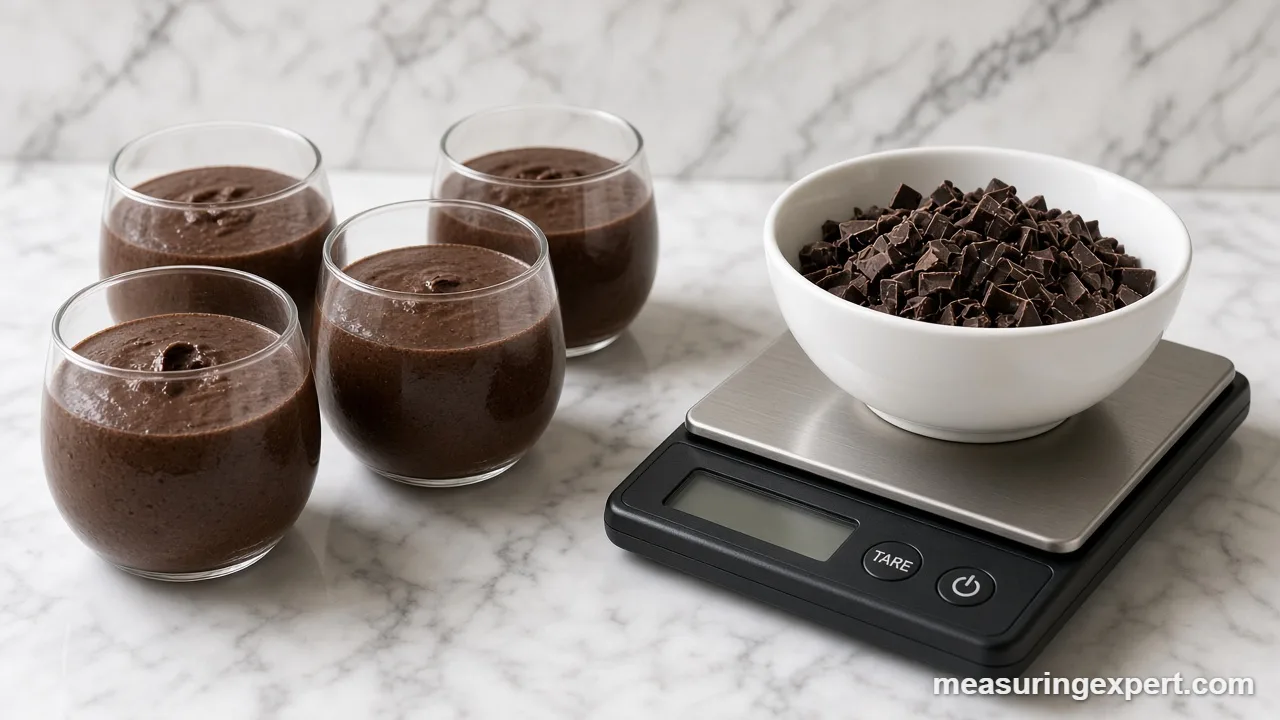
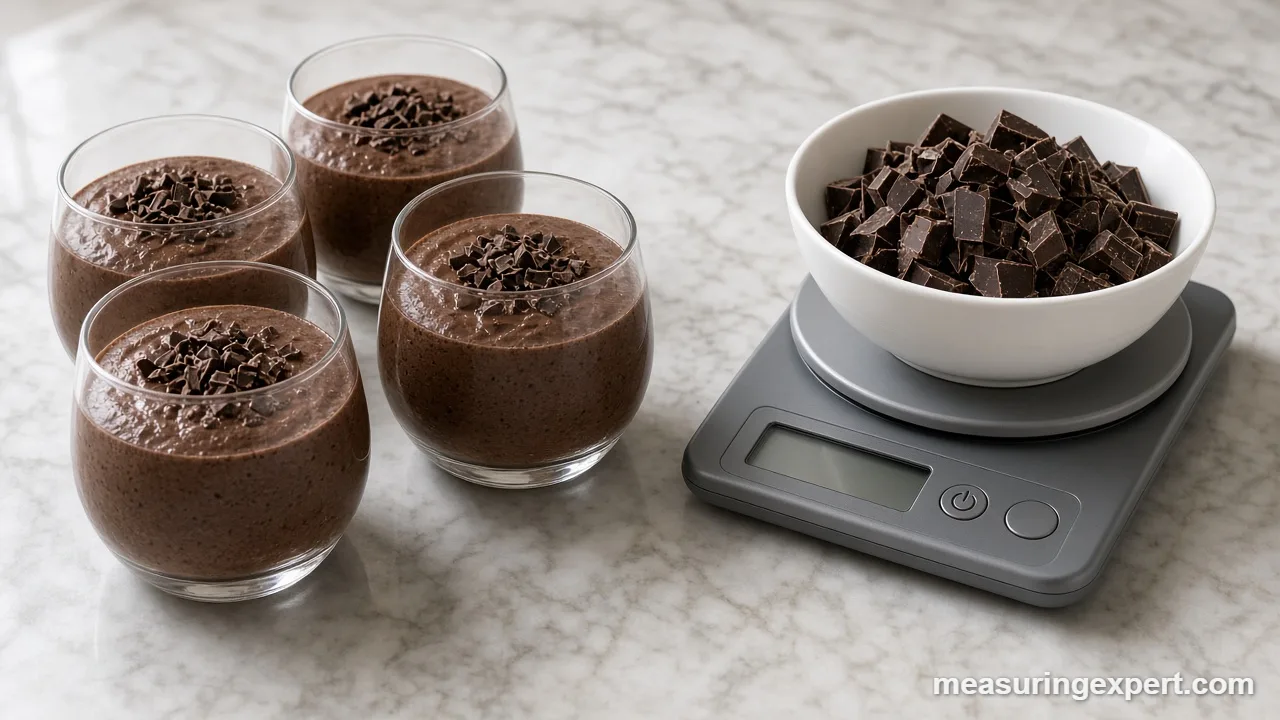
To measure mousse ingredients, weigh them on a digital scale in grams. A common starting ratio is 1 part dark chocolate to 2 parts heavy cream by weight, such as 150 g chocolate and 300 g cream for four servings. Whipped cream roughly doubles in volume, so size the bowl for that.
Measure Mousse Ingredients: Cream Converter
Mousse recipes list cream in cups, milliliters or ounces. Therefore, enter the amount below to switch between them. The converter uses exact US definitions, so 1 cup is 236.5882365 mL.
Mousse looks easy, yet it has little room for error. It is only a few ingredients, so each one carries a lot of weight. For example, a little too much chocolate makes a heavy dessert, while a little too much cream makes a soft one. As a result, a scale helps more here than almost anywhere else in the kitchen.
This guide gives chocolate mousse ratios by weight, explains how much whipped cream grows, and covers egg safety. The ratios are example starting points that many recipes resemble. Also, adjust them to taste, and note that nothing here is a tested recipe.
The USDA Food Safety and Inspection Service says to use pasteurized eggs or egg products in recipes that call for raw or undercooked eggs. That advice shapes the egg section below, because classic mousse often uses raw whites or yolks.
Chocolate Mousse Ratios by Weight
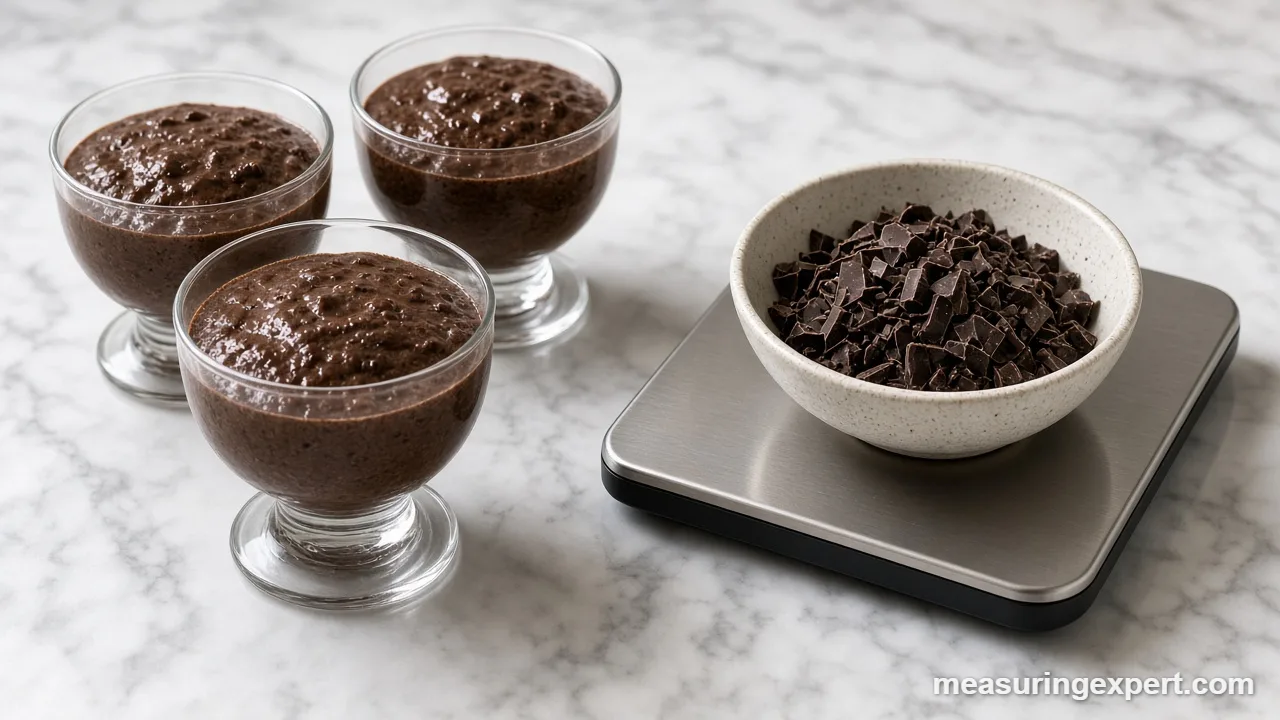
A cream-based mousse needs only chocolate and cream. First, warm part of the cream and pour it over chopped chocolate to make a smooth base. Then fold in the rest of the cream after whipping it to soft peaks. For example, the table below keeps a 1:2 ratio of chocolate to cream by weight, with one third of the cream warmed and two thirds whipped.
| Servings | Dark chocolate | Cream to warm | Cream to whip | Total cream |
|---|---|---|---|---|
| 2 | 75 g (2.6 oz) | 50 g (1.8 oz) | 100 g (3.5 oz) | 150 g (5.3 oz) |
| 4 | 150 g (5.3 oz) | 100 g (3.5 oz) | 200 g (7.1 oz) | 300 g (10.6 oz) |
| 6 | 225 g (7.9 oz) | 150 g (5.3 oz) | 300 g (10.6 oz) | 450 g (15.9 oz) |
| 8 | 300 g (10.6 oz) | 200 g (7.1 oz) | 400 g (14.1 oz) | 600 g (21.2 oz) |
Because the ratio is fixed, scaling is simple multiplication. Four servings use 150 g of chocolate, so six servings use 150 x 6 / 4 = 225 g. Moreover, the finished mousse for four servings weighs about 450 g, which is roughly 112 g per portion. For the ounce conversions, see how much an ounce is.
Similarly, egg-based versions follow the same idea. These add beaten whites or a cooked yolk base for structure. In either case, weigh the whites or yolks instead of counting eggs. Egg sizes differ, and a scale removes that guess.
Whipped Cream Volume: What One Cup Becomes
Heavy cream roughly doubles in volume when whipped, according to Joy of Baking. The same source lists heavy cream at 36 to 40 percent butterfat and whipping cream at about 30 percent. In practice, the higher fat content traps air better and holds its shape longer.
| Liquid cream | Liquid (mL) | Whipped, about | Whipped (mL) |
|---|---|---|---|
| 1/2 cup | 118 | 1 cup | 237 |
| 1 cup | 237 | 2 cups | 473 |
| 1 1/2 cups | 355 | 3 cups | 710 |
| 2 cups | 473 | 4 cups | 946 |
However, these figures are approximate. How far cream grows depends on its fat, its temperature and how long you whip it. Even so, the rule helps you pick a bowl. For example, 2 cups of cream needs a bowl that holds at least 4 cups, and a larger one is better because it leaves room to fold.
Also, stop at soft peaks for mousse. Cream whipped to stiff peaks is harder to fold into melted chocolate, and it can turn grainy. Therefore, whip slightly less than you think you need.
Egg Safety When You Measure Mousse Ingredients
In fact, raw egg is the one food-safety issue in mousse. The USDA advises against eating raw or undercooked eggs and says to heat egg mixtures to 160 degrees F (about 71.1 degrees C), checked with a food thermometer. It also notes that desserts made with raw beaten egg whites cannot be guaranteed safe, and it suggests pasteurized dried egg whites, whipped cream or whipped topping as substitutes.
- Cream-only mousse. This version has no eggs, so it avoids the issue.
- Pasteurized eggs or egg whites. Use these in place of raw eggs, and check the carton.
- Heated yolk base. Warm the yolks with a liquid over low heat, stirring constantly, until a thermometer reads 160 degrees F.
Recommended Tools to Measure Mousse Ingredients
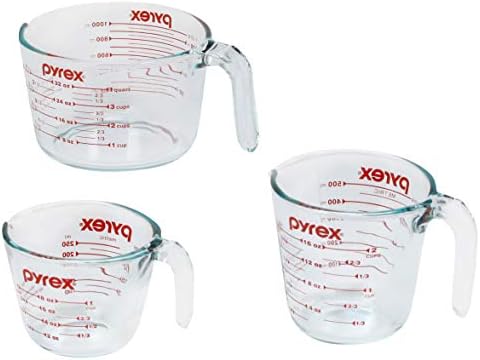
A digital scale is the key tool, because it handles chocolate, cream and sugar in the same bowl. Look for a tare button and a platform wide enough for a mixing bowl. Next, an instant-read thermometer is useful if you heat a yolk base to 160 degrees F. In addition, glass measuring cups help when a recipe lists cream by volume.



As an Amazon Associate, Measuring Expert earns from qualifying purchases.
How to Measure Mousse Ingredients Step by Step
- Chill the bowl and beaters. Cold equipment helps cream whip faster.
- Weigh the chocolate. Set a bowl on the scale, press tare, and add the chopped chocolate.
- Weigh the cream in two parts. First weigh the small portion to warm, then weigh the larger portion to whip.
- Melt the base. Heat the small portion of cream until steaming, pour it over the chocolate, and stir until smooth.
- Whip the rest of the cream. Stop at soft peaks and check that the volume has about doubled.
- Fold gently. Add a third of the whipped cream to the base, then fold in the rest.
- Weigh the finished mousse. Divide the total by the number of servings to portion it evenly.
Chill the portions for a few hours before serving. Meanwhile, keep notes of your weights so the next batch matches.
Fruit and Flavored Mousse by Weight
Similarly, fruit mousse works on the same principle. Weigh the puree and the cream, and keep the same ratio each time once you find a texture you like. Fruit adds water and acid, so it loosens the mousse. Consequently, add the puree gradually and stop when the texture looks right.
Besides, flavorings such as vanilla, espresso or liqueur are small amounts. A resolution of 1 g is fine for most of them. A 0.1 g scale only matters for tiny additions. For a related dessert, see how to measure tiramisu ingredients, which also relies on cream and weighed portions.
Common Mistakes With Mousse Measurements
| Mistake | What happens | Fix |
|---|---|---|
| Measuring chocolate in cups | Chunks leave air gaps, so the amount varies | Weigh it in grams |
| Counting eggs, not weighing whites | Egg sizes differ, so the structure changes | Weigh whites or use pasteurized liquid whites |
| Using a cream with low fat | It whips less and holds less air | Choose heavy cream |
| Using a bowl that is too small | Cream overflows as it doubles | Pick a bowl with at least twice the volume |
| Folding warm chocolate into cold cream | Chocolate seizes into flecks | Let the base cool until just warm |
Do
- Weigh chocolate, cream and sugar in grams.
- Whip cream only to soft peaks.
- Use pasteurized eggs or a cream-only version.
- Write down the weights you used.
Don’t
- Serve raw egg mousse to higher-risk guests.
- Rely on cups for chopped chocolate.
- Overwhip cream into stiff peaks.
- Skip the chill time.
Honest Limits of These Ratios
Overall, the ratios on this page are examples, not laws. Chocolate varies by cocoa percentage, and a higher percentage makes a firmer mousse. Likewise, cream varies by brand and temperature. Furthermore, the doubling rule for whipped cream is approximate, so treat the volumes as a guide for bowl size and not as a promise. In short, weigh consistently, taste the result, and adjust the next batch.
When to Ask a Professional
If you cook for a person with an egg allergy, a weakened immune system or a pregnancy, ask a doctor about which foods are safe for them. Also follow current food-safety guidance from the USDA.
Frequently Asked Questions
Why measure mousse ingredients by weight?
Weight is consistent, while cups of chopped chocolate or whipped cream vary. A scale gives the same texture from batch to batch.
What is a good chocolate to cream ratio for mousse?
A common starting point is 1 part dark chocolate to 2 parts heavy cream by weight, such as 150 g chocolate and 300 g cream for four servings.
How much does cream grow when whipped?
Heavy cream roughly doubles in volume, so 1 cup of liquid cream becomes about 2 cups whipped.
Is mousse with raw eggs safe?
The USDA advises against raw or undercooked eggs. Use pasteurized eggs, heat the mixture to 160 degrees F, or make a cream-only mousse.
How do I measure mousse ingredients without a scale?
Use liquid measuring cups for cream and level spoons for sugar. Chopped chocolate is hard to measure by volume, so a scale is far better.
Do I need to measure mousse ingredients differently for fruit mousse?
Weigh the puree and cream, and add the puree gradually. Fruit adds water, so the texture changes with the fruit you use.
Can I use whipping cream instead of heavy cream?
You can, but it has less fat, about 30 percent against 36 to 40 percent. As a result, it holds less air and gives a softer mousse.
How many ounces is 150 g of chocolate?
150 g equals about 5.3 oz. The exact figure is 150 / 28.349523125 = 5.29 oz.
What temperature makes an egg yolk base safe?
The USDA says egg mixtures should reach 160 degrees F, which is about 71.1 degrees C, measured with a food thermometer.
How long should mousse chill?
Chill it for a few hours until set. The time depends on the recipe and the size of the portions.
Measure Mousse Ingredients: The Bottom Line
In short, weigh the chocolate and cream, start from a 1:2 ratio, and expect whipped cream to double in volume. Choose pasteurized eggs or a cream-only mousse for food safety.
Finally, use the converter at the top of this page for cups, milliliters and ounces of cream. Then keep notes on your weights, so the next batch turns out the same.