

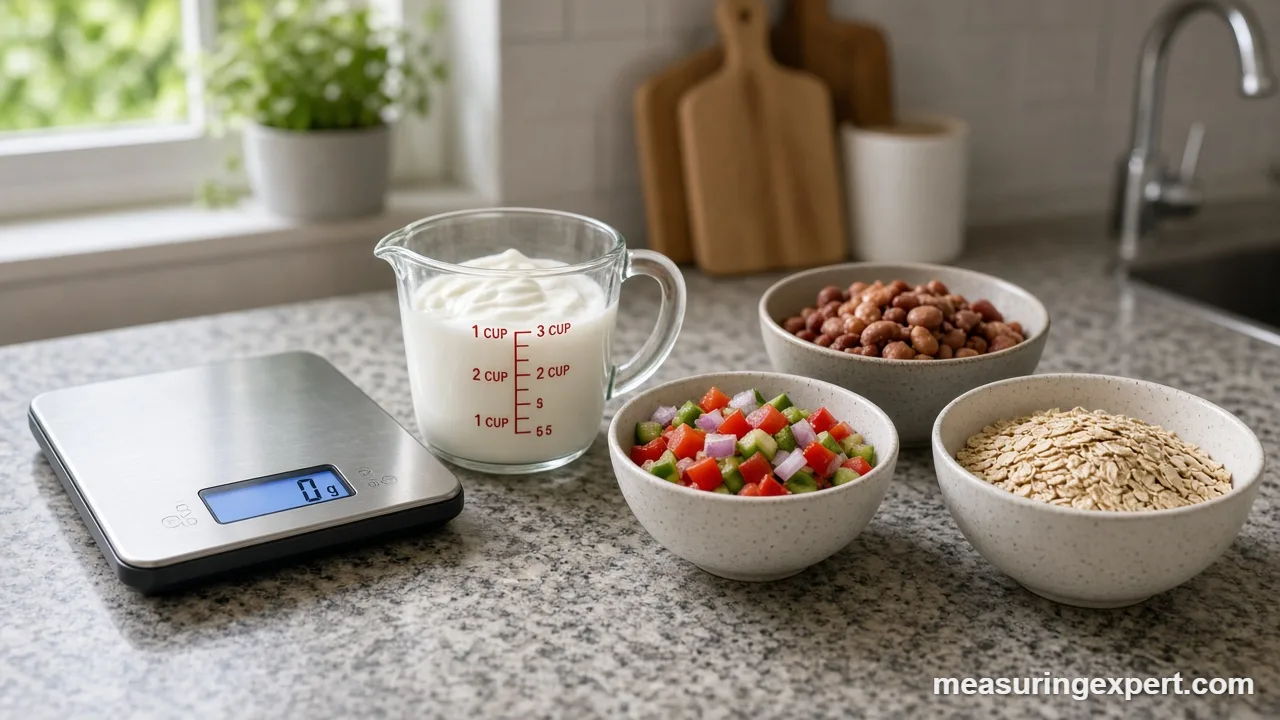
To measure gut healthy foods, use the same unit as your label or recipe and level every scoop. For example, 1 cup (237 mL) of yogurt, 1 cup of chopped vegetables, or 1/2 cup (118 mL) of cooked beans. This page covers measuring and portions only. It is general information, not medical advice.
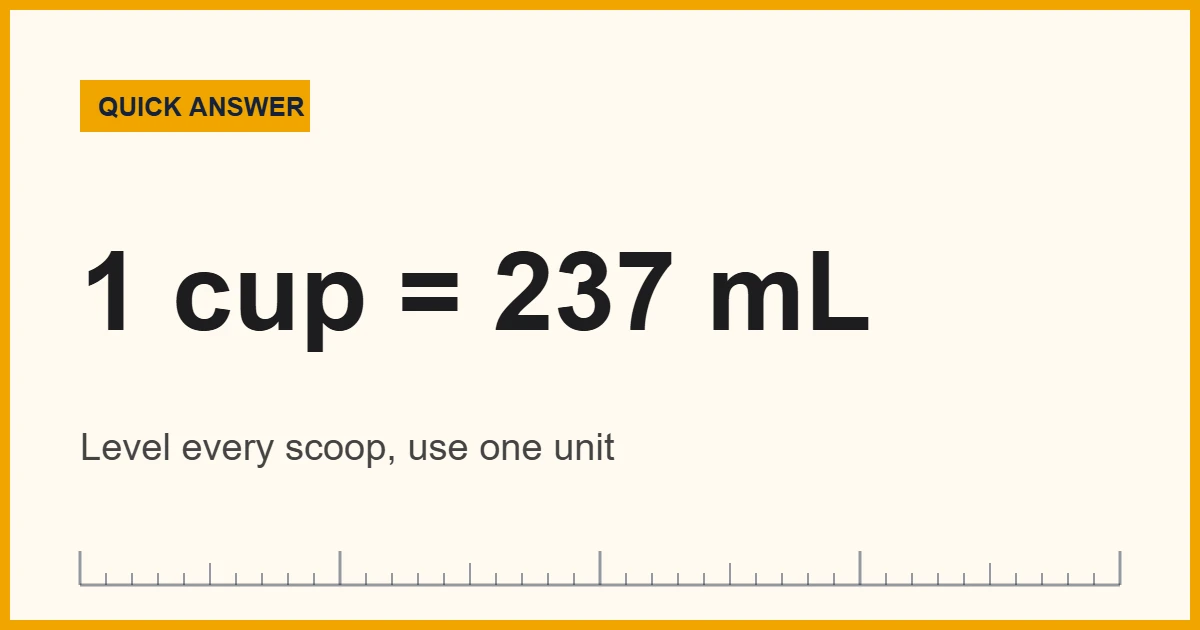
Measure Gut Healthy Foods: Cups, mL and Spoons Converter
Type an amount in cups, and then read it in milliliters, fluid ounces and tablespoons. The converter uses the exact US cup definition, so it works for yogurt, broth, kefir and any other liquid or soft food you portion by volume.
Many people want a simple way to portion fiber-rich and fermented foods, yet most recipes only give vague phrases such as “a handful”. As a result, portions drift from day to day. A measuring habit fixes that problem, because the same scoop gives you the same amount each time.
Below, you will learn how to measure gut healthy foods with cups, spoons and a scale. In addition, you will see official cup equivalents from USDA MyPlate and the FDA label reference for fiber. We stay with measuring here, so this guide makes no claims about what any food does inside your body.
- One US cup is 236.59 mL, or 8 fl oz, by definition.
- MyPlate counts 1 cup of most chopped vegetables as 1 cup, but 2 cups of raw leafy greens as 1 cup.
- Cooked rice or pasta at 1/2 cup counts as 1 ounce-equivalent of grains.
- The FDA label reference for dietary fiber is 28 g per day.
- Weigh grains and nuts, and use cups for vegetables and yogurt.
Portion Chart to Measure Gut Healthy Foods
This chart uses amounts from USDA MyPlate. The metric column converts each US cup with the exact definition, rounded to the nearest milliliter.
| Food | Counts as | Metric |
|---|---|---|
| Broccoli, chopped | 1 cup | about 237 mL |
| Carrots, sliced or chopped | 1 cup | about 237 mL |
| Raw spinach | 2 cups = 1 cup | about 473 mL raw |
| Cooked beans, peas or lentils | 1 cup | about 237 mL |
| Cabbage, shredded | 1 cup | about 237 mL |
| Mushrooms | 1 cup | about 237 mL |
| Yogurt (dairy or fortified soy) | 1 cup | about 237 mL |
| Cooked rice or pasta | 1/2 cup = 1 oz-equivalent | about 118 mL |
| Cooked oatmeal | 1/2 cup = 1 oz-equivalent | about 118 mL |
| Dry oats | 1/3 cup = 1 oz-equivalent | about 79 mL |
For the ounce itself, see how much an ounce is. Note that an ounce-equivalent is a grouping used by MyPlate, so it is not always a weight of exactly 28 g.
Recommended Tools for Measuring Healthy Foods
Fortunately, you do not need much. First, a digital scale with a tare button handles grains, nuts and seeds. Next, a glass liquid measuring cup works for yogurt, kefir and broth. In addition, a set of measuring spoons covers small portions of fermented vegetables. Finally, labeled containers keep your portions the same all week.


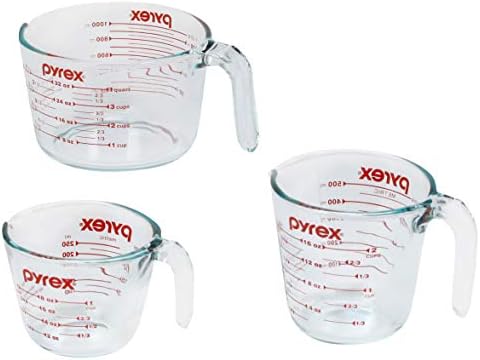


As an Amazon Associate, Measuring Expert earns from qualifying purchases.
Read a Food Label Before You Portion
A label gives you the serving size first and the nutrients second. Therefore, always compare your scoop with the labeled serving. The FDA lists 28 g as the Daily Value for dietary fiber, which the label uses as a reference point.
Here is a made-up example to show the math. If a label lists 4 g of fiber per 1/2 cup, then 1 cup holds 8 g. Since 8 divided by 28 is about 0.29, that portion would show as roughly 29 percent of the Daily Value. Real products differ, so read your own label.
How to Measure Gut Healthy Foods Step by Step
- Choose the unit your label or recipe uses. Check whether the source lists cups, grams or ounces, and use the same unit for every item so numbers stay comparable.
- Weigh or measure one portion. Set a bowl on the scale and press tare, or fill a dry measuring cup and level it with a straight edge.
- Record the portion. Write the amount on a sticky note or in a notes app so you can repeat it next time.
- Convert when needed. Use the converter above to switch between cups, milliliters and tablespoons without doing the math by hand.
- Multiply for the week. Multiply one portion by the number of days or people, then add a small margin for waste.
- Store in labeled containers. Divide the batch into containers, label the contents, and keep cold foods cold.
Dry vs Cooked: Why the Same Cup Differs
Grains and beans swell as they cook. Consequently, a cup of dry rice and a cup of cooked rice are different amounts. MyPlate shows this when it lists 1 ounce (28 g) of dry rice or pasta, and 1/2 cup cooked, as the same 1 ounce-equivalent.
| Mix-up | What to do |
|---|---|
| Dry cup vs cooked cup | Check which one the recipe or label means, and write it down. |
| Raw vs cooked greens | Remember that 2 cups of raw spinach equal 1 cup by MyPlate. |
| Fluid ounce vs weight ounce | Use fl oz for liquids by volume and oz for weight on a scale. |
| US cup vs label cup | A US cup is 236.59 mL, but labels use 240 mL. |
If a recipe lists milliliters, our guide to how much 30 mL is helps with small amounts.
Measure Fermented Foods Without Guesswork
Sauerkraut, kimchi, yogurt and kefir are usually portioned with a spoon or a small scoop. For example, pick one size, such as 2 tablespoons (about 30 mL), and use it every time. That way, you compare like with like from one week to the next.
Making ferments at home is a different job, because salt and water ratios matter. For that, read our guide on how to measure ingredients for fermentation. Likewise, for portion planning around a balanced plate, see heart healthy meal portions.
Meal Prep Math to Measure Gut Healthy Foods for a Week
First, multiply one portion by the days you need. For instance, five days of 1 cup of yogurt need 5 cups, which is about 1.18 L. Seven days of 1/2 cup of cooked beans need 3.5 cups, or about 828 mL. Then add a small margin for spills and leftovers.
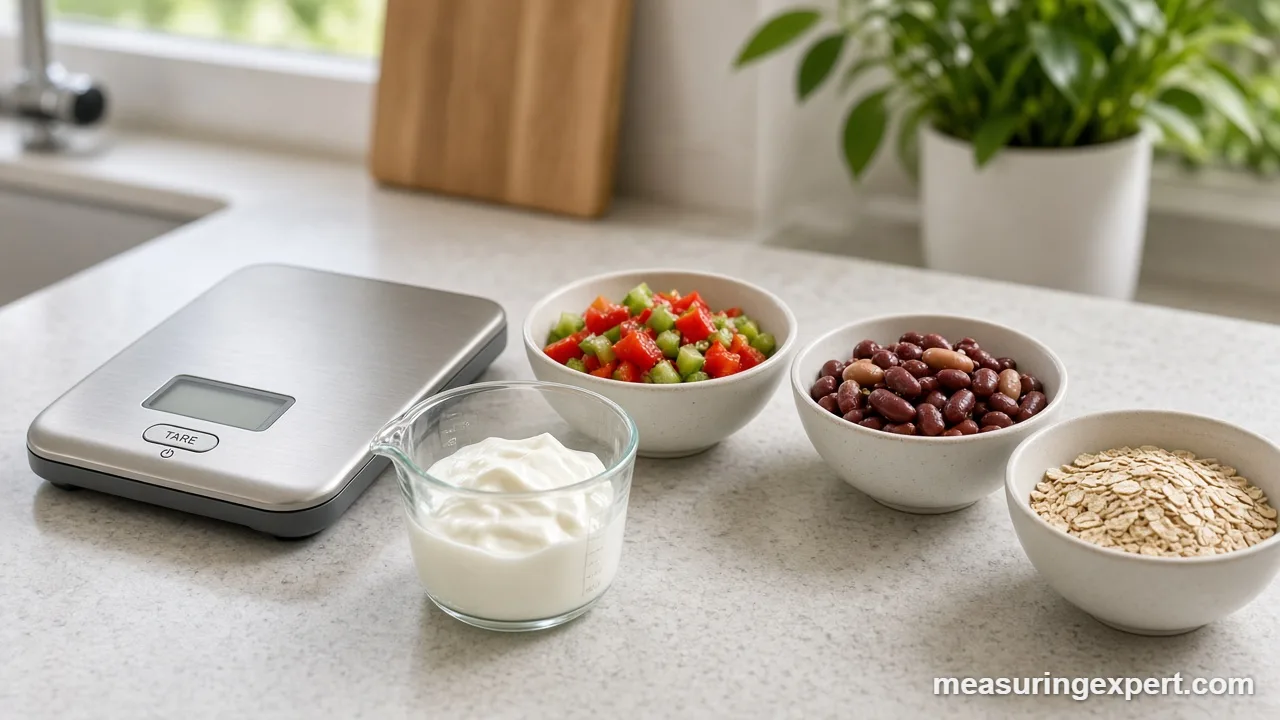
Moreover, cook grains and beans in one batch and divide them into labeled containers. Then cool hot food quickly, and keep cold food cold, following the storage times on your product labels.
Do and Don’t for Portioning
Do
- Level dry scoops with a straight edge.
- Write which unit and state you used.
- Weigh grains, nuts and seeds.
- Compare your portion with the labeled serving.
- Repeat the same scoop each day.
Don’t
- Pack vegetables into the cup to fit more.
- Mix dry and cooked amounts in one total.
- Use eating spoons as measuring spoons.
- Assume every carton holds the same cup count.
- Round a label serving up without noting it.
Honest Limits of Portion Measuring
Cups give a quick estimate, not a precise value. In fact, cut size, moisture and how tightly you pack a cup all change the weight. In short, a cup of chopped kale and a cup of shredded cabbage hold different amounts of food. Scales also have a small error, often about 1 g. Also, labels round their numbers. For everyday cooking this is fine, but treat any number here as a planning aid and not as a nutrition prescription.
When to Ask a Professional
In short, this article covers measuring tools and portions. It does not say what you should eat or how food affects your body. If you have a digestive condition, an allergy, or a medical diet, work with your doctor or a registered dietitian, and follow their instructions instead of a general chart.
Frequently Asked Questions
How do I measure gut healthy foods without a scale?
Use level measuring cups and spoons, and follow the cup equivalents in the table above. For example, 1 cup of chopped broccoli or 1/2 cup of cooked beans works well. A scale is faster for grains and nuts, but cups are fine for most vegetables and yogurt.
What counts as one cup of vegetables?
USDA MyPlate counts 1 cup of chopped broccoli, carrots, cauliflower or mushrooms as 1 cup. Raw leafy greens are different, because 2 cups of raw spinach or romaine count as 1 cup.
How much is a serving of yogurt in cups and mL?
MyPlate counts 1 cup of yogurt as 1 cup from the dairy group. One US cup is about 237 mL, or 8 fl oz. Always check the serving size on the container, because cartons vary.
How much cooked rice or pasta is one ounce-equivalent?
MyPlate lists 1/2 cup of cooked rice or pasta, or 1 ounce (28 g) dry, as 1 ounce-equivalent of grains. That is about 118 mL of cooked grain.
Do I measure beans dry or cooked?
Follow your recipe, and write down which one it uses. MyPlate counts 1 cup of cooked beans, peas or lentils as 1 cup. Dry beans swell as they cook, so a dry cup and a cooked cup are not the same amount.
How do I measure gut healthy foods when I meal prep?
Pick one portion per container, such as 1 cup of vegetables or 1/2 cup of cooked grains. Then multiply by the number of days. For example, five days of 1 cup of yogurt need 5 cups, which is about 1.18 L.
What does the fiber number on a label mean?
It shows grams of fiber in one labeled serving. The FDA uses 28 g as the Daily Value for dietary fiber on labels, so 4 g of fiber is about 14 percent of that reference value.
Is a cup of fresh vegetables the same as a cup of cooked ones?
Not always. Cooking shrinks leafy greens a lot, so 2 cups of raw spinach count the same as 1 cup cooked. Most firm vegetables, such as broccoli and carrots, count as 1 cup either way.
How do I measure gut healthy foods like sauerkraut or kimchi?
Use a spoon or a small scoop and keep the portion the same each time, such as 2 tablespoons (about 30 mL). If you make them at home, see our guide to measuring ingredients for fermentation for salt and water ratios.
Is this article medical advice?
No. It is general information about measuring and portions. For questions about your own diet or health, talk to a doctor or a registered dietitian.
Measure Gut Healthy Foods: The Bottom Line
To sum up, pick one unit, level your scoop, and write the portion down. Use MyPlate cup equivalents for vegetables, yogurt and grains, and use the label for serving sizes.
Finally, let the converter at the top handle cups and milliliters, and keep health questions for your doctor or dietitian.