

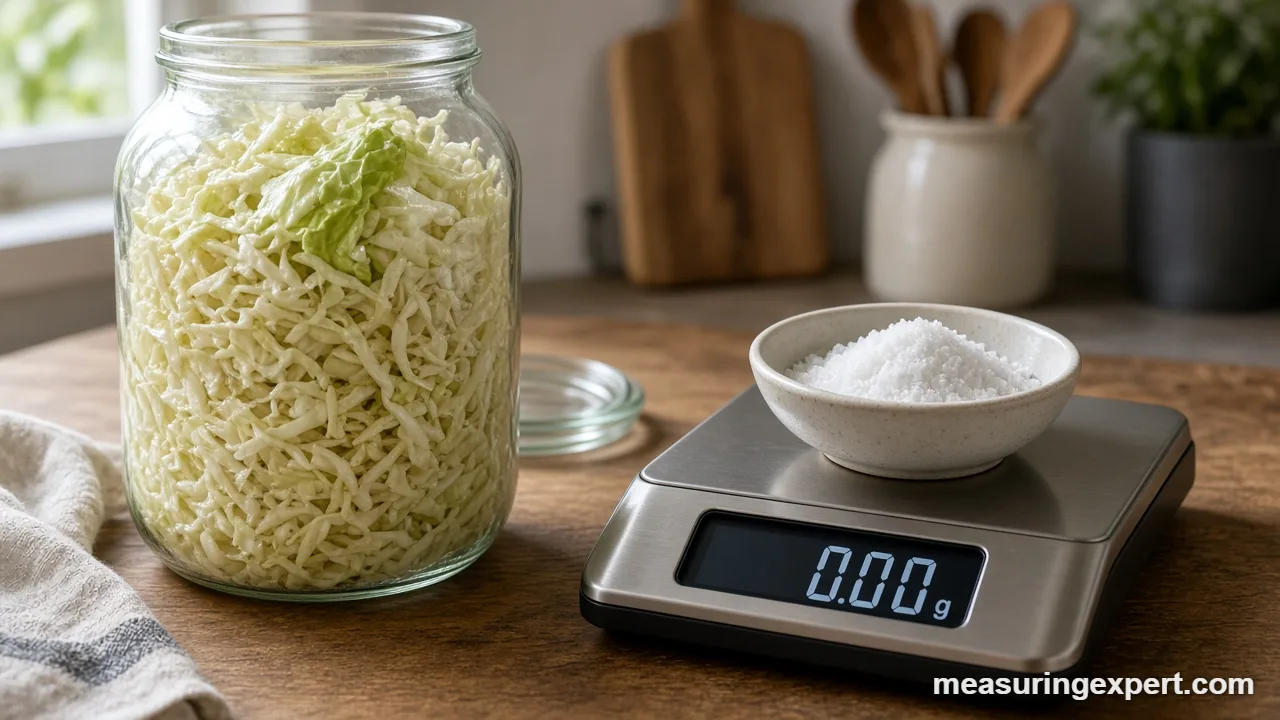
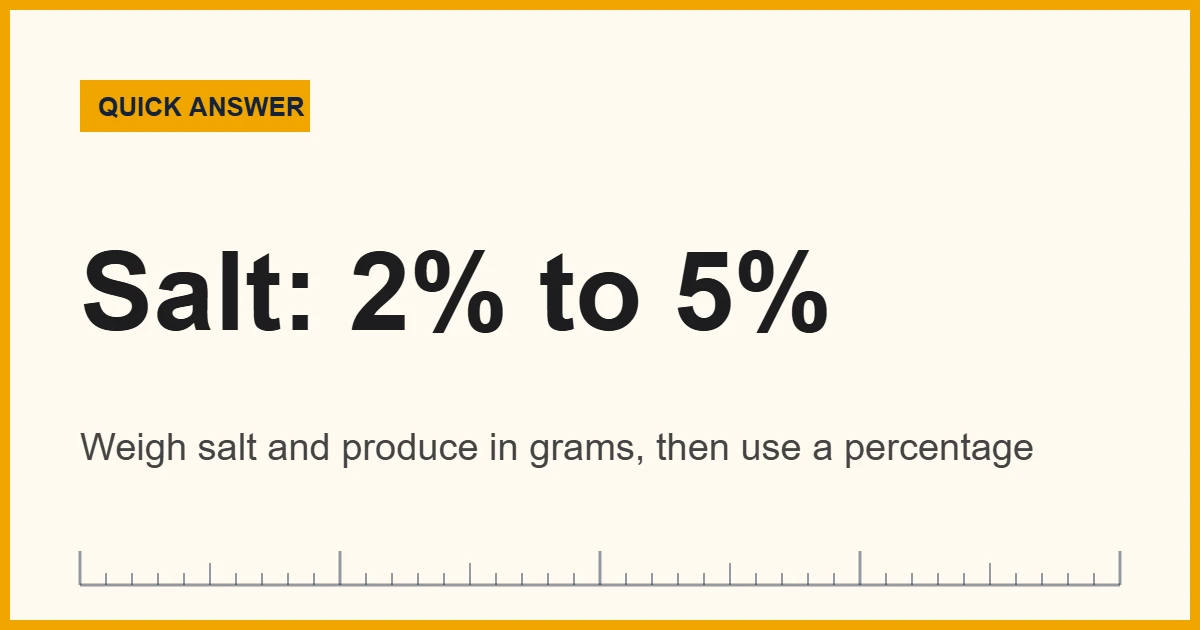
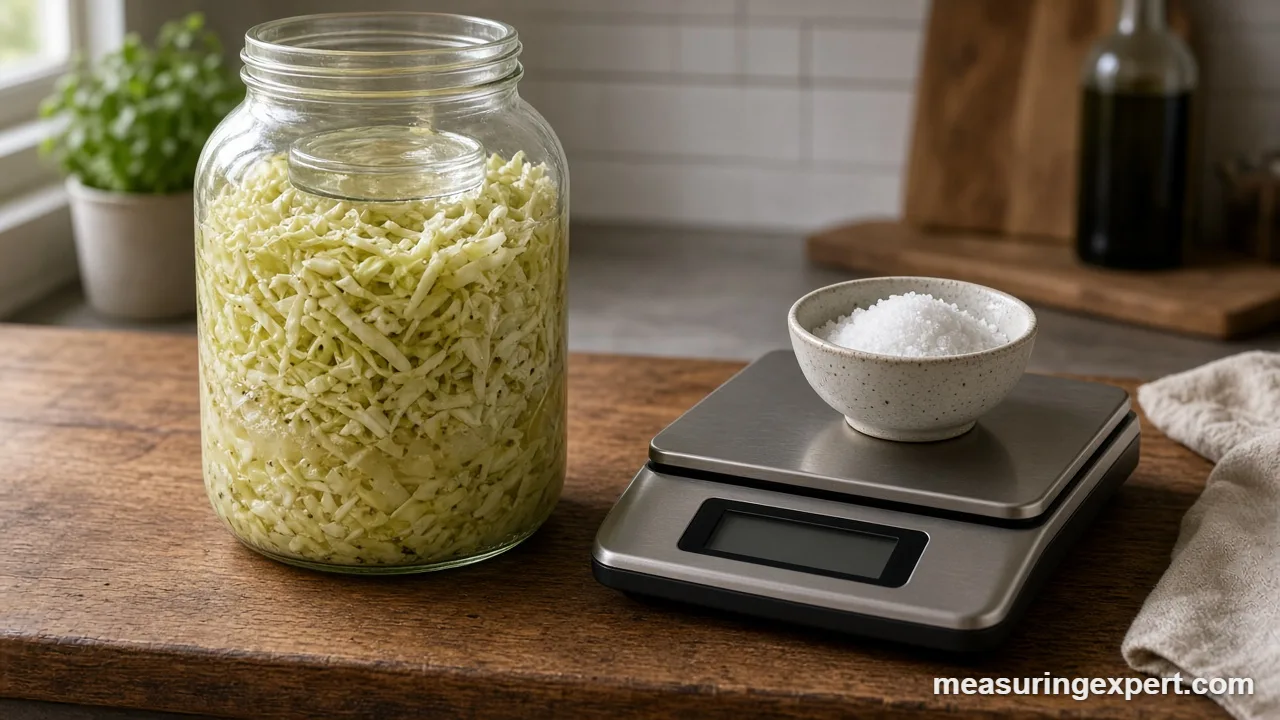
The best way to measure ingredients for fermentation is by weight. Weigh the salt and the vegetables or water on a gram scale, then work from a percentage. Most vegetable ferments use 2% to 5% salt, and 2.2% of the total jar weight is a common starting point.
Convert Grams, Ounces and Pounds for Your Ferment
Because of this, fermentation recipes switch between grams, ounces and pounds all the time. Enter the weight you have below, and the converter shows the other units using the exact NIST definitions.
Fermentation turns sugars into acids, gas or alcohol with the help of microbes, and salt, sugar and starter amounts decide which microbes win. For example, too little salt in a vegetable jar invites soft, spoiled produce. However, too much slows the good bacteria down. As a result, a few grams either way can change the batch.
That is why this guide shows how to measure ingredients for fermentation with a scale and a few percentages. First, you will see the salt math. After that come kombucha and kefir ratios, the tools worth owning, and the mistakes that cause most failed jars.
Why Weight Beats Cups to Measure Ingredients for Fermentation
First, a tablespoon of salt is a volume, and volume changes with grain size. For example, fine sea salt packs tightly, while flaky kosher salt leaves more air between crystals. Therefore, one tablespoon of each can differ by a wide margin in actual salt.
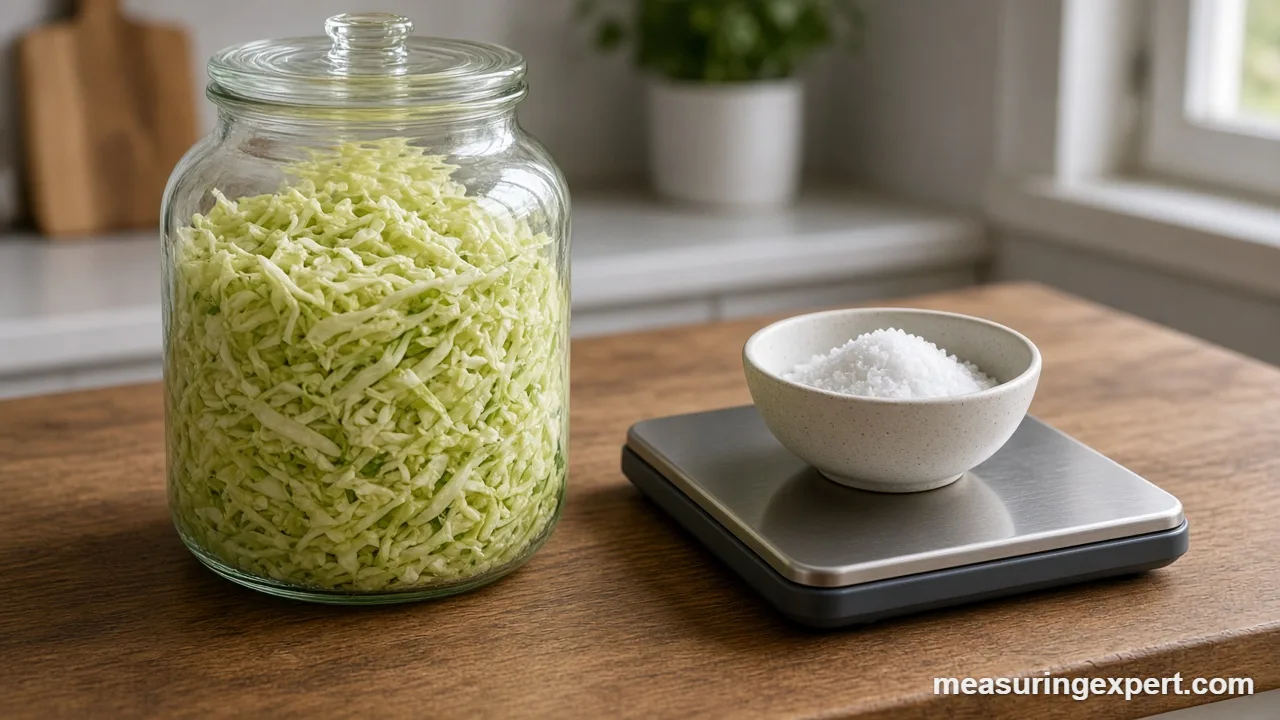
Weight avoids the problem, because 20 grams of salt is 20 grams in any form. Similarly, the same logic applies to cabbage, carrots and cucumbers, which pack differently depending on how finely you cut them. In short, a scale turns a vague recipe into a repeatable one.
If you want a deeper look at how scoops and spoons vary, see our page on how much an ounce is by weight and by volume.
The Salt Math: Percentage by Weight
In short, salt percentage is simply salt weight divided by the weight it is measured against. Recipes pick one of two bases, so always check which one a recipe means.
- Percent of the water (brine strength): multiply the water weight by the percentage. A 3% brine is 30 g of salt per 1,000 g of water.
- Percent of the total jar contents: weigh the vegetables and water together, then multiply by the percentage. One fermenting blog multiplies the full contents by 0.022 for a 2.2% ferment.
In practice, the second method suits dry-salted ferments such as shredded cabbage, because there is no measured water to start with. For example, a jar holding 900 g of vegetables and brine needs about 19.8 g of salt at 2.2%. At 3%, the same jar needs 27 g.
Published guidance says that any ratio from 2% to 5% is workable. The same source makes quick-eat ferments at about 2% and uses at least 2.2% for jars stored longer than a few weeks. Therefore, treat those numbers as one practitioner’s range and follow a tested recipe for anything you plan to store.
Brine Strength Chart to Measure Ingredients for Fermentation
This chart shows salt for a brine measured against the water weight. Each value comes from simple multiplication, so you can check it yourself, and a quart of water weighs about 946 g.
| Brine strength | Salt per 1,000 g water | Salt per US quart (946 g) | Salt per US gallon (3,785 g) |
|---|---|---|---|
| 2% | 20 g (0.71 oz) | 18.9 g | 75.7 g |
| 2.5% | 25 g (0.88 oz) | 23.7 g | 94.6 g |
| 3% | 30 g (1.06 oz) | 28.4 g | 113.6 g |
| 3.5% | 35 g (1.23 oz) | 33.1 g | 132.5 g |
| 5% | 50 g (1.76 oz) | 47.3 g | 189.3 g |
The National Center for Home Food Preservation (NCHFP) uses a volume rule instead for its sauerkraut instructions. Its topping-off brine is 1 1/2 tablespoons of salt per quart of water, boiled and cooled. Because salt type changes what a tablespoon holds, weighing that amount is more consistent. You can read the original on the NCHFP sauerkraut page.
For a ready-made walkthrough with cabbage, read our guide to how to measure ingredients for sauerkraut. Similarly, our page on measuring ingredients for pickling covers vinegar brines, which work differently from fermentation brines.
Ratios for Kombucha and Kefir
Instead of a salt percentage, fermented drinks use ratios rather than a single salt percentage. Below are the figures from two sources that were opened for this page.
Kombucha
The NCHFP kombucha recipe makes 1 gallon of tea. It calls for 3 tablespoons of loose black tea (or 6 tea bags), 1 cup of granulated sugar, and a SCOBY with its starter liquid. In the recipe, 4 cups of water are heated to 160 to 170 degrees F (71 to 77 degrees C) for steeping, and 12 cups of cold water are added afterward. Also, the tea must cool below 95 degrees F (35 degrees C) before the culture goes in.
Using about 200 g for a cup of sugar, that works out to roughly 5.3% sugar by volume of tea. The recipe ferments at 68 to 77 degrees F (20 to 25 degrees C) for 7 to 10 days. In addition, it says the starter liquid must test at pH 4.0 or lower, and anything above 4.0 should be discarded. You can read the full method on the NCHFP kombucha page.
Milk kefir
One published milk kefir recipe uses 1 tablespoon of hydrated kefir grains for 2 cups of milk, which is about 473 mL. In other words, that is a recipe’s starting ratio, not a standard. Kefir timing depends strongly on room temperature, and sources disagree, so adjust by taste and smell.
| Ferment | Key ratio | What to weigh or measure |
|---|---|---|
| Vegetables, dry-salted | About 2% to 2.5% salt of total weight | Salt and vegetables in grams |
| Vegetables, brined | 2% to 5% salt of water weight | Salt and water in grams |
| Kombucha (1 gal) | 1 cup sugar, 6 tea bags, 16 cups water | Sugar in grams, water in cups or liters |
| Milk kefir | 1 tbsp grains to 2 cups milk | Grains by spoon or gram, milk in mL |
Recommended Tools to Measure Ingredients for Fermentation
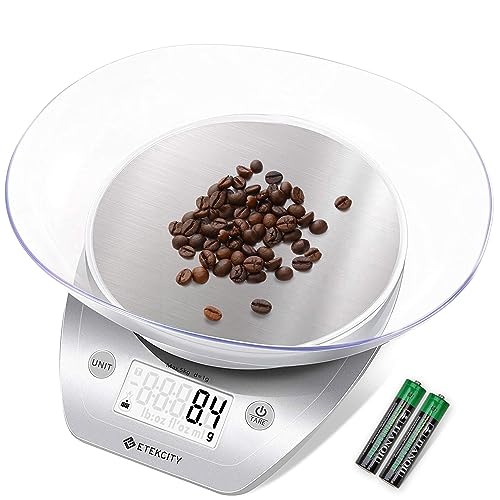
In fact, a scale does most of the work. First, look for a tare button, a capacity of at least 11 pounds (5 kg) for cabbage and other heavy produce, and 1 g resolution. Also, a stainless steel set of measuring spoons helps for tea, starter and small additions.



As an Amazon Associate, Measuring Expert earns from qualifying purchases.
How to Measure Ingredients for Fermentation Step by Step
- Clean and dry your tools. First, wash the jar, scale tray and spoons with hot soapy water, and rinse well.
- Put the empty jar or bowl on the scale and press tare. The display should read zero before you add anything.
- Weigh the vegetables or water. Next, add them to the container and write down the weight in grams.
- Multiply by your salt percentage. For a 2.2% ferment, multiply the weight by 0.022. For a 3% brine, multiply the water weight by 0.03.
- Weigh the salt separately. Then tare a small bowl, add salt until the display shows the target, and mix it in.
- Keep everything under the liquid. Use a weight or a clean water-filled bag so no produce touches air.
- Label the jar. Finally, note the date, the weights and the salt percentage so you can repeat or adjust the batch.
Temperature Also Changes the Result
Salt sets the pace, but temperature also sets the speed. The NCHFP says sauerkraut at 70 to 75 degrees F (21 to 24 degrees C) is fully fermented in about 3 to 4 weeks. By contrast, at 60 to 65 degrees F (16 to 18 degrees C), it can take 5 to 6 weeks. Below 60 degrees F (16 degrees C), it may not ferment, and above 75 degrees F (24 degrees C), the kraut may turn soft.
Because of this, a basic probe or room thermometer belongs next to the scale. Meanwhile, record the room temperature on the jar label. As a result, that single number often explains why one batch finished early and another dragged on.
Mistakes When You Measure Ingredients for Fermentation
Do
- Weigh salt in grams every time.
- Tare the container before each ingredient.
- State whether a percentage uses water weight or total weight.
- Record weights and room temperature on the jar.
- Use a tested recipe for jars you plan to store.
Don’t
- Swap table salt, flaky salt and fine salt by the spoonful.
- Estimate produce weight by eye.
- Add salt “to taste” before you know the base percentage.
- Use a scale that drifts or has a flat battery.
- Seal a kombucha bottle tightly without monitoring pressure.
Honest Limits of These Numbers
Overall, every number above describes a starting point, not a guarantee. Salt percentages come from home fermenting practice and tested extension recipes, and sources do not agree on a single ideal. Moreover, the sugar weight for a cup depends on how it is packed, so the 5.3% figure is an estimate. In short, treat these ratios as defaults and follow the recipe or tested method you have chosen.
However, this page does not replace professional food safety training. For instance, large batches, commercial sales and anyone with a health condition need guidance from a local extension office or health department.
Frequently Asked Questions
What is the best way to measure ingredients for fermentation?
Weigh them on a gram scale. Weigh the salt and the vegetables or water, and then calculate salt as a percentage of the weight.
How much salt should I measure ingredients for fermentation with?
For vegetables, 2% to 5% salt by weight is a workable range. Many home recipes start near 2.2% of total jar weight.
How much salt is 2% in a quart of water?
A US quart of water weighs about 946 g, so a 2% brine needs about 18.9 g of salt.
How many grams of salt are in a 3% brine?
A 3% brine uses 30 g of salt per 1,000 g of water, which is about 1.06 oz per liter.
Why measure ingredients for fermentation by weight instead of volume?
Different salts pack differently, so a tablespoon can hold very different amounts. Weight stays the same for every salt type.
Is salt percentage based on the water or the whole jar?
It depends on the recipe. Brines usually use water weight, while dry-salted ferments often use the total weight of vegetables and brine.
What is the ratio for kombucha?
The NCHFP recipe makes 1 gallon with 1 cup of sugar, 6 tea bags or 3 tablespoons of loose black tea, and a SCOBY with starter liquid.
What is a common milk kefir ratio?
One published recipe uses 1 tablespoon of hydrated grains to 2 cups of milk. Adjust it to your taste and room temperature.
What temperature is best for fermenting vegetables?
For sauerkraut, the NCHFP gives 70 to 75 degrees F (21 to 24 degrees C) as the range for fermenting in about 3 to 4 weeks.
What kind of scale do I need?
A digital scale with a tare button and 1 g resolution works for most jars. A 0.1 g scale helps for tiny amounts of culture or spices.
Measure Ingredients for Fermentation: The Bottom Line
To sum up, weigh your ingredients, pick a salt percentage, and write it down. A 2% to 5% range covers most vegetable ferments, and 2.2% of total weight is a common default. Kombucha and kefir follow fixed ratios instead.
Finally, use the converter at the top when a recipe switches units. For cabbage in particular, continue with our sauerkraut measuring guide.
2 thoughts on “How to Measure Ingredients for Fermentation: Salt, Brine and Ratios”