

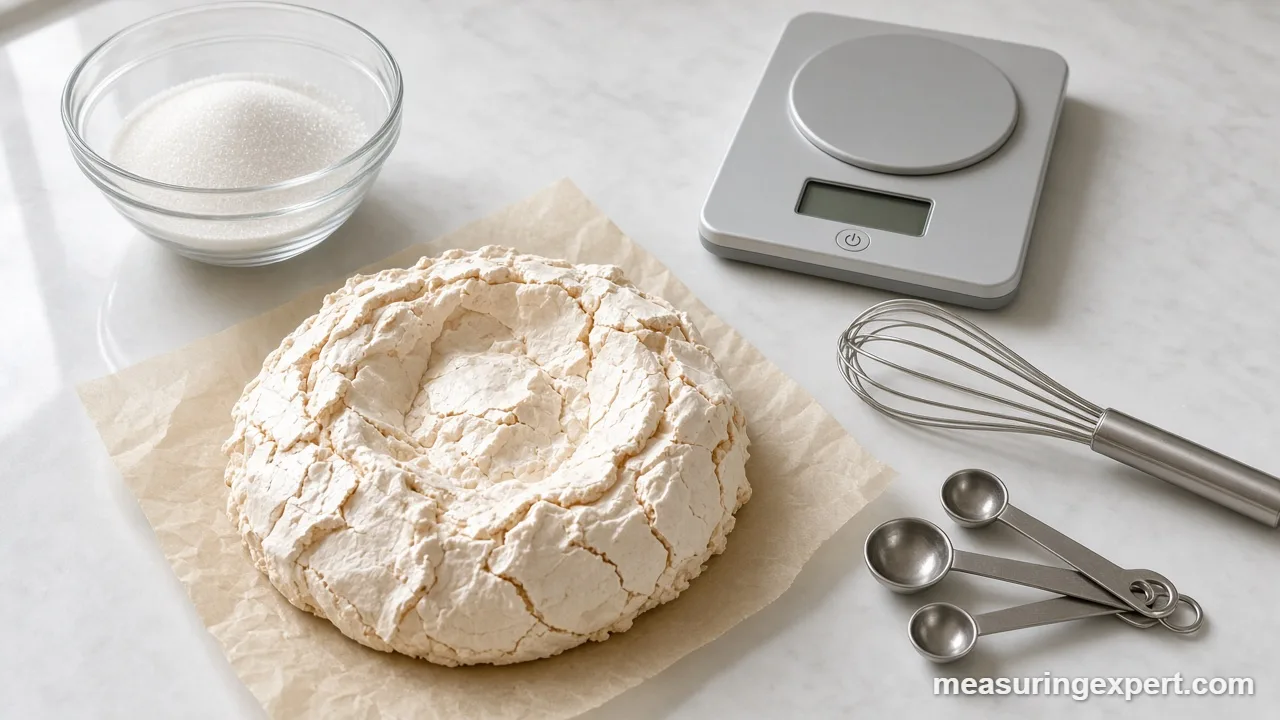
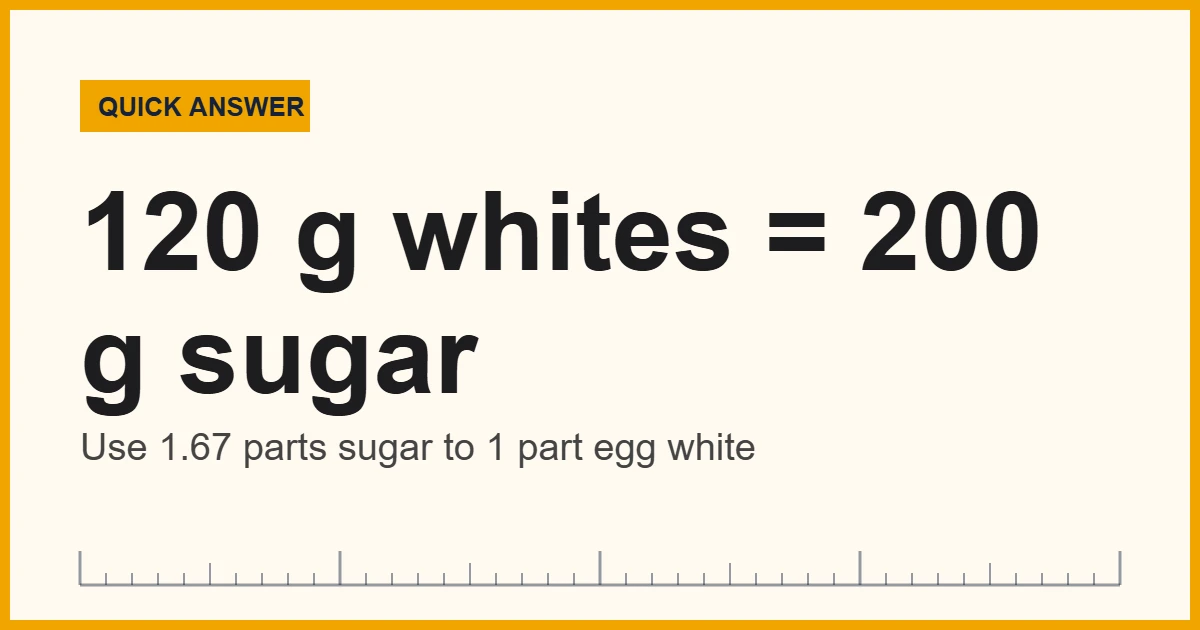
Pavlova ingredients are best measured by weight: use about 1.7 parts superfine sugar to 1 part egg white. For example, 4 large egg whites (120 g) take 200 g (7 oz) of sugar, plus 1 tsp of vinegar and a little cornstarch. Weighing keeps the meringue crisp outside and soft inside.
Pavlova Ingredients Converter: Grams, Ounces and Pounds
Many pavlova recipes list sugar in grams, while some American recipes use ounces or cups. Therefore, type your amount below to switch between them. For instance, enter 200 grams to see the sugar in a standard four-white pavlova as ounces and pounds.
A pavlova has only a handful of ingredients, so each one has to be right. Egg whites, sugar, a little cornstarch and a splash of vinegar make a meringue that should bake into a thin, dry shell around a soft center. However, a few extra grams of sugar or a heaped spoon of cornstarch can tip the balance toward a sticky or a hard result.
This guide shows how to measure pavlova ingredients with a scale, spoons and an oven thermometer. First, you will see a base recipe by weight. Next, you will learn the sugar-to-egg-white ratio and a table for scaling it. Finally, you will find oven temperatures, topping amounts and the mistakes that most often spoil a meringue.
Pavlova Ingredients for One Four-Egg-White Meringue
The base amounts below follow the meringue in the Joy of Baking pavlova recipe, which bakes on a 7 to 8 inch (18 to 20 cm) circle. Another well-known recipe from Zoe Bakes uses 150 g of egg whites and 250 g of sugar, which is the same ratio on a larger scale.
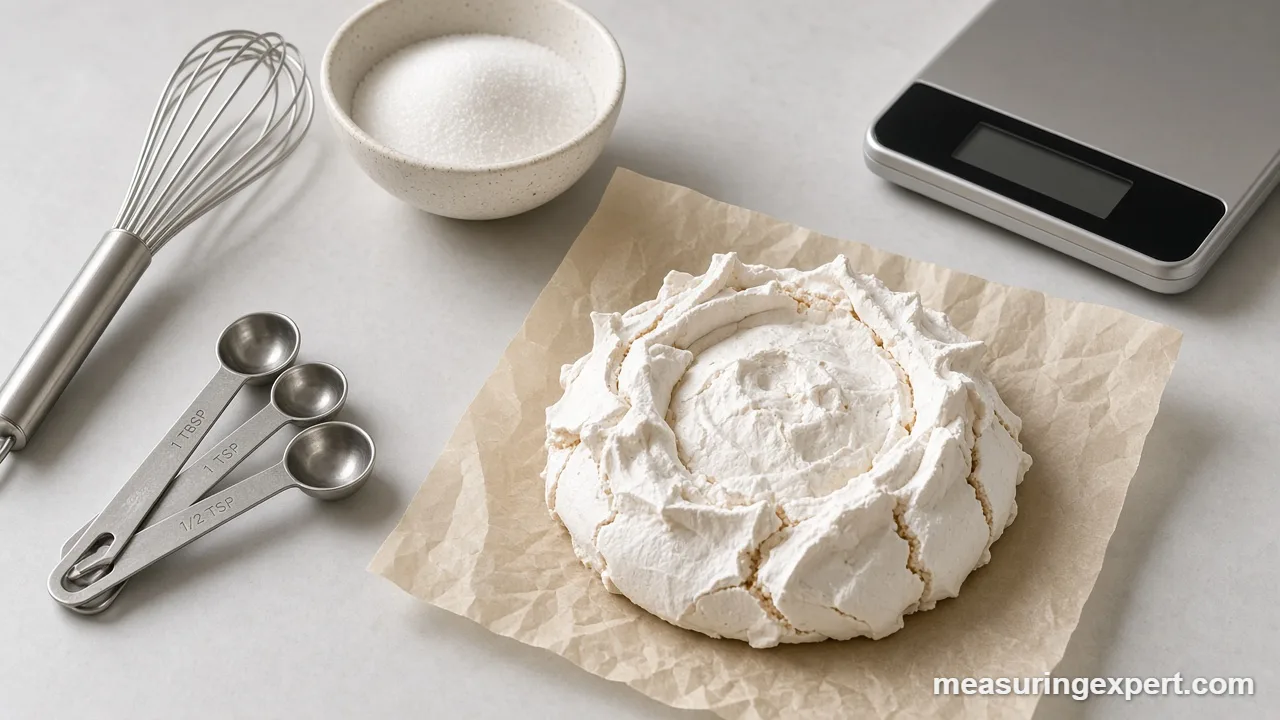
| Ingredient | By weight | By volume |
|---|---|---|
| Egg whites, room temperature | 120 g (4.2 oz) | 4 large whites |
| Superfine (caster) sugar | 200 g (7 oz) | about 1 cup |
| Cornstarch | about 5 g | 1/2 tbsp (1 1/2 tsp) |
| White vinegar | about 3 g | 1 tsp (about 5 mL) |
| Vanilla extract | about 2 g | 1/2 tsp (about 2.5 mL) |
Because recipes vary, expect small differences between sources. For example, the cornstarch in the Zoe Bakes meringue is 1 tablespoon plus 1 teaspoon for its larger batch. In addition, the exact weight of a cup of sugar depends on the brand and how you fill the cup, as the next section explains.
Why Weight Beats Cups for Pavlova Ingredients
A cup measures space, while a scale measures how much sugar is actually there. The King Arthur ingredient weight chart lists 1 cup of superfine sugar at 190 g (6 3/4 oz) and 1 cup of granulated sugar at 198 g (7 oz). The Joy of Baking recipe, on the other hand, calls 1 cup of superfine sugar 200 g. As a result, two correct cups can differ by 10 g, and that gap grows when you double the batch.
| Item | Published weight | Source |
|---|---|---|
| 1 large egg white | 30 to 35 g (1 to 1 1/4 oz) | King Arthur |
| 1 cup superfine sugar | 190 g (6 3/4 oz) | King Arthur |
| 1 cup granulated sugar | 198 g (7 oz) | King Arthur |
| 1/4 cup cornstarch | 28 g (1 oz) | King Arthur |
| 1 cup heavy cream | 227 g (8 oz) | King Arthur |
| 1 cup sliced strawberries | 167 g (5 7/8 oz) | King Arthur |
The Sugar-to-Egg-White Ratio
Both recipes above work out to about 5 parts sugar for every 3 parts egg white by weight. In other words, you multiply the egg white weight by 1.67 to find the sugar. For example, 120 g of whites times 1.67 gives 200 g of sugar, and 150 g of whites gives 250 g.
Measuring Egg Whites
Egg sizes differ, so the count of eggs is only a guide. King Arthur lists a fresh large egg white at 30 to 35 g, so 4 whites can weigh anywhere from 120 to 140 g. Therefore, weigh the whites in a clean bowl and base the sugar on that number. Both recipes also call for room-temperature whites.
Measuring Sugar
Weigh the sugar as well. Both recipes add it a little at a time while beating, so measure it into a separate bowl first. Then you can spoon it in steadily and test the meringue between your fingers to check that it no longer feels gritty.
Measuring Cornstarch, Vinegar and Vanilla
These three are small, so use level measuring spoons. Fold the cornstarch in with the vinegar once the meringue is stiff, then beat in the vanilla. Most kitchen scales cannot read 2 or 3 grams reliably, so spoons are the better choice here.
Scale Pavlova Ingredients Up or Down
The table scales the base recipe by the number of egg whites. Because the ratio stays fixed, you only need the weight of the whites. Cup values assume 190 g per cup of superfine sugar, so they are rounded.
| Egg whites | Weight of whites | Superfine sugar | Cornstarch | Vinegar | Vanilla |
|---|---|---|---|---|---|
| 2 | 60 g | 100 g (3.5 oz, about 1/2 cup) | 3/4 tsp | 1/2 tsp | 1/4 tsp |
| 4 | 120 g | 200 g (7.1 oz, about 1 cup) | 1 1/2 tsp | 1 tsp | 1/2 tsp |
| 6 | 180 g | 300 g (10.6 oz, about 1 1/2 cups) | 2 1/4 tsp | 1 1/2 tsp | 3/4 tsp |
| 8 | 240 g | 400 g (14.1 oz, about 2 cups) | 1 tbsp | 2 tsp | 1 tsp |
For a batch of 6 or 8 whites, shape two separate meringues rather than one large one, since a very big base is harder to cook through. If you only own one size of cup, our guide to measuring cup substitutes shows how to improvise.
Oven Temperature and Timing
Pavlova bakes slowly. Joy of Baking uses 250 F (about 120 C) for roughly 60 minutes, then lets the meringue cool in the switched-off oven with the door slightly open. Zoe Bakes starts at 275 F (135 C), lowers to 250 F (about 120 C) and rests the meringue in the cooling oven for at least an hour.
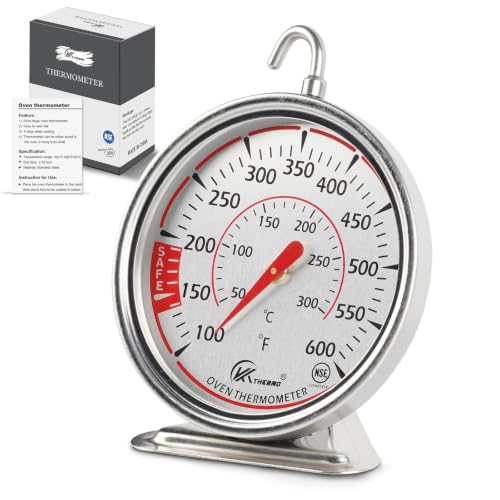
Oven dials do not always match the real temperature, so an oven thermometer is a cheap check. Meanwhile, a timer stops you from opening the door early.
Toppings: Cream and Fruit by Weight
Toppings are not as fussy as the meringue, but amounts still help. A common starting point for a four-white pavlova is 1 cup (227 g, 8 oz) of heavy cream whipped with a little sugar, plus about 1 cup (167 g, 5 7/8 oz) of sliced strawberries. Adjust to taste, and add the cream and fruit just before serving so the shell stays crisp.
How to Measure Pavlova Ingredients Step by Step
- Preheat and check. Set the oven to 250 F (about 120 C) and confirm it with an oven thermometer.
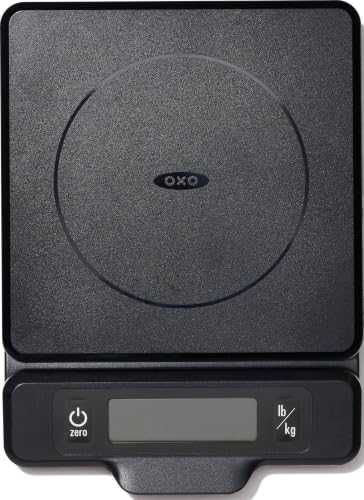
- Weigh the egg whites. Place a clean bowl on the scale, press tare and add the whites until you reach your target weight.
- Calculate the sugar. Multiply the egg white weight by 1.67, then weigh that amount of superfine sugar into another bowl.
- Measure the small items. Level 1 1/2 tsp of cornstarch, 1 tsp of vinegar and 1/2 tsp of vanilla for four whites.
- Beat and add the sugar slowly. Add it a spoonful at a time, then rub a little meringue between your fingers to check that the sugar has dissolved.
- Fold and shape. Fold in the cornstarch and vinegar, then spread the meringue on a parchment circle.
- Bake and cool. Set a timer for about 60 minutes, then leave the meringue in the cooling oven.
Common Mistakes When You Measure Pavlova Ingredients
Most failures trace back to measuring, not to the beating. First, cooks count eggs instead of weighing whites, so the sugar ends up off. Second, they scoop sugar with a cup and get a different amount each time. Third, they use a heaped spoon for cornstarch or vinegar.
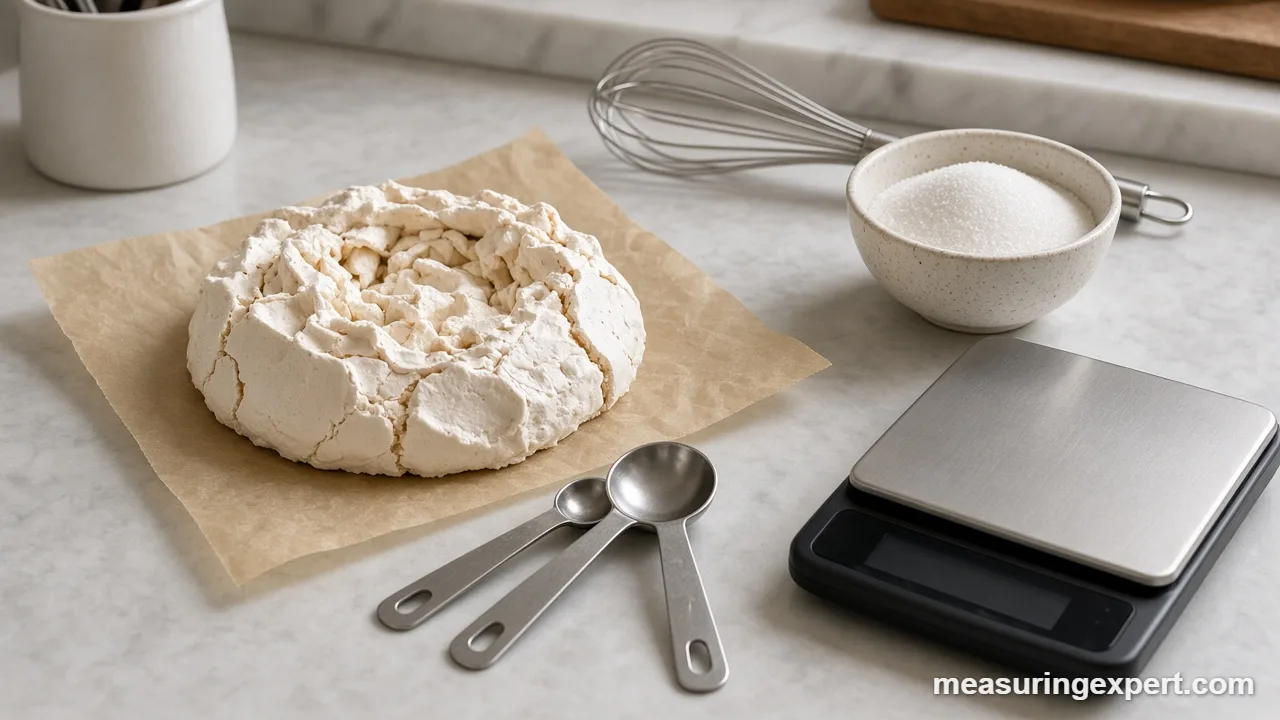
In addition, trusting the oven dial can lead to a meringue that browns or weeps. Likewise, adding the sugar all at once can leave gritty crystals that melt into syrup during baking. Therefore, add it slowly and check the texture between your fingers.
Recommended Tools for Pavlova Ingredients
You need very little equipment. A digital scale with a tare button handles the whites and the sugar. Next, a set of measuring spoons covers the cornstarch, vinegar and vanilla. Finally, an oven thermometer and a timer help with the long, gentle bake.


As an Amazon Associate, Measuring Expert earns from qualifying purchases.
Key Takeaways
- Weigh pavlova ingredients; do not rely on cups or egg counts.
- Use about 1.67 g of superfine sugar for every 1 g of egg white.
- A large egg white weighs about 30 to 35 g, so 4 whites is roughly 120 to 140 g.
- Four whites take 200 g (7 oz) of sugar, 1 tsp of vinegar and 1/2 tsp of vanilla.
- Bake low, at about 250 F (120 C), and cool the meringue in the oven.
- Add cream and fruit just before serving.
Do and Don’t for Pavlova Ingredients
Do
- Weigh the whites, then calculate the sugar.
- Use a clean bowl and room-temperature whites.
- Add the sugar slowly and test for grit.
- Level the small spoons.
- Check the oven with a thermometer.
Don’t
- Assume every large egg gives the same weight.
- Swap volume and weight ounces.
- Pack sugar into a cup.
- Open the oven door early.
- Top the pavlova long before serving.
The ounce trap deserves a note. A weight ounce is not a fluid ounce, so read how much an ounce is if a recipe mixes the two. For small liquid amounts such as vanilla, see how much 30 mL is. Our Easter baking measurements guide also covers eggs, flour and other holiday basics.
Honest Limits of These Numbers
These amounts come from two published recipes and one weight chart, so they describe a typical pavlova rather than a guaranteed result. Humidity, the size of your eggs and your oven all change the outcome. Moreover, recipes differ slightly on cornstarch, vinegar and baking time. In short, use the numbers as a reliable starting point, then adjust after a trial batch.
When Accuracy and Allergies Matter
If you bake for someone with an egg allergy or a restricted diet, check ingredient labels and talk to them first. Sugar-free or egg-free swaps change how a meringue behaves, so the ratios here do not apply.
Frequently Asked Questions
What is the ratio for pavlova ingredients?
Use about 1.67 parts superfine sugar to 1 part egg white by weight. For example, 120 g of egg whites takes 200 g of sugar.
How many egg whites do I need for a pavlova?
A typical 7 to 8 inch pavlova uses 4 large egg whites, which is about 120 g. Weigh them, because large whites range from 30 to 35 g each.
How much sugar do pavlova ingredients need per egg white?
Plan on about 50 g of superfine sugar for each 30 g egg white. Weigh the whites together and multiply the total by 1.67.
How many cups is 200 g of superfine sugar?
It is about 1 cup. King Arthur lists a cup of superfine sugar at 190 g, while Joy of Baking uses 200 g per cup, so weighing is more exact.
Should I measure pavlova ingredients by weight or by cups?
Weight is more accurate. Cups of sugar vary by brand and by how you fill them, while a scale gives the same amount every time.
How much cornstarch goes in a pavlova?
Recipes vary. Joy of Baking uses 1/2 tablespoon for 4 whites, and Zoe Bakes uses 1 tablespoon plus 1 teaspoon for 150 g of whites.
How much vinegar do I add to pavlova?
Both recipes use 1 teaspoon of white vinegar per batch, folded in with the cornstarch after the meringue is stiff.
What oven temperature suits pavlova ingredients?
Bake low. Joy of Baking uses 250 F (about 120 C) for about 60 minutes, and Zoe Bakes starts at 275 F (135 C) and lowers to 250 F.
Why do I need an oven thermometer for pavlova?
Oven dials can be off, and a pavlova is sensitive to heat. A thermometer shows the real temperature so you can adjust the dial.
How do I scale pavlova ingredients for more egg whites?
Weigh the whites and multiply by 1.67 for the sugar. Scale the cornstarch, vinegar and vanilla in the same proportion, and bake very large batches as two meringues.
Pavlova Ingredients: The Bottom Line
To sum up, weigh the egg whites, multiply by 1.67 for the superfine sugar and measure the small items with level spoons. Then bake low, cool slowly and add the toppings just before serving.
Finally, keep notes on your weights and oven temperature. As a result, your second pavlova will be easier than the first, and the converter at the top handles any gram or ounce amount.