

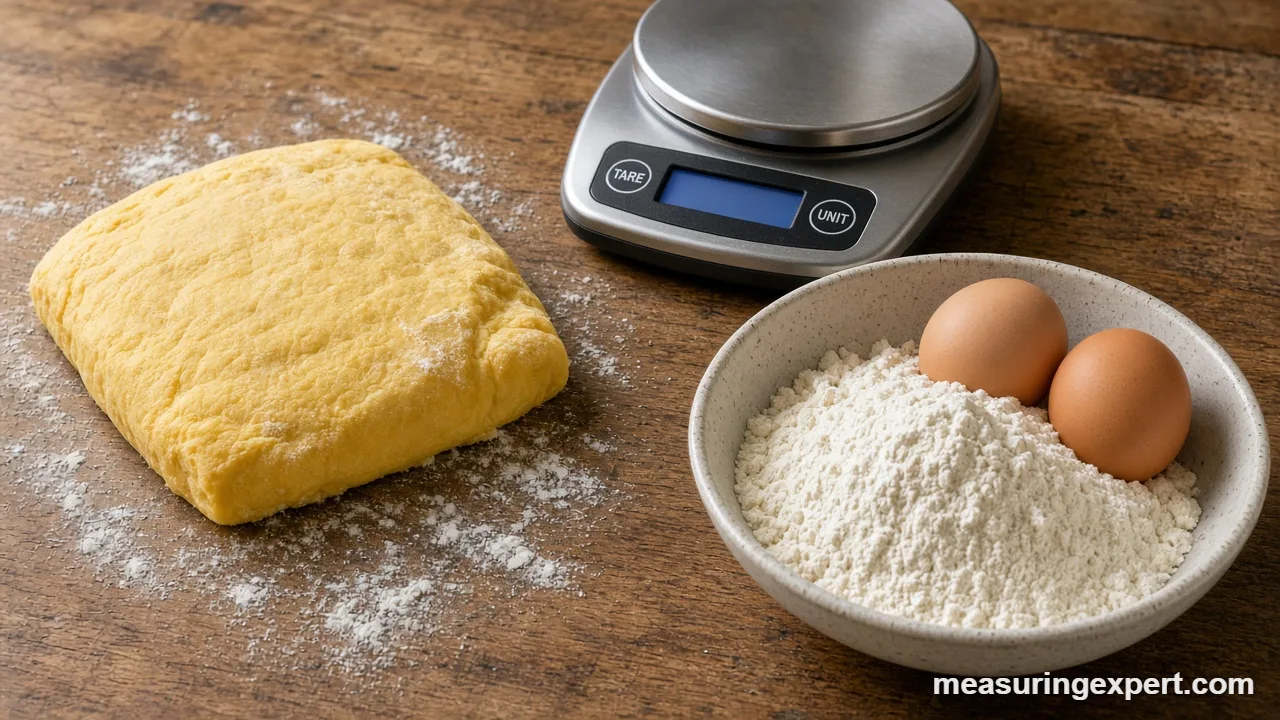
To measure Italian pasta ingredients accurately, weigh them on a kitchen scale instead of using cups. For example, 1 US cup of all-purpose flour weighs about 120 g (4 1/4 oz), while 1 cup of semolina weighs about 163 g. A large egg weighs about 50 g, and one dry pasta serving is about 2 oz (57 g).
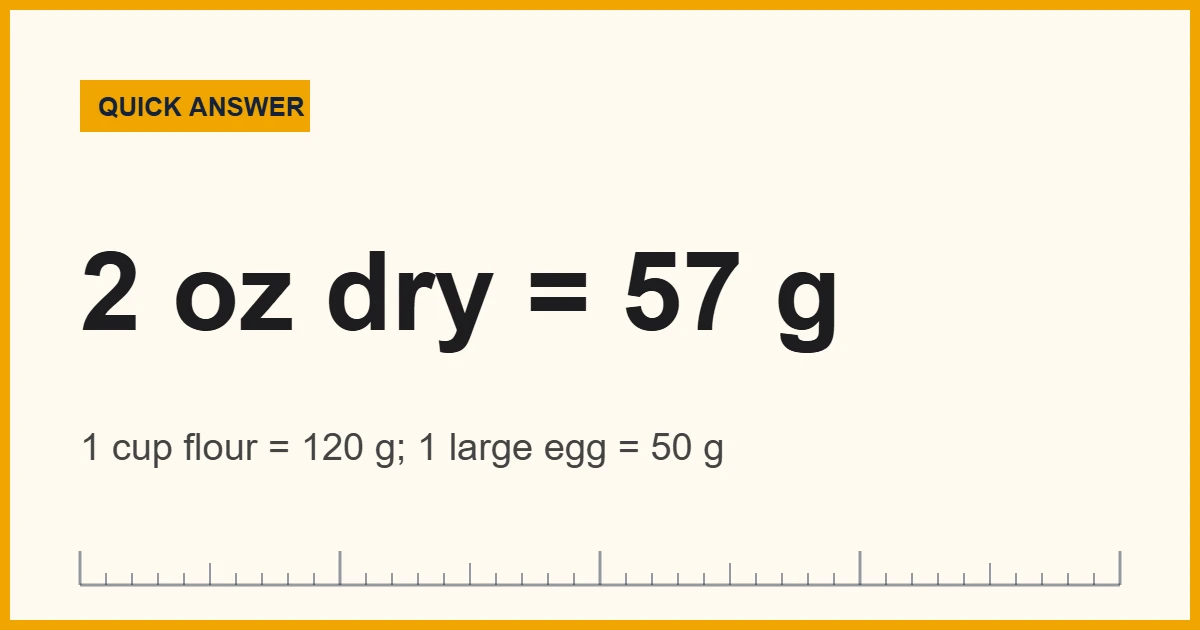
Convert Italian Pasta Ingredients: Ounces, Grams and Pounds
First, type an amount below and pick the unit you have. The converter then shows the same weight in grams, ounces, pounds and kilograms, so you can follow a recipe written in either system.
Pasta dough has only a few parts, usually flour and eggs, so every gram matters. In fact, a cup of flour can swing by 20 or 30 grams depending on how you fill it. As a result, two cooks following the same recipe can end up with dough that feels completely different.
Weighing fixes that problem. For example, King Arthur Baking publishes an ingredient weight chart that lists 1 cup of all-purpose flour as 120 g and 1 large egg as 50 g. In addition, the same chart shows how far apart different pasta flours are.
This page covers the Italian pasta ingredients people measure most: flour, eggs, oil, salt and the dry pasta itself. Next, it shows how to scale a dough recipe, how to portion dry pasta, and which mistakes cause most failures.
Recommended Tools to Measure Italian Pasta Ingredients
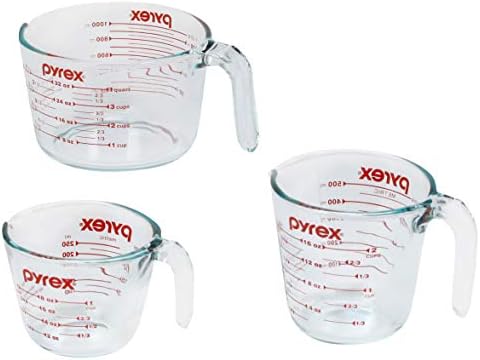
A digital scale is the one tool that does the most for pasta. First, pick a model that reads in 1 g steps and switches between grams and ounces. Next, check for a tare button, which zeroes the bowl so you can add ingredients one after another. Also, a clear liquid measuring cup and a set of measuring spoons cover water, oil and salt.




As an Amazon Associate, Measuring Expert earns from qualifying purchases.
Key Takeaways
- Weigh flour, eggs and dry pasta in grams; use spoons only for small amounts such as salt.
- First, one cup of flour is not one weight: all-purpose is about 120 g, but semolina is about 163 g.
- Also, a large egg is about 50 g (1 3/4 oz) out of the shell.
- In addition, one dry serving is about 2 oz (57 g), which equals roughly 1 cup of cooked pasta.
- Scale a dough recipe by egg count, because the flour amount follows the eggs.
- Finally, salt varies a lot by brand, so a tablespoon of one salt is not a tablespoon of another.
Flour for Italian Pasta Ingredients: Cups vs Grams
Flour is the biggest of all Italian pasta ingredients, so it causes the biggest errors. Cups measure space, not mass. For example, coarse semolina is much denser than fine flour, so a cup of it weighs far more.
| Flour | 1 cup in grams | 1 cup in ounces | 100 g in cups |
|---|---|---|---|
| All-purpose flour | 120 g | 4 1/4 oz | about 5/6 cup |
| “00” flour (pizza flour) | 116 g | 4 oz | about 7/8 cup |
| Durum flour | 124 g | 4 3/8 oz | about 4/5 cup |
| Semolina flour | 163 g | 5 3/4 oz | about 5/8 cup |
These values come from the King Arthur chart. Therefore, a recipe that calls for “1 cup semolina” holds about 43 g more flour than “1 cup all-purpose”, which is roughly 36% more. Because of that gap, swapping flours by volume changes the dough a lot.
Which flour should you use? “00” and all-purpose flour make soft, tender noodles for tagliatelle or ravioli. Durum flour and semolina give a firmer bite. In fact, many cooks blend flours, as King Arthur does in its egg pasta class recipe, which uses about 90 g all-purpose flour with about 93 g durum flour.
Eggs and the Flour-to-Egg Ratio for Italian Pasta Ingredients
Egg pasta gets almost all its moisture from the eggs. For example, the King Arthur class recipe, for instance, uses 3 large eggs with about 183 g of combined flour and no added water or oil. That works out to roughly 61 g of flour per large egg, and it makes 4 to 6 servings.
Use the chart below to scale that recipe. Also, every row keeps the same ratio, and the egg weights assume large eggs at about 50 g each.
| Large eggs | Egg weight | Flour (grams) | Flour (ounces) | Flour (all-purpose cups) |
|---|---|---|---|---|
| 1 | 50 g | 61 g | 2.2 oz | about 1/2 cup |
| 2 | 100 g | 122 g | 4.3 oz | about 1 cup |
| 3 | 150 g | 183 g | 6.5 oz | about 1 1/2 cups |
| 4 | 200 g | 244 g | 8.6 oz | about 2 cups |
| 6 | 300 g | 366 g | 12.9 oz | about 3 cups |
Recipes differ, however, and some use more flour per egg or add yolks for a richer dough. Treat this table as a starting point, not a law. In short, weigh the eggs you actually crack, because medium and extra-large eggs do not match the 50 g figure.
Weigh the eggs in a small bowl on the scale. After that, tip them into the flour well. This habit also makes it easy to top up with a little extra egg if the dough is dry.
How to Measure Italian Pasta Ingredients for Dough
- Set the scale to grams. Grams give finer steps than ounces, so use them for flour and eggs.
- Place the bowl and press tare. The display should read zero before any ingredient goes in, so the bowl is not counted.
- Weigh the flour. Pour in the flour (or the flour blend) until you reach the target weight.
- Tare again and weigh the eggs. Crack them into a second small bowl, because then you can read the weight before using them.
- Mix, then knead. Work the dough until it feels smooth and elastic; King Arthur suggests about 7 minutes.
- Adjust by feel. Dust with a little flour if the dough sticks, and then note how much you added.
- Rest the dough. Finally, cover it for 20 to 30 minutes at room temperature before rolling.
How Much Dry Pasta Per Person (and What 2 Oz Cooks To)
The best way to measure Italian pasta ingredients at serving time is by dry weight. The USDA MyPlate guide counts 1 ounce of dry pasta as one ounce-equivalent, and it counts 1/2 cup of cooked pasta the same way. Therefore, 2 oz of dry pasta (about 57 g) cooks to about 1 cup. See the MyPlate grains page for the full list.
| People | Dry pasta (ounces) | Dry pasta (grams) | Cooked pasta (about) |
|---|---|---|---|
| 1 | 2 oz | 57 g | 1 cup |
| 2 | 4 oz | 113 g | 2 cups |
| 4 | 8 oz | 227 g | 4 cups |
| 6 | 12 oz | 340 g | 6 cups |
| 8 | 16 oz (1 lb) | 454 g | 8 cups |
Recipes written in metric often use round numbers such as 80 g or 100 g per person. For comparison, 80 g is about 2.8 oz and 100 g is about 3.5 oz. The larger portion cooks to about 1 3/4 cups by the MyPlate rule.
A scale is also the easiest way to portion long pasta. For example, spaghetti does not fit in a measuring cup, and a loose handful changes from person to person. Meanwhile, short shapes such as penne vary in density, so a cup of one shape weighs more than a cup of another. A scale ignores all of that, so the portion stays the same. For other ounce-based questions, see our guide on how much an ounce is.
Fresh pasta holds more water than dry pasta, so people usually serve a bit more of it by weight. Also, check the package or recipe for that figure, because it depends on the brand and thickness.
Salt, Oil and Sauce Ingredients for Italian Pasta
Small amounts still deserve care. Salt, for example, is the clearest case, because King Arthur’s chart lists three very different weights for 1 tablespoon: about 8 g for Diamond Crystal kosher salt, about 16 g for Morton kosher salt, and about 18 g for table salt.
| Ingredient | Volume | Weight | Why it matters |
|---|---|---|---|
| Table salt | 1 tbsp | about 18 g | Fine grains pack tightly |
| Morton kosher salt | 1 tbsp | about 16 g | Close to table salt by weight |
| Diamond Crystal kosher salt | 1 tbsp | about 8 g | Light flakes; less than half the weight |
| Olive oil | 1/4 cup | about 50 g | About 12.5 g per tablespoon |
For this reason, a recipe that says “1 tablespoon salt” can taste very different from one kitchen to the next. When a recipe lists salt in grams, use grams. Otherwise, start with less and taste as you go.
Liquid ingredients for sauces, such as water, wine or cream, belong in a clear liquid measuring cup. Next, read the line at eye level on a flat counter. Also, one US cup is 236.6 mL, but a metric cup is 250 mL, so check which one the recipe means. Our 30 mL conversion guide helps with the small amounts.
Bulky sauce ingredients, such as grated cheese or chopped vegetables, are hard to measure by cup because they pack differently each time. Weigh them whenever the recipe gives grams.
Common Mistakes When You Measure Italian Pasta Ingredients
- Scooping flour straight from the bag. This packs the cup, so you add extra flour and the dough turns stiff.
- Swapping flours by volume. Because semolina weighs more per cup, the dough comes out dry.
- Ignoring egg size. A recipe that assumes 50 g eggs will therefore run dry with small eggs.
- Using a dry cup for liquids. It cannot show the exact level, so it spills and misleads.
- Treating all salt as equal. Kosher and table salt differ by a factor of two in weight.
- Forgetting to tare. The bowl then counts as flour, so the dough ends up short.
The same weigh-first habit helps beyond pasta. For instance, our guide to measuring sourdough ingredients by weight uses the same tare-and-weigh routine.
Do and Don’t for Italian Pasta Measuring
Do
- Weigh flour and eggs in grams.
- Also press tare before each new ingredient.
- Convert recipe cups to grams once and write them down.
- Next, weigh the actual eggs you use.
- Finally, portion dry pasta by weight.
Don’t
- Pack flour into a cup.
- Assume that 1 cup of every flour weighs the same.
- Use a dry cup for water or oil.
- Instead of weighing, swap salt types by the spoonful.
- Add all the flour at once if the dough feels sticky.
Honest Limits of These Numbers
The weights above are reference values, not guarantees. For example, brands mill flour differently, and a cup scooped one way can still differ from a cup spooned another way. Moreover, egg size varies, so 50 g is an average for a large egg. The portion table uses the MyPlate equivalents, and actual cooked volume changes with the pasta shape and how long you cook it. In short, use the numbers to get close, then adjust the dough by feel.
When Accuracy Really Matters
Most home pasta forgives small errors. Still, two cases deserve care. First, if you cook for a diet plan or a food label, weigh the dry pasta, because cups of cooked pasta vary. Second, when you scale a recipe up for a party, convert to grams first, since small cup errors multiply across large batches.
Frequently Asked Questions
How do you measure Italian pasta ingredients for dough?
Weigh the flour and eggs on a kitchen scale in grams. For example, a common starting point is about 61 g of flour per large egg, based on a King Arthur class recipe.
How much does a cup of flour weigh for pasta?
One US cup of all-purpose flour weighs about 120 g. In addition, a cup of semolina weighs about 163 g, and a cup of durum flour weighs about 124 g.
What is the ratio of eggs to flour for pasta?
One recipe uses 3 large eggs with about 183 g of flour, or roughly 61 g of flour per egg. However, other recipes use more flour per egg, so adjust the dough by feel.
How much does a large egg weigh?
A large egg weighs about 50 g, or 1 3/4 oz, without the shell.
What is the best way to measure Italian pasta ingredients at home?
A digital kitchen scale is the best tool. It gives the same result every time, and the tare button lets you add each ingredient to one bowl.
How much is 2 oz of dry pasta when cooked?
Two ounces of dry pasta is about 57 g and cooks to roughly 1 cup. This follows the USDA MyPlate rule, because 1 oz dry equals 1/2 cup cooked.
How much dry pasta do I need per person?
Plan on about 2 oz (57 g) of dry pasta for a standard serving. However, for a bigger appetite, use 3.5 oz (100 g), which cooks to about 1 3/4 cups.
Should I use cups or grams for Italian pasta ingredients?
Use grams, because a cup changes with the flour type and how it is packed. As a result, grams give more consistent dough.
Can I swap semolina for all-purpose flour?
You can, but not cup for cup. In fact, a cup of semolina weighs about 43 g more than a cup of all-purpose flour, so swap by weight.
How many grams is 1 pound of dry pasta?
One pound is 453.6 g. Therefore, that makes 8 servings at 2 oz each.
Measure Italian Pasta Ingredients: The Bottom Line
To sum up, weigh your flour, eggs and dry pasta in grams. Also, remember that 1 cup of flour ranges from about 116 g to 163 g, a large egg is about 50 g, and a serving of dry pasta is about 2 oz.
Finally, use the converter at the top of the page to switch between ounces, grams and pounds. Then write your own gram amounts on the recipe so every batch comes out the same.