

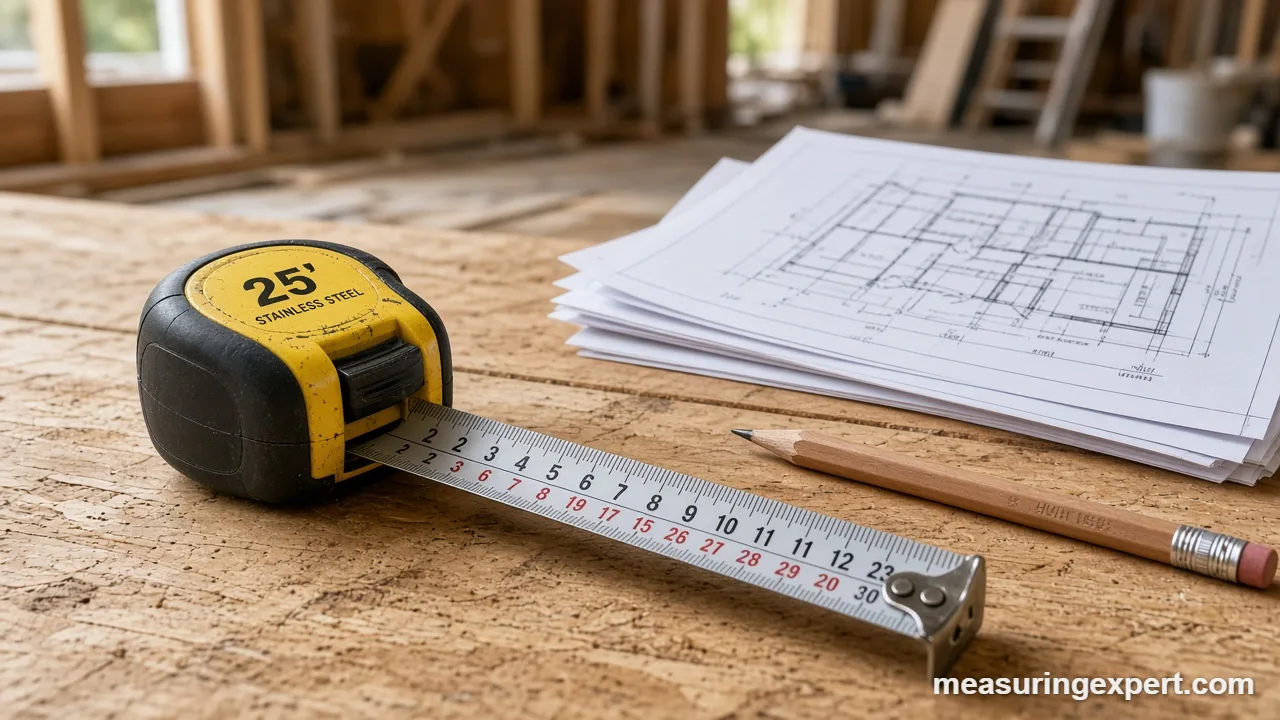
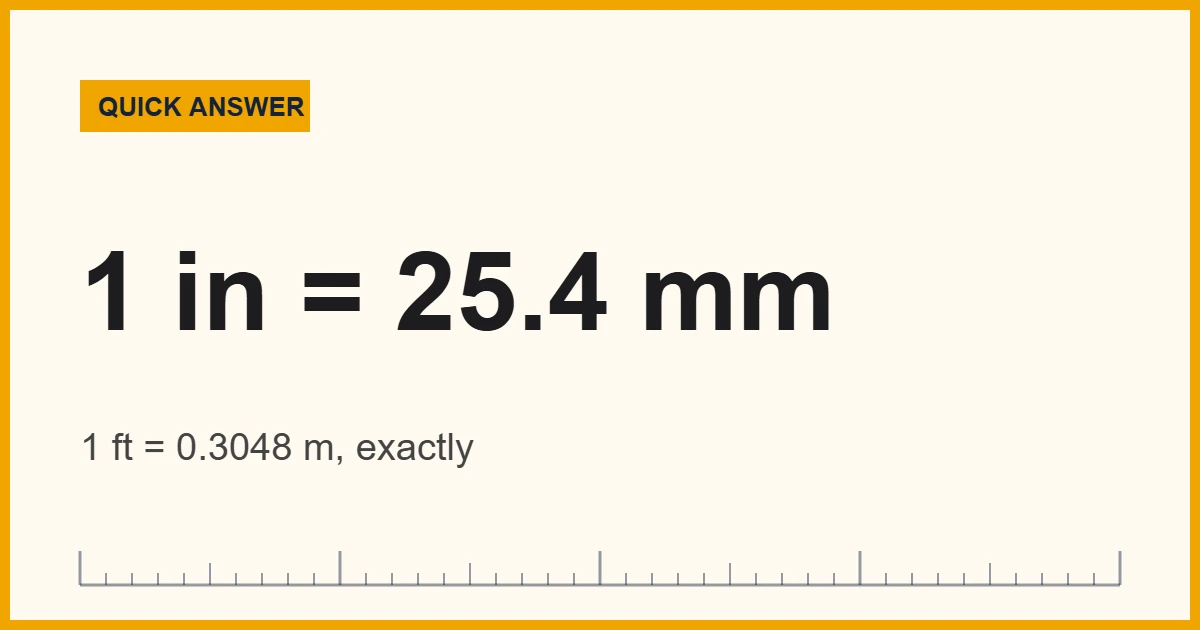
To convert imperial to metric in construction, multiply by a fixed factor: 1 inch = 25.4 mm, 1 foot = 0.3048 m, 1 square foot = 0.0929 square meters, 1 cubic yard = 0.7646 cubic meters, and 1 pound = 0.4536 kg. Multiply first, then round once at the end.
In practice, job sites rarely stay in one system. Architects in Europe send drawings in millimeters, while a supplier down the road still sells lumber by the foot. As a result, crews need to move between the two quickly and without mistakes.
The good news is that every common conversion rests on a handful of exact definitions. For example, the inch has been exactly 25.4 millimeters since the international yard and pound agreement of 1959. The U.S. National Institute of Standards and Technology (NIST) publishes the same factors in its guide to SI conversion factors, and it states that the foot is exactly 0.3048 meters.
Overall, this guide covers imperial to metric conversion for the numbers builders meet most: lengths, areas, volumes, weights and pressures. First comes a calculator, then the factor tables, a step-by-step method and worked examples. Finally, you will see where conversions go wrong and when a professional should check the math.
Convert Imperial to Metric Lengths Instantly
First, enter any length in feet, inches, yards or a metric unit. The converter applies the exact definitions and also shows the nearest practical fraction of an inch for tape-measure work.
Recommended Tools for Imperial to Metric Work
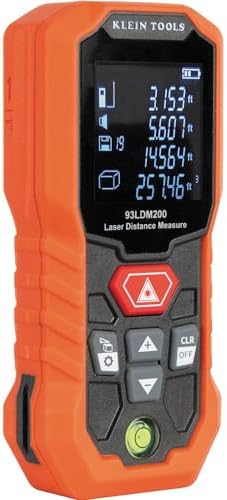
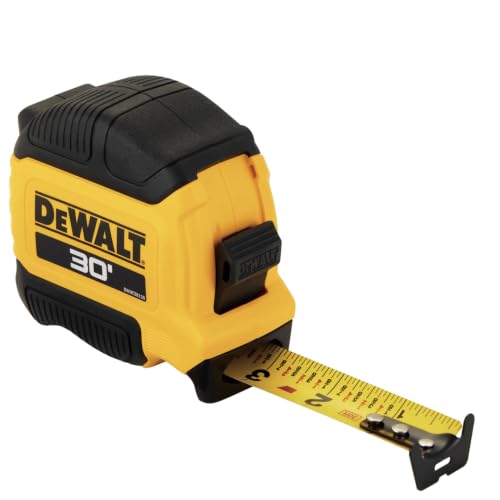
A dual-scale tape or a laser measure removes most hand conversions. In addition, a feet-inch-fraction calculator saves time when drawings mix fractions and decimals. Finally, check the product details for the scales, range and display units before you buy.



As an Amazon Associate, Measuring Expert earns from qualifying purchases.
Also, for a wider comparison of jobsite tapes, see our guide to the best construction measuring tape.
Key Takeaways
- Imperial to metric starts with 1 in = 25.4 mm and 1 ft = 0.3048 m; both are exact.
- Therefore, multiply by the factor and round only the final answer.
- Also, square units need the squared factor, and cubic units need the cubed factor.
- Nominal lumber sizes such as 2×4 are not the real dimensions: a 2×4 measures 1.5 x 3.5 in, or 38.1 x 88.9 mm.
- A U.S. short ton is 907.18 kg, while a metric tonne is 1,000 kg.
- Finally, for structural work, have an engineer or architect check your converted numbers.
Exact Imperial to Metric Factors for Builders
To start, memorize two numbers and you can rebuild most of the rest. Inches to millimeters uses 25.4, and feet to meters uses 0.3048. Also, every other factor in the table below follows from those two or from the pound definition.
| Imperial unit | Metric value | Status |
|---|---|---|
| 1 inch | 25.4 mm (2.54 cm) | Exact |
| 1 foot | 0.3048 m (304.8 mm) | Exact |
| 1 yard | 0.9144 m | Exact |
| 1 mile | 1.609344 km | Exact |
| 1 square foot | 0.09290304 square meters | Exact |
| 1 acre | 4,046.856 square meters (0.4047 ha) | Rounded |
| 1 cubic foot | 0.02831685 cubic meters (28.32 L) | Rounded |
| 1 cubic yard | 0.7645549 cubic meters | Rounded |
| 1 US gallon | 3.785412 L | Rounded |
| 1 pound | 0.45359237 kg | Exact |
| 1 psi | 6.894757 kPa | Rounded |
Alternatively, quick-and-dirty versions work for estimates. For instance, 0.093 for square feet is within 0.1 percent of the exact value, and 0.0283 for cubic feet is within 0.06 percent. However, use the full factors whenever a part has to fit.
How to Convert Imperial to Metric Step by Step
- Write the measurement in one unit. For example, turn 10 ft 6 in into 126 in, or into 10.5 ft, before you multiply.
- Pick the exact factor. Use 25.4 for inches to millimeters, or 0.3048 for feet to meters.
- Square or cube the factor for area and volume. In other words, for square feet, use 0.3048 x 0.3048. For cubic feet, use 0.3048 three times.
- Multiply and keep every digit. For example, 120 in x 25.4 = 3,048 mm.
- Move the decimal for the metric unit you want. For example, 3,048 mm is 304.8 cm or 3.048 m.
- Round once, at the end. In practice, match the rounding to the job: whole millimeters for framing, tenths for survey notes.
- Convert back to check. As a check, dividing the answer by the same factor should return your starting number.
To see it work, here is the method on a real wall. A cabinet wall is 120 in wide, so 120 x 25.4 = 3,048 mm, or 3.048 m. Next, a room that runs 15 ft gives 15 x 0.3048 = 4.572 m. Likewise, a 50 ft garden fence run equals 15.24 m.
Imperial to Metric Lengths, Fractions and Lumber
Tape measures show fractions, but metric drawings use whole millimeters. Therefore, it helps to know the common fractions in millimeters.
| Fraction of an inch | Millimeters |
|---|---|
| 1/16 in | 1.5875 mm |
| 1/8 in | 3.175 mm |
| 3/8 in | 9.525 mm |
| 1/2 in | 12.7 mm |
| 5/8 in | 15.875 mm |
| 3/4 in | 19.05 mm |
| 1 in | 25.4 mm |
Meanwhile, if you need finer detail than a tape gives, our review of the best precision ruler options explains resolution and scale quality.
Nominal Lumber Is Not Its Name
First, a nominal size is a label, not a measurement. In other words, a 2×4 does not measure 2 by 4 inches. The table shows the difference.
| Item | Nominal or common name | Real size | Metric |
|---|---|---|---|
| Stud | 2×4 | 1.5 x 3.5 in | 38.1 x 88.9 mm |
| Board | 1×6 (nominal) | about 3/4 x 5 1/2 in | about 19 x 140 mm |
| Plywood sheet | 4×8 ft | 48 x 96 in | 1,219.2 x 2,438.4 mm |
| Metric panel | 1200 x 2400 mm | 47.2 x 94.5 in | 1,200 x 2,400 mm |
Area and Volume From Imperial to Metric
Area and volume trip people up because the factor must be squared or cubed. For instance, multiplying square feet by 0.3048 gives the wrong answer. Instead, use 0.09290304.
Square Feet and Acres
One square foot is 0.09290304 square meters, so a 100 sq ft room is 9.29 square meters. Similarly, one acre is 43,560 sq ft, which equals about 4,047 square meters or 0.4047 hectares. For instance, a 5-acre lot covers about 2.02 hectares. To size up shapes before converting, try our guide to the area of a shape.
Cubic Feet, Cubic Yards and Concrete
For instance, concrete is ordered by volume, and the units change by country. In the U.S., suppliers sell it by the cubic yard. Elsewhere, however, they sell it by the cubic meter.
As an example, take a slab that is 10 ft by 12 ft and 4 in thick. First, its volume is 10 x 12 x (4 / 12) = 40 cubic feet. Since 27 cubic feet make a cubic yard, that is 1.48 cubic yards. In metric, 40 x 0.02831685 = 1.133 cubic meters. For other solids, the page on the volume of shapes lists the formulas.
Likewise, liquids follow the same pattern. A 20 US gallon tank holds 75.7 liters, and 5 gallons is 18.93 liters.
Weight and Pressure Conversions
To begin, one pound is exactly 0.45359237 kg. Therefore, a 25 lb bag of material weighs 11.34 kg, and a 50 lb bag weighs 22.68 kg.
| Often confused | Value |
|---|---|
| US short ton | 2,000 lb = 907.18 kg |
| Metric tonne | 1,000 kg = 2,204.6 lb |
| Long (UK) ton | 2,240 lb = 1,016.05 kg |
Similarly, pressure works the same way. One psi equals 6.894757 kPa, so a 3,000 psi concrete mix is about 20.7 MPa. Metric specifications often round to preferred values, so always compare the strength class and not only the number.
Do and Don’t When You Convert
Do
- First, convert everything to one unit before multiplying.
- Also, use exact factors for parts that must fit.
- Square or cube the factor for area and volume.
- Label every number with its unit.
- Finally, convert back to check the result.
Don’t
- Round at every step.
- Mix inches and feet in one multiplication.
- Treat a nominal lumber size as a real size.
- Assume a ton means the same everywhere.
- Use a converted number for a structural decision alone.
Honest Limits of Imperial to Metric Conversion
The math is exact, but real projects are not. First, rounding adds error: a part rounded to the nearest millimeter can be off by half a millimeter, and several parts in a row add up. Second, materials follow their own sizes. In addition, a converted dimension may not match any product that a metric supplier actually stocks. In that case, design to the product size and not to the converted number.
Third, old survey records sometimes use the U.S. survey foot, which is slightly longer than the international foot. NIST retired the U.S. survey foot on January 1, 2023, but legacy plans may still rely on it. However, the difference is about 2 parts per million, which is tiny on a house but visible on a long boundary. Finally, a tape measure has its own tolerance, so a perfect conversion cannot fix a poor reading.
When to Call a Professional
Basic conversions are safe for estimates, ordering and layout. However, some jobs need a licensed expert:
- Structural members. For example, beams, footings and anchors need an engineer.
- Permit drawings. Local code usually names the units, so an architect or building department should confirm them.
- Boundaries. Therefore, a licensed surveyor should handle property lines.
- Imported equipment. Gas, electrical and plumbing ratings must follow the manufacturer and local code.
Frequently Asked Questions
How do you convert imperial to metric in construction?
First, multiply the imperial value by the exact factor for that unit. Use 25.4 for inches to millimeters and 0.3048 for feet to meters. Square or cube the factor for area and volume.
How many millimeters are in an inch?
There are exactly 25.4 millimeters in 1 inch. In other words, that is 2.54 centimeters.
How do you convert feet and inches to meters?
Change the inches to feet by dividing by 12, add them to the feet, and multiply by 0.3048. For example, 10 ft 6 in is 10.5 ft, which equals 3.2004 m.
What is the trick for imperial to metric conversion?
First, remember two exact numbers: 25.4 mm per inch and 0.3048 m per foot. Therefore, most other conversions follow from them.
How do you convert square feet to square meters?
To convert, multiply square feet by 0.09290304. For example, 100 sq ft is 9.29 square meters. Because area is squared, the plain 0.3048 factor gives a wrong answer.
How many cubic meters are in a cubic yard?
One cubic yard equals about 0.7646 cubic meters. Similarly, a cubic foot equals about 0.02832 cubic meters.
How do you convert a CAD drawing from imperial to metric?
First, if the drawing units are inches, scale the whole drawing by 25.4 to get millimeters. Then check a known dimension against the original, and set the drawing units to millimeters.
Is a 2×4 really 2 inches by 4 inches?
No. In fact, a finished 2×4 measures 1.5 x 3.5 inches, which is 38.1 x 88.9 millimeters.
How accurate are rounded imperial to metric factors?
Factors such as 0.093 for square feet or 0.0283 for cubic feet are within about 0.1 percent. That is fine for estimates, but use full factors for fit-critical parts.
What is the difference between soft and hard metric conversion?
A soft conversion changes the number but keeps the same object, such as 2 inches becoming 50.8 mm. In contrast, a hard conversion changes the object to a standard metric size, such as a 1200 x 2400 mm panel.
Imperial to Metric: The Bottom Line
In short, imperial to metric conversion is multiplication by exact numbers: 25.4 mm per inch, 0.3048 m per foot and 0.45359237 kg per pound. Square or cube the factor for area and volume, and round once at the end.
Next time you face a mixed set of plans, use the converter at the top of this page and check the answer by converting back. Meanwhile, leave structural and code decisions to the professionals.