

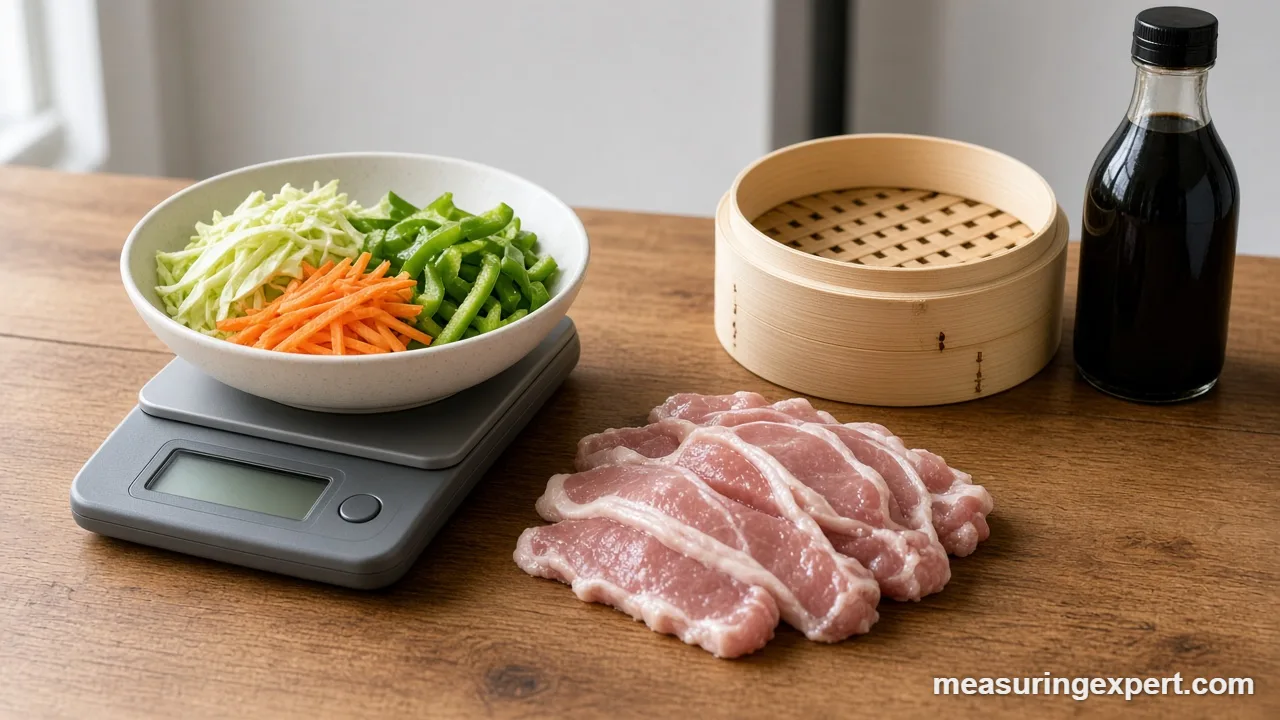
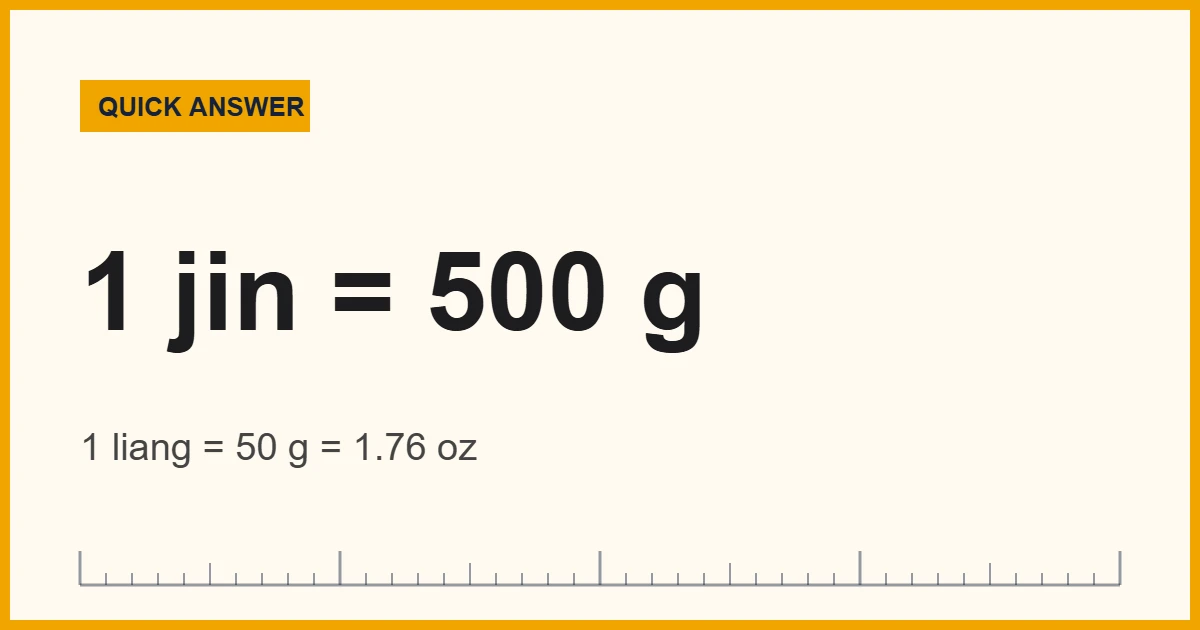
Chinese cooking measurements are mostly weights: 1 jin is 500 g (1.10 lb) and 1 liang is 50 g (1.76 oz) in mainland China. Western recipes, by contrast, use volume, such as a US cup of 236.588 mL or a label cup of 240 mL. As a result, the two systems need a scale, not a cup, to line up.
Convert Chinese Cooking Measurements From Grams to Ounces and Pounds
First, find the weight in grams. For example, a jin is 500 g, so 2 jin is 1,000 g, and a liang is 50 g, so 3 liang is 150 g. Then type that number below to read it in ounces and pounds. However, the jin and liang are not built into this converter, so use the chart further down for them.
In practice, a Chinese recipe and an American recipe often start from different ideas. The American one counts cups and spoons, while the Chinese one may ask for “3 liang of pork” or “1 jin of greens.” In fact, both are units of mass, so a measuring cup is no help for them. Therefore, a cook who guesses the size of a jin can easily end up with a dish that is too salty, too thin or too dry.
The good news is that the numbers are fixed, so you can rely on them. For example, mainland China legally defines 1 jin as exactly 500 g, according to the reference article on the jin, and 10 liang make 1 jin. However, the catch is that Hong Kong and Taiwan use different values for the same words.
This page therefore compares Chinese cooking measurements with Western ones in order. In addition, it covers regional sizes, a worked example and common mistakes.
Chinese Cooking Measurements Chart: Weight Units in Grams and Ounces
First, this chart lines up the common Chinese weight units with US ones. Also, each gram value is a defined size, and the ounce and pound columns use the exact NIST constants (1 oz = 28.3495 g, 1 lb = 453.59237 g).
| Unit | Grams | US ounces | US pounds |
|---|---|---|---|
| Mainland qian | 5 g | 0.18 oz | 0.011 lb |
| Mainland liang | 50 g | 1.76 oz | 0.110 lb |
| Mainland jin | 500 g | 17.64 oz | 1.10 lb |
| Kilogram (gongjin) | 1,000 g | 35.27 oz | 2.20 lb |
| Hong Kong tael | 37.799 g | 1.33 oz | 0.083 lb |
| Hong Kong catty | 604.790 g | 21.33 oz | 1.33 lb |
| Taiwan liang | 37.5 g | 1.32 oz | 0.083 lb |
| Taiwan jin | 600 g | 21.16 oz | 1.32 lb |
| US ounce | 28.350 g | 1 oz | 0.0625 lb |
| US pound | 453.592 g | 16 oz | 1 lb |
Overall, the mainland jin is a little more than a US pound, at about 1.10 lb. For a wider look at grams and ounces in the kitchen, see our guide on how much an ounce is.
Recommended Tools for Chinese Cooking Measurements
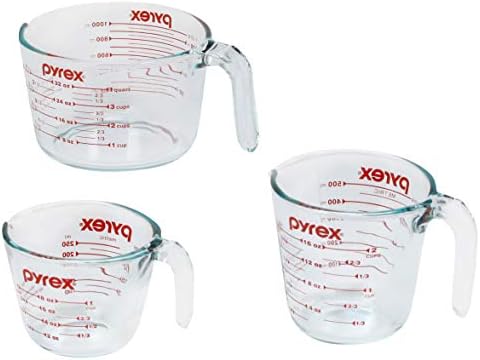
Because jin and liang are weights, a digital scale is the single most useful tool. First, pick one that switches between grams and ounces and has a tare button. Next, add a marked measuring cup in milliliters for sauces and stock, plus a set of measuring spoons for small amounts.




As an Amazon Associate, Measuring Expert earns from qualifying purchases.
Key Takeaways
- First, the mainland jin is 500 g (1.10 lb) and the liang is 50 g (1.76 oz).
- Also, 10 liang make 1 jin in mainland China, while a Hong Kong catty holds 16 tael.
- In addition, the Hong Kong catty is 604.79 g and the Taiwan jin is 600 g.
- Meanwhile, jin and liang measure weight, not volume, so a cup cannot replace them.
- Therefore, convert to grams first, then to ounces or pounds.
- Finally, check where a recipe comes from before you trust the word “jin”.
Chinese Cooking Measurements Explained: Jin, Liang and Qian
In short, three traditional units cover most weights. First, the jin (also spelled catty) is the main one at the market. Next, the liang (tael) is one tenth of a jin on the mainland, and the qian (mace) is one tenth of a liang. In other words, 1 jin = 10 liang = 100 qian = 500 g.
Chinese shoppers also use the kilogram, which is called the gongjin and equals 2 jin. In addition, the mainland system once split the jin into 16 liang. The 1959 State Council order, however, replaced that with 10, according to the same reference article, so older family recipes may assume a smaller liang.
| Mainland unit | Relationship | Grams | US measure |
|---|---|---|---|
| 1 liang | 1/10 jin | 50 g | 1.76 oz |
| 2 liang | 1/5 jin | 100 g | 3.53 oz |
| 3 liang | 3/10 jin | 150 g | 5.29 oz |
| 4 liang | 2/5 jin | 200 g | 7.05 oz |
| 5 liang | 1/2 jin | 250 g | 8.82 oz |
| 10 liang | 1 jin | 500 g | 1.10 lb |
Chinese Cooking Measurements by Region: Mainland, Hong Kong and Taiwan
However, the same words do not mean the same weight everywhere. For example, Hong Kong keeps the older 16-tael catty, and Taiwan uses its own jin. As a result, a recipe from a Hong Kong cookbook is not the same as one from a mainland website, even when both say “1 jin.”
| Place | Jin or catty | Liang or tael | Liang per jin |
|---|---|---|---|
| Mainland China | 500 g | 50 g | 10 |
| Hong Kong | 604.79 g | 37.799 g | 16 |
| Taiwan | 600 g | 37.5 g | 16 |
| Malaysia | 604.79 g | not listed | – |
| Singapore | 604.8 g | not listed | – |
Similarly, the Hong Kong catty equals exactly 1 1/3 pounds, and a tael equals 1 1/3 ounces. Because of that, the catty is about 21% heavier than the mainland jin. In contrast, a Hong Kong tael is about 24% lighter than a mainland liang.
Chinese Cooking Measurements vs Western Cups and Spoons
Western recipes, meanwhile, rely on volume. For example, a cup, a tablespoon and a teaspoon hold a space, not a weight. Moreover, the US has more than one cup, so even the Western side needs care.
| Western measure | Milliliters | Where it is used |
|---|---|---|
| US customary cup | 236.588 mL | US recipes |
| US legal (label) cup | 240 mL | US nutrition labels |
| Metric cup | 250 mL | Australia, New Zealand |
| US tablespoon | 14.787 mL | US recipes |
| Label tablespoon | 15 mL | US nutrition labels, metric recipes |
| US teaspoon | 4.929 mL | US recipes |
| Label teaspoon | 5 mL | US nutrition labels, metric recipes |
First, the FDA household measure guidance sets 1 cup at 240 mL, 1 tablespoon at 15 mL and 1 teaspoon at 5 mL for labels. Similarly, the NIST metric kitchen table lists 1 ounce as 28 g and 1 pound as 454 g for home cooking.
In practice, the difference is easy to see. For example, a cup of water holds about 237 g, but a cup of flour holds far less, so a cup cannot stand in for a fixed weight. Likewise, our guide to Japanese cooking measurements covers the 200 mL cup and the rice go. Finally, for the bigger picture, see the metric system in cooking.
How to Convert Chinese Cooking Measurements for a US Kitchen
- Find the unit. First, look for jin, liang, qian, gram or kilogram, because each has its own size.
- Check the region. Next, decide whether the recipe is mainland, Hong Kong or Taiwan, using the table above.
- Write the grams. Then multiply: 500 g per mainland jin, 50 g per liang and 5 g per qian.
- Convert to US units. Next, divide grams by 28.35 for ounces, or by 453.6 for pounds, or use the converter above.
- Weigh, do not scoop. Then set a digital scale to grams, press tare, and add each ingredient in turn.
- Keep the spoons as listed. Finally, use level spoons for small amounts, and measure liquids in milliliters.
A Worked Example of Chinese Cooking Measurements
For example, suppose a mainland recipe asks for 1 jin of leafy greens, 3 liang of sliced pork and 1 liang of mushrooms. Next, here is how it converts.
| Ingredient | Recipe amount | Grams | US weight |
|---|---|---|---|
| Leafy greens | 1 jin | 500 g | 17.64 oz (1.10 lb) |
| Sliced pork | 3 liang | 150 g | 5.29 oz |
| Mushrooms | 1 liang | 50 g | 1.76 oz |
Overall, the three weigh 700 g, which is 24.69 oz or about 1.54 lb. If the same recipe came from Hong Kong, however, 1 catty of greens would be 604.79 g, and the pork would be 3 tael, or 113.4 g. As a result, the Hong Kong version has more greens and less pork.
Common Mistakes With Chinese Cooking Measurements
- Treating a jin as a pound. The mainland jin is 10% heavier, so a pound of food falls short.
- Treating a liang as an ounce. A mainland liang is 1.76 oz, so you would use about 43% too little.
- Using 50 g for a Hong Kong tael. Because a tael is 37.8 g, you would add about 32% too much.
- Measuring a jin in cups. Since jin is a weight, the cup count depends on the ingredient.
- Mixing 16-liang and 10-liang recipes. Older sources may use the 16-liang jin, so every liang amount changes.
If you do not own a scale yet, our guide to a measuring cup substitute offers a rough fallback, though a scale is better for weights.
Do and Don’t for Chinese Cooking Measurements
Do
- Convert every jin and liang to grams first.
- Also check whether the recipe is mainland or Hong Kong.
- Next, weigh ingredients with the tare function.
- Then write the US weight beside each line of the recipe.
- Finally, keep a scale that shows grams.
Don’t
- Assume a jin equals one pound because they look close.
- Replace a liang with a fluid ounce, since one is weight and the other is volume.
- Use a cup for an ingredient given by weight, because volume varies.
- Mix tael and liang in one recipe, because they differ.
- Guess when the recipe already lists grams.
Honest Limits of Chinese Cooking Measurements
Overall, these conversions describe the legal and standard sizes, not every recipe. For one thing, many Chinese home recipes use loose terms such as “a little” or “to taste”, and no table can turn those into grams. Moreover, older recipes may use a different liang, and market scales in some places still round to the nearest liang. In short, treat the numbers as a strong starting point, then adjust by taste and texture.
When Accuracy Really Matters
In a stir-fry with vegetables, for example, a small error in weight rarely matters. Salt, soy sauce, dough and curing are different, however, because small mistakes change the result. In those cases, therefore, weigh the ingredient in grams and convert once, instead of rounding at every step.
Also, never use kitchen spoons or cups for liquid medicine. Instead, use the dosing device that comes with the medicine, and ask a pharmacist if you are unsure.
Frequently Asked Questions
How many grams is a jin?
A mainland China jin is exactly 500 g, so it is 17.64 oz or 1.10 lb. However, in Hong Kong the catty is 604.79 g, and in Taiwan the jin is 600 g.
How many grams is a liang?
A mainland liang is 50 g, so it equals 1.76 oz. Meanwhile, in Hong Kong a tael is 37.799 g, and in Taiwan a liang is 37.5 g.
What are Chinese cooking measurements?
Chinese cooking measurements are mostly weight units: the jin (500 g), the liang (50 g) and the qian (5 g) on the mainland. In addition, many modern recipes simply list grams and kilograms.
How many liang are in a jin?
First, there are 10 liang in a mainland jin. However, a Hong Kong catty holds 16 tael, and older mainland recipes may have used 16 liang per jin.
Is a jin the same as a pound?
No. A mainland jin is 500 g, while a US pound is 453.592 g. As a result, one jin is about 1.10 lb.
Is a Chinese kilogram the same as a Western kilogram?
Yes. The gongjin is the kilogram, so it is 1,000 g, which equals 2 mainland jin and 2.20 lb.
Are Chinese cooking measurements based on weight or volume?
First, the traditional units, jin and liang, are weights. Western recipes, in contrast, rely on cups and spoons, which are volumes.
How do I convert liang to ounces?
First, multiply liang by 50 to get grams, then divide by 28.35. For example, 3 liang is 150 g, or 5.29 oz.
How many ounces are in a Hong Kong tael?
A Hong Kong tael is 37.799 g, so it is 1.33 oz, or exactly 1 1/3 ounces. Similarly, 16 tael make one catty of 1 1/3 pounds.
Do I need a scale for Chinese cooking measurements?
Yes, a digital scale is therefore the easiest way to follow them. A cup cannot measure a jin or a liang, because the volume of 500 g changes with the ingredient.
Chinese Cooking Measurements: The Bottom Line
To sum up, a mainland jin is 500 g and a liang is 50 g, while Hong Kong and Taiwan use heavier jin and lighter liang. Because these are weights, convert them to grams and then to ounces, not to cups.
Finally, use the converter at the top of the page for any gram amount, and keep a digital scale beside the stove. Then every recipe, from a mainland site or a Hong Kong cookbook, works the first time.