

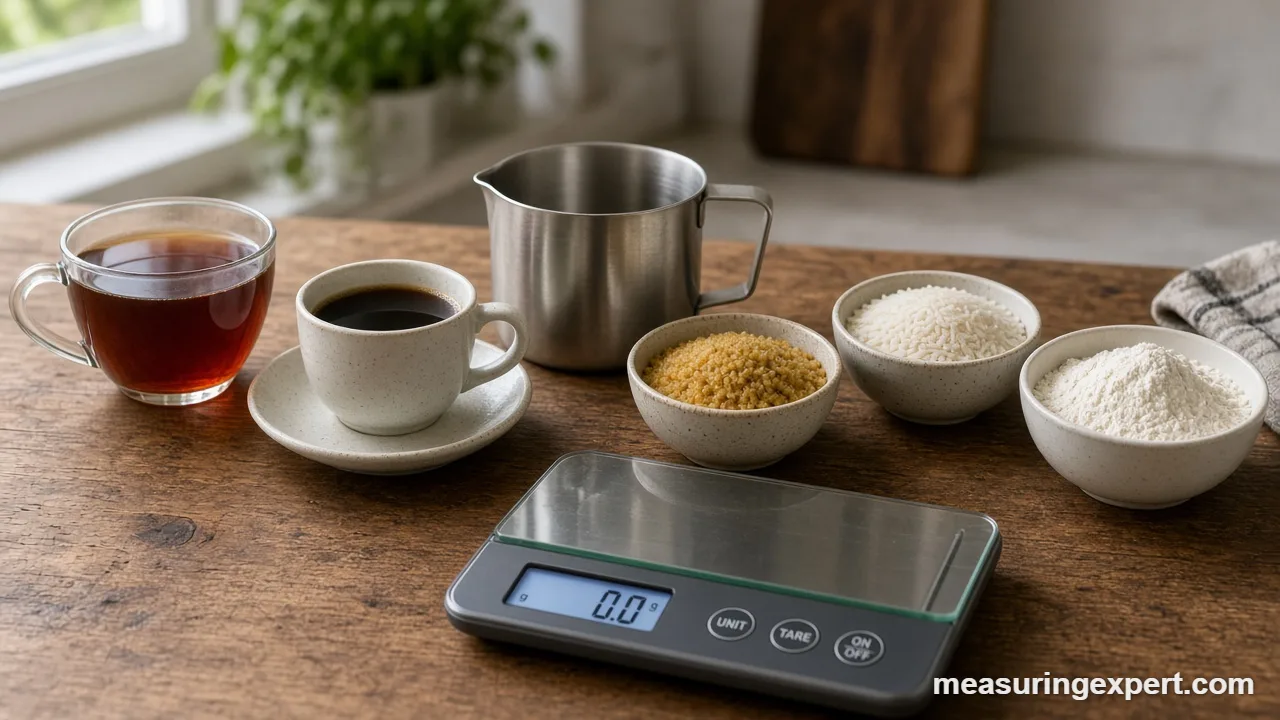
Middle Eastern cooking measurements mix metric weights and milliliters with household vessels such as the tea glass, coffee cup and handful. Western recipes lean on cups and spoons instead: a US cup is 236.588 mL, and a US label cup is 240 mL. Weigh or water-fill a vessel to learn its real size.
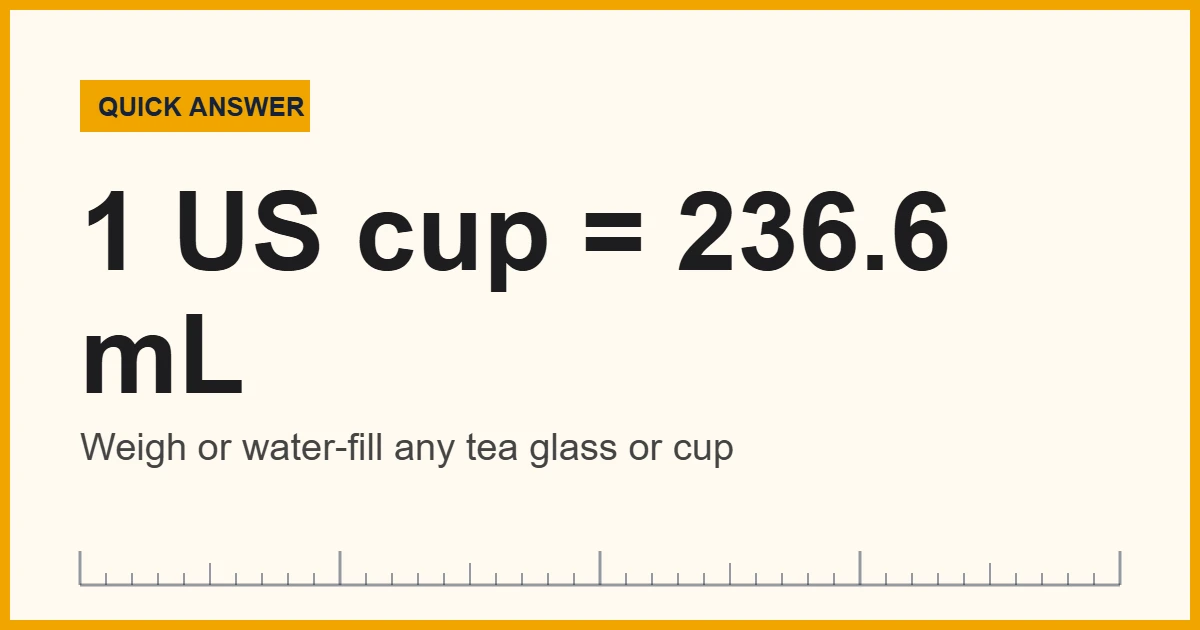
Convert Middle Eastern Cooking Measurements to Western Cups
First, enter the milliliters from your recipe. Then read the same volume in US cups, label cups, metric cups and spoons. If a recipe lists a vessel such as a tea glass, fill that glass with water, pour it into a measuring jug, and type in the milliliters you read.
A recipe from Beirut, Cairo or Riyadh can look odd to a cook used to American cups. The reason is simple: many recipes call for grams, kilograms and liters, while others lean on a tea glass, a coffee cup or a handful that is not a fixed size.
Meanwhile, Western recipes, especially American ones, count volume with cups and spoons. The two styles are not wrong. Instead, they answer different questions: one asks how much it weighs, and the other asks how much space it fills.
As a result, translating between them needs two steps. First, turn the vessel or weight into a known number. Next, convert that number with the exact US definitions. The US Food and Drug Administration, for example, sets 1 cup at 240 mL, 1 tablespoon at 15 mL and 1 teaspoon at 5 mL for nutrition labels.
Middle Eastern Cooking Measurements vs Western: Quick Chart
First, this chart lines up the metric amounts you see in many Middle Eastern recipes with their Western equivalents. In addition, the values use the exact US definitions and are rounded for kitchen use.
| Metric amount | US cups | US fluid ounces | US tablespoons |
|---|---|---|---|
| 100 mL | 0.42 cup | 3.38 fl oz | 6.76 tbsp |
| 150 mL | 0.63 cup | 5.07 fl oz | 10.14 tbsp |
| 200 mL | 0.85 cup | 6.76 fl oz | 13.53 tbsp |
| 250 mL | 1.06 cups | 8.45 fl oz | 16.91 tbsp |
| 500 mL | 2.11 cups | 16.91 fl oz | 33.81 tbsp |
| 1 liter | 4.23 cups | 33.81 fl oz | 67.63 tbsp |
As for weights, 100 g is 3.53 oz, 250 g is 8.82 oz, 500 g is 17.64 oz (1.10 lb) and 1 kg is 35.27 oz (2.20 lb). In addition, our guide to how much an ounce is explains why a weight ounce differs from a fluid ounce.
Recommended Tools for Converting Recipes
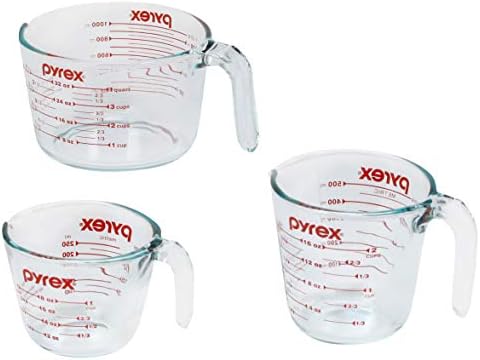
A few simple tools remove most of the guesswork. For example, a digital scale with a tare button handles every recipe written in grams. Next, a glass jug marked in milliliters lets you measure a tea glass or coffee cup once and reuse the number. Finally, a set of measuring spoons covers the small amounts.



As an Amazon Associate, Measuring Expert earns from qualifying purchases.
Key Takeaways
- Many Middle Eastern recipes use grams, kilograms and milliliters, whereas American recipes use cups and spoons.
- A US cup is 236.588 mL, a US label cup is 240 mL, and a metric cup is 250 mL.
- Vessels such as a tea glass or coffee cup are not fixed sizes, so measure your own with water.
- For water-based liquids, 1 mL weighs about 1 g, which turns any vessel into a number.
- One cup of flour is about 120 g, but one cup of tahini is about 256 g.
- Also, weigh dry and sticky ingredients whenever the recipe gives grams.
- Finally, older units such as the ratl varied by region and era, so ask the recipe’s source before converting.
Household Vessels and Handfuls in Middle Eastern Cooking Measurements
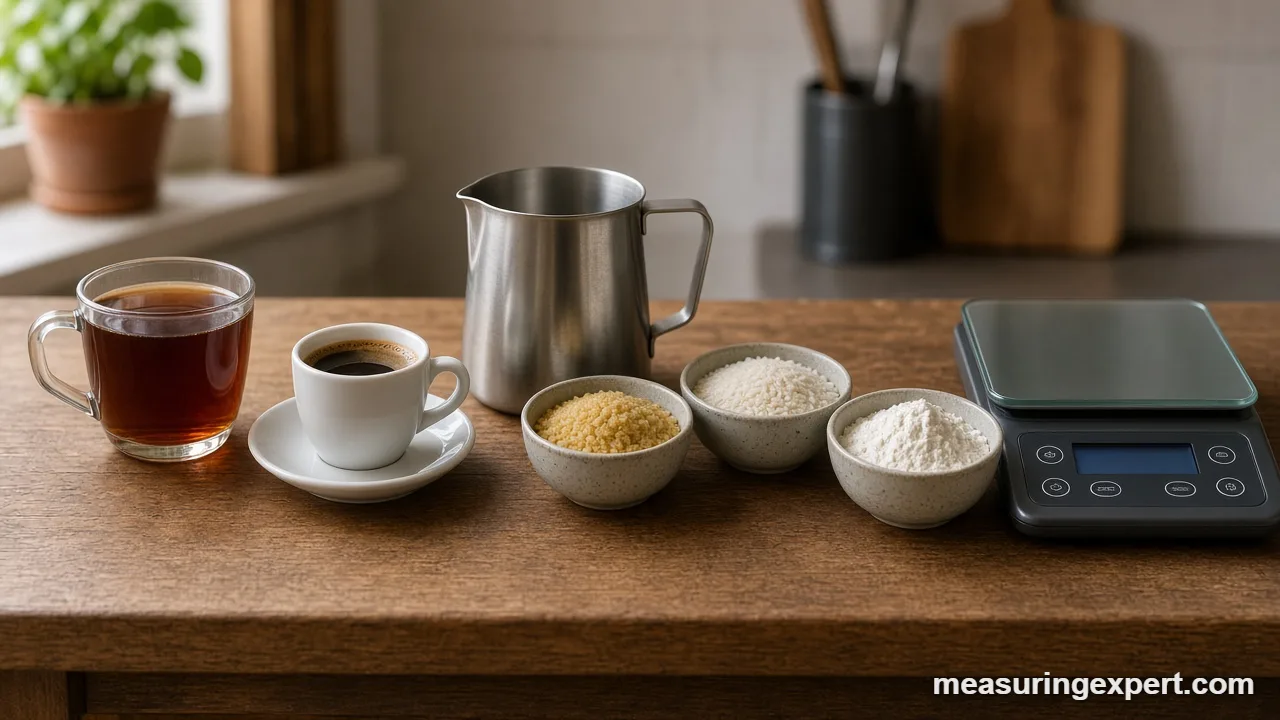
Home recipes passed down in a family often use whatever vessel sits in the kitchen. A tea glass, a small coffee cup, a ladle or a cupped hand can all serve as a measure. In practice, the cook repeats the same vessel every time, so the proportions stay consistent even though the vessel has no official size.
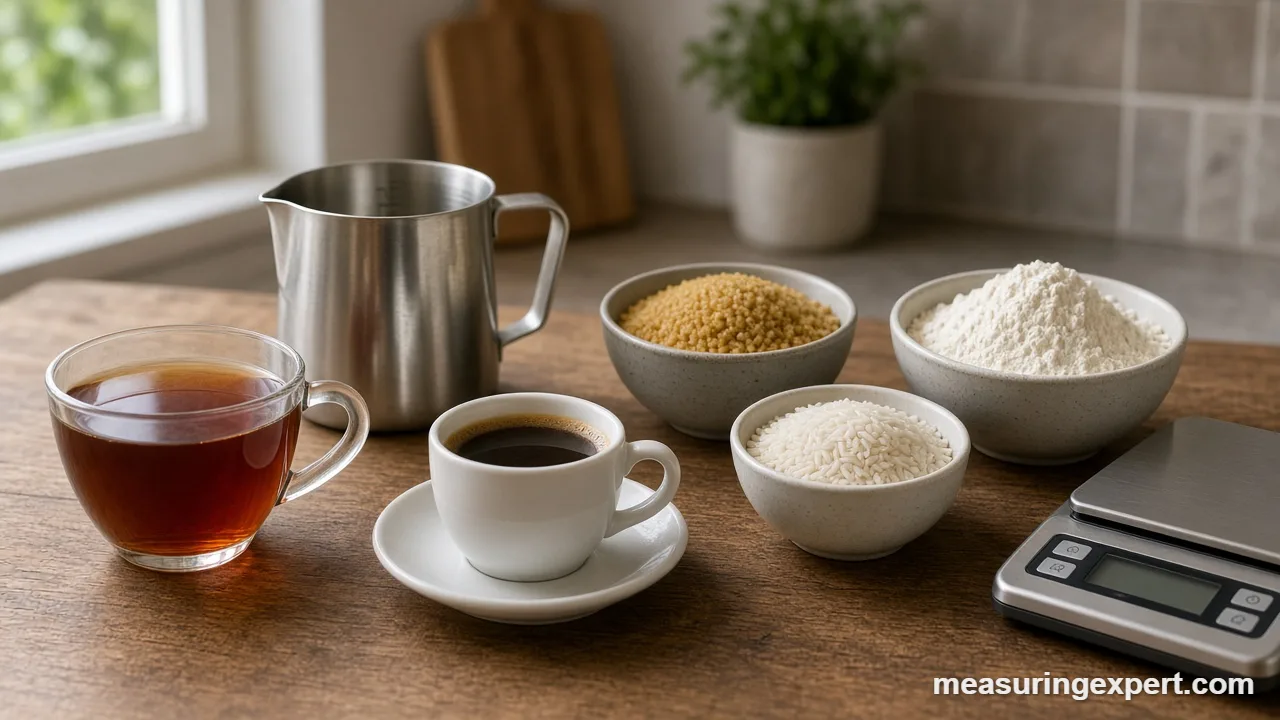
That approach works well inside one kitchen. However, it breaks down when the recipe is written down and handed to someone else. For example, a tea glass in one home can hold much more or less than a glass in another, so no single figure fits all of them.
Wikipedia’s page on cooking weights and measures makes a related point for the UK. Likewise, traditional cooking “cups” there began as drinking vessels, and a coffee cup can range from roughly 100 to 200 mL. The same logic applies to any glass or cup used as a measure.
| Vessel in the recipe | What to do | Example result |
|---|---|---|
| Tea glass | Fill to the line the recipe implies, then pour into a metric jug | Read mL, then convert |
| Coffee cup | Fill with water and weigh it: 1 g is about 1 mL | Read g, treat as mL |
| Handful | Scoop once, level it by eye, then weigh it | Note the grams for next time |
| Cup of rice | Use the same cup every time, then weigh it | About 198 g if it matches a US cup |
Grams, Kilograms and Liters in Middle Eastern Cooking Measurements
Recipes in many Middle Eastern countries are published in metric units, because the metric system is the official system there. As a result, a modern recipe may say 500 g of flour, 250 g of rice or 1 liter of stock. These amounts are easy to scale, and as a result they do not depend on how tightly you pack a cup.
In contrast, a US cup of flour can swing by 20 g or more depending on whether you scoop, spoon or sift. Weight avoids that problem. Also, a scale lets you measure straight into the bowl, which means fewer dishes.
Therefore, the best way to follow a gram-based recipe in a US kitchen is to buy a scale rather than convert to cups. If you must use cups, the next section gives starting values from a published ingredient chart.
Cups to Grams for Ingredients in Middle Eastern Recipes
These weights come from the King Arthur Baking ingredient weight chart. They describe one US cup, measured the way that chart specifies. In addition, the right-hand column shows how many cups 500 g would fill.
| Ingredient | 1 US cup (grams) | 1 US cup (ounces) | Cups in 500 g |
|---|---|---|---|
| All-purpose flour | 120 g | 4 1/4 oz | 4.17 cups |
| Granulated sugar | 198 g | 7 oz | 2.53 cups |
| Long-grain white rice (uncooked) | 198 g | 7 oz | 2.53 cups |
| Semolina | 163 g | 5 3/4 oz | 3.07 cups |
| Bulgur | 152 g | 5 3/8 oz | 3.29 cups |
| Sesame seeds | 142 g | 5 oz | 3.52 cups |
| Tahini paste | 256 g | 9 oz | 1.95 cups |
| Butter | 226 g | 8 oz | 2.21 cups |
| Olive oil | 200 g | 7 oz | 2.50 cups |
For example, a recipe calling for 300 g of bulgur needs about 2 cups (304 g). Likewise, 250 g of tahini is just under 1 cup. Still, because brands and packing methods differ, treat these numbers as starting points.
How to Convert a Middle Eastern Recipe for a US Kitchen
- Check the unit first. Look for g, kg, mL, L or a named vessel before you pull out any cups.
- Weigh whenever you can. Put the bowl on the scale, press tare, and add each dry ingredient by grams.
- Calibrate each vessel. Fill the tea glass or coffee cup with water, then pour it into a metric jug and note the mL.
- Convert liquids to cups. Enter the milliliters in the converter above, or divide by 236.588 for US cups.
- Convert dry goods by chart. Use the cups-to-grams table, then round to a practical fraction such as 1/4 cup.
- Scale and write down the result. Save the converted version so you do not repeat the work.
For instance, a recipe asking for 750 mL of stock converts to 3.17 US cups, so use 3 cups plus about 3 tablespoons. Similarly, 1 liter of milk is 4.23 US cups, or 4 cups plus 3 1/2 tablespoons.
Older Weight Units in Traditional Middle Eastern Recipes
Very old family recipes and market lists sometimes use traditional weights. One example is the ratl, called rotl or rtl in different spellings. According to Wikipedia’s article on the ratl, its size changed with the period and place, and it ranged from about 8 ounces to 8 pounds. The Egyptian ratl is listed at about 413 to 436 g.
Because of that spread, no single conversion is safe. First, ask who wrote the recipe and where. Next, compare the quantities with a similar modern recipe. Finally, if the numbers look far too large or small, the unit is probably an older one.
Common Mistakes With Middle Eastern Cooking Measurements
- Treating a tea glass as exactly one cup. It is often smaller, so the dish may come out too dry or too thick.
- Swapping cups for grams one to one. A cup of flour weighs about 120 g, not 237 g.
- Mixing fluid ounces with weight ounces. The fluid ounce measures volume, but the ounce measures weight.
- Ignoring the cup definition. A US cup is 236.588 mL, but a metric cup is 250 mL.
- Forgetting that spoons may differ. US spoons are 14.787 mL and 4.929 mL, while many metric recipes round them to 15 mL and 5 mL.
The size gap between cups is small but real. For example, a metric cup of 250 mL is about 5.7% larger than a US cup, so scaled-up batches drift quickly. In addition, for more on a comparable case, see how Japanese cooking measurements handle a 200 mL cup and a 180 mL rice measure.
Do and Don’t When Converting Recipes
- Weigh ingredients when the recipe gives grams.
- Fill unfamiliar vessels with water and measure them.
- Use a metric jug for liquids.
- Keep one unit system through the whole recipe.
- Write the converted recipe down.
- Assume a glass or cup holds a standard 8 ounces.
- Convert flour or tahini by volume alone.
- Round a metric cup down to a US cup.
- Guess an older weight unit.
- Pack dry ingredients unless the recipe says so.
Honest Limits of Middle Eastern Cooking Measurements
No conversion removes every uncertainty. For one thing, regional cooking varies a great deal, so one table cannot describe every kitchen from Morocco to Iran. Moreover, a handful depends on the size of the hand, and a tea glass depends on the glass. The numbers on this page describe definitions and published chart values, not every home.
In short, treat each conversion as a close starting point. First, taste and look at the texture. Then adjust. For savory dishes such as stews, rice and salads, a small error rarely matters. For breads, pastries and syrups, however, weigh the ingredients for steadier results.
When Accuracy Really Matters
- Baking and pastry. Flour and sugar errors change texture, so weigh them instead of scooping.
- Syrups and candy. Because sugar ratios decide whether the syrup sets, measure exactly.
- Brines, pickles and preserves. Salt and acid levels protect food safety, so always follow a tested recipe.
Frequently Asked Questions
What are Middle Eastern cooking measurements?
In short, they are the units used in recipes across the region: grams, kilograms, milliliters and liters, plus household vessels such as a tea glass, a coffee cup and a handful.
Are Middle Eastern cooking measurements metric?
Mostly, yes. Because the metric system is official in the region, modern recipes often use grams and milliliters. Family recipes can still use vessels.
How many mL is a US cup?
A US customary cup is 236.588 mL. For nutrition labels, the FDA uses 240 mL, and a metric cup is 250 mL.
How many mL is a tea glass?
There is no single size, so fill your own glass with water and pour it into a metric jug to read its volume in mL.
How do I convert grams to cups?
First, divide the grams by the weight of one cup of that ingredient. For example, 240 g of flour is 2 cups at 120 g per cup.
How many cups is 500 g of rice?
About 2.5 cups of uncooked long-grain white rice, using 198 g per cup from the King Arthur chart.
Is 1 mL the same as 1 gram?
For water and watery liquids, it is very close: 1 mL weighs about 1 g. For oil, honey, flour or tahini, it is not.
How many tablespoons are in 100 mL?
There are about 6.76 US tablespoons in 100 mL. With 15 mL metric tablespoons, it is 6.67.
Why do Western recipes use cups?
Because cups are quick and need no scale, they became common in American home cooking. Weights are more consistent, however, which is why bakers prefer them.
What is the main difference between Middle Eastern and Western cooking measurements?
Middle Eastern recipes often give weights and vessels, whereas Western, especially American, recipes give volumes in cups and spoons.
Middle Eastern Cooking Measurements: The Bottom Line
To sum up, recipes from the Middle East tend to use grams, milliliters and household vessels, while American recipes use cups and spoons. Convert liquids with the exact definitions, weigh dry goods, and measure any glass or cup once so you know its real size.
Finally, keep a scale and a metric jug within reach. If you also cook from Western baking sources, our guide to measuring ingredients by weight shows how to weigh as you go.
1 thought on “Middle Eastern Cooking Measurements vs Western: Grams, Glasses and Cups”