

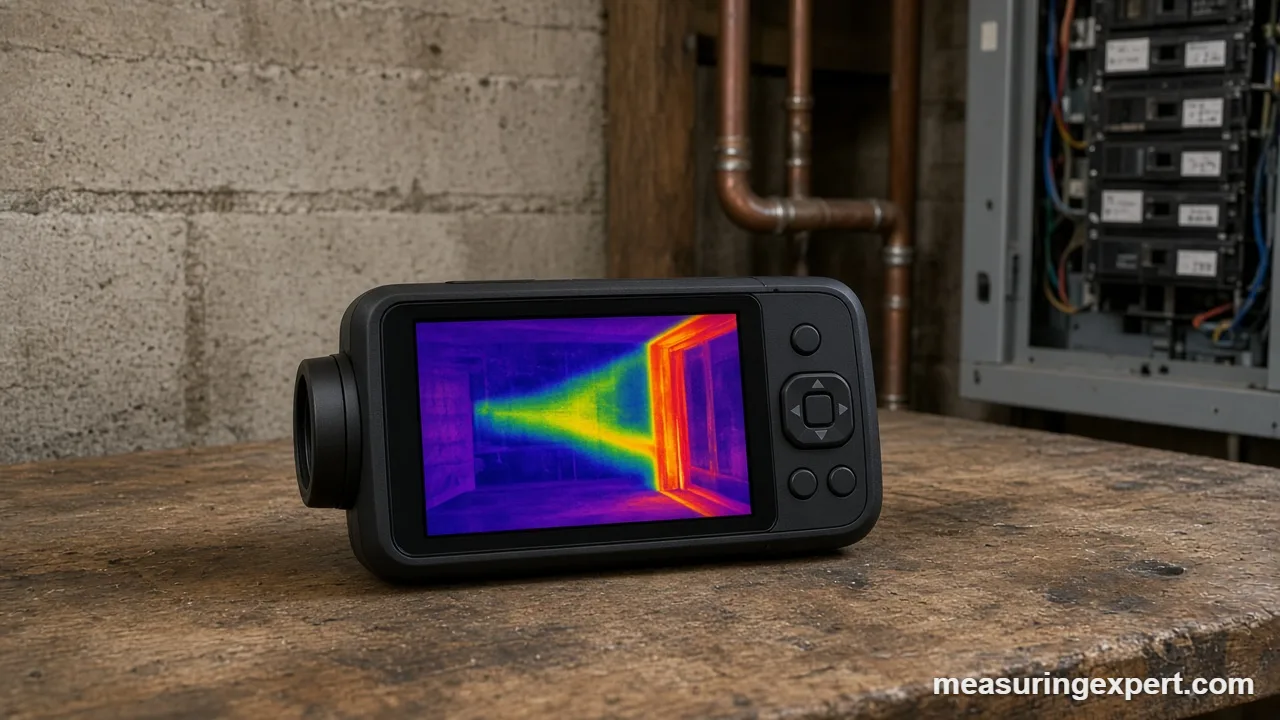
The best thermal imaging camera for most buyers is the FLIR C8, a pocket camera with a 320 x 240 sensor, under 50 mK sensitivity and a -4 to 842 F range. Your choice still comes down to three numbers: thermal resolution, thermal sensitivity (NETD) and the temperature range your work needs.
In short: get the FLIR C8 for pro detail in a pocket, the TOPDON TC004 for value, and the Seek Thermal Reveal 300 if your camera will get wet or dropped.
As an Amazon Associate, Measuring Expert earns from qualifying purchases. Our picks are based on research, specifications and owner feedback, not paid placement.
Best Overall

Top Value

Quick Answer: The Best Thermal Imaging Camera for Your Job
- Pros and serious DIYers: the FLIR C8, with 76,800 thermal pixels and a 5 MP visual camera for MSX detail.
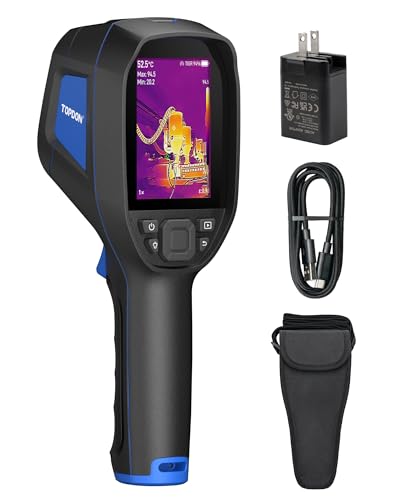
- Most features for the money: the TOPDON TC004, a 3.5-inch handheld that reads up to 1022 F.
- Rain, mud and drops: the Seek Thermal Reveal 300, rated IP67 with a built-in flashlight.
- Electrical panels and spot checks: the FLIR TG268, which pairs a thermal image with a 24:1 spot reading.
- Blended thermal and visible photos: the Thermal Master Thor002 with its 2 MP camera.
- Phone add-ons: the TOPDON TC001 for Android or the Seek Thermal Nano 300 for USB-C iPhones.
On This Page
- Comparison table
- The 7 picks, reviewed
- How we chose
- Resolution, NETD and range explained
- Field of view and spot size
- How to scan a house
- Emissivity and honest limits
- Temperature converter
- FAQ
- Bottom line
Best Thermal Imaging Camera Comparison Table
| # | Product | Best For | Standout Feature | Amazon |
|---|---|---|---|---|
| 1 | FLIR C8 Compact Thermal Imaging Camera | Most buyers | 320 x 240 sensor, MSX, Wi-Fi, IP54 | View |
| 2 | TOPDON TC004 Thermal Imaging Camera | Value | 256 x 192, under 40 mK, -4 to 1022 F | View |
| 3 | Seek Thermal Reveal 300 | Rough job sites | IP67, 320 x 240, 300-lumen light | View |
| 4 | FLIR TG268 Thermal Imaging Camera | Electricians | 24:1 spot reading plus laser and Bluetooth | View |
| 5 | Thermal Master Thor002 | Blended images | 2 MP visual camera, 2 m drop rating | View |
| 6 | TOPDON TC001 for Android | Android phones | 256 x 192 sensor on a USB-C plug | View |
| 7 | Seek Thermal Nano 300 (USB-C iOS) | iPhone users | 320 x 240 sensor, 35 mK, 25 Hz | View |
The 7 Best Thermal Imaging Camera Picks, Reviewed
Each pick below fills a different job, so start with your main task. First come the three handhelds most people should look at. After that, you will find a spot imager for electrical work, a blended-image camera and two phone add-ons.
Best for most buyers
1. FLIR C8
Best for: Home inspectors, HVAC techs and serious DIYers who want sharp images in a camera that fits a shirt pocket.
The C8 is the newest pocket C-series camera from FLIR. As a result of its 320 x 240 sensor, it records 76,800 separate temperature points.
On the measurement side, FLIR lists a thermal sensitivity under 50 mK and an object range of -20 to 450 C (-4 to 842 F). Accuracy is plus or minus 2 C from 0 to 100 C, and plus or minus 2 percent of the reading above that. In addition, MSX adds edge detail from the 5 MP visual camera, which makes walls and pipes easy to recognize in your report. Also, the camera weighs only 0.42 lb (190 g).
- Thermal resolution: 320 x 240 (76,800 pixels)
- Sensitivity: under 50 mK
- Range: -4 to 842 F (-20 to 450 C)
- Field of view: 35 x 27 degrees; 9 Hz frame rate
- Display: 3.5-inch 640 x 480 touchscreen; Wi-Fi; IP54
Pros
- Highest pixel count among our handheld picks
- MSX makes thermal images easy to read
- Also light and truly pocket-sized
- Published accuracy and IP54 rating
Cons
- 9 Hz frame rate looks choppy when you pan fast
- Rated battery life is about 3 hours
- Tops out at 842 F
Skip it if: you also measure furnaces, kilns or exhausts above 842 F, or you need smooth video of moving machinery.
Best value handheld
2. TOPDON TC004
Best for: Homeowners, mechanics and contractors who want a full-size handheld with a wide view and a high upper limit.
First, TOPDON packs a 256 x 192 sensor (49,152 pixels) into a pistol-style body with a 3.5-inch screen. The company also lists an enhanced 512 x 384 image through its TISR processing. Still, upscaling does not add real temperature points.
Where the TC004 shines is range and sensitivity. For example, it reads from -20 to 550 C (-4 to 1022 F), so exhaust manifolds, brake rotors and wood stoves are within reach. Its NETD is under 40 mK, which is better on paper than the FLIR. Moreover, the 56 x 42 degree lens takes in a whole wall.
- Thermal resolution: 256 x 192 native; 512 x 384 enhanced
- Sensitivity: under 40 mK
- Range: -4 to 1022 F (-20 to 550 C)
- Accuracy: plus or minus 2 C or 2 percent
- Field of view: 56 x 42 degrees; 25 Hz; IP54
Pros
- Wide range for automotive and stove work
- Smooth 25 Hz image, so panning looks clean
- Large 640 x 480 screen
Cons
- Wide lens, so spots get larger at a distance
- Heavier than pocket models at 520 g
- TOPDON’s battery figures differ between its own spec table and feature list
Skip it if: instead, you want a camera that slides into a pocket, or you often measure small parts from across a room.
Best rugged pick
3. Seek Thermal Reveal 300
Best for: Roofers, farmers, plumbers and anyone who works outdoors in bad weather.
The Reveal 300 is built for abuse, so Seek rates it IP67, which means dust-tight and protected against short immersion in water. It also survives 2 m (6.6 ft) drops, and a 300-lumen LED flashlight is built in.
Inside, there is also a 320 x 240 sensor with sensitivity under 35 mK and a range of -20 to 550 C (-4 to 1022 F). In contrast to the wide TOPDON lens, the field of view is narrow at about 24 x 18 degrees. So it resolves distant targets with more detail. In addition, Seek lists up to 6 hours of thermal-only use, or 3.5 hours with the light on.
- Thermal resolution: 320 x 240
- Sensitivity: under 35 mK
- Range: -4 to 1022 F (-20 to 550 C)
- Field of view: about 24 x 18 degrees; above 25 Hz
- Build: IP67, 2 m drop rating, 325 g (0.7 lb)
Pros
- Toughest build on our list, so it survives job sites
- Narrow lens suits distant targets
- Bright flashlight for dark spaces
Cons
- Small 2.8-inch, 320 x 240 screen
- Narrow view, so you step back to see a whole wall
- No visual camera for blended images
Skip it if: you mostly scan whole rooms indoors, because a wider lens covers more area at once.
Best for electrical work
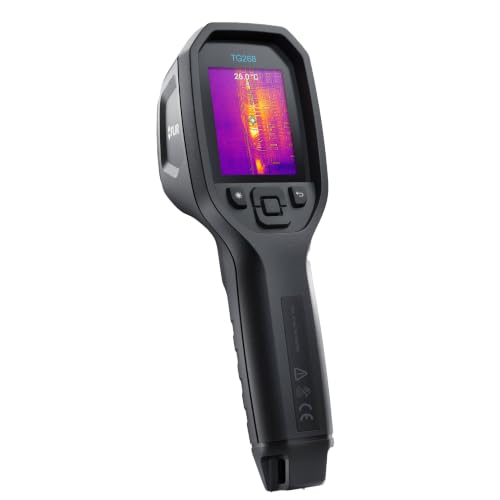
4. FLIR TG268
Best for: Electricians and maintenance techs who want an image plus a precise spot number in one tool.
The TG268 looks like an infrared thermometer, but it shows a full thermal image. However, its sensor is 160 x 120 (19,200 pixels), which FLIR upscales to 320 x 240 on screen. It also adds a 24:1 distance-to-spot ratio and a Class 1 laser that marks where you measure.
For measurement, FLIR lists a range of -25 to 400 C (-13 to 752 F) and sensitivity under 50 mK. Accuracy is plus or minus 2.5 C or 2.5 percent from 0 to 50 C and from 100 to 400 C. Furthermore, it connects over Bluetooth and USB, runs about 5 hours per charge and is designed for 2 m drops.
- Thermal resolution: 160 x 120 native, 320 x 240 displayed
- Sensitivity: under 50 mK
- Range: -13 to 752 F (-25 to 400 C)
- Spot: 24:1 ratio with Class 1 laser
- Battery: about 5 hours; weight 394 g (13.9 oz)
Pros
- Spot reading and image in one tool
- Laser also shows exactly what you measure
- Drop-rated, pistol-grip body
Cons
- Lowest native resolution among our handhelds
- Smaller 2.4-inch screen
- Upper limit of 752 F
Skip it if: you need detailed images for building reports, because a 320 x 240 sensor shows more.
Best for blended images
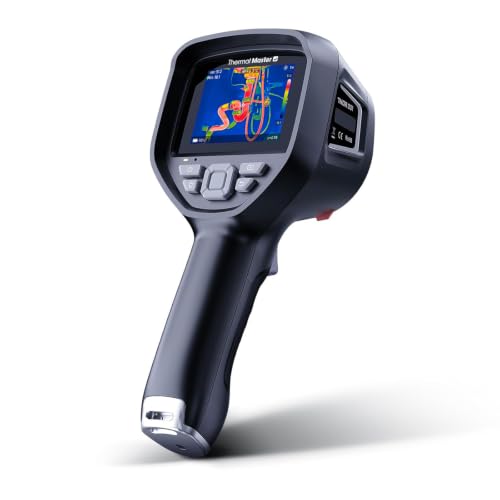
5. Thermal Master Thor002
Best for: Inspectors who share photos with clients and want thermal and visible images side by side.
The Thor 002 is the Thor version without the macro lens. It uses a 256 x 192 sensor with a 512 x 384 enhanced mode, and a 2 MP visible camera that lets you blend the two views.
Otherwise, specs are close to the TOPDON TC004: NETD under 40 mK, a range of -20 to 550 C (-4 to 1022 F) and accuracy of plus or minus 2 C or 2 percent. However, the lens is narrower at 40 x 30 degrees, so each pixel covers a smaller spot. In addition, it is rated IP54 with 2 m drop protection, and it has a 3.5-inch 640 x 480 screen.
- Thermal resolution: 256 x 192 native; 512 x 384 enhanced
- Sensitivity: under 40 mK
- Range: -4 to 1022 F (-20 to 550 C)
- Field of view: 40 x 30 degrees
- Visual camera: 2 MP; IP54; 2 m drop rating
Pros
- Visible camera for blended photos
- Narrower lens than most 256 x 192 handhelds
- Also drop and splash rated
Cons
- Some specs differ between sections of the maker’s page
- Battery claims range from 8 to 10.5 hours on the same page
Skip it if: you never share images, since the TC004 covers the same range and sensitivity.
Best for Android
6. TOPDON TC001

Best for: Android owners who want handheld-class specs for occasional jobs.
The TC001 plugs into the USB-C port of an Android phone or tablet, and it also works with Windows devices. As a result, your phone becomes the screen, the storage and the sharing tool.
Even so, TOPDON lists 256 x 192 pixels, NETD under 40 mK, a range of -20 to 550 C (-4 to 1022 F), accuracy of plus or minus 2 C or 2 percent, and a 25 Hz frame rate. However, the 56 x 42 degree lens is wide, so it suits rooms and car engines more than distant targets.
- Thermal resolution: 256 x 192
- Sensitivity: under 40 mK
- Range: -4 to 1022 F (-20 to 550 C)
- Field of view: 56 x 42 degrees; 25 Hz
- Connection: USB-C for Android and Windows
Pros
- Handheld-level sensor in a tiny add-on
- Uses your phone for storage, so sharing is easy
- Wide range up to 1022 F
Cons
- Not made for iPhone, so Apple users should look elsewhere
- Also drains your phone battery
- Awkward to use with gloves on a ladder
Skip it if: you use an iPhone, or you want a tool you can toss in a work bag without your phone.
Best for iPhone
7. Seek Thermal Nano 300

Best for: iPhone owners who want the most thermal pixels in a phone add-on.
First, the Nano 300 gives a phone a 320 x 240 sensor, the same pixel count as the FLIR C8. It also has a thermal sensitivity of 35 mK and a 25 Hz frame rate. In addition, the lens is wide at 57 x 42 degrees, so it covers a room quickly. Note that this listing is the USB-C version for the iPhone 15 and newer. Seek also sells a Lightning version for older iPhones and a USB-C version for Android, so check your port first.
However, the stated accuracy is plus or minus 5 C or 5 percent, which is looser than the handhelds above. Therefore, the Nano 300 is great for finding problems, but less ideal when you need to record exact numbers.
- Thermal resolution: 320 x 240
- Sensitivity: 35 mK
- Accuracy: plus or minus 5 C or 5 percent
- Field of view: 57 x 42 degrees; 25 Hz
- Connection: USB-C (this version) for iPhone 15 and newer
Pros
- High pixel count for a phone add-on
- Very good sensitivity
- Versions for Lightning, USB-C iPhone and Android
Cons
- Looser stated accuracy
- Seek does not list a temperature range on its overview page
- Easy to buy the wrong connector, so check your port
Skip it if: you need recorded temperatures you can defend in a report; in that case, a handheld with tighter accuracy fits better.
How We Chose the Best Thermal Imaging Camera Models
We did not run hands-on lab tests. Instead, our picks are research-based: we read each maker’s spec page and checked owner feedback for patterns such as weak batteries or fragile ports.
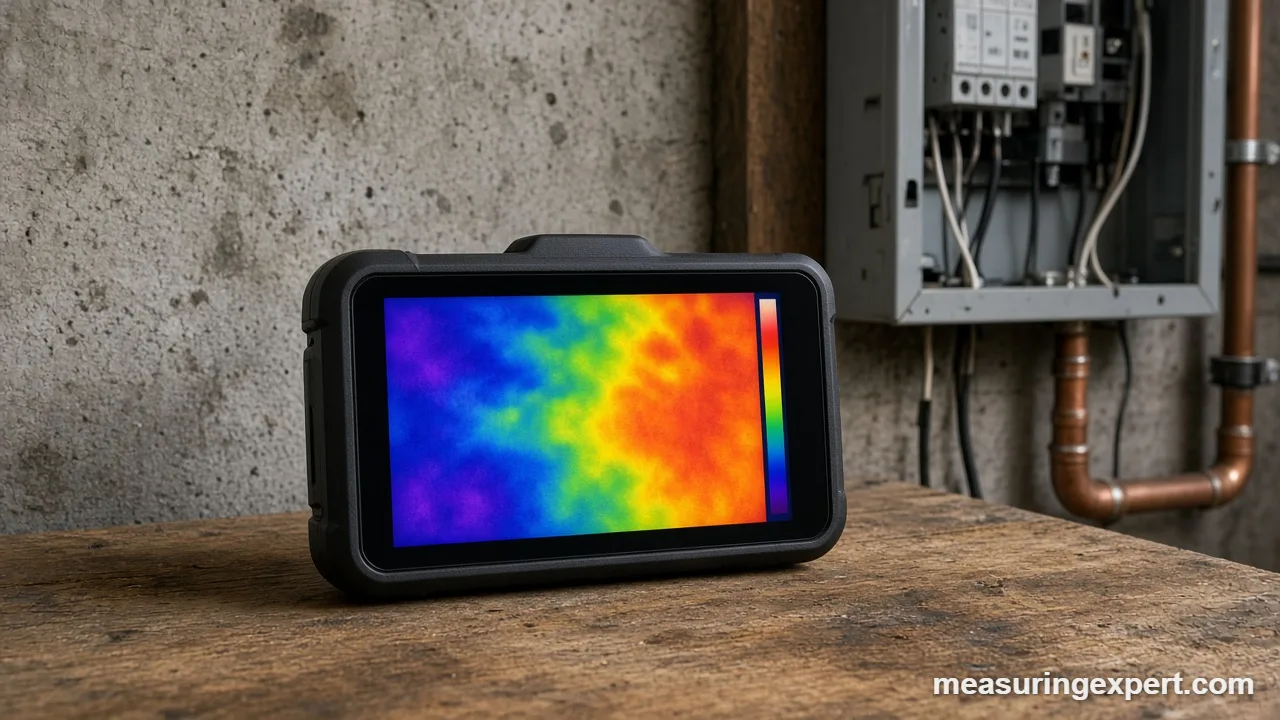
In short, these were the main criteria:
- Native thermal resolution: we compared real sensor pixels instead of upscaled figures.
- Thermal sensitivity: 50 mK or better, so small temperature differences show up.
- Temperature range and accuracy: enough range for the job, and a published tolerance.
- Field of view: wide lenses for rooms, while narrow ones suit distant targets.
- Build and power: IP rating, drop rating and battery life, because field use is hard on tools.
- Brand track record: established names, no more than two models per brand, and no unbranded listings.
Our main sources were the spec pages from FLIR for the C8 and Seek Thermal for the Reveal series, plus the TOPDON and Thermal Master product pages.
Thermal Resolution, NETD and Temperature Range Explained
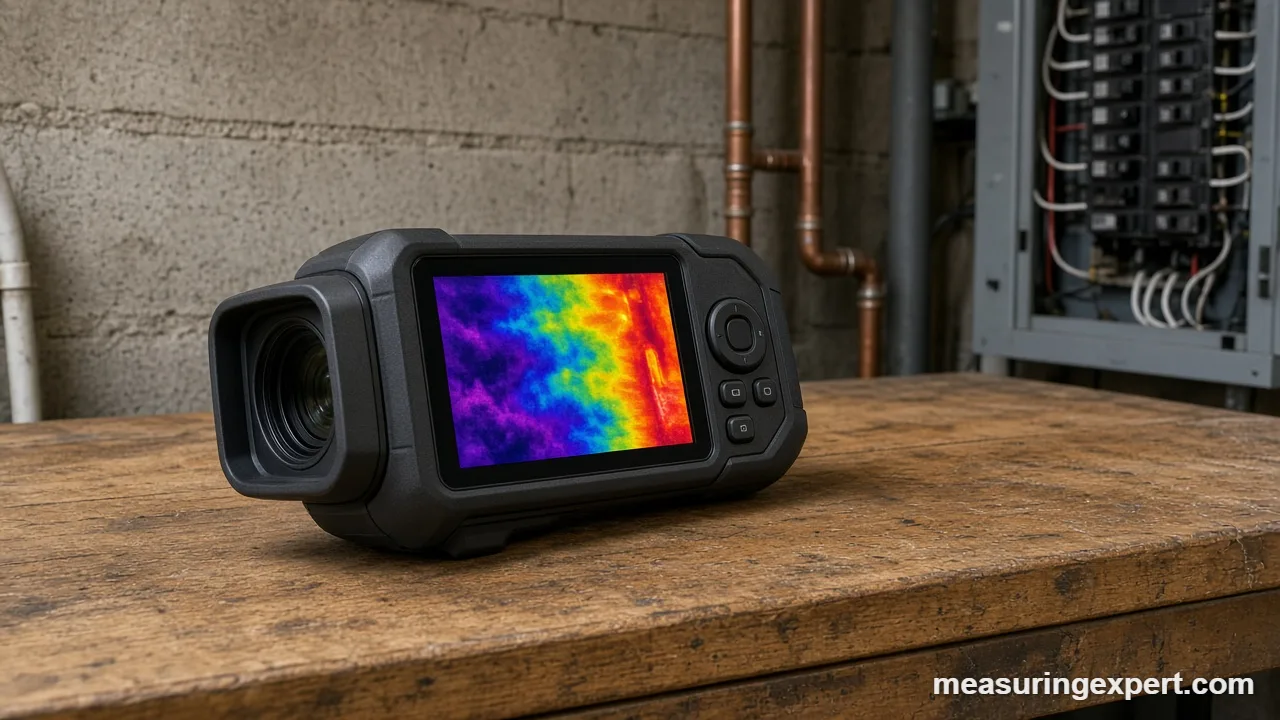
Only a few spec-sheet numbers decide what you will actually see and measure. So here is what each one means.
Thermal resolution: how many temperature points
To begin with, thermal resolution is the number of pixels on the infrared sensor. Each pixel is a separate temperature reading. For example, a 160 x 120 sensor gives 19,200 readings, a 256 x 192 sensor gives 49,152, and a 320 x 240 sensor gives 76,800. More pixels mean sharper edges and smaller targets you can measure.
However, be careful with “super resolution” or “enhanced” numbers. These modes combine frames or upscale the image, so it looks smoother. However, they do not add new sensor pixels. Therefore, always compare the native figure first.
| Native resolution | Temperature pixels | Typical use |
|---|---|---|
| 160 x 120 | 19,200 | Electrical spot work, simple drafts |
| 256 x 192 | 49,152 | Home, auto and HVAC work |
| 320 x 240 | 76,800 | Inspection reports and distant targets |
NETD: how small a difference it can see
First, NETD stands for noise equivalent temperature difference. It is the smallest temperature difference the camera can separate from its own noise. It is listed in millikelvin (mK), and lower is better. For example, 40 mK equals 0.04 C, or about 0.07 F. Similarly, 50 mK equals 0.05 C, or 0.09 F.
For instance, a wet patch in drywall or a missing batt of insulation may be only a degree or two cooler than the wall around it. A camera with good NETD shows that faint pattern clearly, while a noisy sensor shows grain. Still, NETD is not accuracy. A camera can see a 0.04 C difference and still be 2 C off in absolute terms.
Temperature range and accuracy
First, the range is the span of object temperatures the camera can measure. Home inspection rarely needs more than about 100 C (212 F). In contrast, engines, exhausts and wood stoves can pass 400 C (752 F). That is why several picks here read up to 550 C (1022 F).
Accuracy is usually written as “plus or minus 2 C or 2 percent, whichever is greater.” At 50 C, that means plus or minus 2 C. At 300 C, however, 2 percent is 6 C, so the larger figure applies. For background on why every reading carries a tolerance, see our guide to tolerances in construction measurement.
Field of View and Spot Size: How Far Away Can You Measure?
Every pixel looks at a small square of the scene. Also, the size of that square depends on the lens and on your distance. This is called the instantaneous field of view (IFOV), and it is usually listed in milliradians (mrad). Then, to get the spot size of one pixel, multiply the IFOV by the distance.
As a rule, a target should fill at least 3 x 3 pixels for a reliable reading. Otherwise, the pixel averages the hot target with the cooler background, and the number reads low. For this reason, the table shows the approximate minimum target size at 3 m (about 10 ft), calculated from each camera’s listed field of view and resolution.
| Camera | Horizontal FOV | Approx. IFOV | 3 x 3 pixel target at 3 m |
|---|---|---|---|
| Seek Reveal 300 | 24 deg / 320 px | 1.3 mrad | about 12 mm (0.5 in) |
| FLIR C8 | 35 deg / 320 px | 1.9 mrad | about 17 mm (0.7 in) |
| Thermal Master Thor002 | 40 deg / 256 px | 2.7 mrad | about 25 mm (1.0 in) |
| Seek Nano 300 | 57 deg / 320 px | 3.1 mrad | about 28 mm (1.1 in) |
| TOPDON TC004 / TC001 | 56 deg / 256 px | 3.8 mrad | about 34 mm (1.4 in) |
In short, wide lenses suit rooms, while narrow lenses and more pixels win when the target is small or far away, such as a fuse or a roof vent. The same idea applies to spot infrared thermometers, which we cover in our list of the best infrared surface thermometers.
How to Run a Home Heat Scan, Step by Step
A thermal camera sees differences, so scan when inside and outside temperatures differ a lot. As a result, this routine finds most drafts, insulation gaps and hidden moisture.
- Wait for a good temperature difference: Scan when indoor and outdoor air differ by about 18 F (10 C) or more, such as a cold morning or a hot afternoon with the AC running.
- Close up the house: Shut windows and doors, and turn off fans for 15 minutes so surfaces settle.
- Set emissivity and range: Set emissivity to about 0.95 for painted walls and drywall, and pick the low range if your camera has one.
- Lock the color scale: Fix the temperature span on screen so colors mean the same thing from room to room.
- Scan slowly, square to the surface: Sweep walls, ceiling corners, outlets, windows and doors while holding the camera straight on.
- Confirm suspect spots: Check cold or warm patches with a moisture meter or a closer look before you open any wall.
- Save and label images: Save a thermal and a visible photo of each problem and note the room and wall.
Next, compare what you find with the insulation depth in your attic. Our guide on how to measure insulation thickness walks through that step.
Emissivity, Reflections and Honest Limits
A thermal camera does not measure temperature directly. Instead, it measures infrared energy and converts it to a temperature, using an emissivity value you set. In addition, emissivity runs from 0 to 1 and describes how well a surface gives off infrared energy.
| Surface | Typical emissivity | What it means for readings |
|---|---|---|
| Painted wall, drywall, wood | about 0.90 to 0.95 | Reads well at default settings |
| Black electrical tape | about 0.95 | Stick a piece on shiny parts to measure them |
| Oxidized steel | about 0.8 | Usually fine with a small correction |
| Polished aluminum or copper | under 0.1 | Mostly shows reflections, not its own temperature |
There are also other limits. First, a thermal camera cannot see through walls; it only sees the surface temperature that hidden problems cause. Second, glass blocks the long-wave infrared these cameras use, so you cannot scan through a window. Finally, thermal expansion and heat flow take time, so a pipe or a breaker needs a load running before it shows a pattern. Our article on thermal expansion measurements explains how heat changes materials.
Thermal Camera Temperature Converter (C, F, K)
Spec sheets and apps switch between Celsius and Fahrenheit. Also, NETD uses kelvin-based millikelvin. So use the converter to check any range or reading.
In short, the formulas are: F = C x 9/5 + 32, and K = C + 273.15. For a temperature difference, such as NETD, skip the 32. A difference of 1 K equals 1 C, which equals 1.8 F. Therefore 40 mK is 0.04 C, or 0.072 F.
Best Thermal Imaging Camera FAQ
What is the best thermal imaging camera for home inspections?
For most home inspections, the best thermal imaging camera is a 320 x 240 handheld such as the FLIR C8. Because it has 76,800 pixels, it shows small details clearly, adds MSX edges from its visual camera and fits in a pocket. On a tighter budget, a 256 x 192 model such as the TOPDON TC004 also works well.
What thermal resolution do I need?
For occasional home checks, 160 x 120 is the practical minimum. However, for regular inspection work, 256 x 192 or 320 x 240 is better, because you can measure smaller targets and stand farther away. Always compare native resolution, not enhanced figures.
What does NETD mean on a thermal camera?
NETD is the smallest temperature difference the camera can tell apart from its own noise. It is listed in millikelvin, so lower is better. A camera under 50 mK can see differences of 0.05 C (0.09 F), which helps it find faint moisture and insulation patterns.
How accurate is the best thermal imaging camera?
Good handhelds state about plus or minus 2 C or 2 percent of the reading, whichever is greater. However, phone add-ons may state plus or minus 5 C or 5 percent. In addition, real accuracy depends on setting the correct emissivity and filling enough pixels with the target.
Can a thermal camera see through walls?
No, because a thermal camera only reads surface temperature. However, hidden studs, leaks, missing insulation and warm wires change the surface temperature of the wall, so you see their pattern on the surface.
Can the best thermal imaging camera find water leaks?
Often, yes. Wet materials usually read cooler because water evaporates and holds heat differently. Even so, a cool patch can also be a draft or missing insulation, so confirm it with a moisture meter before you cut into a wall.
Why do shiny surfaces give wrong readings?
Shiny metals have low emissivity, so they reflect infrared from their surroundings instead of giving off their own. For example, a polished pipe may show the temperature of your body or the ceiling. Put a piece of black electrical tape on it and measure the tape instead.
What temperature range does a thermal camera need?
For buildings, a range up to about 100 C (212 F) is enough. However, for electrical panels, motors and HVAC, aim for at least 400 C (752 F). Finally, for engines, exhausts and wood stoves, choose a model that reads up to 550 C (1022 F).
Is a higher frame rate better?
For moving targets, yes. A 25 Hz camera looks smooth when you pan or watch spinning parts. However, for still walls, panels and pipes, a 9 Hz camera works fine, and the difference matters much less.
Does the best thermal imaging camera need calibration?
Thermal cameras run a self-correction (the clicking shutter) during use, which keeps the image even. However, for measurements you must defend in a report, follow the maker’s advice on factory calibration, and check readings now and then against a contact thermometer on a high-emissivity surface.
Bottom Line: Our Best Thermal Imaging Camera Pick
For most buyers, the FLIR C8 is the best thermal imaging camera to get. Above all, it combines 76,800 temperature pixels, under 50 mK sensitivity, a published accuracy and an IP54 body in a pocket-sized camera. If you want more range for less, choose the TOPDON TC004. And if your camera will live in a truck or on a roof, the Seek Thermal Reveal 300 is the tough one.
2 thoughts on “Best Thermal Imaging Camera: 7 Picks for Home, HVAC and Electrical Work”