

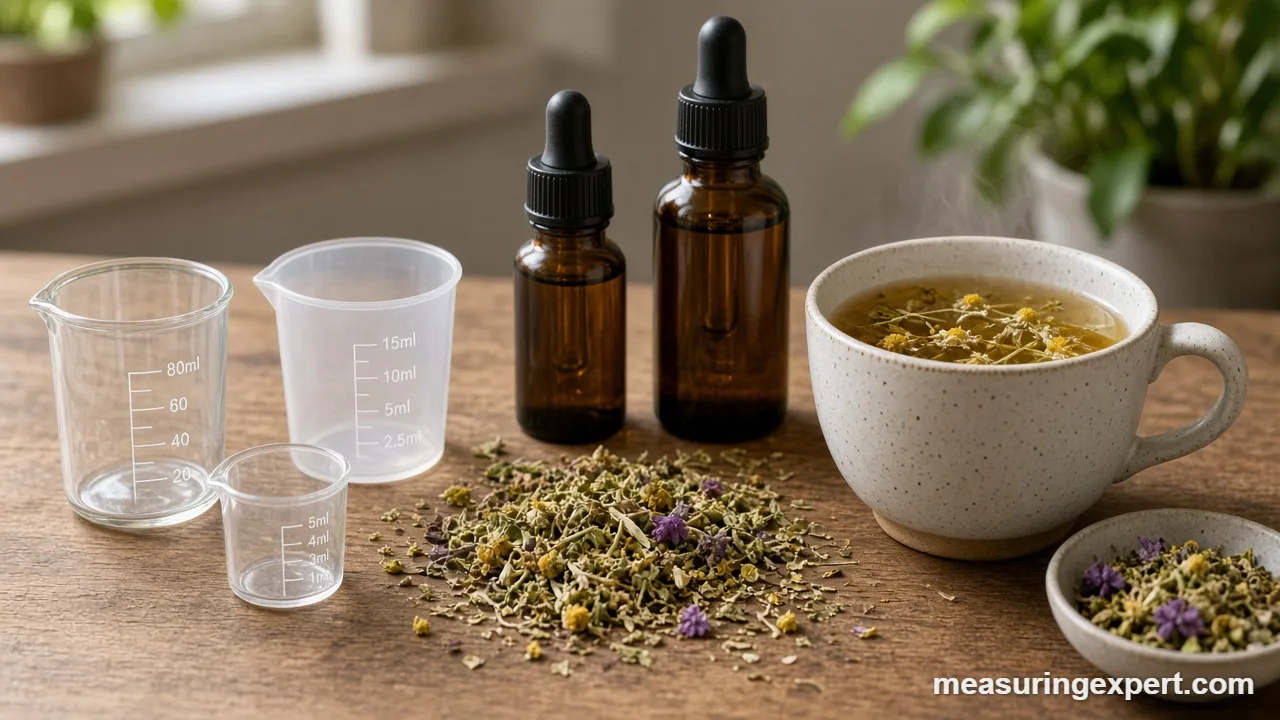
The best herbal measuring cup for most home makers is the OXO Good Grips 4-Piece Mini Measuring Beaker Set, because four small beakers cover the tiny volumes that tinctures, teas and syrups call for. However, capacity, the units on the scale (mL, oz, tbsp) and glass versus plastic decide which tool fits your recipe.
In short: choose the OXO mini beakers for everyday small batches, Dynarex cups when you want cheap disposables, and the Karter Scientific glass beakers for hot infusions and syrups.
As an Amazon Associate, Measuring Expert earns from qualifying purchases. Our picks are based on research, specifications and owner feedback, not paid placement.
Best Overall

Best Budget

Best Glass
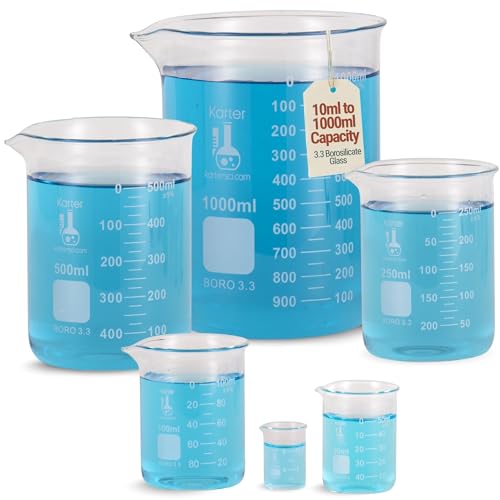
Best Herbal Measuring Cup Picks at a Glance
- Everyday small batches: OXO Good Grips 4-Piece Mini Measuring Beaker Set.
- Heavy glass on the counter: Kolder Mini Measure with 20 marked increments.
- Hot water for teas: Pyrex Prepware 1-Cup glass measuring cup.
- Batch syrups and infusions: Karter Scientific borosilicate beaker set, 10 to 1,000 mL.
- True precision: Eisco glassware kit with Class A graduated cylinders.
- Cheap and disposable: Dynarex 1 oz graduated medicine cups.
- Volumes under 10 mL: Ezy Dose 10 mL oral syringe with a dial.
On This Page
- Comparison table
- The 8 picks, reviewed
- How we chose
- Glass vs plastic
- Reading mL, oz and tbsp marks
- Volume converter
- How to measure a tincture or syrup
- Cleaning and storage
- Honest limits
- FAQ
- Bottom line
Compare the Best Herbal Measuring Cup Options
First, decide how small your typical volume is. Next, choose glass or plastic. Then use the table to jump to the full review.
| # | Product | Best For | Standout Feature | Amazon |
|---|---|---|---|---|
| 1 | OXO Good Grips 4-Piece Mini Measuring Beaker Set | Overall | Four mini beakers in one set | View |
| 2 | Kolder Mini Measure Heavy Glass | Glass shot measure | 20 marked increments on heavy glass | View |
| 3 | Pyrex Prepware 1-Cup Glass Measuring Cup | Teas | Classic 1-cup glass with a spout | View |
| 4 | Karter Scientific 3.3 Boro Griffin Beaker Set | Syrups and batches | Six borosilicate sizes, 10 to 1,000 mL | View |
| 5 | Eisco 9-Piece Laboratory Glassware Set | Precision | Class A 10, 50 and 100 mL cylinders | View |
| 6 | OXO Good Grips Mini Angled Measuring Cup, 2 oz | Reading from above | Angled scale you read while pouring | View |
| 7 | Dynarex 4258 Medicine Cups, 1 oz | Budget | Disposable graduated cups | View |
| 8 | Ezy Dose 10 mL Oral Syringe and Dispenser | Under 10 mL | Color-coded dial with safety stops | View |
The 8 Best Herbal Measuring Cup Picks, Reviewed
We open with the all-round choice, then move to glass, lab-style and disposable options. Also, we only list specs we could confirm from the maker or the listing, and we add metric and US values side by side.
Best Overall
1. OXO Good Grips 4-Piece Mini Measuring Beaker Set
Best for: Home makers who blend small batches of tinctures, glycerites, tea concentrates or syrups and want several small sizes at hand.
OXO is a well-known kitchen tool brand, and this set is our pick as the best herbal measuring cup for most kitchens. First of all, you get four mini beakers instead of one. As a result, you can measure a base liquid in one beaker and a second ingredient in another, without washing between steps. In addition, small vessels give you a taller liquid column for a given volume, so each mark is easier to hit than on a big cup.
Since the beakers are small, they suit recipes written in teaspoons, tablespoons or milliliters. However, they are not meant for hot, freshly boiled water, and a plastic body can pick up the color of strong herbs over time. So, measure hot liquids in glass and let them cool before you move them to plastic.
- Pieces: four mini measuring beakers
- Brand: OXO Good Grips
- Use: small liquid volumes for kitchen recipes
Pros
- Four sizes cover most small recipes
- Separate beakers for separate ingredients
- Light and easy to store
Cons
- Plastic can stain with dark herbs
- Not the right choice for boiling water
Skip it if: You mostly measure hot decoctions, where a glass cup or beaker is the safer match.
Best Glass Shot Measure
2. Kolder Mini Measure Heavy Glass
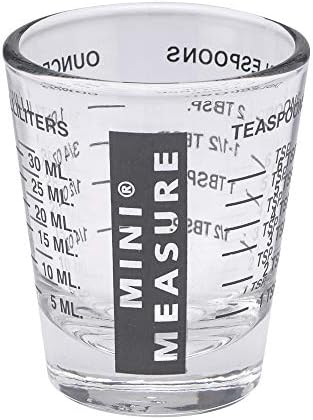
Best for: Anyone who prefers glass and wants one sturdy measure for small liquid and dry amounts.
At first glance, the Kolder Mini Measure looks like a thick shot glass, yet its sides carry a scale. According to the listing, it has 20 marked increments and works for liquid and dry ingredients. Therefore, you can measure a spoonful of honey for a syrup and then a splash of tincture in the same glass. Also, glass does not hold odors the way some plastics do, which helps when you switch between strong and mild herbs.
Next, think about the heavy base. For one thing, a thick bottom keeps the glass steady on the counter, so the liquid settles flat and you read a cleaner level. On the other hand, a thick wall can make the lines look offset if you view them from above. In short, bend down and read at eye level.
- Material: heavy glass, per the listing
- Scale: 20 incremental measurements
- Works with liquid and dry ingredients, per the seller
Pros
- Glass resists stains and smells
- Heavy base sits steady while you pour
- One tool for liquid and dry amounts
Cons
- Can break if dropped
- Thick walls make reading from above harder
Skip it if: You need several vessels at once, because this is a single glass.
Best for Teas
3. Pyrex Prepware 1-Cup Glass Measuring Cup

Best for: Brewing and measuring herbal tea, infusions and the water for simple syrups.
To start, Pyrex is the classic glass measuring cup brand in American kitchens. This 1-cup size holds about 237 mL at the top mark, which is a practical amount for a mug of tea or a small syrup batch. For example, a common simple syrup starts with equal parts water and sugar, so a 1-cup measure handles the water side in one pour. Also, the spout makes it easy to pour into a jar or a bottle with a funnel.
However, a 1-cup measure is too coarse for teaspoon-sized amounts. After all, its marks are spaced for fractions of a cup, so a 5 mL error barely shows. Therefore, pair it with a mini beaker or a syringe for the small additions.
- Capacity: 1 US cup (about 237 mL)
- Material: clear glass
- Line: Pyrex Prepware
Pros
- Glass suits hot tea and syrup water
- Pour spout reduces drips
- Familiar US cup scale
Cons
- Too large for tiny amounts
- Glass is heavier than plastic
Skip it if: Most of your recipes call for less than 2 tablespoons of liquid.
Best Glass Beakers
4. Karter Scientific 3.3 Boro Griffin Low Form Beaker Set
Best for: Herbal makers who heat infusions, reduce syrups or blend larger batches.
First, this lab set gives you six Griffin low form beakers, from 10 mL to 1,000 mL. Because they are borosilicate 3.3 glass, they handle heat far better than everyday kitchen glass. As a result, you can warm a syrup base, cool it and measure it in the same vessel. In addition, the spout on each beaker helps you pour into narrow bottles.
Still, treat beaker lines as a guide. In general, beaker graduations are approximate, so they are fine for “about 200 mL of water” but not for an exact recipe. Instead, measure in a graduated cylinder and use the beaker for mixing. We cover beaker accuracy in more depth in our guide to the best laboratory beakers.
- Sizes: 10, 50, 100, 250, 500 and 1,000 mL
- Material: 3.3 borosilicate glass
- Style: Griffin low form with a pouring spout
Pros
- Handles heat better than kitchen glass
- Six sizes from tiny to large
- Spouts pour cleanly into bottles
Cons
- Beaker lines are approximate
- Smallest sizes have few marks
Skip it if: You only make a cup of tea at a time, so you never heat larger batches.
Best for Precision
5. Eisco 9-Piece Laboratory Glassware Set
Best for: Careful makers who want repeatable batches and real measurement, not just mixing vessels.
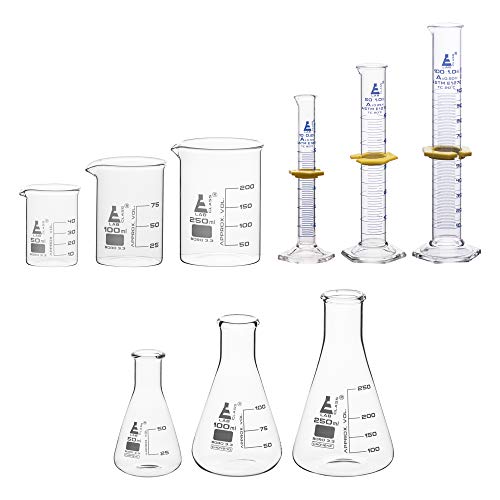
Above all, the key part of this kit is the three graduated cylinders. According to Eisco’s product page, the set includes 10, 50 and 100 mL ASTM Class A cylinders, plus three beakers and three Erlenmeyer flasks, all in borosilicate 3.3 glass with a foam case. So, you measure the menstruum or glycerin in a cylinder, and then you mix in a beaker or flask.
For example, the 10 mL cylinder is handy for small tincture blends, because its narrow tube spreads a few milliliters over a long scale. However, cylinders are tall and tip over more easily than cups. Therefore, keep them in the foam case or a rack when you are not pouring.
- Cylinders: 10, 50 and 100 mL, ASTM Class A
- Beakers: 50, 100 and 250 mL low form
- Flasks: 50, 100 and 250 mL Erlenmeyer
- Storage: fitted foam case
Pros
- Class A cylinders for accurate volumes
- Glass for hot and cold liquids
- Case keeps pieces safe
Cons
- More pieces than a kitchen user may need
- Tall cylinders tip easily
Skip it if: You want a quick kitchen measure instead of a lab-style routine.
Best Read From Above
6. OXO Good Grips Mini Angled Measuring Cup, 2 oz

Best for: People who find it hard to crouch to eye level or to read small side markings.
The OXO Mini Angled Measuring Cup has an angled scale inside the cup, so you read the level from above while you pour. As a result, that design removes the most common error with small cups, which is reading the line from the wrong height. Also, its 2 oz (about 59 mL) capacity fits most tincture and syrup steps.
Then again, one cup means one ingredient at a time. So, if your recipe has several liquids, rinse between them or pair it with the mini beaker set from the same brand.
- Capacity: 2 oz (about 59 mL)
- Design: angled scale you read from above
- Brand: OXO Good Grips
Pros
- Read the level without bending down
- Handy size for small liquid steps
- Easy to pour from
Cons
- Only one vessel
- Plastic is not for boiling liquids
Skip it if: You already own the OXO beaker set and rarely struggle to read side markings.
Best Budget
7. Dynarex 4258 Medicine Cups, 1 oz
Best for: Households that want clean, single-use cups for sampling, portioning or labeling small batches.
First, Dynarex is a medical supply brand, and these 1 oz (about 30 mL) graduated cups come in bulk packs. Because they are disposable, you never pour one herb into a cup that still smells of another. In addition, you can write on a cup and keep each portion separate when you test a new syrup or tea blend.
However, thin, molded plastic cups are less precise than a cylinder or syringe. Also, the marks are molded into the wall, so they can be faint on clear liquids. As a result, hold the cup against a light background and read at eye level.
- Capacity: 1 oz (about 30 mL)
- Type: disposable graduated plastic cup
- Item: Dynarex 4258
Pros
- Low cost per cup
- No cross-flavor between batches
- Easy to label and stack
Cons
- Faint marks on clear liquids
- Single-use plastic creates waste
Skip it if: You prefer reusable glass or need accuracy under 5 mL.
Best Under 10 mL
8. Ezy Dose 10 mL Oral Syringe and Dispenser

Best for: Measuring a few milliliters exactly, such as a label amount stated in mL.
For context, Ezy Dose is a medication management brand from Apothecary Products. This 10 mL oral syringe has a color-coded dial and built-in safety stops, per the listing, so you can set a volume and draw the same amount each time. Consequently, it is the most repeatable tool in this list for tiny volumes. Also, the listing states that it is BPA free.
In contrast, most cups cannot show a 1 mL step clearly, while a 10 mL syringe can. Therefore, if a label gives an amount in milliliters, a syringe is the honest way to match it. On the other hand, a syringe holds only 10 mL, so it is slow for large batches.
- Capacity: 10 mL
- Feature: color-coded dial with safety stops
- Material: BPA-free plastic, per the listing
Pros
- Best accuracy for small mL amounts
- Dial makes repeat measures easy
- Easy to clean between uses
Cons
- Only 10 mL per fill
- Sold under a kids product line
Skip it if: Your recipes work in tablespoons and cups rather than milliliters.
How We Chose the Best Herbal Measuring Cup Picks
To be clear, we did not test these tools by hand. Instead, we compared maker pages, product listings and owner feedback, and we focused on details that affect a small-volume measurement. Here is what we weighed:
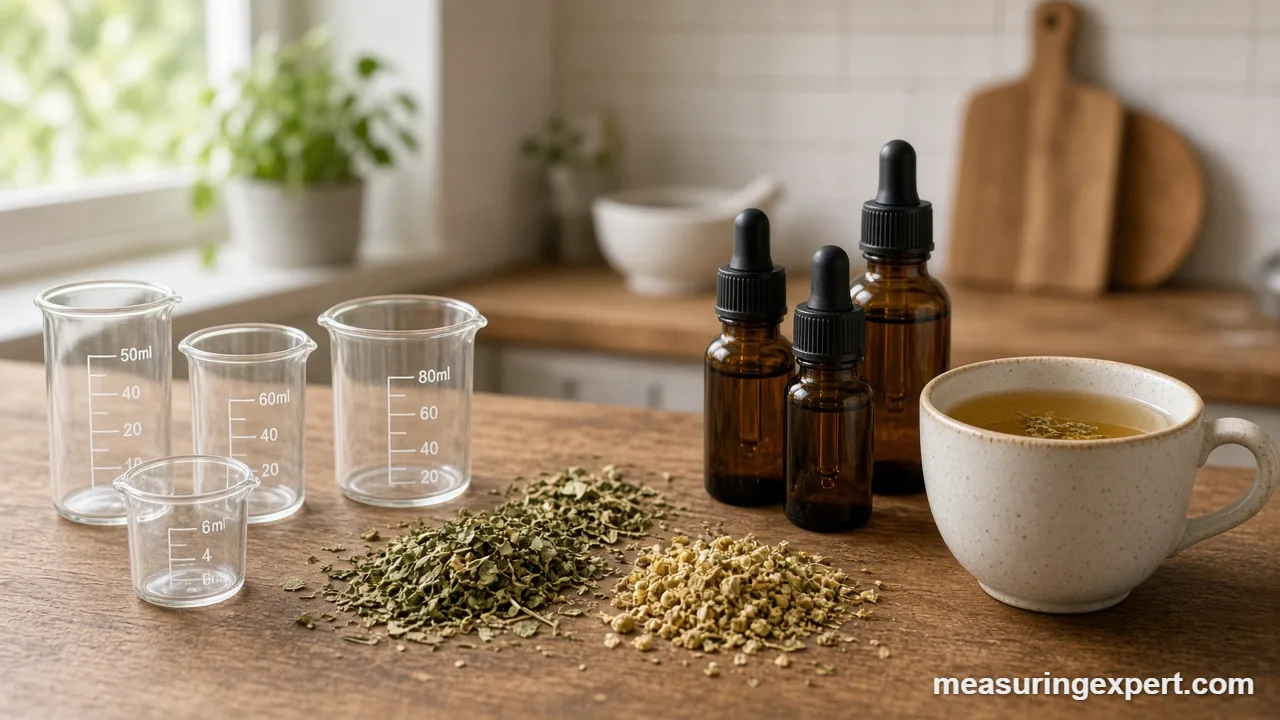
- Volume range: herbal recipes often call for 1 to 60 mL, so we favored small vessels.
- Units on the scale: mL, oz and spoon units make label and recipe amounts easier to match.
- Material: glass for heat and stain resistance, plastic for light weight and low cost.
- Readability: angled scales, tall narrow vessels and clear marks reduce reading errors.
- Brand quality: we skipped unbranded listings and near-duplicate shot glasses.
In addition, we dropped several items from the older version of this page, because they were generic lookalikes. For unit math, we used the conversion factors from NIST. For background on dosing devices such as cups, droppers and syringes, we read the FDA guidance on dosage delivery devices.
Glass vs Plastic: Which Material Suits Herbal Prep?
Of course, both materials measure the same volume. However, they behave differently with heat, color and alcohol, so the right choice depends on what you make.
| Feature | Glass (kitchen or borosilicate) | Plastic |
|---|---|---|
| Hot liquids | Borosilicate handles heat best | Use only for cool or warm liquids |
| Stains and odors | Resists both | Can stain with dark herbs |
| Weight and breakage | Heavier and can break | Light and drop-resistant |
| Reading the scale | Thick walls can offset the view | Thin walls, but marks can be faint |
| Best use | Teas, syrups, hot infusions | Cool tinctures, portioning, travel |
For example, a syrup recipe may ask you to warm water with honey. In that case, measure and heat in glass. Meanwhile, a cool tincture blend works fine in a plastic beaker. Also, strong alcohol can cloud some plastics over time, so rinse plastic tools soon after use.
Reading mL, oz and tbsp Markings Without Mistakes
In fact, small cups often carry several scales at once. So, it helps to know how the units relate before you pour. These values come from the NIST conversion factors, rounded to two decimals.
| US unit | Milliliters | Equal to |
|---|---|---|
| 1 teaspoon (tsp) | 4.93 mL | 1/3 tbsp |
| 1 tablespoon (tbsp) | 14.79 mL | 3 tsp |
| 1 fluid ounce (fl oz) | 29.57 mL | 2 tbsp or 6 tsp |
| 1/4 cup | 59.15 mL | 2 fl oz |
| 1 cup | 236.59 mL | 8 fl oz |
First, notice that 1 fl oz is a little less than 30 mL. Therefore, a cup marked “1 oz = 30 mL” rounds by about 1.4 percent. Admittedly, that small gap rarely matters in a recipe. However, it is one more reason to use one unit system all the way through a recipe instead of switching halfway.
Next, read the meniscus. In a narrow vessel, water and alcohol curve down in the middle, so read the bottom of the curve at eye level. Also, stand the cup on a flat surface, because a tilted cup moves the level against the scale. Our guide to how to measure volume in mL walks through this step by step.
Herbal Volume Converter: mL to tsp, tbsp and oz
Because recipes and labels mix units, use this converter to switch between them. Enter milliliters, and it shows teaspoons, tablespoons and fluid ounces.
For example, 30 mL is just over 2 US tablespoons. Similarly, a metric teaspoon is exactly 5 mL, which is about 1 percent more than a US teaspoon. In short, the difference is tiny for cooking, yet a syringe is still the better tool when a label lists mL.
How to Measure a Tincture or Syrup Accurately
Generally, these steps work with any tool on this list. Also, practice once with water so you know how your cup reads.
- Pick a vessel whose full size is close to the amount you need, so the marks are spread out.
- Set it on a flat, level counter with good light behind it.
- Then pour slowly until the liquid nears the target line.
- Crouch to eye level and read the bottom of the meniscus.
- Add or remove liquid with a dropper or syringe for the final few drops.
- For thick syrups, scrape or rinse the cup so the full amount reaches the recipe.
- Finally, write the amount and date on the bottle label and clean the tool right away.
Cleaning, Storage and Stains
Above all, a clean, dry tool measures true. Otherwise, leftover film can add or hide a small volume. Here is a short routine.
If a plastic beaker stains, a paste of baking soda and water often lifts the color. However, faded marks cannot be restored. So, replace any cup whose scale you can no longer read clearly.
Honest Limits of Any Best Herbal Measuring Cup
Even the best herbal measuring cup has limits. First, a wide cup spreads a small volume thin, so a 1 mL error hides easily. Second, molded marks are made for convenience rather than lab precision. Third, drops are not a reliable unit, because drop size changes with the dropper, the liquid and the angle you hold it at.
Also, a measuring tool cannot tell you how much of an herb to use. Instead, that decision belongs to the product label or a qualified professional. Our separate guide to the best dose measuring cup covers cups made for labeled liquid products.
Best Herbal Measuring Cup FAQ
What is the best herbal measuring cup for most people?
For most kitchens, the best herbal measuring cup is a small set such as the OXO Good Grips 4-Piece Mini Measuring Beaker Set. Several small beakers let you measure separate liquids for tinctures, teas and syrups without washing between steps.
Is glass or plastic better for herbal tinctures?
Glass resists stains, odors and heat, so it suits teas and syrups. Plastic is lighter and cheaper, and it works for cool tinctures. However, rinse plastic soon after contact with strong alcohol.
How many mL are in a tablespoon?
One US tablespoon is about 14.79 mL, based on NIST conversion factors. A metric tablespoon is exactly 15 mL. In practice, the gap is about 1 percent.
How many mL is a dropperful?
It varies. A dropperful depends on the bulb, the pipette and how hard you squeeze, so it is often less than 1 mL. Therefore, check your own dropper by emptying a few squeezes into a 10 mL syringe.
Can I use a shot glass as a best herbal measuring cup?
Only if it has a printed or etched scale. A plain shot glass has no marks, and sizes differ by brand. A marked glass such as the Kolder Mini Measure is a better choice.
Why is my small measuring cup reading wrong?
Usually, the cup is tilted or you read it from above. Set it on a level counter and read the bottom of the curved surface at eye level. Also, check that the cup is dry before you pour.
Do I need a lab beaker for herbal syrups?
No, but a borosilicate beaker helps if you heat syrups often. It handles heat better than kitchen glass. Still, beaker lines are approximate, so measure exact amounts in a cylinder or cup.
Which best herbal measuring cup is most accurate for tiny amounts?
A 10 mL oral syringe or a 10 mL Class A graduated cylinder is the most accurate. Both spread a few milliliters over a long scale, so small steps are easy to see.
How should I clean a measuring cup used for tinctures?
Rinse it right after use, wash it in warm soapy water, and let it air-dry. Avoid abrasive pads, because they can wear off printed marks.
Does the best herbal measuring cup tell me how much to take?
No. A cup only measures volume. Always follow the product label, or ask a doctor, pharmacist or qualified herbalist for guidance on amounts.
Bottom Line: Our Best Herbal Measuring Cup Pick
For most home makers, the OXO Good Grips 4-Piece Mini Measuring Beaker Set is the best herbal measuring cup choice. It gives you several small vessels for tinctures, teas and syrups in one set. However, choose the Dynarex cups to save money, the Karter Scientific beakers for hot batches, or the Ezy Dose syringe when a label lists mL.