

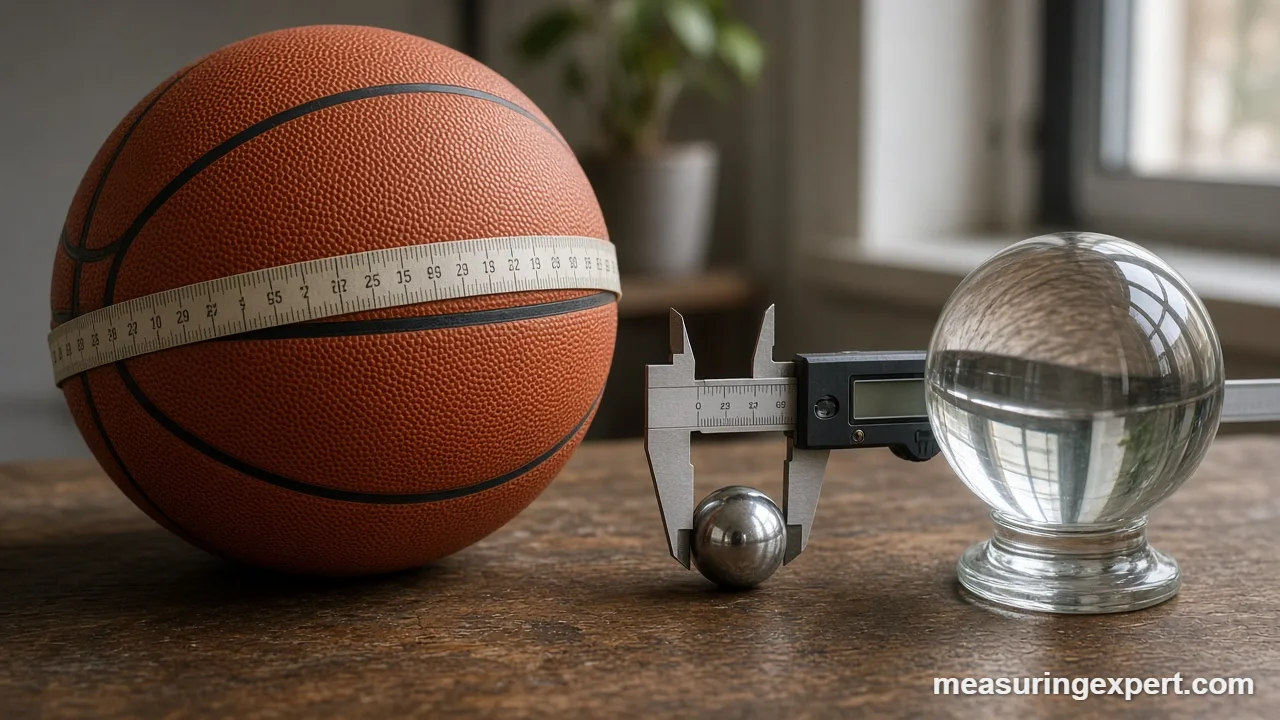
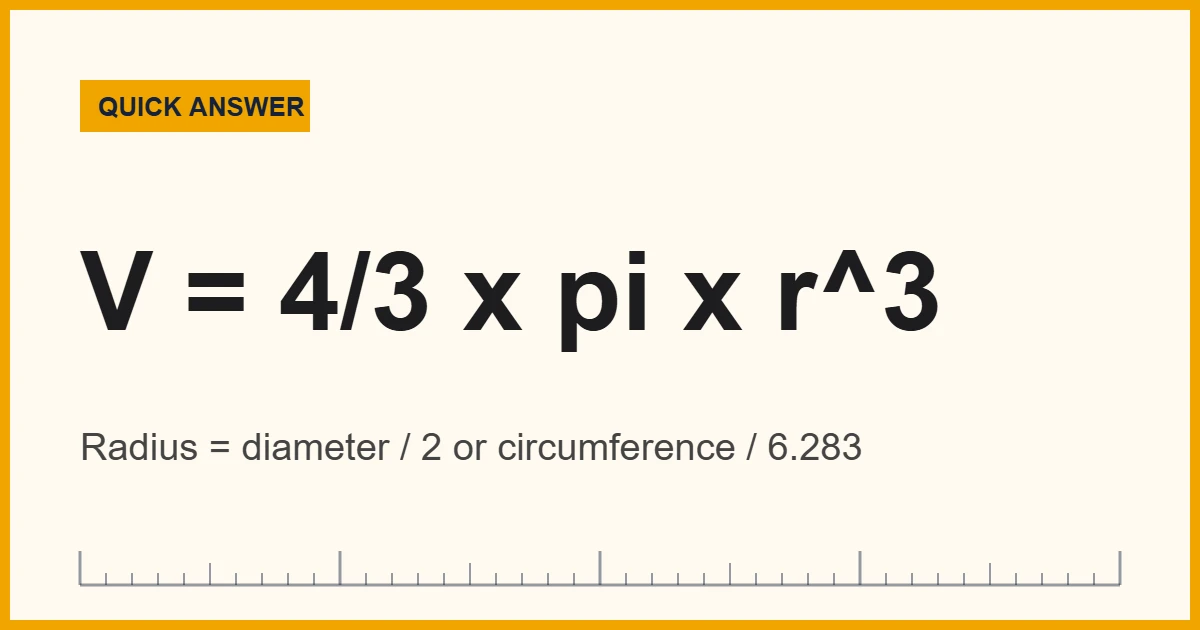
The volume of a sphere is V = 4/3 x pi x r3, where r is the radius. To measure it, first find the diameter with calipers (r = d / 2) or wrap a tape around the widest part (r = C / 2pi). For example, a ball 10 cm across holds about 523.6 cm3, or 0.52 liters.
You cannot put a ruler inside a ball, so you never measure the volume directly. Instead, you measure one straight line on the outside and let the formula do the rest. That single number can be the diameter, the circumference or the radius. Once you have it, the math takes about ten seconds.
The catch is that the radius is cubed. As a result, a small error in your measurement grows into a bigger error in the answer. A reading that is 1% too large gives a volume about 3% too large. So the real skill lies in measuring the diameter carefully, not in the arithmetic.
In short: measure across the ball, halve it, cube it, and multiply by 4.18879 (which is 4/3 x pi). If you measured the diameter, you can skip a step and multiply d3 by 0.5236 instead.
The formula itself is old and settled. Archimedes worked it out around 225 BC, and Wolfram MathWorld lists it as the standard sphere volume formula today. For units, NIST, the US national measurement lab, defines the liter as one cubic decimeter, which equals 1,000 cm3.
Below, you will find a converter, three ways to measure a round object, and a water test to check your result. After that, there are worked examples for a ball, a globe and a tank, plus a unit table.
Convert Your Sphere Volume to Liters, Ounces and Gallons
First, work out the volume in cubic centimeters with the formula above (or read it from the table below). Then type that number into the converter. It uses exact NIST definitions to show milliliters, liters, US fluid ounces, cups, quarts and gallons. Since 1 cm3 equals 1 mL, the first line is a quick check.
Recommended Tools for Measuring a Sphere
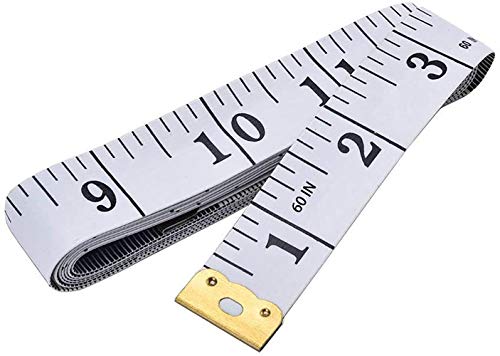
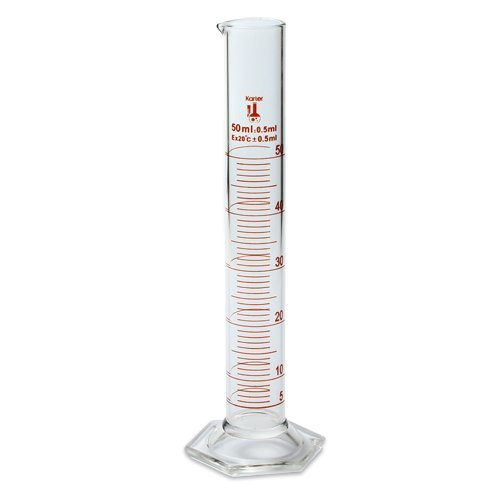
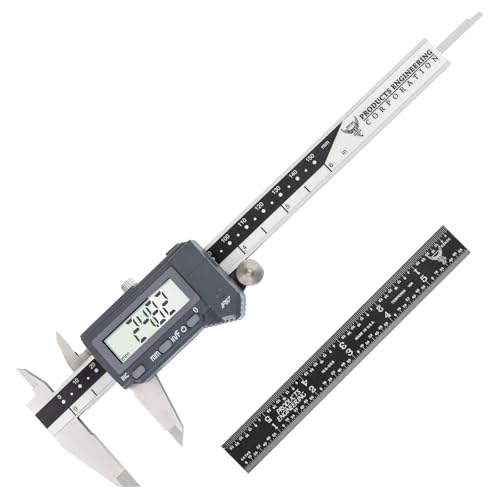
You need just two things: something to measure the size, and optionally something to check the volume with water. For small balls under about 6 inches, a digital caliper gives the best diameter reading. For larger objects, a flexible tailor’s tape around the middle works better. Meanwhile, a graduated cylinder lets you confirm small volumes by displacement.



As an Amazon Associate, Measuring Expert earns from qualifying purchases.
- The volume of a sphere is V = 4/3 x pi x r3, or V = pi x d3 / 6 if you start from the diameter.
- Radius from diameter: r = d / 2. Radius from circumference: r = C / (2 x pi).
- Calipers suit small balls; a soft tape around the widest point suits large ones.
- Because the radius is cubed, a 1% measuring error becomes about a 3% volume error.
- Water displacement checks your answer: 1 mL of water moved equals 1 cm3 of volume.
- Keep units consistent: cubic inches in, cubic inches out; then convert at the end.
- 1 liter = 1,000 cm3, and 1 US gallon = 231 cubic inches.
The Volume of a Sphere Formula, Explained
Here is the formula in two equivalent forms. Use whichever matches what you measured.
V = (4/3) x pi x r^3 or V = pi x d^3 / 6In the first form, r is the radius: the distance from the center to the surface. In the second, d is the diameter: the full distance across, through the center. Both give the same answer because d = 2r, and 2 cubed is 8. Therefore 4/3 divided by 8 gives 1/6.
The constant pi is about 3.14159. Using 3.14 is fine for homework, although it makes the result about 0.05% low. For a 3 cm radius, for instance, 3.14 gives 113.04 cm3, while the full value of pi gives 113.10 cm3.
The units come out cubed. If you measure in centimeters, the volume of a sphere is in cubic centimeters (cm3). Likewise, inches give cubic inches and feet give cubic feet. In addition, for the area of the outside skin, use S = 4 x pi x r2, which is a different question.
Three Ways to Find the Radius of a Round Object
Almost nobody can reach the center of a real ball. So you measure from the outside and convert. Here is how the three common methods compare.
| Method | Best for | What you measure | Radius formula |
|---|---|---|---|
| Calipers | Small balls: marbles, golf balls, bearings, fruit | Diameter (d) | r = d / 2 |
| Soft tape around the middle | Large balls, globes, balloons, tanks | Circumference (C) | r = C / (2 x pi), about C / 6.283 |
| Two blocks and a ruler | Medium balls when you have no calipers | Diameter (gap between blocks) | r = d / 2 |
Calipers. Close the jaws gently on the ball until they just touch. Then rotate the ball and take two or three more readings. Finally, average them, because few real balls are perfectly round.
Circumference with a tape. Wrap a flexible tape around the widest part, like the equator on a globe. Keep it level and snug, but not tight. Then divide the reading by 6.283 to get the radius. Our guide to linear measurement covers reading a tape accurately.
Two blocks and a ruler. Set the ball on a table between two books or wood blocks. Push the blocks in until they touch the ball on both sides. Next, lift the ball out and measure the gap between the blocks. That gap is the diameter.
How to Measure the Volume of a Sphere, Step by Step
- Choose your method. Use calipers for small balls and a soft tape for large ones.
- Take three readings. Turn the object between readings and average the results.
- Convert to the radius. Halve the diameter, or divide the circumference by 6.283.
- Cube the radius. Multiply it by itself three times (r x r x r).
- Multiply by 4.18879. This number is 4/3 x pi, so the result is the volume in cubic units.
- Convert units if needed. Enter cm3 in the converter above, or use the unit table below.
- Check with water (optional). For anything that fits in a container, compare your answer with a displacement test.
Check the Volume of a Sphere With Water Displacement
Displacement measures volume directly, without the formula. So it is a good way to check your arithmetic, or to measure an object that is not quite round. The idea is simple: a submerged object pushes aside exactly its own volume of water.
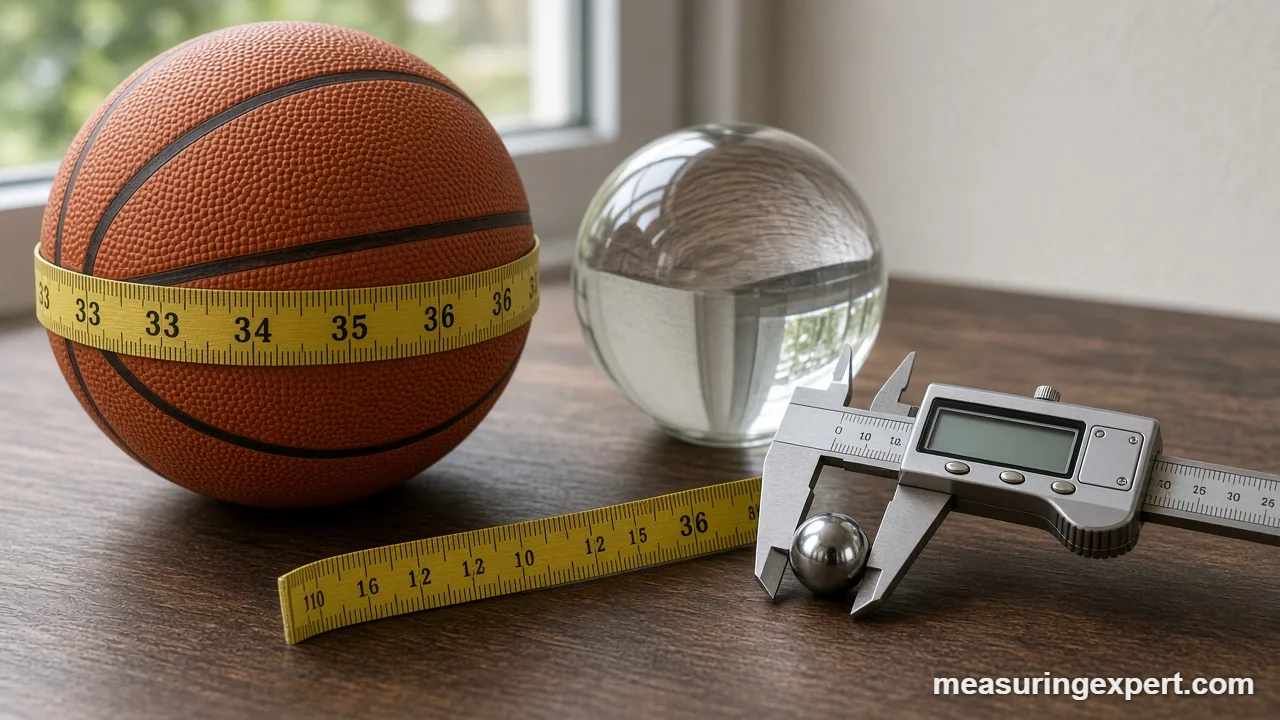
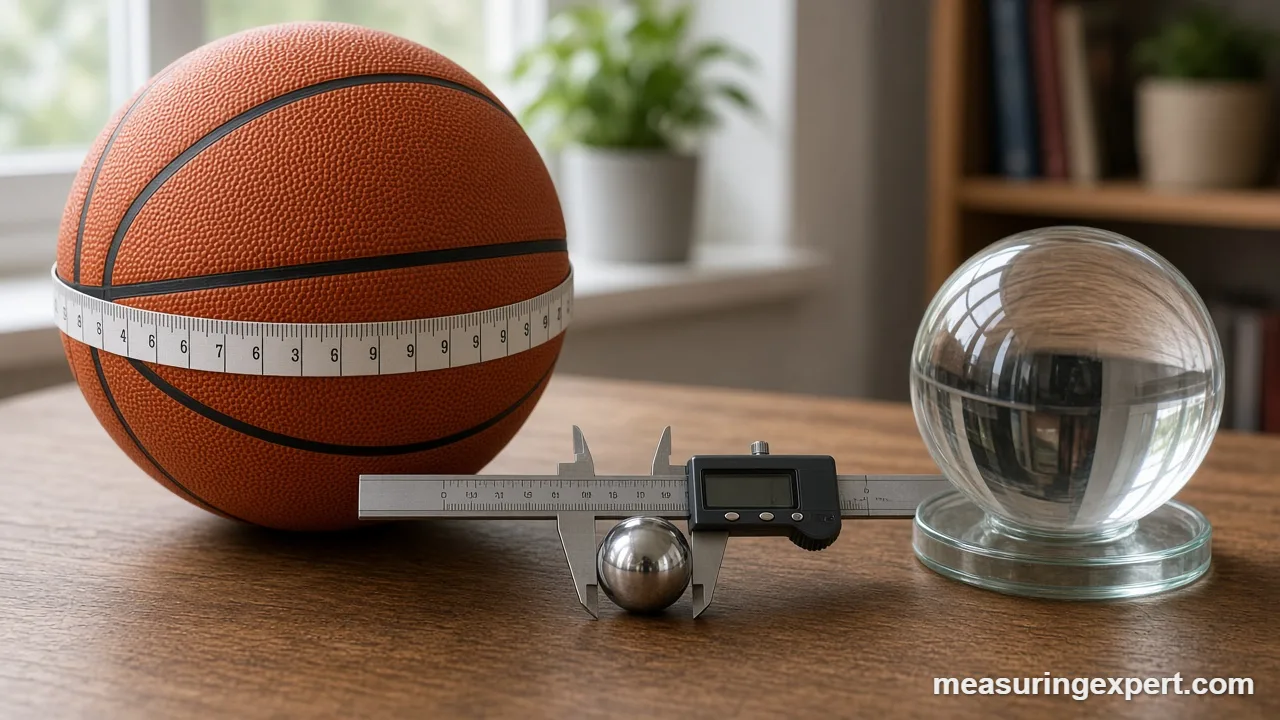
- Pour water into a graduated cylinder or measuring jug, and note the level.
- Lower the ball in gently until it is fully under the surface.
- If it floats, push it under with a thin wire or skewer.
- Read the new level at eye height, at the bottom of the curved surface.
- Subtract the first reading from the second.
For example, a 9 cm ball should have a volume of 381.7 cm3. Suppose the water rises from 1,200 mL to 1,580 mL. That is 380 mL, so the test agrees with the formula within about 0.5%. If the two disagree by more than a few percent, measure the diameter again.
For bigger objects, use the overflow method instead. Fill a bucket to the brim, stand it in a tray, and submerge the ball. Then weigh the water that spills into the tray. Since water at room temperature weighs about 1 gram per milliliter, 500 g of spilled water means about 500 cm3. For more on this technique, see our guide to the volume of a solid.
Volume of a Sphere: Worked Examples
Example 1: a basketball (circumference)
A men’s size 7 basketball measures about 29.5 inches around. First, find the radius: 29.5 / 6.283 = 4.695 in. Next, cube it: 4.6953 = 103.5. Then multiply by 4.18879 to get about 433.5 cubic inches. In metric, that is 7,104 cm3, or about 7.1 liters (roughly 1.88 US gallons).
Example 2: a desk globe (diameter)
A typical desk globe is 12 inches across, so its radius is 6 inches. Because 63 = 216, the volume is 216 x 4.18879 = 904.8 cubic inches. That equals about 14.83 liters, or 3.92 US gallons. Similarly, you could start from the diameter: 123 x 0.5236 gives the same 904.8 cubic inches.
Example 3: a spherical tank (large diameter)
Spherical tanks hold water, propane and other gases. Take one with an inside diameter of 2 meters, so r = 1 m. The volume is 4.18879 x 13 = 4.189 cubic meters. Since 1 m3 is 1,000 liters, the tank holds about 4,189 liters, or 1,107 US gallons. A 6-foot tank, by comparison, holds about 113.1 cubic feet, which is about 846 US gallons.
Example 4: a golf ball (calipers)
Under the Rules of Golf, a ball must be at least 1.68 inches across. Halve that to get r = 0.84 in. Then 0.843 x 4.18879 = 2.48 cubic inches, which is about 40.7 cm3. In other words, a golf ball holds a little less than 3 tablespoons.
Unit Conversions for Sphere Volume
Do the whole calculation in one unit, then convert at the end. Mixing inches and centimeters halfway through is the most common source of wrong answers. Use the exact factors below.
| From | To | Multiply by |
|---|---|---|
| cm³ | mL | 1 (they are equal) |
| cm³ | liters | 0.001 |
| cubic inches | cm³ | 16.387064 |
| cubic inches | US gallons | 1/231 (0.004329) |
| cubic feet | liters | 28.316846592 |
| cubic feet | US gallons | 7.4805 |
| m³ | liters | 1,000 |
| US gallons | liters | 3.785411784 |
Here is a quick lookup for common diameters, computed with the full value of pi:
| Diameter | Volume | Diameter | Volume |
|---|---|---|---|
| 1 cm | 0.52 cm³ | 1 in | 0.524 in³ (8.6 cm³) |
| 2 cm | 4.19 cm³ | 2 in | 4.189 in³ (68.6 cm³) |
| 5 cm | 65.45 cm³ | 6 in | 113.1 in³ (1.85 L) |
| 10 cm | 523.6 cm³ | 12 in | 904.8 in³ (14.83 L) |
| 20 cm | 4,188.8 cm³ | 24 in | 7,238 in³ (118.6 L) |
| 50 cm | 65,450 cm³ | 100 cm | 523,599 cm³ (523.6 L) |
Notice the pattern: doubling the diameter multiplies the volume by 8. So a 20 cm ball holds eight times as much as a 10 cm ball.
Sphere vs Cylinder vs Cone: How the Volumes Compare
Archimedes was proudest of one result. A sphere fills exactly two-thirds of the smallest cylinder that can hold it. That cylinder has the same diameter as the sphere and a height equal to the diameter.
| Shape (radius r, height 2r) | Volume formula | Share of the cylinder |
|---|---|---|
| Cylinder | pi x r² x 2r = 2 pi r³ | 100% |
| Sphere | 4/3 pi r³ | 66.7% |
| Cone | 1/3 pi r² x 2r = 2/3 pi r³ | 33.3% |
| Hemisphere (half sphere, height r) | 2/3 pi r³ | 33.3% |
This comparison is handy for a sanity check. For instance, a ball that fits snugly in a can must hold about two-thirds of the can’s volume. To work out the can itself, read our guide on how to measure cylinder volume.
Do and Don’t When Measuring a Sphere
Do
- Take at least three diameter readings and average them.
- Wrap the tape around the widest part, kept level.
- Keep every number in one unit until the end.
- Use the full value of pi for large tanks.
- Check small objects with water displacement.
Don’t
- Plug the diameter into the radius formula.
- Squeeze soft balls with the caliper jaws.
- Pull the tape so tight that it sinks into the surface.
- Forget to cube the radius (squaring gives area, not volume).
- Read a measuring jug from above; get down to eye level instead.
Honest Limits of the Sphere Formula
The formula is exact for a perfect sphere. Real objects, however, are rarely perfect. Earth, for example, is wider at the equator than pole to pole. Fruit, balloons and inflated balls are also slightly uneven. In those cases, the formula gives a close estimate, while displacement gives the true volume.
Measurement error matters more than most people expect. Because the radius is cubed, any error triples in percentage terms. A caliper reading that is 0.5 mm off on a 20 mm marble is a 2.5% error in diameter. As a result, the volume is off by nearly 8%. For small parts, therefore, a good caliper is worth more than extra decimal places of pi.
Finally, for tanks, remember the difference between outside and inside size. The wall takes up space, so measure the inside diameter, or subtract twice the wall thickness from the outside diameter. In addition, real tanks are rarely filled to 100% of their volume.
When to Call a Professional
For homework, cooking and hobby projects, a tape and a calculator are plenty. Some jobs, though, need certified numbers. Pressure vessels and propane tanks have rated capacities stamped by the manufacturer, and fill limits are set by code. So never rely on your own calculation to decide how much gas or liquid a pressure tank can safely hold. Instead, check the data plate or ask a licensed propane supplier or tank inspector. Similarly, precision parts such as bearings should go to a calibration lab if the size truly matters.
Frequently Asked Questions
What is the formula for the volume of a sphere?
The formula is V = 4/3 x pi x r^3, where r is the radius. If you know the diameter instead, use V = pi x d^3 / 6.
How do I find the radius if I only know the circumference?
Divide the circumference by 2 x pi, which is about 6.283. For example, a 29.5-inch circumference gives a radius of about 4.70 inches.
Can you find the volume of a sphere without the radius?
Yes. You can start from the diameter or the circumference and convert. You can also skip the formula entirely and measure the volume by water displacement.
What is the volume of a sphere with a radius of 3 cm?
It is about 113.1 cubic centimeters (113.04 if you use 3.14 for pi). That is about 0.113 liters, or 3.82 US fluid ounces.
Why is the radius cubed?
Volume has three dimensions: length, width and height. A sphere grows in all three at once, so its volume grows with the radius times itself three times.
How do I convert the volume of a sphere to liters?
Work in centimeters, then divide the cubic centimeters by 1,000. If you worked in inches, multiply cubic inches by 0.016387 to get liters.
How do I measure the diameter of a ball without calipers?
Place the ball between two books, push them in until they touch it, and measure the gap. Alternatively, measure the circumference with a soft tape and divide by pi.
Does water displacement work for a ball that floats?
Yes, if you push it fully under with a thin wire or skewer. The wire adds a tiny amount, so keep it thin and only submerge the tip you need.
What is the volume of a hemisphere?
A hemisphere is half a sphere, so its volume is 2/3 x pi x r^3. For a 10 cm wide bowl shape, that is about 261.8 cm^3.
Is the volume of a sphere the same as its capacity?
Not quite. Volume is the space the whole object takes up. Capacity is what fits inside, so for a tank or bottle you subtract the wall thickness first.
The Bottom Line on the Volume of a Sphere
To sum up, the volume of a sphere comes from one outside measurement. Measure the diameter with calipers or the circumference with a tape, convert to the radius, cube it, and multiply by 4.18879. Then convert units at the end, and double-check that you did not use the diameter as the radius.
For small objects, a quick water test confirms your answer within a few percent. For everything else, the converter at the top of this page turns cubic centimeters into liters, fluid ounces and gallons. Finally, for pressure tanks, trust the stamped rating over any calculation.