

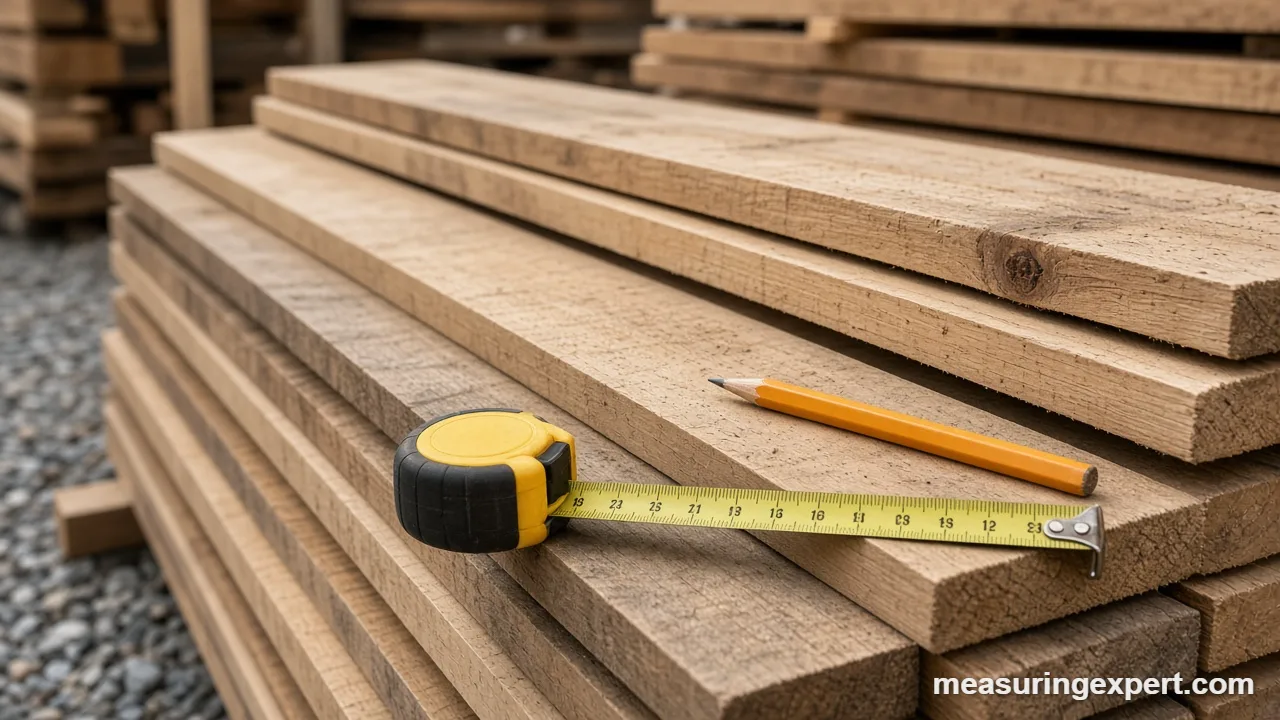
A linear measurement is the length of something along one straight line, measured in a single dimension such as inches, feet, yards, meters or miles. For example, 1 linear foot is simply 12 inches (30.48 cm) of length, no matter how wide or thick the board, fence or countertop is.
You meet linear measurements every time you buy a fence, order baseboard trim, price a countertop, or pick up a stack of 2x4s at the lumberyard. However, stores quote these jobs “per linear foot”, and that phrase confuses a lot of people. Is it the same as a foot? Does it include width? How is it different from a square foot?
What Linear Measurement Means
The short version is that “linear” only means “in a line”. So a linear foot is an ordinary foot of length, and a linear meter is an ordinary meter. Instead, the word is there to tell you that width and depth are not part of the number. As a result, you only need one tape measure reading per piece, and then you add the pieces together.
In short: linear measurement counts length only, square measurement counts area (length times width), and cubic measurement counts volume (length times width times height). Also, mixing them up is the most common reason people order too much or too little material.
The units themselves are fixed by law. For instance, the US National Institute of Standards and Technology (NIST) explains that the meter is defined by the distance light travels in a vacuum in 1/299,792,458 of a second. In addition, NIST confirms that the foot is exactly 0.3048 meter, since the old US survey foot was retired at the start of 2023.
Below, you will find a converter, a comparison of linear, square and cubic units, the step-by-step method for linear footage, and several worked examples for lumber, fencing, trim and countertops.
Convert Linear Measurement Units
First, enter a length and choose the unit you have. The converter then shows the same length in inches, feet, yards, meters, centimeters and millimeters, using the exact definition 1 inch = 2.54 cm.
Recommended Tools for Linear Measurement
Most linear jobs need only a good tape measure. First, pick a 25-foot tape with a stiff blade and clear fraction marks for trim, lumber and room work. Next, add a laser distance measure if you often measure whole rooms or ceilings alone. Finally, a measuring wheel is the easiest way to walk off a long fence line or driveway edge.
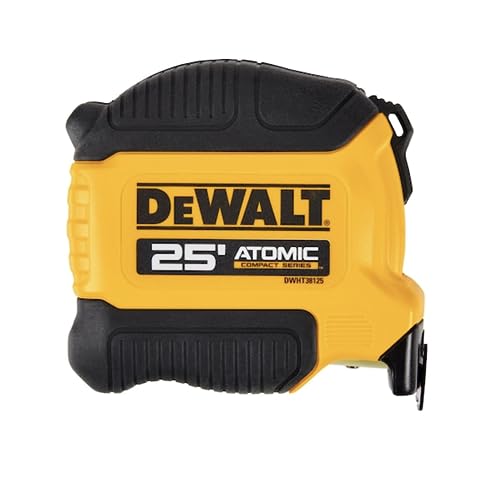

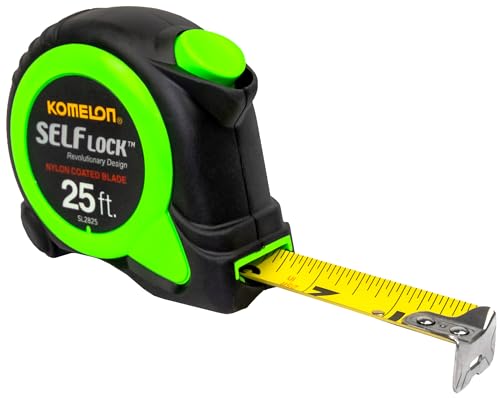
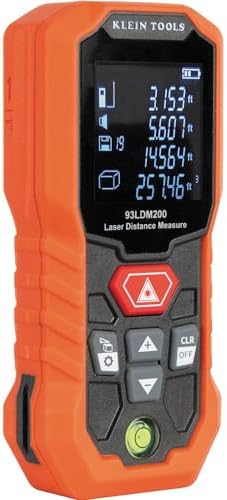


As an Amazon Associate, Measuring Expert earns from qualifying purchases.
Key Takeaways
- A linear measurement is length in one direction only; width and height are ignored.
- One linear foot equals one foot: 12 inches or exactly 30.48 cm.
- Square feet measure area, while cubic feet (and board feet) measure volume.
- To find linear footage, measure each piece or run and add the lengths together.
- Convert inches to feet by dividing by 12, and feet to meters by multiplying by 0.3048.
- Always add a waste allowance, often around 10 percent, for cuts and joints.
- Check how a seller prices the job: per linear foot and per square foot give very different totals.
Linear Measurement vs Square and Cubic Measurement
Think of the three types as one, two and three dimensions. For example, a piece of string has length only. Next, a floor has length and width. Finally, a box has length, width and height. Because each type adds a dimension, the units grow in a different way, too: 1 square foot is 144 square inches, and 1 cubic foot is 1,728 cubic inches.
| Type | Dimensions | Typical units | Everyday examples |
|---|---|---|---|
| Linear | 1 (length) | in, ft, yd, mi, mm, cm, m, km | Fencing, trim, lumber, pipe, wire, fabric off the bolt |
| Square (area) | 2 (length x width) | sq in, sq ft, sq yd, acre, m² | Flooring, paint coverage, roofing, lawn sod |
| Cubic (volume) | 3 (length x width x height) | cu in, cu ft, cu yd, L, m³ | Concrete, mulch, room air volume, board feet of lumber |
So you cannot turn linear feet into square feet without a second number. If a board is 5 1/2 inches wide, each linear foot covers 5.5 / 12 = 0.458 square feet. Likewise, to get volume you need all three sides; our guide on how to calculate cubic volume walks through that step.
Units of Linear Measurement and the Tools That Read Them
First of all, every length unit is a linear unit. In the United States, people mostly use inches, feet, yards and miles. Most other countries, however, use millimeters, centimeters, meters and kilometers. Still, the two systems are tied together by exact definitions, so conversions never drift.
| Unit | Exact size | Metric value | Common use |
|---|---|---|---|
| Inch (in) | 1/12 ft | 2.54 cm | Trim, fabric, small parts |
| Foot (ft) | 12 in | 30.48 cm | Lumber, rooms, fencing |
| Yard (yd) | 3 ft | 0.9144 m | Fabric, landscaping |
| Mile (mi) | 5,280 ft | 1.609344 km | Roads, running |
| Meter (m) | 100 cm | about 3.2808 ft (39.37 in) | Building plans outside the US |
For a deeper look at each unit, including older ones, see our full list of length units. Some historic units still turn up on old deeds, too, such as the rod; our page on what a rod measurement is explains that one.
Similarly, the right tool depends mostly on distance. A ruler or caliper suits a few inches, while a tape measure handles most home jobs up to 25 or 30 feet. Beyond that, a laser measure reads wall to wall in a second, and a measuring wheel rolls off long outdoor runs. Our roundup of tools to measure length compares them in more detail.
What Linear Feet Means for Lumber, Fencing and Countertops
Retailers use linear feet because it is the simplest way to price long, narrow products. Even so, each trade adds its own twist.
Lumber and boards
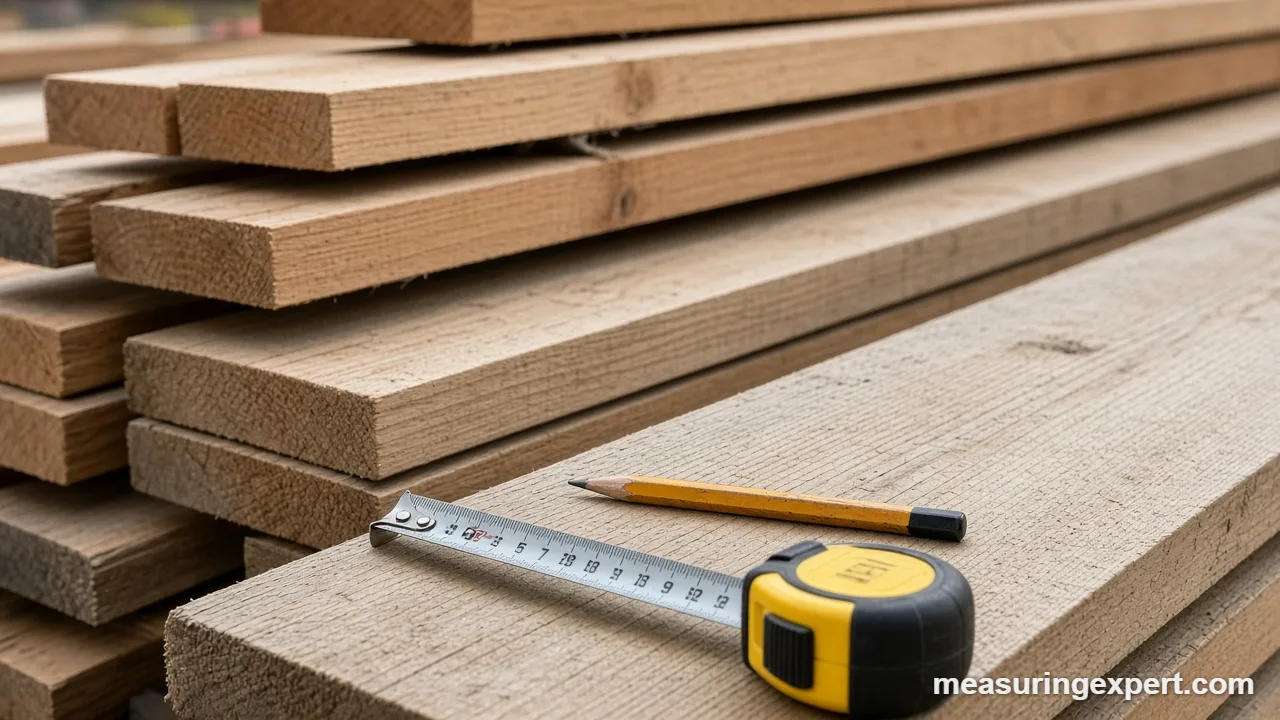
For lumber, linear feet is just the total length of boards. For example, twenty 8-foot boards are 160 linear feet (about 48.77 m), whether they are 1x4s or 2x10s. Keep in mind that nominal sizes are not actual sizes: a 1×6 is really about 3/4 inch by 5 1/2 inches. That matters because coverage depends on the actual width.
Fencing
Likewise, fence contractors quote per linear foot along the fence line. Measure the perimeter you plan to enclose, then subtract any openings that will not get fence panels. A gate usually has its own price, so list it separately.
Countertops
Countertops, on the other hand, are trickier. Some laminate and butcher-block suppliers price by the linear foot along the wall at a standard depth, often about 25 to 25 1/2 inches. Stone fabricators, however, usually price by the square foot. Therefore, ask which method a quote uses before you compare prices.
Trim, pipe and wire
Baseboard, crown molding, gutters, pipe and electrical cable are all sold by length. Here, linear footage is the sum of every run, plus extra for miter cuts and joints.
How to Calculate Linear Footage
- Sketch the job. Draw each wall, fence side or board run as a line and label it.
- Measure every run. Hold the tape straight and tight, and read it at the end of the run.
- Write each length in one unit. Convert mixed readings, such as 7 ft 4 in, into inches or decimal feet.
- Add the lengths together. The total is your linear measurement for the whole job.
- Convert inches to feet. Divide the total inches by 12, or use the converter above.
- Subtract openings. Take out doorways, gates or any gap that will not get material.
- Add a waste allowance. Multiply by about 1.10 for 10 percent extra, then round up to whole pieces.
Worked Examples You Can Copy
Baseboard for a room. A room is 12 ft by 14 ft. First, find the perimeter: 2 x (12 + 14) = 52 ft. After you subtract a 3-foot doorway, you need 49 linear feet. With 10 percent extra, that becomes 53.9 ft, so buy 54 ft or more in whole lengths.
A backyard fence. Next, picture a yard that measures 50 ft by 80 ft. Fencing all four sides takes 2 x (50 + 80) = 260 linear feet. If a 4-foot gate goes in one side, the panels cover 256 ft and the gate is priced separately.
Short trim pieces. Four pieces of 30, 45, 62 and 18 inches add up to 155 inches. Then 155 / 12 = 12.92, so you need about 13 linear feet before waste.
An L-shaped countertop. One leg is 10 ft and the other is 6 ft, so the run is 16 linear feet (about 4.88 m). At a depth of 25 1/2 inches, the area is 16 x 25.5 / 12 = 34 square feet. As a result, the same counter is “16 linear feet” on one quote and “34 square feet” on another.
Metric conversion. If a European supplier sells trim by the meter, multiply linear feet by 0.3048. For example, 100 linear feet is 30.48 m.
Do and Don’t for Linear Measurement
- Keep the tape straight and pulled snug.
- Record every run in the same unit.
- Add waste for miters, splices and defects.
- Ask whether a quote is per linear or per square foot.
- Round up to whole boards or panels.
- Multiply by width when the seller prices by length.
- Confuse board feet with linear feet.
- Assume nominal lumber sizes are actual sizes.
- Forget short returns, closets and corners.
- Let the tape sag over long spans.
Honest Limits of Linear Measurement
A linear total is only as good as the readings behind it. For one thing, a tape that sags over a long span reads long, and a bent hook can add or remove about 1/16 inch. Also, walls are rarely perfectly straight, so two readings on the same wall can differ slightly. Moreover, linear footage tells you nothing about coverage on its own. So, to estimate how much floor a board covers or how much paint a wall needs, you also need width. Finally, irregular shapes such as curved garden beds need a flexible tape or a measuring wheel, and even then the result is an estimate.
When to Call a Professional
For trim, shelves and small fences, a careful DIY measurement is usually fine. However, some jobs deserve an expert. Property-line fences should follow a licensed surveyor’s boundary, because a few inches on the wrong side can lead to disputes. Similarly, stone countertop shops normally send a templater to measure, and they base the final cut on that template rather than your numbers. Finally, for structural framing, follow your plans and local building code.
FAQ: Linear Measurement Questions
What is a linear measurement in simple terms?
It is the length of something along one straight line. Only one dimension counts, so width and height are ignored.
Is a linear foot the same as a foot?
Yes. A linear foot is a regular foot of length: 12 inches or exactly 30.48 cm. The word linear only tells you that width is not included.
How do I convert linear feet to square feet?
Multiply the linear feet by the width in feet. For example, 100 linear feet of a board 5.5 inches wide covers 100 x 5.5 / 12 = about 45.8 square feet.
Which units are used for linear measurement?
Any length unit works: inches, feet, yards and miles in the US, and millimeters, centimeters, meters and kilometers in the metric system.
How do I calculate linear footage from inches?
Add all the lengths in inches, then divide by 12. For instance, 155 inches of trim is about 12.92 linear feet.
Is a board foot a linear measurement?
No. A board foot is a volume of 144 cubic inches, such as a board 12 inches long, 12 inches wide and 1 inch thick.
How many linear feet of fence do I need?
Measure the length of every side you want to fence and add them. Then subtract gates or other openings and add a little extra for posts and corners.
What tool is best for linear measurement?
A 25-foot tape measure covers most home jobs. A laser distance measure is faster for rooms, and a measuring wheel suits long outdoor runs.
How many meters is 100 linear feet?
100 linear feet equals exactly 30.48 meters, because 1 foot is defined as 0.3048 meter.
Why are countertops sometimes priced by the linear foot?
Countertops have a fairly standard depth, so some suppliers quote only the run along the wall. Stone fabricators usually quote by the square foot instead, so always check the method.
The Bottom Line
To sum up, a linear measurement is plain length in one direction, and a linear foot is simply 12 inches. That makes it the easy unit for lumber, fencing, trim, pipe and some countertops: measure each run, add the lengths, subtract openings, and then add a waste allowance.
Meanwhile, remember that square feet and board feet are different units, so you need width (and sometimes thickness) to switch between them. If you just need a fast conversion between feet, inches, yards and meters, the converter near the top of this page does it for any length.
6 thoughts on “What Is a Linear Measurement? Linear Feet Explained With Examples”