

US vs UK units share the same inch, foot, yard, mile, pound and weight ounce, so lengths and everyday weights match exactly. Volumes differ, however. A UK (imperial) pint is 568 mL against 473 mL in the US, a UK gallon is 4.546 L against 3.785 L, and a long ton is 2,240 lb against 2,000 lb.
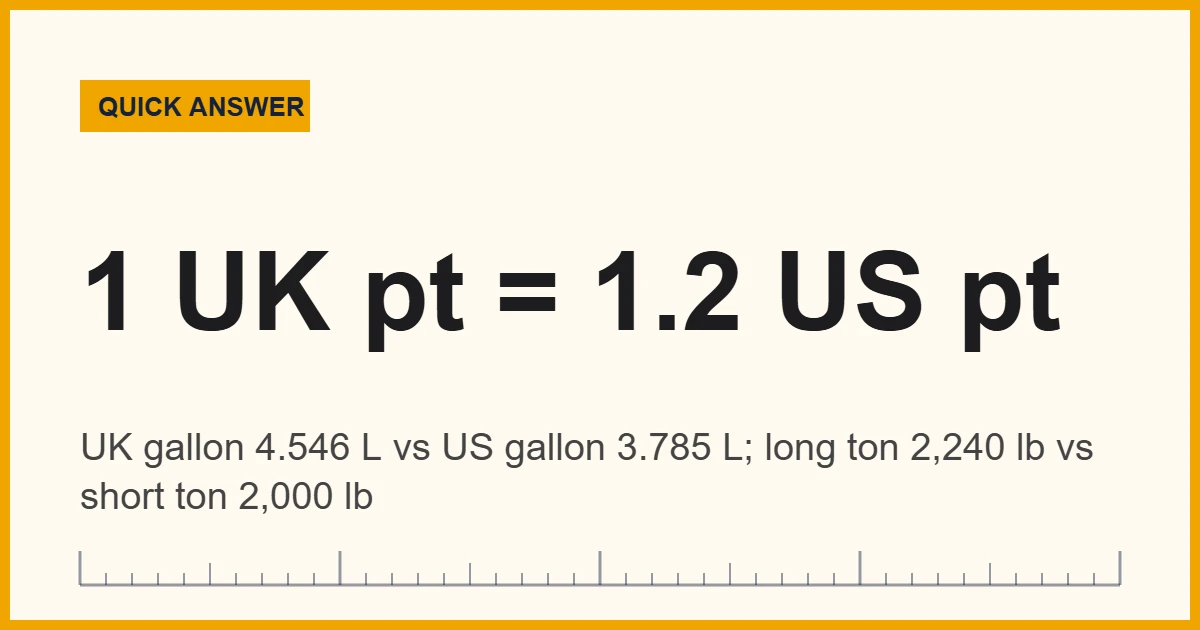
Americans and Britons both say “pint”, “gallon” and “ton”, yet they often mean different amounts. That is why a British pub pint looks generous to American visitors, and why a UK car’s miles per gallon figure seems better than the same car’s US rating. Meanwhile, both countries also use the metric system, each in its own way.
The key idea is that there are really three systems in play: US customary units, British imperial units, and the metric (SI) system. The first two grew from the same English roots, so many units are identical. A few, however, split apart in the early 1800s and never came back together.
In short: if you are converting length, area or body weight in pounds, nothing changes between the two countries. If you are converting liquid volume, fuel economy or tons, on the other hand, you must know which version you have.
Both governments define these units in metric terms. For example, the UK’s Weights and Measures Act 1985 fixes the yard at exactly 0.9144 meter and the pound at exactly 0.45359237 kilogram. The US uses the same two values, so an inch is 2.54 cm on both sides of the Atlantic.
Below you will find a converter, a side-by-side table, a closer look at gallons, pints, tons, stones and miles, and finally a short checklist for converting without mistakes.
US vs UK Units Converter: Pints, Gallons and Ounces
First, enter an amount and choose the unit you start with. The converter then shows US and UK pints, both kinds of fluid ounce, liters and US gallons, using the exact legal definitions.
The converter has no UK gallon or stone setting. Instead, multiply UK pints by 8 for UK gallons, and use the stone table further down for body weight.
Recommended Tools for Measuring in Both Systems
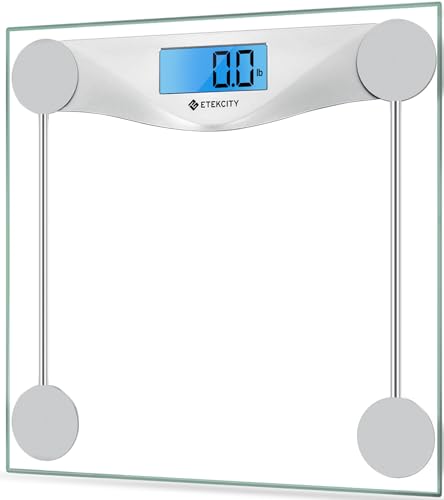
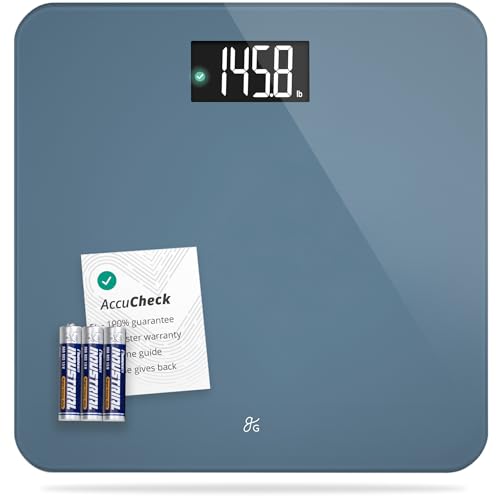
Above all, dual-unit tools save you from doing math at all. First, a bathroom scale that switches between pounds, kilograms and stones covers body weight for any reader. Next, a tape measure with inches on one edge and centimeters on the other handles length. Finally, a measuring pitcher marked in ounces and milliliters, plus a kitchen scale with gram and ounce modes, covers volume and weight.



As an Amazon Associate, Measuring Expert earns from qualifying purchases.
Key Takeaways
- Inches, feet, yards, miles, pounds and avoirdupois ounces are identical in the US and UK.
- A UK pint (20 UK fl oz) is about 20% bigger than a US pint (16 US fl oz).
- One UK gallon equals about 1.2 US gallons, so UK mpg figures look higher.
- Oddly, the US fluid ounce is about 4% larger than the UK fluid ounce.
- A US (short) ton is 2,000 lb, a UK (long) ton is 2,240 lb, and a metric tonne is 1,000 kg.
- Stones (14 lb each) are a British body-weight unit with no US use.
- Shops in Britain must sell goods in metric units, with a few legal exceptions such as draught beer.
Customary vs Imperial vs Metric: Three Systems, Not Two
People often say “the US uses imperial units”, but that is not quite right. The US uses US customary units, which kept older English definitions from before 1824. Britain, by contrast, created the imperial system in the Weights and Measures Act of 1824 and redefined several volume units at that time. As a result, the two systems agree on length and weight but not on liquid volume.
Meanwhile, the metric system sits above both. Since the 1959 international yard and pound agreement, the US, the UK and other English-speaking countries have defined the yard and the pound through the meter and the kilogram. So every customary and imperial unit is now legally a fixed fraction of a metric unit. For a wider look at how metric and non-metric units compare, see our guide to metric vs imperial measurement.
In daily life, Britain is mostly metric with imperial habits. The US, meanwhile, is mostly customary, although science, medicine, the military and many industries work in metric.
US vs UK Units Side by Side
First, this table lists the units people ask about most. In addition, it marks whether each one is the same or different in the two countries.
| Unit | US value | UK value | Same? |
|---|---|---|---|
| Inch | 2.54 cm | 2.54 cm | Yes |
| Foot | 0.3048 m (12 in) | 0.3048 m (12 in) | Yes |
| Yard | 0.9144 m (3 ft) | 0.9144 m (3 ft) | Yes |
| Mile | 1.609344 km (5,280 ft) | 1.609344 km (5,280 ft) | Yes |
| Ounce (weight) | 28.35 g | 28.35 g | Yes |
| Pound | 453.59 g (16 oz) | 453.59 g (16 oz) | Yes |
| Stone | Not used | 14 lb (6.35 kg) | UK only |
| Hundredweight | 100 lb (45.36 kg) | 112 lb (50.80 kg) | No |
| Ton | 2,000 lb (907.18 kg) | 2,240 lb (1,016.05 kg) | No |
| Fluid ounce | 29.57 mL | 28.41 mL | No |
| Pint | 16 US fl oz (473.18 mL) | 20 UK fl oz (568.26 mL) | No |
| Quart | 946.35 mL | 1,136.52 mL | No |
| Gallon | 3.785 L (231 cu in) | 4.546 L | No |
Gallons, Pints and Fluid Ounces
The US gallon comes from the old English wine gallon of 231 cubic inches, which equals exactly 3.785411784 liters. In 1824, however, Britain replaced its several gallons with one imperial gallon, based on the volume of 10 pounds of water. Today, as a result of later law, it is defined as exactly 4.54609 liters.
Because the UK gallon is bigger, everything divided from it is bigger too, with one twist. A UK pint holds 20 UK fluid ounces, whereas a US pint holds 16 US fluid ounces. Yet the US fluid ounce (29.57 mL) is slightly larger than the UK one (28.41 mL). Therefore, a UK pint equals about 19.2 US fluid ounces, not 20.
| Conversion | Result |
|---|---|
| 1 UK gallon in US gallons | 1.2009 US gal |
| 1 US gallon in UK gallons | 0.8327 UK gal |
| 1 UK pint in US pints | 1.2009 US pt |
| 1 UK pint in US fluid ounces | 19.22 US fl oz |
| 1 US gallon in UK pints | 6.66 UK pt |
| 1 UK gallon in US pints | 9.61 US pt |
| 10 US gallons | 37.85 L = 8.33 UK gal |
Even so, both systems still put 8 pints in a gallon and 2 pints in a quart. For the US breakdown into quarts, pints and cups, see how many pints are in a gallon. If your question is about recipes, cups and spoons rather than pints and gallons, our separate guide to UK cooking measurements covers the kitchen side.
Tons and Hundredweights: Short, Long and Metric
The word “ton” has three common meanings. First, the US short ton is 2,000 lb, or 907.18 kg. Second, the British long ton is 2,240 lb, or 1,016.05 kg, which is 12% heavier. Third, the metric tonne is exactly 1,000 kg, or about 2,204.62 lb.
Above all, the gap starts with the hundredweight. In the US, a hundredweight is 100 lb, so 20 of them make 2,000 lb. In Britain, by contrast, a hundredweight is 112 lb (8 stones), so 20 of them make 2,240 lb. Today the UK uses the metric tonne for almost all trade, while the long ton survives mainly in older records and in shipping terms such as displacement.
Stones: The UK Body-Weight Unit
To begin with, a stone is 14 pounds, or 6.35 kg. Britons and Irish people often state body weight in stones and pounds, for example “11 stone 2”. Americans, however, use pounds alone, so the same person would say “156 pounds”.
| Stones and pounds | Pounds | Kilograms |
|---|---|---|
| 8 st 0 lb | 112 lb | 50.80 kg |
| 9 st 7 lb | 133 lb | 60.33 kg |
| 11 st 0 lb | 154 lb | 69.85 kg |
| 12 st 6 lb | 174 lb | 78.93 kg |
| 14 st 4 lb | 200 lb | 90.72 kg |
| 16 st 0 lb | 224 lb | 101.60 kg |
To convert, multiply the stones by 14 and then add the leftover pounds. To go the other way, divide pounds by 14; the whole number is the stones and the remainder is the pounds. Meanwhile, British doctors and hospitals record weight in kilograms.
Miles, Feet and Inches: Where the Two Systems Agree
Length, by contrast, is the easy part. A mile is 5,280 feet, or 1,760 yards, in both countries, and it equals exactly 1.609344 km. Likewise, both countries show road distances in miles and speed limits in miles per hour. Our page on how many yards are in a mile breaks that down further.
There is one small US footnote. Until 2022, American land surveyors also used a “US survey foot” that was about 2 parts per million longer than the international foot. Since January 1, 2023, however, NIST says the survey foot should be avoided except for legacy data. For everyday use, a foot is simply 0.3048 meter everywhere.
Smaller differences are about habit, not size. For example, British road signs give short distances in yards, while US signs use feet or fractions of a mile.
Where You Still Meet US vs UK Units in Daily Life
Even though the units overlap, everyday use differs a lot. Next, this table shows what each country typically uses.
| Situation | United States | United Kingdom |
|---|---|---|
| Road distance and speed | Miles, mph | Miles, mph |
| Fuel at the pump | US gallons | Liters |
| Fuel economy | mpg (US gallon) | mpg (UK gallon), plus L/100 km |
| Beer in a bar | Varies, often 16 US fl oz | Pint (568 mL) by law for draught |
| Groceries | Pounds, ounces, fluid ounces | Grams, kilograms, liters |
| Body weight | Pounds | Stones and pounds, or kilograms |
| Height | Feet and inches | Feet and inches, or centimeters |
| Weather temperature | Fahrenheit | Celsius |
Fuel economy is where US vs UK units cause the most confusion. Because a UK gallon is bigger, a car rated 30 mpg in the US is about 36 mpg in UK terms. So a British review is not exaggerating; it simply uses a larger gallon. In metric, that same car uses about 7.8 L/100 km in both countries.
Retail rules also matter. According to UK government guidance, traders in Great Britain must sell goods in metric units. Draught beer and cider by the pint, milk in returnable containers, and precious metals by the troy ounce are the exceptions.
How to Convert US vs UK Units Without Mistakes
- Identify the quantity. Decide whether you are dealing with length, weight or volume, because only volume and large weights change between countries.
- Find out where the number came from. Check the country and age of the source, since an older British document may use imperial gallons or long tons.
- Convert to metric first. Change the starting value into liters, kilograms or meters using the exact definitions in the table above.
- Then convert to the target unit. Divide by the metric size of the unit you want, for example 4.54609 for UK gallons or 3.785411784 for US gallons.
- Round at the end. Keep full precision during the math, and only round the final answer to a sensible number of digits.
- Sanity-check the result. A UK pint or gallon should come out about 20% larger than the US one, and a long ton 12% larger than a short ton.
Alternatively, use the converter at the top of this page for pints, fluid ounces and gallons.
A Short History of the Split
Before 1824, England had several gallons at once, including a wine gallon and an ale gallon. The American colonies took these older units with them, and the young United States kept the 231-cubic-inch wine gallon for liquids. Britain then reformed its system in 1824, so the two countries went separate ways on volume.
Over time, both countries moved toward metric definitions. In the US, the Metric Act of 1866 made metric units legal in trade, and the Mendenhall Order of 1893 defined the yard and pound in metric terms. Later, the Metric Conversion Act of 1975 encouraged a voluntary switch that never fully happened. Britain, for its part, set up a Metrication Board in 1969 and moved most trade to metric units over the following decades.
Do and Don’t When Converting
Do
- Check whether a pint, gallon or ton is US or UK.
- Convert through liters or kilograms for accuracy.
- Look for “imperial” or “US” labels on old documents.
- Use a dual-unit scale or tape when you work in both systems.
- Quote fuel use in L/100 km when you compare cars internationally.
Don’t
- Assume a fluid ounce is the same size everywhere.
- Compare US and UK mpg figures directly.
- Treat “ton” and “tonne” as the same unit.
- Round 1.2009 to exactly 1.2 for large volumes.
- Forget that stones exist when reading British weights.
Honest Limits of Any Conversion Chart
The numbers on this page come from legal definitions, so they are exact before rounding. Real life is messier, though. For one thing, the US also has a dry pint (about 550.61 mL) and a dry gallon for things like berries, which differ from the liquid units in this article. In addition, drinks in bars rarely match a legal pint exactly unless the law requires it, as it does for UK draught beer. Finally, older British records may use local or pre-1824 units that no modern chart covers. In short, the definitions are precise, but you still need to know which unit the writer actually meant.
When to Call a Professional
For travel, shopping and general reading, the tables above are enough. However, some jobs need an expert. If you are importing goods, a customs broker can tell you which units labels and invoices must show. Likewise, land and property records that use the old US survey foot are best handled by a licensed surveyor. For engineering or shipping documents that mention tons or hundredweights, ask the issuer which ton they mean before you rely on the figure.
US vs UK Units: Frequently Asked Questions
What is the main difference in US vs UK units?
Liquid volume is the main difference. UK pints, quarts and gallons are about 20% larger than US ones, while lengths and everyday weights are identical.
Is a UK pint bigger than a US pint?
Yes. A UK pint is 568.26 mL and a US pint is 473.18 mL, so the UK pint is about 20% bigger.
Are miles the same in US vs UK units?
Yes. A mile is 5,280 feet, or exactly 1.609344 km, in both countries. Both also use miles per hour for speed limits.
How many US gallons are in a UK gallon?
One UK gallon equals about 1.2009 US gallons. Going the other way, one US gallon is about 0.8327 UK gallons.
Which is bigger, a US or UK fluid ounce?
The US fluid ounce is bigger, at about 29.57 mL versus 28.41 mL. The UK pint is still larger because it holds 20 fluid ounces instead of 16.
Do US vs UK units differ for pounds and ounces?
No. The pound is exactly 453.59237 g and the weight ounce is about 28.35 g in both countries.
What is a stone in pounds and kilograms?
A stone is 14 pounds, or about 6.35 kg. It is used in Britain and Ireland for body weight, but not in the US.
What is the difference between a ton and a tonne?
A US short ton is 2,000 lb, a UK long ton is 2,240 lb, and a metric tonne is 1,000 kg, which is about 2,204.62 lb.
Why do UK cars show higher mpg in US vs UK units?
UK mpg uses the larger imperial gallon. As a result, a car that gets 30 mpg in US terms gets about 36 mpg in UK terms.
Does the UK use the metric system?
Mostly. Shops must sell goods in metric units, but road signs use miles and yards, draught beer comes in pints, and many people give body weight in stones.
US vs UK Units: The Bottom Line
To sum up, the US and UK share the same inch, foot, yard, mile, pound and weight ounce. The real differences are in liquid volume, where UK pints and gallons are about 20% larger, and in tons, where the UK long ton is 240 lb heavier than the US short ton. Stones, meanwhile, are a British-only way to state body weight.
So whenever you see a pint, gallon, fluid ounce or ton, ask which country it came from before you convert. Then use the converter above, or convert through liters and kilograms, and you will get the right answer every time.