

The best way to measure ingredients for diabetic recipes is to weigh them on a digital kitchen scale, then match the grams to the carbohydrate listed on the food label. Measuring cups and spoons work for liquids and small amounts. Ask your dietitian for your personal carbohydrate targets.
Convert Grams and Ounces for Diabetic Recipes
Many nutrition labels list grams, while many US recipes list ounces. Therefore, a quick converter saves time when you build diabetic recipes from a label or a food chart. Type an amount, pick the unit you have, and read the other units below it.
Why Measuring Matters in Diabetic Recipes
Every carbohydrate count starts with an amount of food. If the amount is off, the count is off too. For example, a label that lists 30 grams of carbohydrate per cup tells you nothing useful when your “cup” is really a heaping cup and a half.
Diabetic recipes add a second layer. A recipe makes several servings, so each ingredient error spreads across the whole dish. As a result, a careless scoop of flour or oats in the mixing bowl changes the carbohydrate total for every portion you serve.
Fortunately, the fix is simple: measure the same way every time, and prefer weight over volume when the ingredient is dry or sticky. The National Institute of Diabetes and Digestive and Kidney Diseases (NIDDK) says you can weigh food on a scale or measure it with cups and spoons to estimate its carbohydrate. This guide focuses on the measuring side only: scales, cups, spoons and portion math.
Recommended Tools for Measuring Diabetic Recipes
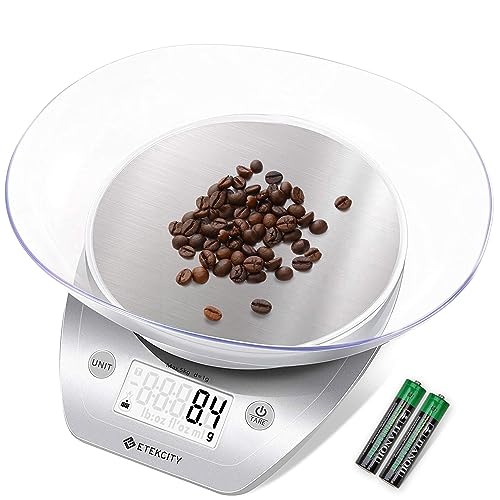
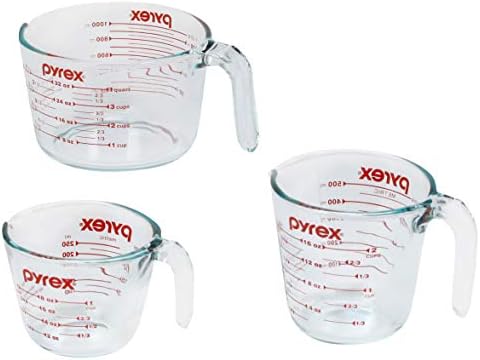
You do not need a drawer full of gadgets. First, buy a digital scale with a tare button and a display that shows grams. Next, add a set of measuring spoons and a clear liquid measuring cup. In addition, a scale that reads in 1 g steps is enough for most home cooking.



As an Amazon Associate, Measuring Expert earns from qualifying purchases.
Key Takeaways
- Weigh dry and sticky ingredients; use cups and spoons for liquids and small amounts.
- Press the tare button before every new ingredient so the bowl never counts.
- Match grams on your scale to the grams on the label, not to a guessed cup.
- Check the serving size and the servings per container before you do any math.
- Divide the recipe total by the number of equal portions to get carbohydrate per serving.
- Record raw or cooked for each weight, because the two are not interchangeable.
- Take personal targets to a dietitian instead of copying a number from the internet.
How to Weigh Ingredients for Diabetic Recipes
Weighing takes about as long as scooping once you know the routine. Follow these steps for each ingredient in the recipe.
- Set the scale on a flat surface. A tilted counter shifts the reading by a few grams.
- Choose grams. Grams are finer than ounces, so small errors show up on the display.
- Place the empty bowl and press tare. The display returns to zero, so only the food counts.
- Add the first ingredient until the display matches the recipe. Spoon it in slowly near the target weight.
- Press tare again before the next ingredient. This lets you build the whole recipe in one bowl.
- Write the weights down the first time. Later batches then repeat the same numbers.
- Divide the finished dish into equal portions. Weigh the total, then split it by the number of servings.
Scale vs Measuring Cups for Diabetic Recipes
A cup measures space, not food. How much fits in that space depends on the ingredient and on how you fill it. Consequently, two cooks can follow the same recipe and end up with different carbohydrate totals.
King Arthur Baking publishes an ingredient weight chart that makes the point clearly. It lists a cup of all-purpose flour at 120 g (4 1/4 oz), and it recommends weighing ingredients on a digital scale for best results. The table below shows a few of its cup weights next to the gram and ounce values.
| Ingredient (1 US cup) | Grams | Ounces (weight) |
|---|---|---|
| All-purpose flour | 120 g | 4.23 oz |
| Granulated sugar | 198 g | 6.98 oz |
| Brown sugar, packed | 213 g | 7.51 oz |
| Almond flour | 96 g | 3.39 oz |
| Old-fashioned or quick-cooking oats | 89 g | 3.14 oz |
| Brown rice, cooked | 170 g | 6.00 oz |
Notice the spread: a cup of almond flour weighs less than half as much as a cup of granulated sugar. For that reason, “one cup” says very little about how much food you actually eat. If you want to understand the difference between weight ounces and fluid ounces, read how much an ounce is.
Reading Labels to Count Carbs in Diabetic Recipes
The label is the bridge between grams on your scale and grams of carbohydrate. According to the FDA, all nutrient amounts on the label refer to the serving size, so eating two servings doubles every number. The FDA example label shows 34 g of total carbohydrate in a 1-cup serving, which makes 68 g for two servings.
The same page also tells you to check the number of servings per container. A package with 4 servings at 34 g each holds 136 g of carbohydrate in total. Therefore, the whole-package number is easy to miss if you read only the per-serving line.
Scaling a label to your weighed portion
Many labels list a serving in both a household measure and grams. You can use the gram figure to scale the carbohydrate to any weight. The example below uses a made-up label with 27 g of carbohydrate in a 40 g serving.
| Weighed portion | Math | Carbohydrate |
|---|---|---|
| 40 g (one serving) | 27 x 40 / 40 | 27.0 g |
| 55 g | 27 x 55 / 40 | 37.1 g |
| 80 g (two servings) | 27 x 80 / 40 | 54.0 g |
| 100 g | 27 x 100 / 40 | 67.5 g |
NIDDK gives a household-measure version of the same idea. If a label shows 45 g of carbohydrate in 1 1/2 cups of cereal, then 1/2 cup has 15 g and 1 cup has 30 g. In both cases, you divide first and multiply second.
For homemade dishes, NIDDK says to add up the grams from each ingredient. Use the label on each package, or a food database, then total the column. A recipe with no label of its own still has a carbohydrate count that you can build from its parts.
Portion Sizes: Dividing a Recipe Into Servings
Once you know the recipe total, portion size controls the per-serving number. Suppose your weighed ingredients add up to 180 g of carbohydrate. Twelve equal portions give 15 g each, while ten portions give 18 g each and eight portions give 22.5 g each.
| Recipe total | Servings | Carbohydrate per serving |
|---|---|---|
| 180 g | 8 | 22.5 g |
| 180 g | 10 | 18.0 g |
| 180 g | 12 | 15.0 g |
To keep portions equal, weigh the finished dish and divide by the number of servings. For example, a 1,200 g casserole cut into 8 servings gives 150 g per portion. Likewise, you can weigh each muffin or bar if the batch makes uneven pieces.
NIDDK also lists several foods that contain about 15 g of carbohydrate per serving, such as 1 slice of bread, 1/3 cup of pasta or rice, and 1/2 cup of canned or fresh fruit. These are reference points for building a meal plan with your care team. They are not a prescription. If you freeze portions for later, our guide to freezing meal portions shows how to size and label them.
Measuring Liquids and Sticky Sweeteners in Diabetic Recipes
Liquids behave differently from dry foods. Use a clear liquid cup, set it on a flat counter, and read the line at eye level. For small amounts, use measuring spoons and fill them to the brim over a separate bowl.
Thick sweeteners are the exception, because they cling to the spoon. King Arthur lists honey at 21 g per tablespoon, so 3 tablespoons is 63 g. Weighing it directly into the bowl is easier than scraping spoons. In addition, a light coat of oil on the spoon helps sticky foods slide out.
Spoon sizes also matter. A US tablespoon holds 14.79 mL, while a metric tablespoon holds 15 mL. The difference is small, but the guide to how much 30 mL is in spoons and ounces explains how it adds up in larger amounts.
Do and Don’t When Measuring for Diabetic Recipes
Do
- Weigh dry ingredients in grams.
- Tare the bowl before each addition.
- Read the serving size and the servings per container.
- Level every spoon and cup with a straight edge.
- Save your weights on the recipe card.
Don’t
- Scoop flour straight from the bag and call it one cup.
- Mix up raw and cooked weights.
- Guess a serving by eye and skip the scale.
- Round every amount up or down without checking the total.
- Copy another person’s targets instead of asking a dietitian.
Honest Limits of Measuring Diabetic Recipes
Measuring reduces error, but it does not remove it. Nutrition labels describe the product as packaged, and foods vary from batch to batch. Moreover, a scale only reports weight, so it cannot tell you how much of that weight is carbohydrate. You still need a label or a database for that part.
Scales have limits too. Cheap models can drift when batteries run low, and very small amounts such as a pinch of spice fall below their resolution. In short, treat your carbohydrate totals as careful estimates. Consistent habits matter more than chasing a perfect number.
When to Ask a Dietitian About Diabetic Recipes
Measuring tells you what is on the plate. A professional tells you what should be there. NIDDK notes that a dietitian or diabetes educator can build a carbohydrate-counting plan around your weight, activity, medicines and blood glucose targets. The ADA adds that a registered dietitian can help you find the counting method that works for you.
Bring your recipe cards, your scale weights and the labels you use to your next appointment. Ask how many portions you should plan for, which swaps are right for you, and how to fit sweets into your eating plan. Then update your recipes together.
Frequently Asked Questions About Diabetic Recipes
What is the best way to measure ingredients for diabetic recipes?
Weigh them on a digital kitchen scale in grams, then match the weight to the carbohydrate on the label. Use cups and spoons for liquids and small amounts.
Is a kitchen scale better than measuring cups?
Yes, for dry and sticky ingredients. A cup of all-purpose flour is listed at 120 g, but a packed or heaped cup can weigh more, so weight is more repeatable than volume.
How do I count carbs from a food label?
Find the serving size and the total carbohydrate line. Then multiply by the number of servings you eat. Two servings of a 15 g food make 30 g.
How do I work out carbs per serving in diabetic recipes?
Add the carbohydrate from each ingredient, then divide by the number of equal portions. A 180 g total split into 12 portions gives 15 g each.
How many grams is a cup of flour?
King Arthur Baking lists a cup of all-purpose flour at 120 g, which is about 4.23 oz. Other flours differ, so check the chart for the one you use.
Should I weigh food raw or cooked?
Either works if you match the label. Dry rice and cooked rice differ greatly in weight, so weigh the food in the same state the label describes.
What does a 15 gram carbohydrate serving look like?
NIDDK lists examples such as 1 slice of bread, 1/3 cup of pasta or rice, and 1/2 cup of fruit. These are reference amounts, not a personal target.
What is the most accurate way to measure flour and sugar in diabetic recipes?
Weigh them in grams. Place the bowl on the scale, press tare, and add the ingredient until the display reaches the recipe weight.
Can I use measuring spoons for honey or syrup?
You can, but weighing is more accurate. King Arthur lists honey at 21 g per tablespoon. Put the bowl on the scale and pour directly.
Who sets my carbohydrate targets?
Your doctor, registered dietitian or diabetes educator. This site covers measuring only, so take your recipes and weights to them for personal advice.
Diabetic Recipes: The Bottom Line
To sum up, a digital scale, a tare button and a habit of writing weights down give you the most repeatable results for diabetic recipes. Use the label to turn grams into carbohydrate, divide the recipe total by equal portions, and keep cups and spoons for liquids.
Finally, remember that measuring supports your care plan; it does not replace it. Share your recipes with a dietitian, and use the converter at the top of this page whenever a label and a recipe use different units.