

To measure food gift ingredients well, weigh them in grams on a digital scale, because a cup of flour and a cup of sugar hold very different weights. Weigh one gift’s worth, multiply by the number of gifts, and check each filled jar or bag against its target weight before you label it.
In fact, food gifts multiply small mistakes. For example, a recipe that is slightly off for one loaf is slightly off for every loaf in the batch, and the person unwrapping it cannot fix it. Likewise, cookie mixes, spice blends, granola, fudge and bagged nuts all depend on the same habit: decide the amount, measure it the same way every time, and record it.
This guide covers the parts that gift makers actually run into. First, it explains why weight beats cups. Next, it shows how to scale a recipe for 6 or 12 gifts, how much a jar really holds, and how to label the result. The ingredient weights come from the King Arthur Baking ingredient weight chart, and the safety points come from NC State Extension guidance on holiday food gifts.
Convert Gift Weights Between Grams, Ounces and Pounds
Most US recipes list cups, while scales and labels use grams and ounces. Next, enter a weight below to switch between them. In addition, the converter uses the exact definitions of the ounce and the pound.
Why Weight Beats Cups When You Measure Food Gift Ingredients
First, a cup measures space, not amount. Flour that was sifted, scooped or spooned into the cup can differ noticeably in weight, whereas 120 grams is always 120 grams. As a result, weighing gives the same cookie mix in jar number one and jar number twelve.
Different ingredients also fill a cup very differently. For example, a cup of granulated sugar is about 1.65 times heavier than a cup of all-purpose flour. The table below uses the King Arthur chart, so you can convert a cup-based recipe to grams once and reuse the numbers.
| Ingredient (1 US cup) | Grams | Ounces |
|---|---|---|
| All-purpose flour | 120 g | 4 1/4 oz |
| Granulated sugar | 198 g | 7 oz |
| Brown sugar, packed | 213 g | 7 1/2 oz |
| Confectioners’ sugar, unsifted | 113 g | 4 oz |
| Butter (16 tbsp) | 226 g | 8 oz |
| Unsweetened cocoa | 84 g | 3 oz |
| Chocolate chips | 170 g | 6 oz |
| Old-fashioned or quick oats | 89 g | 3 1/8 oz |
| Pecans, whole | 105 g | 3 3/4 oz |
| Walnuts, chopped | 113 g | 4 oz |
| Raisins, loose | 149 g | 5 1/4 oz |
| Dried cranberries | 114 g | 4 oz |
The cocoa and cranberry rows are doubled from the chart’s half-cup values. Similarly, the butter row is eight tablespoons doubled. For a cup-to-milliliter refresher, see how much 30 mL is in spoons and ounces.
Recommended Tools to Measure Food Gift Ingredients
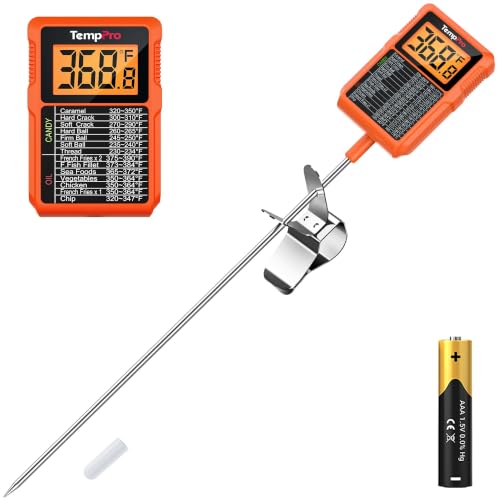
A digital scale with a tare button is the most useful tool here. Also, look for a capacity of at least 11 pounds so a full jar fits, and for 1 gram steps. Meanwhile, measuring spoons still cover leaveners and spices, and a candy thermometer helps with fudge and caramel. Our guides to kitchen scales and food measuring cups go deeper on each type.


As an Amazon Associate, Measuring Expert earns from qualifying purchases.
Key Takeaways
- Weigh in grams whenever you can; cups vary with how you fill them.
- Convert the recipe to grams once, then multiply by the number of gifts.
- Scale salt, baking soda and baking powder by the same factor as everything else.
- A quart jar holds about 4 cups, so check the total volume of a mix before you buy jars.
- One tablespoon of salt can weigh 8 g, 16 g or 18 g, depending on the type.
- Weigh each finished gift and write the net weight and ingredients on the label.
- Do not seal a cake or bread baked inside a jar; give dry mixes instead.
Scaling a Recipe to Measure Food Gift Ingredients for Many Gifts
Scaling is simple multiplication, but only if every ingredient starts in grams. First, write the weight of each ingredient for one gift. Then multiply by the number of gifts. Finally, weigh the full batch into one large bowl before you divide it.
The example below is a cookie mix of the kind often layered in a quart jar. It is only an illustration, so use the amounts from your own tested recipe. Each jar holds about 483 g of flour, sugar and chips (roughly 17 oz), plus the leaveners and salt.
| Ingredient | Per jar | 6 jars | 12 jars |
|---|---|---|---|
| All-purpose flour | 150 g (1 1/4 cups) | 900 g (7 1/2 cups) | 1,800 g (15 cups) |
| Granulated sugar | 99 g (1/2 cup) | 594 g (3 cups) | 1,188 g (6 cups) |
| Brown sugar, packed | 106.5 g (1/2 cup) | 639 g (3 cups) | 1,278 g (6 cups) |
| Chocolate chips | 127.5 g (3/4 cup) | 765 g (4 1/2 cups) | 1,530 g (9 cups) |
| Baking soda | 1/2 tsp | 3 tsp (1 tbsp) | 6 tsp (2 tbsp) |
| Salt | 1/2 tsp | 3 tsp (1 tbsp) | 6 tsp (2 tbsp) |
However, the cup column is a convenience, not the method. In practice, the gram column is what you set on the scale. If you only have cups, spoon the flour into the cup and level it, and then expect slightly more variation between jars.
Jar Sizes and Fill Weights for Dry Mix Gifts
However, jar sizes are nominal. A “quart” jar holds 32 fluid ounces of water, which is 4 US cups or about 946 mL. Meanwhile, a pint holds 2 cups, and a half-pint holds 1 cup. Dry mixes leave some headroom, so work out the total volume of the layers first.
| Jar | Fluid ounces | Cups | Milliliters |
|---|---|---|---|
| Half-pint | 8 fl oz | 1 cup | 236.6 mL |
| Pint | 16 fl oz | 2 cups | 473.2 mL |
| Quart | 32 fl oz | 4 cups | 946.4 mL |
The example cookie mix above uses 1 1/4 + 1/2 + 1/2 + 3/4 cups, which is 3 cups of layers. That fits a quart jar with about a cup to spare, but it would not fit a pint. As a result, you can check jar sizes before the shopping trip instead of during assembly.
Layered mixes look best when each layer is level. However, pressing flour down changes its volume while the weight stays the same. That is another reason to weigh each layer and tap the jar gently instead of packing it.
Measure Food Gift Ingredients for Spice Blends and Rubs
Spice blends are easiest to scale by parts. First, choose the total weight you want, add up the parts, and divide. For example, a 100 g blend in a 4:2:1:1 ratio has 8 parts in total, so each part is 12.5 g. As a result, that gives 50 g, 25 g, 12.5 g and 12.5 g. Because 12.5 g falls between scale steps, a 0.1 g spice scale helps with small batches.
Next, salt deserves extra care. According to the King Arthur chart, one tablespoon of table salt weighs about 18 g. By comparison, a tablespoon of Diamond Crystal kosher salt weighs about 8 g, and Morton kosher salt about 16 g. In short, swapping one salt for another by volume can double or halve the saltiness of every jar.
| Salt (1 tablespoon) | Approximate weight |
|---|---|
| Table salt | 18 g |
| Morton kosher | 16 g |
| Diamond Crystal kosher | 8 g |
Finally, honey is a handy comparison for sticky gifts. One tablespoon is about 21 g, so a 250 g jar holds roughly 12 tablespoons. Our guide to the ounce also explains why weight ounces and fluid ounces differ.
Candy, Fudge and Caramel Gifts: Measure Temperature Too
Also, sugar candy depends on temperature as much as on weight. For instance, a few degrees decide whether fudge sets, stays soft or turns grainy. Therefore, weigh the ingredients as usual and then cook to the exact temperature in your recipe.
A thermometer can drift, so test it before each season. First, put the probe in a pot of boiling water and note the reading. Water boils at a lower temperature as elevation rises, so compare the result with your local boiling point and adjust the recipe target by the same difference. Likewise, a probe that reads high or low in ice water is a sign it needs replacing.
How to Measure Food Gift Ingredients Step by Step
- Set the batch size. Decide how many gifts you are making and how much goes in each one.
- Convert to grams. Use the weight chart above or the converter at the top of this page.
- Multiply every line. Include the salt, spices and leaveners, not only the main ingredients.
- Weigh into one bowl. Put the bowl on the scale, press tare, and add each ingredient in turn, pressing tare between them.
- Portion by weight. Place each empty jar or bag on the scale, tare, and add the target amount.
- Weigh and label. Record the net weight of the finished gift and list the ingredients on the label.
Labeling Gifts With Weights, Ingredients and Storage
In fact, a label turns a jar into a gift someone can use safely. List every ingredient so recipients can check for allergies, which is a point NC State Extension makes for baked goods. In addition, write the net weight in grams and ounces, the date you made it, and the storage instructions from your recipe.
If the gift is home-canned food, remember that opened jars need refrigeration, and that only tested recipes belong in a jar. Our guide to measuring ingredients for canning covers headspace, acid and salt in detail. Finally, if you plan to sell rather than give, state and local cottage food rules may apply, so check with your local health department.
Do and Don’t for Food Gift Batches
Do
- Weigh in grams and write the amounts down.
- Tare the container before every ingredient.
- Scale salt and leaveners with the rest of the recipe.
- Check jar volume before you buy jars.
- List ingredients and allergens on every label.
Don’t
- Pack flour into a cup to fit more in.
- Swap one kind of salt for another by volume.
- Seal a baked cake or bread inside a jar.
- Change the acid or sugar in a tested canning recipe.
- Trust a thermometer you have not checked this season.
Honest Limits of Weight Charts and Scales
In short, weight charts are averages. The 120 g per cup figure for flour comes from King Arthur’s own measurements, and other sources list slightly different numbers. Pick one source and use it for the whole batch, so every jar matches. Moreover, humidity, brand and grind change how an ingredient behaves in the cup, though not on the scale.
However, scales have limits as well. A scale that reads in 1 g steps is fine for flour and sugar, but it can be off by a large percentage on 2 g of baking soda. Therefore, for tiny amounts, a 0.1 g scale or a level measuring spoon is more reliable. Finally, a low battery can shift readings, so replace it before a big batch.
Food Safety for Homemade Gifts
NC State Extension lists dry spice mixes, baking mixes and breads as the lowest-risk gifts. It also says to keep baked goods covered. In addition, baked goods with cream, custard, cheese, meat or vegetable fillings, and cream frostings, need refrigeration. The same source says not to gift infused alcohol, because no researched safe home recipes exist for it.
Therefore, when you are unsure, choose a dry mix. In addition, it travels well, it stays stable, and it moves the baking step to the recipient’s kitchen.
Frequently Asked Questions
What is the best way to measure food gift ingredients?
Weigh them in grams on a digital scale with a tare button. Weight stays the same no matter how an ingredient is scooped, so every gift in a batch matches.
Do I need a scale to measure food gift ingredients?
No, but it helps. Spoon-and-level cups work for small batches. For a dozen or more gifts, a scale saves time and keeps each jar the same.
How do I scale a recipe to measure food gift ingredients for 12 gifts?
Write each ingredient in grams for one gift and multiply by 12. Include the salt and leaveners, then weigh the full batch before dividing it into jars.
How many cups of flour do I need for 12 jars?
It depends on the recipe. If each jar uses 1 1/4 cups (150 g), 12 jars need 15 cups, which is 1,800 g.
Can I measure food gift ingredients with cups instead?
Yes, with care. Spoon flour into the cup and level it, and do not pack it. Expect more jar-to-jar variation than with a scale.
How much does a quart jar hold?
A quart jar holds 32 fluid ounces, which is 4 US cups or about 946 mL of water. Dry mixes usually leave some headroom.
Why do some recipes list kosher salt by weight?
Kosher salts differ in crystal size, so a tablespoon weighs about 8 g for Diamond Crystal and about 16 g for Morton. Weight avoids a mix that is twice as salty as intended.
Is it safe to bake a cake in a jar and seal it as a gift?
NC State Extension advises against it. Give a dry mix with baking instructions, or give baked goods in a covered container.
What should I write on the label of a food gift?
List all ingredients, note common allergens, and add the net weight, the date made and storage instructions. Mention refrigeration if the food needs it.
How many ounces are in 250 grams?
There are about 8.82 ounces in 250 grams. Divide the grams by 28.3495 to get ounces.
Measure Food Gift Ingredients: The Bottom Line
To sum up, weigh the ingredients, multiply by the number of gifts, and check each finished jar on the scale. Convert cup recipes to grams once, keep the numbers in a notebook, and reuse them next season.
Finally, remember that the label is part of the gift. Write the ingredients, the net weight and the storage steps, and choose dry mixes when you want the safest, longest-lasting present.