

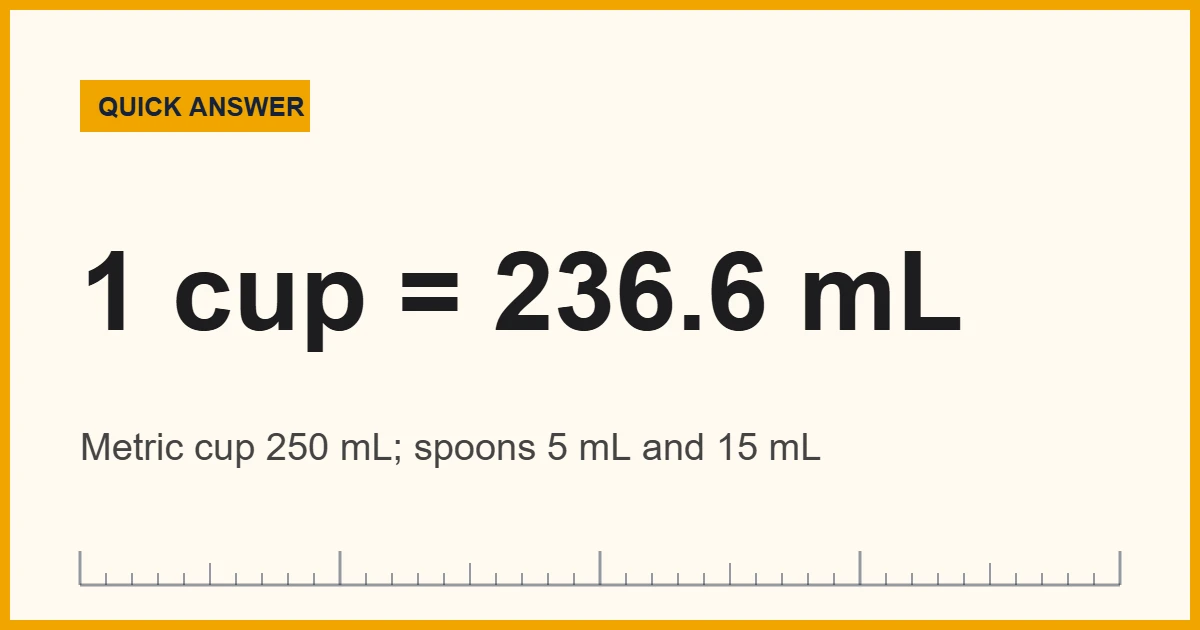
Indian cooking measurements come down to one habit: pick one cup size and stick with it. A metric recipe usually means a 250 mL cup, while US recipes use a 236.6 mL cup (240 mL on labels). Spoons are 5 mL and 15 mL. For flours, lentils and rice, however, grams are far more reliable than cups.
Convert Indian Cooking Measurements: Cups, Spoons and mL
Enter an amount and pick the unit your recipe uses. The converter shows the exact US value, the metric cup, the label cup and both spoon sizes side by side, so you can see how far apart two “cups” really are.
Indian recipes are written in many styles. Some use grams, some use cups, and many older family recipes use a katori (a small steel bowl) or a handful. As a result, the same dal can taste quite different from one kitchen to the next. Indian cooking measurements are not hard, but they do need a clear starting point.
Fortunately, the starting point is simple. The US National Institute of Standards and Technology (NIST) lists 5 mL for a teaspoon, 15 mL for a tablespoon and 240 mL for a cup in its metric kitchen equivalents. In addition, the exact US cup is 236.59 mL, and many metric recipes use 250 mL. This page shows how to handle all three, plus weights for the flours and sugar you reach for most often.
- 1 US cup is 236.59 mL (240 mL on labels); a metric cup is 250 mL.
- 1 teaspoon is about 5 mL and 1 tablespoon is about 15 mL.
- A katori has no standard size, so check what yours holds in mL.
- Weigh flours, besan and rice flour; a cup of each holds a very different weight.
- Level every spoon and add spices in small steps, then taste.
- Keep one set of tools for the whole recipe.
Indian Cooking Measurements by Weight: Flours and Sugar
Volume is convenient, but it hides a lot of variation. For example, a cup of chickpea flour (besan) is much lighter than a cup of white rice flour. The King Arthur Baking ingredient weight chart gives the following values for one US cup, measured with their method.
| Ingredient (1 US cup) | Grams | Ounces |
|---|---|---|
| All-purpose flour (maida) | 120 g | 4 1/4 oz |
| Chickpea flour (besan) | 85 g | 3 oz |
| White rice flour | 142 g | 5 oz |
| Granulated sugar | 198 g | 7 oz |
| Brown sugar, packed | 213 g | 7 1/2 oz |
First, water is the easy case. Since 1 mL of water weighs about 1 g, a US cup of water is close to 237 g. Whole wheat atta, semolina (sooji) and lentils are not on that chart, so weigh your own and write the number in the margin of the recipe. After that, you can repeat it exactly.
Recommended Tools for Indian Cooking Measurements
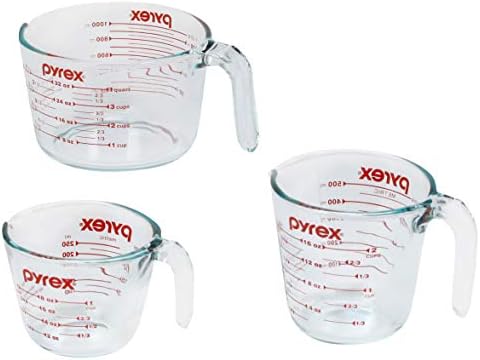
In fact, you do not need much. First, a digital scale with a tare button handles flours, lentils and rice. Next, a set of metal measuring spoons covers spices, salt and oil. Finally, a clear liquid cup with mL markings settles any cup-size argument, because you can read the metric amount directly.



As an Amazon Associate, Measuring Expert earns from qualifying purchases.
How to Follow Indian Cooking Measurements Step by Step
- Check the unit system. Look for mL and grams (metric) or cups and ounces (US). If the recipe only says “cup”, assume 250 mL for a metric recipe and 240 mL for a US one.
- Pick one cup. Use that same cup for rice, water and lentils in the whole recipe so the ratios stay consistent.
- Weigh the flours. Place a bowl on the scale, press tare, and add the flour until you hit the target grams.
- Level the spoons. Fill a dry spoon past the rim, then sweep a straight edge across the top.
- Measure liquids at eye level. Set the cup on a flat counter and read the line from the side.
- Taste and adjust. Add chili and salt in small steps, because you can add more but cannot take it out.
Katori, Handful and Pinch: Traditional Indian Cooking Measurements
Also, many home cooks measure with a katori, a handful or a pinch. These methods work well for the person who uses them every day, because their hands and bowls stay the same. For anyone else, however, they need a translation. A pinch has no official size at all, while katori sets differ from brand to brand.
To translate your own katori, fill it level with water and pour it into a marked cup. Then write the mL on the recipe. For example, a 150 mL katori is about 0.63 US cup, and a 200 mL katori is about 0.85 US cup.
| Traditional measure | How to translate it |
|---|---|
| 1 katori | Fill it with water and read the mL; sizes differ between sets |
| 1 handful | Scoop one handful onto a scale once, then record the grams |
| 1 pinch | No standard; start with a small fraction of a teaspoon and taste |
| 1 glass | Check the mL printed on the base or measure with water |
Measuring Spices in Indian Cooking
Spices are the point where small errors show up fastest. For instance, salt is a good example. The same tablespoon holds very different weights depending on the type: the King Arthur chart lists 8 g for Diamond Crystal kosher salt, 16 g for Morton kosher salt and 18 g for table salt. Because of that, a recipe that says “1 tablespoon salt” can be twice as salty with one brand than with another.
| Salt (1 tablespoon) | Weight |
|---|---|
| Diamond Crystal kosher | 8 g |
| Morton kosher | 16 g |
| Table salt | 18 g |
The same idea applies to ground spices such as turmeric, coriander and chili powder. They pack differently depending on how fresh and fine they are. Consequently, level every spoon, and add hot spices in two or three small rounds.
Scaling Indian Cooking Measurements Up or Down
Halving or doubling a recipe sounds easy, but not every ingredient scales the same way. Start with a multiplier. For a recipe that serves 4 and a table of 6, multiply by 6 / 4 = 1.5. Multiply the main ingredients by that number first.
Then treat salt, chili and other strong spices with care. Add about the scaled amount, taste near the end, and adjust. In addition, a bigger pot changes how quickly water evaporates, so gravies may need a different cooking time. Finally, keep notes on what you changed.
Common Indian Cooking Measurements Mistakes
- Mixing two cup sizes. Using a 250 mL cup for rice and a 240 mL cup for water changes the ratio slightly.
- Scooping flour straight from the bag. This packs it and adds weight.
- Confusing tsp and tbsp. A tablespoon is 3 teaspoons, so one slip triples the spice.
- Trusting an unmeasured katori. Its size may not match the recipe writer’s bowl.
- Measuring hot oil in plastic. Use a metal spoon or a heat-safe cup instead.
For a deeper look at spoons, see our guide on how much 30 mL is in spoons and ounces. Our page on how much an ounce is explains the weight versus fluid ounce confusion.
Do and Don’t for Indian Cooking Measurements
Do
- Weigh flours and besan on a scale.
- Level every dry spoonful.
- Measure your katori once and note the mL.
- Read liquid cups at eye level.
- Write down the final amounts that worked.
Don’t
- Pack flour or besan into a cup.
- Swap kosher and table salt one for one.
- Assume every “cup” is 250 mL.
- Use heaping spoons unless asked.
- Add all the chili in the first step.
Related Cooking Measurements From Other Cuisines
Many of the same rules carry over. Similarly, if you cook across cuisines, our pages on Chinese cooking measurements and Middle Eastern cooking measurements show how other kitchens handle spoons, cups and weights.
Honest Limits of Indian Cooking Measurements
Unfortunately, no chart can promise the exact amount for every kitchen. For example, flour weight changes with humidity and how it was stored. Likewise, spice strength changes with freshness. Also, measuring spoons and cups differ slightly between makers. In short, the numbers on this page are a reliable starting point, not a guarantee. Taste, look and adjust, and use weight when a recipe is sensitive.
When Accuracy Really Matters in Indian Cooking Measurements
Overall, everyday curry forgives a lot. Still, a few jobs need care:
- Breads and batters. Dosa, idli and roti dough depend on the flour-to-water ratio, so weigh the flour.
- Sweets. Sugar syrup stages and milk-based sweets react badly to errors.
- Food safety. For canning, curing or pickling, follow tested recipes exactly and do not guess amounts.
Indian Cooking Measurements FAQs
How much is 1 cup in Indian cooking?
It depends on the recipe. A metric cup is 250 mL, while a US cup is about 236.6 mL and 240 mL on labels. So pick one size and use it throughout the recipe.
How many mL is a teaspoon and a tablespoon?
A teaspoon is about 5 mL and a tablespoon is about 15 mL in metric and nutrition-label measures. The exact US values are 4.93 mL and 14.79 mL.
How big is a katori?
There is no standard size. Katori sets differ, so fill yours with water and read the amount in a marked cup.
How many teaspoons are in a tablespoon?
There are 3 teaspoons in 1 tablespoon. Australian tablespoons are larger, at 20 mL.
Should I measure Indian flours by cup or by weight?
Weight is better. A cup of besan is about 85 g, while a cup of white rice flour is about 142 g, according to King Arthur Baking.
How much does 1 cup of all-purpose flour weigh?
King Arthur Baking lists 120 g for one US cup of all-purpose flour.
How much does a tablespoon of salt weigh?
It depends on the salt: 8 g for Diamond Crystal kosher, 16 g for Morton kosher and 18 g for table salt.
How do I measure a pinch of spice?
A pinch has no official size. Start with a small amount, taste, and add more if needed.
How do I scale an Indian recipe for more people?
Divide the new number of servings by the old one, then multiply the main ingredients by the result. Add salt and chili more slowly and taste.
Do I need a kitchen scale for Indian cooking?
You can cook without one, but a scale makes flours, besan and rice flour far more consistent from batch to batch.
Indian Cooking Measurements: The Bottom Line
To sum up, choose one cup size, confirm what your katori holds, and weigh the flours. Spoons are 5 mL and 15 mL, and every spoonful should be level.
Finally, use the converter at the top of this page whenever a recipe switches between cups, spoons and milliliters, and keep notes on the amounts that worked.