

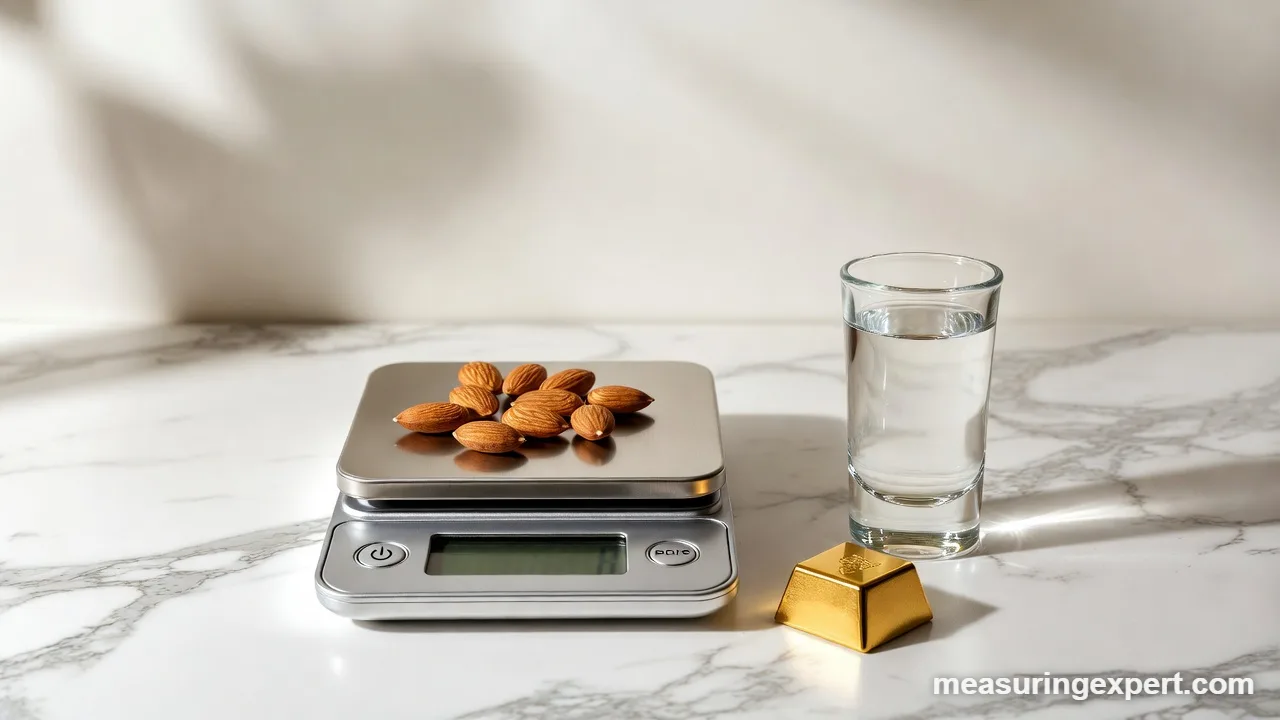
One ounce (oz) of weight equals exactly 28.349523125 grams, or about 28.35 g, and 16 oz make 1 pound. However, a troy ounce for gold and silver is heavier at 31.10 g. A US fluid ounce, by contrast, measures volume: about 29.57 mL, or 2 tablespoons.
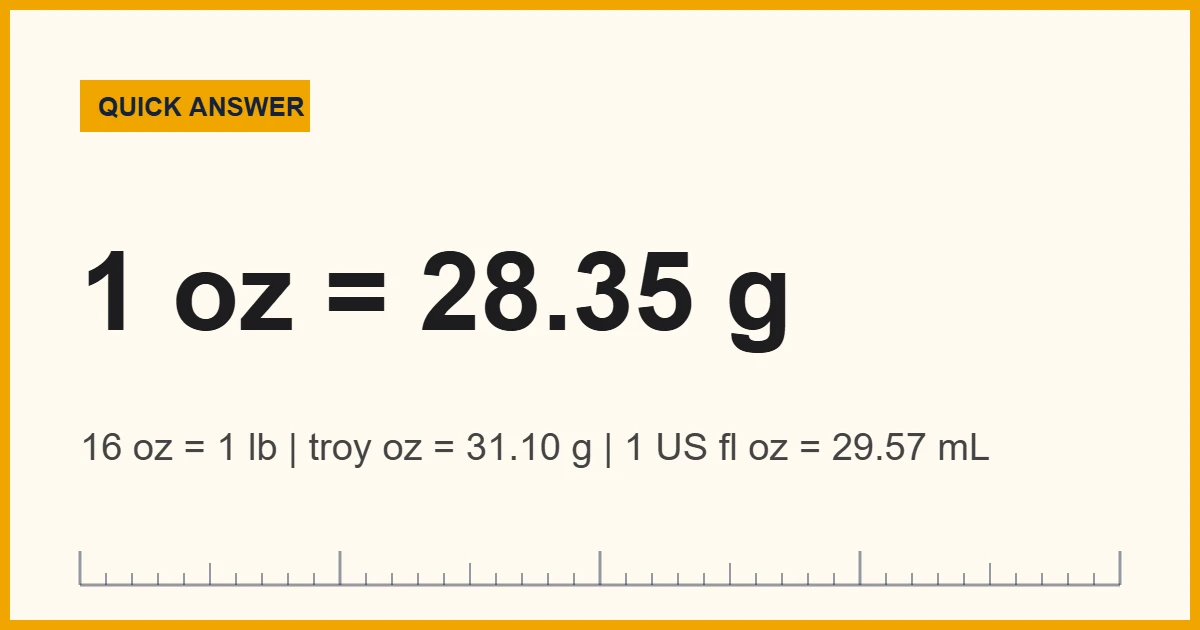
Convert Ounces to Grams and Pounds
First, enter any weight below and pick the unit you start with. The converter then uses the exact NIST definition and shows grams, milligrams, pounds, kilograms and grains at the same time.
You meet this unit everywhere in the United States: on cereal boxes, deli tickets, postage rates, baby bottles and soda cans. The catch, however, is that “oz” can mean three different things. First, the everyday avoirdupois oz measures weight. Second, the troy oz measures precious metals. Third, the fluid oz (fl oz) measures volume, and it even has a separate UK size.
In fact, the everyday ounce is not an estimate. Since the international yard and pound agreement of 1959, the pound has been exactly 453.59237 grams, so one sixteenth of it is exactly 28.349523125 grams. The US National Institute of Standards and Technology (NIST) lists this factor, along with the troy and fluid versions, in its Guide to the SI conversion tables. In everyday use, 28.35 g is close enough; for example, a kitchen scale rarely shows more than one decimal place anyway.
- 1 oz = 28.349523125 g exactly (about 28.35 g).
- Because 16 oz = 1 lb, 1 oz = 0.0625 lb.
- 1 troy oz = 31.1034768 g, used for gold, silver and platinum.
- 1 US fl oz = 29.5735295625 mL, a volume, not a weight.
- 1 UK fl oz = 28.4130625 mL, about 4% smaller than the US one.
- Similarly, 1 kg is about 35.27 oz, and 100 g is about 3.53 oz.
Ounce to Grams Conversion Chart
These values use the exact definition, and they are rounded to two decimals for grams and four for pounds and kilograms. Also, you can print this chart or save it on your phone for the kitchen.
| Ounces (oz) | Grams (g) | Pounds (lb) | Kilograms (kg) |
|---|---|---|---|
| 1/4 oz | 7.09 g | 0.0156 lb | 0.0071 kg |
| 1/2 oz | 14.17 g | 0.0313 lb | 0.0142 kg |
| 1 oz | 28.35 g | 0.0625 lb | 0.0283 kg |
| 2 oz | 56.70 g | 0.125 lb | 0.0567 kg |
| 3 oz | 85.05 g | 0.1875 lb | 0.0850 kg |
| 4 oz | 113.40 g | 0.25 lb | 0.1134 kg |
| 5 oz | 141.75 g | 0.3125 lb | 0.1417 kg |
| 6 oz | 170.10 g | 0.375 lb | 0.1701 kg |
| 8 oz | 226.80 g | 0.5 lb | 0.2268 kg |
| 10 oz | 283.50 g | 0.625 lb | 0.2835 kg |
| 12 oz | 340.19 g | 0.75 lb | 0.3402 kg |
| 16 oz | 453.59 g | 1 lb | 0.4536 kg |
| 32 oz | 907.18 g | 2 lb | 0.9072 kg |
Conversely, 1 g is about 0.0353 oz, 100 g is about 3.53 oz, and 1 kg is about 35.27 oz. Also, a quarter pound is exactly 4 oz; our page on the quarter-pound conversion walks through that one in detail.
Three Kinds of Ounce Compared
Most confusion, in fact, comes from treating these three units as one. Therefore, the table below separates them, so you can tell at a glance which one a label, recipe or price chart means.
| Unit | Measures | Exact size | Where you see it |
|---|---|---|---|
| Avoirdupois (oz) | Weight (mass) | 28.349523125 g; 437.5 grains; 1/16 lb | Food, mail, body weight, groceries |
| Troy (oz t, ozt) | Weight of precious metals | 31.1034768 g; 480 grains | Gold, silver, platinum prices and coins |
| US fluid (fl oz) | Volume | 29.5735295625 mL; 2 tbsp; 1/8 cup | Drinks, milk, medicine cups, US recipes |
| UK fluid (fl oz) | Volume | 28.4130625 mL; 1/20 imperial pint | Older British recipes, UK pub measures |
Recommended Scales for Weighing an Ounce
To measure weight in oz, you need a scale rather than a cup. For cooking, a digital kitchen scale with a tare button and 1 g (or 0.05 oz) steps covers almost everything. For small amounts such as spices, coffee or jewelry, on the other hand, a pocket scale that reads to 0.01 g is far more useful. In short, the picks below rely on manufacturer specs and buyer reports.

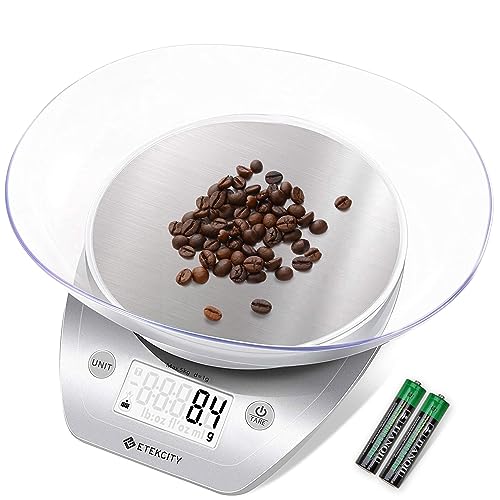


As an Amazon Associate, Measuring Expert earns from qualifying purchases.
How to Weigh One Ounce Accurately
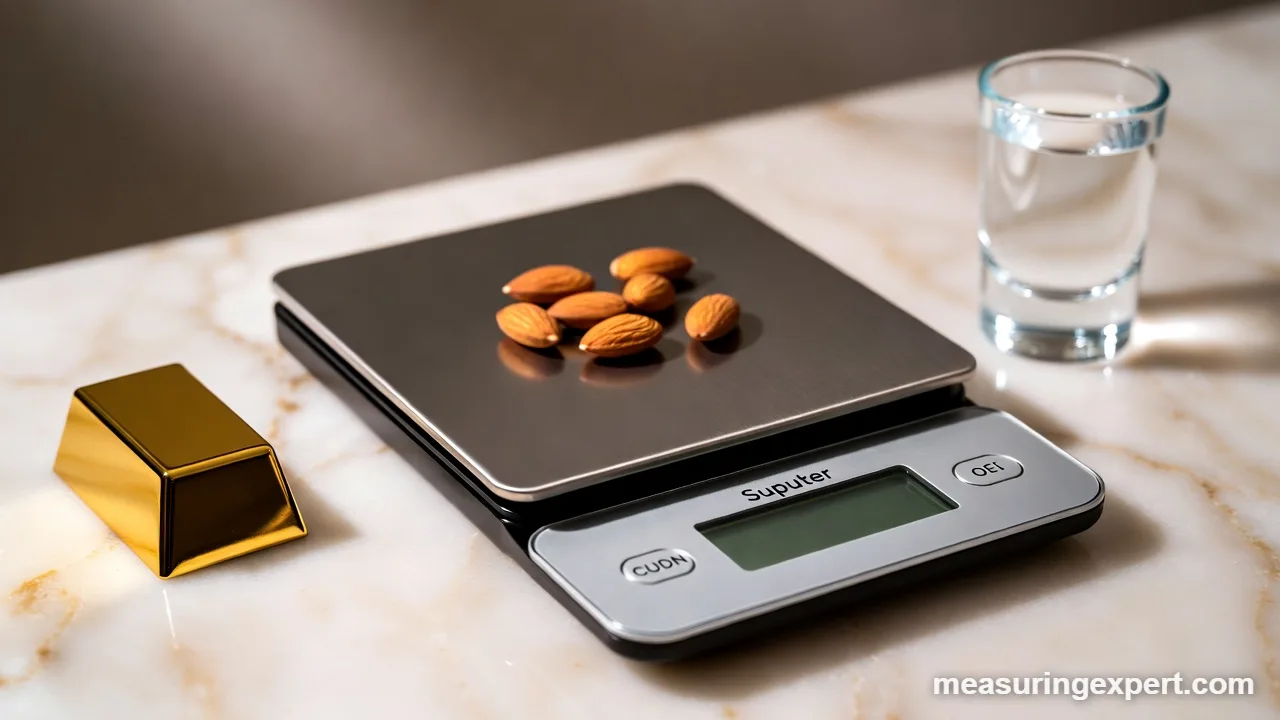
- Place the scale on a flat, hard surface. Otherwise, a wobbly or soft surface throws off the load cell.
- Turn it on with nothing on the platform. That way, most digital scales zero themselves at startup.
- Choose the unit. Press the unit button until the display shows oz (or g if you prefer metric).
- Add your bowl and press tare. As a result, the display returns to zero, so you weigh only the food.
- Add the ingredient slowly. Stop at 1.00 oz, or at 28 g on a scale that reads whole grams.
- Check with a known weight now and then. For example, a US nickel weighs 5 g, so 5 nickels should read about 25 g.
Fluid Ounce vs Weight Ounce
Simply put, a fluid ounce tells you how much space something fills. A weight ounce, in contrast, tells you how heavy it is. The two only line up for water and water-like liquids: 1 US fl oz of water weighs about 29.5 g, which is roughly 1.04 oz. For anything lighter or denser than water, however, they drift apart quickly.
For instance, a cup of all-purpose flour holds 8 fl oz by volume but weighs only about 4.25 oz, according to King Arthur Baking’s weight chart. Honey, on the other hand, goes the other way, because it is denser than water. That is why US recipes that list “8 oz chocolate” mean weight, while “8 fl oz milk” means volume. Still, when a recipe just says “oz” for a liquid, it usually means fl oz.
Troy Ounce for Gold and Silver
When a news report quotes the price of gold “per ounce”, it means the troy ounce, not the kitchen one. One troy oz is 31.1034768 g, or about 1.097 regular oz. Consequently, a 1 oz gold coin weighs more than a 1 oz slice of cheese.
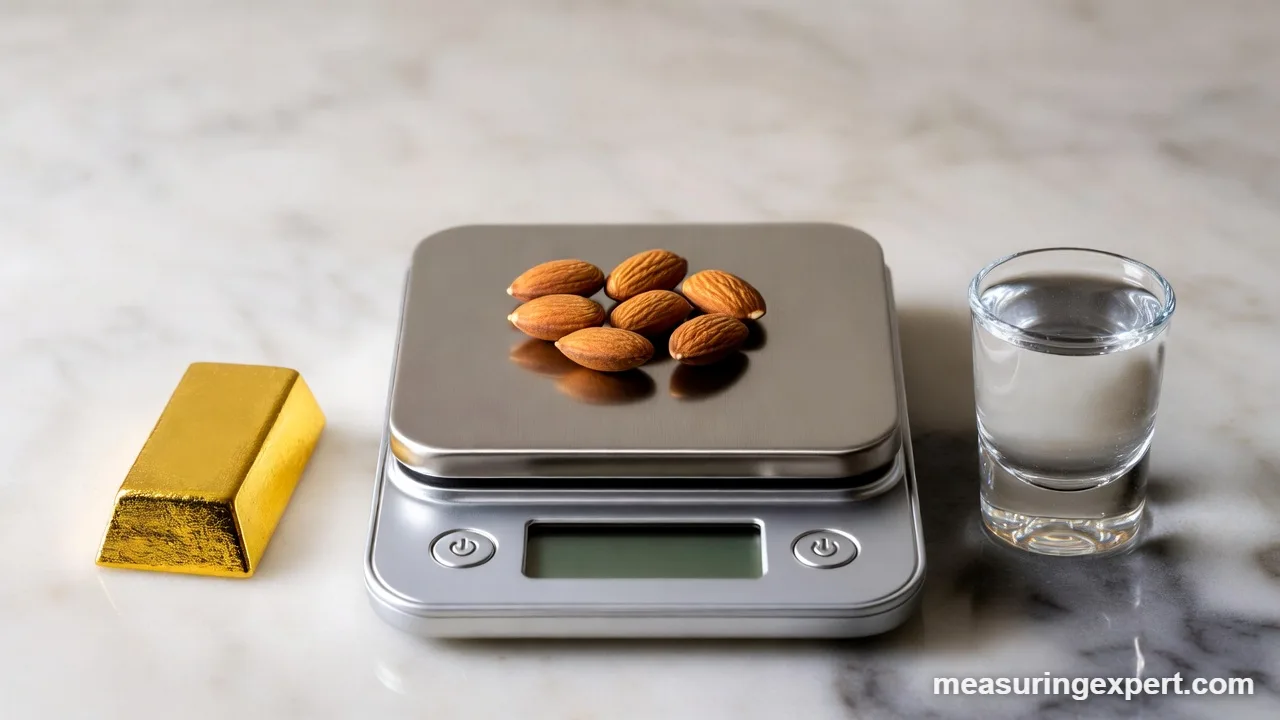
The troy system also has its own pound, made of 12 troy oz (about 373.24 g), whereas the everyday pound has 16 oz (453.59 g). So, oddly, a troy ounce is heavier than a regular one, yet a troy pound is lighter than a regular pound. Today, however, people rarely use the troy pound; precious metals trade almost entirely in troy oz, grams and kilograms.
US vs UK Fluid Ounce
First of all, the weight ounce is the same in the US and the UK. The fluid ounce, however, is not. A UK (imperial) fl oz is 28.4130625 mL, which is about 96% of the US fl oz at 29.5735295625 mL. In addition, the pints differ: a UK pint has 20 fl oz and a US pint has 16.
For a single fl oz, therefore, the gap is only about 1.2 mL. Over a liter, however, it adds up: 1 L is about 33.81 US fl oz but 35.20 UK fl oz. Similarly, an old British recipe that calls for 10 fl oz of stock means about 284 mL, not the 296 mL a US measuring cup would give you.
Ounce Do’s and Don’ts
Do
- Weigh dry ingredients on a scale when a recipe lists weights.
- Read “fl oz” as volume and “oz” with NET WT as weight.
- Use troy oz or grams for precious metals.
- Tare the bowl first, then add food.
- Check the recipe’s country before measuring fl oz.
Don’t
- Pour flour into a liquid cup to measure weight; instead, weigh it.
- Compare a gold price with a kitchen-scale reading.
- Assume 1 fl oz of oil weighs 1 oz; it weighs less.
- Mix US and UK pints in one recipe, since they differ.
- Round 28.35 g to 30 g when you scale up a large batch, because errors add up.
Where the Ounce Comes From
The word “ounce” comes from the Latin uncia, meaning one twelfth. That is because the Roman pound had 12 unciae, and the troy pound still follows that pattern. The avoirdupois system, by contrast, came from medieval trade in bulk goods, and it settled on 16 to the pound. Finally, the 1959 agreement between the US, UK and other nations fixed the pound at exactly 453.59237 g, which made every conversion exact.
Honest Limits of Ounce Conversions
The numbers on this page are exact definitions. Therefore, the math is never the weak point. Instead, the limits come from the tools and the ingredients. A typical kitchen scale reads in 1 g or 0.05 oz steps, which means a reading of “1 oz” could really be anything from about 0.98 to 1.02 oz. Also, cheap scales drift as their batteries run low.
Moreover, volume-to-weight conversions are even looser. For example, a cup of flour can weigh 4 to 5 oz depending on how you scoop it. Therefore, any “fl oz to oz” figure for something other than water is an estimate, and it depends on the ingredient’s density.
When Accuracy Really Matters
- Baking. Because bread and pastry recipes are ratios, weigh flour, water and salt rather than converting from cups.
- Buying gold, silver or coffee in bulk. Next, check whether the seller quotes troy or regular oz, and compare per gram if in doubt.
- Shipping. Postage tiers change at each whole oz, so a letter at 1.02 oz pays the 2 oz rate.
- Medicine. Above all, read liquid medicine doses in mL. Meanwhile, the “oz” marks on a dosing cup are fl oz, not weight, so use the device that comes with the medicine.
Ounce FAQs
How many grams are in an ounce?
There are 28.349523125 grams in one avoirdupois oz, usually rounded to 28.35 g. A troy oz is larger at about 31.10 g.
How many ounces are in a pound?
There are 16 oz in a standard pound. In the troy system used for precious metals, a troy pound has 12 troy oz.
Is a fluid ounce the same as an ounce?
No. A fluid ounce measures volume (about 29.57 mL in the US), while a regular oz measures weight (about 28.35 g). As a result, they roughly match only for water.
How much does a fluid ounce of water weigh?
One US fl oz of water weighs about 29.5 g, or roughly 1.04 oz, at room temperature.
What is a troy ounce?
A troy ounce is a unit for precious metals equal to 31.1034768 g, or 480 grains. Consequently, it is about 9.7% heavier than a regular oz.
How many oz are in a kilogram?
One kilogram is about 35.27 regular oz, or about 32.15 troy oz.
How many tablespoons make 1 fl oz?
One US fl oz equals 2 tablespoons, or 6 teaspoons. Keep in mind, though, that this is a volume measure, not a weight.
What does oz stand for?
The abbreviation oz comes from onza, the old Italian word for ounce. Fluid measures use fl oz, and troy weights use oz t or ozt.
Do the UK and US use the same oz?
The weight unit is identical in both countries at 28.35 g. Only the fluid version differs: 28.41 mL in the UK and 29.57 mL in the US.
How can I measure an ounce without a scale?
For water-like liquids, 2 tablespoons is about 1 oz. For dry food, however, there is no reliable shortcut, because weight depends on density, so a scale is the only accurate method.
The Bottom Line
In short, an everyday ounce is 28.35 g and one sixteenth of a pound. Meanwhile, gold and silver use the heavier troy ounce at 31.10 g, and liquids use the fluid ounce, which measures volume rather than weight.
So when you see “oz”, ask which one it is. Then, use the converter above for exact figures, and use a scale whenever weight really matters.
5 thoughts on “How Much Is an Ounce? Ounces to Grams, Troy and Fluid Ounces Explained”