

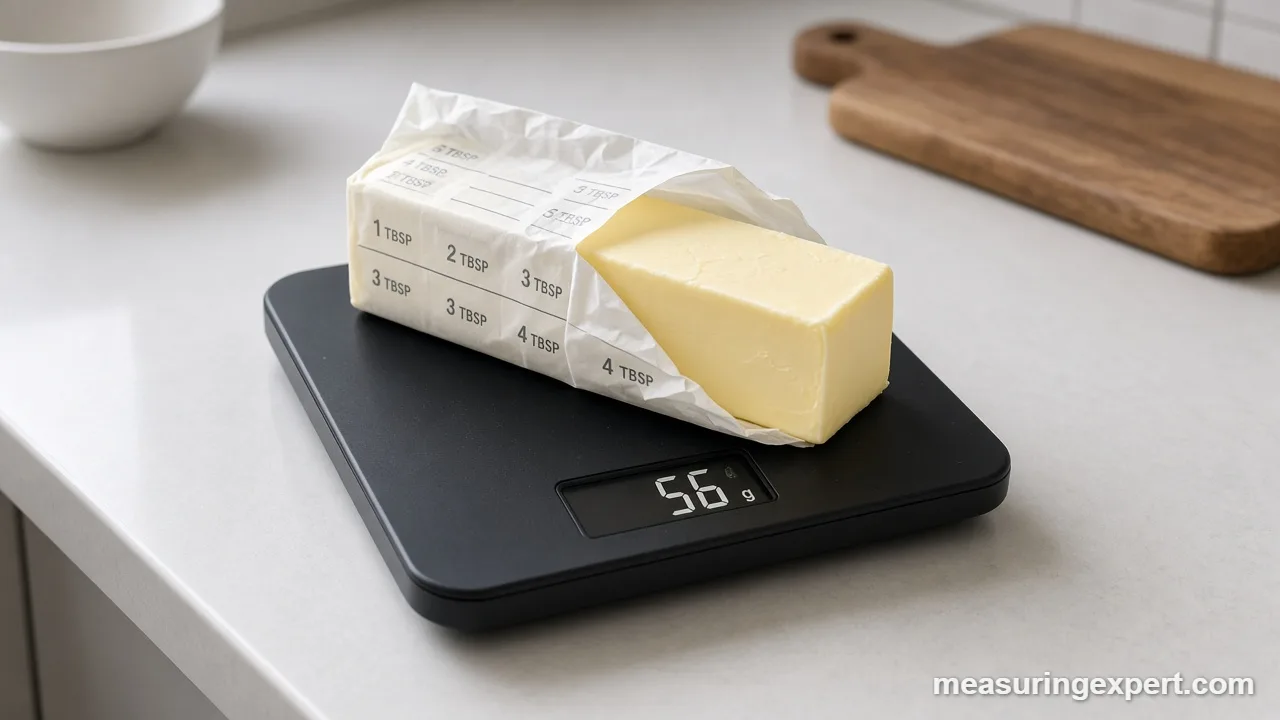
One US stick of butter weighs 4 ounces, which is 113.4 grams (most recipes round it to 113 g). By volume, it is also 1/2 cup or 8 tablespoons, as the wrapper markings show. So four sticks make 1 pound (453.6 g), while a European 250 g block equals about 2.2 sticks.
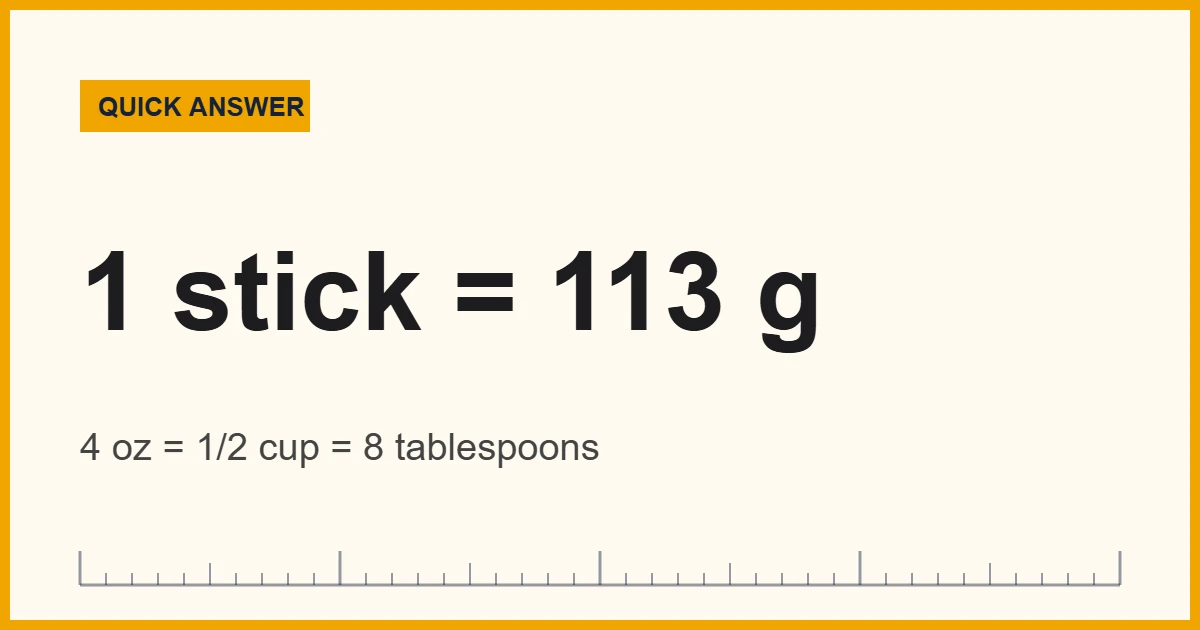
Convert a Stick of Butter to Grams
Enter the butter weight in ounces below; one stick is 4 oz, so the converter starts there. It then shows grams and pounds using the exact definition of the ounce (1 oz = 28.349523125 g). For example, type 2 for half a stick or 8 for two sticks.
American recipes count butter in sticks because that is how it is sold: a 1-pound box holds four wrapped quarter-pound sticks. Recipes from almost everywhere else, however, list butter in grams. As a result, anyone baking from a British, European or Australian cookbook (or simply using a kitchen scale) needs the stick in grams.
Fortunately, the math is simple because the stick is defined by weight. A stick is a quarter of a pound, and a pound is exactly 453.59237 g, so one stick is 113.398 g. King Arthur Baking lists the same figure in its ingredient weight chart: 8 tablespoons (1/2 cup) of butter weigh 4 oz, or 113 g. Similarly, the US National Institute of Standards and Technology (NIST) uses 28 g per ounce and 454 g per pound in its kitchen measurement table.
Stick of Butter to Grams Chart
First, this chart covers the amounts that show up most in recipes, from a quarter stick to a full pound. In addition, the gram values are rounded to one decimal; in practice, rounding to the nearest gram is fine for cooking.
| Sticks | Grams | Ounces | Tablespoons | Cups |
|---|---|---|---|---|
| 1/4 stick | 28.3 g | 1 oz | 2 tbsp | 1/8 cup |
| 1/3 stick | 37.8 g | 1 1/3 oz | 2 2/3 tbsp | 1/6 cup |
| 1/2 stick | 56.7 g | 2 oz | 4 tbsp | 1/4 cup |
| 3/4 stick | 85.0 g | 3 oz | 6 tbsp | 3/8 cup |
| 1 stick | 113.4 g | 4 oz | 8 tbsp | 1/2 cup |
| 1 1/2 sticks | 170.1 g | 6 oz | 12 tbsp | 3/4 cup |
| 2 sticks | 226.8 g | 8 oz | 16 tbsp | 1 cup |
| 3 sticks | 340.2 g | 12 oz | 24 tbsp | 1 1/2 cups |
| 4 sticks (1 lb) | 453.6 g | 16 oz | 32 tbsp | 2 cups |
Printable tip: for example, print this page or save the chart as a screenshot and keep it near your scale. Also, one wrapper tablespoon of butter weighs about 14.2 g, which is handy when a recipe asks for “3 tablespoons, melted”.
Recommended Tools for Weighing Butter
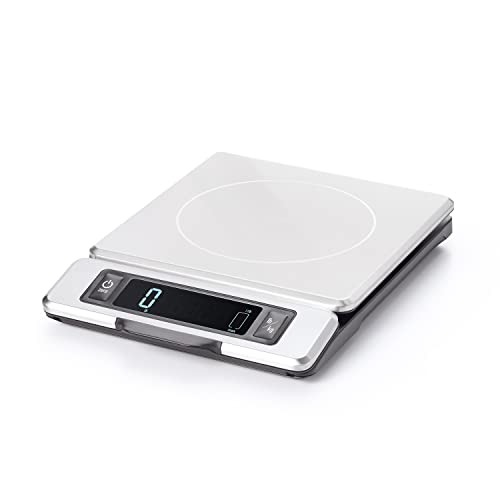
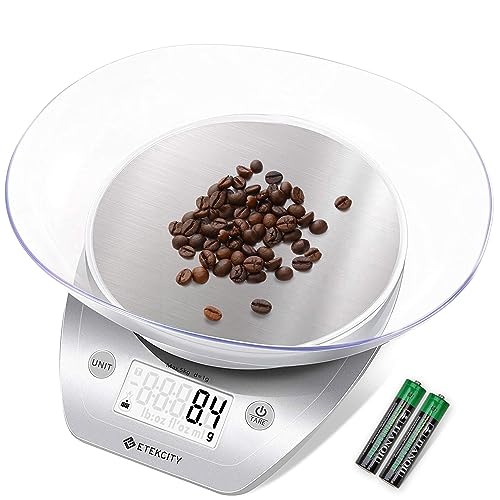
A digital kitchen scale is the fastest way to turn sticks into grams, because you simply cut and weigh. First, look for a tare button and 1 g resolution. Next, check that the scale switches between grams and ounces. Finally, an airtight butter dish sized for both stick shapes keeps a partly used stick fresh, so the leftover markings stay readable.


As an Amazon Associate, Measuring Expert earns from qualifying purchases.
Why a Stick of Butter Is 113 Grams, Not 125
People often expect a round metric number, so 113 g can look odd. The reason, however, is that the stick was never a metric unit. Instead, it is a quarter of a US pound. Because the pound is defined as exactly 453.59237 g, dividing by four gives 113.398 g. As a result, that is 113 g on most labels and 113.4 g in precise charts.
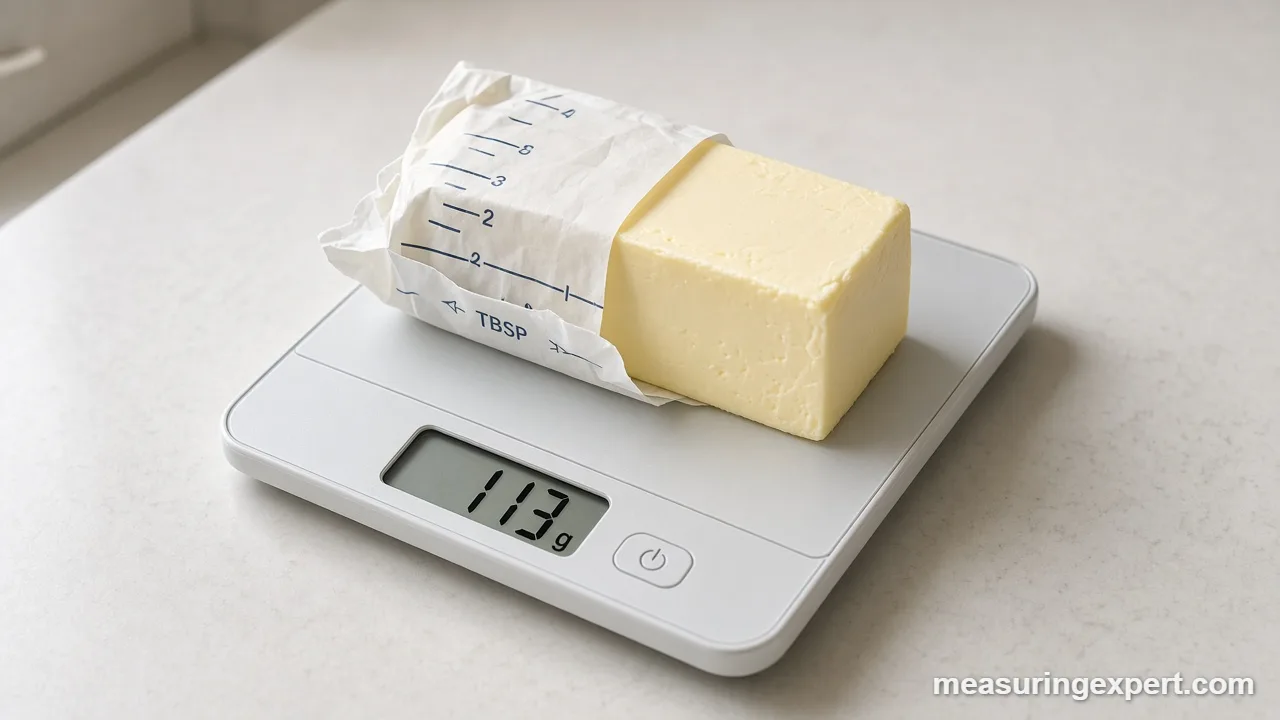
In contrast, 125 g is half of a 250 g European block. So it is about 11.6 g heavier than a stick, or nearly a tablespoon more. Therefore, if a recipe from Europe says 125 g, one stick plus a little under 1 tablespoon gets you there.
| People often confuse | What it really is |
|---|---|
| 1 US stick | 4 oz = 113.4 g = 1/2 cup = 8 tbsp |
| 125 g (half a European block) | about 1.1 sticks, or 1 stick + 0.8 tbsp |
| 250 g European block | about 2.2 sticks, or 17.6 tbsp |
| Weight ounce (oz) | 28.35 g of butter |
| Fluid ounce (fl oz) | 29.57 mL; about 2 tbsp of butter by volume |
For more on why the weight ounce and fluid ounce differ, see how much an ounce really is.
Elgin vs Western Stubby: Does the Stick of Butter Shape Matter?
Not for weight. For example, in the US, there are two common stick shapes. First, the long, thin Elgin stick (about 4.8 by 1.3 inches) is standard east of the Rockies. Meanwhile, the short, wide “Western stubby” (about 3.1 by 1.5 inches) is common on the West Coast. According to Food Network, the two shapes weigh the same; the difference comes from the packing machines each region bought decades ago.
Butter Sizes Outside the US
Outside North America, by contrast, butter usually comes in metric blocks rather than sticks. So a stick in a US recipe needs converting when you shop abroad. Next, the table below shows common package sizes and how many US sticks each one equals.
| Package | Where you see it | Equals |
|---|---|---|
| 4 oz stick (113 g) | United States | 1 stick |
| 1 lb box (454 g) | United States, Canada | 4 sticks |
| 250 g block | UK, Europe, Australia, Canada | about 2.2 sticks |
| 200 g block | Some Asian and European markets | about 1.76 sticks |
| 8 oz European-style tub or block | US imports and specialty butter | 2 sticks |
Package sizes vary by brand and country, so always check the net weight printed on the label. In addition, many imported blocks have no tablespoon markings at all, which makes a scale especially useful.
How to Measure a Stick of Butter in Grams
Here is the quickest accurate method, step by step. Alternatively, you can also enter your amount in the converter above to check the target weight first.
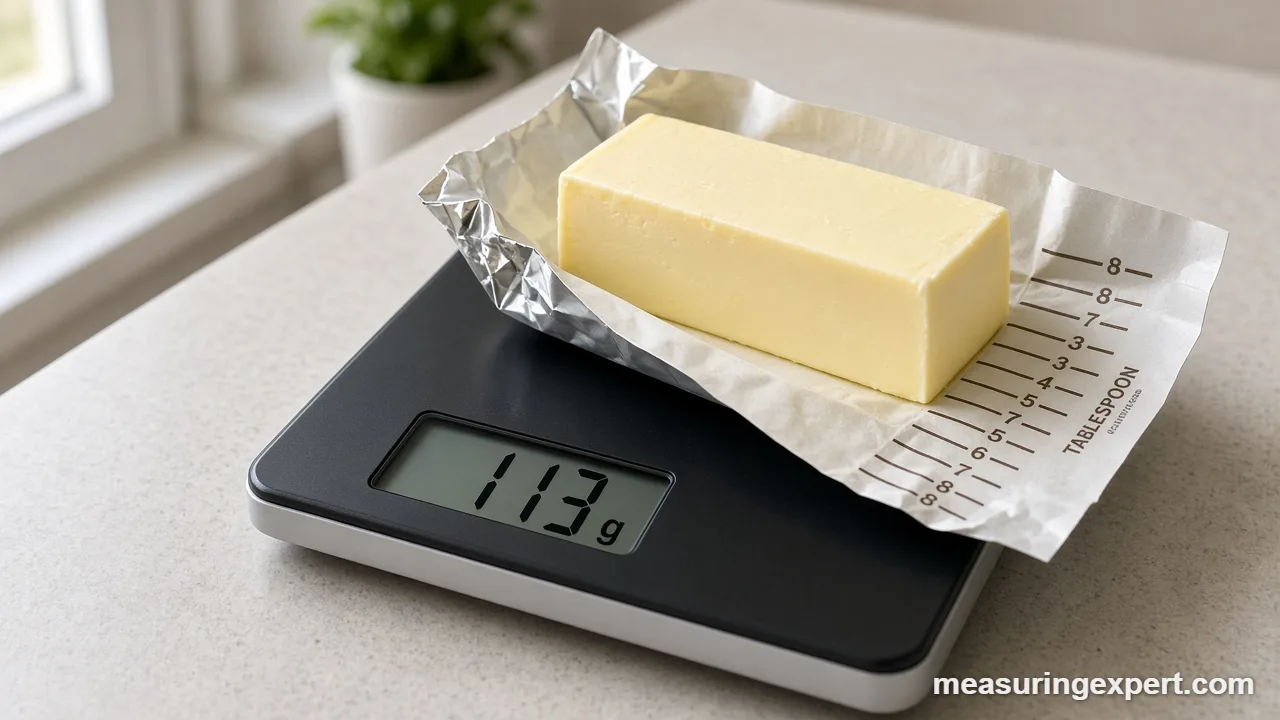
- Set the scale to grams. Place it on a flat counter, turn it on and pick the g unit.
- Tare a plate. Put a small plate or piece of parchment on the scale and press tare so it reads 0 g.
- Find your target. Use 113 g per stick, or read the chart for fractions.
- Cut along the wrapper lines. Slice close to the amount you need using the tablespoon marks as a guide.
- Weigh and trim. Add or shave off thin slices until the display shows the target weight.
- Wrap the rest. Fold the wrapper back over the cut end and refrigerate it.
Stick of Butter in Tablespoons and Cups
For example, most US butter wrappers are printed with 8 tablespoon lines and a 1/4 cup and 1/2 cup mark. Because of this, you can cut most amounts without measuring tools. Note, though, that these are butter tablespoons: by weight, each one is 1/8 of a stick (14.2 g). By volume, a US tablespoon is 14.79 mL, and butter is slightly less dense than water, so the two figures line up closely.
Also, keep in mind that tablespoons and teaspoons are easy to confuse in handwritten recipes. One tablespoon is 3 teaspoons, as explained in our teaspoon vs tablespoon guide. So 1 teaspoon of butter is about 4.7 g.
Do and Don’t When Converting Butter
Do
- Use 113 g for one stick.
- Check the net weight on imported blocks.
- Tare the scale before adding butter.
- Weigh butter when baking pastry or cookies.
- Cut cold butter for clean, even slices.
Don’t
- Assume a European 250 g block is two sticks.
- Pack soft butter into a measuring cup.
- Measure melted butter as if it were solid.
- Trust a torn or shifted wrapper line.
- Swap whipped butter for stick butter by volume.
Honest Limits of Stick Conversions
The 113.4 g figure is the nominal weight, not a guarantee for every stick. For one thing, packaging rules allow small variations, and wrappers can be printed slightly off-center. Moreover, butter left on the paper or the knife can cost you a gram or two. For everyday cooking, however, none of this matters. For laminated doughs, shortbread or candy, on the other hand, a scale removes the guesswork.
Likewise, the cup and tablespoon equivalents assume solid butter cut from the stick. For instance, melted butter takes up a little less space, and softened butter packed into a cup traps air pockets. In short, weigh by grams when precision counts, and use the wrapper marks for everyday cooking.
When Accuracy Really Matters
Overall, most savory cooking is forgiving: a few extra grams of butter in a pan sauce will not hurt. In contrast, pie crust, croissants, shortbread and caramel depend on the ratio of fat to flour or sugar, so being off by a tablespoon can change the texture. That is why, in general, professional bakers write butter in grams. Similarly, if you follow a nutrition plan, weighing gives you a more reliable number than eyeballing a slice.
Frequently Asked Questions
How many grams is 1 stick of butter?
One US stick of butter is 113.4 grams, usually rounded to 113 g. Also, it equals 4 ounces, 1/2 cup or 8 tablespoons.
Is a stick of butter 250 grams?
No. A 250 g block is the common European size and equals about 2.2 US sticks. In contrast, one stick is 113 g.
Is a stick of butter 125 g?
Not quite. A stick is 113 g, so 125 g is one stick plus about 12 g, or a little under 1 more tablespoon.
How many grams is half a stick of butter?
Half a stick is 56.7 grams, or 2 ounces. Therefore, it equals 4 tablespoons or 1/4 cup.
How many grams are 2 sticks of butter?
Two sticks weigh 226.8 grams (8 oz), which is 1 cup or 16 tablespoons.
How many sticks of butter are in a pound?
There are 4 sticks in a 1-pound box. As a result, together they weigh 453.6 grams.
How many grams is 1 tablespoon of butter?
One tablespoon of butter weighs about 14.2 grams, which is 1/8 of a stick.
Do East Coast and West Coast sticks weigh the same?
Yes. Elgin sticks and Western stubby sticks are shaped differently, but both weigh 4 oz (113 g).
How many cups is a stick of butter?
A stick of butter is 1/2 cup. Similarly, two sticks make 1 cup.
Is salted butter heavier than unsalted butter?
Not in a way that matters. Because both are sold as 4 oz sticks, use 113 g for either type.
The Bottom Line on a Stick of Butter
To sum up, one US stick is 4 oz, which is 113.4 g, 1/2 cup or 8 tablespoons, whatever its shape. In addition, two sticks make a cup, four make a pound, and a European 250 g block is about 2.2 sticks. Finally, for any other amount, the converter at the top of the page does the math for you.
1 thought on “How Many Grams Is a Stick of Butter? 1 Stick = 113 g (Chart and Converter)”