

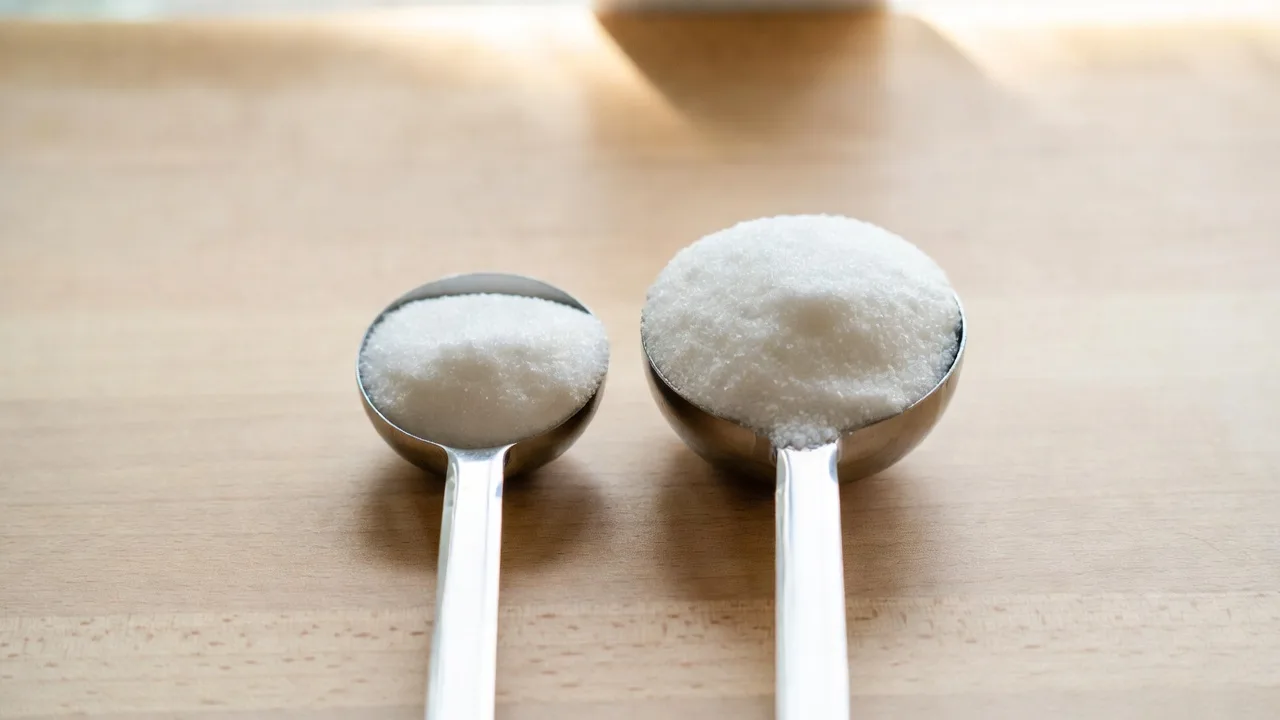
Teaspoon vs tablespoon: a tablespoon is three times bigger than a teaspoon. In fact, one US tablespoon (tbsp) equals 3 US teaspoons (tsp), or about 14.79 mL, while one teaspoon holds about 4.93 mL. On nutrition labels and in metric recipes, however, the two are rounded to 15 mL and 5 mL.
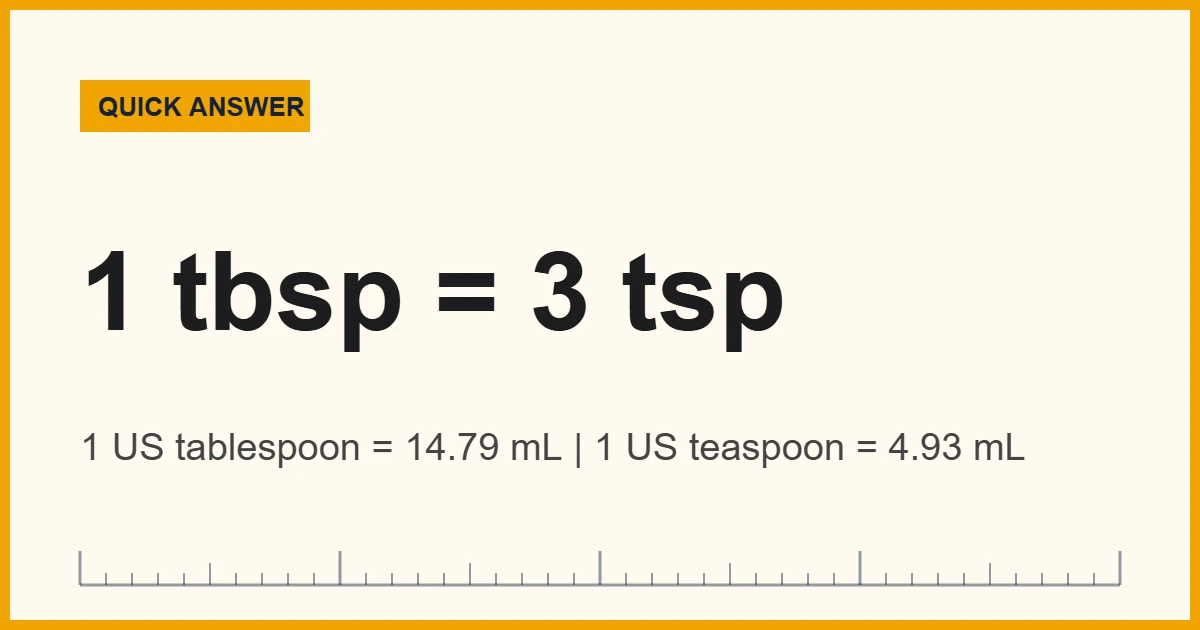
Teaspoon vs Tablespoon Converter
To start, type any amount below and pick the unit you have. The converter then uses the exact US definitions, shows the nearest practical spoon fraction, and also lists metric and Australian spoons.
Teaspoons and tablespoons look alike, share almost the same abbreviation, and often hang on the same ring in the kitchen drawer. That is exactly why they get swapped. As a result, mixing them up triples (or cuts to a third) whatever you are measuring. In practice, that is the difference between a pleasantly seasoned soup and one you cannot eat, or between a cake that rises and one that tastes of baking soda.
Fortunately, the teaspoon vs tablespoon relationship is simple and fixed: 3 teaspoons make 1 tablespoon, 2 tablespoons make 1 fluid ounce, and 16 tablespoons make 1 cup. In other words, these are definitions, not approximations. For example, the US National Institute of Standards and Technology (NIST), which maintains the official US measurement standards, lists the kitchen equivalents in its metric kitchen table: about 5 mL for a teaspoon and 15 mL for a tablespoon.
Below, you will first find a quick chart. After that, you will see how to read recipe abbreviations, how US, metric, UK and Australian spoons differ, and finally how to measure accurately with or without proper spoons.
Teaspoon vs Tablespoon Conversion Chart
Use this chart for the conversions that come up most in recipes. In addition, the milliliter values use the exact US definitions and are rounded to two decimals.
| Tablespoons | Teaspoons | Milliliters (US) | Also equals |
|---|---|---|---|
| 1/2 tbsp | 1 1/2 tsp | 7.39 mL | – |
| 1 tbsp | 3 tsp | 14.79 mL | 1/2 fl oz |
| 2 tbsp | 6 tsp | 29.57 mL | 1 fl oz, 1/8 cup |
| 3 tbsp | 9 tsp | 44.36 mL | 1 1/2 fl oz |
| 4 tbsp | 12 tsp | 59.15 mL | 1/4 cup |
| 5 tbsp + 1 tsp | 16 tsp | 78.86 mL | 1/3 cup |
| 8 tbsp | 24 tsp | 118.29 mL | 1/2 cup |
| 12 tbsp | 36 tsp | 177.44 mL | 3/4 cup |
| 16 tbsp | 48 tsp | 236.59 mL | 1 cup |
For smaller amounts, 1/4 tsp is about 1.23 mL and 1/2 tsp is about 2.46 mL. Similarly, if you are converting milliliters instead, see how much 30 mL is in spoons and ounces.
Recommended Measuring Tools for Teaspoons and Tablespoons
A good set of measuring spoons removes most of the guesswork. First, look for engraved (not printed) markings that will not wear off. Next, check for a flat rim so you can level dry ingredients, and for narrow spoon heads that fit into spice jars. Also, a small digital scale is worth adding if you bake often, because weighing is more consistent than scooping.


As an Amazon Associate, Measuring Expert earns from qualifying purchases.
Key Takeaways
- Teaspoon vs tablespoon in one line: 1 tablespoon = 3 teaspoons in every US recipe.
- 1 US tablespoon is about 14.79 mL; 1 US teaspoon is about 4.93 mL.
- However, nutrition labels and metric recipes round these to 15 mL and 5 mL.
- A capital T or “tbsp” means tablespoon; a lowercase t or “tsp” means teaspoon.
- By contrast, Australian tablespoons are bigger: 20 mL, or 4 teaspoons.
- Also, always measure level spoonfuls unless the recipe says “heaping”.
- Never use kitchen spoons for liquid medicine; use the dosing device in mL.
Teaspoon vs Tablespoon Abbreviations
In most cases, mix-ups start with the abbreviation, not the spoon. For instance, recipe writers use several shorthand forms, and handwritten family recipes often rely on capital versus lowercase letters alone.
| Unit | Common abbreviations | Size (US) |
|---|---|---|
| Teaspoon | tsp, t, ts, tspn | about 4.93 mL |
| Tablespoon | tbsp, T, Tbs, tbs, TB, tblsp | about 14.79 mL (3 tsp) |
Teaspoon vs Tablespoon Sizes Around the World
Generally, a teaspoon is close to 5 mL almost everywhere. The tablespoon, however, is not one size worldwide, so this matters most when you follow a recipe written in another country.
| System | Teaspoon | Tablespoon | Teaspoons per tablespoon |
|---|---|---|---|
| US customary | 4.93 mL | 14.79 mL | 3 |
| US nutrition label (FDA) | 5 mL | 15 mL | 3 |
| Metric (UK, Canada, New Zealand, most of Europe) | 5 mL | 15 mL | 3 |
| Australia | 5 mL | 20 mL | 4 |
| Older British (imperial) recipes | varies | about 17.76 mL | varies |
The FDA rule for food labels says 1 tablespoon means 15 mL and 1 teaspoon means 5 mL, which is why serving sizes on food labels list household measures such as “2 tbsp” next to grams. Even so, the difference between 14.79 and 15 mL is too small to matter in cooking.
How to Measure a Teaspoon or Tablespoon Accurately
- Pick the right spoon. First, check the engraving: “1 Tbsp” or “15 mL” for a tablespoon, “1 tsp” or “5 mL” for a teaspoon.
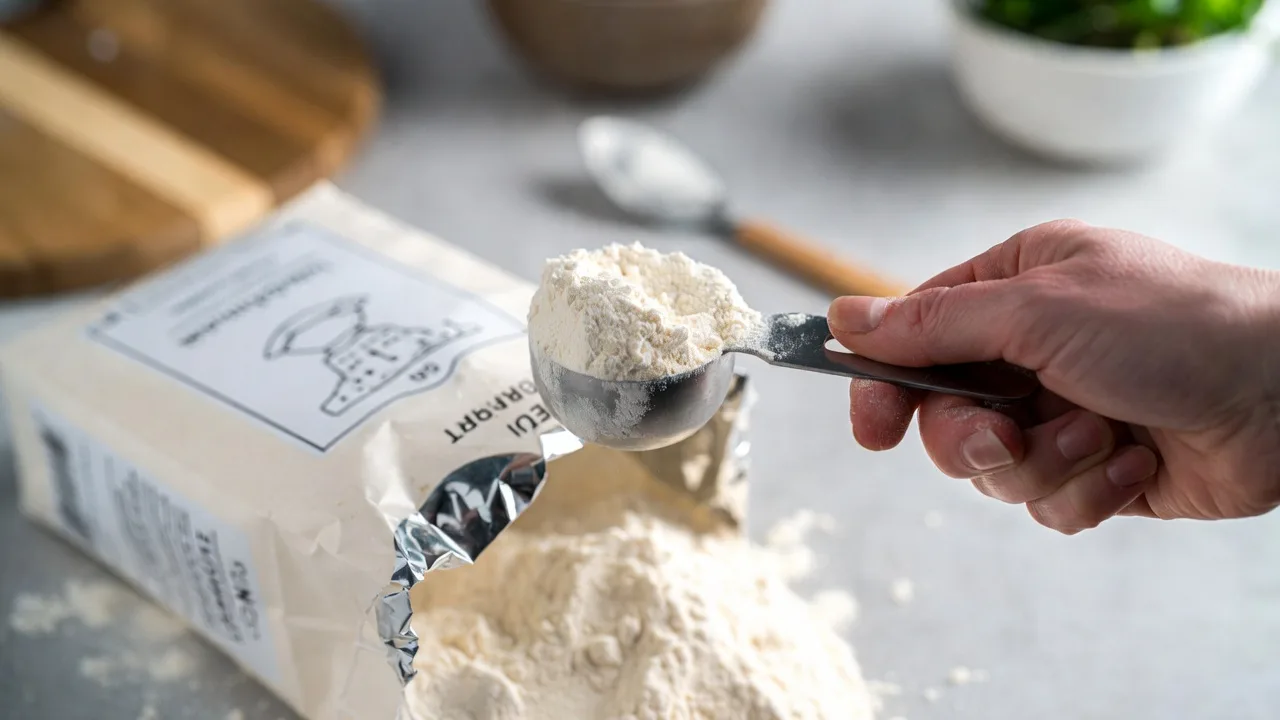
- For dry ingredients, overfill slightly. Then dip or spoon the ingredient in until it mounds above the rim.
- Level it. Next, sweep a straight edge (the back of a knife or a leveler) across the rim so the top is flat.
- For liquids, fill to the brim. Meanwhile, hold the spoon flat over a bowl, not over your mixing bowl, so spills do not end up in the recipe.
- For sticky liquids, grease the spoon first. That way, honey or syrup slides out completely.
- Count repeats out loud. For example, if you are measuring 3 teaspoons to make a tablespoon, counting avoids losing track.
Teaspoon vs Tablespoon by Weight: Dry vs Liquid
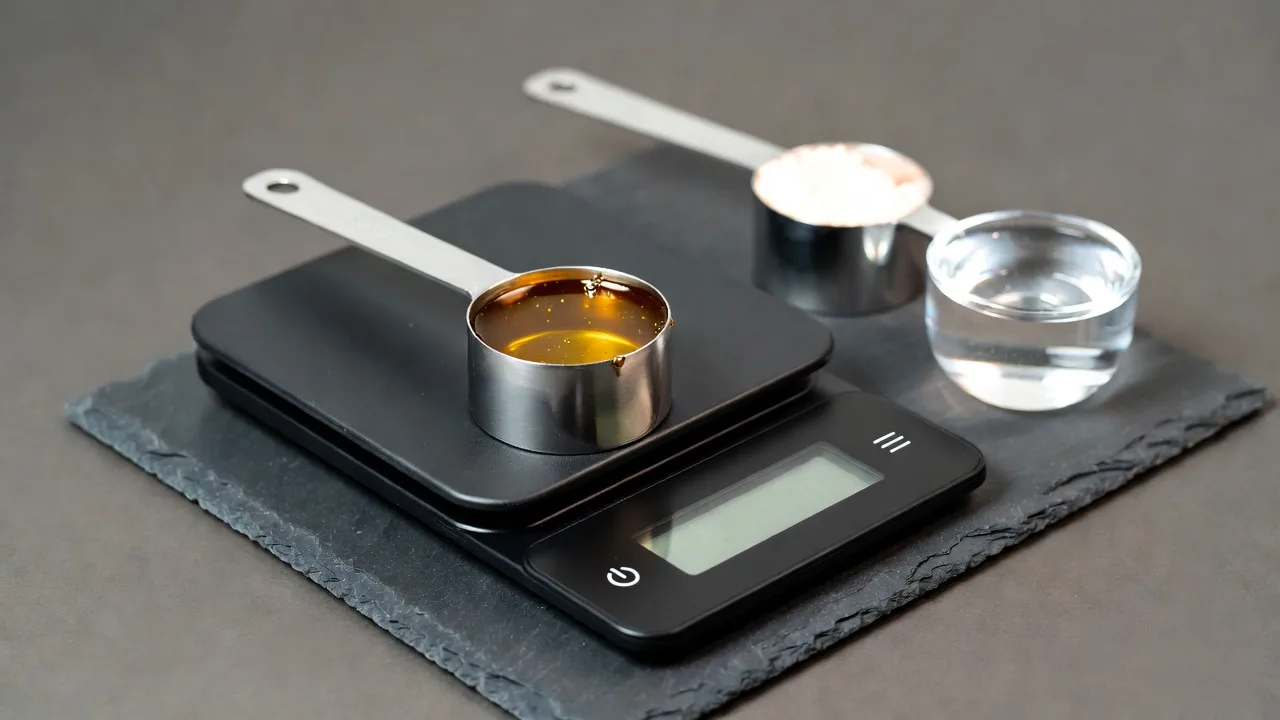
A tablespoon is a unit of volume, so it always holds the same space. What it weighs, though, depends on the ingredient. For example, a tablespoon of water weighs about 15 g. By contrast, a tablespoon of all-purpose flour weighs roughly 8 g, and granulated sugar about 12 to 13 g, depending on how tightly it is packed. That is why bakers who need precision weigh their ingredients instead of scooping them.
| People often confuse | What it really measures |
|---|---|
| Fluid ounce (fl oz) | Volume: 2 tablespoons, about 29.57 mL |
| Ounce (oz) | Weight: about 28.35 g; how many spoonfuls depends on the ingredient |
For more on the weight ounce, see also how much is an ounce.
No Measuring Spoons? What to Use Instead
Even without a proper set, you can still get close:
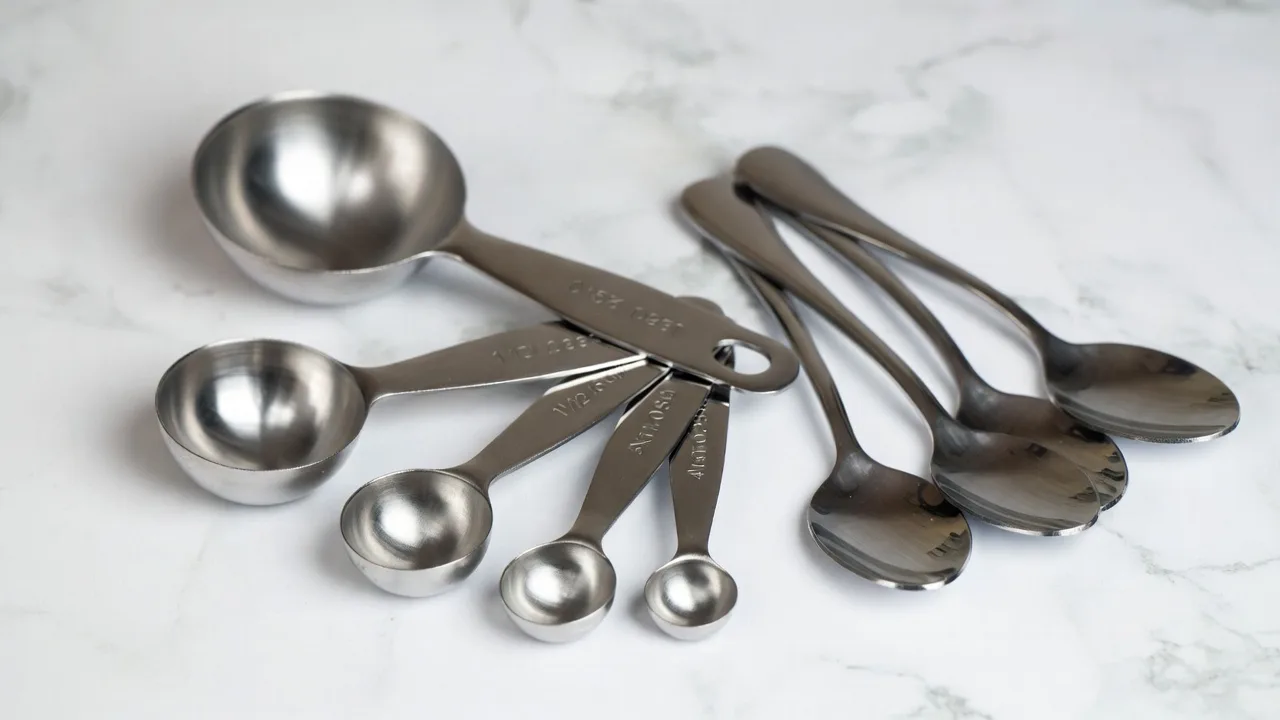
- Repeat the teaspoon. If you only have a teaspoon, then 3 level teaspoons make a tablespoon.
- Weigh water on a kitchen scale. For water-based liquids, 15 g on the scale is about 1 tablespoon and 5 g is about 1 teaspoon.
- Check a marked measuring cup. 1/8 cup is 2 tablespoons and 1/4 cup is 4 tablespoons.
- Grab a medicine cup or oral syringe for small liquids. Since these are marked in mL, 5 mL is a teaspoon and 15 mL is a tablespoon.
Do and Don’t When Measuring Spoonfuls
Do
- Level dry ingredients with a straight edge.
- Check whether a recipe is US, metric or Australian.
- Measure over a separate bowl.
- Use engraved spoons that keep their markings.
- Weigh ingredients when baking needs precision.
Don’t
- Assume a capital and lowercase “t” mean the same thing.
- Use heaping spoons unless the recipe says so.
- Pack flour into a spoon; brown sugar is the exception.
- Use cutlery spoons for medicine.
- Round an Australian tablespoon down to 15 mL.
Honest Limits of Spoon Measurements
Overall, spoons are convenient, not precise. For one thing, manufacturing tolerances mean two “1 tablespoon” spoons from different sets can differ slightly. Moreover, how you fill and level a spoon changes the result more than the spoon itself does; a heaping tablespoon, for instance, holds noticeably more than a level one. In short, the exact milliliter values on this page describe the definition, not what every spoon in every drawer will hold. For everyday cooking this does not matter. For baking leaveners, salt in brines, or anything where small errors add up, however, a scale or a marked syringe is more reliable.
When Accuracy Really Matters
For most recipes, a slightly generous teaspoon is harmless. Still, three situations deserve more care:
- Baking soda and baking powder. Too much leaves a bitter, soapy taste and can make cakes collapse; measure level, never heaping.
- Salt, especially in brines, cures and bread. In this case, mixing up tsp and tbsp triples the salt.
- Liquid medicine. Medication safety experts advise against kitchen spoons because they are not standard sizes and vary widely. Instead, use the oral syringe or dosing cup that comes with the medicine and dose in mL.
Frequently Asked Questions
How many teaspoons are in a tablespoon?
There are 3 teaspoons in 1 tablespoon in US and metric measurements. In Australia, however, a tablespoon is 20 mL, so it holds 4 teaspoons.
Teaspoon vs tablespoon: which is bigger?
The tablespoon is bigger. It is three times the size of a teaspoon: about 14.79 mL versus about 4.93 mL in US measurements.
How many mL is a tablespoon?
A US tablespoon is about 14.79 mL. Nutrition labels and metric recipes, on the other hand, round it to 15 mL. Meanwhile, an Australian tablespoon is 20 mL.
How many mL is a teaspoon?
A US teaspoon is about 4.93 mL, which is why it is rounded to 5 mL on labels and in metric recipes.
In teaspoon vs tablespoon abbreviations, what does a capital T mean?
A capital T means tablespoon, whereas a lowercase t means teaspoon. So when in doubt, check the ingredient and the batch size.
How many tablespoons are in a cup?
There are 16 tablespoons in a US cup; in other words, a cup is the same as 48 teaspoons.
How many tablespoons are in 1/4 cup?
There are 4 tablespoons in 1/4 cup. Similarly, for 1/3 cup, use 5 tablespoons plus 1 teaspoon.
Teaspoon vs tablespoon halves: is half a tablespoon 1 1/2 teaspoons?
Yes. In other words, half a tablespoon is 1 1/2 teaspoons, or about 7.39 mL.
Can I use a regular eating spoon instead of a measuring spoon?
For rough cooking, sometimes, but eating spoons vary a lot in size. Instead, use 3 level measuring teaspoons for a tablespoon, or a scale. Most importantly, never use eating spoons for medicine.
How many tablespoons are in a fluid ounce?
There are 2 tablespoons in 1 US fluid ounce, so it also equals 6 teaspoons or about 29.57 mL.
Teaspoon vs Tablespoon: The Bottom Line
To sum up, one tablespoon equals three teaspoons, about 14.79 mL against 4.93 mL in US measurements, rounded to 15 mL and 5 mL on labels and in metric recipes. So read the abbreviation carefully, level your spoonfuls, and watch out for the 20 mL Australian tablespoon.
Finally, if you want to skip the arithmetic, the converter at the top of this page handles any amount in tablespoons, teaspoons, milliliters and cups. Above all, for medicine, put the kitchen spoons away and use the dosing device in mL.
6 thoughts on “Teaspoon vs Tablespoon: What Is the Difference? (1 Tbsp = 3 Tsp)”