

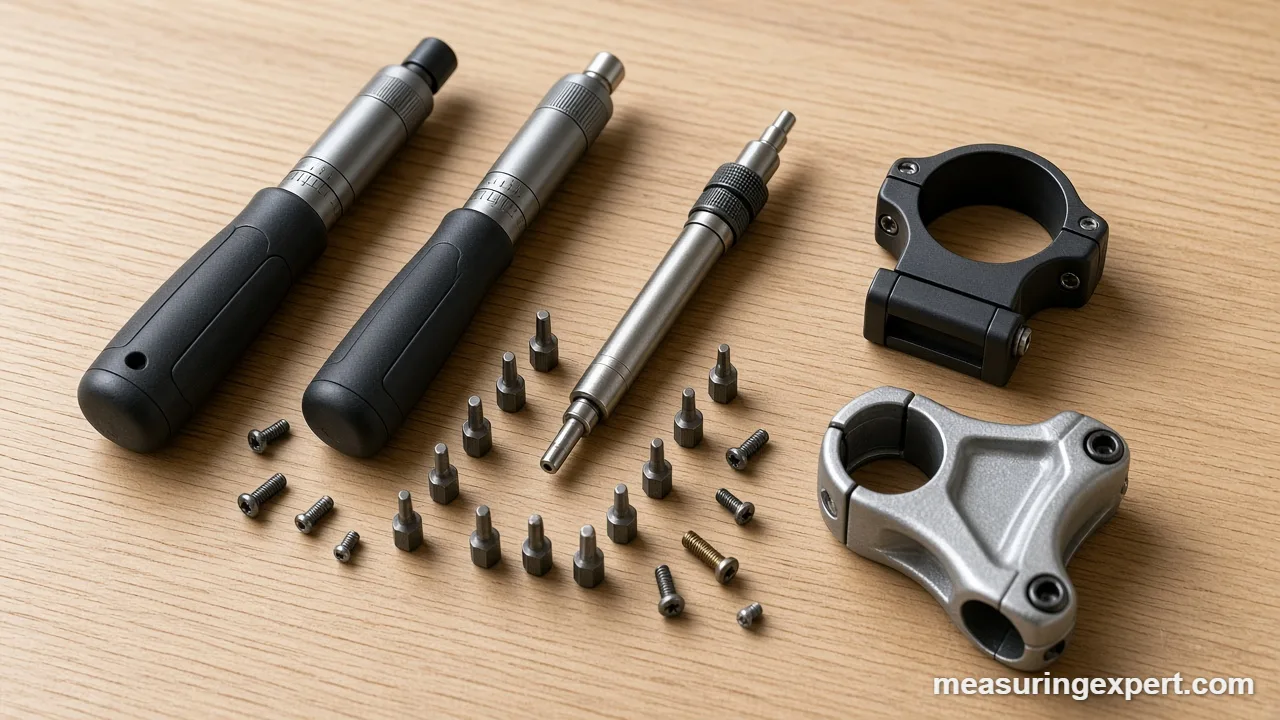
The best torque screwdriver for most home and shop work is the GEARWRENCH 89624, a 10 to 50 in-lb driver rated +/-6% across its working range. Still, the right pick depends on the size of your screws, so match the range to your spec first and the bit system second.
In short: GEARWRENCH 89624 for general work, KNINE OUTDOORS on a budget, Wera 7445 or Wiha TorqueVario-S for tiny screws, and Feedback Sports for bikes.
As an Amazon Associate, Measuring Expert earns from qualifying purchases. Our picks are based on research, specifications and owner feedback, not paid placement.
Best Overall

Best Budget

Best Precision
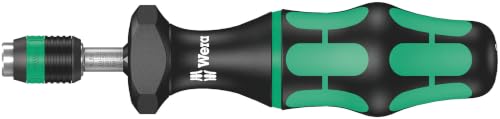
Quick Answer: Which Torque Screwdriver Fits Your Job?
- General shop and home use: the GEARWRENCH 89624 covers 10 to 50 in-lb in 1 in-lb steps.
- Lowest cost with bits: the KNINE OUTDOORS set adjusts from 10 to 70 in-lb and includes S2 steel bits.
- Small screws in inch-pounds: the Wera 7445 reads 2.5 to 11.5 in-lb in 0.5 in-lb steps.
- Electronics and optics: the Wiha TorqueVario-S handles 0.1 to 0.6 N-m, roughly 0.9 to 5.3 in-lb.
- Bicycles: the Feedback Sports Range Click covers 2 to 14 N-m with 13 bits.
- Scope rings and gun work: the Wheeler accurizing driver reads in inch-pounds and ships with bits and a case.
- Digital readout: the GROWNEER driver shows torque on a screen from 0.3 to 6 N-m.
On This Page
- Picks at a glance
- The 7 picks, reviewed
- How we chose
- Driver types compared
- Reading the spec sheet
- in-lb and N-m converter
- How to set and use one
- Keeping it accurate
- What it cannot do
- FAQ
- Final pick
Best Torque Screwdriver Picks at a Glance
First, find your fastener size and job in the table. Then jump to each best torque screwdriver review for range, scale and accuracy details.
| # | Product | Best For | Standout Feature | Amazon |
|---|---|---|---|---|
| 1 | GEARWRENCH 89624 (10-50 in-lb) | Most shop and home jobs | +/-6% from 20% to 100% of range | View |
| 2 | KNINE OUTDOORS Torque Driver Set | Budget kits and scope mounting | 10 to 70 in-lb with S2 bits in a case | View |
| 3 | Wera Kraftform 7445 | Small screws in inch-pounds | 0.5 in-lb scale steps, set by hand | View |
| 4 | Wiha 28550 TorqueVario-S | Electronics and optics | 0.1 to 0.6 N-m micro range | View |
| 5 | Feedback Sports Range Click | Bike stems, seatposts, levers | 0.17 N-m adjustment, 13 bits | View |
| 6 | Wheeler Firearms Accurizing Driver | Scope mounting and gunsmithing | Inch-pound scale, bits and case | View |
| 7 | GROWNEER Digital Torque Screwdriver | Reading live torque on a screen | 0.3 to 6 N-m digital readout | View |
The 7 Best Torque Screwdriver Picks, Reviewed
We open with the general-purpose drivers, since most readers need one for scopes, small engines and home repairs. Next, we cover the precision tools for tiny screws. Finally, we finish with the bike, firearm and digital picks.
Best Overall
1. GEARWRENCH 89624 (1/4 in., 10-50 in-lb)
Best for: DIYers and techs who tighten scope rings, small engine covers, sensors and appliance screws.
The GEARWRENCH 89624 is our best torque screwdriver for most people because its range lands where common small-fastener specs live. For instance, it adjusts from 10 to 50 in-lb, which is about 1.13 to 5.65 N-m. In addition, the scale moves in 1 in-lb steps, so you can hit odd values such as 18 or 23 in-lb.
On the measuring side, GEARWRENCH rates it at +/-6% clockwise from 20% to 100% of full range. Because 20% of 50 is 10, the rating covers the whole scale. For example, a 20 in-lb setting should land between 18.8 and 21.2 in-lb. It also follows ASME B107.300, and the line uses a 1/4 in. quick-release bit holder.
- Range: 10 to 50 in-lb (1.13 to 5.65 N-m)
- Increments: 1 in-lb
- Accuracy: +/-6% clockwise, 20% to 100% of range
- Standard: ASME B107.300
- Length: 7.68 in. overall
Pros
- Accuracy rating spans the full scale
- Fine 1 in-lb steps
- Covers most scope ring and small engine specs
Cons
- Rated for clockwise use only
- Starts at 10 in-lb, so it is too strong for tiny electronics screws
Skip it if: your specs sit under 10 in-lb, such as laptop, drone or camera screws.
Best Budget
2. KNINE OUTDOORS Torque Driver Set (10-70 in-lb)
Best for: hunters, shooters and hobbyists who want a full kit with bits for occasional torque work.
KNINE OUTDOORS sells its torque screwdriver kits with a 10 to 70 in-lb range, or about 1.13 to 7.91 N-m. That span reaches a bit higher than the GEARWRENCH, so it also covers many scope base screws. Also, the bits are S2 steel with an anti-rust oil finish, and the kit packs into a case.
However, KNINE does not publish an accuracy tolerance on its product page. As a result, treat it as a good consistency tool rather than a certified instrument. For example, set it, then compare a few clicks against a known-good wrench before you trust it on expensive optics.
- Range: 10 to 70 in-lb (1.13 to 7.91 N-m)
- Drive: 1/4 in. hex bits
- Bits: S2 steel with anti-rust oil finish
- Storage: carry case
Pros
- Wide range for the cost
- Bits and case included, so it is ready to use
- Higher top end than the GEARWRENCH
Cons
- No published accuracy tolerance
- No calibration certificate listed
Skip it if: you need a stated tolerance or paperwork for work records.
Best Precision
3. Wera Kraftform 7445 (2.5-11.5 in-lb)
Best for: anyone working on small machine screws, electronics housings, model engines or optics in inch-pound specs.
The Wera 7445 belongs to the Series 7400 line, and it is built for small values. Specifically, it reads 2.5 to 11.5 in-lb, which is about 0.28 to 1.30 N-m. In addition, the scale moves in 0.5 in-lb steps, so you can set values such as 6.5 in-lb exactly.
Wera rates the series at +/-6% and builds it to DIN EN ISO 6789. Also, you set the torque by hand, with no special tool. Meanwhile, the Rapidaptor quick-release chuck takes standard 1/4 in. hex bits, and the whole tool is only 6 in. (155 mm) long.
- Range: 2.5 to 11.5 in-lb (0.28 to 1.30 N-m)
- Scale steps: 0.5 in-lb
- Accuracy: +/-6%, DIN EN ISO 6789
- Chuck: Rapidaptor, 1/4 in. hex bits
- Length: 155 mm (6 in.) overall
Pros
- Fine 0.5 in-lb steps
- Set by hand, so there is no key to lose
- Compact 6 in. body
Cons
- Tops out at 11.5 in-lb
- Costs more than generic kits
Skip it if: your specs run 15 in-lb or more; the sister Wera 7446 covers 11 to 29 in-lb.
Best for Electronics
4. Wiha 28550 TorqueVario-S (0.1-0.6 N-m)

Best for: electronics techs, camera and lens repair, and other jobs where a tenth of a newton-meter matters.
The Wiha 28550 handle covers 0.1 to 0.6 N-m. In inch-pounds, that is about 0.9 to 5.3 in-lb, so it starts below every other pick here. Also, the scale reads in newton-meters, which matches most electronics and optics specs.
Next, Wiha lists a +/-10% tolerance and builds it to ASME B107.14M and EN ISO 6789. That wider band is normal at such low values, because tiny loads are harder to control. Instead of a hex chuck, it takes Wiha Torque Control blades, and you change the setting with an adjustment tool. Finally, serialized units ship with a calibration certificate.
- Range: 0.1 to 0.6 N-m (about 0.9 to 5.3 in-lb)
- Accuracy: +/-10%
- Standards: ASME B107.14M, EN ISO 6789
- Blades: Wiha Torque Control blade system
- Setting: with an adjustment tool
Pros
- Lowest range in this guide
- N-m scale suits electronics specs
- Tool-set value is hard to bump by accident
Cons
- Blades are a separate purchase
- Wider +/-10% tolerance
- Too weak for most mechanical work
Skip it if: your screws need more than about 5 in-lb.
Best for Bikes
5. Feedback Sports Range Click (2-14 N-m)

Best for: cyclists with carbon stems, seatposts and bars who want a compact kit for home and travel.
The Range Click is a bit driver with a ratchet, so it works like a torque screwdriver for bike bolts. Overall, it covers 2 to 14 N-m, or about 17.7 to 123.9 in-lb. Also, you can adjust it in 0.17 N-m steps, while the scale shows 1 N-m marks.
Meanwhile, Feedback Sports rates it at +/-4% for 4,000 cycles. In addition, the 72-tooth magnetic ratchet keeps the swing short in tight cockpits. The kit adds 13 S2 steel bits: seven hex sizes from 2 to 8 mm, three Torx sizes and three 50 mm extended bits. As a result, it covers nearly every bolt on a modern bike.
- Range: 2 to 14 N-m (17.7 to 123.9 in-lb)
- Adjustment: 0.17 N-m steps
- Accuracy: +/-4% for 4,000 cycles
- Ratchet: 72-tooth, magnetic
- Includes: 13 hex and Torx bits in a TPU roll
Pros
- Range fits carbon bike parts
- Tighter +/-4% rating
- Bits included in a fold-up roll
Cons
- Too strong for electronics screws
- Scale marks are 1 N-m apart, so fine settings take care
Skip it if: you need values under 2 N-m, such as tiny scope or electronics screws.
Best for Gun Work
6. Wheeler Firearms Accurizing Torque Driver

Best for: shooters who mount scopes, rings and bases and want a driver made for gunsmithing.
Wheeler built this driver for firearm work, and the brand has long focused on firearm tools. Also, it reads in inch-pounds, which is how scope makers usually list ring and base specs. In addition, it comes with gunsmithing bits and a storage case.
However, we could not confirm the exact range or tolerance on Wheeler’s own site. So read the scale on the listing before you buy, and make sure your ring spec sits inside it. In addition, keep the spec in the middle of the scale, because that is where most drivers read best.
- Scale: inch-pounds
- Use: scope mounting, gunsmithing and maintenance
- Includes: bits and a storage case
Pros
- Made for scope and action screws
- Bits and case included
- Inch-pound scale matches gun specs
Cons
- No metric scale
- Range and tolerance are not posted on the maker’s site
Skip it if: your specs come in N-m, or you need a published tolerance.
Best Digital
7. GROWNEER Digital Torque Screwdriver (0.3-6 N-m)
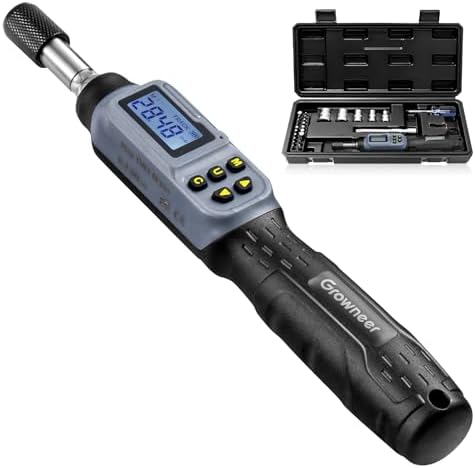
Best for: users who want to watch the reading climb on a screen instead of waiting for a click or slip.
The GROWNEER driver uses a digital readout and lists a range of 0.3 to 6 N-m, or 2.66 to 53.1 in-lb. Therefore, one tool spans everything from small electronics screws to scope rings. Also, a screen removes the guesswork of reading a tiny scale.
On the other hand, GROWNEER does not publish a calibration standard that we could check. Besides, digital drivers rely on battery power and electronics. As a result, we rank it as a convenient option rather than a reference tool, and we suggest checking it against a known wrench.
- Range: 0.3 to 6 N-m (2.66 to 53.1 in-lb)
- Readout: digital display
- Specs source: maker listing, not an independent data sheet
Pros
- Wide range in one tool
- Easy-to-read screen
- Covers small and mid-size screws
Cons
- No published standard or tolerance we could verify
- Depends on battery power
Skip it if: you want a mechanical tool that works in the cold or with dead batteries.
How We Chose the Best Torque Screwdriver Picks
We did not run hands-on tests. Instead, these best torque screwdriver picks are research-based. First, we read maker spec pages, then we checked torque standards and weighed owner feedback. Finally, we scored each driver on the points below.
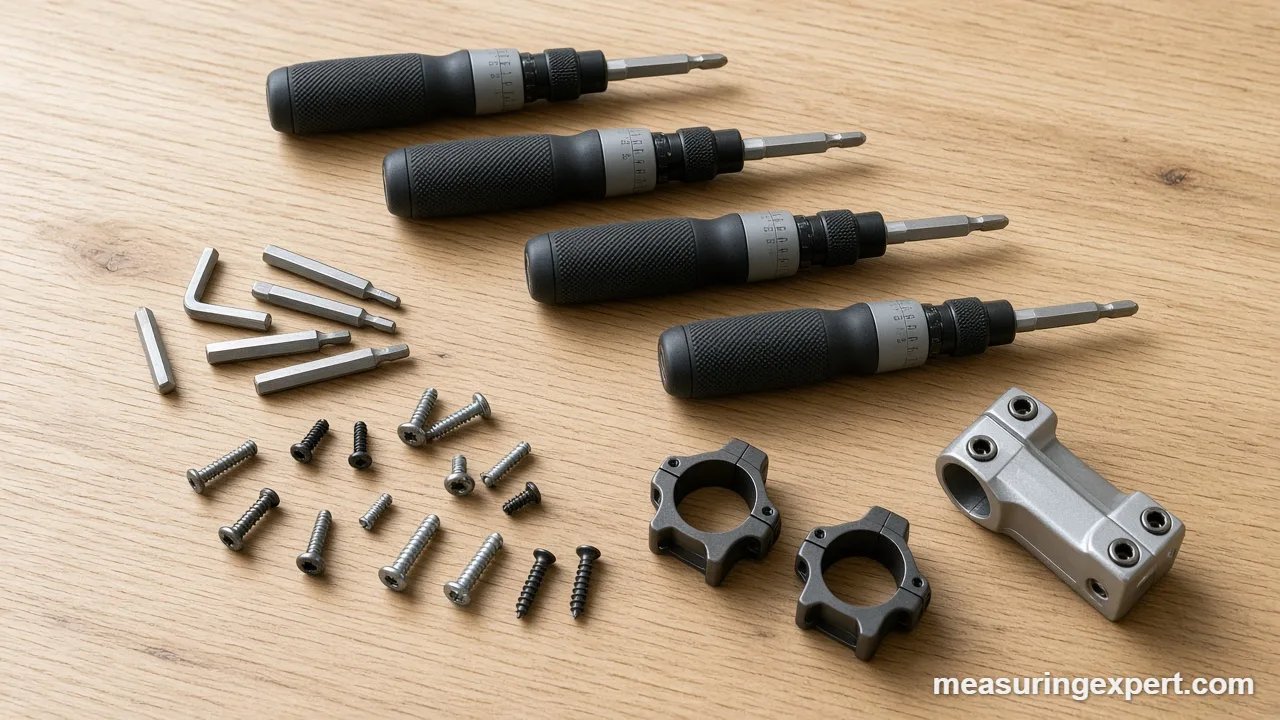
- Published accuracy: a stated tolerance, and the part of the scale it covers, earned credit.
- Standards: named standards such as ISO 6789 or ASME B107 counted in favor.
- Useful range: we looked for ranges that put real specs in the middle of the scale.
- Use case spread: we covered general work, tiny screws, bikes, guns and digital readouts, with at most two models per brand.
Our sources include the GEARWRENCH 89624 spec page, the Wera Series 7400 data, Wiha, Feedback Sports and KNINE product pages, and the NIST torque conversion factors. We dropped several listings because their makers do not publish clear specs.
Slip, Click, Preset or Digital: Torque Screwdriver Types Compared
Every torque screwdriver limits turning force at the bit, and the best torque screwdriver type depends on how you work. However, each type signals the limit in a different way, and that changes how it feels in your hand.
| Type | What happens at the set value | Strength | Watch out for |
|---|---|---|---|
| Slip (cam-over) | The handle slips and keeps turning | Cannot over-torque, even if you keep going | Feels odd at first |
| Click (break-over) | A click and a small give | Clear signal, familiar feel | You can push past the click |
| Preset | Slips or clicks at one fixed value | No setting mistakes on a line | Only one value per tool |
| Digital | The screen shows the load and warns at the target | Live reading in several units | Needs batteries and care |
Slip vs click drivers
In short, if you want the best torque screwdriver for fragile parts, a slip driver protects the screw, while a click driver relies on you to stop. So slip designs suit fragile parts, and click designs suit people who already use click wrenches. For larger bolts, a click wrench takes over; see our best torque wrench guide for 3/8 in. and 1/2 in. picks.
Adjustable vs preset handles
First, an adjustable handle lets one tool cover many specs. By contrast, a preset handle is locked to one value. As a result, presets suit production benches where the same screw comes up all day.
How to Read a Best Torque Screwdriver Spec Sheet
Above all, the best torque screwdriver is the one whose spec sheet fits your screws, so the numbers matter more than the handle color. Here is what each line tells you.
Range and units. Torque drivers list in-lb, oz-in or N-m. For instance, 16 oz-in equals 1 in-lb, and 1 N-m equals about 8.85 in-lb. Always pick a range where your spec falls near the middle, not at the ends.
Tolerance and the 20% rule. A tolerance such as +/-6% means a 20 in-lb setting may deliver 18.8 to 21.2 in-lb. Also, many makers state accuracy only from 20% to 100% of full scale. GEARWRENCH states its 89624 rating that way, for example. Therefore, avoid the bottom fifth of any scale.
Resolution. In simple terms, resolution is the smallest step you can set. The Wera 7445 sets in 0.5 in-lb steps, while the Feedback Sports tool adjusts in 0.17 N-m steps. Similarly, finer steps help when a spec lands between marks.
Standards and certificates. ISO 6789 and ASME B107 set test methods and limits for hand torque tools. In practice, a named standard and a serialized certificate mean someone checked that unit. Meanwhile, a tool with neither may still work, but you should verify it yourself.
Torque Converter for in-lb, oz-in and N-m
Often, spec sheets mix units, while most drivers show only one scale. So convert first, and then set the tool. NIST lists 1 in-lb = 0.1129848 N-m and 1 oz-in = 0.007061552 N-m.
For example, a 5 N-m stem spec equals about 44.3 in-lb. To learn more about the metric unit, read our guide on what Nm means in measurement.
How to Set and Use the Best Torque Screwdriver
Even the best torque screwdriver needs good technique. So follow these steps for scopes, electronics or bikes.
- Find the spec: Look up the torque value and its unit in the manual, and note whether the threads should be dry or treated.
- Convert if needed: Change the spec into the unit on your scale before you set anything.
- Choose the bit: Pick a bit that fills the screw head fully, so it does not cam out under load.
- Set the value: Turn the collar or use the setting tool until the scale shows the target, then lock it if the tool has a lock.
- Start by hand: Run each screw down until it seats, then snug a set of screws in a cross pattern.
- Turn slowly: Hold the driver in line with the screw and turn smoothly until it slips, clicks or beeps, then stop.
- Repeat once: Finally, go around the pattern again at the full value to even out the clamp.
Keeping Your Best Torque Screwdriver Accurate
A torque driver drifts with use, so a few habits keep even the best torque screwdriver honest.
Do:
- Store adjustable spring drivers at the low end of the scale, as the maker directs.
- Keep the tool in its case, away from grit and solvents.
- Have it checked about once a year or every 5,000 cycles, as ISO 6789 practice suggests.
Don’t:
- Never use it to break loose a stuck screw.
- Avoid dropping it, because a drop can shift the setting.
- Don’t turn the scale below its lowest mark or past the top.
Between lab checks, you can also compare two tools at the same setting. If they disagree by more than their combined tolerance, then send one out for service. In addition, our page on metric vs imperial units helps when specs and scales do not match.
What Even the Best Torque Screwdriver Cannot Do
To begin with, a torque driver measures turning force, not clamp force. However, clamp force is what holds a part in place. In fact, friction in the threads and under the head uses up most of the input torque. As a result, oiled, dry or thread-locked screws clamp differently at the same setting.
Also, a torque driver cannot fix a worn bit or a stripped thread. For the physics behind torque and lever arms, see our guide on how to measure and calculate torque.
Best Torque Screwdriver FAQ
What is the best torque screwdriver for most people?
For most home and shop work, the best torque screwdriver is a 10 to 50 in-lb model such as the GEARWRENCH 89624. It is rated +/-6% clockwise across its working range and sets in 1 in-lb steps.
What torque range do I need for scope rings?
Ring and base specs vary by maker, so always use the value from your ring maker first. Then pick a driver that puts it near the middle of the scale. For example, a 20 in-lb spec sits well inside a 10 to 50 in-lb driver.
What is the difference between a torque screwdriver and a torque wrench?
A torque screwdriver handles small values, usually under about 6 N-m or 50 in-lb, and drives bits. By contrast, a torque wrench drives sockets and covers larger bolts in ft-lb.
How accurate is a torque screwdriver?
Most quality drivers are rated about +/-4% to +/-6%. Micro ranges are often rated +/-10%, because very small loads are harder to control. Also, many ratings apply only from 20% to 100% of the scale.
How do I convert in-lb to N-m?
First, multiply in-lb by 0.1129848 to get N-m. For example, 20 in-lb equals about 2.26 N-m. To go the other way, multiply N-m by about 8.85.
Are digital torque screwdrivers more accurate?
Not by default. A digital screen is easier to read, but accuracy depends on the sensor and its calibration. So check the published tolerance, just as you would for a mechanical driver.
Which best torque screwdriver works for bikes?
A 2 to 14 N-m bit driver such as the Feedback Sports Range Click suits stems, seatposts and brake levers. For crank bolts and other larger parts, use a 10 to 60 N-m wrench instead.
How often should I calibrate a torque screwdriver?
A common rule from ISO 6789 practice is once a year or every 5,000 cycles, whichever comes first. Also check it sooner after a drop or if results seem off.
Can I use a torque screwdriver to loosen screws?
No. Instead, use a plain screwdriver to loosen screws. Otherwise, the extra load can strain the mechanism and shift the setting.
What does oz-in mean on a torque screwdriver?
Oz-in means ounce-force inch, a small US unit for light screws. There are 16 oz-in in 1 in-lb, and 1 N-m equals about 141.6 oz-in.
Final Pick for a Best Torque Screwdriver
For most readers, the GEARWRENCH 89624 is the best torque screwdriver to buy: it spans 10 to 50 in-lb, reads in 1 in-lb steps and carries a +/-6% rating across the scale. Then add a micro driver such as the Wera 7445 or Wiha TorqueVario-S if you work on tiny screws. Similarly, cyclists should start with a 2 to 14 N-m tool. Above all, keep your spec in the middle of the range and check the tool once a year.
1 thought on “Best Torque Screwdriver: 7 Research-Based Picks for Precise Work”