

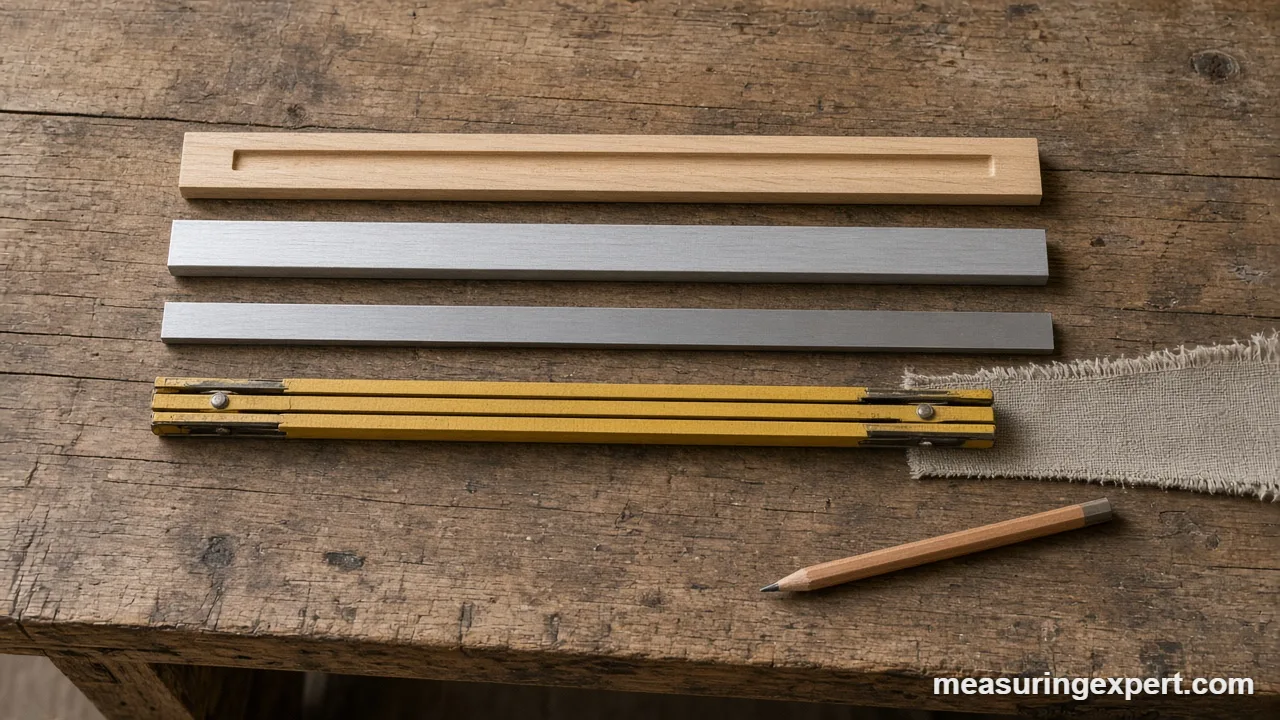
The best meter ruler for most people is the Starrett MS-2, an anodized aluminum meter stick with 1 mm and 1/8-inch scales that stays straight and light. However, the right pick depends on three things: who uses it, how fine the marks must be, and whether you need inches as well as millimeters.
In short: get the Starrett MS-2 for all-round use, the Westcott 10431 for classrooms on a budget, and the INSIZE 7110-1000 when you need a steel rule with a published tolerance.
As an Amazon Associate, Measuring Expert earns from qualifying purchases. Our picks are based on research, specifications and owner feedback, not paid placement.
Best Budget


Quick Answer: The Best Meter Ruler for Each Job
- Starrett MS-2: a light, stiff aluminum meter stick with metric and inch scales for home, shop and school.
- Westcott 10431: a lacquered wooden meter stick that suits classrooms and craft tables.
- INSIZE 7110-1000: a 1,000 mm steel rule with a published accuracy of plus or minus 0.50 mm.
- EISCO double-sided meter stick: a metric-only hardwood stick with metal ends for science labs.
- Wiha MaxiFlex 61602: a 2 m folding rule that also locks at 90 and 180 degrees.
- Fairgate 15-202: a metric pattern-making set for sewing and fashion students.
- Shinwa 36-inch steel rule: etched 0.5 mm and 1/64 in marks for bench layout.
On This Page
- Comparison table
- The 7 picks, reviewed
- How we chose
- Wood vs aluminum vs steel
- Accuracy classes and scales
- Length converter
- How to measure with a meter stick
- Care and checking
- Honest limits
- FAQ
- Bottom line
Best Meter Ruler Comparison Table
First, this table sums up each pick in one line. Next, the reviews below explain the scales, materials and limits behind each choice.
| # | Product | Best For | Standout Feature | Amazon |
|---|---|---|---|---|
| 1 | Starrett MS-2 Aluminum Meter Stick | Most users | 1 mm and 1/8 in scales on anodized aluminum | View |
| 2 | Westcott 10431 Wooden Meter Stick | Classrooms | Lacquer finish that resists chips and splinters | View |
| 3 | INSIZE 7110-1000 Steel Rule | Machine and wood shops | Published accuracy of +/-0.50 mm over 1,000 mm | View |
| 4 | EISCO Double-Sided Hardwood Meter Stick | Science labs | Metric on both sides, metal end caps | View |
| 5 | Wiha MaxiFlex 61602 Folding Rule | Jobsites and travel | 2 m in 10 sections, fiberglass-reinforced | View |
| 6 | Fairgate 15-202 Metric Rule Kit | Sewing and pattern making | Four metal rulers graduated in centimeters | View |
| 7 | Shinwa 36-Inch Rigid Stainless Steel Rule | Bench layout | 0.5 mm and 1/64 in etched marks | View |
The 7 Best Meter Ruler Picks, Reviewed
First, we ordered the list by how well each rule serves a typical buyer. So the general-purpose meter sticks come first, and the specialist tools follow.
Best Overall
1. Starrett MS-2 Aluminum Meter Stick
Best for: anyone who wants one meter stick for the shop, the garage and the kitchen table.
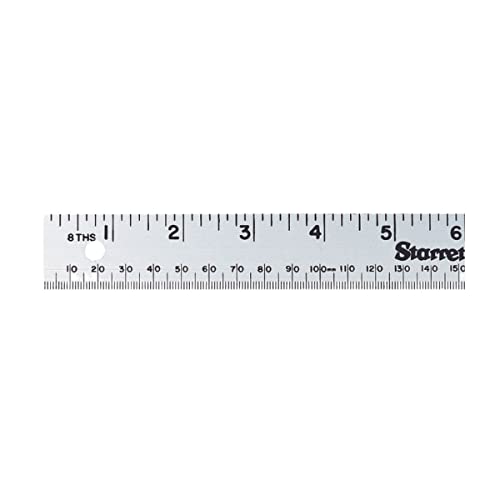
Starrett is a long-established American tool maker, and the MS-2 is its plain aluminum meter stick. Also, it is a full 1 m (39.37 in) long, with 1 mm graduations on one scale and 1/8-inch graduations on the other. As a result, you can mark a cut in either system without switching tools.
The blade is 1-1/8 in (28 mm) wide and 0.075 in (1.9 mm) thick. In addition, Starrett describes it as parallel and resistant to bending. Meanwhile, the anodized finish gives the bare aluminum a harder, cleaner surface. Starrett does not publish an accuracy class for it, so treat it as a quality general rule rather than a reference standard.
- Length: 1 m (39.37 in).
- Graduations: 1 mm and 1/8 in.
- Size: 1-1/8 in (28 mm) wide, 0.075 in (1.9 mm) thick.
- Material: anodized aluminum.
Pros
- Dual metric and inch scales on one stick.
- Also light enough to hold flat with one hand.
- In addition, it doubles as a straightedge for marking.
Cons
- No published accuracy class.
- Inch scale stops at 1/8 in, so fine inch work needs another rule.
Skip it if: you need half-millimeter marks or a stated tolerance; the INSIZE rule below covers both.
Best for Classrooms
2. Westcott 10431 Wooden Meter Stick
Best for: teachers, students and crafters who need an affordable stick that is easy to read.
Westcott is the school-supply brand of Acme United, and the 10431 is its standard wooden meter stick. Moreover, it carries a metric scale in millimeters and an inch scale in 1/8-inch steps, printed in bold black. In addition, a clear lacquer finish helps the wood resist chipping and splintering, which matters when a class of 30 shares the same sticks.
Overall length is listed at about 39.5 in, so the scale sits a little in from each end. Because the zero is not at the very tip, line up the zero mark instead of the end of the wood. Still, for basic length lessons, crafts and room layouts, that is a small habit to learn.
- Scales: millimeters and 1/8 in.
- Material: wood with a clear lacquer finish.
- Overall length: about 39.5 in (100 cm scale).
- Markings: bold black for easy reading.
Pros
- Low cost per stick for a class set.
- Lacquer finish also holds up to handling.
- Dual scales help with US and metric lessons.
Cons
- Wood can warp if stored damp or leaned at an angle.
- Zero sits in from the end, so end-to-end readings need care.
Skip it if: you work on a jobsite where a wooden stick would get wet or crushed.
Best Pro
3. INSIZE 7110-1000 Steel Rule
Best for: machinists, cabinetmakers and inspectors who want a stated tolerance in writing.
INSIZE is a metrology brand that sells calipers, micrometers and gauges to industry. In particular, its 7110-1000 rule is 1,000 mm (40 in) long and comes with a published accuracy of plus or minus 0.50 mm over the full length. For comparison, that matches the limit an EU Class II rule may show over a 1 m interval. So it is the only pick here with a written number you can plan around.
First, the front carries metric scales in 1 mm and 0.5 mm steps. The back, however, holds the inch scales in 1/64, 1/32 and 1/16 in. As a result, the mix makes it handy when a drawing is metric but your router fence or saw is set in inches.
- Range: 1,000 mm (40 in).
- Accuracy: +/-0.50 mm (manufacturer manual).
- Metric graduations: 1 mm and 0.5 mm on the front.
- Inch graduations: 1/64, 1/32 and 1/16 in on the back.
Pros
- Published accuracy figure.
- Fine marks on both metric and inch sides.
- Steel edge works as a cutting guide.
Cons
- Heavier than aluminum, so it can sag if held at one end.
- Fine 1/64 in marks are hard to read without good light.
Skip it if: you only measure fabric or classroom objects; a lighter stick is easier to handle.
Best for Science Labs
4. EISCO Double-Sided Hardwood Meter Stick
Best for: physics and chemistry classes that work only in SI units.
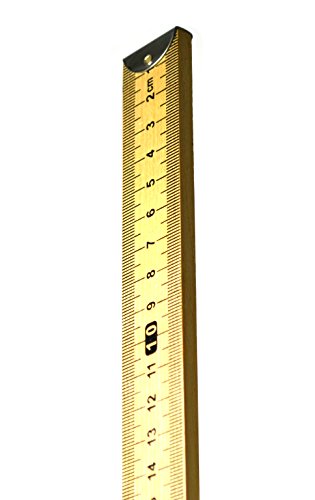
EISCO supplies lab equipment to schools, and this stick (model PH0064E) is built for experiments. For instance, both faces are marked in centimeters and millimeters, with every centimeter numbered. Also, the scale reads horizontally, so it suits pendulum, ramp and spring labs where the stick lies flat on the bench.
Also, the hardwood has a clear protective finish, and rugged metal caps guard both ends. That matters because dropped sticks usually fail at the corners first. Overall, the stick is 2.5 cm wide and 0.5 cm thick. However, note that there is no inch scale at all, which is a plus in a science class but a minus at home.
- Scale: centimeters and millimeters on both sides.
- Reading: horizontal.
- Ends: metal caps.
- Size: 2.5 cm wide, 0.5 cm thick.
Pros
- Metric on both sides, so students never read the wrong scale.
- Metal ends protect the zero point.
- Made by a school lab supplier for experiments.
Cons
- No inches for US home projects.
- Wood can swell in very humid rooms.
Skip it if: you need to switch between inches and centimeters.
Best Folding
5. Wiha MaxiFlex 61602 Folding Rule

Best for: carpenters, installers and travelers who need 2 m of rigid rule in a pocket.
Above all, a folding rule gives you a stiff scale that a tape cannot match when you reach across a gap. For example, Wiha’s MaxiFlex opens to 2 m in 10 sections, and it is molded with 30% fiberglass. As a result, it is waterproof and resists chemicals better than a wooden folding rule.
Also, the joints lock at 0, 90 and 180 degrees, with a stainless steel spring for the 90- and 180-degree stops. So you can also use it to check a corner. In addition, it carries metric and inch scales, with inch marks in 1/16 in, printed black on yellow on both sides and both edges.
- Length: 2 m in 10 sections.
- Material: molded with 30% fiberglass.
- Stops: lock at 0, 90 and 180 degrees.
- Scales: metric plus inches in 1/16 in steps.
Pros
- Twice the reach of a meter stick, yet pocket size.
- Waterproof and chemical resistant.
- Locking 90-degree stop for quick square checks.
Cons
- Each joint adds a little play, so it is less exact than a solid rule.
- Not a straightedge for marking long lines.
Skip it if: you need a true straightedge to draw or cut against.
Best for Sewing
6. Fairgate 15-202 Metric Rule Kit

Best for: sewists and fashion students who draft patterns in centimeters.
Fairgate makes drafting and garment rules, and the 15-202 kit is the metric version of its fashion designer set: four metal rulers graduated in centimeters. In practice, a set like this covers straight seams, hems and curves that one meter stick cannot.
For example, many sewing patterns from Europe and Asia list seam allowances and body sizes only in centimeters. Therefore, a metric set saves you from converting every number and rounding errors along the way. For layout, however, pair it with a long meter stick when you spread fabric on a cutting table.
- Contents: four metal rulers.
- Scale: centimeters (metric).
- Use: pattern drafting and garment construction.
Pros
- Built for pattern work, not general shop use.
- Metric only, so it matches metric patterns directly.
- Metal edges stay true for tracing.
Cons
- Not a full meter stick on its own.
- Costs more than a single ruler.
Skip it if: your patterns are in inches; an inch set suits you better.
Best Rigid Steel Rule
7. Shinwa 36-Inch Rigid Stainless Steel Rule
Best for: woodworkers and metalworkers who want fine metric and inch marks on one rigid blade.
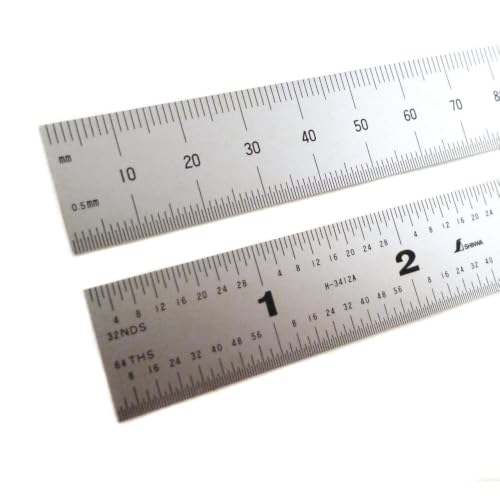
Shinwa is a Japanese rule maker known for etched stainless rules. Specifically, this rigid 36-inch model carries metric scales in 1 mm and 0.5 mm steps plus inch scales in 1/32 and 1/64 in. Also, its satin chrome finish cuts glare under shop lights, so the fine marks stay readable.
Because it is 36 in long, it falls a little short of a full meter, so it is not a true meter stick. However, for layout on a bench, a rigid steel blade with etched marks beats a printed stick for precision. Therefore, keep a meter stick nearby for anything longer than about 91 cm.
- Length: 36 in (about 914 mm).
- Metric graduations: 1 mm and 0.5 mm.
- Inch graduations: 1/32 and 1/64 in.
- Material: stainless steel, satin chrome finish.
Pros
- Fine marks in both unit systems.
- Low-glare finish makes small marks easier to read.
- Stainless steel resists rust.
Cons
- About 3.4 in (8.6 cm) short of a full meter.
- Rigid steel is unforgiving if dropped on its corner.
Skip it if: you need to span a full meter in one reading.
How We Chose the Best Meter Ruler Picks
These picks are research-based. In other words, we did not run lab tests. Instead, we compared published specifications, manufacturer manuals and owner feedback, and then we applied the same rules to every candidate.
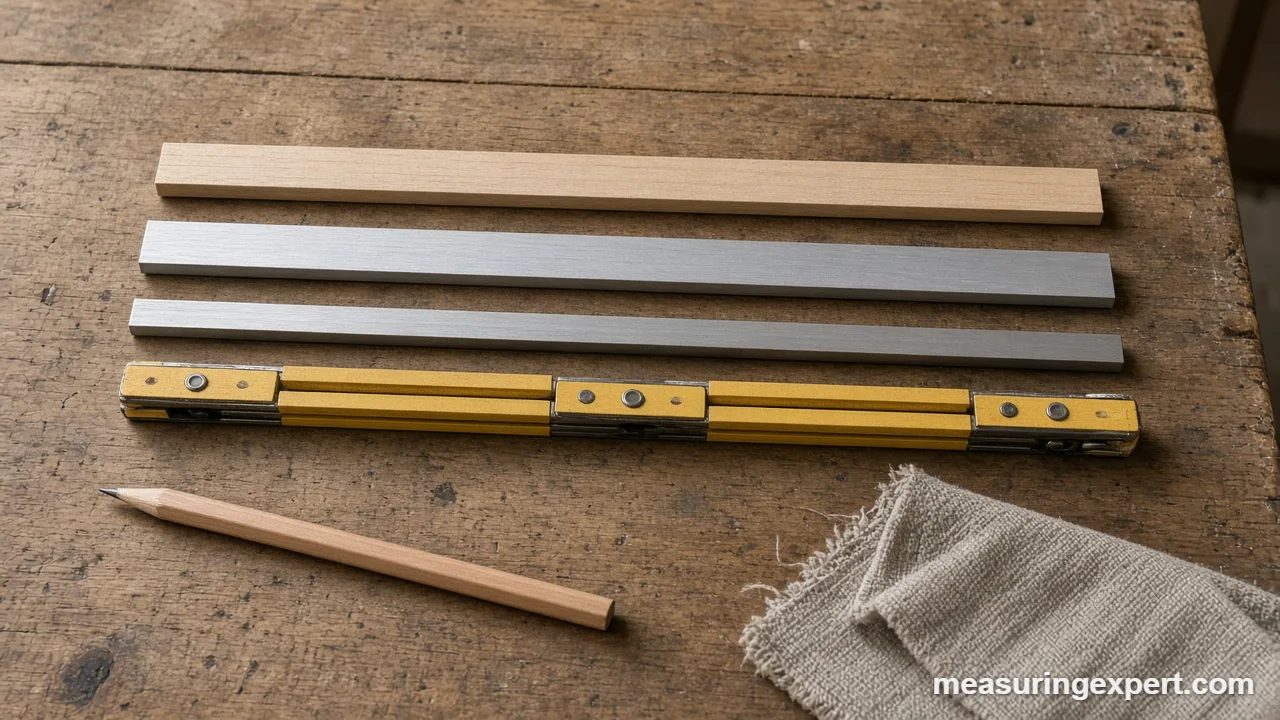
- Real 1 m coverage first. We favored full meter sticks and 1,000 mm rules, then added a folding rule and a sewing set for jobs a meter stick handles poorly.
- Clear scales. We checked the graduations each maker lists, such as 1 mm, 0.5 mm, 1/8 in or 1/64 in.
- Published data. A stated tolerance, like the INSIZE plus or minus 0.50 mm figure, counted in a product’s favor.
- Established brands. We used makers with manuals and support, and we allowed at most two products per brand.
- No junk listings. We left out unbranded rulers with no spec sheet, along with discontinued models. For example, Starrett lists its C636-1000 steel rule as discontinued, so it is not here.
Sources included the Starrett MS-2 product page, the INSIZE 7110 manual, the Wiha and EISCO product pages, and the EU Measuring Instruments Directive annex for material measures of length.
Wood, Aluminum or Steel: Which Meter Stick Material Fits?
First of all, material changes weight, stiffness and how long the marks last. So start here before you compare brands.
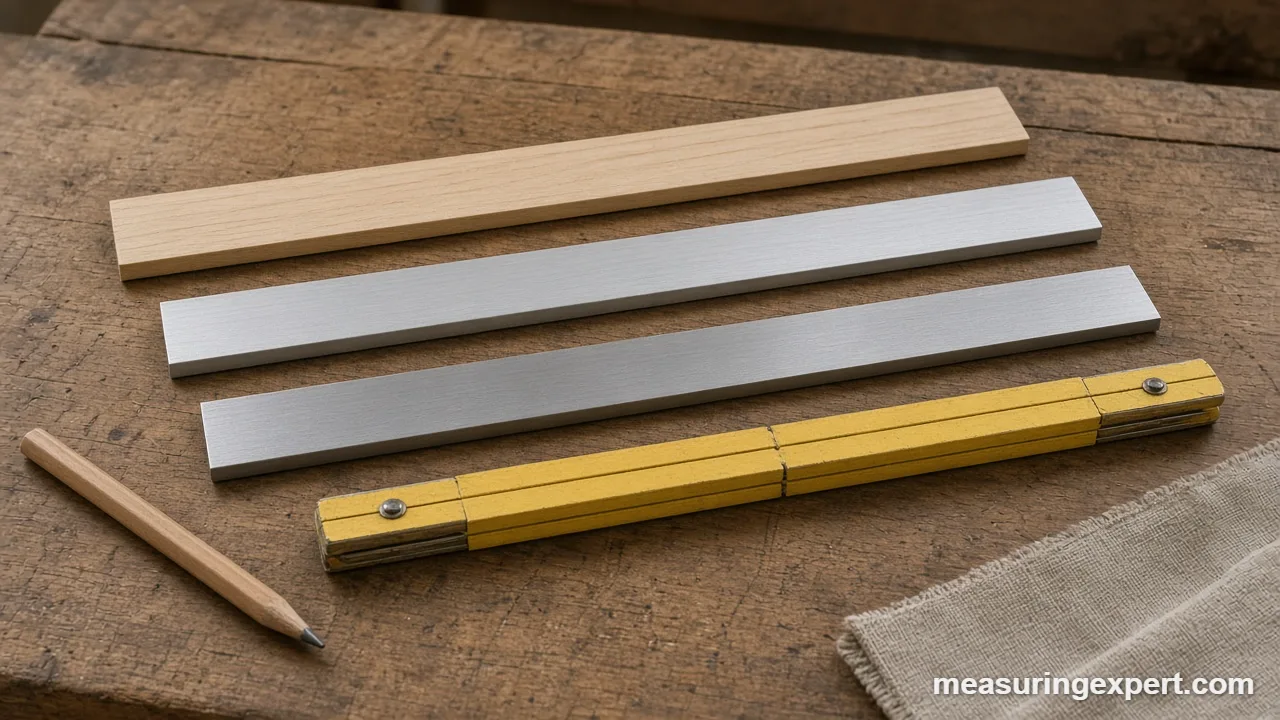
| Type | Strengths | Weak points | Best use |
|---|---|---|---|
| Wood meter stick | Cheap, light, warm to hold | Can warp, printed marks wear off | Classrooms, crafts, home |
| Aluminum meter stick | Light, stiff, will not rot | Soft edge dents if dropped | Shop layout, general use |
| Steel or stainless rule | Etched marks, true edge, fine scales | Heavier, can rust if plain steel | Machining, cabinetry, inspection |
| Folding rule | 2 m reach in pocket size | Joint play adds error | Jobsites, quick checks |
| Sewing rule set | Shapes for curves and hems | Not one long scale | Pattern making |
Accuracy Classes, Graduations and Dual Scales on a Best Meter Ruler
First, most rulers sold in the US carry no accuracy class at all. In Europe, however, rules sold for trade use follow the Measuring Instruments Directive. Specifically, its annex for material measures of length sets a maximum permissible error of a + bL, where L is the length rounded up to the next whole meter.
| EC class | a (mm) | b (mm) | Max error over 1 m | Max error over 2 m |
|---|---|---|---|---|
| Class I | 0.1 | 0.1 | +/-0.2 mm (0.008 in) | +/-0.3 mm (0.012 in) |
| Class II | 0.3 | 0.2 | +/-0.5 mm (0.020 in) | +/-0.7 mm (0.028 in) |
| Class III | 0.6 | 0.4 | +/-1.0 mm (0.039 in) | +/-1.4 mm (0.055 in) |
For context, Class I is the tightest of the three, and Class III allows five times more error over 1 m. Meanwhile, Japan grades steel rules under its own JIS B 7516 standard, so a JIS grade on a Shinwa rule plays a similar role.
However, none of our US-market picks print an EC class on the product pages we read. Instead, look for a written tolerance, like the INSIZE figure, or a recognized grade such as JIS Grade 1.
Resolution vs Accuracy
For example, a ruler with 0.5 mm marks has fine resolution, but that does not prove the marks are in the right place. In contrast, accuracy is how close a mark sits to its true position. So a rule can be easy to read and still be wrong, which is why published tolerances matter.
Millimeter vs Inch Dual Scales
Since 1959 the inch has been defined as exactly 25.4 mm, so both scales trace back to the same meter. A dual-scale rule saves converting, but check which scale you are reading every time. For example, 1/8 in is 3.175 mm, not 3 mm, and that gap grows across a long cut. For more on how the units relate, see our guide to length units and conversions.
Convert Meter Stick Readings to Inches and Feet
Enter a reading from your meter stick to convert it. The default is 100 cm, which is one full meter.
The converter uses 1 in = 25.4 mm exactly. NIST explains that the meter itself is defined by the distance light travels in 1/299,792,458 of a second, so every good scale traces back to that one definition.
How to Measure Accurately With a Meter Stick
Equally important, good technique matters as much as the tool. Follow these steps to get repeatable readings from any meter stick or rule.
- Check the zero first: see whether the scale starts at the tip or a little in from the end.
- Lay the stick flat on the object, edge on edge, so the marks touch the surface.
- Look straight down at the mark to avoid parallax error.
- For a damaged end, start at the 10 cm mark and subtract 10 cm from the reading.
- For lengths over 1 m, mark the end of the stick with a fine pencil line, then move it and add the readings.
- Read the smallest mark you can see clearly, and write down the unit with the number.
- Measure twice, and if the readings differ, measure a third time.
For more ways to measure longer or curved objects, read our step-by-step guide on how to measure length.
Care and Quick Checks to Keep the Best Meter Ruler True
In general, a meter stick lasts years if you store it well. First, hang it by its hole or lay it flat; never lean it in a corner, because that bows wood and thin aluminum over time. Next, keep wooden sticks away from damp floors and heaters.
Temperature also changes length. For example, aluminum grows roughly 0.23 mm per meter for a 10 C (18 F) rise, and steel grows about half that. That is small for crafts but real for precision work, so let a rule sit in the room before you use it.
Finally, to check a rule at home, compare it with a second good rule along the full length. As a rule, if the 1 m marks disagree by more than about 1 mm, one of them is off. Also, a straight rule should show no light gap when you lay it edge to edge with another known-straight edge.
Do
- Store rules hanging or flat.
- Wipe steel rules with light oil if they will sit unused.
- Read the mark from directly above.
- Use one tool for the whole job when you can.
Don’t
- Use the stick as a pry bar or scraper.
- Trust a worn tip as your zero.
- Mix readings from two different rules on one part.
- Cut with a knife against a wooden stick.
Honest Limits of Even the Best Meter Ruler
Every rule has limits. First, printed wooden scales can be off by a fraction of a millimeter, and the ink wears away with use. Second, a folding rule adds a little play at every joint. Third, your eye limits you: most people cannot split a 1 mm mark reliably without a magnifier.
So if a job needs better than about 0.5 mm, switch to calipers or a certified steel rule. In addition, for legal trade measurement or inspection, use a tool with a calibration certificate from an accredited lab.
Best Meter Ruler FAQ
What is the best meter ruler for most people?
The Starrett MS-2 is the best meter ruler for most people. Specifically, it is a light anodized aluminum stick, 1 m long, with 1 mm and 1/8 in scales, so it handles shop, home and school jobs.
How long is a meter stick in inches?
A meter is exactly 39.3701 inches, because 1 inch is defined as 25.4 mm. As a result, a meter stick is about 3.37 inches longer than a 36-inch yardstick.
What is the best meter ruler for a classroom?
The Westcott 10431 is the best meter ruler here for general classrooms, thanks to its low cost, lacquer finish and dual scales. For science labs, the metric-only EISCO stick is a better fit.
Is aluminum or wood better for a meter stick?
Aluminum stays straight and will not rot, so it lasts longer in a shop. On the other hand, wood is cheaper and lighter, which suits classrooms. However, wood can warp if stored damp.
What do EC Class I and Class II mean on a ruler?
They are EU accuracy classes for length measures. Over 1 m, Class I allows an error of up to 0.2 mm and Class II up to 0.5 mm. However, most US rulers do not carry a class at all.
Which meter ruler is most accurate?
Among our picks, the INSIZE 7110-1000 publishes the clearest figure, plus or minus 0.50 mm over 1,000 mm. The etched Shinwa steel rule is also easier to read finely than a printed wooden stick.
Do I need a meter ruler with both inches and millimeters?
Yes, if you work from mixed plans or patterns. As a result, a dual-scale rule avoids conversion errors. In a science class, however, a metric-only stick keeps students from reading the wrong side.
What ruler is best for sewing in centimeters?
The Fairgate 15-202 metric kit is built for pattern drafting in centimeters. Also, use it with a long meter stick to lay out fabric on the cutting table.
Is a folding rule as accurate as a meter stick?
Usually not quite. Each joint adds a little play, so a folding rule suits rough layout and quick checks. Instead, use a solid stick or steel rule for fine marking.
How do I check if my meter stick is accurate?
Compare it end to end with a second good rule, such as a steel rule with a published tolerance. After that, if the 1 m marks differ by more than about 1 mm, replace the cheaper one.
Bottom Line: Our Best Meter Ruler Pick
The Starrett MS-2 is the best meter ruler for most homes, shops and schools, because it is light, stiff and marked in both millimeters and inches. Otherwise, choose the Westcott 10431 for class sets on a budget, and the INSIZE 7110-1000 when a written tolerance matters.
2 thoughts on “7 Best Meter Ruler Picks (2026): Wood, Aluminum and Steel Meter Sticks for Class, Sewing and Shop”