

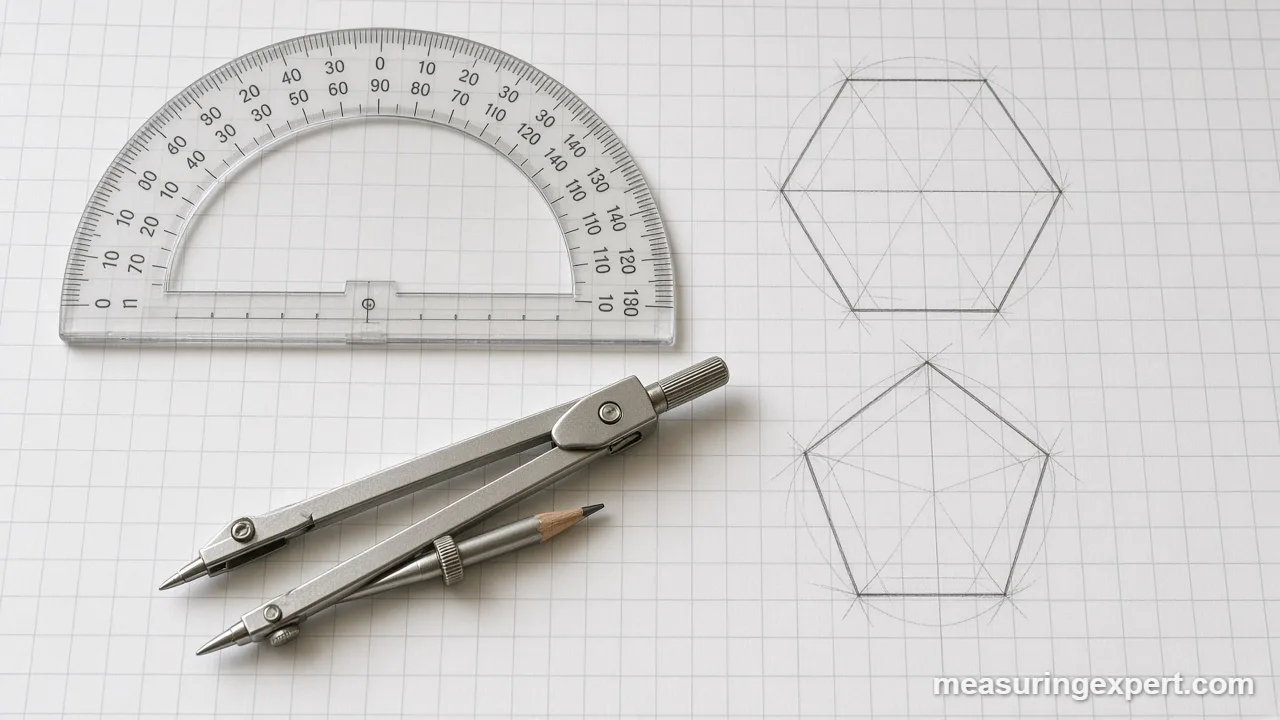
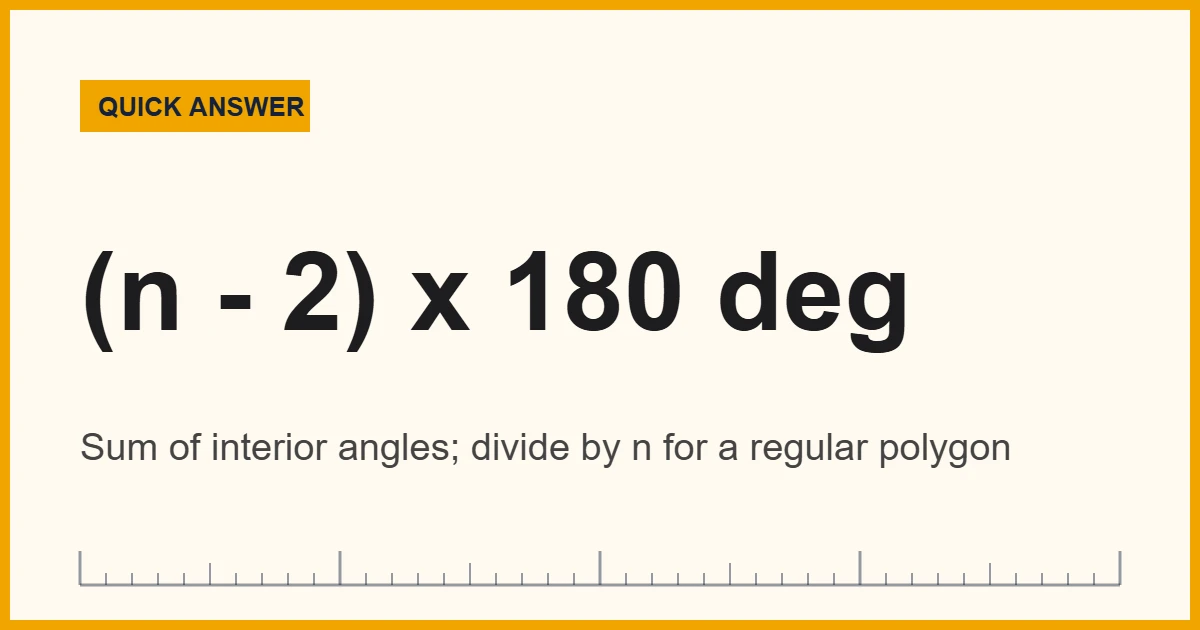
Angles in a polygon add up to (n – 2) x 180 degrees, where n is the number of sides. A triangle totals 180 degrees, a quadrilateral 360 and a pentagon 540. In a regular polygon, divide that total by n to get each angle, such as 108 degrees for a pentagon.
Convert an Angle From Your Polygon Project
Many polygon jobs end with a cut or a slope, not just a number on paper. For example, the corner of a regular octagon is 135 degrees, so each mitered board needs a 22.5-degree cut. Enter any angle below to see it as percent grade and roof pitch as well.
First, a polygon is a flat, closed shape made of straight sides. Each place where two sides meet is a vertex, and the angle inside that corner is an interior angle. Because the sides are straight, the corners follow strict rules. As a result, you rarely need to measure every angle by hand.
In fact, most angles in a polygon can be found with one short formula. The US National Institute of Standards and Technology defines the degree as exactly pi/180 radian in its SI unit guide (SP 811), which is why a full turn is 360 degrees. Similarly, Wolfram MathWorld’s polygon entry gives the interior total as (n – 2) x 180 degrees and the exterior total as 360 degrees.
In short: count the sides, apply the formula, and use a protractor only to check the result or to read an irregular shape.
Next, you will find the formula, a table for common shapes, a protractor method, and ways to find a missing angle.
Angles in a Polygon at a Glance
- The interior angles of any simple polygon add up to (n – 2) x 180 degrees.
- Each interior angle of a regular polygon equals (n – 2) x 180 / n degrees.
- Exterior angles, one per corner, always add up to 360 degrees for a convex polygon.
- An interior angle and its exterior angle add up to 180 degrees.
- A polygon with n sides splits into n – 2 triangles, which explains the formula.
- A concave polygon has at least one interior angle larger than 180 degrees.
- A protractor reads to about half a degree, so use the formula to check your reading.
The Formula for Angles in a Polygon
Put simply, the formula is (n – 2) x 180, where n is the number of sides. It works because you can pick one corner and draw lines to every corner that is not next to it. As a result, the shape splits into n – 2 triangles, and each triangle holds 180 degrees.
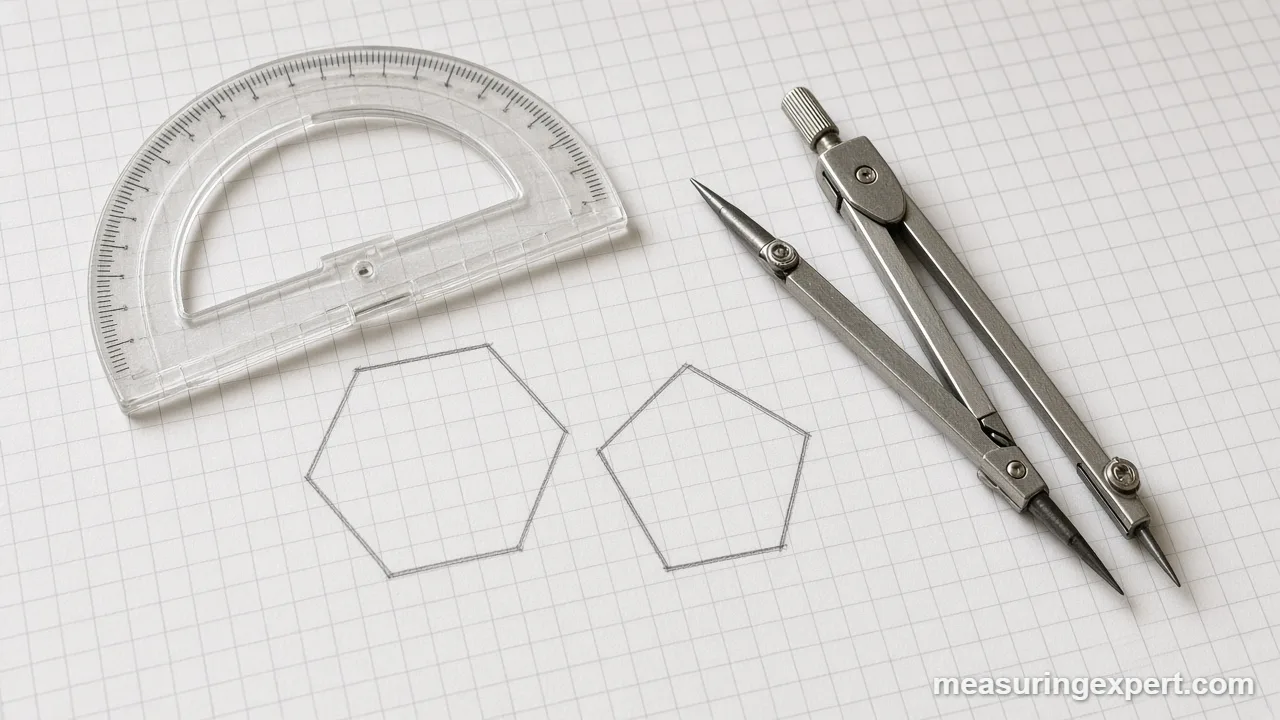
For example, a hexagon has 6 sides, so it splits into 4 triangles. Therefore, its interior angles total 4 x 180 = 720 degrees. The same logic works for a shape with 20 sides: 18 triangles give 3,240 degrees.
Interior Angles in a Polygon by Number of Sides
This table covers the shapes you meet most often. The middle columns apply to regular polygons, where every side and angle is equal.
| Polygon | Sides (n) | Sum of interior angles | Each interior angle (regular) | Each exterior angle (regular) |
|---|---|---|---|---|
| Triangle | 3 | 180° | 60° | 120° |
| Quadrilateral | 4 | 360° | 90° | 90° |
| Pentagon | 5 | 540° | 108° | 72° |
| Hexagon | 6 | 720° | 120° | 60° |
| Heptagon | 7 | 900° | 128.57° | 51.43° |
| Octagon | 8 | 1,080° | 135° | 45° |
| Nonagon | 9 | 1,260° | 140° | 40° |
| Decagon | 10 | 1,440° | 144° | 36° |
| Dodecagon | 12 | 1,800° | 150° | 30° |
| 20-gon | 20 | 3,240° | 162° | 18° |
Notice the pattern. Also, each extra side adds exactly 180 degrees to the total. Meanwhile, each angle in a regular polygon creeps closer to 180 degrees but never reaches it.
Regular vs Irregular Polygons
A regular polygon has equal sides and equal angles. In contrast, an irregular polygon does not. This difference decides whether you can find the angles by calculation alone.
| Feature | Regular polygon | Irregular polygon |
|---|---|---|
| Side lengths | All equal | Can differ |
| Interior angles | All equal | Can differ |
| Each angle | (n – 2) x 180 / n | Measure or calculate each one |
| Total of the angles | (n – 2) x 180 | (n – 2) x 180, the same total |
| Examples | Square, stop sign, honeycomb cell | Lot outline, kite, most floor plans |
The total never changes, even when the shape is lopsided. However, the split between corners does change. For an irregular polygon, therefore, you measure all but one angle and then subtract their sum from the total.
Convex vs concave shapes
In a convex polygon, every interior angle is less than 180 degrees. By contrast, a concave polygon has at least one corner that dents inward, so that angle is larger than 180 degrees. The sum formula still holds, although a standard protractor cannot read the large angle in one step. Instead, measure the small angle outside the dent and subtract it from 360, as explained in our guide to the reflex angle.
Exterior Angles in a Polygon
An exterior angle is formed when you extend one side past a corner. It sits outside the shape, next to the interior angle. Together, the two make a straight line, so they add up to 180 degrees.
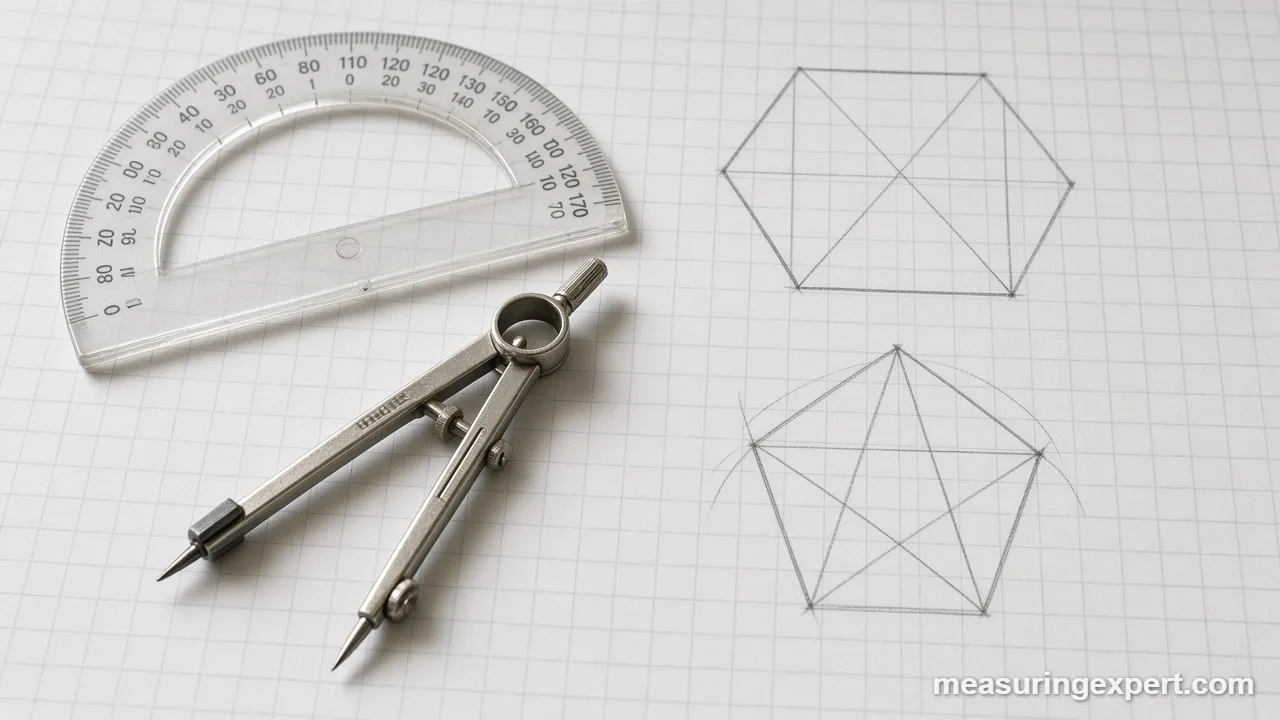
If you take one exterior angle at each corner of a convex polygon, they always add up to 360 degrees. Imagine walking around the shape and turning at each corner. In the end, you finish a full turn. As a result, each exterior angle of a regular polygon is simply 360 / n.
This also gives a handy shortcut for regular shapes. For example, a regular nonagon has exterior angles of 360 / 9 = 40 degrees. Therefore, its interior angles are 180 – 40 = 140 degrees.
How to Measure Angles in a Polygon With a Protractor
Use this method for an irregular shape, or to check a calculation on a drawing. Our guide on how to measure angles using a protractor goes deeper on reading the scale.
- Number the corners. Label each vertex with a letter so that you do not skip or repeat one.
- Extend short sides. If a side is shorter than the protractor, extend it lightly with a ruler so it reaches the scale.
- Align the protractor. Place the center mark on the vertex and set the zero line along one side.
- Read the scale. Follow the other side to the number on the scale that starts at 0 on your first side.
- Record every angle. Write each reading beside its letter, and then repeat for each corner.
- Add and compare. Finally, add your readings and compare the total with (n – 2) x 180. A gap of one or two degrees is normal.
If the gap is larger, one reading is probably off. In that case, look for a corner where you used the wrong scale, since protractors print two scales that run in opposite directions.
Finding Missing Angles in a Polygon
Often you know most of the angles and need the last one. Fortunately, the method is the same for every shape.
- First, find the total with (n – 2) x 180.
- Next, add the angles you already know.
- Finally, subtract that sum from the total.
For example, take a pentagon with angles of 100, 110, 120 and 95 degrees. First, the total is 540 degrees. The four known angles add up to 425, so the missing angle is 540 – 425 = 115 degrees.
When you only know side lengths, you can split the shape into triangles. Next, use the law of cosines on each triangle: cos(C) = (a^2 + b^2 – c^2) / (2ab). Here, C is the angle opposite side c. As a result, you get the angle without a protractor, which is useful for land plots and plans.
Recommended Tools for Measuring Angles in a Polygon
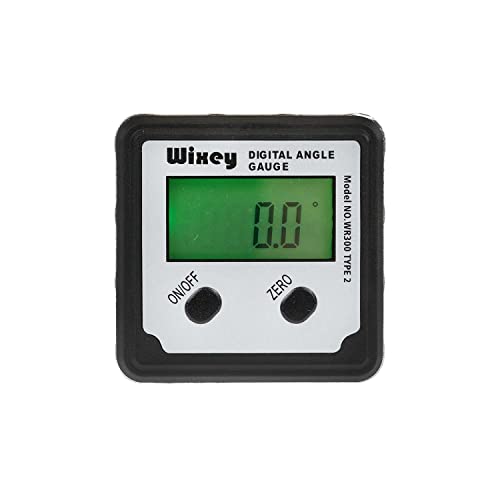
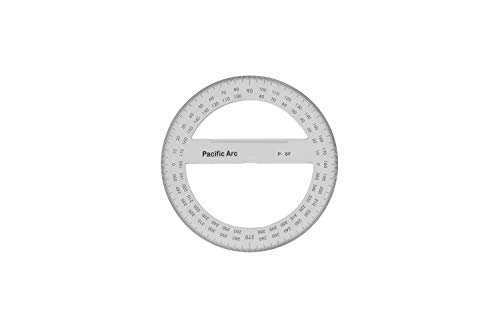
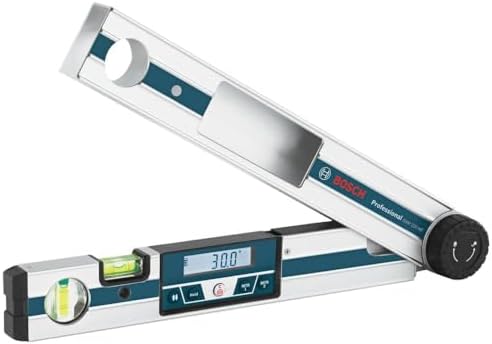
For paper work, a clear protractor is enough. However, for boards, frames and trim, a digital angle gauge saves time because it reads the angle straight from the part. Based on manufacturer specs and buyer reports, the options below are well reviewed. First, look for sharp, engraved markings. Also, check the measuring range in the manual, since not every digital tool reads a full circle.


As an Amazon Associate, Measuring Expert earns from qualifying purchases.
To compare more models, see our roundups of the best protractors and the best angle measuring tools.
Do and Don’t When Working With Polygon Angles
- Count the sides twice before you use the formula.
- Check that your angle total is a multiple of 180.
- Sketch the shape and label each vertex.
- Use a sharp pencil, because thin lines read more clearly.
- Compare measured totals with the formula.
- Use the regular-polygon formula on an irregular shape.
- Mix up interior and exterior angles.
- Read the wrong protractor scale.
- Assume that a right-looking corner is exactly 90 degrees.
- Round early when you have many sides.
Honest Limits of Measured Polygon Angles
The formulas are exact, but a measured angle never is. For instance, a school protractor has 1-degree marks, so a careful reading is good to about half a degree. Besides, thick pencil lines and a slightly misplaced vertex can add another degree or two. Moreover, errors add up as you go around a shape with many corners.
For example, if each of eight readings is off by half a degree in the same direction, the total misses by 4 degrees. In short, a small gap against the formula is normal, and it does not mean the shape is wrong. Also, real objects have rounded corners and worn edges, so any real polygon is only an approximation of the ideal one.
When to Call a Professional
For homework, crafts and basic DIY, a protractor and the formula are plenty. However, some jobs need verified angles, such as roof framing, a deck with a six-sided or eight-sided layout, or machined parts. In those cases, ask a licensed contractor, surveyor or machinist. Likewise, a calibration lab can check angle gauges that must meet a tolerance.
Angles in a Polygon: Frequently Asked Questions
What is the sum of the angles in a polygon?
The interior angles of a simple polygon add up to (n – 2) x 180 degrees, where n is the number of sides. For example, a hexagon totals 720 degrees.
How do you find each of the angles in a polygon that is regular?
Divide the total by the number of sides: (n – 2) x 180 / n. For a regular octagon, that is 1,080 / 8 = 135 degrees.
Do all angles in a polygon add up to 360 degrees?
No. Only a quadrilateral has interior angles that total 360 degrees. However, the exterior angles of any convex polygon add up to 360 degrees.
Do the angles in a polygon add up to 180 degrees?
Only in a triangle. Every extra side adds another 180 degrees to the total.
How do you find the number of sides from one angle?
For a regular polygon, first find the exterior angle with 180 minus the interior angle. Then divide 360 by it. For example, 360 / 30 = 12 sides.
How do you find the angles of an irregular polygon?
Measure all but one angle with a protractor. Then subtract their sum from (n – 2) x 180 to get the last one.
What is the exterior angle of a regular pentagon?
It is 360 / 5 = 72 degrees. The matching interior angle is 180 – 72 = 108 degrees.
Can an interior angle in a polygon be more than 180 degrees?
Yes, in a concave polygon. A shape with n sides can have up to n – 3 such angles.
How many triangles fit inside a polygon?
A polygon with n sides splits into n – 2 triangles when you draw diagonals from one corner. A decagon, for example, gives 8 triangles.
How many diagonals does a polygon have?
A polygon has n x (n – 3) / 2 diagonals. A hexagon has 6 x 3 / 2 = 9, and an octagon has 20.
Angles in a Polygon: The Bottom Line
To sum up, count the sides, then use (n – 2) x 180 for the total. For a regular shape, divide by n to get each angle. For an irregular one, measure all but one corner and subtract.
Finally, use a protractor to check your work, and keep in mind that hand readings are good to about half a degree. When a project depends on tight angles, such as framing or machining, bring in a professional with calibrated tools.