

Your 4 High speed should rarely go above about 50 mph (80 km/h), and in snow, mud or sand it should be much lower. 4 Low is a crawling range: most manuals that give a figure point to about 25 mph (40 km/h) or less. Always check your own owner’s manual, because limits vary by model.
Four-wheel drive gives you grip, not permission to drive fast. That is the single most useful thing to remember when you move the selector out of 2H. So this guide explains what the owner’s manuals of major makers actually say, why the numbers differ, and how to pick a safe speed for the surface under your tires.
First, the short version of the mechanics. In 4H, a part-time transfer case locks the front and rear driveshafts together at normal road gearing. In 4L, it adds an extra reduction gear, so the wheels turn far slower for the same engine speed. As a result, 4H suits slippery roads at moderate speeds, while 4L suits steep, rough or deep terrain at a crawl.
In short: treat about 50 mph as a ceiling for 4H, not a target, and treat about 25 mph as a ceiling for 4L. Then drive slower whenever the surface demands it.
These figures come from manufacturer documents, not forum lore. For example, the 2026 Kia Tasman owner’s manual recommends driving under about 80 km/h (50 mph) in 4H and under about 40 km/h (25 mph) in 4L. Similarly, General Motors’ service publication on four-wheel drive operation warns that 4HI is not designed for dry pavement, and it notes that the maximum 4LO speed varies by model.
Below, you will find a converter, a maker-by-maker table, a step-by-step routine for shifting safely, and the honest limits of any speed number.
Convert Your 4 High Speed Limit to km/h
Manuals print limits in mph, km/h or both. So type the number from your manual below to see it in other units. The default is 50 mph, a common 4H ceiling.
For reference, 25 mph is about 40.23 km/h, 50 mph is about 80.47 km/h, and 62 mph is about 99.78 km/h. If you want to check your real speed against the dash, see how to measure speed with an iPhone.
Recommended Tools for Safe 4WD Driving
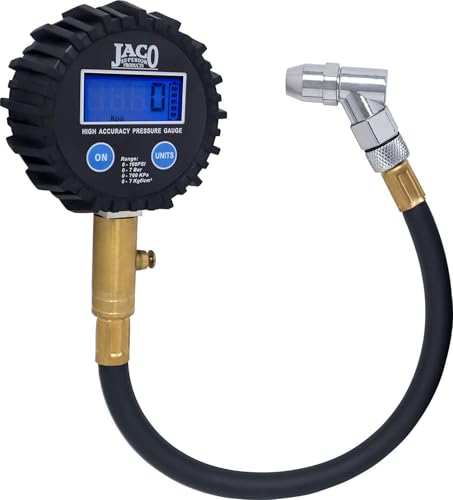
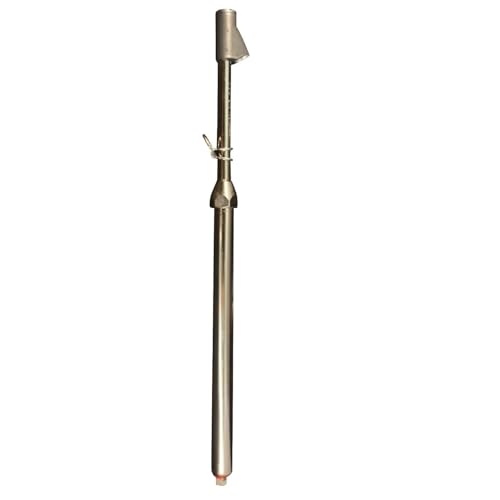
Speed is only half of the traction story. Tire pressure and tread depth matter just as much, because they decide how much grip you have to work with. So keep an accurate pressure gauge in the glove box, especially if you air down for sand or rocks. In addition, a tread depth gauge tells you when worn tires are cutting your margin on snow and mud.
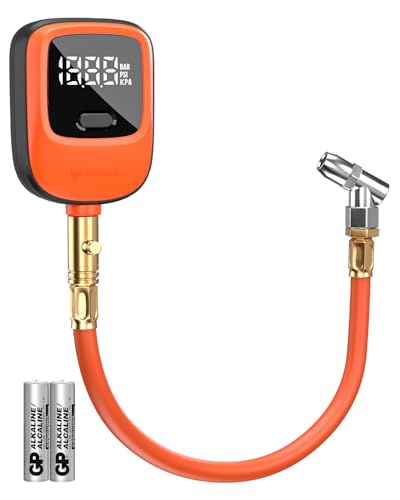
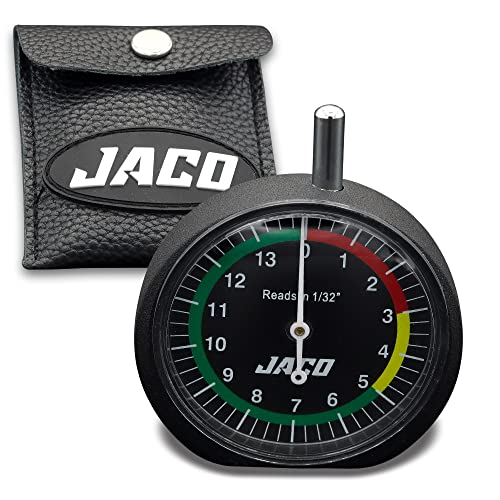

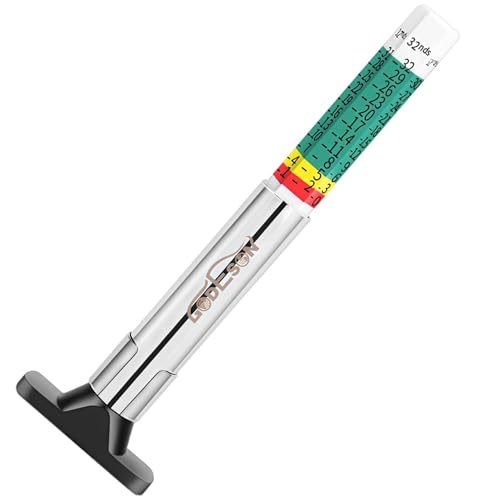
As an Amazon Associate, Measuring Expert earns from qualifying purchases.
- A safe 4 High speed is usually well under 50 mph (80 km/h); the surface sets the real limit.
- 4 Low is for crawling: stay near or under 25 mph (40 km/h) unless your manual says otherwise.
- Kia, GM and Toyota manuals all give different shift rules, so read yours.
- Part-time 4H on dry pavement causes binding, tire scrub and poor handling.
- Most trucks shift into 4H on the move; 4L usually needs a stop and Neutral.
- Four-wheel drive does not shorten braking distances on ice or snow.
- Correct tire pressure and good tread matter as much as speed.
4 High Speed vs 4 Low Speed at a Glance
People often lump 4H and 4L together as “four-wheel drive”. However, they do very different jobs, and their speed ranges barely overlap.
| 4 High (4H) | 4 Low (4L) | |
|---|---|---|
| Gearing | Normal road ratio (1:1 in the transfer case) | Extra reduction, often about 2.5:1 to 4:1 |
| Typical use | Snow, ice, mud, gravel, sand at moderate pace | Steep climbs and descents, rocks, deep mud or sand, towing a boat up a slick ramp |
| Common speed ceiling | About 50 mph (80 km/h) where a manual gives one | About 25 mph (40 km/h) or less |
| Shifting into it | Usually on the move at moderate speed | Usually stopped, transmission in Neutral |
| Dry pavement | Avoid with part-time systems | Avoid |
What Owner’s Manuals Say About 4 High Speed
Manufacturers write their limits in two ways. Some give a recommended driving speed for each range. Others only give a shifting speed and leave the rest to driving conditions. Here is what three major makers publish.
| Maker / source | 4H guidance | 4L guidance |
|---|---|---|
| Kia (2026 Tasman owner’s manual) | Driving under about 80 km/h (50 mph) is recommended; shift 2H, 4A and 4H at about 50 mph or below | Driving under about 40 km/h (25 mph) is recommended; shift 4H and 4L only when stopped on a firm, level surface |
| General Motors (TechLink, 2023) | For snowy or icy roads and off-roading; not designed for dry pavement; shifts between 2HI, 4HI and AUTO at normal driving speeds | Off road only; shift when stopped or below 3 mph (5 km/h) in Neutral; maximum speed varies by model |
| Toyota (2020 Tacoma Quick Reference Guide) | Shift into 4WD high below 62 mph (about 100 km/h) | Shift into Neutral while stopped, or press the clutch below 2 mph on manual models |
Toyota’s figure comes from the 2020 Tacoma Quick Reference Guide. Notice that 62 mph is a shifting limit, not a recommended cruising speed. In other words, Toyota tells you when the system can engage, while your driving speed still depends on the road.
Why a 4 High Speed Limit Exists at All
A part-time 4WD system has no center differential. So when you select 4H, the front and rear axles must turn at the same speed. On a loose surface, that is fine, because the tires can slip a little to make up the difference. On grippy pavement, however, the front wheels travel a longer path than the rears in every turn. As a result, the driveline winds up, the steering feels heavy, and the tires scrub. GM describes this as poor handling and steering vibration.
Speed makes every one of those problems worse. In addition, slippery surfaces simply cannot deliver the grip that high speed requires. Four-wheel drive helps you accelerate and keep moving. Even so, it does nothing for braking, because every vehicle already brakes with all four wheels. That is why a truck in 4H can feel planted at 45 mph on snow and still need a very long distance to stop.
How Low Range Changes Your Speed
Low range works like a second gearbox. For example, with a 2.72:1 low ratio, the wheels turn 2.72 times slower than in 4H at the same engine rpm. So the speed you would reach in a given gear drops sharply.
| Speed in 4H at a given rpm | 4L at 2.5:1 | 4L at 2.72:1 | 4L at 4:1 |
|---|---|---|---|
| 30 mph (48.3 km/h) | 12.0 mph | 11.0 mph | 7.5 mph |
| 40 mph (64.4 km/h) | 16.0 mph | 14.7 mph | 10.0 mph |
| 50 mph (80.5 km/h) | 20.0 mph | 18.4 mph | 12.5 mph |
The math is simple: 4L speed = 4H speed / low-range ratio. Therefore, pushing past about 25 mph in 4L means the engine is spinning very fast, which adds heat and stress for no benefit. If you need more speed, the terrain is probably easy enough for 4H.
How to Shift and Drive in 4H and 4L Safely
Use this routine as a general guide. Then adjust it to the exact steps in your owner’s manual.
- Check the surface first. Use 4H only on snow, ice, mud, sand, gravel or wet grass. On dry or merely wet pavement, stay in 2H or an automatic mode if your vehicle has one.
- Shift into 4H at a moderate speed. Lift off the throttle, drive straight and select 4H below the speed in your manual (for example, about 50 mph for the Kia Tasman or below 62 mph for the 2020 Tacoma).
- Set a speed for the grip you have. Start well under the manual’s number and test the brakes gently on a clear stretch. Then add speed only while steering and braking stay predictable.
- Stop before selecting 4L. Come to a stop (or below about 2 to 3 mph if your manual allows it), put the transmission in Neutral, and then select 4L. Wait for the indicator to confirm the shift.
- Keep 4L slow and steady. Hold a walking-to-jogging pace on rocks and steep grades, and stay under about 25 mph (40 km/h) unless your manual says otherwise. Let the low gearing do the work.
- Return to 2H when grip returns. Once you reach dry pavement, shift back to 2H. If the indicator stays on, drive straight a short distance or reverse a few feet to release the driveline tension.
Finally, remember that the converter above can turn any manual limit into km/h or mph before you set off.
Picking a 4 High Speed for the Surface
The manual gives a ceiling. The surface gives the real limit. So use these ranges as rough starting points in good visibility, and go slower in doubt.
- Packed snow or gravel roads: often 25 to 45 mph (40 to 72 km/h), well below the posted limit.
- Ice or slush: slow to a pace where gentle braking stays controlled, often under 25 mph.
- Mud: steady momentum, usually 5 to 20 mph, with 4L for deep ruts.
- Sand: keep momentum in 4H with aired-down tires, then re-inflate before road speed.
- Rocks and steep grades: 4L at walking pace, about 1 to 5 mph.
Also note that posted limits still apply. For instance, a road sign does not change because you are in 4WD. If you rely on navigation apps for limits, read how Google Maps shows speed limits and where it can be wrong.
4 High Speed Do and Don’t
Do
- Read the 4WD section of your owner’s manual.
- Shift into 4H while driving straight with light throttle.
- Stop and select Neutral before choosing 4L.
- Check tire pressure after airing down.
- Leave extra following distance on snow and ice.
Don’t
- Use part-time 4H on dry pavement.
- Treat 50 mph as a target speed.
- Exceed about 25 mph in 4L.
- Shift into 4L while rolling at speed.
- Assume 4WD shortens braking distance.
Honest Limits of Any 4 High Speed Number
No article can give you a safe speed for your truck on your road today. For one thing, manuals differ by maker, model year and transfer case. In addition, tire type, tread depth, load and towing all change how much grip you have. Worn tires on ice may be unsafe at 15 mph, while new mud-terrain tires on packed gravel may handle 40 mph with ease.
Moreover, the low-range figures on this page are examples. Your vehicle’s ratio may be different. Check tread before winter with a tire tread depth gauge, and treat every figure here as a starting point, not a promise.
When to Call a Professional
Some symptoms point to a mechanical problem rather than a driving one. So book a dealer or a qualified 4×4 shop if you notice:
- Grinding or clunking when you shift into or out of 4H or 4L.
- A 4WD indicator that flashes or stays on after you return to 2H.
- Binding or tire hop in straight-line driving on loose surfaces.
- Fluid leaks around the transfer case or front differential.
4 High Speed FAQs
What is the 4 High speed limit in most trucks?
There is no single legal or universal number. Owner’s manuals that give one tend to sit near 50 mph (80 km/h); the 2026 Kia Tasman manual, for example, recommends staying under about 50 mph in 4H. In real slippery conditions, however, safe speeds are usually much lower.
How fast can you drive in 4 Low?
Most drivers stay under about 25 mph (40 km/h) in 4 Low, and many trails call for walking pace. The Kia Tasman manual recommends staying under about 25 mph in 4L, while GM says the maximum 4LO speed varies by model, so check your own manual.
Can I drive 60 mph in 4 High?
Some vehicles allow it mechanically, but it is rarely a good idea. Part-time 4H is meant for loose or slippery surfaces, where 60 mph is usually too fast for the available grip. Also, many manuals recommend lower speeds, so check yours before you try.
Is it bad to drive 4 High on dry pavement?
Yes, with part-time systems. GM states that 4HI is not designed for dry pavement and can cause poor handling and steering vibration. That happens because the locked front and rear axles cannot turn at different speeds in corners. Automatic or full-time 4WD modes are different.
Can you shift into 4 High while driving?
On most modern trucks and SUVs, yes. GM allows 2HI to 4HI shifts at normal driving speeds, Kia allows them at about 50 mph or below, and the 2020 Toyota Tacoma guide says to shift below 62 mph. Ease off the throttle and drive straight while it engages.
Do you have to stop to shift into 4 Low?
Usually, yes. GM says to be stopped or below 3 mph (5 km/h) with the transmission in Neutral. Kia says to stop on a firm, level surface. Toyota’s Tacoma guide says to shift while stopped in Neutral, or below 2 mph with the clutch pressed on manual models.
Does 4 High help you stop faster on ice?
No. Four-wheel drive sends power to all four wheels, but every car already brakes with all four. As a result, 4H helps you get moving and keep moving, not stop. Leave extra following distance and keep your speed down.
Why is 4 Low so much slower than 4 High?
Low range adds an extra gear reduction in the transfer case, often roughly 2.5:1 to 4:1. So at the same engine speed, the wheels turn 2.5 to 4 times slower. In exchange, you get much more torque and finer control on steep or rough ground.
What happens if I go too fast in 4 Low?
First, the engine hits high rpm at a low road speed, which wastes fuel and adds heat. In addition, exceeding the manual’s limit can strain the transfer case and driveline. Shift back to 4H once the terrain allows a steady, faster pace.
Where do I find my vehicle’s 4WD speed limits?
Look in the owner’s manual under four-wheel drive, transfer case or drive modes. Most makers also post manuals free on their owner websites. If the manual gives no number, follow its surface guidance and drive to the conditions.
The Bottom Line on 4 High Speed
To sum up, 4H is a traction mode for slippery ground, not a fast mode. Where manuals give a figure, it usually lands near 50 mph (80 km/h) for 4H and near 25 mph (40 km/h) for 4L. Meanwhile, the surface under your tires almost always sets a lower limit than either number.
So read the 4WD section of your manual, keep part-time 4H off dry pavement, and stop before you select 4L. Then let grip, not the speedometer, decide how fast you go.