

A flag snapping straight out from its pole tells you something, but not how much. Ask three neighbors how windy it is and you will get three different answers, which is exactly why weather services, pilots, farmers and builders rely on a number instead of a feeling.
People measure wind speed because wind is both a forecast input and a hazard. A number lets forecasters track storms, pilots pick a runway, sailors reef a sail, farmers decide when it is safe to spray, crane crews decide when to stop lifting, and engineers size wind turbines, since the power in moving air grows with the cube of its speed. A reading in mph, knots or meters per second turns a vague impression into something that can be compared, logged and acted on.
In short: wind speed is cheap to measure and expensive to ignore. A hand-held meter takes seconds to read, while a missed gust can cost a fence, a boat or a day of work.
The National Weather Service describes wind in terms of the Beaufort scale, which links numbers to what you can see, such as leaves rustling at force 2 or whole trees in motion at force 7. Its Beaufort scale reference lists the ranges in both mph and knots, and it is a handy way to sanity-check any instrument.



Black Friday week: get the picks above delivered fast with Prime
Wind Speed Converter: mph, Knots, km/h and m/s
Forecasts use mph, marine charts use knots, European sites use km/h and scientists use meters per second. Enter one value and read the rest.
Below you will find the nine most common reasons people measure wind, a converter for the units involved, a short guide to taking a reading yourself, and the honest limits of a cheap meter.
- Wind speed feeds forecasts, warnings and storm tracking.
- Gusts, not averages, break fences and tip loads.
- Wind power rises with the cube of speed: double the wind, eight times the power.
- Pilots and sailors need speed and direction before they move.
- Spraying crops in strong wind sends chemicals off target.
- A standard reading is taken about 10 m (33 ft) above open ground.
- A handheld meter is fine for jobs; official warnings come from the weather service.
Formula: 1 mph = 0.44704 m/s, 1 knot = 1.852 km/h and 1 km/h = 1/3.6 m/s. Example: 25 mph = 11.2 m/s = 40.2 km/h = 21.7 knots.
Forecasts and Storm Tracking
Weather is moving air, so wind is the first thing a forecaster wants to know. Wind speed and direction show where a front is heading, how fast a thunderstorm line is moving and whether a pressure gradient is tightening. Stations around the world report it on a schedule, and models use those numbers as starting points.
For ordinary people the payoff is local. Your forecast app says gusts to 30 mph this afternoon, and you decide to bring in the patio umbrella, postpone the paint job or skip the lake. Without measured wind speed, that sentence could not be written.
Wind also controls how weather feels. A 40 degree F day with a 20 mph wind feels much colder on bare skin than the thermometer suggests, which is why cold-weather forecasts quote a wind chill alongside the air temperature.
Safety: When Wind Becomes a Hazard
The first reason most people care is damage. Moving air pushes with force that grows quickly as speed climbs, so a breeze that is pleasant at 10 mph is a problem at 45. Weather offices issue wind advisories and high wind warnings when strong gusts could knock over trees, loosen roofing and make driving a high-sided vehicle hard. The thresholds are set by each local office, so the same number can trigger a warning in one region and not in another.
The Beaufort scale is the classic way to connect a number to what you would see. These rows come from the National Weather Service table.
| Force | Speed (mph) | Speed (knots) | What you notice on land |
|---|---|---|---|
| 3 Gentle breeze | 8-12 | 7-10 | Leaves and small twigs in constant motion |
| 5 Fresh breeze | 19-24 | 17-21 | Small trees in leaf begin to sway |
| 6 Strong breeze | 25-31 | 22-27 | Large branches in motion; umbrellas hard to use |
| 7 Near gale | 32-38 | 28-33 | Whole trees in motion; walking into it is tiring |
| 8 Gale | 39-46 | 34-40 | Twigs break off; progress is impeded |
| 9 Severe gale | 47-54 | 41-47 | Slight structural damage |
Flying, Sailing and Drones
Pilots check wind before every takeoff and landing because it sets the groundspeed, the crosswind component and the runway in use. A tailwind lengthens the landing roll, and a strong crosswind can exceed what an aircraft is rated to handle. If you want to see how aircraft sense airspeed in flight, our guide to how airplanes measure speed covers pitot tubes and the difference between indicated and true airspeed.
Sailors have the same need in knots. Wind speed decides which sail to carry, when to reef and whether a passage is sensible at all. Knots are tied to the nautical mile, a story told in why ships measure speed in knots.
Drone pilots have joined the group. Small multirotors have a maximum wind they can hold against, usually stated in the manual, and a pocket meter gives you a number to compare before you launch. Remember that wind at 100 ft is usually stronger than at your feet.
Wind Meters and Weather Stations for Home and Work
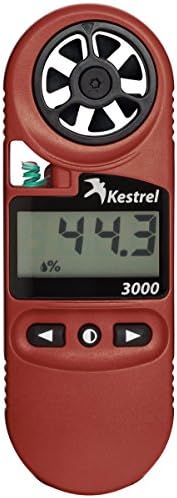
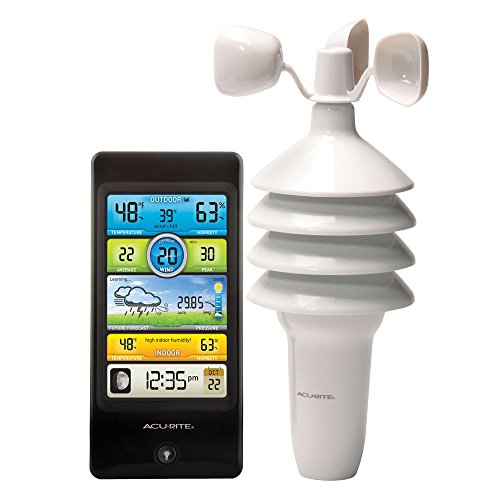
You do not need a research station to start. A pocket meter covers hikes, drones and job sites, while a mounted weather station logs wind all day. These picks are based on manufacturer specs and buyer reports, so check the listing for range and accuracy before you choose.
As an Amazon Associate, Measuring Expert earns from qualifying purchases.
Wind Energy and the Cube Rule
Wind turbine developers measure wind for months or years before a single tower goes up, because energy depends so heavily on speed. According to Iowa State University’s wind power explainer, the power in moving air varies with the cube of wind speed, so doubling the speed multiplies the available power by eight.
| Wind speed | In m/s | Relative power |
|---|---|---|
| 10 mph | 4.5 | 1 (baseline) |
| 15 mph | 6.7 | 3.4 |
| 20 mph | 8.9 | 8 |
| 30 mph | 13.4 | 27 |
This is why a site with a small difference in average wind can be the difference between a profitable project and a failed one. It also explains why small backyard turbines in sheltered spots disappoint: a wind meter run for a few weeks before buying will tell you whether the site is worth it.
Farming, Spraying and Fire Weather
Growers watch wind for several reasons. Spray drift, where a pesticide or herbicide travels off the target field, is worse in strong or gusty wind, and labels often set a maximum wind speed for application. Wind also dries soil and crops, bends young plants and spreads pests and pathogens.
Fire agencies treat wind as one of the main controls on wildfire behavior, along with fuel and slope. Specialist handhelds known as fire weather meters pair wind readings with humidity and temperature for exactly this reason.

Building Sites, Cranes and Weekend Plans
Construction crews use wind limits to decide when it is safe to lift materials, work at height or leave scaffolding sheeted. Crane manufacturers publish maximum in-service wind speeds for each model, and many sites mount an anemometer on the crane itself so the operator can see gusts in real time.
Outside of work, wind drives plenty of ordinary decisions: kite flying, paragliding, cycling, golf, camping, backyard fires and hanging laundry. A tent that is fine at 10 mph can be a problem at 30. A reading takes a few seconds, and it turns a hunch into a decision you can defend.
Wind also matters at home. It increases heat loss through poorly sealed doors and windows and shapes how well an outdoor kitchen or a patio heater works.
Average Wind, Gust and Peak: Three Different Numbers
One of the biggest sources of confusion is that “wind speed” can mean several things. Reports usually give a sustained speed and a gust, and the two can differ by a wide margin.
| Term | What it means | Why you care |
|---|---|---|
| Sustained wind | Average speed over a period, often one to ten minutes depending on the reporting standard | Sets general conditions and long-term loads |
| Gust | A brief peak above the average, lasting seconds | Breaks branches, tips loads, jolts aircraft |
| Lull | A brief dip below the average | Explains why a single reading can look calm |
| Wind chill | A feels-like temperature, not a wind speed | Used for frostbite and comfort advice |
The National Weather Service describes a wind advisory as strong wind that is not quite strong enough for a high wind warning, and a high wind warning as sustained strong wind with even stronger gusts, with the exact numbers set by each local office. Always compare like with like: a gust reading from your meter is not the same thing as the sustained number in a forecast.
How to Take a Useful Wind Reading
You do not need to be a meteorologist to get a good number. The goal is a reading you can compare from one day to the next.
- Choose the spot. Pick open ground away from buildings and trees. Wind shadows from structures can cut readings by half.
- Set the height. Official stations measure about 10 m (33 ft) above the ground. At home, hold the meter as high as you can reach and say so when you record it.
- Face the wind. Hold the meter steady and point it into the airflow, away from your body.
- Wait. Let the reading settle for 30 to 60 seconds and note both the average and the highest value.
- Repeat. Take three readings a few minutes apart and use the average.
- Write it down. Include the time, the units and the height, so a reading from last week still makes sense.
Do
- Measure in the open and note the height
- Record average and peak separately
- Convert units before comparing
- Check the battery and keep the vane or cups clean
Don’t
- Read next to a wall, car or tree line
- Treat one quick reading as the whole story
- Mix up mph, knots and km/h
- Rely on a meter for official storm decisions
If you want to go deeper on instruments, see our guide to how to use an anemometer and the roundup of handheld anemometers.
Honest Limits of a Home Wind Reading
A pocket meter is a useful tool, not a calibrated reference. Cheap cup or vane models can read a few percent off, and small hot-wire or ultrasonic units have their own limits at very low or very high speeds. Readings also vary a lot over a few feet, so two meters side by side may disagree even when both are working.
For this reason, treat home data as local trend information. It answers “is it windier than yesterday?” better than “exactly how many mph?” If a decision involves safety or money, look at official forecasts and warnings first.
When to Call a Professional
Some wind questions need an expert. Siting a real turbine needs a wind resource assessment, ideally a year of data at hub height. Rated loads on roofs, signs, towers and cranes belong to a structural or civil engineer. Anything related to aviation, marine operations or fire fighting follows official procedures and official weather products, not a hand meter. Calibration of an instrument for legal or contractual use should be done by an accredited calibration lab.
Frequently Asked Questions
Why do people measure the speed of the wind?
Because wind drives weather, creates hazards and powers turbines. A number lets forecasters, pilots, sailors, farmers and builders make decisions instead of guessing.
What unit is wind speed measured in?
It depends on the field. The US uses mph for weather reports and knots for marine and aviation use, many countries use km/h, and scientists prefer meters per second.
What is a normal wind speed?
Most days sit in the light to gentle breeze range, roughly 4 to 12 mph (Beaufort forces 2 and 3). Above about 25 mph you start to notice large branches moving and umbrellas become hard to use.
What is a dangerous wind speed?
It depends on what is exposed. Around 39 mph and above (gale force) twigs break and walking is hard, and higher speeds cause structural damage. Local warnings use criteria set by each weather office.
How high should wind be measured?
Official stations use about 10 m (33 ft) above open ground. At home, measure as high and as clear as you can and write the height down.
What is the difference between wind speed and gust?
Wind speed is the sustained average, while a gust is a brief peak above it. Gusts are what break branches and tip light objects.
Why does the wind power rule use the cube of speed?
Kinetic energy depends on the square of speed, and more air also passes the blades each second, so available power rises with the cube. Doubling the wind gives eight times the power.
Can I measure wind speed without a meter?
Yes, roughly. The Beaufort scale links effects like swaying trees, rustling leaves and whitecaps to speed ranges, which is useful when no instrument is available.
Is a phone app accurate for wind speed?
Not usually. Phones have no proper wind sensor, so apps either pull nearby station data or use the microphone, which is rough. A real anemometer is better.
How often should I check wind before an outdoor job?
Check before you start, then again if conditions change. For work at height, lifting or spraying, follow the written limits for the equipment or product.
Verdict on Wind Numbers
Measured wind is a decision tool. It shows when a storm is coming, when a job is unsafe, when a site can pay for a turbine and when a day is fine for flying a kite. The same number appears in forecasts, marine charts, farm labels and crane manuals, so learning to read it in mph, knots and m/s is time well spent.
Start simple. Use the converter above, take three readings in an open spot, and compare them to the Beaufort table. If a result affects safety or money, lean on official warnings and a qualified professional rather than a pocket meter alone.
Add ad-free music to your kitchen or workshop