

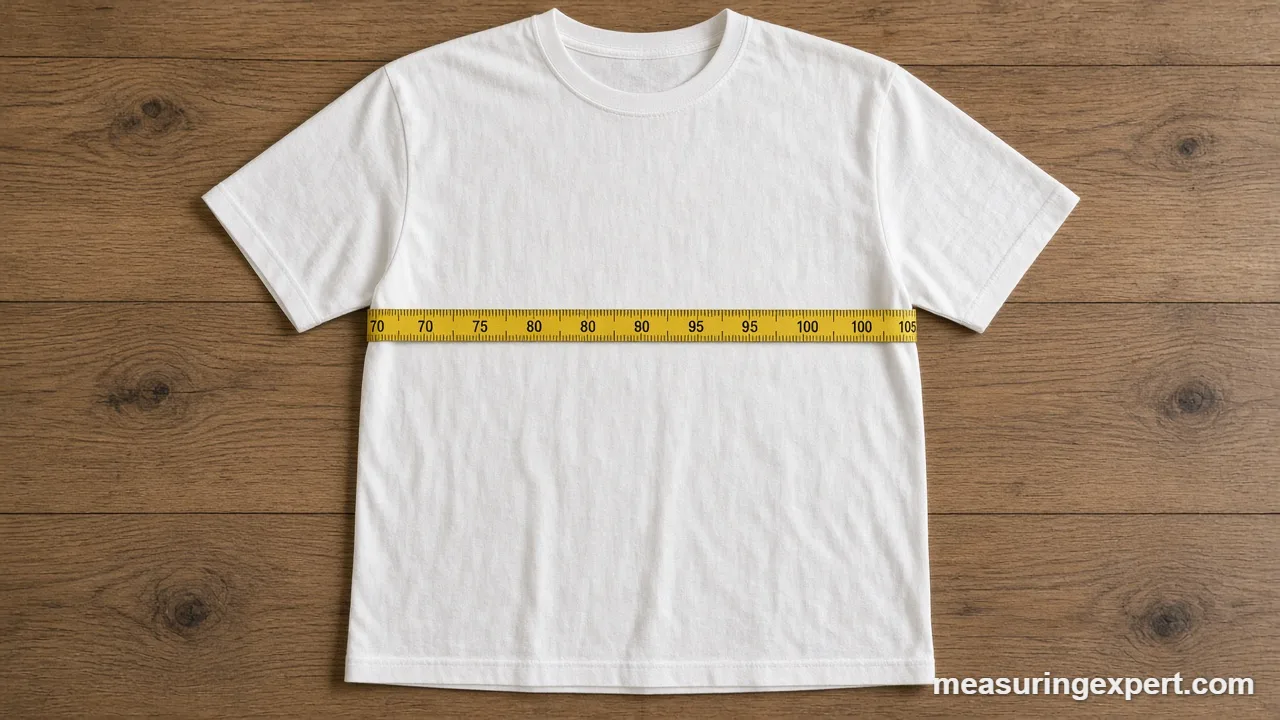
Pit to pit is the straight-line width of a shirt laid flat, measured from one armpit seam across the chest to the other. Many size charts take it about 1 inch (2.54 cm) below the armpit. Double it to get the garment’s chest circumference: a 21-inch flat width is a 42-inch (106.7 cm) chest.
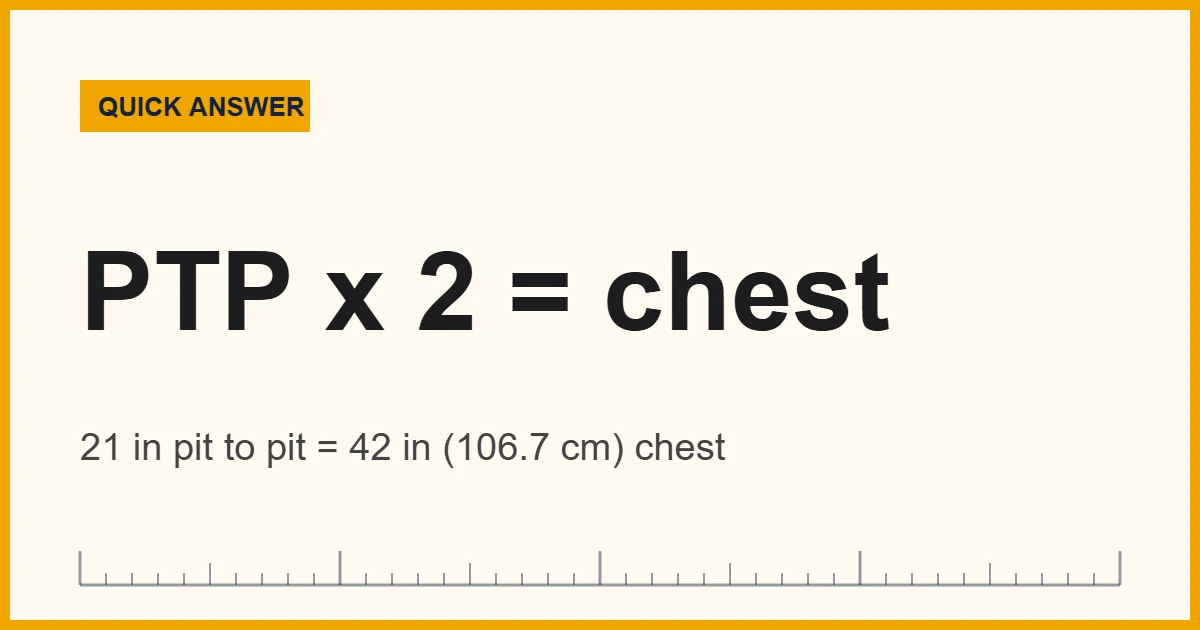
If you buy clothes on eBay, Grailed, Poshmark or a vintage store, you will see “PTP” (armpit to armpit) in almost every listing. Sellers use it because it is quick and repeatable. Size labels, on the other hand, drift between brands, decades and countries, so a “Large” from 1995 and a “Large” from today can be very different shirts.
The idea, however, is simple. First, you lay the garment flat and face up. Next, you stretch a tape across the chest from one underarm seam to the other. As a result, that single number tells you how wide the shirt is, and therefore whether it will fit around your chest.
What Pit to Pit Tells You
In short: pit to pit measures the garment, not your body. It is half of the shirt’s chest circumference, so you double it and then compare it with your own chest plus some room to move.
Similarly, manufacturers measure their blanks the same way. For example, the published spec sheet for the Gildan 5000 heavy cotton T-shirt defines body width as the distance across the chest one inch below the armhole when laid flat. Also, the inch itself is exact: NIST lists 1 inch as exactly 2.54 cm, so converting a listing from inches to centimeters needs no guesswork.
Finally, below you will find a converter, a step-by-step method, a chart by size, and the most common mistakes that make these numbers disagree.
Convert a Pit to Pit Measurement to Centimeters
First, enter the PTP width from a listing, or from your own shirt. The converter then shows the value in centimeters and the nearest 1/16 inch. Afterward, simply double the result to get the full chest circumference.
- PTP is the flat width of a garment from underarm seam to underarm seam.
- Many sellers and spec sheets measure about 1 inch below the armpit seam.
- Next, double the number to get the garment’s chest circumference.
- Finally, compare that circumference with your body chest plus some ease.
- Always measure flat, buttoned or zipped, and without stretching the fabric.
- A shirt you already like is the best reference for your own number.
How to Measure Pit to Pit on a Shirt
To start, you need a flat surface, a soft tape measure, and a couple of minutes. A rigid metal tape works too, but a cloth or vinyl tape lies flatter on fabric.
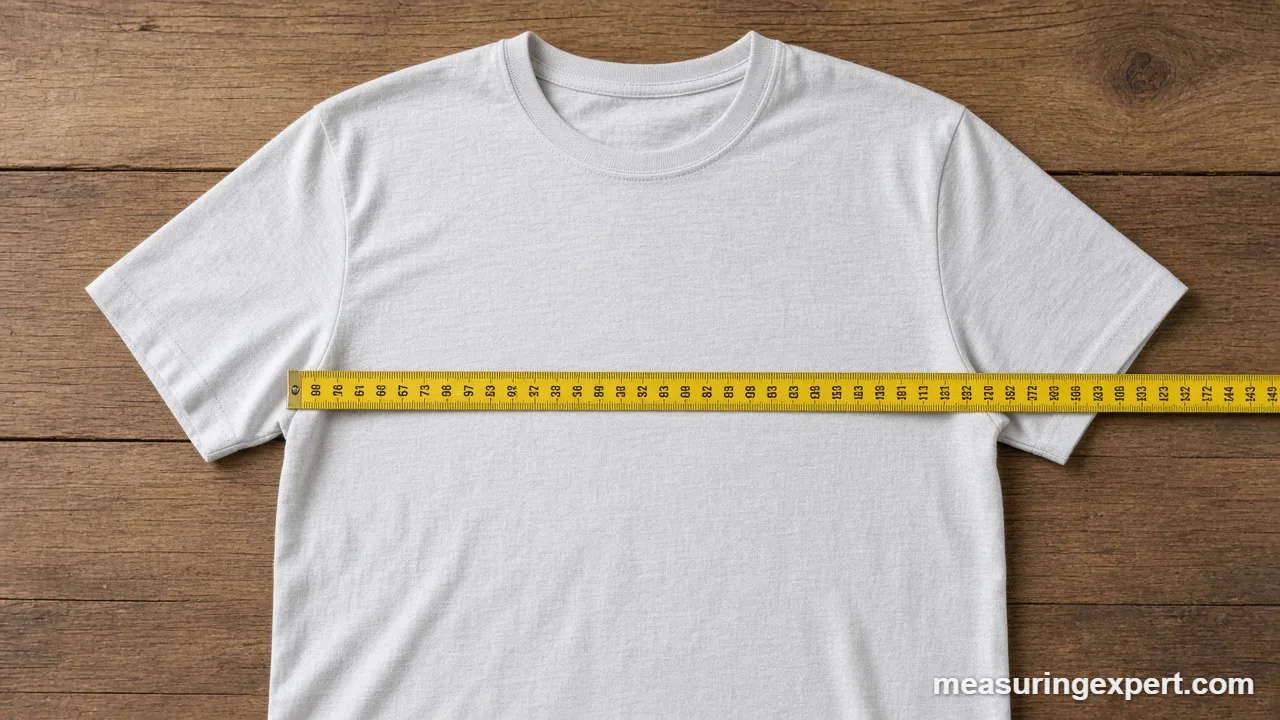
- Lay the shirt flat, face up. For example, use a table or a hard floor. Then button or zip the front so both panels line up.
- Smooth out wrinkles. To do this, run your hands from the center outward. However, do not pull the fabric tight.
- Find both armpit seams. In other words, these are the points where the sleeve joins the body at the bottom of each armhole.
- Drop about 1 inch. Many size charts, including the Gildan spec sheet, take the reading about 1 inch (2.5 cm) below the armpit seam. Check the listing if a seller uses a different point.
- Measure straight across. Next, hold the tape level and read it at the far side seam. Keep the tape parallel to the hem, not angled.
- Record and double-check. Note the number to the nearest 1/4 inch or half centimeter. After that, measure again to confirm it.
Converting Pit to Pit to Chest Size
After all, a shirt laid flat shows only its front layer. As a result, the full distance around the chest is twice the flat width. The math is therefore one step:
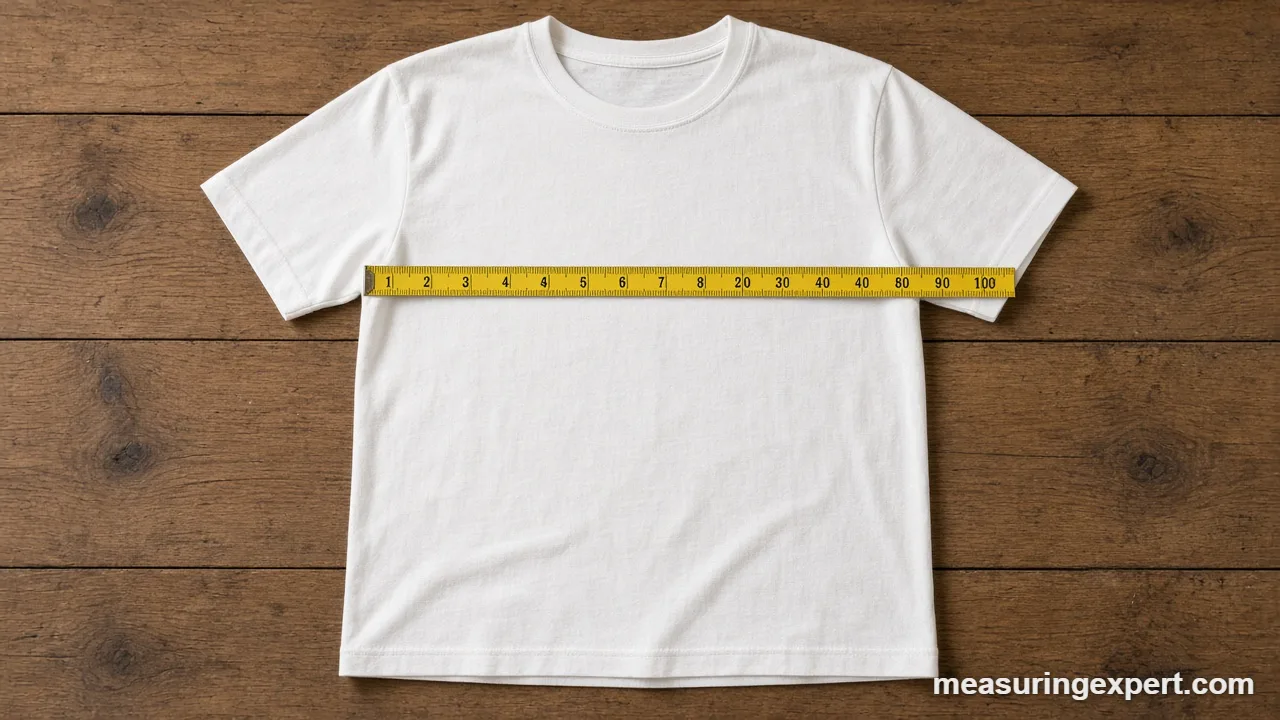
Garment chest circumference = PTP x 2
For example, a 21-inch PTP gives a 42-inch garment chest, which is 106.7 cm. Similarly, a 50 cm PTP equals a 100 cm garment chest.
How Much Ease to Add
Next, compare that number with your body. Specifically, your body chest is the tape measurement around the fullest part of your chest, under the arms. Of course, a shirt needs to be bigger than your body so you can breathe and move. Tailors call this extra room ease.
A common rule of thumb from resellers is to halve your body chest and then add 1 to 2 inches. In other words, the garment ends up 2 to 4 inches bigger around than you are. So a 40-inch body chest suits a PTP of about 21 to 22 inches for a regular fit. Meanwhile, slim fits use less ease, while relaxed and oversized cuts use more.
| Your body chest | Half of it | PTP for a close fit (+1 in) | PTP for a relaxed fit (+2 in) |
|---|---|---|---|
| 36 in (91.4 cm) | 18 in | 19 in (48.3 cm) | 20 in (50.8 cm) |
| 38 in (96.5 cm) | 19 in | 20 in (50.8 cm) | 21 in (53.3 cm) |
| 40 in (101.6 cm) | 20 in | 21 in (53.3 cm) | 22 in (55.9 cm) |
| 42 in (106.7 cm) | 21 in | 22 in (55.9 cm) | 23 in (58.4 cm) |
| 44 in (111.8 cm) | 22 in | 23 in (58.4 cm) | 24 in (61.0 cm) |
| 46 in (116.8 cm) | 23 in | 24 in (61.0 cm) | 25 in (63.5 cm) |
Pit to Pit Chart by Size
There is no universal size standard for this width. Instead, every brand publishes its own chart. To illustrate, the example below comes from the Gildan 5000 heavy cotton T-shirt spec sheet, a very common blank tee. Because it is one cut from one brand, treat it as a reference point only.
| Size | PTP (in) | PTP (cm) | Garment chest (in) | Garment chest (cm) |
|---|---|---|---|---|
| S | 18 | 45.7 | 36 | 91.4 |
| M | 20 | 50.8 | 40 | 101.6 |
| L | 22 | 55.9 | 44 | 111.8 |
| XL | 24 | 61.0 | 48 | 121.9 |
| 2XL | 26 | 66.0 | 52 | 132.1 |
| 3XL | 28 | 71.1 | 56 | 142.2 |
| 4XL | 30 | 76.2 | 60 | 152.4 |
| 5XL | 32 | 81.3 | 64 | 162.6 |
Source: Gildan 5000 spec sheet (body width, measured 1 inch below the armhole, laid flat). Centimeter values use 1 in = 2.54 cm. Also notice the pattern: each size step adds 2 inches of flat width, which is 4 inches around the chest. In any case, other brands, slim cuts and women’s tops follow their own charts, so always check the listing.
PTP vs Chest, Bust and Shoulder Width
Several clothing measurements sound alike; however, they describe different things. In fact, mixing them up is the most common reason a “matching” number still gives a bad fit.
| Measurement | What it measures | Garment or body? |
|---|---|---|
| Armpit to armpit (PTP) | Flat width across the chest, armpit seam to armpit seam | Garment |
| Garment chest | Full circumference of the shirt at the chest (PTP x 2) | Garment |
| Body chest | Tape around the fullest part of your chest, under the arms | Body |
| Bust | Tape around the fullest part of the bust | Body |
| Shoulder width | Seam to seam across the top of the shoulders | Garment or body |
| Body length | High point of the shoulder down to the hem | Garment |
By contrast, for a women’s top, the matching body measurement is the bust. Our guide to measuring your bust correctly explains where to place the tape. Likewise, sleeve fit depends on a separate number, so see how to measure sleeve length for that.
Recommended Tape Measures for Measuring Clothes
Above all, a soft tailor’s tape is the right tool for clothing. First, look for a double scale with inches on one side and centimeters on the other, so you can read either unit in a listing. Next, check that the tape starts at zero right at the metal tip. A retractable tape is handy if you measure often, because it stays tidy and does not tangle.


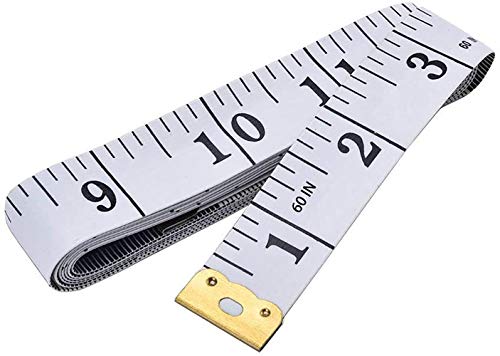


As an Amazon Associate, Measuring Expert earns from qualifying purchases.
Measuring Jackets, Hoodies and Dresses Flat
For the most part, the method stays the same for most tops. Still, a few garments need small adjustments.
- Button-up shirts: Button every button first. Otherwise, the front panels overlap unevenly and the reading comes out wrong.
- Jackets and coats: First, zip or button them closed. Also, measure the shell, not the lining, and keep pockets flat.
- Hoodies and sweatshirts: However, thick fleece adds bulk. As a result, a hoodie with the same flat width as your tee will feel a little tighter.
- Raglan sleeves: The sleeve seam runs diagonally to the collar. In that case, measure across at the bottom of the armhole, where the seam meets the side.
- Dresses and fitted tops: Measure at the bust line, then compare the doubled number with your bust measurement.
Do and Don’t for Accurate Readings
Do
- Lay the garment on a hard, flat surface.
- Close every button and zipper first.
- Keep the tape level and parallel to the hem.
- Ask sellers where they took the reading.
- Compare with a shirt that fits you well.
Don’t
- Stretch the fabric to smooth it.
- Measure diagonally or across a fold.
- Confuse garment chest with body chest.
- Trust the size tag on vintage pieces.
- Round to the nearest whole inch.
Honest Limits of Flat Measurements
Pit to pit is useful, but it is one number for a three-dimensional garment. First, sellers place the tape differently: some measure right at the seam, while others go 1 inch lower. In fact, that alone can shift the reading by half an inch or more on a tapered shirt. Second, the number says nothing about shoulders, sleeve length or body length. Consequently, two shirts with the same width can still fit very differently. Finally, fabric matters. For instance, cotton jersey stretches and may shrink after washing, while denim and canvas hardly give at all. For these reasons, read this width together with length and shoulder width whenever a listing provides them.
When to See a Tailor
In general, home measuring works well for T-shirts, hoodies and casual shirts. However, a tailor is worth it for suits, blazers, formal shirts and expensive vintage pieces. A tailor also checks posture, shoulder slope and arm position, which a flat tape cannot see. In addition, if your measurements fall between two sizes, a tailor can tell you whether the larger size can be taken in. Similarly, for pants, our guide on what an inseam measurement is covers the leg numbers.
Pit to Pit FAQs
What does pit to pit mean on a shirt?
It is the flat width of the shirt from one armpit seam straight across the chest to the other. Sellers also shorten it to PTP.
Where exactly do you measure pit to pit?
Measure across the chest at the bottom of the armholes. In addition, many size charts take the reading about 1 inch below the armpit seam with the garment laid flat.
How do I convert pit to pit to chest size?
Multiply it by 2 to get the garment’s chest circumference. For example, 21 inches x 2 = 42 inches, or 106.7 cm.
What flat width fits a 40-inch chest?
First, half of 40 inches is 20 inches. Next, adding 1 to 2 inches of ease gives a PTP of about 21 to 22 inches for a regular fit.
Is pit to pit a body measurement?
No. Instead, it measures the garment laid flat. Your body chest is a separate measurement taken around your chest with a tape.
How wide is a men’s medium shirt laid flat?
In short, it depends on the brand. On the Gildan 5000 T-shirt, a medium is 20 inches (50.8 cm) across, but other brands and cuts differ.
Should I measure in inches or centimeters?
Use whichever unit the listing uses. One inch equals exactly 2.54 cm, so a 22-inch reading is 55.88 cm.
Why does my reading differ from the size chart?
The tape may sit at a different point, the fabric may be stretched or shrunk, or the chart may use a different cut. In that case, measure again 1 inch below the armpit seam.
Does PTP include the sleeves?
No. It runs across the body only, from side seam to side seam. In contrast, sleeve length is a separate measurement.
What tool is best for measuring clothes?
A soft tailor’s tape with inches and centimeters works best. Also, it lies flat on fabric and reads both units in listings.
The Bottom Line on Pit to Pit
To sum up, pit to pit is the flat chest width of a garment, measured from underarm seam to underarm seam, often 1 inch below the armpit. After that, double it for the garment’s chest circumference, then compare it with your body chest plus 2 to 4 inches of ease.
So the fastest way to shop with confidence is to measure a shirt you already love, note its PTP, and use the converter above for centimeters. Then check the brand’s chart, and you will rarely send a shirt back again.
2 thoughts on “What Is Pit to Pit Measurement? How to Measure a Shirt and Find Your Chest Size”