

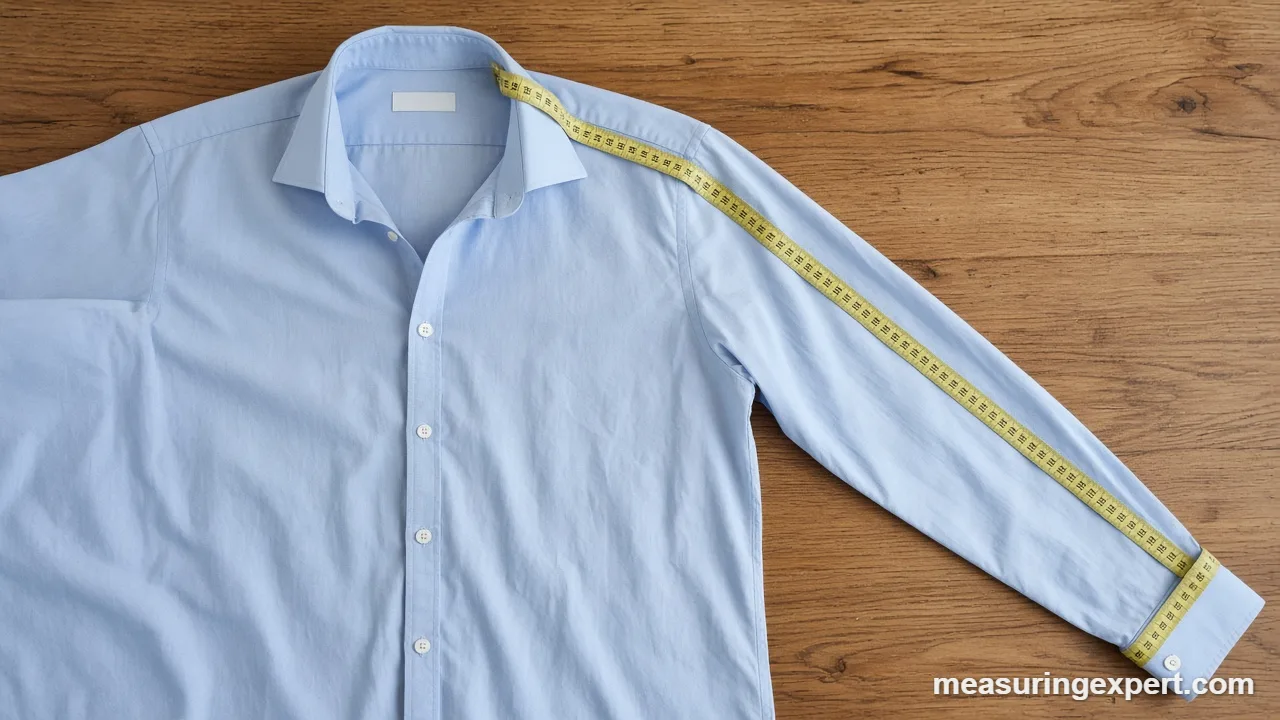
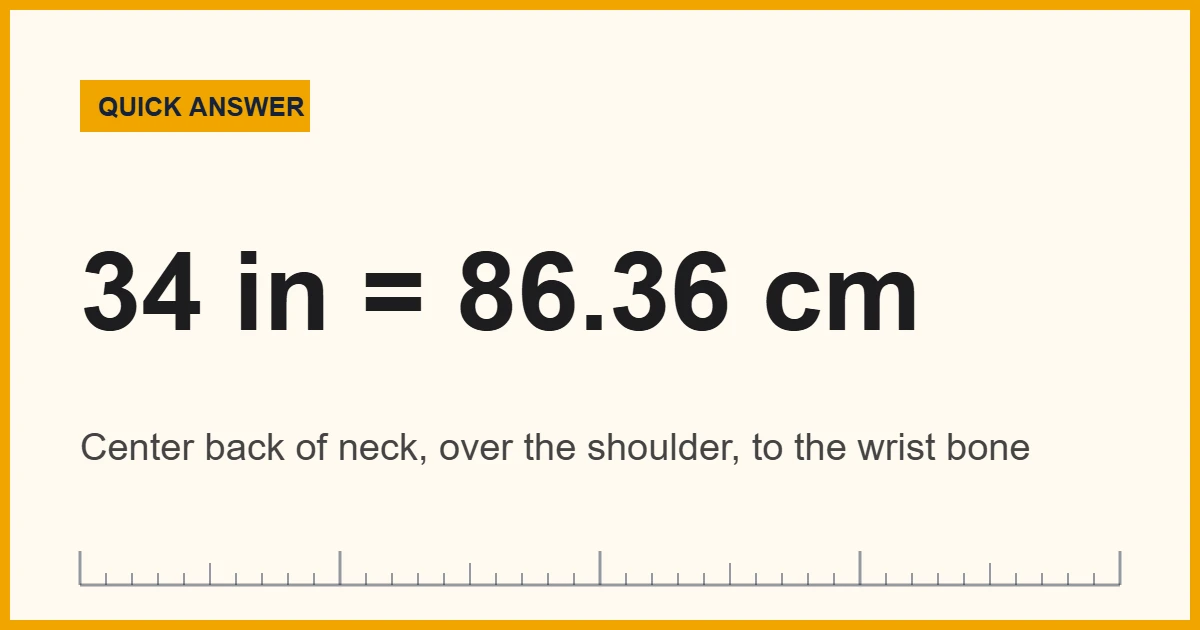
To measure sleeve length for a dress shirt, run a tape from the center back of your neck, over the top of your shoulder and down your slightly bent arm to the wrist bone. That number, in inches, is your shirt sleeve size: 34 inches (86.36 cm) fits a 34/35 shirt.
Sleeve length is the number that decides whether a shirt cuff peeks out of your jacket or creeps halfway up your forearm. It is also the measurement people get wrong most often. The reason is simple: shirts, jackets and sweaters do not all measure it from the same starting point.
A dress shirt sleeve, for example, starts at the center back of the neck. A suit jacket sleeve, by contrast, starts at the shoulder seam. So a man with a 34-inch shirt sleeve might wear a jacket with a sleeve of only about 25 inches, and both numbers are correct. Once you know which method a size chart uses, however, the confusion disappears.
In short: shirt sizes like 32/33 or 34/35 use the center-back method, while jackets and most casual tops use the shoulder-to-wrist method. Therefore, always check the chart before you compare numbers.
Clothing makers base their size charts on published body-measurement tables. For instance, ASTM International publishes standard tables of body measurements for adult men that designers use as a baseline, then add ease for movement and style. In addition, NIST lists 1 inch as exactly 2.54 cm, so converting a sleeve size to centimeters is exact.
Below, you will find a converter, both measuring methods, a way to check a shirt you already own, a size chart, and the mistakes that throw the number off.
Convert Your Sleeve Length to Centimeters
Type the sleeve number you measured or found on a label. The converter then shows centimeters, millimeters and the nearest 1/16 inch, which helps when a European brand lists sleeves in cm.
Recommended Tools to Measure Sleeve Length
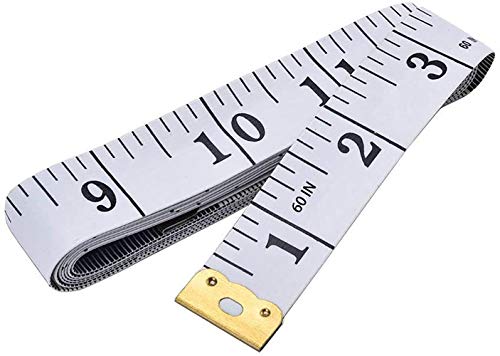
A soft, flexible tape is the only tool you really need. First, choose one that reads in both inches and centimeters. Next, look for a tape long enough to reach from your neck to your wrist in one pass, since 60 inches covers almost everyone. Also, a retractable tape is easier to handle when you measure yourself.




As an Amazon Associate, Measuring Expert earns from qualifying purchases.
- Shirt sleeve size runs from the center back of the neck to the wrist bone.
- Jacket sleeves run from the shoulder seam to the end of the cuff.
- A 34/35 shirt fits a body sleeve measurement of about 34 to 35 inches.
- Keep your arm slightly bent, because a straight arm reads short.
- You can also measure a shirt that already fits you, laid flat on a table.
- One inch equals exactly 2.54 cm, so 34 inches is 86.36 cm.
- When you fall between sizes, pick the longer sleeve and have it shortened.
How to Measure Sleeve Length for a Dress Shirt
This is the method behind the two-number sizes on dress shirt labels. A helper makes it easier and more accurate, although you can do it alone in front of a mirror.
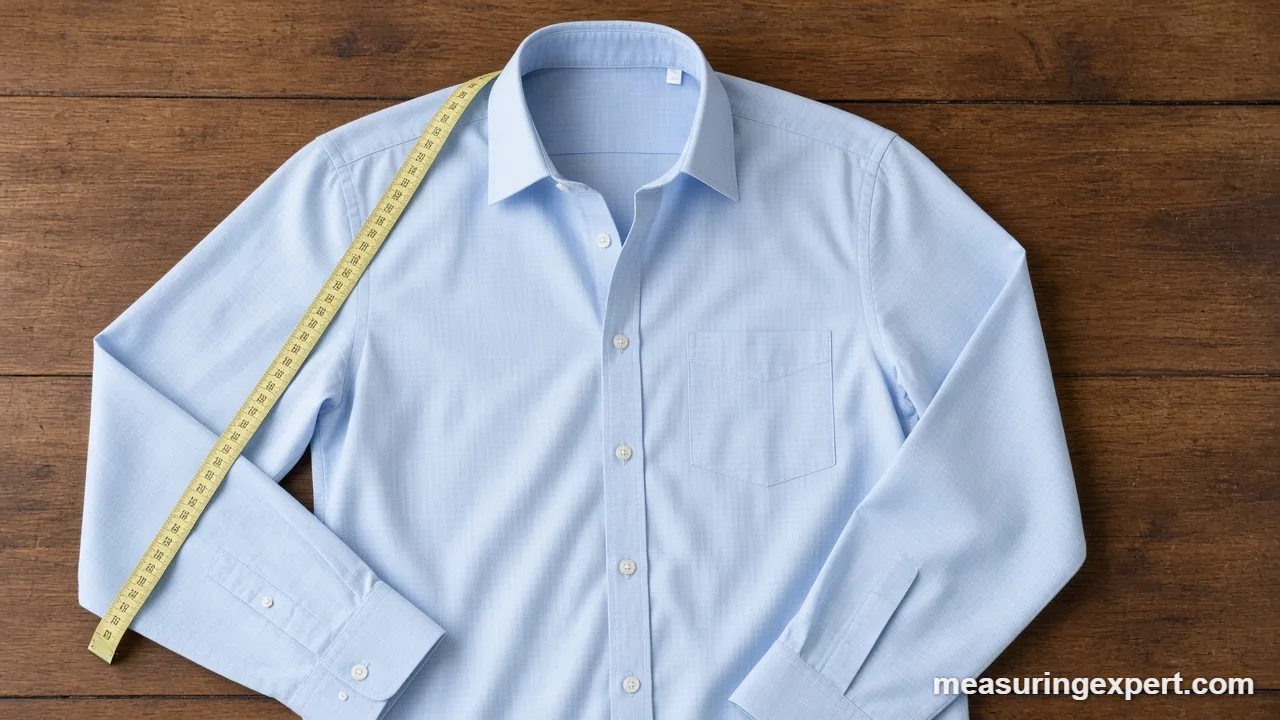
- Stand relaxed in a thin shirt. Wear a T-shirt or the kind of shirt you will wear the new one over, not a sweater.
- Find the center back of your neck. Tilt your head forward and feel for the bony bump at the base of the neck; the tape starts just above it.
- Bend your arm slightly. Rest your hand on your hip so the elbow bends a little, which adds the length you need when you reach.
- Run the tape over the shoulder. Take it across the top of the shoulder to the outer point where a shirt seam would sit.
- Continue down the arm to the wrist bone. Follow the outside of the elbow and stop at the prominent bone on the outside of the wrist.
- Read and round the number. Round to the nearest half inch, then measure the other arm too, since many people have one longer arm.
Finally, use the longer of your two arms. A cuff that is a quarter inch long on one side looks fine, while one that is short looks like the shirt shrank.
How to Measure Sleeve Length for a Jacket
Suit jackets, blazers and coats use the shoulder-to-wrist method instead. This number is shorter because it skips the distance from your neck to your shoulder.
- Start at the shoulder point. Place the tape at the outer edge of the shoulder bone, where a jacket’s shoulder seam sits.
- Keep the arm relaxed at your side. Unlike the shirt method, the arm hangs naturally, with only a slight bend.
- Stop where the jacket cuff should end. For most people that is just past the wrist bone, so about 1/4 to 1/2 inch of shirt cuff can show.
In practice, a tailor checks jacket sleeves by eye as well. That is because the right length also depends on the shoulder padding and how high the armholes sit.
Shirt vs Jacket: Two Ways to Measure Sleeve Length
This table separates the two methods people mix up most. The shirt number is roughly the jacket number plus half your shoulder width.
| Feature | Center-back method | Shoulder-to-wrist method |
|---|---|---|
| Starting point | Center back of the neck | Outer shoulder point (seam) |
| End point | Wrist bone | Wrist bone or desired cuff end |
| Arm position | Slightly bent, hand on hip | Relaxed at the side |
| Used for | Men’s dress shirts (32/33, 34/35) | Jackets, blazers, coats, many casual tops |
| Typical adult range | About 32 to 37 in (81 to 94 cm) | Roughly 9 in (23 cm) shorter for the same person |
For example, if your shoulders measure 18 inches across, half of that is 9 inches (22.86 cm). A 25-inch (63.5 cm) shoulder-to-wrist reading then adds up to a 34-inch (86.36 cm) shirt sleeve. Shoulder width varies, though, so treat that 9 inches as a rough guide, not a rule.
How to Measure Sleeve Length on a Shirt You Own
If a shirt already fits you well, measuring it is often more reliable than measuring your body. It is also how online sellers list sleeve length.
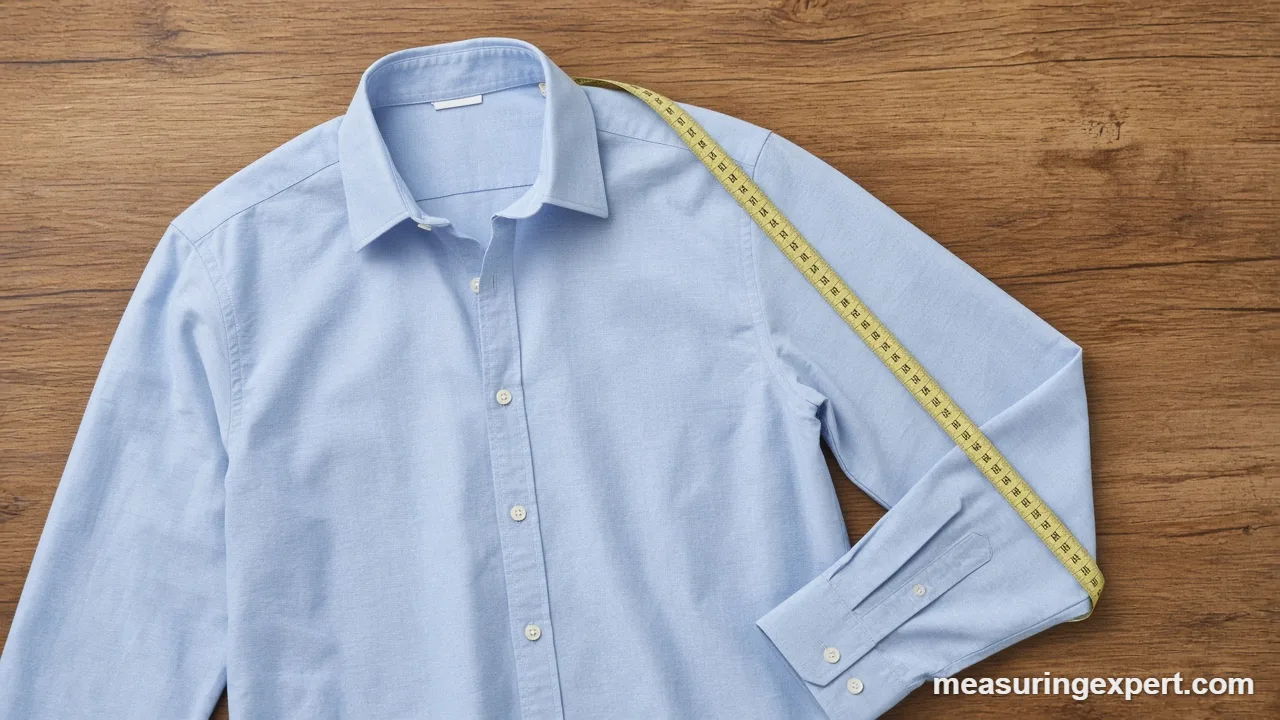
- Button the shirt and lay it face down on a flat table.
- Smooth the back so the yoke and sleeves lie flat without wrinkles.
- Next, find the center of the collar seam at the back of the neck.
- Measure straight across to the top of the shoulder seam and note the number.
- Then measure from the shoulder seam along the top of the sleeve to the end of the cuff.
- Add the two numbers together to get the shirt’s sleeve length.
The same approach works for flat measurements of the body. For width, see our guide on pit to pit measurement, and for overall length, our guide on how to measure back length.
Dress Shirt Sleeve Size Chart
Dress shirts list two numbers: neck size first, then sleeve. A label reading 15.5 34/35 means a 15.5-inch neck and a sleeve between 34 and 35 inches. The chart below shows typical pairings, but they vary by brand.
| Label size | Typical neck (in) | Sleeve (in) | Sleeve (cm) |
|---|---|---|---|
| Small | 14 – 14.5 | 32/33 | 81.28 – 83.82 |
| Medium | 15 – 15.5 | 32/33 or 34/35 | 81.28 – 88.90 |
| Large | 16 – 16.5 | 34/35 | 86.36 – 88.90 |
| X-Large | 17 – 17.5 | 34/35 or 35/36 | 86.36 – 91.44 |
| XX-Large | 18 – 18.5 | 35/36 or 36/37 | 88.90 – 93.98 |
Two-number sleeves cover a range, so the shirt is cut in between and the cuff has two buttons. As a result, you can tighten the cuff to keep a longer sleeve from slipping over your hand. Meanwhile, some brands sell single sleeve sizes, such as 33 or 34, for a closer fit.
Do and Don’t When You Measure Sleeve Length
Do
- Keep the elbow slightly bent.
- Measure both arms and use the longer one.
- Check which method the size chart uses.
- Round to the nearest half inch.
- Re-measure a shirt that fits you well.
Don’t
- Lock your arm straight at your side.
- Measure over a thick sweater or jacket.
- Pull the tape tight against the skin.
- Compare a jacket number with a shirt number.
- Guess from your height alone.
Mistakes That Make Sleeves Fit Badly
Most poor fits come from a few repeat errors. First, starting at the shoulder for a dress shirt gives a number about 9 inches too small. Second, measuring with a straight arm reads about an inch short, so the cuff rides up when you reach forward. Third, letting the tape sag across the back adds length that the shirt will not have.
Another common error is ignoring shirt fit. A slim-fit shirt has narrower shoulders, so its sleeve sits slightly longer on the arm than a classic cut with the same label. Likewise, a shirt that has not been washed yet may shrink a little in the sleeve, especially cotton that is not pre-shrunk.
Honest Limits of Sleeve Measurements
A tape measure gives you a good starting point, not a guaranteed fit. Two careful people can still measure the same arm half an inch apart, because the exact neck point and wrist bone are slightly different for each person who looks for them. Moreover, brands add their own ease and cut, so a 34/35 from one label can fit differently from another.
Height also predicts sleeve length only loosely. Arm length relative to height varies widely between people, which is why this page does not give a “sleeve by height” table. Instead, measure yourself, or measure a shirt that fits, and use the brand’s own chart.
When to See a Tailor
A tailor is worth the visit when you are buying a suit, when your arms are noticeably different lengths, or when you sit between sleeve sizes. Most tailors can shorten a shirt or jacket sleeve. Lengthening, however, depends on how much fabric is folded inside the cuff, which is often very little.
Sleeve Length FAQs
What does 32/33 sleeve length mean?
It means the shirt suits a sleeve measurement of about 32 to 33 inches (81.28 to 83.82 cm), taken from the center back of the neck to the wrist bone.
Where do you start to measure sleeve length on a shirt?
For a dress shirt, start at the center back of the neck. For jackets and many casual tops, start at the outer shoulder seam.
Should my arm be straight when I measure?
No. Keep the elbow slightly bent with your hand on your hip, because a straight arm gives a reading that is too short.
Is jacket sleeve length the same as shirt sleeve length?
No. A jacket sleeve starts at the shoulder seam, so its number is several inches shorter than a shirt sleeve for the same person.
How much shirt cuff should show under a jacket?
About 1/4 to 1/2 inch (0.64 to 1.27 cm) of shirt cuff is the classic guideline when your arms hang at your sides.
Can I measure sleeve length by myself?
Yes. Clip the tape to your collar at the back of your neck, bend your arm slightly, and guide the tape to your wrist while you check in a mirror.
How do I convert sleeve length from inches to cm?
Multiply the inches by 2.54. For example, a 34-inch sleeve is 86.36 cm, and a 35-inch sleeve is 88.9 cm.
What if I am between two sleeve sizes?
Choose the longer sleeve. A tailor can shorten it easily, while a sleeve that is too short usually cannot be fixed.
How do women measure sleeve length?
Women use the same two methods. Many women’s size charts use shoulder to wrist, so check the drawing on the brand’s chart first.
Can I use a metal tape measure instead of a soft one?
It works for a shirt laid flat, but on the body a soft tape is better because it follows the curve of the shoulder and elbow.
The Bottom Line
To sum up, a dress shirt sleeve runs from the center back of the neck to the wrist bone with the arm slightly bent, and that inch figure is the second number on the label. Jackets, by contrast, start at the shoulder seam, so their number is shorter.
So take two readings, use the longer arm, and compare only like with like. If you want a second check, measure a shirt that already fits, then use the converter above to switch between inches and centimeters.
3 thoughts on “How to Measure Sleeve Length: Dress Shirt, Jacket and Size Chart”