

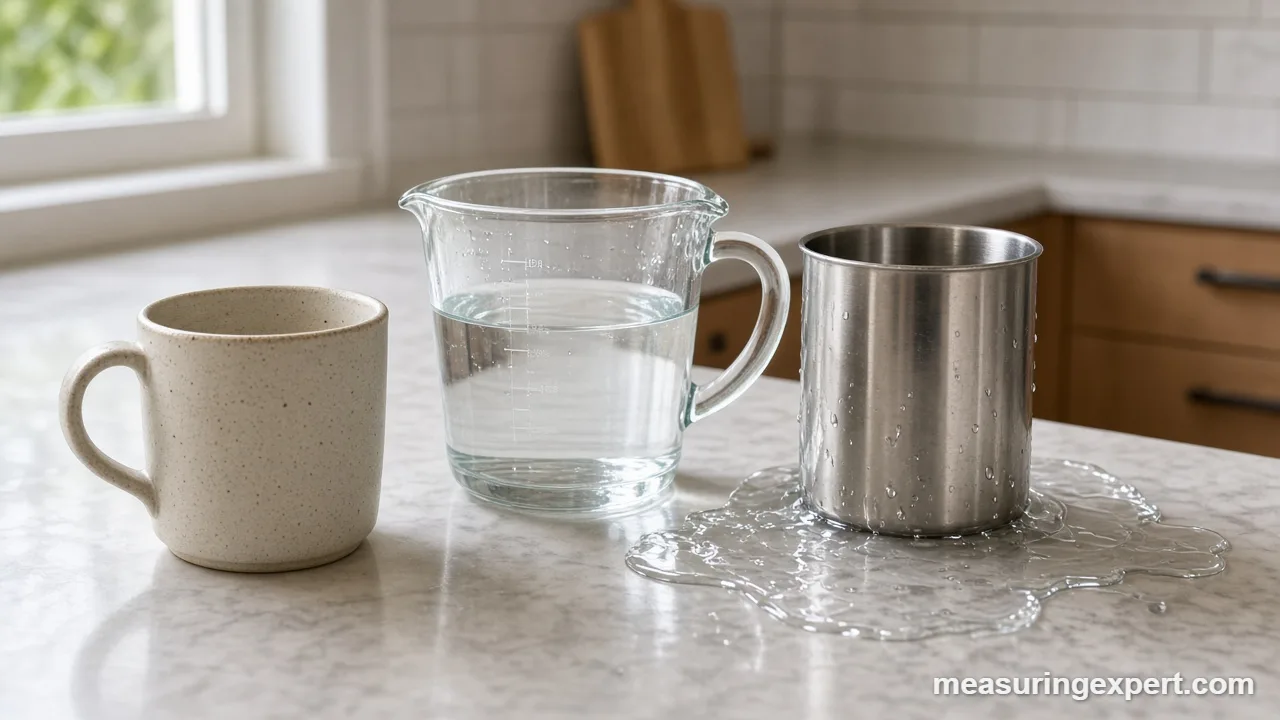
Volume and capacity both describe three-dimensional space, but they answer different questions. Volume is the amount of space an object takes up, usually given in cubic units such as cm3 or cubic inches. Capacity, by contrast, is how much a container can hold, usually given in mL, liters, cups or gallons.
People mix the two words up all the time, and in casual speech that is fine. In science class, in a kitchen, or when you compare products, however, the difference matters. For example, a ceramic mug has a volume (the clay it is made of) and a capacity (the coffee it holds). Those two numbers are completely different, even though both describe the same mug.
The Short Answer on Volume and Capacity
Here is the direct answer. Volume tells you how much room a solid, liquid or gas occupies, and you can find it for any object, hollow or not. Capacity applies only to things that hold something, such as cups, tanks, bottles and boxes, and it describes the empty space inside. As a result, a solid steel ball has volume but no capacity. A water bottle has both: the plastic has a small volume, while the space inside has a much larger capacity. Because 1 mL is defined as exactly 1 cm3, the units overlap, so you can switch between them freely.
In short: volume is the space something fills, and capacity is the space something can be filled with.
The US National Institute of Standards and Technology (NIST) spells out how the units connect. Its SI volume page explains that the liter is a special name for the cubic decimeter and the milliliter is a special name for the cubic centimeter. In other words, cm3 and mL are the same size; the choice of unit only signals whether you mean a solid amount of space or a container’s contents.
Convert Cubic Centimeters to Milliliters, Liters and Cups
Type a volume in cubic centimeters (cc) below, or switch the unit. The converter then shows the matching capacity in milliliters, liters and US kitchen units. Since 1 cc equals 1 mL exactly, the first two numbers always match.
Recommended Tools for Measuring Volume and Capacity
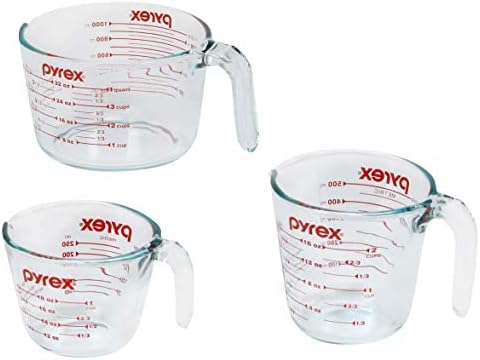
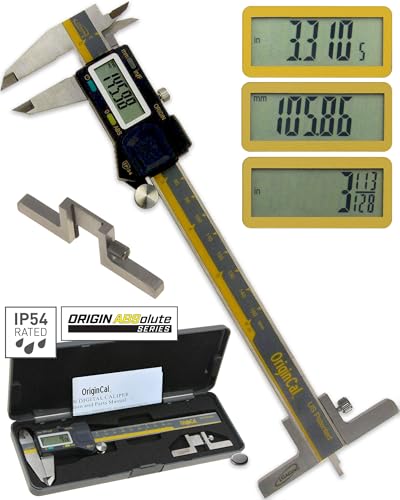
You do not need a lab to measure either quantity. First, a graduated cylinder gives the most precise readings for small objects and for water displacement. Next, glass measuring cups with clear markings handle kitchen capacity checks. Finally, a digital caliper measures the length, width and height of small solid objects, so you can calculate their volume with a formula.




As an Amazon Associate, Measuring Expert earns from qualifying purchases.
- Volume is the space an object occupies; capacity is the space a container can hold.
- Every object has a volume, but only containers have a capacity.
- 1 cm3 = 1 mL and 1,000 cm3 = 1 L, by definition.
- Cubic units (cm3, in3, m3) usually signal volume; mL, L, cups and gallons usually signal capacity.
- A container’s outside volume is always larger than its capacity because the walls take up space.
- Rulers and calipers measure volume by formula, while filling a container with water measures capacity.
- Water displacement measures the volume of irregular solids.
Volume and Capacity Defined in Plain Words
Volume is the amount of three-dimensional space an object or substance fills. A brick, a balloon full of air and a glass of juice each take up a certain amount of room, and that amount is their volume. Because volume belongs to the object itself, you can find it whether the object is solid, hollow, liquid or gas.
Capacity, on the other hand, is the greatest amount a container can hold. It describes the empty space inside, so it only makes sense for things with an inside: cups, jars, fuel tanks, refrigerators, swimming pools and shipping boxes. Manufacturers often call it “rated capacity” or “fill volume”.
Here is a simple way to keep them apart. Ask yourself, “Am I talking about the stuff, or about the space inside the holder?” If you mean the stuff, you mean volume. If you mean the space inside the holder, you mean capacity. Also note that the contents of a container have a volume too; a half-full 1 L bottle holds 500 mL of water, so the water’s volume is 500 mL while the bottle’s capacity is still 1 L.
Volume and Capacity Units Side by Side
Both quantities measure the same kind of thing, so they share one family of units. Even so, habit links certain units to each one. For instance, engineers describe a concrete slab in cubic meters, while a recipe lists milk in cups. The table below shows how the common units line up. For a longer list, see our guide to the units of volume.
| Usually used for volume | Usually used for capacity | Exact relationship |
|---|---|---|
| 1 cubic centimeter (cm3, cc) | 1 milliliter (mL) | 1 cm3 = 1 mL |
| 1,000 cm3 (1 cubic decimeter) | 1 liter (L) | 1 dm3 = 1 L |
| 1 cubic meter (m3) | 1,000 liters | 1 m3 = 1,000 L, about 264.17 US gal |
| 1 cubic inch (in3) | 16.387064 mL | exact, because 1 in = 2.54 cm |
| 231 cubic inches | 1 US gallon | 1 US gal = 3.785411784 L |
| 1 cubic foot (ft3) | 28.316846592 L | exact; common for refrigerators and freezers |
Notice that the US gallon is defined as exactly 231 cubic inches. In other words, the old capacity unit is tied directly to a cubic length unit, just as the liter is tied to the cubic decimeter. So the choice between “cm3” and “mL” is about context, not size.
The Mug Example: Volume and Capacity of the Same Object
A coffee mug shows the difference better than any definition. Take a straight-sided mug that is 8.5 cm (about 3.3 in) wide and 9.5 cm (about 3.7 in) tall on the outside. Its inside is 7.5 cm wide and 9 cm deep, because the walls and base are about half a centimeter thick.
| Measurement | How it is worked out | Result |
|---|---|---|
| Outside volume (space the mug fills on a shelf) | pi x 4.25 cm x 4.25 cm x 9.5 cm | about 539 cm3 |
| Capacity (filled to the brim) | pi x 3.75 cm x 3.75 cm x 9 cm | about 398 mL, or 13.4 US fl oz |
| Material volume (the ceramic itself) | 539 cm3 – 398 cm3, plus the handle | about 141 cm3 before the handle |
So the same mug has three honest answers, depending on the question. If you want to know whether it fits in a cupboard, you need its outside size. If you want to know how much coffee it holds, you need its capacity. Meanwhile, if you want to know how much clay a potter used, you need the material volume. For a deeper look at drinkware, our article on the volume of a teacup walks through real cup sizes.
In practice, a mug labeled “12 oz” usually holds about 355 mL when filled to a sensible level below the rim. Brim-full capacity is always a little larger than the practical serving size.
How to Measure the Volume of an Object
The method depends on the object’s shape. Regular shapes call for a ruler and a formula, while irregular solids call for water displacement. Here are the steps for both.
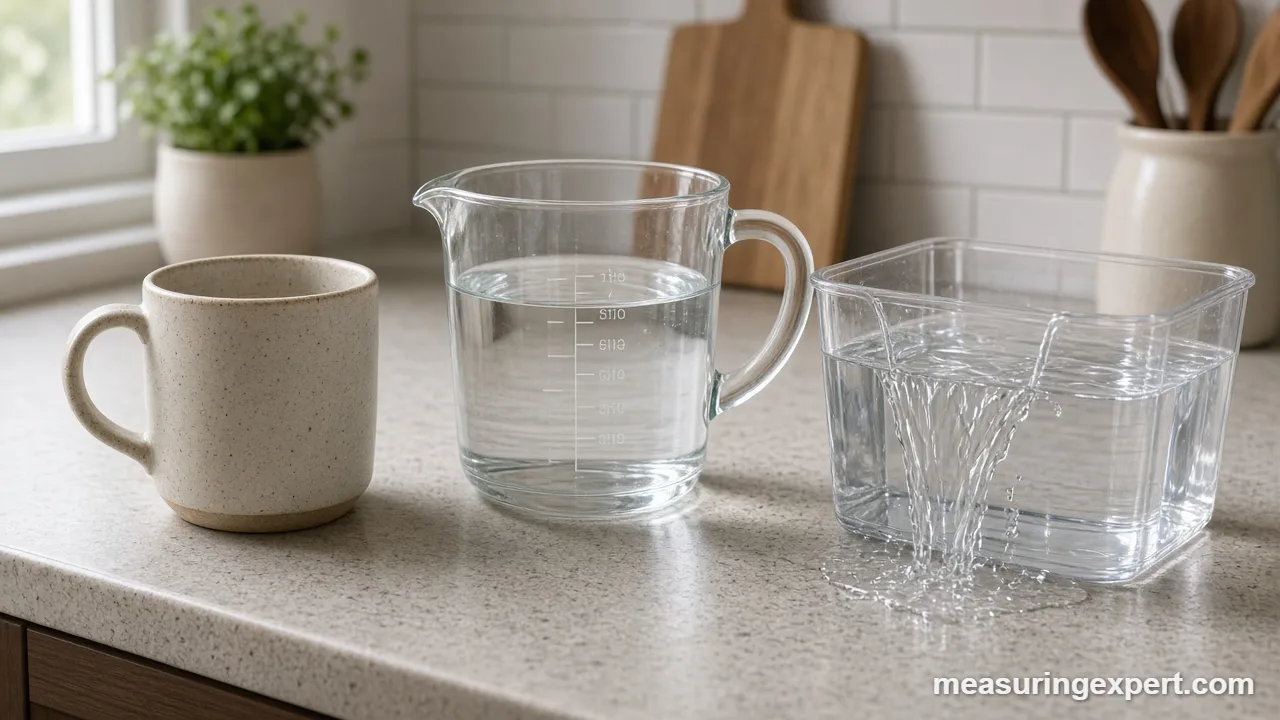
- Decide whether the shape is regular. Boxes, cylinders, cones and spheres have formulas; rocks, keys and toys do not.
- For a regular shape, measure each dimension. Use a ruler, tape measure or caliper, and record every length in the same unit.
- Apply the formula. A box is length x width x height; a cylinder is pi x radius x radius x height; a sphere is 4/3 x pi x radius cubed.
- For an irregular solid, partly fill a graduated cylinder with water. Read the level at eye height from the bottom of the curved surface (the meniscus).
- Lower the object in gently until it is fully underwater. Tilt the cylinder slightly so it slides down without splashing.
- Read the new level and subtract. The rise in milliliters equals the object’s volume in cubic centimeters.
For example, if the water rises from 60 mL to 72 mL, the object’s volume is 12 cm3. Likewise, a 2 x 2 x 2 in wooden block has a volume of 8 cubic inches, which is about 131.1 cm3.
How to Measure the Capacity of a Container
Capacity is usually easier to find, because you simply fill the container and measure what went in. First, place the empty container on a level surface. Next, pour water from a measuring cup or graduated cylinder until it reaches the brim, or the “fill line” if there is one. Then add up how much water you used. That total is the capacity.
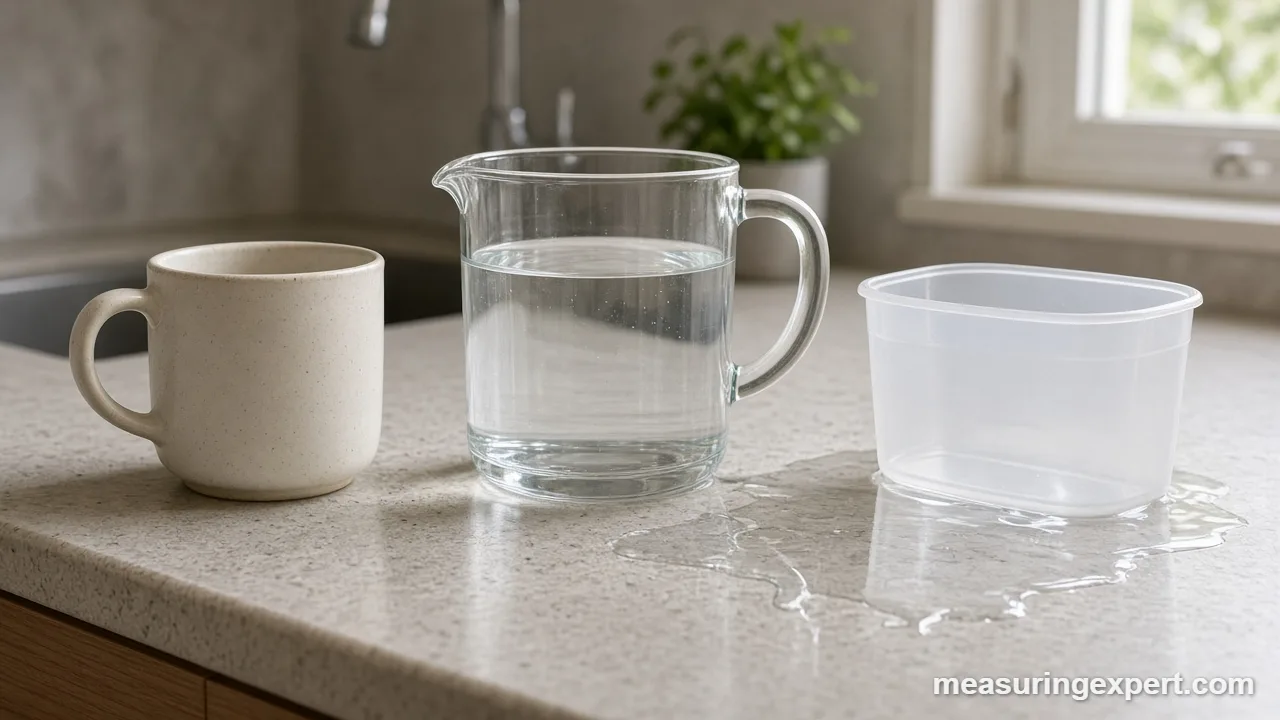
A kitchen scale offers a faster route. Because 1 mL of water at room temperature weighs very close to 1 g, you can tare the empty container, fill it, and read the grams as milliliters. As a result, a container that holds 750 g of water has a capacity of about 750 mL. This trick works for water only; oil, milk and syrup have different densities.
For large boxy containers, such as a tank, raised garden bed or moving box, measure the inside length, width and depth and multiply them. For instance, a box with inside dimensions of 29 x 19 x 14 cm holds 7,714 cm3, or about 7.7 L, even though its outside dimensions of 30 x 20 x 15 cm give a volume of 9,000 cm3.
Volume and Capacity in Everyday Life
Once you see the difference, you will notice it everywhere. Here are a few common cases:
- Refrigerators: the “cubic feet” on the label is capacity, the storage space inside. The outside size decides whether it fits your kitchen.
- Car engines: engine displacement, such as 2.0 L, is the combined volume swept by the pistons, so it is a volume figure even though it uses liters.
- Medicine cups: the 5 mL and 10 mL marks show capacity up to each line.
- Concrete and soil: suppliers sell by the cubic yard or cubic meter, which is the volume of material delivered.
- Luggage: a “40 L” backpack describes capacity, while airline size limits describe outside dimensions.
In each case, therefore, ask whether the number describes the thing or the space inside it. That single question settles almost every mix-up between volume and capacity.
Do and Don’t When Measuring Volume and Capacity
Do
- Use the same unit for every dimension before multiplying.
- Read graduated cylinders at eye level from the meniscus.
- Measure inside dimensions when you want capacity.
- Check that an object sinks before using displacement.
- Label your answer with cubic units or capacity units.
Don’t
- Mix centimeters and inches in one formula.
- Assume a label’s capacity is the brim-full amount.
- Weigh liquids other than water and call grams milliliters.
- Forget the walls when you compare outside size and capacity.
- Read a cylinder from above, because parallax shifts the mark.
Honest Limits of These Measurements
Every method on this page has some error. For example, a kitchen measuring cup may be off by a few percent, while a Class A glass graduated cylinder is far tighter. Similarly, formulas assume perfect shapes, yet real mugs taper, real boxes bulge and real tanks have rounded corners. The water-weighing trick also drifts slightly with temperature, because water expands as it warms. Even so, for homework, cooking and DIY projects, these small errors rarely matter. When they do, measure twice, use the most precise tool you have, and round your answer only at the end.
When to Call a Professional
Some capacity and volume figures carry legal or safety weight. Fuel tanks, propane cylinders, pressure vessels and commercial scales and measures fall under weights-and-measures rules, so their capacities should come from the manufacturer or a certified inspector. Likewise, lab work that depends on exact volumes needs calibrated glassware, and large concrete or excavation jobs are best estimated by a contractor or engineer.
Volume and Capacity FAQs
What is the main difference between volume and capacity?
Volume is the space an object takes up. Capacity is the most a container can hold. Every object has volume, but only containers have capacity.
Are volume and capacity measured in the same units?
Yes. They share one family of units because 1 cm3 equals 1 mL. Cubic units are more common for volume, while mL, liters, cups and gallons are more common for capacity.
Is 1 cm3 the same as 1 mL?
Yes, exactly. NIST defines the milliliter as a special name for the cubic centimeter, so 1,000 cm3 equals 1 liter.
Can an object have volume but no capacity?
Yes. A solid marble, brick or steel ball takes up space but has no inside space to fill, so it has volume and no capacity.
Why is a container’s capacity smaller than its volume?
The walls and base take up space. Outside volume includes them, while capacity counts only the empty space inside.
How do you find the volume of an irregular object?
Use water displacement. Read the water level in a graduated cylinder, lower the object in, and subtract. The rise in mL equals the volume in cm3.
How do you measure the capacity of a bottle?
Fill it with water from a measuring cup, or weigh it empty and full on a kitchen scale. Each gram of water is about 1 mL of capacity.
Is engine size a measure of volume or capacity?
Engine size is a volume figure. It is the total space the pistons sweep through, even though it is usually written in liters or cubic centimeters.
How many cubic inches are in a gallon?
A US gallon is defined as exactly 231 cubic inches, which equals 3.785411784 liters.
What tools measure volume and capacity?
Graduated cylinders, beakers and measuring cups measure liquid amounts and capacity. Rulers, tape measures and calipers measure dimensions, so you can calculate volume with a formula.
Volume and Capacity: The Bottom Line
To sum up, volume is how much space something occupies, and capacity is how much a container can hold. The units overlap because 1 cm3 equals 1 mL, so the real difference lies in what you are measuring: the object itself, or the empty space inside it.
Next time you look at a mug, a fridge or a backpack, ask which number you need. Then measure dimensions for volume, fill with water for capacity, and use the converter above to switch between cubic centimeters, milliliters, liters and cups.