

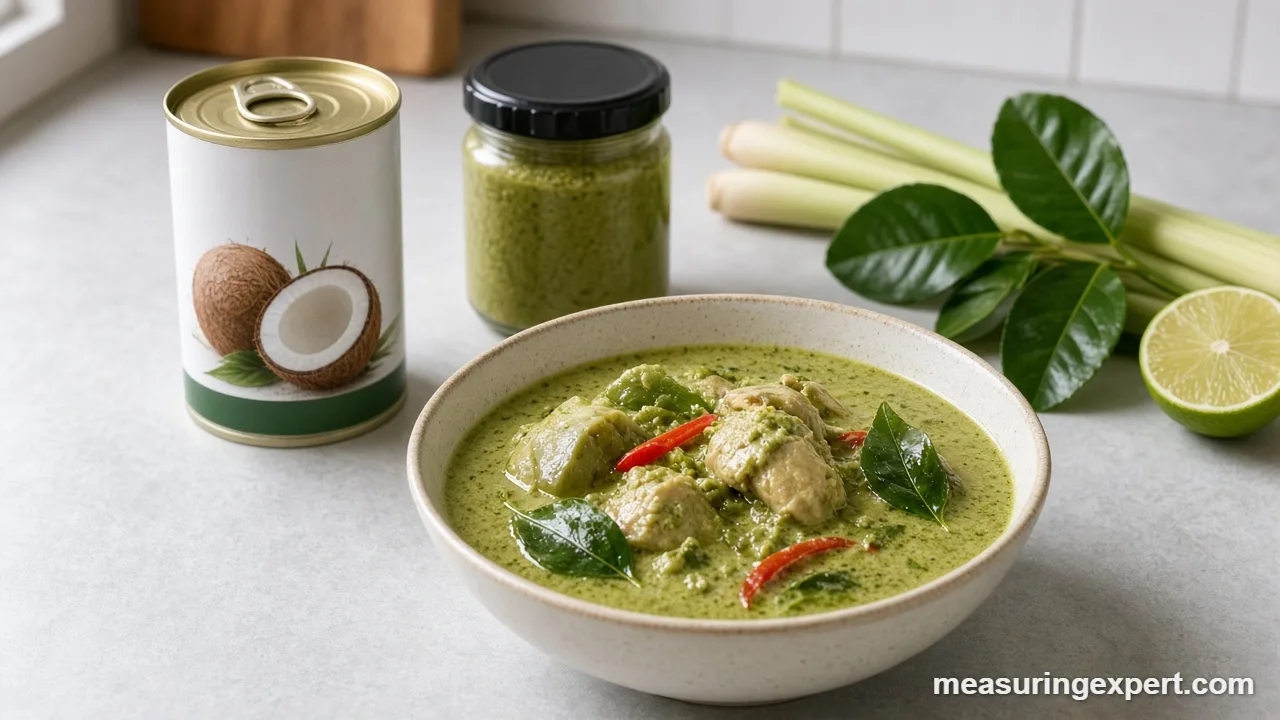
Thai curry measurements for four servings are simple: 1 to 3 tablespoons of curry paste, 13.5 fl oz (400 mL) of coconut milk per can, 1 tablespoon of fish sauce, and 1 to 2 teaspoons of palm sugar. Add 1.1 to 1.7 lb (500 to 750 g) of meat or seafood, then adjust to taste.

Thai Curry Measurements Converter: Spoons, Cups and mL
First, type a spoon, cup, or milliliter amount from your recipe below. The converter then shows the same volume in the other units, using the exact US definitions.
Thai curries balance heat, salt, sweetness, and creaminess, so small errors show up fast. For example, an extra tablespoon of curry paste changes the heat far more than an extra splash of water. As a result, a few reliable Thai curry measurements matter more than a perfect recipe.
Published recipes disagree, however, and that is normal. Three recipes we reviewed, from SBS, ITV, and Foodlovers, each serve four people. In fact, they call for 1 to 3 tablespoons of green curry paste, which is a threefold range.
Below, you will find a quantity table, a guide to paste and coconut milk, and a scaling chart. After that come step-by-step instructions, common mistakes, and answers to the questions cooks ask most.
Typical Thai Curry Measurements for Four Servings
In practice, use this table as a starting point for a green, red, or yellow curry. The ranges come from the three recipes above, and the weights use exact NIST ounce and gram definitions.
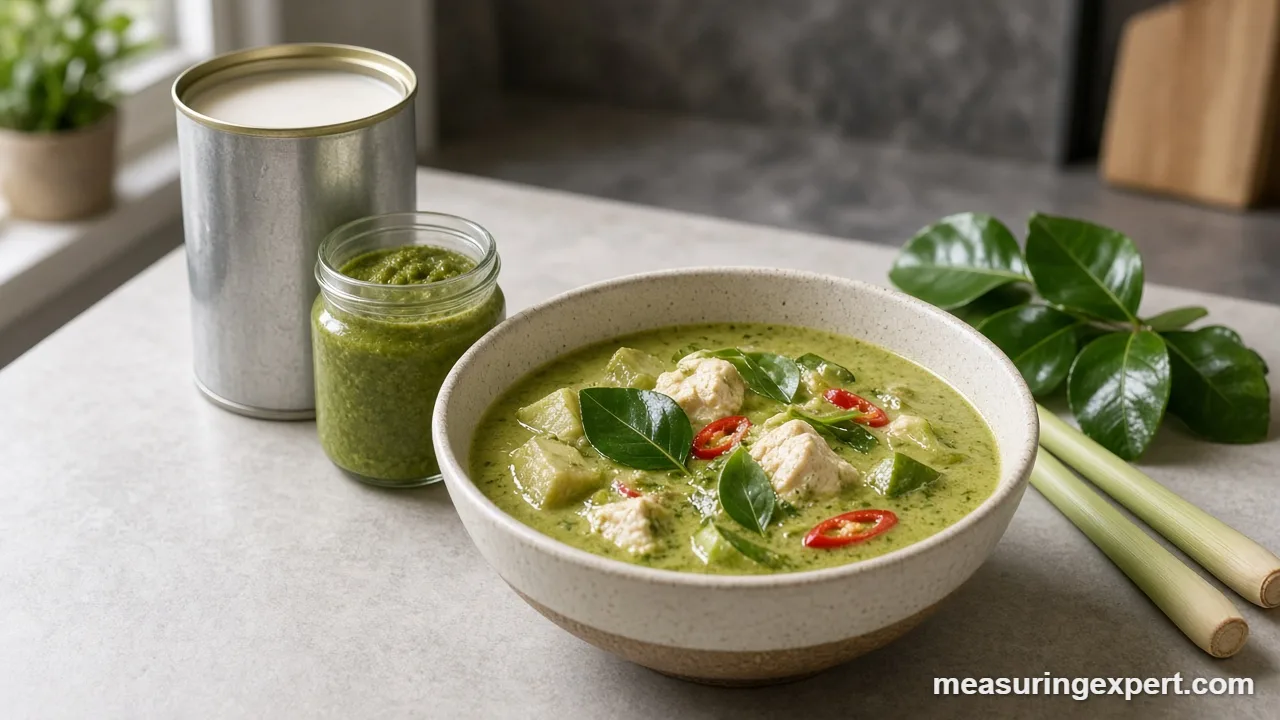
| Ingredient | Typical amount for 4 servings | Metric or weight |
|---|---|---|
| Curry paste | 1 to 3 tbsp | 14.8 to 44.4 mL |
| Coconut milk | One to two 13.5 fl oz cans | About 400 to 800 mL |
| Fish sauce | 1 tbsp | 14.8 mL |
| Palm sugar | 2 tsp to 1 tbsp | 9.9 to 14.8 mL |
| Chicken or seafood | 1.1 to 1.7 lb | 500 to 750 g |
| Lime leaves | 2 to 6 leaves | – |
| Lemongrass | 1 to 2 stalks | – |
A 13.5 fl oz can holds 399.2 mL, so it is the same as a 400 mL can in practice. Similarly, 500 g of chicken equals 1.10 lb, and 750 g equals 1.65 lb. For the underlying unit math, see our guide to how much an ounce is.
Recommended Tools for Thai Curry Measurements
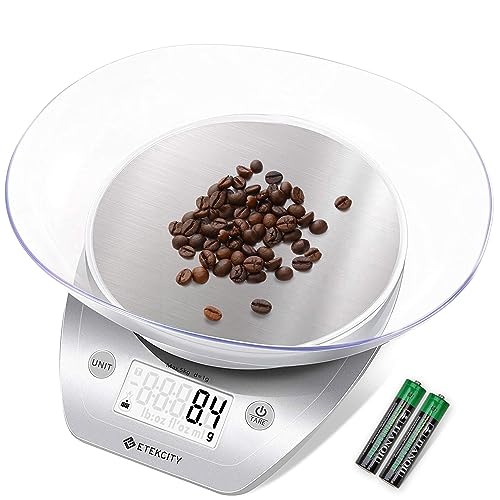
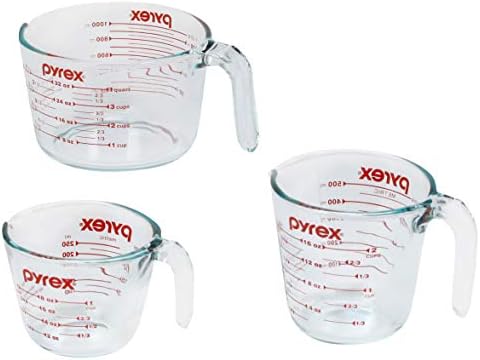
In fact, a scale does most of the work in Thai cooking. First, choose one that reads in 1 g steps or better, because curry paste and fish sauce are used in small amounts. Next, add a liquid measuring cup for coconut milk and stock. Finally, a set of measuring spoons helps with sugar and lime juice.



As an Amazon Associate, Measuring Expert earns from qualifying purchases.
Key Takeaways
- Start with 2 tablespoons of curry paste for four servings, then add more after tasting.
- Weigh paste and fish sauce when you can, because brands differ in strength and density.
- A standard can of coconut milk is 13.5 fl oz, or about 400 mL.
- Stir or shake coconut milk before you measure, since the cream separates.
- Fish sauce is very salty, so add it in small steps.
- Scale paste and coconut milk with the servings, but season by taste.
- Recipes vary widely, so treat every quantity here as a range.
Measuring Curry Paste for Thai Curry Measurements
Curry paste is the strongest flavor in the pot, so it deserves the most care. Indeed, brands differ in chili content, salt, and water. Therefore, one tablespoon of one paste can taste twice as hot as another.
Spoons are also unreliable for paste, because a heaped spoon holds far more than a level one. If a package gives grams, use them. Otherwise, weigh a level tablespoon of your paste once and write the number on the jar. For example, 4 oz of paste is 113.4 g. If your level tablespoon weighs 12 to 18 g, that is roughly 6 to 9 tablespoons.
| Measure | Good for | Watch out for |
|---|---|---|
| Level tablespoon | Small batches, quick checks | Heaped spoons can double the amount |
| Grams on a scale | Repeatable results, scaling up | Forgetting to tare the bowl |
| Jar fraction (for example, half a jar) | Rough planning | Jar sizes differ by brand |
Measuring Coconut Milk and Cream
Also, coconut milk separates in the can, with thick cream on top and thinner liquid below. As a result, pouring half a can does not give you half the fat. So shake the can well, or stir it in a bowl, before you measure.
Some cooks fry the paste in the thick cream first, then add the thin milk later. For instance, one of the recipes above uses 200 mL of thick coconut milk and 400 mL of thin milk plus 300 mL of hot water. In that case, spoon the cream off the top and measure it separately.
| Amount | US fluid ounces | Milliliters | Cups |
|---|---|---|---|
| One 13.5 fl oz can | 13.5 | 399.2 | 1.69 |
| Two cans | 27.0 | 798.5 | 3.38 |
| 200 mL thick cream | 6.8 | 200 | 0.85 |
| 400 mL thin milk | 13.5 | 400 | 1.69 |
For small volume checks, our page on how much 30 mL is shows how to read mL on a measuring cup.
Fish Sauce, Palm Sugar and Lime in Thai Curry Measurements
Finally, fish sauce, sugar, and lime juice finish the curry. Taste after every change, because each ingredient moves the balance. Moreover, fish sauce is extremely salty. USDA data, as shown on Get Food Facts, lists about 7,850 mg of sodium per 100 g of fish sauce.
That works out to about 785 mg of sodium in every 10 g. In other words, a splash adds up quickly. If you track sodium, weigh the fish sauce instead of guessing. Likewise, add it in 1 teaspoon steps (4.93 mL) and stir before you taste again.
| If the curry tastes | Try adding | Step size |
|---|---|---|
| Flat or bland | Fish sauce | 1 tsp |
| Too salty | Coconut milk, water, or a little sugar | 2 tbsp of liquid |
| Too sharp or sour | Palm sugar | 1/2 tsp |
| Too sweet or heavy | Lime juice | 1 tsp |
| Too hot | Coconut cream or more rice | 2 tbsp |
Scaling Thai Curry Measurements Up or Down
In general, paste and coconut milk scale well with the number of servings. Fish sauce and sugar scale more loosely, so add about 75 percent first and taste. The chart below uses 2 tablespoons of paste, two cans of coconut milk, and 1 tablespoon of fish sauce as the four-serving base.
| Servings | Curry paste | Coconut milk | Fish sauce (start with) |
|---|---|---|---|
| 2 | 1 tbsp | 1 can (13.5 fl oz) | 2 tsp |
| 4 | 2 tbsp | 2 cans (27 fl oz) | 1 tbsp |
| 6 | 3 tbsp | 3 cans (40.5 fl oz) | 1 1/2 tbsp |
| 8 | 4 tbsp | 4 cans (54 fl oz) | 2 tbsp |
For other cuisines that rely on spice pastes, compare the quantities in our Indian cooking measurements guide.
How to Measure a Thai Curry Step by Step
- Pick your servings. Decide how many people you are feeding, then use the scaling chart.
- Weigh the protein. Place a bowl on the scale, tare it, and add 500 to 750 g of chicken or seafood.
- Prep the aromatics. Measure lime leaves, lemongrass, and galangal or ginger by count or by weight.
- Measure the paste. Tare a small dish and weigh your paste, or use level tablespoons.
- Stir the coconut milk. Shake the cans, then pour into a measuring cup to confirm the volume.
- Fry the paste and add liquid. Cook the paste in the thick cream, then add the thin milk and stock.
- Season in small steps. Add fish sauce by the teaspoon, then sugar, then lime, and taste each time.
- Write it down. Note the amounts you used so the next batch matches.
Common Thai Curry Measurements Mistakes
| Mistake | What happens | Fix |
|---|---|---|
| Heaped spoons of paste | The curry turns far too hot or salty | Level the spoon or weigh the paste |
| Not stirring the coconut milk | The sauce is thin or too oily | Shake the can and stir before measuring |
| Adding all the fish sauce at once | The curry is too salty to fix | Add 1 tsp at a time |
| Using volume for meat | Uneven cooking and seasoning | Weigh protein in grams |
| Copying one brand’s paste amount | Heat differs by brand | Start low and taste |
Do and Don’t for Thai Curry Measurements
Do
- Weigh paste, protein, and fish sauce.
- Stir the coconut milk before measuring.
- Taste after every seasoning step.
- Scale paste and coconut milk together.
- Record your final amounts.
Don’t
- Assume all pastes have the same heat.
- Heap the spoon unless the recipe says so.
- Add extra salt before tasting.
- Mix up fluid ounces and ounces.
- Skip the tare button.
Honest Limits of Thai Curry Measurements
Overall, no table can replace tasting. For one thing, paste strength, coconut milk fat, and fish sauce saltiness change from brand to brand. Moreover, the three recipes we compared disagree by a factor of three on paste. In addition, a can of coconut milk may be labeled in grams or milliliters, so check the package. In short, the numbers here are a starting range, not a rule for every pot.
When Accuracy Really Matters
Generally, most home curries forgive small errors. Still, three situations deserve more care:
- Sodium limits. Fish sauce and paste add salt quickly, so weigh them if you track sodium.
- Allergies. Fish sauce and shrimp paste contain fish or shellfish, so read every label.
- Cooking for a crowd. Errors multiply, so write down amounts and scale carefully.
If you cook other cuisines too, our Chinese cooking measurements guide covers soy sauce and stir-fry amounts in the same way.
Frequently Asked Questions
How much curry paste do I use for four servings?
Start with 2 tablespoons. Published recipes use 1 to 3 tablespoons, so taste first and then add more if you want extra heat.
How many tablespoons is 4 oz of curry paste?
Four ounces is 113.4 g. A level tablespoon of paste often weighs 12 to 18 g, so 4 oz is roughly 6 to 9 tablespoons. Therefore, weigh your own paste for a firm answer.
How much is one can of coconut milk?
A standard can holds 13.5 fl oz, which is about 400 mL or 1.69 cups. However, some cans are labeled in grams, so check the label.
Why are Thai curry measurements different in every recipe?
Brands vary in heat and salt. Also, cooks have different tastes. As a result, recipes range from 1 to 3 tablespoons of paste for the same four servings.
Should I measure Thai curry ingredients by weight or volume?
Use weight for paste, protein, and fish sauce, because it is more consistent. In contrast, volume works well for coconut milk, stock, and lime juice.
How much fish sauce goes in a Thai curry?
Start with 1 tablespoon for four servings. Then add 1 teaspoon at a time, because fish sauce is very salty.
How do I keep Thai curry from getting too salty?
Measure paste and fish sauce carefully, and taste before adding any salt. Instead, if it is already salty, add more coconut milk or a little water.
How do I make a Thai curry creamier?
First, use full-fat coconut milk and stir the thick cream into the pot. In addition, avoid boiling hard, because strong heat can make the sauce split.
How do I double a Thai curry recipe?
Double the paste and coconut milk. After that, add about 75 percent of the doubled fish sauce and sugar, taste, and adjust.
Can I use measuring spoons for curry paste?
Yes, but level the spoon each time. For better accuracy, however, weigh the paste on a kitchen scale.
Thai Curry Measurements: The Bottom Line
To sum up, weigh your paste and protein, stir your coconut milk, and season in small steps. Start from the four-serving ranges in this guide, and then adjust to your own taste.
Finally, write down what worked. After two or three batches, your own Thai curry measurements will be more reliable than any published recipe, and scaling for guests becomes easy.