

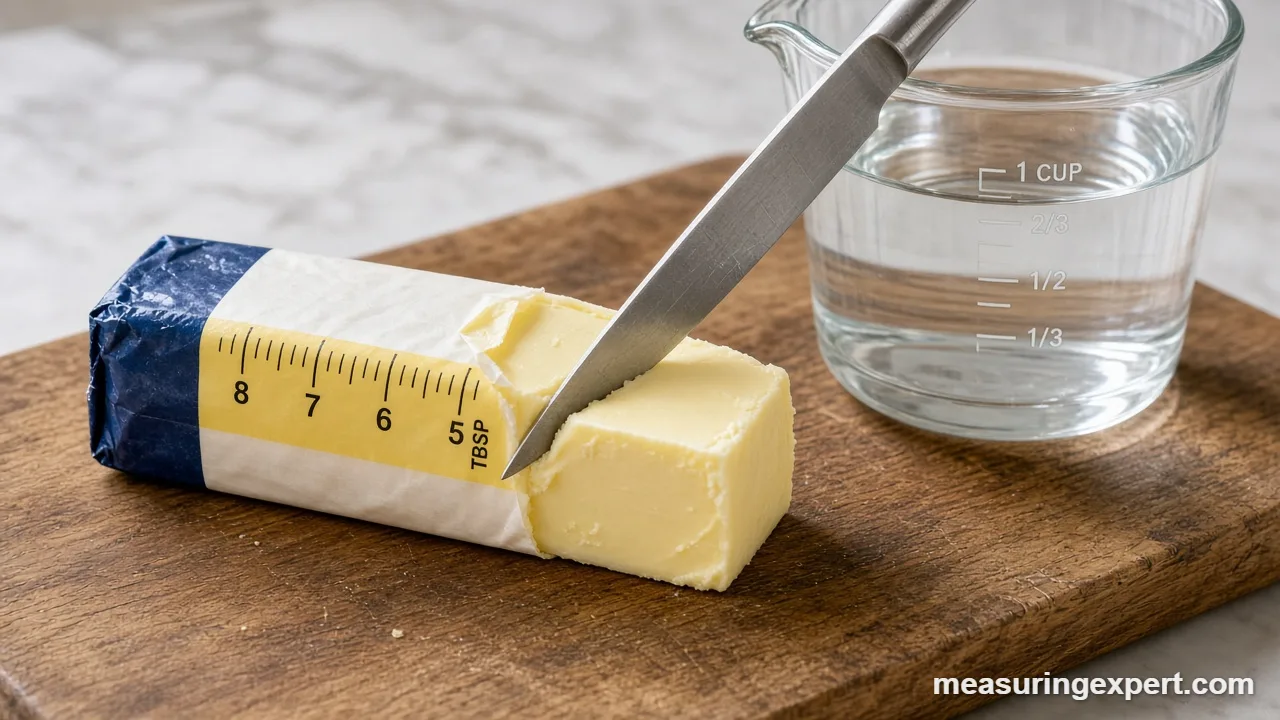
To measure butter without a scale, use the lines on the stick wrapper: one US stick is 1/2 cup, 8 tablespoons, 4 ounces or about 113 g, so each line is 1 tablespoon (about 14 g). No wrapper? Then use tablespoons, a cup, or the water displacement method shown below.
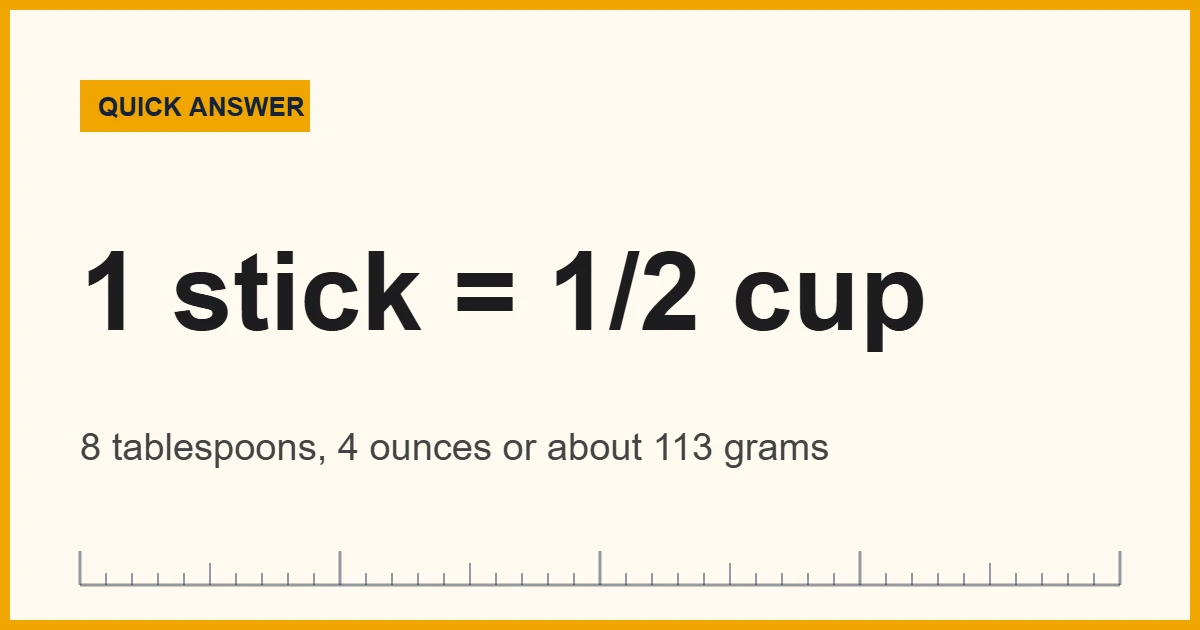
Convert Tablespoons of Butter to Cups and Milliliters
Enter the number of tablespoons your recipe asks for. The converter then shows the same volume in teaspoons, cups, milliliters and fluid ounces. For grams, multiply the tablespoons by 14.17, because a level tablespoon of butter weighs about 14.17 g.
Most American recipes give butter by volume or by the stick, not by weight. That is good news, because the stick itself is a measuring tool. A standard US stick weighs 4 ounces and fills 1/2 cup. In addition, the paper wrapper is printed with tablespoon lines, so you can slice off exactly what you need.
Problems start when the wrapper is gone, when you have a tub or a European block, or when a recipe lists grams. Fortunately, you can still measure butter accurately with spoons, a cup, or a jug of cold water. For example, King Arthur Baking’s ingredient weight chart lists 8 tablespoons (1/2 cup) of butter as 4 ounces or 113 grams, which matches the numbers on this page.
Below you will find a quick chart, the wrapper method, the water trick, and finally the difference between softened and melted butter.
Butter Conversion Chart: Sticks, Tablespoons, Cups and Grams
Keep this chart handy when you measure butter for baking. The gram and milliliter values come from the exact US definitions and the standard 4-ounce stick. Also, feel free to print it and tape it inside a cupboard door.
| Sticks | Tablespoons | Cups | Ounces | Grams |
|---|---|---|---|---|
| 1/8 stick | 1 tbsp | 1/16 cup | 1/2 oz | 14.2 g |
| 1/4 stick | 2 tbsp | 1/8 cup | 1 oz | 28.3 g |
| 1/2 stick | 4 tbsp | 1/4 cup | 2 oz | 56.7 g |
| 2/3 stick | 5 tbsp + 1 tsp | 1/3 cup | 2.67 oz | 75.6 g |
| 1 stick | 8 tbsp | 1/2 cup | 4 oz | 113.4 g |
| 1 1/3 sticks | 10 tbsp + 2 tsp | 2/3 cup | 5.33 oz | 151.2 g |
| 1 1/2 sticks | 12 tbsp | 3/4 cup | 6 oz | 170.1 g |
| 2 sticks | 16 tbsp | 1 cup | 8 oz | 226.8 g |
| 4 sticks | 32 tbsp | 2 cups | 16 oz (1 lb) | 453.6 g |
Need the stick in grams with more detail? See our guide to how many grams are in a stick of butter. Likewise, if a recipe asks for a quarter cup, our page on how much 1/4 cup is covers spoons and milliliters.
Recommended Tools to Measure Butter Without a Scale
You do not need special gear, but a few items make the job cleaner. First, a clear glass measuring jug lets you read the water level for the displacement method. Next, a push-up (adjustable) measuring cup handles soft butter and shortening without scraping. Finally, a set of engraved measuring spoons and cups covers everything else.

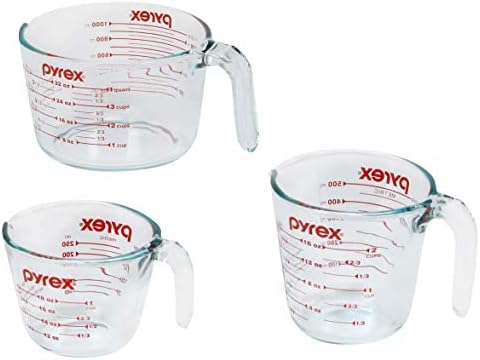


As an Amazon Associate, Measuring Expert earns from qualifying purchases.
How to Measure Butter With the Stick Wrapper
First of all, the wrapper is the fastest method by far. A standard US stick has eight tablespoon marks along one side, plus labels at 1/4 cup and 1/3 cup on many brands. So cutting at the right line gives you an exact amount with no dishes to wash.
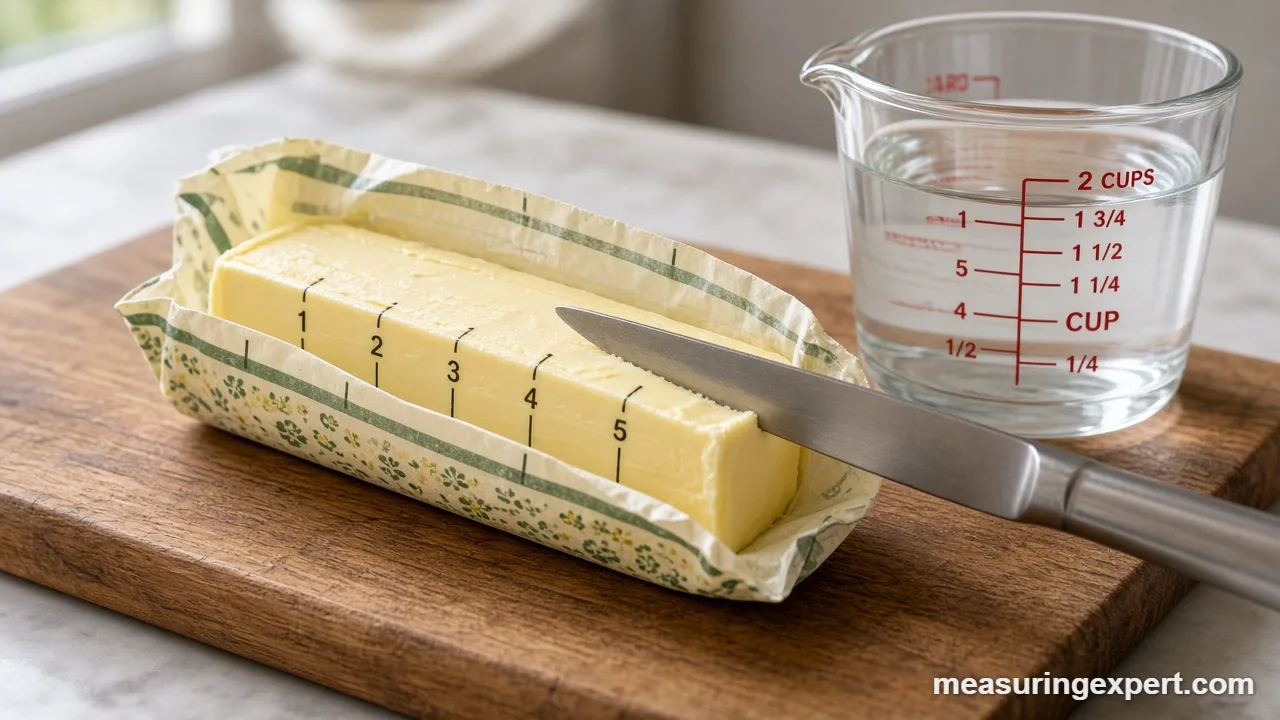
- Line up the wrapper. Sometimes the paper slides during shipping. Before cutting, check that the first mark sits at the very end of the butter.
- Cut straight down. Use a sharp knife and press through the paper in one motion. A sawing motion tears the wrapper and blurs the line.
- Count from the correct end. If you already used part of the stick, count the remaining lines instead of guessing.
- Use the cup labels. For 1/3 cup, cut at the 1/3 cup mark, which falls between the fifth and sixth tablespoon lines.
How to Measure Butter by Water Displacement
The water displacement method works for any shape of butter, including odd chunks and tubs. Because butter floats and does not mix with cold water, the rise in the water level equals the volume of butter you added. Here is how to measure butter this way:
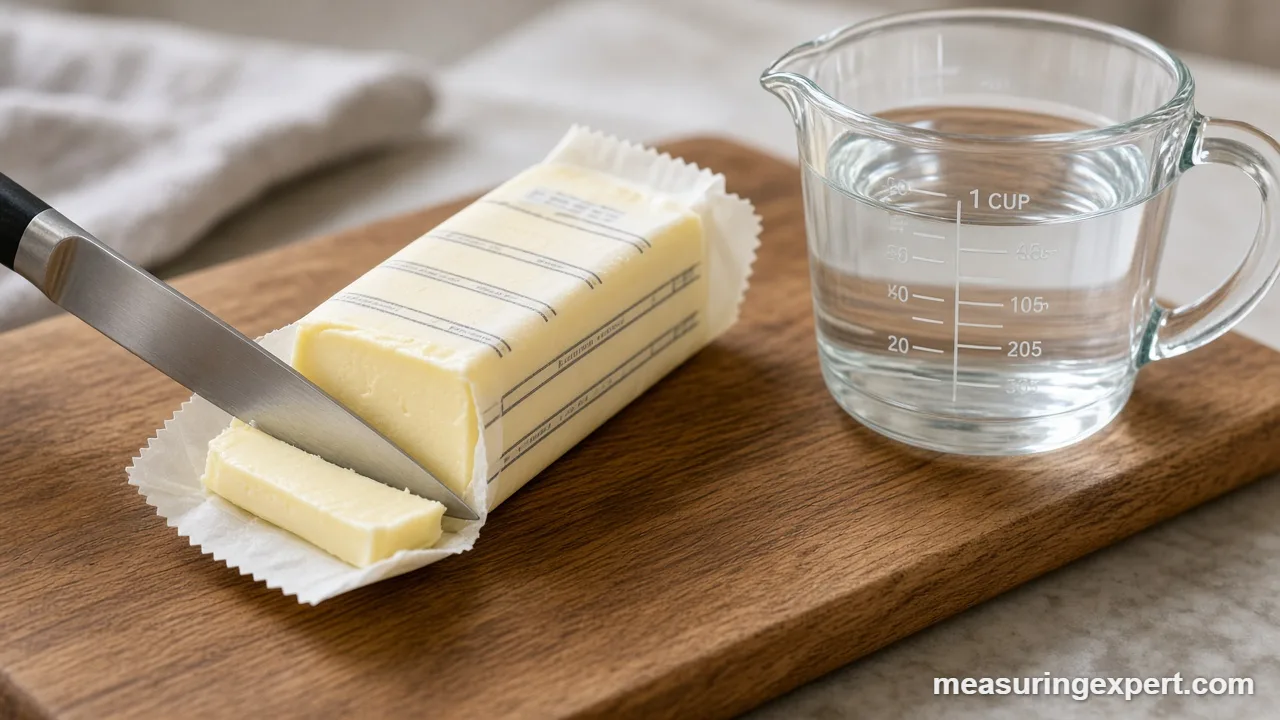
- Fill a clear measuring jug with cold water. Use a round number, for example 1 cup, so the math is easy.
- Remove any ice before you start. If you chilled the water with ice cubes, take them out first, because floating ice also raises the level. Cold water keeps the butter firm, so it does not smear or melt.
- Drop in pieces of butter. Keep adding until the water reaches your starting level plus the amount you need. For 1/2 cup of butter, stop at 1 1/2 cups.
- Push the butter under the surface. Butter floats, so press it down gently with a spoon until it is fully submerged, and read the level with your eye at the line.
- Pour off the water. Lift out the butter, pat it dry with a paper towel, and add it to your recipe.
Measure Butter With Tablespoons and Measuring Cups
Of course, spoons work well for small amounts. Soften the butter slightly, press it into a measuring tablespoon, and level the top with a knife. One level tablespoon is about 14.2 g, while one teaspoon is about 4.7 g. As a result, three teaspoons make one tablespoon, just as they do for water.
For larger amounts, a dry measuring cup works. However, firm butter leaves air pockets, so cut it into small cubes first or let it soften. Then pack it in firmly and level the top. In short, a packed, level cup of butter is 16 tablespoons, or about 227 g.
| People often confuse | What it really means |
|---|---|
| Fluid ounce (fl oz) | Volume: 2 tablespoons, about 29.57 mL |
| Ounce (oz) of butter | Weight: about 28.35 g, which for butter is also about 2 tablespoons |
| US stick (1/2 cup) | 113 g, about 118 mL |
| European block | Usually 250 g, about 2.2 US sticks |
| Metric cup | 250 mL, slightly more than a US cup (236.6 mL) |
Because butter is close to the density of water, an ounce of butter and a fluid ounce of butter are almost the same amount. That shortcut does not hold for flour or sugar, though. For more on weight ounces, see how much an ounce weighs.
How to Measure Butter From a European 250 g Block
By contrast, butter in Europe, the UK and Australia usually comes in 250 g blocks rather than 4-ounce sticks. So a block holds about 2.2 US sticks, 17.6 tablespoons, or about 1.1 US cups. Many blocks also have gram markings on the foil, often every 25 g or 50 g.
| Grams | Fraction of a 250 g block | US tablespoons | US sticks |
|---|---|---|---|
| 50 g | 1/5 block | 3 1/2 tbsp | 0.44 stick |
| 100 g | 2/5 block | 7 tbsp | 0.88 stick |
| 125 g | 1/2 block | 8 3/4 tbsp | 1.1 sticks |
| 200 g | 4/5 block | 14 tbsp | 1.76 sticks |
| 250 g | 1 block | 17 1/2 tbsp | 2.2 sticks |
If the foil has no marks, measure the block with a ruler and cut it into equal parts. For example, half the length of a 250 g block is 125 g, and a fifth is 50 g.
Softened vs Melted: When to Measure Butter
Recipe wording tells you when to measure. “1/2 cup butter, melted” means you measure 1/2 cup of solid butter (one stick) and then melt it. By contrast, “1/2 cup melted butter” means you melt first and then pour it into a liquid measuring cup. In practice, the two come out close, because butter changes volume only a little when it melts.
On the other hand, softened butter is still a solid. It should hold a fingerprint without looking greasy, which usually takes 30 to 60 minutes on the counter. Meanwhile, cold butter is easier to cut along wrapper lines. So slice it cold first, then let the measured pieces soften.
Do and Don’t When You Measure Butter
Do
- Check that the wrapper lines up with the stick.
- Cut cold butter, then soften the pieces.
- Use cold water for the displacement method.
- Pack and level butter in a dry cup.
- Convert European grams with the table above.
Don’t
- Guess by eye for pastry or shortbread.
- Read the water level with butter floating above it.
- Assume a tub of spread equals stick butter.
- Measure melted butter in a dry cup.
- Confuse a 250 mL metric cup with a US cup.
Honest Limits of Measuring Butter by Volume
Volume methods are close, not perfect. For one thing, the 113 g stick and the 14.2 g tablespoon assume the standard US stick density of about 0.96 g per mL. However, real butter varies a little with water content, salt and temperature. Also, a packed cup can hide air pockets, and wrapper lines can sit slightly off. As a result, expect a few grams of difference per stick. For cookies, sauces and frosting, that is fine. For laminated dough or precise pastry, however, a scale gives more repeatable results.
In addition, whipped butter and spreads are a separate case. Whipped butter has air beaten in, so a cup of it weighs much less than a cup of stick butter. Similarly, tub spreads contain more water. Therefore, use stick or block butter whenever a recipe gives a weight.
When Accuracy Really Matters
In general, most recipes forgive a small error. Still, a few cases call for extra care:
- Pastry, pie crust and shortbread. The ratio of butter to flour sets the texture, so a heaping guess can make dough greasy.
- Recipes written in grams. Convert with the chart instead of rounding 250 g to “two sticks”; that would leave you about 23 g short.
- Special diets. If you track fat or sodium, the gram values on this page are estimates. Check the nutrition label on your own butter.
Frequently Asked Questions
How do I measure butter without a scale?
Use the tablespoon lines on the stick wrapper, a measuring tablespoon or cup, or the water displacement method. One US stick is 1/2 cup, 8 tablespoons or about 113 g.
How many tablespoons are in a stick of butter?
A standard US stick holds 8 tablespoons, which is 1/2 cup or 4 ounces.
How many grams is 1 tablespoon of butter?
One level tablespoon of butter weighs about 14.2 g, or 1/2 ounce.
How do I measure butter for 1 cup?
Use two full US sticks. Otherwise, pack soft butter into a dry 1-cup measure and level it, or use water displacement from 1 to 2 cups.
How do I measure butter with water?
Fill a clear jug with cold water to a round number, add butter until the level rises by the amount you need, keep the butter fully submerged while reading, then drain it.
How much is half a stick of butter?
Half a stick is 4 tablespoons, 1/4 cup, 2 ounces or about 57 g.
How many US sticks are in a 250 g block of butter?
A 250 g block equals about 2.2 US sticks, or about 17.6 tablespoons.
Should I measure butter before or after melting?
Follow the wording. “1/2 cup butter, melted” means measure solid, then melt. “1/2 cup melted butter” means melt first, then measure in a liquid cup.
Is a cup of whipped butter the same as a cup of stick butter?
No. Whipped butter contains air, so a cup of it weighs much less. Use stick or block butter for recipes that list sticks or grams.
Can I measure butter by its length?
Yes. Divide a standard stick into eight equal slices with a ruler; each slice is 1 tablespoon. Divide a 250 g block by length to get 125 g halves or 50 g fifths.
The Bottom Line
To sum up, the stick is its own measuring tool: 1 stick equals 1/2 cup, 8 tablespoons, 4 ounces or about 113 g. Cut cold butter at the wrapper lines, use spoons for small amounts, and turn to water displacement for odd chunks. For European blocks, remember that 250 g is about 2.2 sticks.
Finally, use the converter at the top whenever a recipe mixes tablespoons, cups and milliliters. If you bake pastry often, a scale is still the most repeatable way to measure butter.