

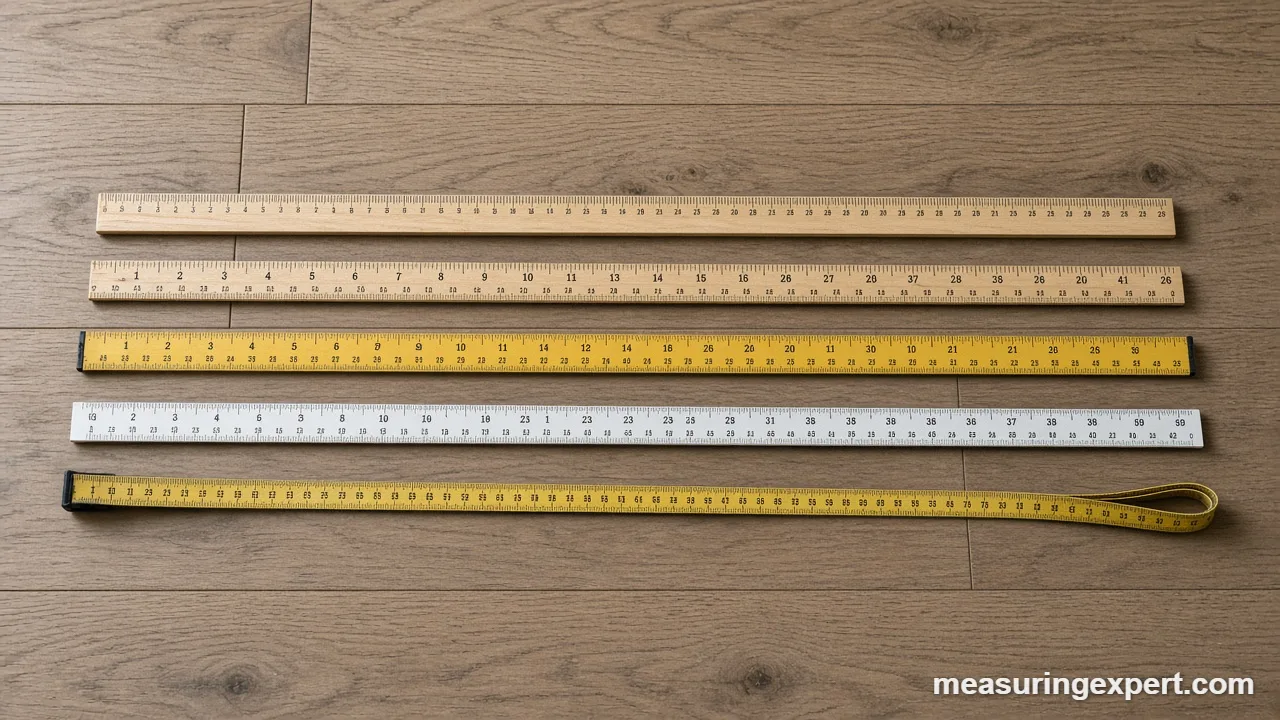
Length units measure distance. In the metric system, the base unit is the meter: 1 m = 100 cm = 1,000 mm, and 1 km = 1,000 m. In US customary length units, 12 inches make a foot, 3 feet make a yard, and 5,280 feet make a mile. Since 1959, 1 inch = 2.54 cm exactly (NIST).
Length Units Converter: Metric and US
First, enter a number and choose the unit you have. Then the converter shows the same distance in millimeters, centimeters, meters, kilometers, inches, feet, yards and miles. Because it uses the exact definitions, 1 inch is always 25.4 mm.
A length is simply the distance between two points. In other words, every length unit is an agreed-upon size that lets two people compare that distance without standing next to each other. Today, however, the world relies on two families of units. For instance, most countries use the metric system (the SI), while the United States still uses inches, feet, yards and miles for everyday work.
Even so, the two systems are tied together by definition. For example, the meter is now defined by the speed of light: light in a vacuum travels exactly 299,792,458 meters in one second. The US units, in turn, are also defined in meters. According to the NIST page on SI length units, the inch has been exactly 25.4 mm since July 1, 1959. As a result, every conversion on this page is exact until you round it.
In this guide, you will therefore find a quick chart first. After that, we list the metric and US length units from smallest to largest, show which ones people mix up, and finally explain how to measure and convert without mistakes.
Common Length Units Chart
To begin with, this chart covers the length units you meet most often. In addition, every metric value comes from the exact definitions and is rounded only at the last step.
| Unit (symbol), system | Exact or defined size | Rough equivalent |
|---|---|---|
| Millimeter (mm), metric | 0.001 m | 0.0394 in |
| Centimeter (cm), metric | 0.01 m = 10 mm | 0.3937 in |
| Inch (in), US | 2.54 cm exactly | 25.4 mm |
| Foot (ft), US | 12 in = 30.48 cm | 0.3048 m |
| Yard (yd), US | 3 ft = 0.9144 m | 91.44 cm |
| Meter (m), SI base unit | 100 cm = 1,000 mm | 39.37 in, 3.281 ft, 1.094 yd |
| Kilometer (km), metric | 1,000 m | 0.6214 mi |
| Mile (mi), US | 5,280 ft = 1,609.344 m | 1.609 km |
| Nautical mile (nmi), international | 1,852 m exactly | 1.151 mi, 6,076 ft |
Printable tip: first print this chart in landscape mode and tape it inside a workshop cabinet or a sewing box. Also, if you only need inch and centimeter values, see how long 6 inches is in centimeters.
Recommended Tools for Measuring Length Units
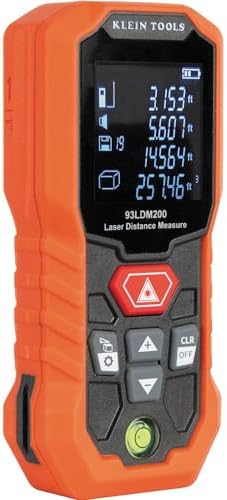
In general, the right tool depends on the size of the job. First, a tape measure with both inch and metric markings handles rooms, furniture and lumber. Next, a digital caliper reads small parts to a hundredth of a millimeter. Finally, a laser distance measure is faster for whole rooms and ceilings because one person can do it alone.



As an Amazon Associate, Measuring Expert earns from qualifying purchases.
Metric Length Units From Smallest to Largest
First of all, metric length units all build on the meter. Each prefix multiplies or divides it by a power of ten. As a result, you convert by moving the decimal point. For example, 2.5 m is 250 cm because centi means one hundredth.
| Unit (symbol) | Size in meters and typical use |
|---|---|
| Picometer (pm) | 10-12 m; atoms and chemical bonds |
| Nanometer (nm) | 10-9 m; light waves, chip features |
| Micrometer (µm) | 10-6 m; cells, hair width, machining tolerances |
| Millimeter (mm) | 0.001 m; screws, rainfall, phone thickness |
| Centimeter (cm) | 0.01 m; body height, clothing, school rulers |
| Decimeter (dm) | 0.1 m = 10 cm; mostly classrooms |
| Meter (m) | 1 m; used for rooms, fabric and, similarly, track events |
| Decameter (dam) | 10 m; rare in daily life |
| Hectometer (hm) | 100 m; a hectare is 1 hm by 1 hm |
| Kilometer (km) | 1,000 m; used for road distances and, for example, running races |
The ladder does not stop at the kilometer, however. For example, astronomers use the astronomical unit, which the International Astronomical Union fixed at exactly 149,597,870,700 m in its 2012 Resolution B2. In other words, that is about 92.96 million miles, roughly the average Earth-Sun distance. Beyond that, a light-year (about 9.46 trillion km) is a distance, not a time.
US Customary Length Units in Order
By contrast, US length units grew out of older English measures, so their ratios are not powers of ten. Therefore it helps to memorize the four everyday steps: 12, 3, 1,760 and 5,280. In addition, the table includes the older surveying and sea units you still see on deeds, maps and charts.
| Unit | Definition and metric value |
|---|---|
| Mil (thou) | 1/1,000 in = 0.0254 mm |
| Inch | 1/12 ft = 2.54 cm |
| Hand | 4 in = 10.16 cm |
| Foot | 12 in = 30.48 cm |
| Yard | 3 ft = 0.9144 m |
| Fathom | 6 ft = 1.8288 m |
| Rod | 16.5 ft = 5.0292 m |
| Chain (Gunter’s) | 66 ft (4 rods) = 20.1168 m |
| Furlong | 660 ft (10 chains) = 201.168 m |
| Mile | 5,280 ft (1,760 yd) = 1.609344 km |
| League (land) | 3 mi = about 4.828 km |
For a closer look at one of these older units, see our guide to the rod and how surveyors used it. Similarly, if you are working with miles on a track or a map, the breakdown of how many yards are in a mile shows the math step by step.
Length Units People Often Confuse
Unfortunately, several length units share a name or an abbreviation but differ in size. In practice, most mistakes come from the five pairs below, so check them before you trust a conversion.
| Pair | Difference | Why it matters |
|---|---|---|
| International foot vs US survey foot | 0.3048 m vs 1200/3937 m (about 0.3048006 m) | The gap is about 2 parts per million, or roughly 1/8 inch per mile. NIST deprecated the survey foot from 2023. |
| Statute mile vs nautical mile | 1,609.344 m vs 1,852 m | For this reason, boats and aircraft use nautical miles; a knot is one nautical mile per hour. |
| Mil vs millimeter | 0.0254 mm vs 1 mm | For example, a 4-mil plastic sheet is about 0.1 mm thick, not 4 mm. |
| Meter vs yard | 1 m is about 1.094 yd | So a 100 m race is about 109 yd, not 100 yd. |
| Light-year vs year | A distance, not a time | Instead, a light-year measures how far light goes in one year. |
Today, the survey foot matters mainly for old land records. According to NIST’s survey foot notice, it should be avoided except for historic and legacy data.
How to Measure Length and Convert Units Correctly
After all, good conversions start with a good measurement. So follow these steps in order, whether you are measuring a board, a room or a hem.
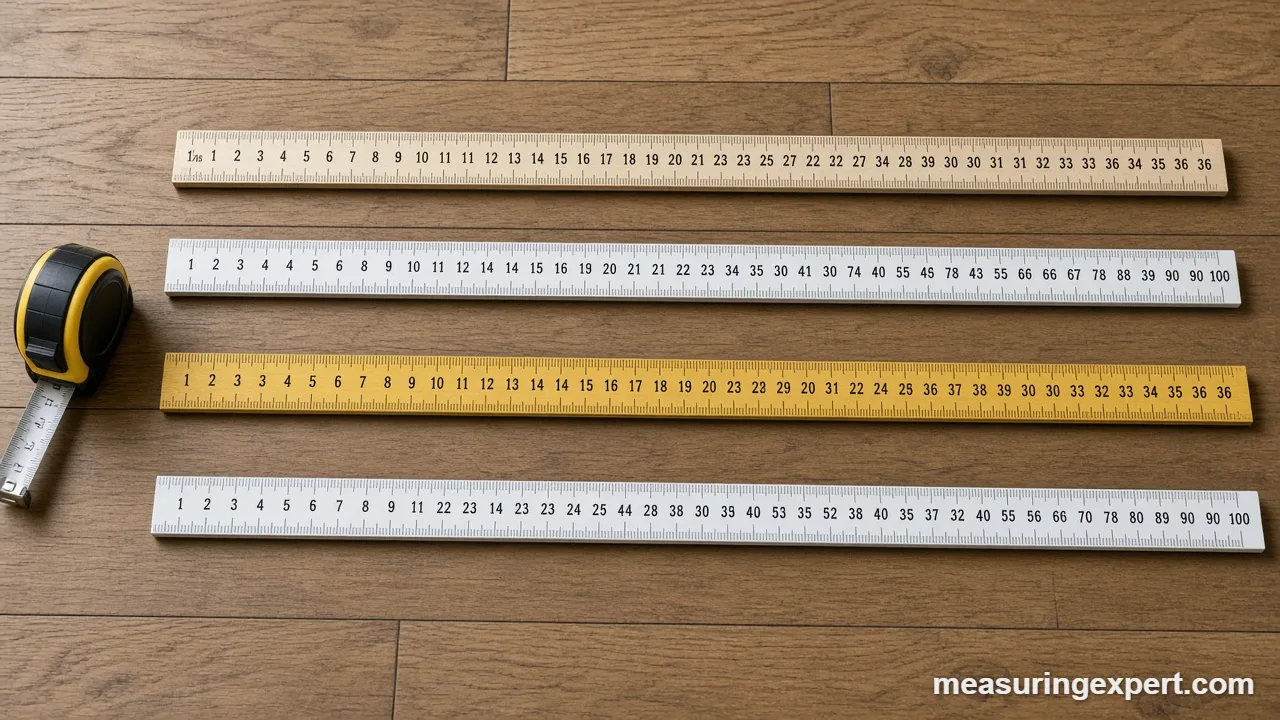
- Pick a tool that fits the size: a caliper for small parts, a tape for rooms, a laser for long walls.
- Next, hook or butt the zero end firmly against one edge and keep the tape straight and level.
- Then read the mark at eye level, straight on, so the viewing angle does not shift the reading.
- After that, write the number down with its unit right away, for example 72 1/4 in or 183.5 cm.
- Now convert with an exact factor such as 1 in = 2.54 cm, or enter the value in the converter above.
- Finally, round only at the end, and keep one more digit than the job needs.
Do and Don’t With Length Units
Do
- Always write the unit next to every number.
- Use exact factors: 2.54 cm per inch, 0.3048 m per foot.
- Check whether a drawing is in mm or inches before cutting.
- Also measure twice when the material is costly.
Don’t
- Round 2.54 down to 2.5 for long distances.
- Mix feet and meters in one calculation.
- Assume “mil” means millimeter.
- Read a tape from an angle or trust a bent hook.
Honest Limits of Any Conversion
Of course, an exact factor does not make a rough measurement exact. If you read a tape to the nearest 1/16 inch, your result is only good to about 1.6 mm, no matter how many decimals the converter shows. Likewise, a cheap tape can stretch, and its hook can bend, which adds error before you convert anything.
Rounding errors also add up. For instance, using 1.6 km per mile instead of 1.609344 km puts you about 930 m short over 100 miles. In short, keep full precision during the math and round once.
When Accuracy Really Matters
For most home projects, a tape read to 1/16 inch or 1 mm is enough. However, machining, medical devices, flooring orders and property surveys need tighter control. In those jobs, therefore, use calibrated tools, record the unit system on every drawing, and have critical numbers checked by a second person.
Metric or US: which should you use? In practice, use whatever the plans, pattern or customer uses, and convert only at the edges. Our comparison of metric vs imperial systems explains the trade-offs in more detail.
Length Units FAQs
What are the basic length units?
The basic metric length units are the millimeter, centimeter, meter and kilometer. Similarly, the basic US customary units are the inch, foot, yard and mile.
What is the SI unit of length?
The meter is the SI base unit of length. Since 1983 it has been defined by the distance light travels in a vacuum in 1/299,792,458 of a second.
What are the length units from smallest to largest?
In everyday metric use, the order is millimeter, centimeter, decimeter, meter and kilometer. In US use, by contrast, it is inch, foot, yard and mile.
How many centimeters are in an inch?
There are exactly 2.54 centimeters in one inch. In other words, an inch is 25.4 millimeters.
Is a meter longer than a yard?
Yes. In fact, a meter is about 1.094 yards, or about 39.37 inches, so it is roughly 3.4 inches longer than a yard.
How many feet are in a mile?
There are 5,280 feet in a mile. In other words, a mile is the same as 1,760 yards or 1.609344 kilometers.
Which length units do scientists use for tiny things?
Typically, scientists use micrometers for cells, nanometers for light waves and picometers for atoms. In short, all of them are fractions of a meter.
Is a light-year a unit of time?
No. Despite the name, a light-year is a distance: how far light travels in one year, about 9.46 trillion kilometers or 5.88 trillion miles.
Why does the US still use non-metric length units?
Mostly because of habit and cost. Even so, US units have been defined in metric terms since 1959, so 1 inch is exactly 2.54 cm.
What is the difference between length units and area units?
Length units measure one dimension, such as a side of a room. Area units, on the other hand, measure two dimensions and are written as squares, such as square feet or square meters.
Length Units: The Bottom Line
To sum up, every length unit you are likely to meet is tied to the meter. Metric units step by tens, whereas US units use 12 inches, 3 feet and 5,280 feet. Because 1 inch equals exactly 2.54 cm, you can move between the two systems without guesswork. So measure carefully, keep the units written down, and let the converter at the top do the arithmetic.
4 thoughts on “Length Units: Metric and US Units From Smallest to Largest”