

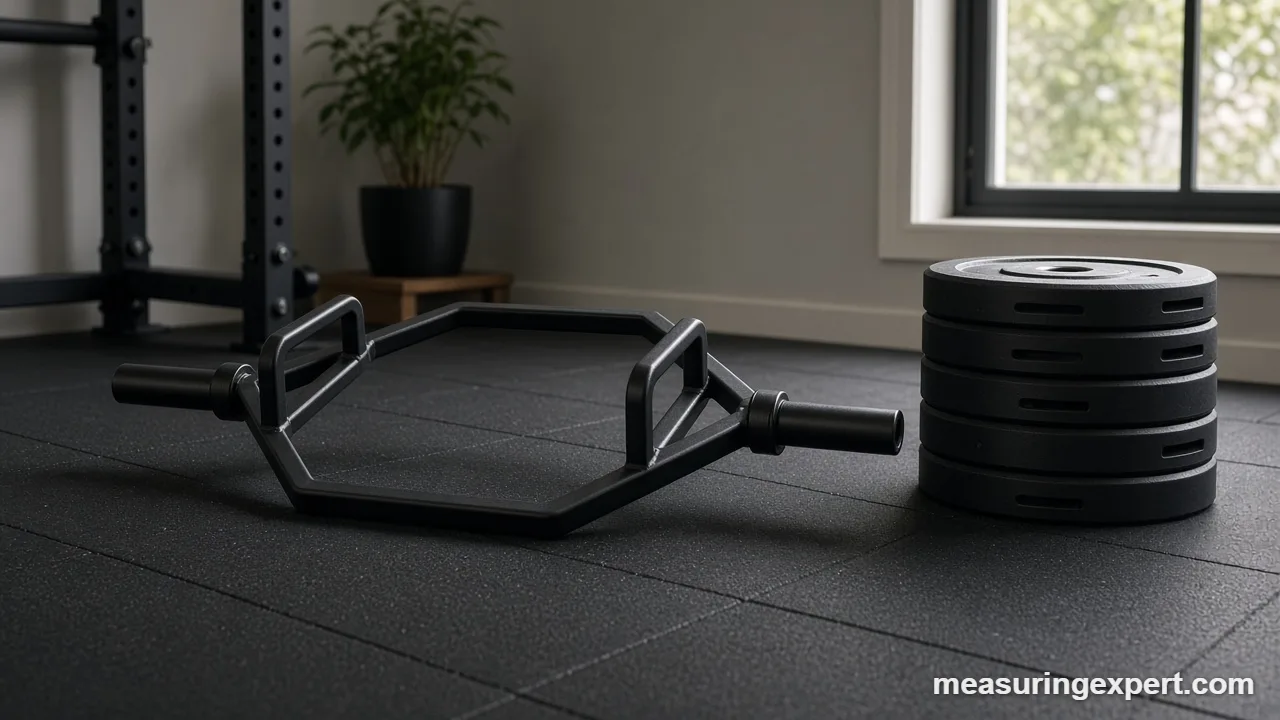
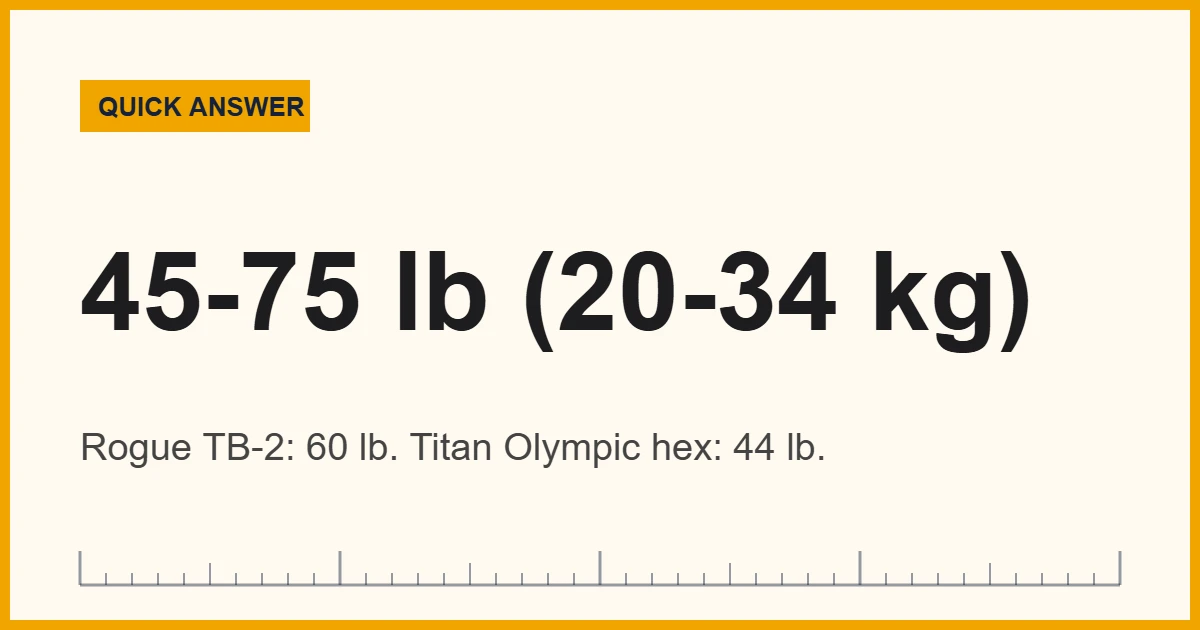
A hex bar (trap bar) usually weighs between 45 and 75 lb (about 20 to 34 kg), depending on the model. For example, Rogue lists its TB-1 and TB-2 trap bars at 60 lb (27.2 kg), while Titan lists its basic Olympic hex bar at 44 lb (20 kg). So always check the spec sheet, or weigh your own bar.



As an Amazon Associate, Measuring Expert earns from qualifying purchases.
Convert Your Hex Bar Weight to Kilograms
Enter the bar weight from your spec sheet or your own scale reading. The converter then shows it in kilograms, ounces and grams, using the exact definition of the pound.
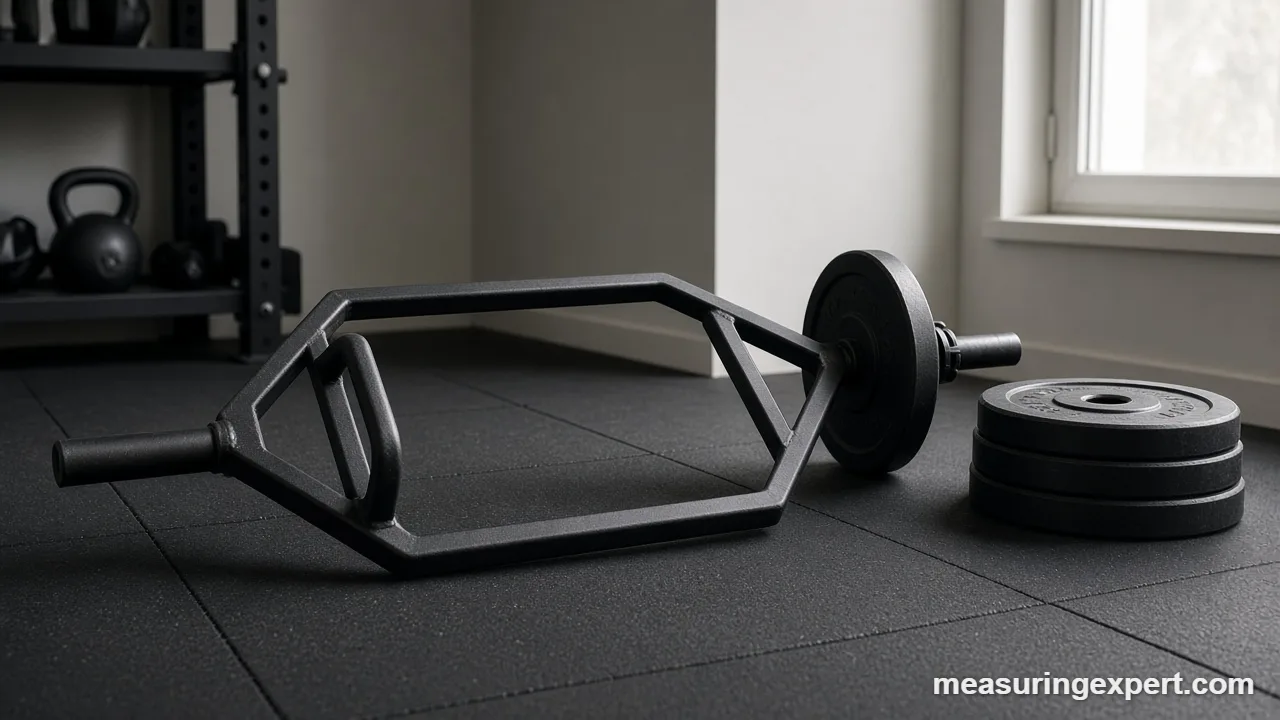
A trap bar is the hexagon- or diamond-shaped bar you step inside to lift. Because your hands sit at your sides instead of in front of your shins, it is popular for deadlifts, shrugs and farmer’s carries. However, unlike a standard Olympic barbell, a trap bar has no official weight. Instead, each brand builds its own frame, so one gym’s bar can be 15 lb lighter or heavier than another’s.
That matters more than it sounds, because small errors add up. If you log a 300 lb lift but your bar is really 44 lb instead of the 60 lb you assumed, your total is off by 16 lb. In short, knowing the true bar weight keeps your training numbers honest.
The conversions on this page use the avoirdupois pound, which the US National Institute of Standards and Technology (NIST) defines as exactly 0.45359237 kilogram. Below, you will first see published weights for several real bars, then typical ranges by type, and finally a simple way to weigh any bar at home.
Hex Bar Weight by Model: Published Specs
Also, these figures come straight from the manufacturers’ own product pages. When a maker does not publish a bar weight, however, the table says so instead of guessing.
| Bar (manufacturer page) | Listed weight | In kilograms | Other listed specs |
|---|---|---|---|
| Rogue TB-2 Trap Bar | 60 lb | 27.22 kg | 16 in loadable sleeves |
| Rogue TB-1 Trap Bar 2.0 | 60 lb (+/- 2 lb) | 27.22 kg (26.31 to 28.12 kg) | 16 in loadable sleeves |
| Titan Olympic Hex Weight Bar | 44 lb | 19.96 kg | 500 lb capacity, 9.75 in sleeves, 56 in long |
| Titan Rackable Hex Trap Bar | 60 lb | 27.22 kg | 800 lb capacity, 16 in sleeves, raised handles |
| CAP Olympic Trap Bar | Not listed on the CAP page | – | 500 lb capacity, 24 in between handles |
First, notice the pattern. The short-sleeved, budget-style bar sits near 44 to 45 lb, whereas the longer-sleeved, raised-handle bars land around 60 lb. Also, CAP lists capacity and handle spacing but not bar weight, which is exactly why a home scale is useful.
Typical Weight by Bar Style
If you cannot find a spec sheet, the style of the bar gives a reasonable first estimate. Still, treat these as typical ranges, not rules.
| Bar style | Typical weight | Why |
|---|---|---|
| Basic closed hex bar, short sleeves | about 40 to 50 lb (18 to 23 kg) | Lighter tubing and shorter sleeves |
| Rackable or dual-handle trap bar | about 55 to 65 lb (25 to 29 kg) | Extra handles, longer 16 in sleeves |
| Open trap bar (one side open) | about 55 to 75 lb (25 to 34 kg) | Heavier frame to stay rigid without the closing bar |
| Heavy-duty or oversized bars | about 65 to 75 lb and up (29 to 34+ kg) | Thicker steel and wider frames |
In other words, “45 lb” is a guess that fits only some bars. Also, if you train at a commercial gym, ask the staff or check for a stamped weight near a sleeve, and otherwise weigh the bar yourself.
Recommended Tools for Checking Hex Bar Weight
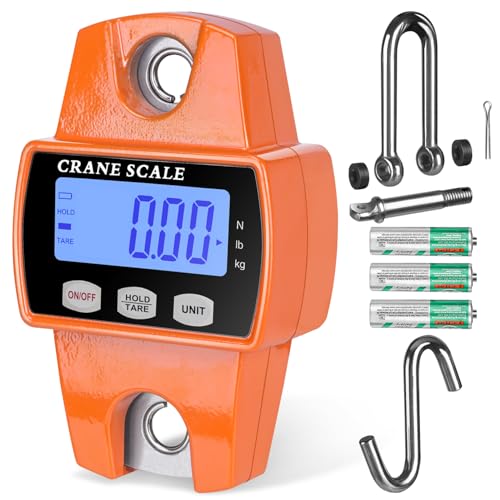
In fact, you only need two things: the bar itself and a way to weigh it. First, a hanging scale rated well above the bar’s weight lets you hook the bar on a strap. Next, a digital luggage or fish scale works for lighter bars. Finally, if you are still shopping, the bars below come from established fitness brands, and each listing states its own bar weight.
Hex Bar vs Straight Barbell Weight
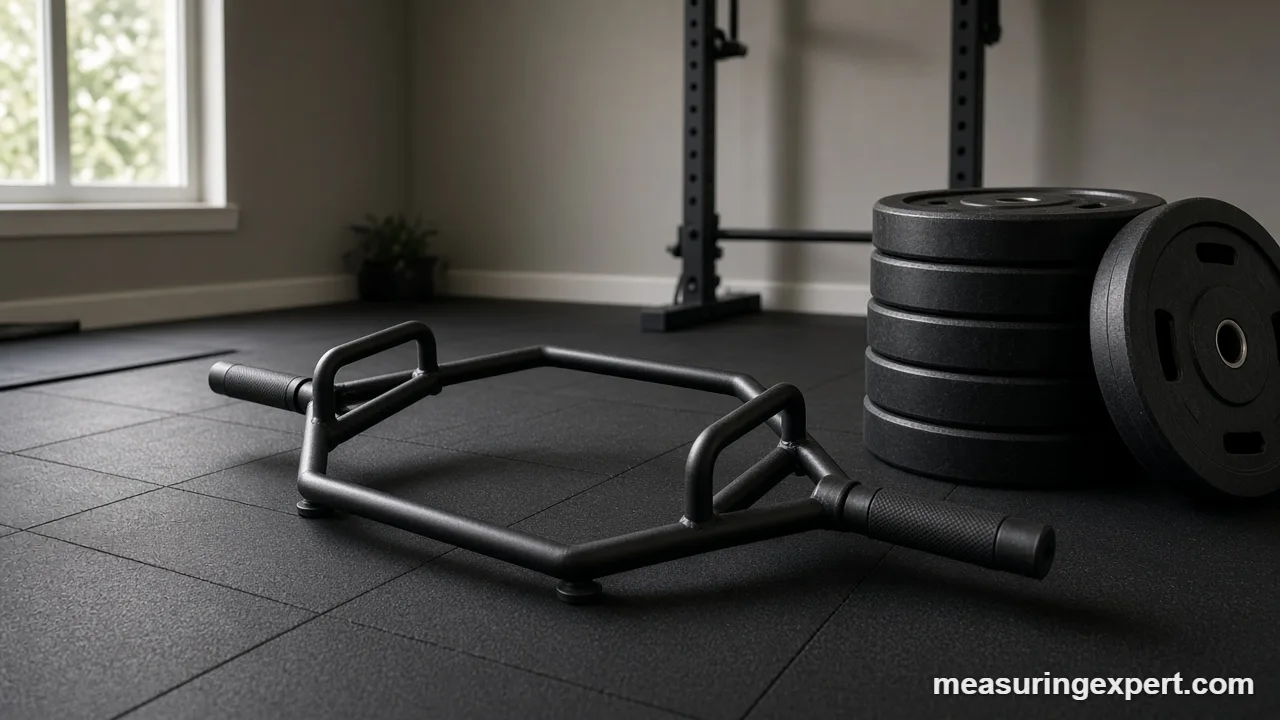
People often assume a trap bar weighs the same as a standard bar. Sometimes it does; however, often it does not. For that reason, this table separates the things that usually get mixed up.
| Item | Typical weight | Notes |
|---|---|---|
| Men’s Olympic barbell | 20 kg (44.09 lb) | Often called “45 lb” in US gyms |
| Women’s Olympic barbell | 15 kg (33.07 lb) | Thinner grip, shorter shaft |
| Hex or trap bar | about 45 to 75 lb (20 to 34 kg) | No standard; varies by model |
| Bar capacity | often 500 to 1,000 lb | Maximum rated load, not bar weight |
So, a 44 lb trap bar happens to match a 20 kg barbell almost exactly, but a 60 lb trap bar is about 16 lb heavier. For more on the difference between how heavy something is and how much matter it contains, see our explainer on what mass is and how it differs from weight.
How to Weigh Your Own Hex Bar
A closed trap bar is wide enough to stand inside, so a regular bathroom scale works. Then, enter the result in the converter above to get kilograms.
- Unload the bar. Remove every plate and collar, because even spring clips add a few ounces.
- Place the scale on a hard, level floor. Otherwise, carpet and rubber mats can make bathroom scales read low.
- Weigh yourself alone. Next, step on, stand still and write down the number.
- Weigh yourself holding the bar. Stand on the scale inside the hex frame, lift the bar by its handles and hold it level.
- Subtract the two readings. As a result, the difference is the weight of the empty bar.
- Repeat three times and average. Above all, this smooths out the scale’s rounding and any wobble.
Alternatively, loop a strong strap through both handles and hang the bar from a hanging scale. Because that method reads the bar directly, so there is nothing to subtract.
Working Out the Total Loaded Weight
In other words, your lift total is simply bar weight plus plates. For example, here is how the bar choice changes the same plate load.
| Bar | Plates added | Total (lb) | Total (kg) |
|---|---|---|---|
| 45 lb bar | 90 lb (one 45 per side) | 135 lb | 61.2 kg |
| 60 lb bar | 90 lb (one 45 per side) | 150 lb | 68.0 kg |
| 60 lb bar | 180 lb (two 45s per side) | 240 lb | 108.9 kg |
| 44 lb bar | 180 lb (two 45s per side) | 224 lb | 101.6 kg |
Similarly, plates have small tolerances, so these totals are as accurate as the numbers stamped on your plates. If you want to see how small masses add up, our guide to how much 1 gram is puts tiny amounts in everyday terms, and how much an ounce is covers the ounce readout on many scales.
Do and Don’t When Checking Bar Weight
Do
- Check the manufacturer page for the listed weight.
- Weigh the empty bar at least three times.
- Use a hard, level floor for bathroom scales.
- Label the bar once you know its weight.
- Count collars if you log exact totals.
Don’t
- Assume every trap bar weighs 45 lb.
- Confuse rated capacity with bar weight.
- Weigh the bar with plates still loaded.
- Exceed the capacity of a hanging scale.
- Mix kilograms and pounds in one log.
Honest Limits of Published Bar Weights
Listed weights are nominal, after all. For instance, Rogue states a tolerance of plus or minus 2 lb on its TB-1 2.0, which is about 3% of a 60 lb bar. In addition, bathroom scales add their own error, since many round to the nearest 0.2 lb or so and drift on soft floors. Meanwhile, coatings, end caps and replacement sleeves can shift a used bar’s weight slightly. In short, a home measurement within a pound or two of the spec is normal, and the average of several readings is the number to trust.
When Accuracy Really Matters
For general fitness, a 1 to 2 lb difference changes nothing. However, three situations deserve care. First, percentage-based programs depend on a true starting number, so a 15 lb error compounds every week. Second, if you compare lifts across gyms, different bars make the totals unequal. Finally, shipping and floor-load planning for a home gym need real weights rather than estimates.
Hex Bar Weight FAQs
How much does a hex bar weigh in kg?
In general, most of these bars weigh about 20 to 34 kg. A 45 lb bar is 20.41 kg, and a 60 lb bar is 27.22 kg.
Does a standard hex bar weigh 45 lb?
Some do; however, there is no standard. Titan lists its basic Olympic model at 44 lb, while Rogue lists its TB-1 and TB-2 at 60 lb.
Is a trap bar the same as a hex bar?
Yes. They are two names for the same type of bar, although open and diamond-shaped versions also exist.
Is a trap bar heavier than an Olympic barbell?
Often. For instance, a men’s Olympic barbell is 20 kg (44.09 lb), while many trap bars weigh 55 to 65 lb.
How much does an open trap bar weigh?
Open trap bars typically weigh around 55 to 75 lb, because the frame must stay stiff without a closing side. So check the maker’s spec for your model.
How can I weigh my hex bar without a gym scale?
Weigh yourself on a bathroom scale, then weigh yourself again while holding the empty bar inside the frame. Finally, subtract the first reading from the second.
Do I count the bar in my deadlift total?
Yes. In short, your total is the bar weight plus every plate and collar on it.
What does a bar’s capacity rating mean?
It is the maximum load the bar is rated to hold, such as 500 or 800 lb. Therefore, it is not the weight of the empty bar.
Why doesn’t my bar match its listed weight?
Manufacturing tolerance, scale error and added parts all play a part, because no bar is perfect. Rogue, for example, lists plus or minus 2 lb on one model.
How much does a hex bar weigh with two 45 lb plates?
First, add 90 lb to the bar. That gives 135 lb with a 45 lb bar, or 150 lb with a 60 lb bar.
Bottom Line on Hex Bar Weight
To sum up, a trap bar usually weighs 45 to 75 lb (about 20 to 34 kg), and real models range from Titan’s 44 lb Olympic hex bar to Rogue’s 60 lb trap bars. Because there is no standard, the safest number is the one on your bar’s spec sheet or, better still, the one you measure yourself.
So weigh the empty bar, label it, and use the converter at the top of this page whenever you need the figure in kilograms.
Black Friday is coming: shop the deals with Prime