

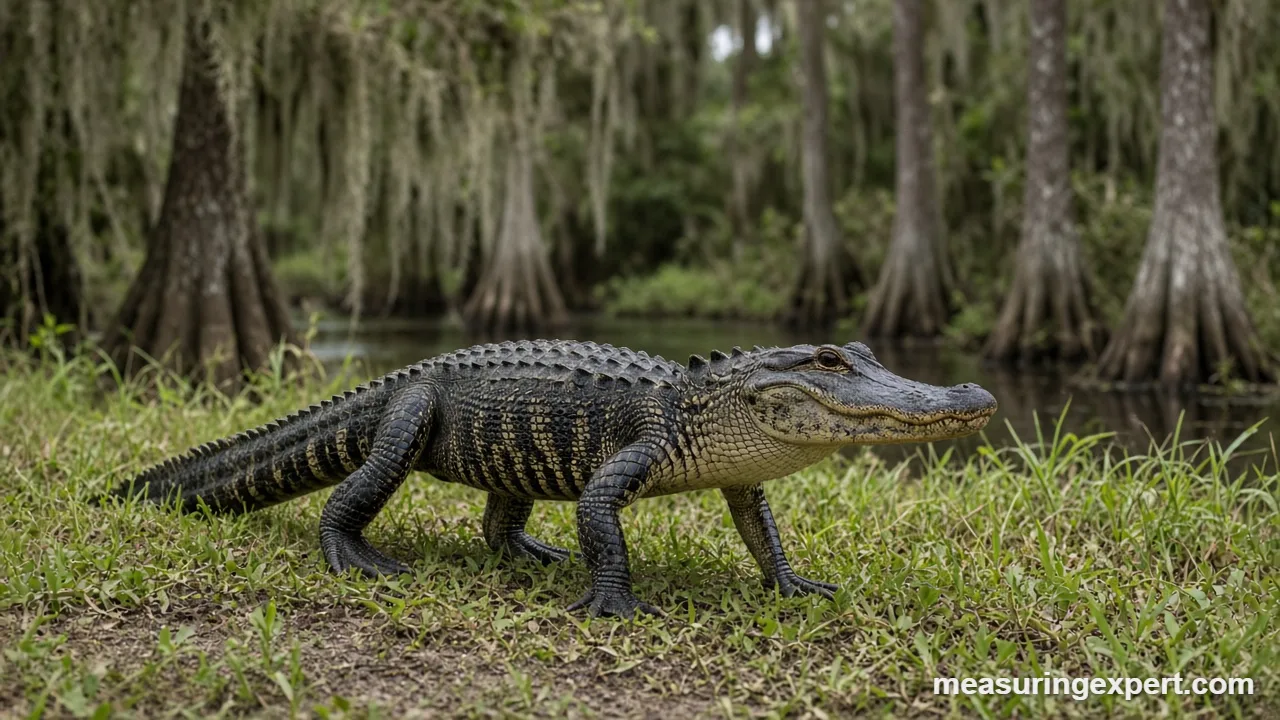
How fast is an alligator? On land, an alligator can sprint at roughly 9 to 11 mph (about 14 to 18 km/h), but only for a short dash. In water, it can surge to about 20 mph (32 km/h) in brief bursts. Most of the time, however, it moves slowly to save energy.
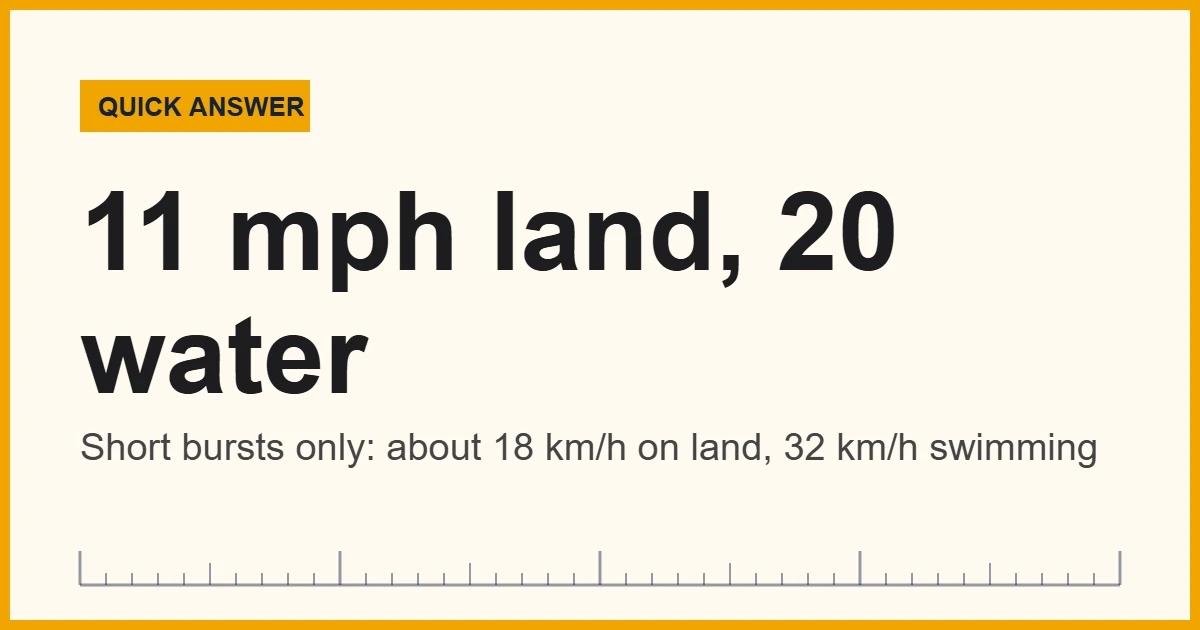
Convert Alligator Speed to km/h, m/s and Knots
Enter any speed below to compare it with the figures on this page. For example, type 11 for the land burst or 20 for the swimming burst. The converter uses the exact definition of the mile (1.609344 km).
People picture a gator as a slow log that drifts in a canal. That image is only half right. For example, day to day, the animal barely moves. When it needs to, though, it can lunge, dash down a bank and shoot through the water far faster than its bulk suggests.
The trouble is that the numbers online disagree wildly. For example, some pages claim 35 mph on land, while others say 20 mph. In contrast, careful sources give much lower land figures. For instance, the University of Florida IFAS Extension, in its guide Living with Alligators, says alligators can run at 7.5 to 9 mph for short distances. Similarly, Britannica puts the land top speed at about 11 mph and the swimming top speed at about 20 mph.
So this guide sticks to those sourced numbers. Next, it converts them into units you can picture, explains how scientists actually time a running reptile, and finally covers what the speed means for your safety.
Alligator Speed Chart in mph, km/h and m/s
First, this chart collects the figures from the sources above. The metric values are calculated from the mph figures, so they carry the same uncertainty as the originals.
| Situation | mph | km/h | m/s | Source |
|---|---|---|---|---|
| Land dash, lower estimate | 7.5 | 12.07 | 3.35 | UF/IFAS |
| Land dash, upper UF/IFAS estimate | 9 | 14.48 | 4.02 | UF/IFAS |
| Fastest crocodilian in a 2019 runway study | 9.73 | 15.66 | 4.35 | Hutchinson et al. |
| Land top speed, often quoted | 11 | 17.70 | 4.92 | Britannica |
| Swimming burst | 20 | 32.19 | 8.94 | Britannica |
| Crocodile swimming, clocked | 10 | 16.09 | 4.47 | UF/IFAS |
In short, a land figure near 9 to 11 mph is the realistic ceiling. Meanwhile, the 20 mph water figure is a widely repeated estimate rather than a precise lab measurement. In fact, UF/IFAS notes there is no definitive answer for how fast an alligator can swim.
Walk, Trot or Swim: Which Alligator Speed Is Which?
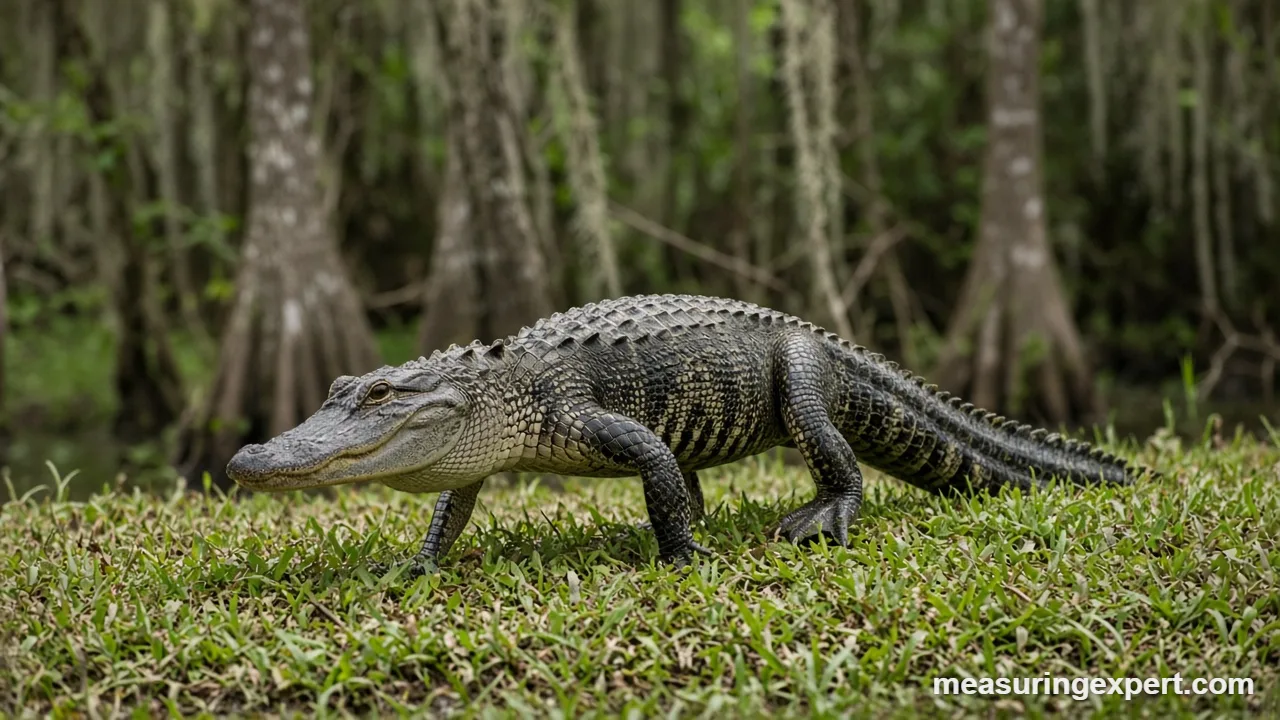
In fact, much of the confusion comes from mixing up different kinds of movement. Also, each one has its own speed, so a single number never tells the whole story.
| Movement | What it looks like | Typical speed |
|---|---|---|
| Belly crawl | Body drags on the ground, often near water | Slow |
| High walk | Body lifted clear of the ground, legs under the body | Slow, steady pace |
| Fast trot or dash | Rapid high walk, used to reach water or escape | Up to about 9 to 11 mph |
| Tail-driven swim | Legs tucked, tail sweeps side to side | Cruise is slow; bursts near 20 mph |
| Lunge from water | Explosive strike over a body length or two | Very fast, but lasts a fraction of a second |
Notably, a 2019 study of 15 crocodilian species in Scientific Reports found that crocodiles can bound and gallop, but alligators and their relatives never did. Instead, they used trotting gaits. Even so, the authors reported that trotting and bounding reached similar top speeds, with the fastest animals near 4.35 m/s (about 9.7 mph).
How Far an Alligator Dash Covers in a Few Seconds
At first, speeds in mph are hard to picture. Feet per second are easier, however, because they match the distances you see on a lake bank. At 11 mph, an alligator covers about 16.1 feet each second. Similarly, at 9 mph it covers about 13.2 feet per second.
| Distance | Time at 9 mph | Time at 11 mph | Time for a person at 15 mph |
|---|---|---|---|
| 10 ft (3.05 m) | 0.76 s | 0.62 s | 0.45 s |
| 30 ft (9.14 m) | 2.27 s | 1.86 s | 1.36 s |
| 50 ft (15.24 m) | 3.79 s | 3.10 s | 2.27 s |
| 100 ft (30.48 m) | 7.58 s | 6.20 s | 4.55 s |
As a result, a few feet of head start matter far more than raw speed. Also, keep in mind that a gator rarely keeps up a dash for long. It tires quickly, so it usually gives up after a short distance.
Binoculars for Watching an Alligator From a Safe Distance
Of course, the best way to see a gator move is from far away. A good pair of binoculars lets you watch basking, swimming and feeding without stepping near the water. For example, 8×42 or 10×42 models suit most park trails, while a waterproof 7×50 pair is steadier on a boat. Also, look for waterproof, fog-proof housings, because swamps and marshes are humid.


As an Amazon Associate, Measuring Expert earns from qualifying purchases.
Alligator vs Crocodile vs Human Speed
Gators and crocs are close relatives. As a result, people often lump their speeds together. However, the 2019 study suggests the two groups move differently on land. Crocodiles can switch to a bounding gallop, while alligators stick to a trot. For the full numbers on crocs, see our guide to how fast crocodiles are.
| Runner | Short burst on land | Swimming |
|---|---|---|
| American alligator | About 9 to 11 mph (14 to 18 km/h) | Bursts near 20 mph (32 km/h) |
| Crocodile | See our crocodile guide | Clocked at 10 mph (16 km/h), per UF/IFAS |
| Usain Bolt, 100 m record | 23.35 mph average (37.58 km/h) | Not applicable |
| Typical jogger | About 5 to 6 mph (8 to 9.7 km/h) | Far slower than a gator |
On land, then, a fit adult can outrun a gator over any real distance. In water, by contrast, no person comes close. Our page on how fast a human can run explains the human figures in detail. Likewise, for a land predator built for speed, compare how fast a jaguar is.
Alligator Speed Myths
Several claims keep circulating, so here is how they hold up:
- “Gators run 35 mph.” However, no careful source supports this. Even galloping crocodiles in the 2019 study topped out under 10 mph.
- “They run 20 mph on land.” In fact, this mixes up the water figure with the land figure.
- “Young gators are faster than adults.” Small animals look nimble, but no study gives reliable speeds by age.
- “You must run in a zigzag.” There is no need, so simply move straight away from the water.
How to Measure an Alligator’s Speed Safely
In general, you can estimate how fast any animal moves using only distance and time. Here is how researchers and careful observers do it, without getting close:
- Choose two fixed markers. For example, pick objects the animal will pass, such as two posts on a boardwalk or two trees on the far bank.
- Measure the gap between them. Use a laser rangefinder or a map tool, and note the distance in feet or meters.
- Record video from a safe spot. Also, film at a known frame rate so you can count frames later.
- Time the crossing. Count the frames between the two markers, then divide by the frame rate to get seconds.
- Divide distance by time. For example, 30 feet in 2.5 seconds is 12 feet per second.
- Convert the result. Enter it in the converter above; in this case, 12 ft/s equals about 8.2 mph.
Alligator Safety: Do and Don’t
The Florida Fish and Wildlife Conservation Commission (FWC) advises keeping a safe distance, never feeding gators, and swimming only in designated areas in daylight. It also notes that alligators are most active between dusk and dawn.
Do
- Stay well back from the water’s edge.
- Keep pets on a leash and away from the bank.
- Watch from a boardwalk, car or boat with binoculars.
- Back away calmly if a gator hisses or opens its mouth.
- Report a threatening gator to your state wildlife agency.
Don’t
- Feed a gator, even once, because it learns to link people with food.
- Swim at dusk or night in waters where they live.
- Let dogs swim in fresh or brackish water in gator country.
- Get between a gator and the water.
- Approach a nest or small hatchlings.
Honest Limits of Alligator Speed Numbers
To begin with, every speed on this page is an estimate. First, wild gators are hard to time, so many figures come from short observations or from animals in captivity. Second, speed also depends on size, temperature and ground. Because gators are cold-blooded, a cool morning can slow them down. Third, the popular 20 mph swimming number has no precise published measurement behind it, as UF/IFAS points out. In short, treat 9 to 11 mph on land and about 20 mph in water as rough upper limits, not exact values.
When Accuracy Really Matters
For trivia, of course, a rough figure is fine. For safety, though, the exact speed matters less than the distance you keep. Because an attack usually starts with a sudden lunge, being a few seconds away gives you no real margin. Instead, stay far enough back that the animal never feels threatened.
Alligator Speed FAQs
How fast can an alligator run on land?
Most careful sources put the land dash at about 9 to 11 mph (14 to 18 km/h), and UF/IFAS gives 7.5 to 9 mph. It only lasts a short distance.
How fast can an alligator swim?
For example, bursts of about 20 mph (32 km/h) are widely quoted. Still, UF/IFAS says there is no definitive measurement of swimming speed.
Can you outrun an alligator?
On land, a healthy adult usually can, because a gator tires after a short dash while people can keep running. The danger lies in the first lunge, so keep your distance.
Can an alligator gallop?
No. A 2019 study of 15 crocodilian species saw galloping in true crocodiles only. Alligators trotted instead.
Is an alligator faster than a crocodile?
On land, the two reach broadly similar top speeds in research. Crocodiles, however, can gallop, while alligators cannot.
What is 11 mph in km/h?
In other words, 11 mph equals about 17.70 km/h, 4.92 m/s or 16.13 feet per second.
How long can a gator keep up its top speed?
Only for a short dash, because gators tire quickly. As a result, they rarely chase anything far from the water.
Why do gators move so slowly most of the time?
Because they are ambush hunters, they save energy. In addition, they sit still for long periods. Because they are cold-blooded, they also slow down in cool weather.
What should I do if a gator charges?
First, move away quickly in a straight line. After that, report the animal to your state wildlife agency.
How far away should I stay from an alligator?
FWC advises keeping a safe distance and never feeding one. In practice, stay well back from the bank and use binoculars to watch.
Bottom Line on How Fast an Alligator Moves
To sum up, a gator can dash about 9 to 11 mph on land and surge near 20 mph in water, but only briefly. However, most of its life happens at a slow crawl or a lazy drift.
So respect the burst, not the chase. Keep your distance, watch with binoculars, and use the converter above to turn any speed you read into units you can picture.