

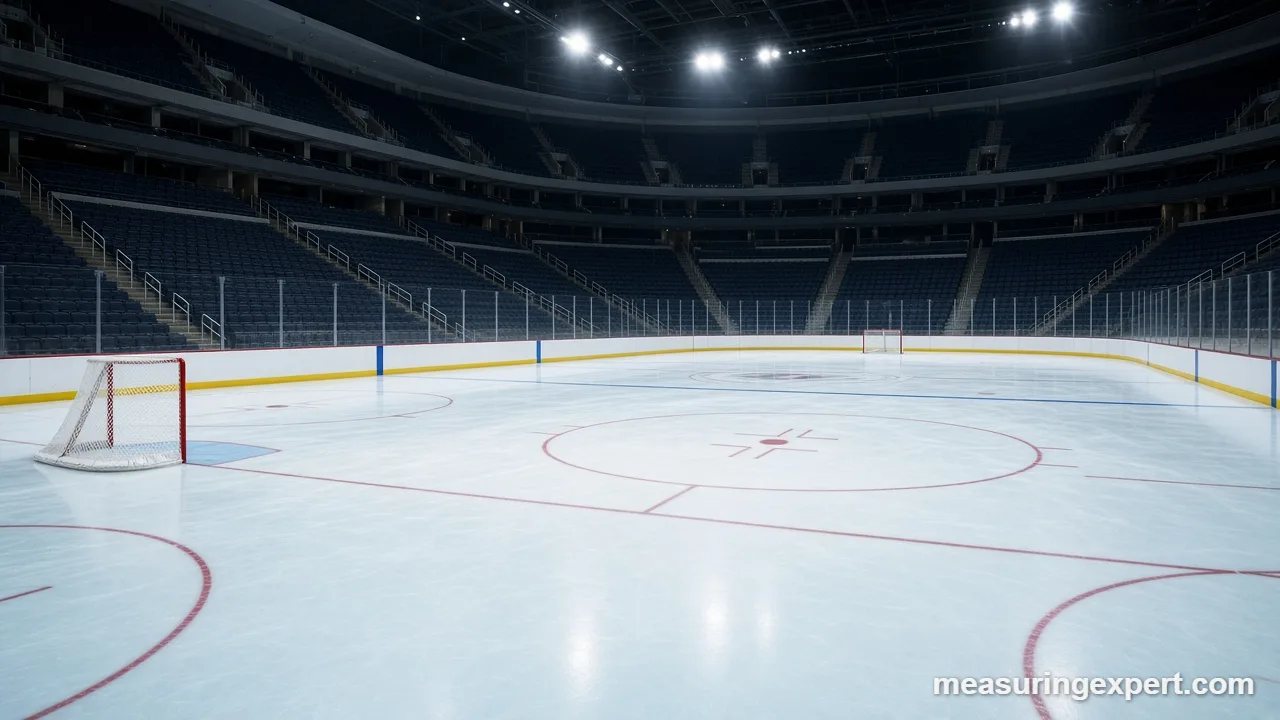
An NHL hockey game lasts about 2 hours 30 minutes from the opening faceoff to the final horn. The game clock runs only 60 minutes, split into three 20-minute periods. However, two intermissions of about 17 minutes, TV timeouts and other stoppages fill the rest, and overtime or a shootout can add 10 to 20 minutes.
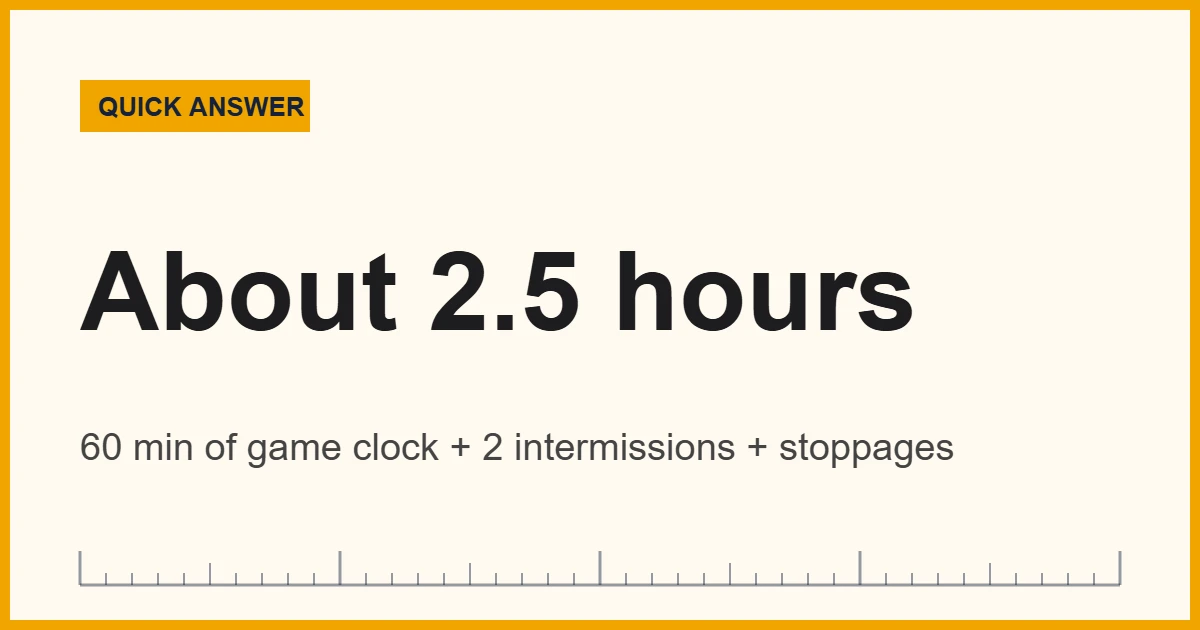
Convert Hockey Game Time to Hours
Enter a game length in minutes below. For example, the typical 150 minutes is already filled in. The converter then shows the same span in hours, seconds and days, so you can plan a drive home, a sitter or a recording.
On paper, hockey is one of the shortest major team sports. After all, the official clock covers just 60 minutes of play. In the arena, though, the clock stops for every whistle: offsides, icings, penalties, goals and pucks that fly over the glass. As a result, real time runs about two and a half times longer than the game clock.
Unlike football or basketball, the clock in hockey also stops for long breaks between periods. So the crew can resurface the ice, each break lasts close to 17 minutes. Meanwhile, the overtime rules change between the regular season and the playoffs, and that is where most of the surprises in game length come from.
For example, a regular-season tie ends within five minutes of 3-on-3 play or a shootout, as Sports Illustrated’s overtime explainer sets out. In the playoffs, by contrast, teams keep playing full 20-minute periods until someone scores. Below, you will find the minute-by-minute breakdown, overtime rules, and how to time a game yourself.
Hockey Game Length: Minute-by-Minute Breakdown
First, here is where the time goes in a typical NHL regular-season game that ends in regulation. The stoppage figure is an estimate, so treat the total as a planning number, not a promise.
| Part of the game | Time | Running total |
|---|---|---|
| 1st period (game clock) | 20 min | 20 min |
| 1st intermission | about 17 min | 37 min |
| 2nd period (game clock) | 20 min | 57 min |
| 2nd intermission | about 17 min | 74 min |
| 3rd period (game clock) | 20 min | 94 min |
| TV timeouts (9 x about 2 min) | about 18 min | 112 min |
| Other stoppages (faceoffs, penalties, goals, reviews) | about 38 min | 150 min (2 h 30 min) |
In other words, the puck is live for only 60 of those 150 minutes. That gives a ratio of real time to game clock of about 2.5 to 1. By comparison, the same ratio is about 3 to 1 in college basketball and well above 3 to 1 in football.
Hockey Game Periods and Intermissions
An NHL hockey game has three periods of 20 minutes each, with two intermissions in between. The game clock counts down and stops whenever play stops. Because of this, a 20-minute period usually takes 30 to 40 minutes of real time.
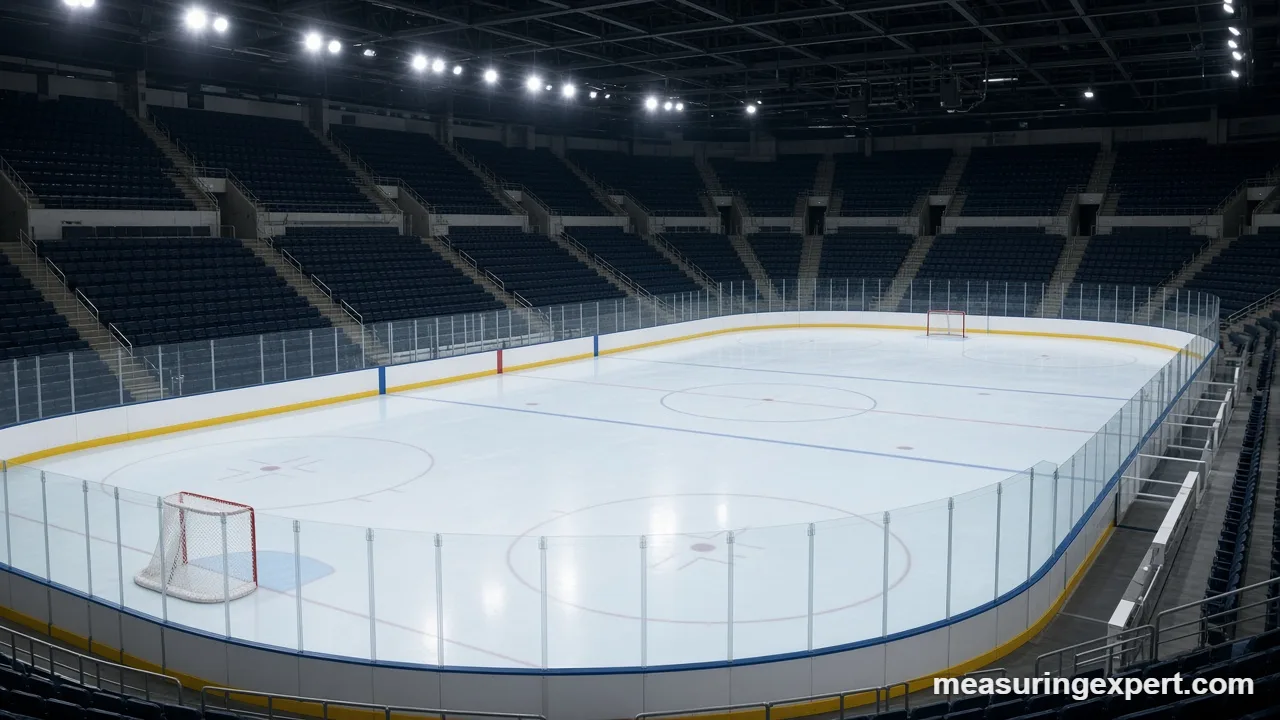
Each intermission lasts about 17 minutes in the NHL. During the break, the ice crew resurfaces the rink, players rest and coaches adjust their plans. In addition, the teams switch ends after every period, so each side defends both goals.
An earlier version of this page said that TV timeouts happen three times per period, at the first stoppage after the 6, 10 and 14-minute marks. That part was right. In fact, a commercial break does not follow an icing, which keeps the tired team on the ice. On top of these, each team also gets one 30-second timeout per game.
Hockey Game Overtime and Shootout Rules
If a regular-season NHL game is tied after 60 minutes, it goes to overtime. The rules are short and simple:
- Five minutes of sudden death. The first goal wins, and the overtime ends at once.
- Three skaters per side. The NHL has used 3-on-3 overtime since 2015, which opens up the ice and creates more chances.
- Then a shootout. If nobody scores, each team sends three shooters. After that, it becomes sudden death, one shooter per side per round.
- Points. Both teams earn one point for reaching overtime, and the winner gets a second point.
In real time, overtime and a shootout together usually add 10 to 20 minutes. Still, a shootout can run long. For instance, the record is 20 rounds, set by the Washington Capitals and Florida Panthers on December 16, 2014, according to the list of NHL team records.
How Long a Playoff Hockey Game Lasts
Playoff hockey has no shootout. If a game is tied after three periods, the teams take a full intermission while the ice is resurfaced. Next, they play a 20-minute sudden-death period at 5-on-5. If nobody scores, they rest again and play another full period, and so on until a goal ends it.
So each overtime period can add about 35 to 45 minutes of real time once you count the intermission and stoppages. A game that ends early in the first overtime might finish near 3 hours. A double or triple overtime, however, can push past 4 or 5 hours.
The longest NHL game ever was a playoff game between the Detroit Red Wings and Montreal Maroons on March 24, 1936. It had 116 minutes 30 seconds of overtime, for a total of 176 minutes 30 seconds of game clock. That is nearly three full games of hockey, played in one night.
Recommended Tools for Timing a Hockey Game
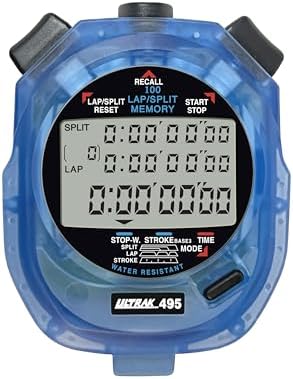
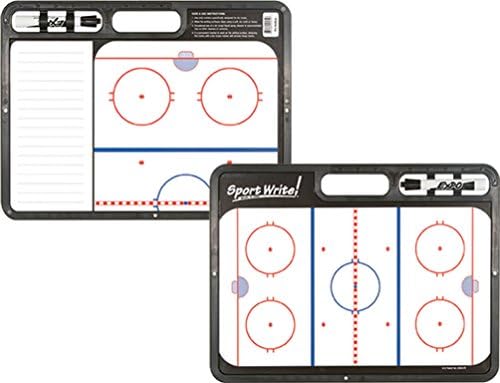
You do not need gear to watch a game. Still, a stopwatch helps if you coach youth hockey, keep stats or run the bench. First, look for a large display and a lap or split button. Next, check for a lanyard so it stays with you behind the boards. Finally, a dry-erase rink board is handy for drawing plays between periods.


As an Amazon Associate, Measuring Expert earns from qualifying purchases.
Hockey Game Clock Time vs Real Time
People often mix up game clock time and real time, and they also assume every sport works the same way. The table separates the two and puts hockey next to the sports fans compare it with most.
| Sport | Game clock | Break in the middle | Typical real time |
|---|---|---|---|
| NHL hockey | 3 x 20 min = 60 min | 2 intermissions of about 17 min | about 2 h 30 min |
| College basketball | 40 min | 15 min halftime | about 2 h |
| NBA basketball | 4 x 12 min = 48 min | 15 min halftime | about 2 h 15 min |
| College football | 4 x 15 min = 60 min | 20 min halftime | about 3 h 20 min or more |
Football and hockey share the same 60 minutes of clock. Even so, football runs about an hour longer, because its clock stops after incomplete passes, scores and many other plays. For the details, see our guide to how long a college football game lasts. Similarly, our page on college basketball game length explains why 40 minutes of clock turns into about two hours.
Over a season, the hours add up fast. Starting in 2026-27, every NHL team plays 84 regular-season games instead of 82, as this summary of the new season’s changes notes. At about 2.5 hours each, that is roughly 210 hours of hockey per team, before the playoffs. For a basketball comparison, see how many games are in the NBA season.
How to Time a Hockey Game Yourself
- Start at the opening faceoff. Begin your stopwatch when the puck drops, not at the listed broadcast start.
- Split each period. Press the lap button at the horn that ends each period, so you can see which one ran longest.
- Log each intermission. Take one split at the horn and another at the next faceoff.
- Count the TV timeouts. Make a tally mark for each commercial break; most periods have three.
- Stop at the final horn. End the timer when the game ends, including any overtime or shootout.
- Convert the total. Finally, enter the minutes in the converter above to read the result in hours.
Hockey Game Night Planning: Do and Don’t
Do
- Budget about 2.5 hours from puck drop.
- Add 30 to 60 minutes before the game for parking and security.
- Allow 10 to 20 more minutes for overtime and a shootout.
- Plan for 40 minutes or more per playoff overtime.
- Check whether the game is on national TV.
Don’t
- Treat 60 minutes of clock as 60 minutes of real time.
- Skip the intermissions in your math.
- Expect a shootout in the playoffs.
- Assume the last minute is quick in a one-goal game.
- Forget postgame traffic around a big arena.
For example, at 2.5 hours a 7:00 p.m. puck drop ends around 9:30 p.m., and a 7:30 p.m. start ends near 10:00 p.m. Likewise, a 10:00 p.m. West Coast game seen from the East ends around 12:30 a.m.
Honest Limits of These Game Length Numbers
Of course, averages hide a wide range. A clean game with few penalties can wrap up in about 2 hours 15 minutes. On the other hand, a game with many penalties, fights, video reviews and an injury delay can pass 2 hours 45 minutes without any overtime. Also, the stoppage estimate above is a planning figure, because the NHL does not publish one official average for real game time. Intermission length can vary slightly by broadcast, too. Finally, college, junior and youth games follow their own rules, and youth ice slots are often shorter. In short, use about 2.5 hours as a guide, not a guarantee.
When the Exact Time Really Matters
For most fans, a few minutes either way is fine. However, some situations deserve a bigger cushion:
- Travel after the game. Allow for overtime plus the time it takes to leave the arena.
- Playoff nights. Leave plenty of slack, since one overtime adds about 40 minutes and several can add hours.
- Recording a broadcast. Extend a recording by 30 to 60 minutes in the regular season and longer in the playoffs.
Hockey Game FAQs
How long is a hockey game on average?
An NHL game usually lasts about 2 hours 30 minutes in real time. The game clock covers only 60 minutes; intermissions and stoppages take up the rest.
How many periods are in a hockey game?
There are three periods of 20 minutes each, for 60 minutes of game clock in regulation.
How long is an intermission in an NHL game?
Each NHL intermission lasts about 17 minutes. During the break, the crew resurfaces the ice and the teams rest.
How long is overtime in the NHL regular season?
Overtime lasts up to 5 minutes of 3-on-3 sudden death. If nobody scores, a shootout decides the game.
How does a hockey game shootout work?
Each team sends three shooters to face the goalie one-on-one. If the teams are still tied, it becomes sudden death, one shooter per side per round.
Is there a shootout in the NHL playoffs?
No. Playoff games use full 20-minute overtime periods at 5-on-5, with an intermission before each one, until a team scores.
What was the longest hockey game in NHL history?
Detroit and the Montreal Maroons played 176 minutes 30 seconds of game clock on March 24, 1936, including 116 minutes 30 seconds of overtime.
How many TV timeouts are in a hockey game?
There are usually three commercial breaks per period, at the first stoppage after the 6, 10 and 14-minute marks, so about nine per game.
How many timeouts does each team get?
Each NHL team gets one 30-second timeout per game, separate from the TV timeouts.
How many games are in an NHL season?
Starting in 2026-27, each team plays 84 regular-season games, up from 82. At about 2.5 hours each, that is roughly 210 hours of hockey.
The Bottom Line
To sum up, an NHL game packs 60 minutes of game clock into about 2 hours 30 minutes of real time. Two intermissions of about 17 minutes, nine TV timeouts and regular stoppages fill the gap, while overtime and a shootout can add 10 to 20 minutes.
So when you plan a night at the rink, budget about two and a half hours from puck drop, and add much more for the playoffs. Finally, if you time a game yourself, use the converter at the top to turn your minutes into hours.