

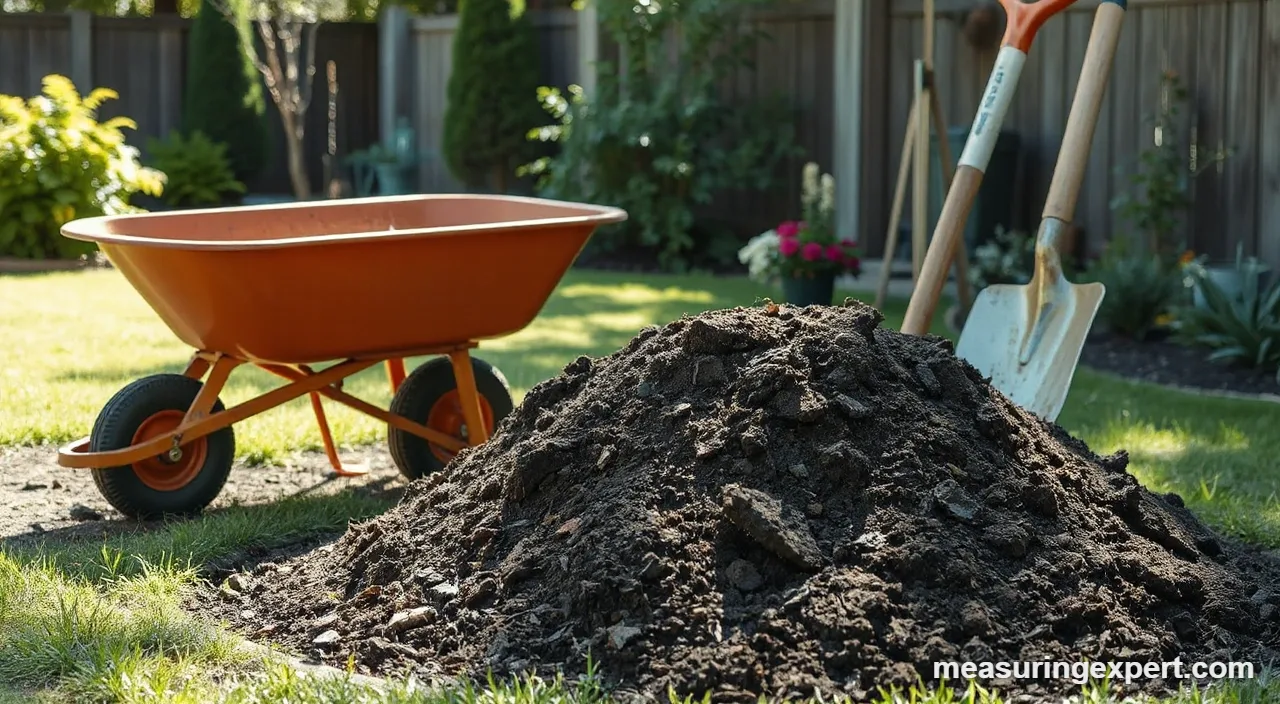
A cubic foot of dry soil typically weighs about 69 to 100 pounds (31 to 45 kg), based on USDA NRCS bulk density values of 1.1 to 1.6 g/cm3 for common soils. Wet dirt is heavier, because water adds weight. A cubic yard of dry dirt therefore weighs roughly 1,850 to 2,700 pounds.


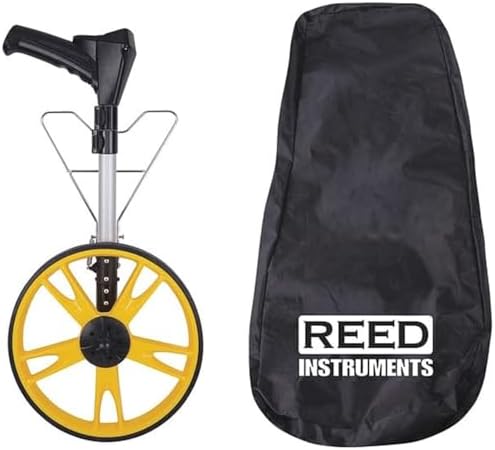

Buying from this list? Get it fast, and catch Black Friday deals, with Prime
As an Amazon Associate, Measuring Expert earns from qualifying purchases.
- Dry soil: about 69 to 100 lb per cubic foot (1.1 to 1.6 g/cm3).
- A cubic yard of dry dirt is roughly 1,850 to 2,700 lb, or about 0.9 to 1.35 US tons.
- Water adds weight: 20 percent moisture by dry weight adds about 20 percent to the total.
- Clay, silt and sand differ; compacted soil is denser than loose soil.
- Weigh a sample for the best number on your own site.
Soil Density Converter: g/cm3 to Pounds per Cubic Foot
Dirt is usually reported as bulk density in grams per cubic centimeter. Enter a value (the box starts at 1.4) to see pounds per cubic foot, kilograms per cubic meter and more.
Ordering fill dirt for a raised bed, a low spot in the lawn or a backyard grade change is mostly a volume problem, but the truck, the trailer and your back care about weight. A cubic yard of soil can weigh close to a ton and a half after rain, and the same pile can feel very different from week to week.
The USDA Natural Resources Conservation Service describes soil by bulk density, which it defines as the dry weight of soil divided by its volume, usually in grams per cubic centimeter. That is the cleanest starting point for an estimate, since it gives a weight per volume that does not depend on the weather.
The sections below turn those bulk density values into pounds per cubic foot and per cubic yard, show what happens as soil gets wet, and explain why the real answer for your dirt can land above or below the range.
What the USDA Bulk Density Numbers Mean in Pounds
NRCS publishes a table of bulk densities that favor plant growth and values that start to restrict roots. Those are reference points for compaction, but they also bracket typical soil weight. Multiplying grams per cubic centimeter by 62.43 gives pounds per cubic foot.
| Soil type and condition | NRCS dry bulk density (g/cm3) | Pounds per cubic foot at that value |
|---|---|---|
| Clayey soil, ideal for plant growth | under 1.10 | 68.7 |
| Silty soil, ideal for plant growth | under 1.40 | 87.4 |
| Sandy soil, ideal for plant growth | under 1.60 | 99.9 |
| Clayey soil, restricts roots | over 1.47 | 91.8 |
| Silty soil, restricts roots | over 1.65 | 103.0 |
| Sandy soil, restricts roots | over 1.80 | 112.4 |
The lowest value in the table, 1.10 g/cm3 for clayey soil, is about 69 pounds per cubic foot. The highest, 1.80 g/cm3 for sandy soil, is about 112 pounds. These are dry weights.
Dirt Weight per Cubic Foot, Yard and Meter
This table uses four dry densities that span the NRCS range, so you can pick the row closest to your soil.
| Dry density used | Per cubic foot | Per cubic yard (27 ft3) | Per cubic meter |
|---|---|---|---|
| 1.1 g/cm3 | 68.7 lb | 1,854 lb | 1,100 kg |
| 1.4 g/cm3 | 87.4 lb | 2,360 lb | 1,400 kg |
| 1.6 g/cm3 | 99.9 lb | 2,697 lb | 1,600 kg |
| 1.8 g/cm3 | 112.4 lb | 3,034 lb | 1,800 kg |
How Water Changes the Weight
Soil moisture is usually reported as a percentage of the dry weight. A soil with 20 percent moisture weighs 20 percent more than the same soil dry, since each 100 pounds of dry soil carries 20 pounds of water. The table uses a dry density of 1.4 g/cm3 (87.4 lb per cubic foot).
| Moisture (percent of dry weight) | Weight of 1 cubic foot | Weight of 1 cubic yard |
|---|---|---|
| 0% | 87.4 lb | 2,360 lb |
| 10% | 96.1 lb | 2,596 lb |
| 20% | 104.9 lb | 2,832 lb |
| 30% | 113.6 lb | 3,068 lb |
Rain on a stockpile, a delivery of freshly dug clay and a bed that has just been watered can all land in the 10 to 30 percent range. That is why a trailer that handles a load of dry sand can feel overloaded with the same volume of wet clay. A soil moisture meter gives a rough reading of how wet your dirt is; the soil moisture sensor guide compares options.
Loose, Compacted and In the Ground
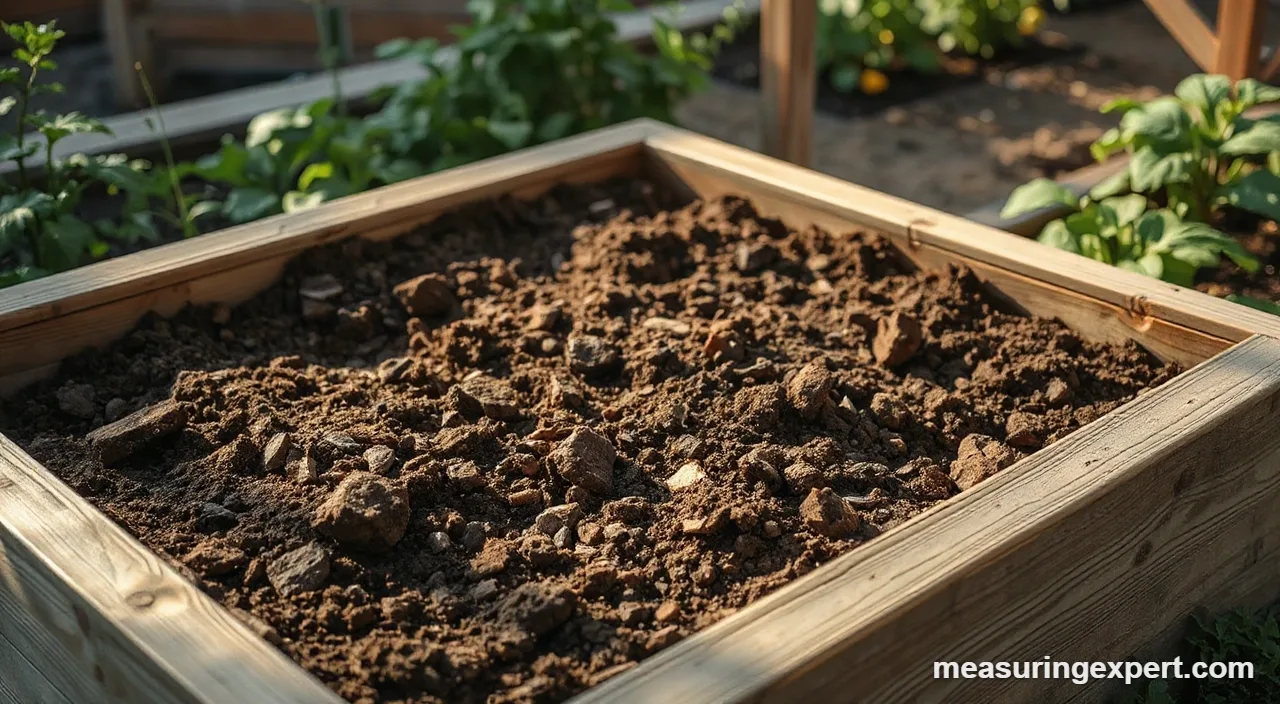
Bulk density describes soil as it sits in the ground. When you dig it, the soil loosens and takes more room, so a hole of one cubic yard produces more than a cubic yard of loose dirt. Spreading and compacting it again squeezes the volume back down. That means the weight of the dirt you move is set by the volume it occupied in the ground, while the pile you see can look bigger than that.
When you order, ask the supplier whether they sell by loose volume or by weight. Many suppliers charge by the ton or by the yard, and a few weigh the truck. Ask for the weight ticket if you are paying by the ton.
How to Estimate the Weight of Your Dirt
- Measure the area and the depth in feet. Use a tape or a measuring wheel for larger areas.
- Multiply length, width and depth to get cubic feet. Divide by 27 for cubic yards.
- Choose a density: about 70 lb for light clay, around 90 lb for typical soil and up to 100 lb for sand, all dry.
- Multiply cubic feet by that density.
- Add water weight. Multiply by 1.1, 1.2 or 1.3 for 10, 20 or 30 percent moisture.
- Compare the result with your truck or trailer rating, and round up.
Tools That Help You Measure Dirt
A tape measure handles raised beds and trenches. A measuring wheel makes quick work of long runs and big yards. A soil moisture meter tells you whether the pile in the truck is dry sand or wet clay. The picks near the top of this page include each of these.
Do and Don’t
Do
- Weigh a bucket sample if you need a firm number.
- Round up for rain, clay and compaction.
- Check trailer and truck ratings before loading.
- Ask the supplier how the dirt is sold.
Don’t
- Use one density for all soils.
- Forget that a wet pile can add 20 percent or more.
- Overload a wheelbarrow with wet dirt.
- Treat bagged potting soil as if it were garden dirt; it is much lighter.
Honest Limits
Every figure here comes from dry bulk density reference values and arithmetic. Real soil contains rocks, roots and organic matter, and each shifts the weight. Your own sample will beat any table, so treat the ranges as planning numbers. The pound figures are rounded from exact conversions.
When to Call a Professional
For retaining walls, foundations, slopes or any ground that carries a structure, the load and the soil behavior are an engineering question. A geotechnical engineer or a licensed contractor can test the soil and size the work. Call before you dig if utilities may be buried nearby, and use the local call-before-you-dig service in your area.
FAQs
How much does a cubic foot of dirt weigh?
Dry soil typically weighs about 69 to 100 pounds per cubic foot (31 to 45 kg), based on bulk densities of 1.1 to 1.6 g/cm3.
How much does a cubic yard of dirt weigh?
Roughly 1,850 to 2,700 pounds when dry, or about 0.9 to 1.35 US tons. Wet soil weighs more.
How much does wet dirt weigh?
Add the water. At 20 percent moisture by dry weight, a soil of 87.4 lb per cubic foot dry weighs about 104.9 lb.
Does sandy soil weigh more than clay?
Usually yes when both are dry. NRCS notes that sandy soils have relatively high bulk density, while fine soils with good structure have lower bulk density.
What is bulk density?
NRCS defines it as the dry weight of soil divided by its volume, usually in grams per cubic centimeter.
How many pounds per cubic foot is 1.4 g/cm3?
About 87.4 pounds per cubic foot, since 1 g/cm3 is 62.43 lb per cubic foot.
How much does a 5-gallon bucket of dirt weigh?
A bucket holds about 0.668 cubic feet, so dry soil weighs roughly 46 to 67 pounds, depending on the density.
Does compacted dirt weigh more?
Per cubic foot, yes, since the soil is packed into less space. The total weight of the same dirt does not change.
How do I weigh my own soil?
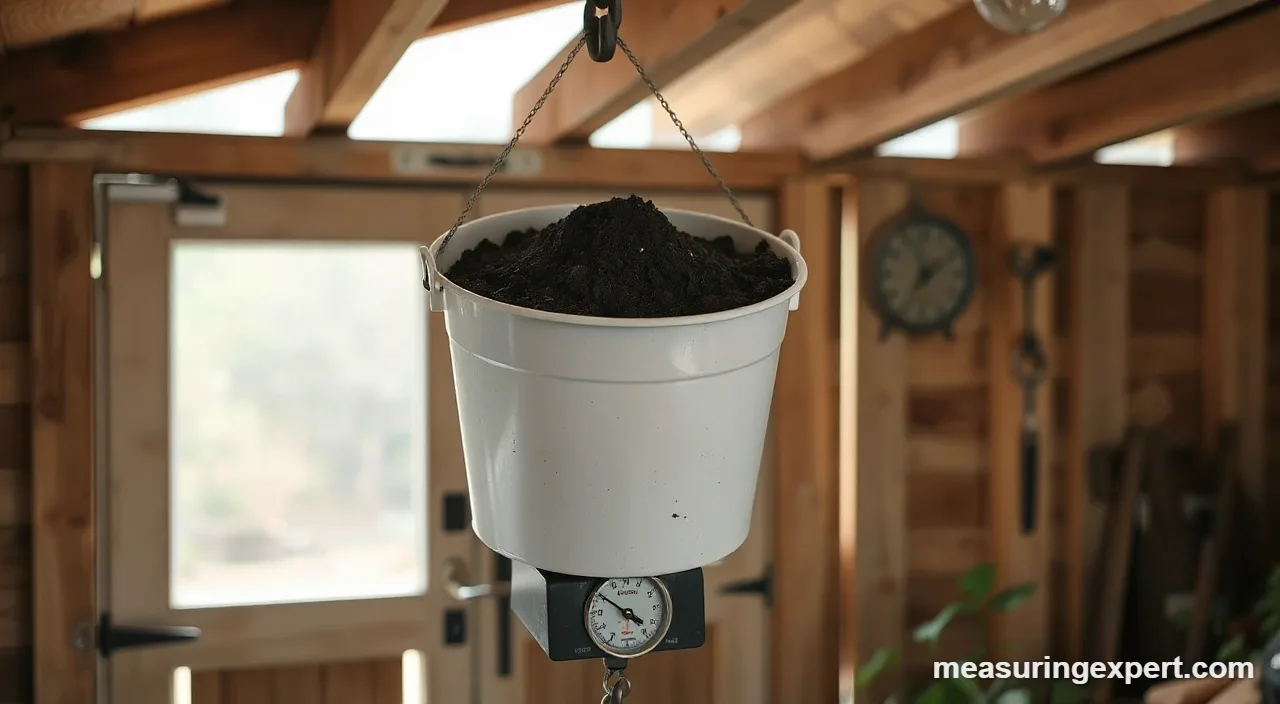
Fill a bucket of known volume, weigh it, subtract the empty bucket and divide by the volume.
Is potting soil the same weight as dirt?
No. Bagged potting mixes contain peat, bark or perlite and are much lighter than mineral soil.
Bottom line
Plan on about 70 to 100 pounds for every cubic foot of dry dirt, about 1,850 to 2,700 pounds per cubic yard, and more once rain or irrigation has soaked it. Weigh a bucket for a number you can trust.
The ranges come from the NRCS soil bulk density indicator sheet. For concrete rather than dirt, see the cubic foot of concrete weight guide, and for working out the area, the area formula guide.
Listen to a free audiobook while you cook, work or wait