

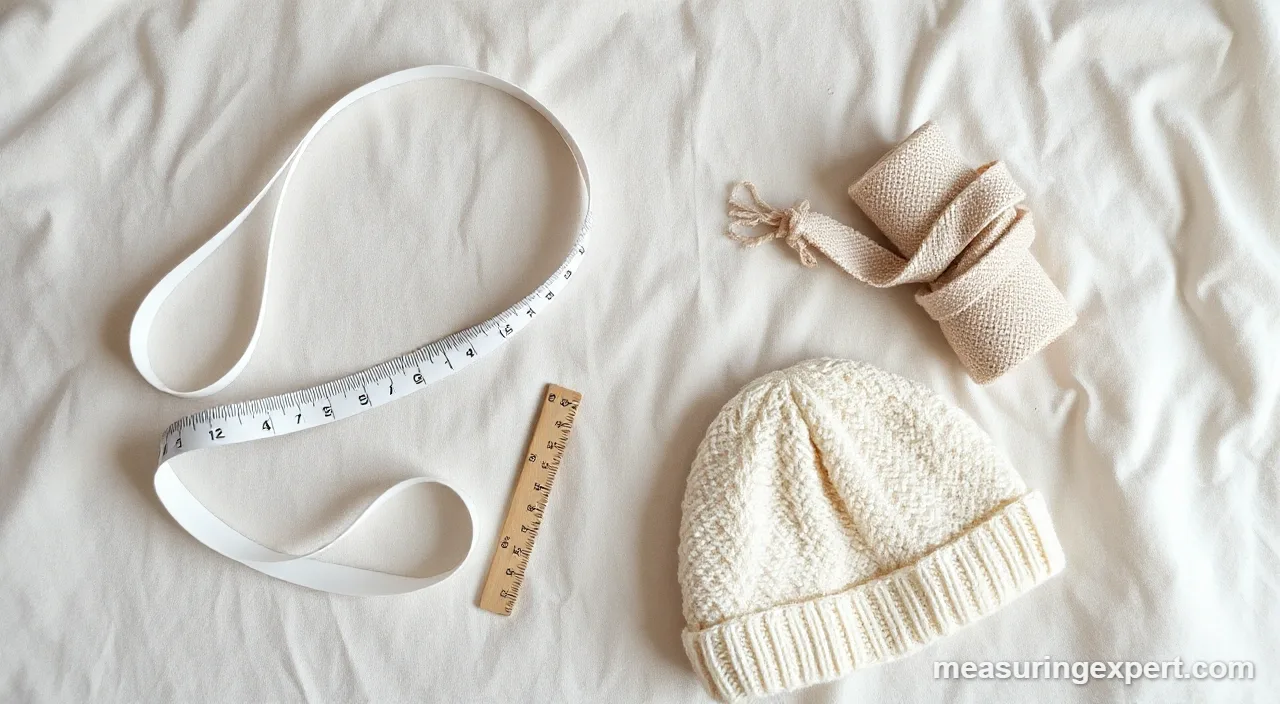
Watching a newborn stretch past the last pencil mark on the door frame is half the fun of the first two years, and the right tape or board makes those numbers trustworthy. For most families the best baby growth tool is a flat, non-stretch head circumference tape such as the seca 212 dispenser set, paired with a firm length mat or board for lying-down readings and a wall chart once your toddler stands. The ten picks below cover all three jobs, from clinic-style tapes to a keepsake height ruler. Whatever you buy, measure the same way every time and bring the numbers to your pediatrician, who plots them on the official charts.
Search for a baby growth chart measuring tape and you will find three different kinds of products sharing one name: flat tapes that wrap around a head, mats and boards that hold a baby straight for a length reading, and decorative rulers that hang on the wall. They answer different questions, so this list sorts all three, ranks ten of them, and explains which job each one is built for.
In short: buy a flat 24 in (60 cm) head tape if you track head size, a rigid board or printed mat if you want true length before age 2, and a wall chart only once your child can stand against it. A soft retractable tape is a handy spare for chest and limb checks, but it is the least consistent choice for length.
The CDC recommends the WHO growth standards for children from birth to 2 years and its own growth charts from age 2, and it notes that a chart is a screening aid rather than a diagnosis on its own (see the CDC growth charts page). Your pediatrician plots your numbers on those charts. At home, your job is simply a steady, repeatable measurement.
Further down you will find an inches-to-centimeters calculator, how we shortlisted products, the ten picks with honest drawbacks, and a buying guide that covers technique, accuracy limits and when to ask a professional. If you only need a head tape, our dedicated roundup of head circumference tapes for babies goes deeper on that one tool.
As an Amazon Associate we earn from qualifying purchases. Picks are based on manufacturer specs, listing details and buyer reports, not lab testing. This page is general education, not medical advice.
Clinic-style tape dispenser with a 15-pack for tracking head size.
A printed mat that helps you read length with a baby lying down.
Six flat 60 cm tapes, so spares and sharing are easy.
Key takeaways
- Best overall: the seca 212 head tape set is the cleanest way to follow head size with a clinic-style tool.
- Best for length: the Hopkins Infant Measure Mat II gives a printed scale to read length while the baby lies flat.
- Best budget: the HARFINGTON 6-pack gives you six 60 cm flat tapes, enough to leave one in the diaper bag.
- Use a non-stretch flat tape for heads. Soft retractable tapes are fine for chest, arm or leg checks.
- Under age 2, length is measured lying down. Wall charts are for standing toddlers and keepsakes.
- The same person, the same method and the same time of day matter more than the brand.
- Growth charts are screening aids. Your pediatrician interprets them.
- How we chose these ten
- The 10 best baby growth measuring tools right now
- Tape, mat or wall chart: what each one actually measures
- How to measure a baby’s head at home
- How to measure length lying down
- Why your number may differ from the doctor’s
- Reading growth charts without the stress
- Honest limits of home measuring
- When to talk to your pediatrician
- Frequently asked questions
- The bottom line
How we chose these ten
We started from baby-measuring listings that earn consistently strong ratings from a large number of shoppers, then checked each product page against the maker’s own description for scale, length and intended age. Thin listings with few reviews, vague descriptions or no clear units were dropped.
We kept the list to three tool families on purpose: head tapes, length mats and boards, and wall charts, so you can compare like with like. No more than two products come from any one brand, and near-duplicates (the same tape in another color or pack size) were merged. This is a research-based ranking built on manufacturer specs and buyer reports, not a lab test, and we have not handled these products.
The 10 best baby growth measuring tools right now
Ranks 1 to 4 are head tapes, 5 and 6 are length tools, 7 and 8 are soft retractable tapes, and 9 and 10 are wall charts. Check the current listing for size and pack contents before you buy.
| # | Product | Type | Best use | Scale to know |
|---|---|---|---|---|
| 1 | seca 212 set | Head tape | Head size | Dispenser with 15-pack |
| 2 | AnthroFlex 5-pack | Head tape | Head size | Pack of 5 |
| 3 | HARFINGTON 6-pack | Head tape | Head size | 24 in (60 cm) x 6 |
| 4 | 2-piece white tape | Head tape | Head size | 24 x 0.79 in (60 x 2 cm) |
| 5 | Hopkins Mat II | Length mat | Length, lying down | Printed mat |
| 6 | seca 416 | Length board | Length, lying down | Rigid board |
| 7 | WORKPRO 3-pack | Soft tape | Chest, limbs, hats | 60 in (150 cm) x 3 |
| 8 | Perfect Measuring Tape | Soft tape | Chest, limbs, craft | Retractable |
| 9 | MIBOTE chart | Wall chart | Standing height | 79 x 7.9 in |
| 10 | Wooden growth ruler | Wall chart | Standing height | Painted wood |
Expecting? Keep everything in one free Baby Registry
seca 212 head circumference tape dispenser: the clinic-style choice

Best for: parents who want a professional-style tape for regular head checks.
The seca 212 comes as a tape dispenser with a 15-pack of tapes, which is how many pediatric offices handle head measurements. Seca is a long-established maker of medical measuring gear, and this listing is aimed squarely at head circumference rather than general sewing use.
Having a stack of fresh tapes means you can use a new one for each reading or hand one to a grandparent without losing your own. It suits families who track head size monthly and like the idea of a tool made for exactly that job.
- Dispenser holding a 15-pack of tapes
- Made for head circumference readings
- Flat tape format, not a retractable roll
- Check the listing for tape material and scale units
- Purpose-built for head size
- Plenty of tapes included
- Familiar clinic-style format
- More than most families need
- Not useful for length or chest
Skip it if you only need to measure once or twice, since a two-pack tape will do.
AnthroFlex infant head circumference tapes: five-pack of flat tapes
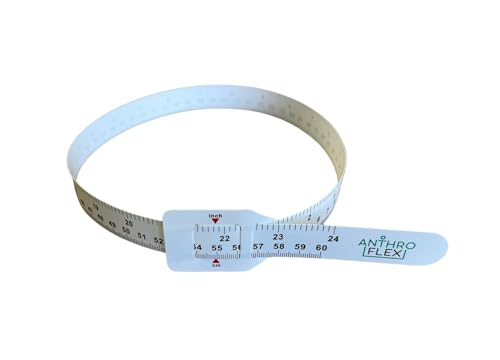
Best for: families who want several infant-specific tapes at a modest commitment.
AnthroFlex sells this as a pack of five infant head circumference tapes, a size that suits a household with a diaper bag, a nursery drawer and a grandparent’s house. The name points to an anthropometric tape, the type used in growth studies, rather than a decorative one.
With five tapes you can keep one at each location and never improvise with a stretchy sewing tape. It is a sensible middle path between a single tape and the larger clinic dispenser above.
- Pack of 5 tapes
- Designed for infant head circumference
- Flat tape intended not to stretch
- Confirm length and units on the listing
- Several tapes for several places
- Infant-specific design
- Easy to replace if one gets damaged
- Single-purpose tool
- Not a retractable convenience
Skip it if you want a tape that also handles chest or waist for older kids.
HARFINGTON 6-piece head circumference tape set: the value pack
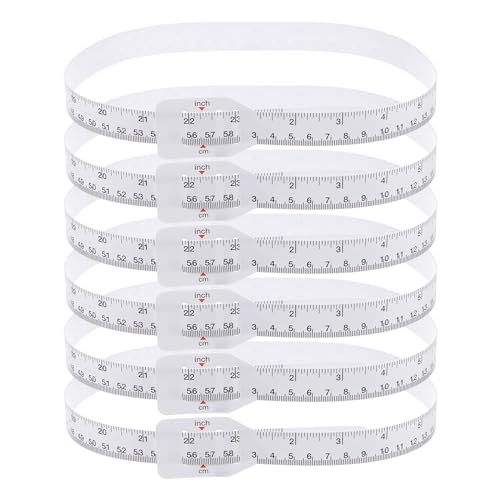
Best for: shoppers who want the most tapes for the least commitment.
This HARFINGTON set bundles six flat plastic head circumference tapes, each 24 in (60 cm) long according to the listing. That is plenty of range for infants and toddlers, whose head circumference stays well inside a 60 cm span.
Flat plastic holds its shape better than a floppy cloth tape, so readings are easier to repeat. The six-pack format also makes it handy for a baby shower gift set or a shared family kit.
- Six flat plastic tapes
- 24 in (60 cm) length per the listing
- Made for head circumference
- Look for both inch and centimeter markings on the tape
- Six tapes in one pack
- Enough spares for the whole family
- Flat plastic is easy to wipe clean
- Generic brand with little clinical documentation
- Plastic can curl after months in a drawer
Skip it if you want a name-brand clinical tape with documented scale accuracy.
2-piece head circumference tape, white 24 x 0.79 in: the simple pair

Best for: first-time parents who want just two tapes, one for home and one for the bag.
This listing sells two white tapes, each 24 x 0.79 in (60 x 2 cm). The 2 cm width is narrow enough to sit neatly above the eyebrows and ears without bunching, and a pair is all many households need.
It is the lowest-friction way to start tracking head size: small, light and easy to tuck into a baby book. If a tape goes missing, you still have its twin.
- Two tapes in the pack
- 24 x 0.79 in (60 x 2 cm) per the title
- White, flat design
- Made for infant head measurement
- Minimal and uncluttered
- Narrow tape is easy to position
- Good pair for home plus daycare
- Generic brand
- Fewer spares than a multipack
Skip it if you already own a head tape from the pediatrician.
Hopkins Medical Infant Measure Mat II: a printed scale for lying-down length

Best for: parents who want a more consistent way to read length than a floppy tape along the body.
The Hopkins Infant Measure Mat II is marketed for precise baby height, or length, readings. A printed mat gives you a straight, flat reference to lay the baby along, which is far steadier than running a soft tape down a wriggling body.
You still need a helper to keep the head against the top edge and straighten the legs, but the mat removes the guesswork about where to hold the tape. It is the home tool that most closely echoes what you see at the clinic.
- Printed infant measuring mat
- Intended for baby length readings
- Used lying down on a flat surface
- Check the listing for size, scale units and care instructions
- Better repeatability than a soft tape
- Compact and easy to store
- Easy to read printed scale
- Needs two people for good results
- No fixed footboard on a mat, so heel position takes care
Skip it if your baby is already walking, in which case use a standing height tool.
seca 416 infantometer: the professional length board
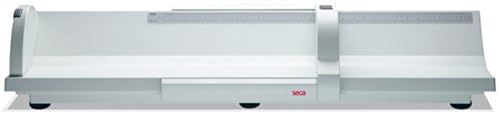
Best for: pediatric offices, home-visit nurses and very detail-oriented parents.
The seca 416 is an infantometer, a rigid length board with a fixed headboard and sliding footboard, built for babies and toddlers. That design is the gold standard for recumbent length because both ends of the body are held against hard stops.
It is professional equipment, so it is more tool than most families need. If you want the same type of reading you would get at a well-baby visit, this is the closest you can get at home.
- Infantometer for babies and toddlers
- Fixed head end with a sliding foot end
- Used lying down
- Professional-grade design
- Best repeatability for length
- Rigid, consistent reference points
- Used in clinical settings
- Bulky for home storage
- Far more than a casual tracker needs
Skip it if a printed mat and a pediatric checkup every few months already meet your needs.
WORKPRO 3-pack soft tape measure, 60 in: handy spares for body checks
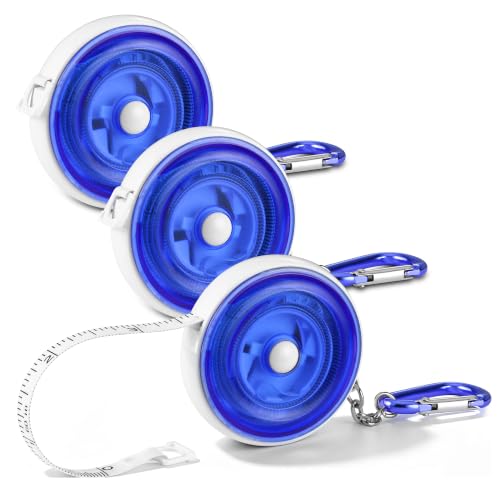
Best for: everyday measuring of chest, arm, leg or hat size.
WORKPRO’s three-pack of retractable soft tapes each reaches 60 in (150 cm). Retractable soft tapes are the Swiss Army knife of baby measuring: you can check chest circumference, wrap a limb or size a hat in seconds.
They are not the best for head size, since a wide, flexible tape can bunch, and not the best for length, since the tape has to follow the baby. Treat them as a convenient spare rather than the main tool.
- Three retractable soft tapes
- 60 in (150 cm) length per the title
- Double scale for inches and centimeters
- Flexible body-measuring tape
- Quick and versatile
- Three tapes for the price of one
- Easy to carry
- Not ideal for head or length
- Retractable mechanisms can catch the tape
Skip it if your main goal is a precise head or length log.
Perfect Measuring Tape retractable tailor’s tape: a pocketable spare

Best for: parents who also sew, knit or size baby clothes.
This premium retractable tailor’s tape is aimed at sewing and body measurements. For baby purposes it works for chest, arm length or sizing a hand-knit hat, and its push-button retraction makes it easy to use one-handed while holding a baby.
It is not specific to infants, so treat it as a handy general-purpose tape rather than your growth log’s main instrument.
- Retractable tailor’s tape
- Soft, flexible body-measuring tape
- Push-button retraction on many tailor’s tapes
- Check the listing for length and units
- One-handed, pocket-size
- Useful for crafts and clothes sizing
- Smooth retraction
- Not infant-specific
- Soft tape can sag over a long distance
Skip it if you want a tape made for head circumference.
MIBOTE removable kids growth height chart: a big wall ruler

Best for: toddlers and kids old enough to stand straight against a wall.
MIBOTE’s removable chart is listed at 79 x 7.9 in, tall enough to follow a child from toddler years into the school age. Removable materials suit renters and parents who do not want to drill into a wall.
Remember it is a keepsake as much as a measuring tool: wall charts depend on a level floor and a flat wall, and they are not the right pick for babies under 2.
- Removable growth height chart
- 79 x 7.9 in per the listing
- For standing height
- Wall mounted
- Tall, good for years of use
- Renter-friendly removable design
- Fun for kids to track their own growth
- Needs a flat wall and floor
- Not for babies who cannot stand
Skip it if your child is under about 18 months.
Wooden kids growth height chart ruler: a painted keepsake
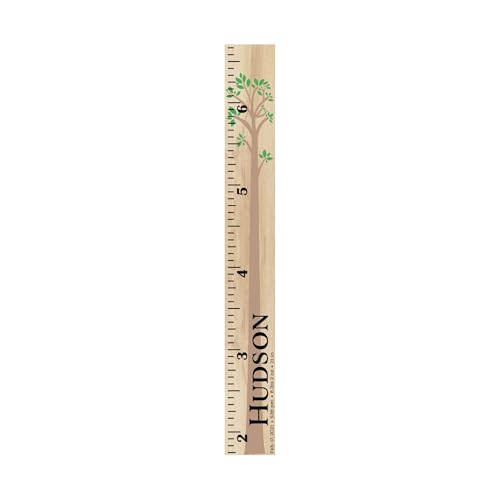
Best for: families who want a decorative, long-lived memento.
A painted wooden ruler turns height tracking into a piece of nursery decor. The listing calls it a growth height chart ruler for boys and girls, and wooden rulers are popular as baby shower gifts.
Because it hangs on the wall, it measures standing height only, and the accuracy depends on how level and straight you mount it. Use it as a keepsake alongside a proper tape or board.
- Wooden growth height chart ruler
- Painted decorative finish
- Hangs on a wall
- Check the listing for height range and mounting
- Looks great in a nursery
- Sturdy wood construction
- Makes a thoughtful gift
- Not a precision instrument
- Mounting height affects readings
Skip it if you need medical-style accuracy for a monitored condition.
Tape, mat or wall chart: what each one actually measures
Parents often buy one product expecting all three measurements. The table separates the jobs so you can match the tool to the question.
| Tool | What it measures | Best age | Main error source |
|---|---|---|---|
| Flat head tape | Head circumference | Newborn to about age 3 | Tape too low or tilted, or pulled too tight |
| Length mat or board | Length lying down | Birth to 24 months | Bent knees, head not against the stop |
| Soft retractable tape | Chest, limbs, hats | Any age | Slack, twisting, baby moving |
| Wall chart or ruler | Standing height | About 2 years and up | Unlevel floor, slouching, shoes on |
A tool made for one job almost always beats a general tape stretched across another. If you have to pick just one, many parents start with a flat head tape because it is the cheapest, easiest to use alone and works from the first week.
How to measure a baby’s head at home
Head circumference is the one measurement most parents can do alone in under a minute. Use a flat, non-stretch tape and keep the steps the same each time.
- Hold your baby upright or lie them on their back, calm and facing forward.
- Place the zero end of the tape just above the eyebrows and above the ears.
- Wrap it around the back of the head at its fullest point and bring the ends together at the front.
- Pull the tape snug enough to lie flat in the hair without pressing into the skin.
- Read where the zero end meets the tape, then repeat two more times.
- Write down the largest of the three readings with the date.
How to measure length lying down
For children under 2, length is measured lying on the back, which is why a floor tape or a wall ruler does not give a true reading. Here is the do and don’t list that matters most.
- Use two people, one to hold the head still
- Lay the baby on a firm, flat surface
- Keep the head against a fixed edge or the top of the mat
- Gently straighten the legs and press the feet to a flat stop
- Take two readings and record the average
- Measure on a soft bed or couch
- Pull the legs forcefully straight
- Guess at the top of the head
- Measure while the baby is crying and curled up
- Compare a home number with the clinic number as though they must match
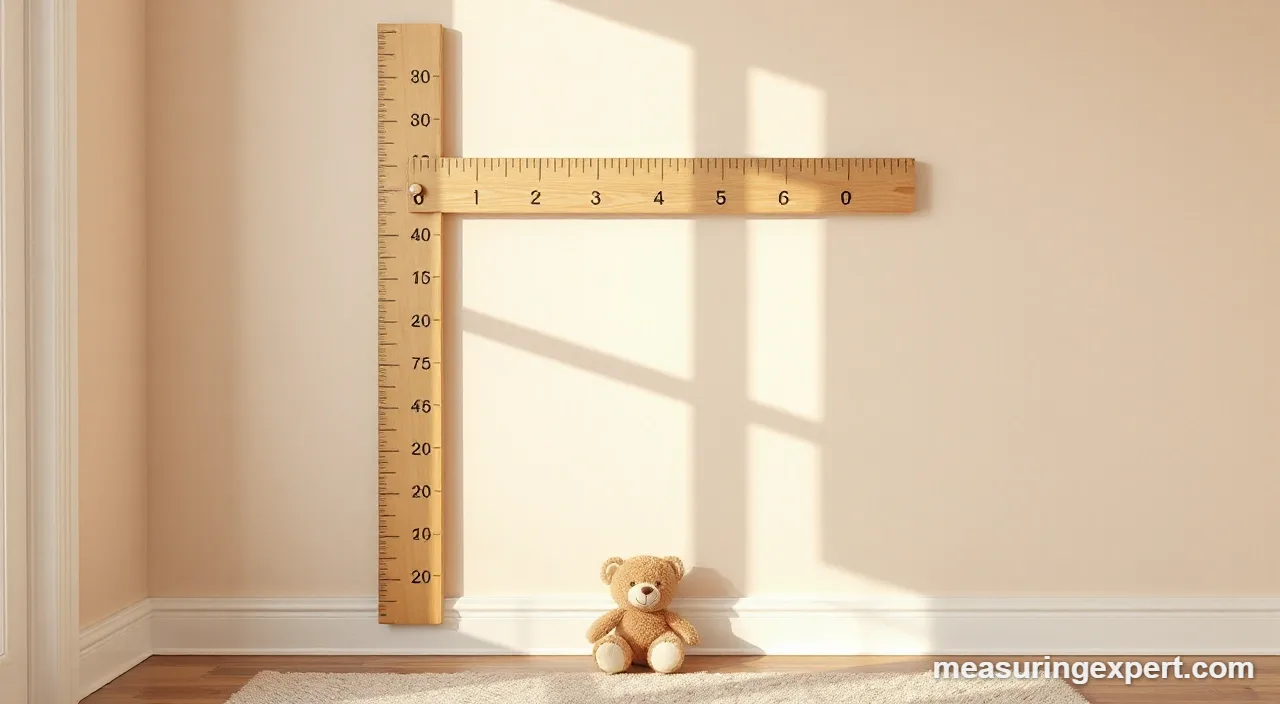
Why your number may differ from the doctor’s
A one-half inch gap between the clinic reading and your home reading is common and usually reflects method, not growth. Different tapes, different helpers, a wriggling baby and the time of day (babies are a touch longer after sleep) all move the number.
The healthcare team plots the clinic measurement on a standard chart, so keep your home log as a personal record, not as a replacement. The pattern over several months matters far more than any single number.
Reading growth charts without the stress
A growth chart shows a line for each percentile, and a child’s own curve usually follows one band over time. A baby in the 25th percentile for length is longer than 25 percent of babies the same age, which is neither good nor bad on its own.
The CDC explains that WHO standards cover birth to 2 years and CDC charts cover ages 2 and up, and that these charts are not meant to be the only diagnostic tool (CDC growth charts). If you also weigh your baby at home, see our review of baby scales for the weight side of the picture.
Honest limits of home measuring
Home tapes and mats are only as good as the person using them. Even trained staff get small differences between readings. A 0.5 cm swing in head circumference or 1 cm in length can be pure technique.
No product on this list diagnoses anything. If you want a chest, arm or tummy check as well, a body measuring tape can help, but the same technique caveats apply. Treat your own numbers as notes to share, not as test results.
When to talk to your pediatrician
Call your child’s doctor if your baby seems to be falling off their usual growth curve, if head size seems to jump quickly or stall, or if you simply feel unsure about feeding or development. Bring your log, since it gives the clinician more context.
Frequently asked questions
What is the best tape for measuring a baby’s head?
A flat, non-stretch tape made for head circumference, such as the seca 212 dispenser set or a multipack of flat 60 cm tapes, is the best choice. Flat tapes lie against the head without bunching, so repeat readings agree more closely than with a soft cloth tape.
Can I use a regular sewing tape measure on my baby?
You can, as long as it is a flexible, non-stretch tape and you read it carefully. Wide or stretchy tapes bunch and drift, so a narrow flat tape gives steadier numbers, particularly around a head.
How often should I measure my baby at home?
Monthly is plenty for most families, and many parents measure only when the pediatrician asks. Measuring daily adds noise, since normal technique differences are larger than a day’s growth.
Why does my home measurement differ from the clinic’s?
Different tools, helpers and wriggling cause small gaps of half an inch or so. The clinic’s measurement is the one plotted on the official chart, so use your own as a trend over time.
When do I switch from lying down to standing height?
The CDC and WHO approach is to measure length lying down until about age 2, then standing height. Switching early or late can shift the number by a centimeter or so, so tell the clinician which method you used.
Are wall growth charts accurate?
They are fine for fun and rough tracking, but accuracy depends on a flat wall, a level floor and a child standing straight without shoes. Treat them as keepsakes, not clinical tools.
Do I need my own growth chart at home?
No. Your pediatrician plots your child’s numbers on the WHO or CDC charts. If you want a copy, ask for a printout or use the patient portal, then keep your own log of dated measurements.
How do I convert inches to centimeters?
Multiply inches by 2.54. For example, 24 in x 2.54 = 60.96 cm, and 20 in = 50.8 cm. The calculator near the top of this page does it for any value.
Are disposable tapes better than reusable ones?
Single-use tapes are used in clinics mainly for hygiene. At home a reusable flat tape that you wipe clean is fine, and it usually costs less per use.
Should I worry if my baby’s numbers look different from a friend’s baby?
No. Healthy babies vary widely, and growth is judged by a child’s own pattern over time, not by comparison with others. Share any worries with your pediatrician, who can look at the full picture.
The bottom line
Pick the tool that matches the question. If you want to follow head size, the seca 212 set or a flat multipack gives you a reliable record at a low cost. If you want length before age 2, the Hopkins mat is the most practical home option, and the seca 416 is the clinic-grade choice for people who want to go all in.
Then keep the habit simple: measure at calm moments, use the same method, write down dates, and let your pediatrician interpret the trend. A wall ruler can come out once your toddler stands tall, and it makes a lovely memento, but it is the tape and the routine that make your numbers worth sharing.
Black Friday week: get the picks above delivered fast with Prime