

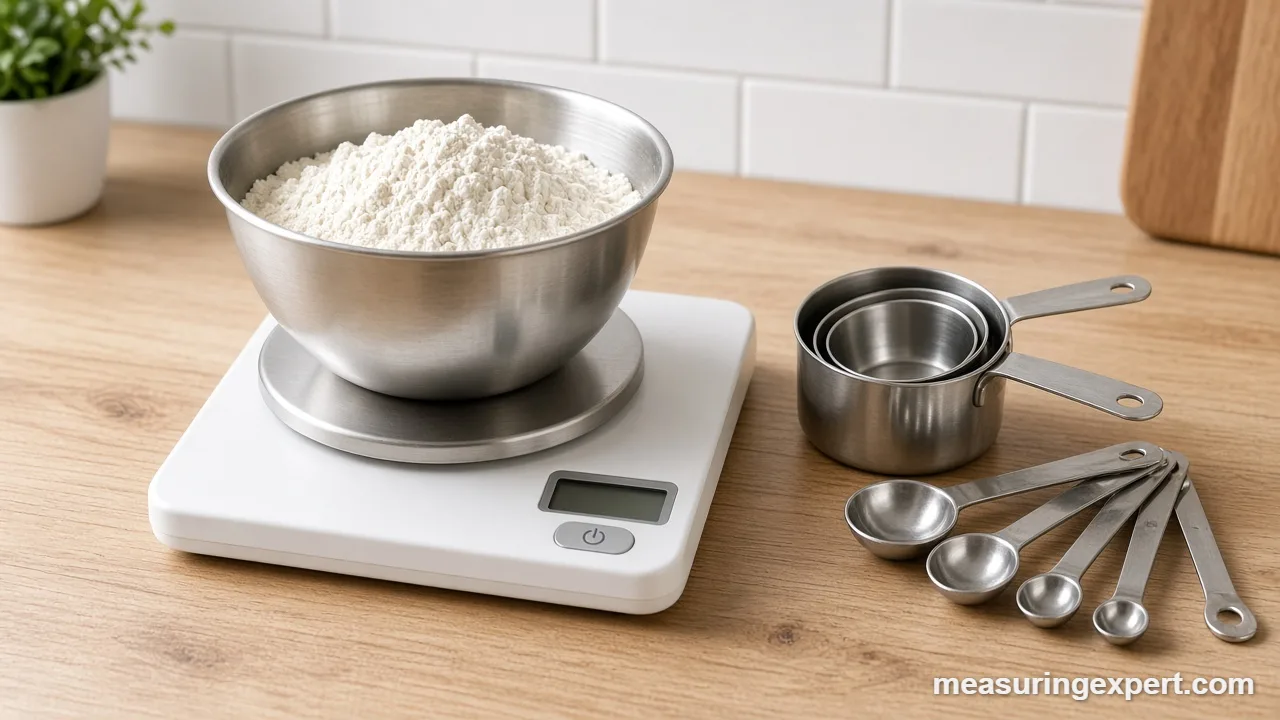
The safest way to handle allergen-free cooking is to weigh each ingredient in grams on a clean digital scale, pouring straight from its container into the bowl. As a result, no shared cup or spoon touches the food. Wash every tool before use, and read each label for the major allergens.
Why Weighing Fits Allergen-Free Cooking
Allergen-free cooking has two measuring jobs at once. First, the recipe needs the right amounts, because swapping wheat flour or milk changes how a dough or batter behaves. Second, the kitchen needs to avoid cross-contact, which the FDA describes as the unintended introduction of a major allergen into a food.
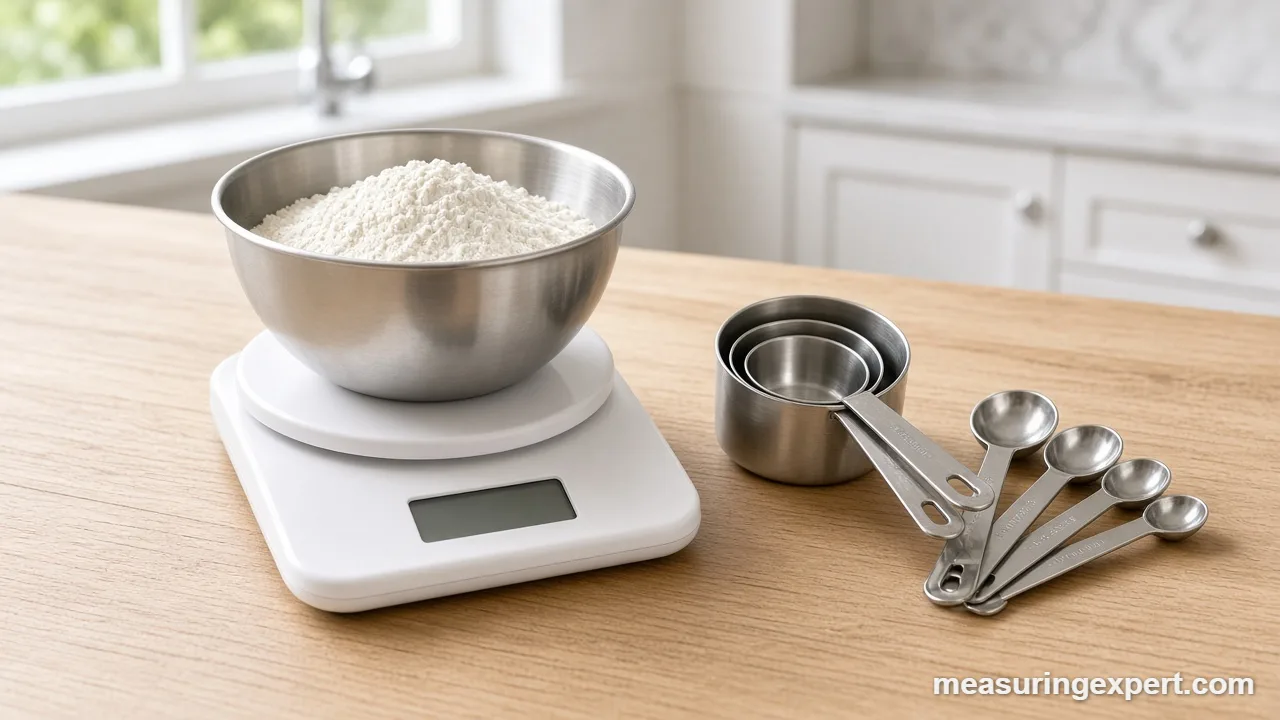
A kitchen scale helps with both jobs. For example, you can set a bowl on the scale, press tare, and pour flour from its own bag. In other words, no scoop travels between bags, so nothing carries a trace from one container to the next. Volume measuring, by contrast, usually means dipping the same cup into several ingredients.
In short, this guide covers the tools, the weights for common substitutes, and the cleaning habits that matter. It is general kitchen information, not medical advice. Because of that, if you or someone you cook for has a diagnosed allergy, follow the plan from your allergist.
Convert Ingredient Weights for Allergen-Free Cooking
Enter a weight in grams to see ounces, pounds and kilograms. Many allergen-free recipes list grams only, so the converter is handy when your scale shows ounces.
Recommended Tools for Allergen-Free Cooking
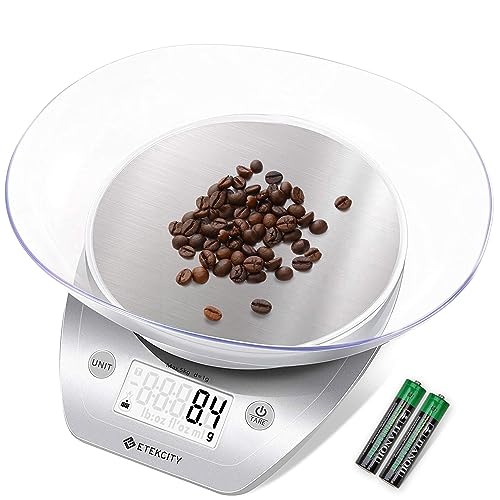
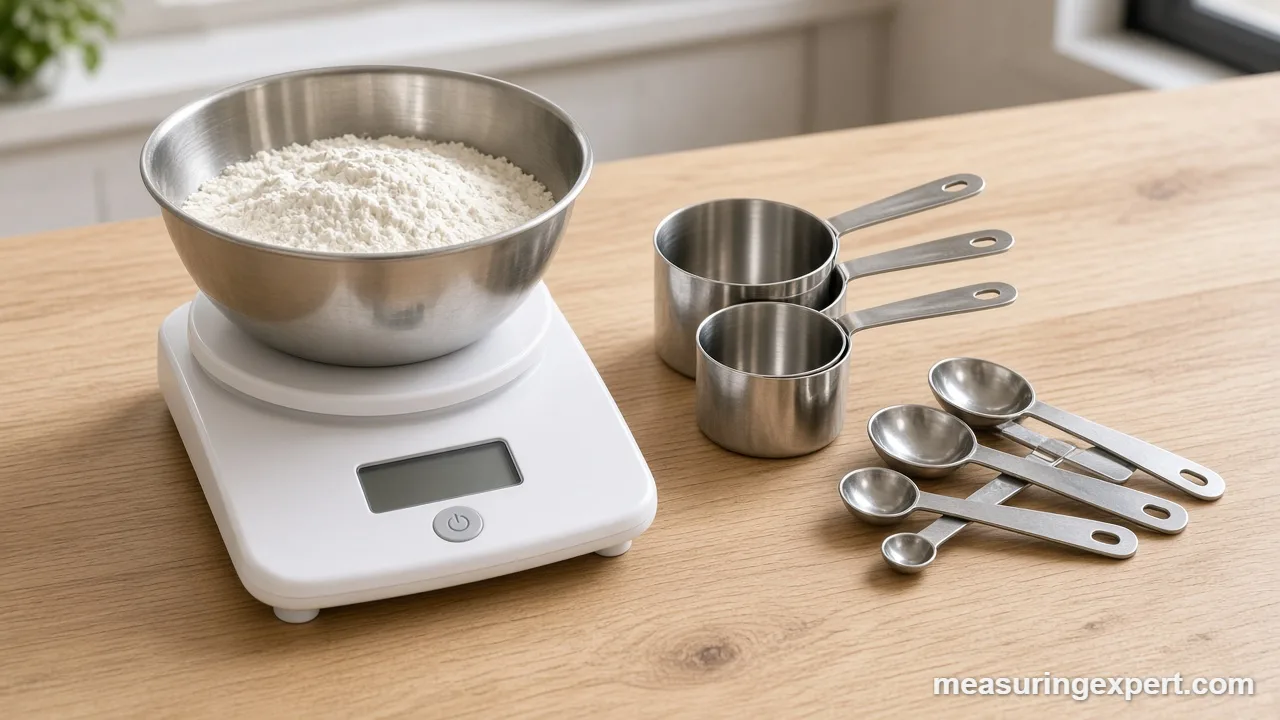
Start with a scale that has a tare button and shows single grams. In addition, choose measuring cups and spoons made of stainless steel, because they are easy to scrub and do not hold odors or oils the way some plastics can. Finally, keep a separate set for allergen-free jobs if your household also cooks with allergens.




As an Amazon Associate, Measuring Expert earns from qualifying purchases.
Cross-Contact Basics for Allergen-Free Cooking
The FDA lists nine major food allergens: milk, eggs, fish, crustacean shellfish, tree nuts, peanuts, wheat, soybeans and sesame. Also, sesame joined the list on January 1, 2023. Cross-contact happens when any of these reaches a food that should be free of it, and measuring tools are a common path.
Food Allergy Research & Education (FARE) advises cleaning and sanitizing food-prep equipment and utensils before and after each use. In addition, it notes that oils can soak through wax paper and other liners, so trays and baking sheets need cleaning too. On hands, FARE says plain water and hand sanitizer are not effective for removing allergens, while soap and water is.
| Step | What to do | Why it helps |
|---|---|---|
| Wash hands | Use soap and water before you start | Sanitizer and plain water leave allergen behind (FARE) |
| Clean tools | Wash cups, spoons, bowls and the scale platform before use | Residue on a tool can transfer to the next food |
| Weigh first | Pour from the original container into the bowl | No scoop moves between bags |
| Line trays | Use fresh parchment and washed pans | Oils soak through some liners |
| Check labels | Read every ingredient list, every time | Recipes and formulas change |
How to Weigh Ingredients for Allergen-Free Cooking
- Clean everything first. Wash your hands, the bowl, the spatula and the scale platform with soap and water, then dry them.
- Read the labels. Check each ingredient list for the nine major allergens, including the “Contains” line.
- Place the bowl on the scale. Switch the scale to grams and press tare so it reads zero.
- Pour the first ingredient directly. Tip it from the original bag or box until the display shows the recipe weight.
- Tare again and add the next one. Each press of tare lets you measure the next ingredient in the same bowl.
- Handle liquids by weight too. Milk substitutes weigh close to water, so grams and milliliters are nearly equal for thin liquids.
- Clean up right away. Wash the tools with soap and water so no residue dries on.
Allergen-Free Cooking Substitute Weights by Cup
Cup measures vary widely between flours, which is why weight is more reliable. The King Arthur Baking ingredient weight chart lists these gram values per US cup. Notice that gluten-free flours do not share one weight, so a swap by cups alone can be off by 30 percent or more.
| Ingredient | Grams per cup | Ounces per cup | Grams per 1/4 cup |
|---|---|---|---|
| All-purpose wheat flour | 120 g | 4.23 oz | 30 g |
| Gluten-free all-purpose flour (King Arthur) | 156 g | 5.50 oz | 39 g |
| White rice flour | 142 g | 5.01 oz | 35.5 g |
| Brown rice flour | 128 g | 4.52 oz | 32 g |
| Tapioca starch | 113 g | 3.99 oz | 28 g |
| Oat flour | 92 g | 3.25 oz | 23 g |
| Coconut flour | 128 g | 4.52 oz | 32 g |
| Almond flour (a tree nut) | 96 g | 3.39 oz | 24 g |
| Granulated sugar | 198 g | 6.98 oz | 49.5 g |
Coconut flour is a good example of why a swap needs care. A cup of it weighs about the same as a cup of brown rice flour, yet it behaves very differently in a batter. Therefore, check the recipe’s own weights before substituting. Our guide to vegan baking measurements lists egg, butter and milk swaps by weight as well.
Using Cups and Spoons Safely When Allergen-Free Cooking
Sometimes a recipe only gives cups. In that case, treat the cup like any other contact surface. Use a clean, dedicated set, and keep it away from shared drawers where a floury scoop could rest.
For dry ingredients, spoon the flour into the cup and level it with a straight edge. For one thing, dipping the cup into the bag packs the flour and also touches the bag with a tool that may carry traces. With liquids, use a clear cup and read it at eye level. Moreover, check the cup size, because a US legal cup on nutrition labels is 240 mL, while the standard US cup is about 236.6 mL.
Likewise, measuring spoons need the same care. Wash them between ingredients, or keep one spoon per ingredient. Small spoons are the easiest to forget when you wash up, so count them.
Do and Don’t for Allergen-Free Cooking
Do
- Wash hands with soap and water before cooking.
- Weigh straight from the original container.
- Keep a dedicated, labeled set of tools.
- Use fresh liners and washed baking sheets.
- Recheck labels each time you buy.
Don’t
- Rely on hand sanitizer to remove allergen from hands.
- Dip a shared cup into several bags.
- Assume a missing “may contain” line means no risk.
- Swap flours by cups without checking weights.
- Reuse a sponge that touched an allergen without washing it.
Scaling Allergen-Free Cooking Recipes
Allergen-free recipes often depend on exact ratios, since binders such as eggs, gluten or dairy proteins are missing. For that reason, scale by weight, not by cup. First, multiply each gram value by the same factor, then round to the nearest gram.
For example, a batter that uses 156 g of gluten-free flour becomes 234 g at one and a half times the size. Next, doubling the same batter needs 312 g. Cups, instead, would turn those numbers into awkward fractions. As a result, a scale also makes it easier to halve a recipe for a small household.
Finally, keep notes on what worked. For example, write the weights you used on the recipe card, along with the brand of each flour. Brands differ, so a blend that works in one brand may not in another.
Honest Limits of Allergen-Free Cooking Measurements
Scales, cups and charts help, but they have limits. However, gram values in a chart are averages for one brand and one test method, so another brand can differ. Moreover, humidity and how a flour was packed change the numbers. Also, a scale only tells you how much of an ingredient you have, not what it contains.
Similarly, cleaning guidance has limits. FARE’s advice is aimed at removing visible and trace residue from surfaces, but no kitchen routine can promise zero risk. In short, measuring well reduces mistakes, while labels, manufacturer answers and medical advice cover the rest.
When to Ask a Professional
Instead, talk to an allergist or registered dietitian for anything beyond kitchen technique. That includes, for instance, deciding which foods to avoid, planning a diet for a child, and judging whether a trace amount is a problem. Because every person’s allergy is different, a general guide cannot answer those questions.
For further reading, see the FDA’s page on food allergies and labeling, the FARE page on cleaning methods, and the King Arthur ingredient weight chart. If you are unsure about ounces, see how much an ounce is, and for small liquid amounts see how much 30 mL is.
Frequently Asked Questions
What is the best way to measure ingredients for allergen-free cooking?
Weigh them in grams on a clean digital scale, pouring directly from the original container into the bowl. This avoids shared scoops and gives consistent amounts.
Which foods are the major allergens in the United States?
The FDA lists nine: milk, eggs, fish, crustacean shellfish, tree nuts, peanuts, wheat, soybeans and sesame.
What is cross-contact?
Cross-contact is the unintended transfer of an allergen into a food that should not contain it. Shared tools, hands and surfaces are common routes.
Does hand sanitizer remove food allergens?
No. FARE says plain water and hand sanitizers are not effective for removing food allergens, while soap and water is.
Do I need separate measuring cups for allergen-free cooking?
A dedicated set is a simple precaution. If you share tools, wash them with soap and water before and after each use.
How many grams is a cup of gluten-free flour?
King Arthur lists its gluten-free all-purpose flour at 156 g per cup. Other gluten-free flours range from about 92 g to 142 g per cup.
Can I swap flours cup for cup in allergen-free cooking?
Not reliably. Cup weights differ by up to 30 percent or more between flours, so swap by weight and follow the recipe’s own guidance.
Does “may contain” on a label mean the food is unsafe?
Not necessarily. The FDA says advisory statements are not required by law and are meant for unavoidable cross-contact. Contact the manufacturer for details.
How do I measure liquid milk substitutes by weight?
Thin liquids weigh close to water, so 1 mL is about 1 g. Thicker products such as coconut cream can differ, so check the label.
Is this article medical advice?
No. It is general kitchen information. Ask your allergist or doctor about your own allergy and diet.
Allergen-Free Cooking: The Bottom Line
To sum up, weighing beats cup measuring for both accuracy and safety. A clean scale, soap-and-water habits, careful label reading and recipe weights in grams cover most of what a home kitchen can control.
Finally, use the converter above when a recipe and your scale disagree on units, and bring any health questions to a professional.