

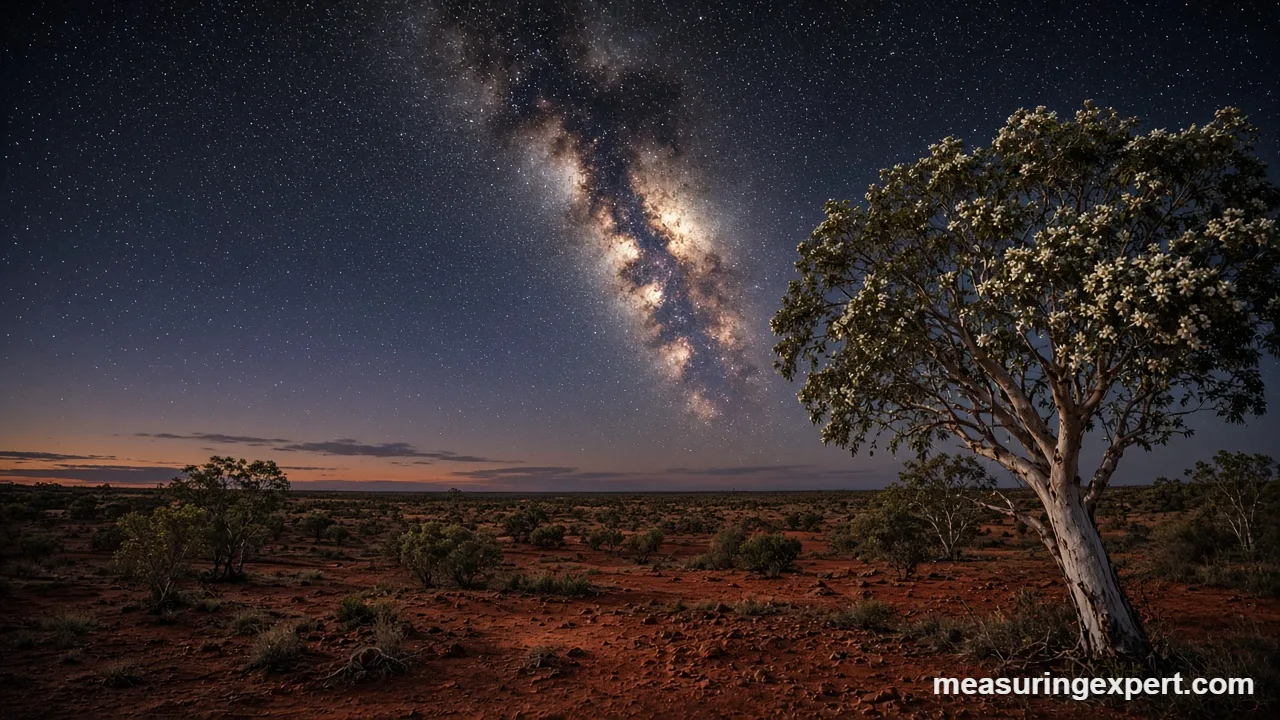
Aboriginal time is read from Country itself. Instead of fixed dates, Aboriginal peoples track seasons through plants, animals, wind and rain, mark longer cycles by the rising of stars, count months as moons, and count days as sleeps. As a result, many groups recognize six or more seasons, not four.
Ask a clock what time it is and you get a number. Ask Country, however, and you get an event: the speargrass is taller than a person, the water lilies cover the billabong, or the Emu in the Sky stands on her head after sunset. For tens of thousands of years, Aboriginal and Torres Strait Islander peoples have kept time this way, by watching the land, the sea and the sky closely enough to know what comes next.
How Aboriginal Time Works in Brief
There is no single Aboriginal calendar, because there is no single Aboriginal people. Australia has hundreds of distinct nations and language groups, and each one reads its own Country. However, the methods share a common logic. First, a season begins when the signs appear, not when a date arrives. Second, the same cycle returns every year, so knowledge builds on what earlier generations saw. Finally, each season tells people what to do: when to hunt, gather, burn, travel or hold ceremony.
In short: Aboriginal time measurement is event-based and cyclical. A season is defined by what happens in nature, the sky confirms where you are in the year, and moons and sleeps count shorter spans.
Science agencies now work with these systems rather than around them. For example, Australia’s national science agency CSIRO has spent about fifteen years co-designing Indigenous seasonal calendars with Traditional Owners, and it notes that the Western four-season model is not a very informative way to describe Australian weather and climate.
Next, this guide explains how that kind of timekeeping works, with real published examples. Along the way, it compares natural calendars with the clock-and-date system most readers use, and it is written with respect for the communities who hold this knowledge.
Convert Sleeps and Moons Into Days, Weeks and Months
Want to compare a span counted in sleeps with a modern calendar? Enter a number of days (one sleep is one night, so one day) and the converter shows weeks, average months and years. For example, the default of 56 days matches the roughly 56-day emu incubation period mentioned below. Keep in mind that a moon (a lunar month) is about 29.53 days, slightly shorter than the average calendar month of about 30.44 days.
Recommended Tools for Watching Sky and Seasonal Cycles
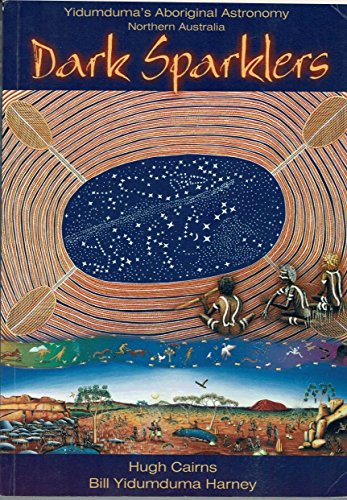
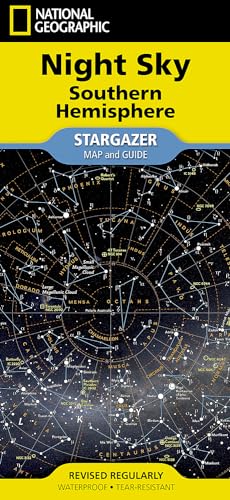
You do not need equipment to follow the sky the way Aboriginal astronomers have. Still, a few tools help non-Indigenous readers learn the southern sky and its seasonal rhythm. First, a southern hemisphere star finder shows which stars rise after sunset in each month. Next, a pair of wide-field binoculars makes the dark dust lanes of the Milky Way, where the Emu in the Sky lives, easier to trace. Also, a book co-written with a Wardaman elder offers knowledge shared on the community’s own terms.


As an Amazon Associate, Measuring Expert earns from qualifying purchases.
- Aboriginal time follows events in nature, so seasons start when the signs appear.
- Many calendars have six seasons; Kakadu’s Bininj/Mungguy calendar is a well-known example.
- Stars rising or setting at dusk mark the time of year, much like a calendar page.
- The Emu in the Sky tracks the emu breeding cycle from April to January.
- Shorter spans are counted in moons (about 29.53 days) and sleeps (nights).
- Each group’s calendar belongs to its own Country, so one region’s seasons do not apply everywhere.
- Published calendars are made with Traditional Owners, who decide what is shared.
Why Aboriginal Time Is Event-Based
To begin with, a Western calendar is a counting system. It starts on January 1 and adds days until December 31, whatever the weather does. An Aboriginal seasonal calendar works the other way around. Instead, it watches for indicators, and the indicators tell you which season you are in. So if the rains come early, the season comes early too.
This makes sense on a continent with such varied climates. Tropical Arnhem Land swings between monsoon and dry heat, while the southeast has cold, wet winters and hot summers. Because a four-season model fits neither very well, local calendars split the year by what actually changes. For instance, a season might start when a certain tree flowers, a bird begins calling, a wind shifts, or a fish starts running in the river.
Time in many Aboriginal cultures is also relational. People often describe it as cyclical, with the past present in the land, in stories and in ceremony. Therefore, knowing the time is not only about the date. It also means knowing your responsibilities to Country at that point in the cycle, such as when to burn grass or when to leave a resource alone so it can recover.
Aboriginal Time in Six Seasons: The Kakadu Example
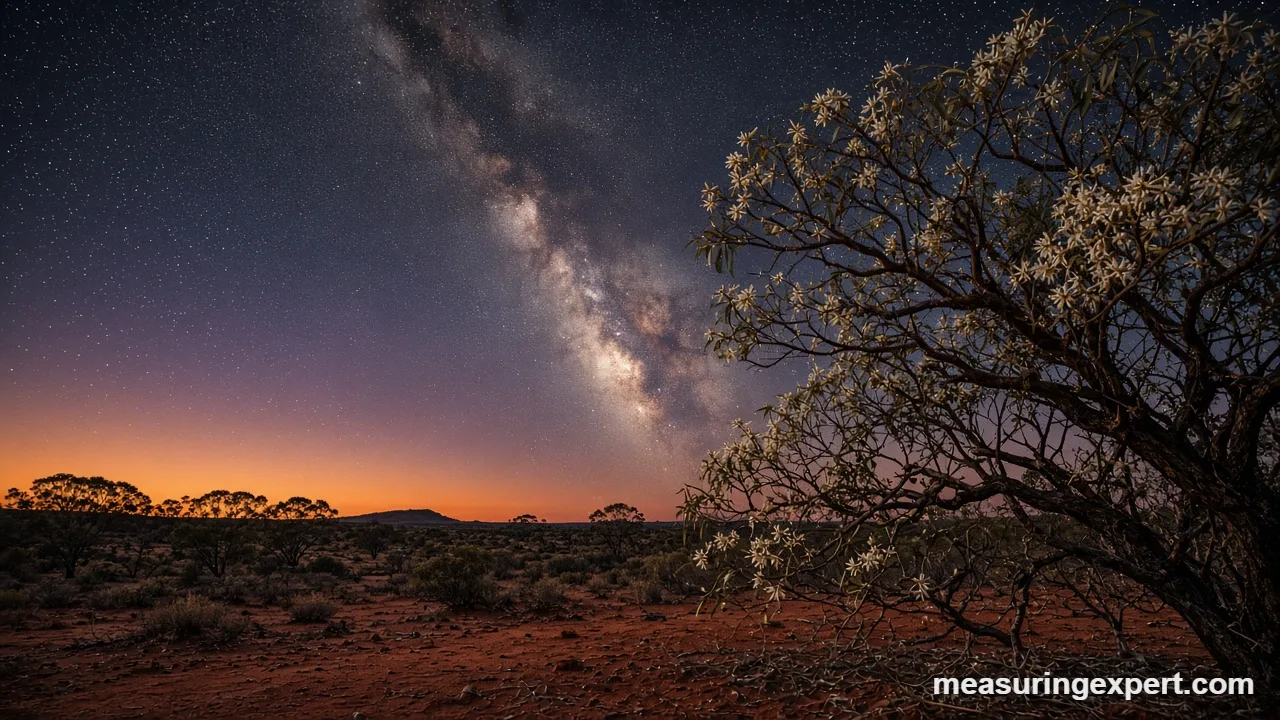
Kakadu National Park in the Northern Territory publishes the six seasons recognized by its Bininj/Mungguy Traditional Owners. The park’s seasons guide gives approximate months and temperatures, but the signs define each season, not the dates. You may also see older spellings, such as Gudjewg for Kudjewk.
| Season | Approx. months | Typical temps | Signs and activities |
|---|---|---|---|
| Kudjewk | December to March | 24-34 °C (75-93 °F) | Monsoon: thunderstorms, heavy rain and floods; speargrass grows over 2 m (6.5 ft) tall |
| Bangkerreng | April | 23-34 °C (73-93 °F) | “Knock ’em down” storms flatten the grass; floodwaters recede; animals rear young |
| Yekke | May to mid-June | 21-33 °C (70-91 °F) | Cooler and less humid; early-morning mists; water lilies cover wetlands; patch burning begins |
| Wurrkeng | Mid-June to mid-August | 17-32 °C (63-90 °F) | Cold-weather season with low humidity; creeks stop flowing and billabongs shrink |
| Kurrung | Mid-August to mid-October | 23-37 °C (73-99 °F) | Hot and dry; sea turtles nest on beaches; time to hunt file snakes and long-necked turtles |
| Kunumeleng | Mid-October to late December | 24-37 °C (75-99 °F) | Pre-monsoon: humidity builds, afternoon storms gather, and streams begin running again |
Above all, notice how practical this is. Each season names food, water and fire conditions together, so the calendar doubles as a land-management plan. In addition, CSIRO has documented calendars from other groups, including Ngan’gi (Daly River), Walmajarri and Gooniyandi (Kimberley), Kunwinjku (western Arnhem Land), Tiwi, and Gulumoerrgin (Larrakia) around Darwin. The number of seasons and their signs differ from one Country to the next.
How Aboriginal Time Is Read in the Stars
The sky turns a little each night, so the stars you see at dusk change through the year. Consequently, the evening sky works as a seasonal clock that never drifts. Aboriginal astronomers paired these sky changes with events on the ground, so a star’s first appearance could signal that a food source was ready.
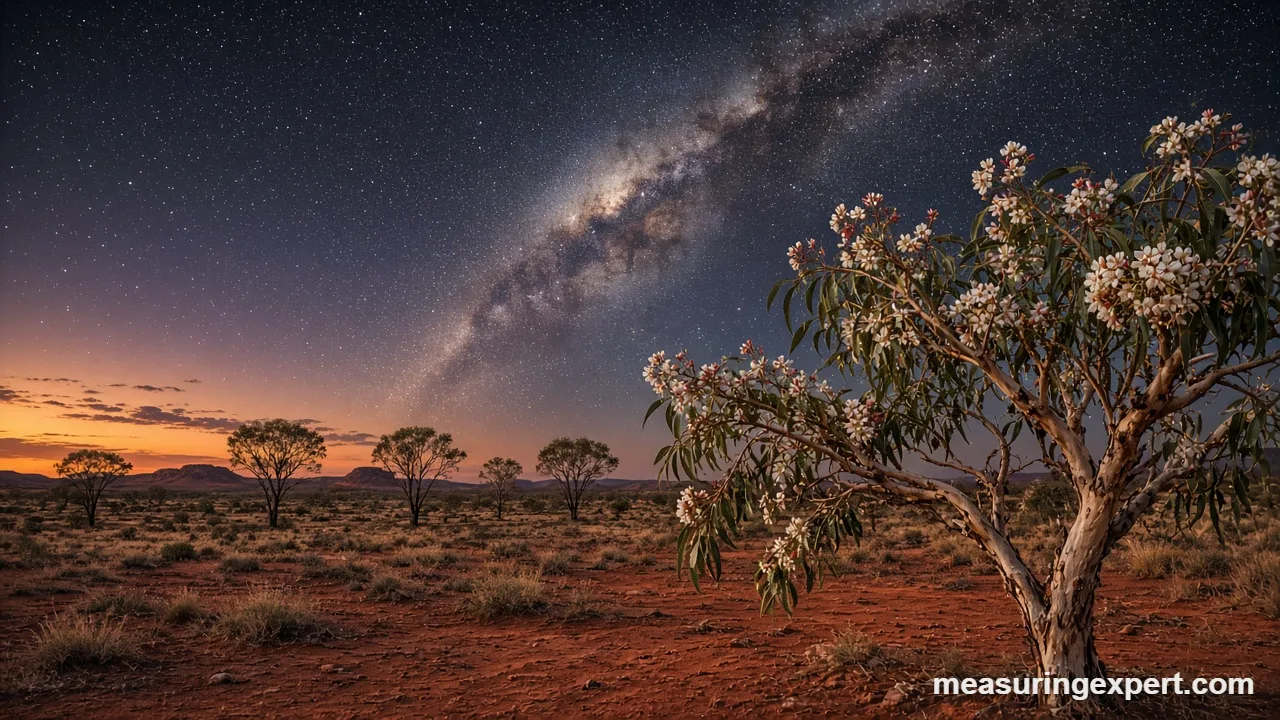
In particular, the best-known example is the Emu in the Sky. Rather than a pattern of bright stars, she is traced in the dark dust clouds of the Milky Way, with her head near the Southern Cross. In Euahlayi and Kamilaroi traditions of northern New South Wales, her position after dusk follows the emu breeding season, as described by the University of Melbourne.
| Months | Emu in the evening sky | What it signals on the ground |
|---|---|---|
| April to May | Rises after dusk, seen as a female courting a male | Emus pair and nest; females lay about 5 to 15 eggs, each about 450-650 g (1.0-1.4 lb) |
| June to July | Sits high in the sky after sunset | The male sits on the eggs for about 56 days; a key time for collecting eggs |
| August to September | Appears to stand on her head | The male rises off the nest as the eggs hatch |
| October to November | Sits in a waterhole | Rains peak and waterholes are full |
| December to January | Sinks below the horizon | Waterholes dry up |
Other groups use different stars in the same way. For example, Museums Victoria explains that the Boorong people of northwest Victoria watched Neilloan (the star Vega). It appears in the morning sky in autumn, when malleefowl start building nests, and leaves the evening sky in spring, when egg laying begins. Similarly, the Boorong pair Yurree and Wanjel (Castor and Pollux) return in late spring as the fan-tailed cuckoo becomes active.
Moons, Sleeps and Aboriginal Time of Day
Seasons and stars handle the year. For shorter spans, however, people traditionally counted moons and sleeps. A moon runs from one new moon to the next, about 29.53 days. Meanwhile, a sleep is one night, so “three sleeps” means about three days. Moreover, these units are still common in everyday speech in many communities.
The Moon also links to the sea. Astronomers Ray Norris and Duane Hamacher note that Yolngu people of Arnhem Land recognized the connection between the Moon’s phases and the tides. That matters on the coast, because the biggest tides arrive around the new and full moon, and they shape when to fish or cross tidal flats.
Similarly, within a day, the Sun’s position, shadows, bird calls and the heat of the ground mark the hours. In other words, “when the sun is high” or “when the birds start calling” carries the same job as “noon” or “dawn.” If you want to see how the modern alternative grew out of those same sky cycles, our article on why we measure time in 60s traces the Babylonian roots of hours and minutes.
A quick piece of arithmetic shows why moons alone cannot run a year. Twelve moons add up to about 354.37 days, roughly 11 days short of a solar year of about 365.24 days. As a result, any moon count slowly slips against the seasons. Natural calendars avoid that problem, because the season itself resets the count every year.
Aboriginal Time vs the Clock Calendar
Neither system is “better.” Instead, each one answers a different question. The comparison below shows how they differ.
| Feature | Aboriginal seasonal calendar | Gregorian clock calendar |
|---|---|---|
| What defines a period | Events in nature: rain, flowering, animal behavior, star rising | A fixed count of days |
| Number of seasons | Varies by Country; often six, sometimes more or fewer | Four, set by solstices and equinoxes or by months |
| Shape of time | Cyclical and relational | Linear, counted forward from a start date |
| Short spans | Moons and sleeps | Months, weeks, days, hours |
| Handles an early or late year | Yes, the season moves with the signs | No, dates stay fixed |
| Main purpose | Knowing what to do on Country right now | Coordinating many people precisely |
Of course, clocks shine when millions of people must meet at the same minute. If you are curious how that precision is achieved, see how clocks are measured, from pendulums to atomic standards. Natural calendars, by contrast, shine when you need to know what the land is doing, which a date alone cannot tell you.
How to Read an Aboriginal Time Calendar
Published seasonal calendars are usually drawn as a circle, with the seasons as segments and the indicators around the edge. Here is a simple way to read one.
- Find the Country it belongs to. Check which nation or language group made the calendar, and where that Country is.
- Read the season names first. Use the names as given, with the community’s own spelling.
- Look at the indicators. Note the plants, animals, weather and stars listed for each season.
- Treat the months as a rough guide. Any months on the circle are approximate, because the signs decide.
- Match signs to what you see. If you are on that Country, compare the listed signs with what is happening around you.
- Check the guidance that comes with it. Calendars often say what is and is not appropriate to share or do.
Respectful Do and Don’t
Seasonal knowledge belongs to the communities who hold it. So these simple habits help you learn without causing harm.
Do
- Credit the nation or language group by name.
- Use calendars published with Traditional Owners’ consent.
- Learn the calendar for the Country you live on or visit.
- Follow any cultural notices that come with a resource.
- Support Indigenous-led education and ranger programs.
Don’t
- Treat all Aboriginal peoples as one culture.
- Make up “Aboriginal” season names or star stories.
- Copy calendar artwork for commercial use without permission.
- Describe this knowledge as only in the past; it is living.
- Assume every story is public; some knowledge is restricted.
Honest Limits of This Guide
This article is a short, outside summary. Therefore, it leaves out far more than it includes. Each calendar holds detail that only its knowledge holders can explain properly, and much knowledge is not published at all, by choice. Also, season names have several spellings, because they come from oral languages written down in different ways over time. Finally, the months and temperatures above are approximate guides from public sources. In other words, they describe typical years, and real seasons start when the signs say so.
When to Ask a Knowledge Holder
If you need seasonal knowledge for real decisions, such as fire management, land care, education or research, go to the source. First, contact the local Aboriginal land council, Traditional Owner corporation or Indigenous ranger group. Next, look for programs run in partnership with them, such as the CSIRO calendars or national park cultural programs. Finally, ask before you use images, names or stories.
Frequently Asked Questions
How did Aboriginal people measure time?
They read events in nature. Seasons begin when plants, animals and weather show the signs, stars at dusk mark the time of year, moons count months, and sleeps count days.
How many seasons are in an Aboriginal time calendar?
It depends on the Country. Many calendars have six seasons, such as Kakadu’s Bininj/Mungguy calendar, but others have more or fewer.
What is the Emu in the Sky?
It is a shape traced in the dark dust clouds of the Milky Way, with the head near the Southern Cross. Its position after dusk follows the emu breeding season from April to January.
Did Aboriginal people use the Moon to keep time?
Yes. A moon, about 29.53 days, was a common unit for longer spans, and coastal groups such as the Yolngu linked the Moon’s phases with the tides.
What does counting sleeps mean?
A sleep is one night. Saying something will happen in three sleeps means it will happen in about three days.
Is Aboriginal time linear or cyclical?
It is usually described as cyclical. The same seasons return each year, and the past is seen as present in the land and in stories.
Does one Aboriginal time calendar cover all of Australia?
No. There are hundreds of nations and language groups, and each calendar belongs to its own Country and climate.
Are Aboriginal seasonal calendars still used today?
Yes. Communities, rangers and national parks use them, and agencies like CSIRO co-design calendars with Traditional Owners for land and fire management.
Why did Aboriginal calendars not use fixed dates?
Because the signs matter more than the date. If the rains come early, the season comes early, so an event-based calendar stays accurate when a fixed date would not.
Where can I see a real Aboriginal time calendar?
Start with the CSIRO Indigenous seasonal calendars, the Kakadu National Park seasons page, and any calendar published by Traditional Owners where you live.
Aboriginal Time: The Bottom Line
To sum up, Aboriginal peoples measure time by reading Country. Seasons are defined by events in nature, often six or more of them, while the stars at dusk confirm the time of year, moons count months, and sleeps count days. Above all, each calendar belongs to a particular nation and place.
For readers used to clocks, the lesson is simple. A date tells you where you are in a count; a natural calendar tells you what the world is doing. So if you want to learn more, start with the calendar of the Country you live on, and learn it from the people who hold it.