

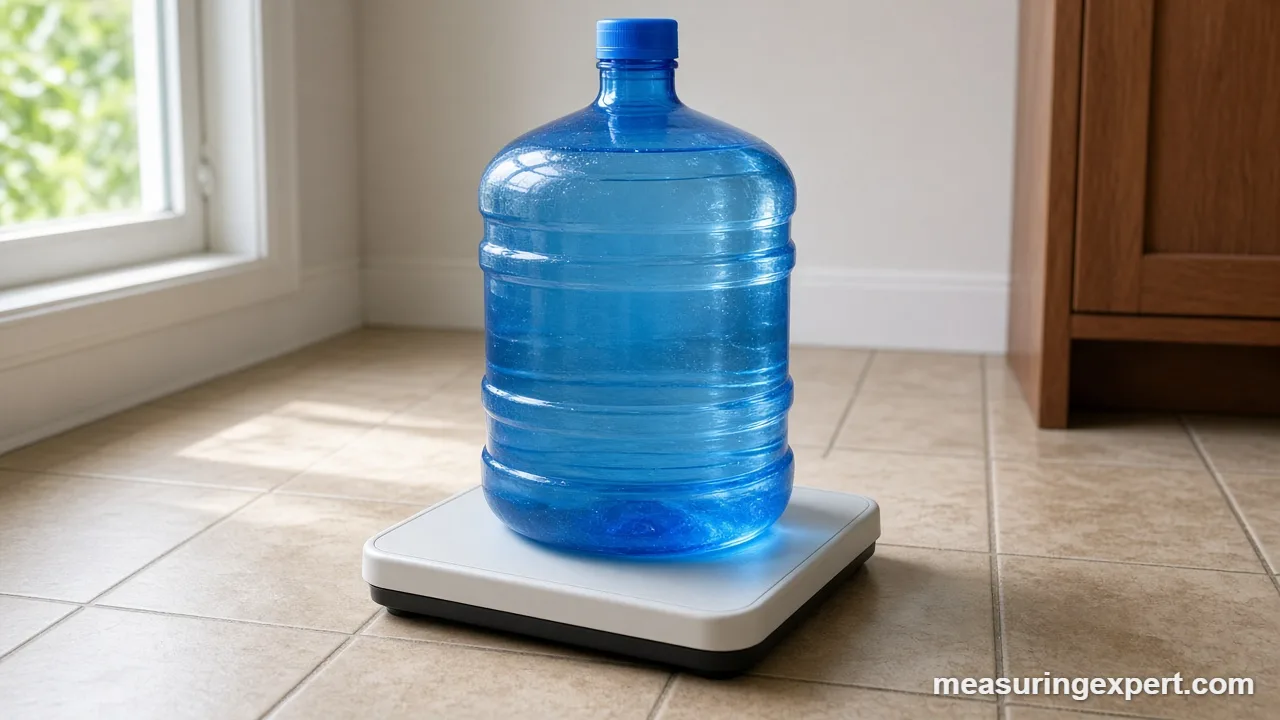
5 gallons of water weighs about 41.7 pounds (18.9 kg). That is because one US gallon of water weighs roughly 8.34 lb (3.78 kg), so five gallons comes to 5 x 8.34 = 41.7 lb. At room temperature it is closer to 41.6 lb, and the container adds its own weight on top.

Convert the Weight of 5 Gallons of Water
The converter starts at 41.73 lb, which is the weight of five US gallons of water at its densest. Then change the number or the unit to see the same weight in kilograms, grams and ounces. Also, if you weigh your own jug, type the scale reading in to switch units instantly.
Generally, a 5-gallon jug is the standard size for office water coolers, camping containers and hardware-store buckets. Because people lift, carry and stack these jugs every day, the weight matters more than it seems. For instance, it decides whether a shelf can hold three jugs, how much payload a truck bed loses, or whether a child can safely carry one.
First, the math is short. Namely, a US gallon is defined as exactly 231 cubic inches, or 3.785411784 liters. In addition, one liter of water has a mass of very nearly one kilogram. So 5 gallons is 18.93 liters, and that much fresh water has a mass of about 18.9 kg, or 41.7 lb. The NIST customary-to-metric conversion table rounds the gallon to 3.79 liters, which gives the same answer.
However, the old version of this page claimed that warm water gets heavier. That is not true, because warm water is slightly less dense, so a full gallon of it weighs slightly less, as the sections below show.
Water Weight Chart: 1 to 100 Gallons
Specifically, this chart uses fresh water at 68 degrees F (20 degrees C), a typical room or tap temperature. Therefore, the numbers sit a hair below the rounded 8.34 lb per gallon figure.
| US gallons | Liters | Pounds | Kilograms |
|---|---|---|---|
| 1 gal | 3.79 L | 8.33 lb | 3.78 kg |
| 2 gal | 7.57 L | 16.66 lb | 7.56 kg |
| 3 gal | 11.36 L | 24.99 lb | 11.34 kg |
| 4 gal | 15.14 L | 33.32 lb | 15.11 kg |
| 5 gal | 18.93 L | 41.65 lb | 18.89 kg |
| 6 gal | 22.71 L | 49.98 lb | 22.67 kg |
| 7 gal | 26.50 L | 58.31 lb | 26.45 kg |
| 10 gal | 37.85 L | 83.30 lb | 37.79 kg |
| 15 gal | 56.78 L | 124.96 lb | 56.68 kg |
| 20 gal | 75.71 L | 166.61 lb | 75.57 kg |
| 55 gal (drum) | 208.20 L | 458.18 lb | 207.82 kg |
| 100 gal | 378.54 L | 833.05 lb | 377.86 kg |
Printable tip: save or print this chart for the garage or the camper, because the values do not change. For a single jug of milk instead of water, see how much a gallon of milk weighs.
Does Temperature Change What 5 Gallons of Water Weighs?
Yes, but only a little. To begin with, water is densest at about 39.2 degrees F (4 degrees C). Above that point, however, it expands as it warms, so the same 5-gallon volume holds slightly less water. Below 4 degrees C it also expands, and ice is much less dense than liquid water.
The US Geological Survey lists water density at 0.99802 g/cm3 at 70 degrees F and about 0.959 at boiling. For example, the USGS weighed a gallon of 70-degree tap water at 8.329 lb, while a gallon at the boiling point weighed only 7.996 lb.
| Water temperature | Density (g/mL) | 1 gallon | 5 gallons |
|---|---|---|---|
| 32 °F / 0 °C (liquid) | 0.99984 | 8.34 lb | 41.72 lb / 18.92 kg |
| 39.2 °F / 4 °C | 0.99997 | 8.35 lb | 41.73 lb / 18.93 kg |
| 68 °F / 20 °C | 0.99821 | 8.33 lb | 41.65 lb / 18.89 kg |
| 77 °F / 25 °C | 0.99705 | 8.32 lb | 41.60 lb / 18.87 kg |
| 140 °F / 60 °C | 0.98320 | 8.21 lb | 41.03 lb / 18.61 kg |
| 212 °F / 100 °C | 0.95835 | 8.00 lb | 39.99 lb / 18.14 kg |
In short, a jug of boiling water would weigh about 1.7 lb less than a cold one. For a deeper look at why water behaves this way, read how dense water is at different temperatures.
How to Calculate the Weight of Any Amount of Water
In short, you only need one number: about 8.34 lb per US gallon, or 1 kg per liter. Then multiply.
- Pounds: gallons x 8.34 = pounds. Thus 5 x 8.34 = 41.7 lb.
- Kilograms: gallons x 3.785 = liters, and liters x 1 = kilograms. Thus 5 x 3.785 = 18.9 kg.
- Cubic feet: one cubic foot holds about 7.48 gallons and weighs about 62.4 lb, so 5 gallons is 0.67 cubic feet.
Next, remember that these formulas assume fresh water near room temperature. Salt water, warm water and other liquids need their own density, as the comparison table further down shows.
How to Weigh 5 Gallons of Water at Home
Want the real number for your own jug, container and all? In that case, a bathroom scale or a hanging scale gets you there in a minute.
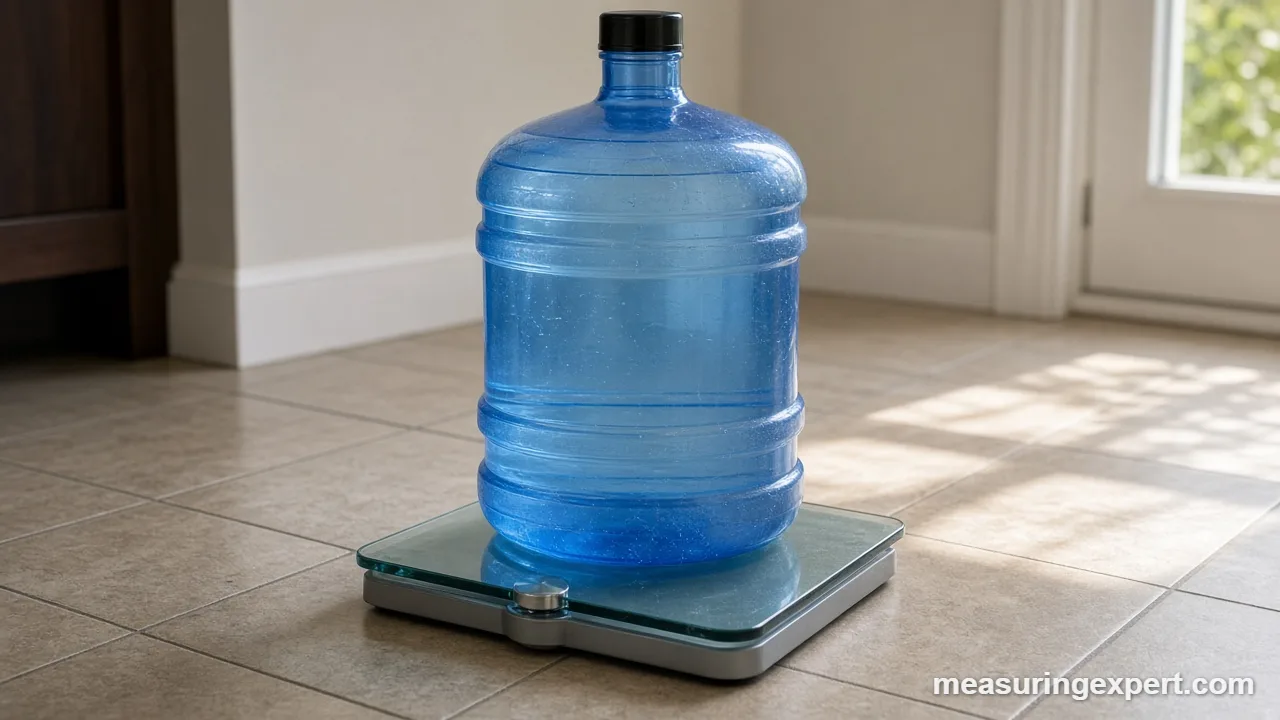
- Weigh yourself first. Stand on a bathroom scale on a hard floor, then note the reading.
- Pick up the full jug. Hold it close to your body, and then step back on the scale.
- Subtract. As a result, the difference is the weight of the jug and its water together.
- Weigh the empty container. Repeat the steps with the empty jug to get its tare weight.
- Find the water weight. Then take the empty weight away from the full weight; the result should land near 41.7 lb.
- Use a hanging scale for more accuracy. Hook the handle on a digital hanging scale and read the weight directly instead.
5 Gallons of Water vs Other Gallons and Liquids
People often mix up the US gallon with the larger imperial gallon still used in the UK. Similarly, they assume every liquid weighs the same as water. However, neither is true, and the gap is big enough to matter for loads and shipping.
| Five gallons of… | Volume | Approximate weight |
|---|---|---|
| Fresh water (US gallons) | 18.93 L | 41.7 lb / 18.9 kg |
| Fresh water (imperial gallons) | 22.73 L | about 50.1 lb / 22.7 kg |
| Seawater (US gallons, about 1.025 g/mL) | 18.93 L | about 42.8 lb / 19.4 kg |
| Ice from 5 gallons of water | about 20.6 L of ice | 41.7 lb / 18.9 kg (mass unchanged) |
Also note the difference between a fluid ounce and a weight ounce. A US gallon holds 128 fluid ounces, yet a gallon of water weighs about 133.4 ounces. Our guide to how much an ounce is explains why the two ounces differ.
Lifting and Carrying 5 Gallons of Water Safely
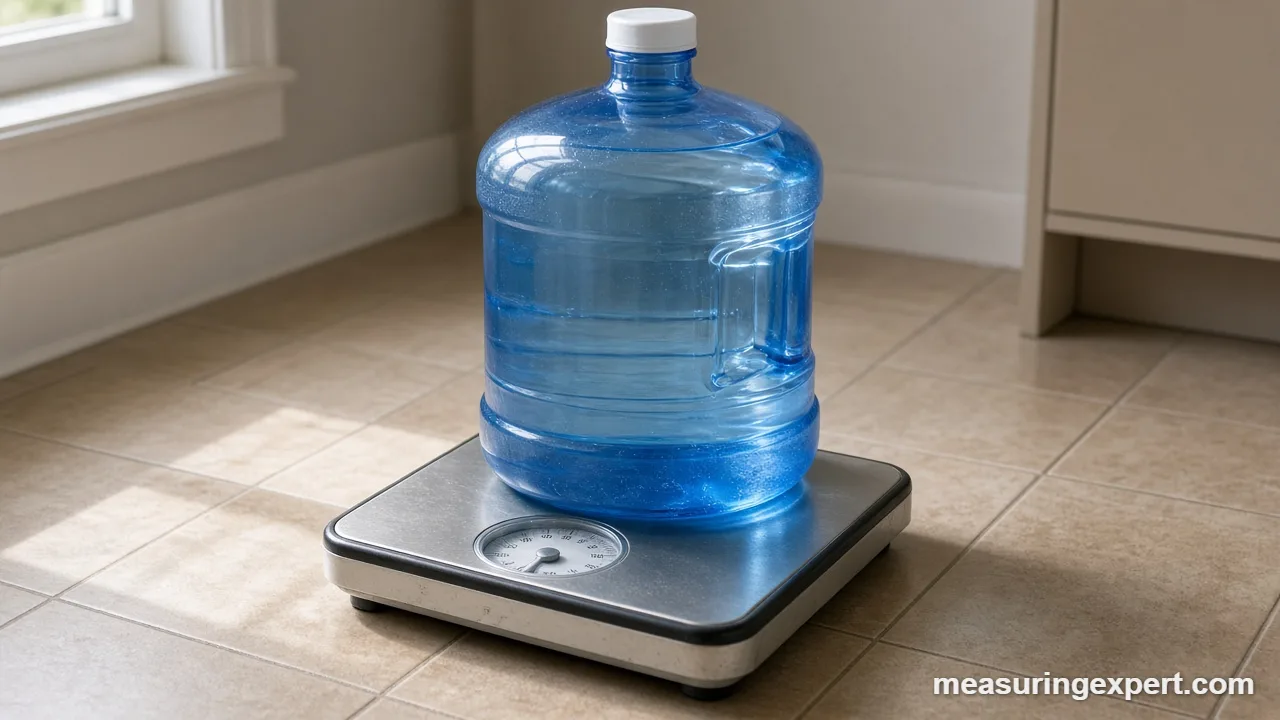
After all, about 42 lb plus the jug is a real load, especially when it sloshes. Meanwhile, a water-cooler bottle is awkward to grip and has to go up to chest height. As a result, many back strains come from the lift onto the dispenser rather than from carrying.
Do
- Bend your knees and keep the jug close to your body.
- Use a hand truck for more than one jug.
- Check the weight rating of shelves and racks.
- Leave headroom when you freeze water.
- Count about 42 lb per jug when you plan a load.
Don’t
- Twist your back while lifting a full jug.
- Stack full jugs higher than the maker allows.
- Forget that the container adds weight too.
- Assume an imperial gallon equals a US gallon.
- Let small children lift a full 5-gallon jug.
Recommended Tools for Weighing and Storing 5 Gallons of Water
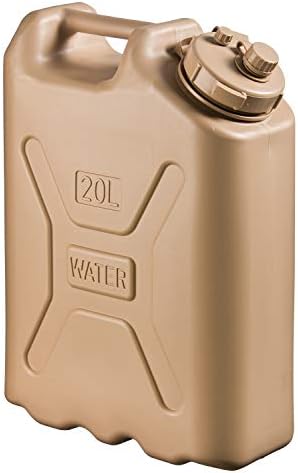
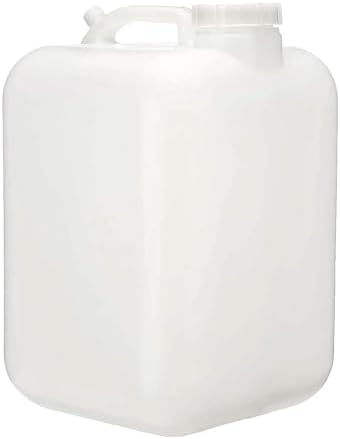
First, a digital hanging scale is the simplest way to check the real weight of a jug, a cooler or a loaded bucket. Next, a sturdy food-grade container with a good handle makes storing and moving water much easier. Finally, a spigot cooler helps at events where you pour rather than lift.

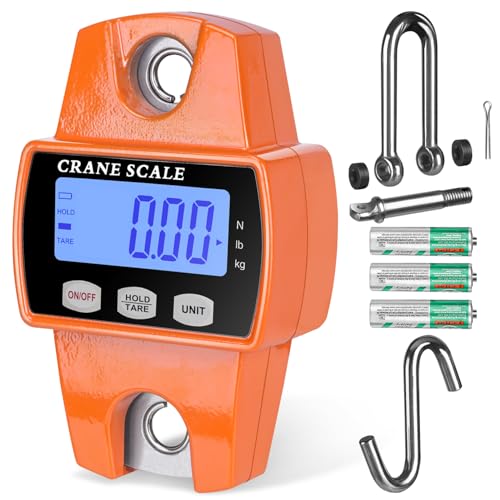

As an Amazon Associate, Measuring Expert earns from qualifying purchases.
Honest Limits of the 41.7 lb Figure
Above all, the 41.7 lb answer describes the water only, at roughly room temperature, in a container that holds exactly 5 US gallons. In practice, real life is messier. For one thing, many “5-gallon” buckets hold a bit more when filled to the rim. Moreover, cooler bottles are rarely filled to the very top. Meanwhile, dissolved minerals in hard water add only a tiny amount, while salt water adds about a pound. Because of all this, treat 41.7 lb as the reference value and weigh your own setup when the exact number matters.
When Accuracy Really Matters
Of course, for carrying groceries, rounding to 42 lb is fine. In a few cases, however, you should use a scale or a rated spec:
- Vehicle and trailer loads. Water tanks in RVs and boats add up fast, so check payload limits in the owner’s manual.
- Floors, decks and shelves. For example, aquariums and stacked jugs put heavy, constant loads on a small area.
- Shipping. Carriers bill by actual weight, so weigh the packed container.
- Lab and brewing work. In this case, you should measure temperature and use the matching density.
Frequently Asked Questions
How much do 5 gallons of water weigh in pounds?
Five US gallons of fresh water weigh about 41.7 lb. However, at room temperature the figure is closer to 41.6 lb.
How much do 5 gallons of water weigh in kilograms?
Five US gallons of water weigh about 18.9 kg, because 5 gallons equals 18.93 liters and a liter of water is close to 1 kg.
How much does a full 5-gallon water jug weigh?
In general, the water alone is about 41.7 lb. Add the empty weight of your bottle, which you can find by weighing it empty on a kitchen or bathroom scale.
Is 5 gallons of water heavier when it is cold?
Slightly. Cold water near 39 degrees F is a little denser than warm water, so a full 5-gallon jug weighs about 41.7 lb cold and about 40 lb at the boiling point.
How much does 1 gallon of water weigh?
One US gallon of water weighs about 8.34 lb, or 3.78 kg. At room temperature, however, it is about 8.33 lb.
How much do 5 imperial gallons of water weigh?
Five imperial gallons hold 22.73 liters, so they weigh about 50.1 lb, or 22.7 kg. In other words, that is about 8 lb more than five US gallons.
Does frozen water weigh more or less?
Neither. Freezing does not change mass, so 5 gallons of water still weighs about 41.7 lb as ice. Instead, it simply takes up about 9% more space.
How many liters are in 5 gallons?
There are 18.93 liters in 5 US gallons, because one US gallon equals exactly 3.785411784 liters.
How much does a 5-gallon bucket of salt water weigh?
Seawater is about 2.5% denser than fresh water, so 5 gallons weighs about 42.8 lb, or roughly 19.4 kg.
How much do 10 gallons of water weigh?
Similarly, ten US gallons of water weigh about 83.3 lb, or 37.8 kg, at room temperature.
The Bottom Line on 5 Gallons of Water
To sum up, five US gallons of fresh water weigh about 41.7 lb, or 18.9 kg, and the container adds its own weight. Meanwhile, temperature shifts the number by well under two pounds, while imperial gallons and salt water change it more.
So when you plan a load, count about 42 lb per jug. For your own numbers, use the converter at the top of the page or weigh the jug with the simple scale method above.