

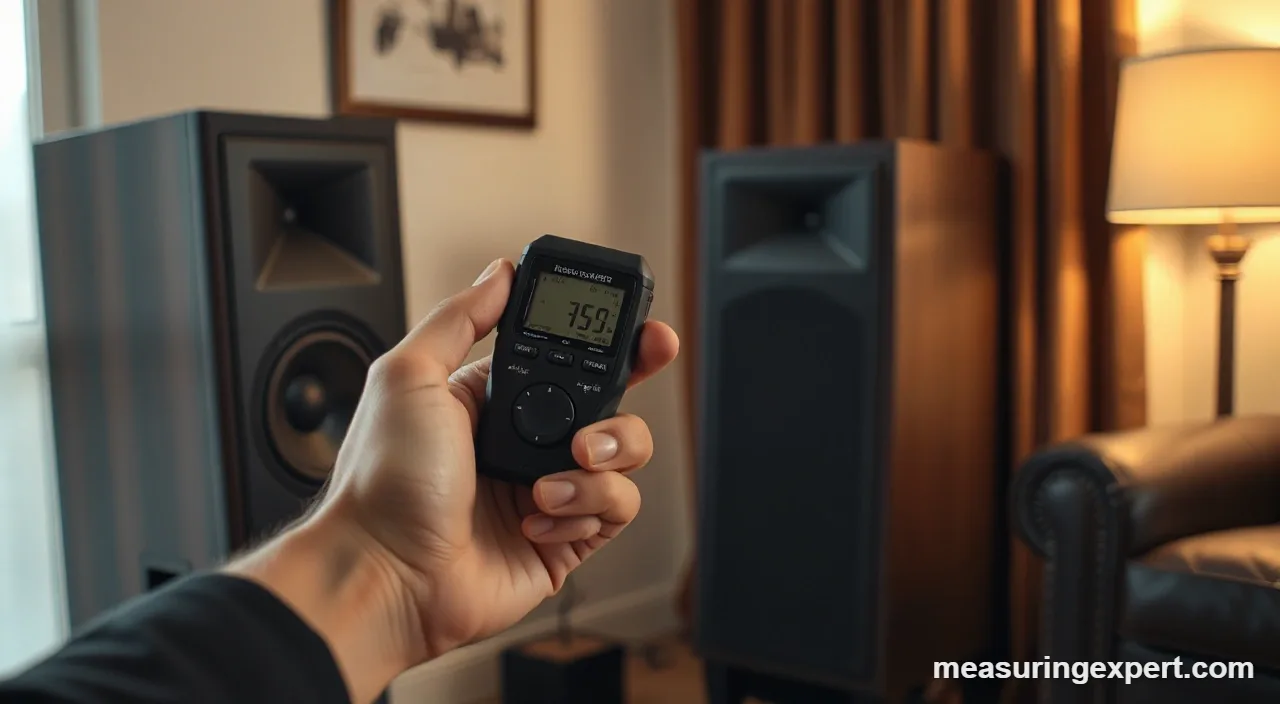
A normal conversation is around 60 dB, and a rock concert is around 110 dB. That 50 dB gap does not mean the concert is a bit louder. It means about 100,000 times the sound intensity. Numbers on the decibel scale behave very differently from the numbers on a ruler.
In sound, volume means loudness: how strong the pressure variations of a sound wave are when they reach your ear or a microphone. It is measured in decibels (dB), usually as sound pressure level (SPL) compared with a reference of 20 micropascals, which is about the faintest sound a healthy young ear can detect. This is a different idea from volume as the three-dimensional space of an object, which is measured in cubic meters or liters. Because the decibel scale is logarithmic, every 10 dB step multiplies sound intensity by 10 and is heard as roughly twice as loud, so 90 dB is far more than a little louder than 80 dB.
In short: when someone asks what volume measures in sound, the answer is the size of the pressure wave, expressed in decibels. A larger amplitude gives a louder sound, and the decibel number goes up. The pitch of the sound, which is its frequency, is a separate property.


Buying from this list? Get it fast, and catch Black Friday deals, with Prime
Sound Pressure in Pascals vs Atmospheres
Sound is a tiny ripple on top of normal air pressure. Enter a sound pressure in pascals and compare it with a full atmosphere to see just how small the ripple is.
Hearing safety guidance is built on these numbers. The CDC’s National Institute for Occupational Safety and Health (NIOSH) says noise is considered hazardous or loud when it reaches 85 dBA or higher, and its recommended exposure limit is 85 dBA averaged over an eight-hour workday. You can read its explanation on the NIOSH noise page, and OSHA publishes its own limits on its occupational noise page.
This guide explains the decibel, shows how pressure maps to dB, lists typical sounds, and walks through measuring volume with a meter. If you want a closer look at the mechanics, see what determines the volume of a sound, the practical guide to measuring sound volume, or our roundup of the best sound level meters.
Short Answer: Volume in Sound Is Loudness
The word “volume” has two unrelated meanings, and the old confusion between them is why this question keeps coming up. In everyday audio it means how loud something is. In geometry it means how much space something takes up. The table lines them up.
| Meaning | What it describes | Unit | Example |
|---|---|---|---|
| Volume as loudness | How strong a sound is | Decibel (dB) | A speaker turned from 60 dB to 80 dB |
| Volume as space | How much room an object fills | Cubic meter, liter, gallon | A 2 L bottle holds 2 liters of water |
| Pitch (not volume) | How high or low a sound is | Hertz (Hz) | A flute plays higher than a tuba |
| Intensity | Sound power per unit area | Watt per square meter | A louder sound carries more power |
A speaker’s “volume knob” is really a gain control. It makes the electrical signal bigger, which makes the speaker cone move farther and push harder on the air, and that raises the sound pressure at your ear. Nothing about the room or the speaker changes in size.
What a Decibel Really Measures
A decibel is not a fixed amount of anything. It is a ratio, a comparison between two values expressed on a logarithmic scale. For sound pressure, the formula is SPL = 20 x log10(p / p0), where p is the measured pressure and p0 is the reference pressure of 20 micropascals (0.00002 Pa).
The logarithm is there because human hearing covers a gigantic range. The loudest sounds the ear can tolerate are about a million times greater in pressure than the faintest sounds you can hear. Using plain pascals would mean numbers from 0.00002 to 20 or more. Decibels squeeze that range into a scale that runs from about 0 to 140.
Two numbers help in everyday use. A 3 dB rise doubles the sound power, and a 10 dB rise multiplies it by ten. The ear perceives a 10 dB rise as roughly a doubling of loudness, which is why a gentle-looking number change can mean a large real difference.
Amplitude, Pressure and Loudness: How They Relate
A sound wave is a pattern of high and low pressure traveling through the air. The size of the swing between high and low is the amplitude. Bigger swings push harder on the eardrum, and we hear that as a louder sound. The table below shows what each change in decibels does to intensity and pressure.
| Change in level | Sound intensity | Sound pressure | How it is heard (rule of thumb) |
|---|---|---|---|
| +3 dB | 2 times | 1.41 times | Just noticeably louder |
| +6 dB | 4 times | 2 times | Clearly louder |
| +10 dB | 10 times | 3.16 times | About twice as loud |
| +20 dB | 100 times | 10 times | About four times as loud |
| +30 dB | 1,000 times | 31.6 times | About eight times as loud |
Distance matters too. In open space, each doubling of the distance from a source lowers the level by about 6 dB. That is why stepping back from a speaker helps, and why a noisy machine is far less harmful from across the room.
Typical Sound Levels You Can Compare
These values are approximate. Real levels depend on distance, the room and the particular source, so use them for orientation rather than precision.
| Sound | Approximate level | Exposure comment |
|---|---|---|
| Quiet room | 30 to 40 dBA | No concern |
| Normal conversation | 60 dBA | No concern |
| Vacuum cleaner or busy restaurant | 70 to 80 dBA | Fine for normal use |
| Heavy city traffic from the curb | 80 to 85 dBA | Near the level where protection begins to matter |
| Lawn mower or power tool | 90 to 100 dBA | Hearing protection advised |
| Rock concert | 100 to 115 dBA | Short safe time without protection |
As a practical check from OSHA’s guidance, if you have to raise your voice to be heard by someone about 3 feet (1 meter) away, the noise may be above 85 dBA.
NIOSH uses a 3 dB exchange rate, so 85 dBA is allowed for 8 hours, 88 dBA for 4 hours and 91 dBA for 2 hours. OSHA uses a 5 dB exchange rate and a higher 90 dBA limit.
Loudness vs Pitch, and What dBA Means
Volume and pitch are independent. A bass drum and a whistle can have the same decibel reading, yet they sound nothing alike, because pitch depends on frequency, measured in hertz. Our ears are not equally sensitive to all frequencies either. We hear mid-range sounds around 1 to 4 kHz best, and we are much less sensitive to deep bass at low levels.
| Reading | Meaning | Use it for |
|---|---|---|
| dB SPL (unweighted) | Raw pressure level, every frequency treated equally | Physics, acoustics and equipment tests |
| dBA | A-weighted, adjusted to match the ear at moderate levels | Noise at work, hearing safety, neighborhood noise |
| dBC | C-weighted, nearly flat, includes more bass | Loud peaks, music and low-frequency sources |
| Phon and sone | Units of perceived loudness, not just pressure | Comparing how loud sounds seem to people |
That is why a noise meter for hearing safety normally reads in dBA. It gives more weight to the frequencies that damage hearing and less to the ones the ear barely notices.
The formula is p = 0.00002 Pa x 10^(L/20), where L is the sound pressure level in dB. For example, 94 dB gives 0.00002 x 10^4.7 = 1.0 Pa, which is only about 0.00001 atm.
Recommended Sound Level Meters
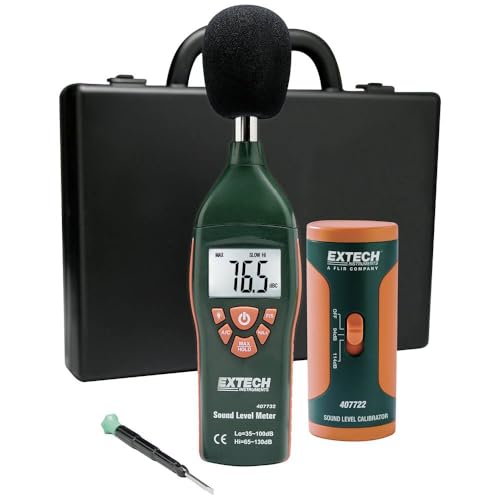
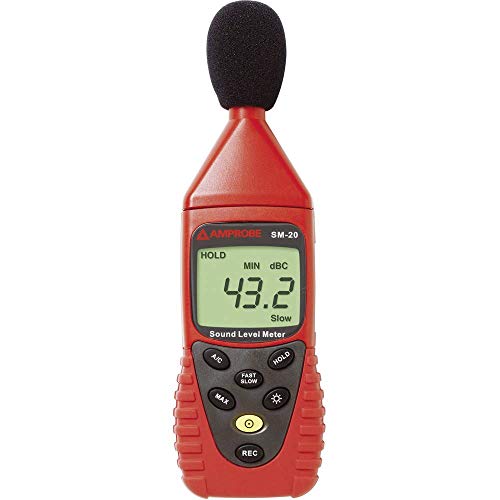
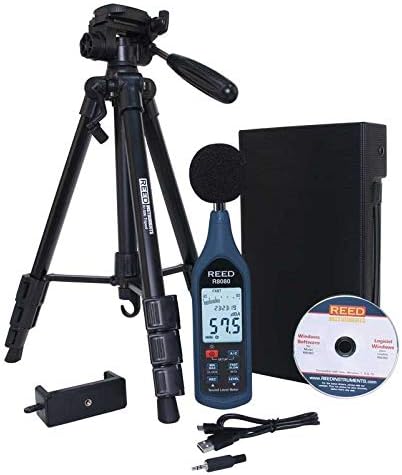
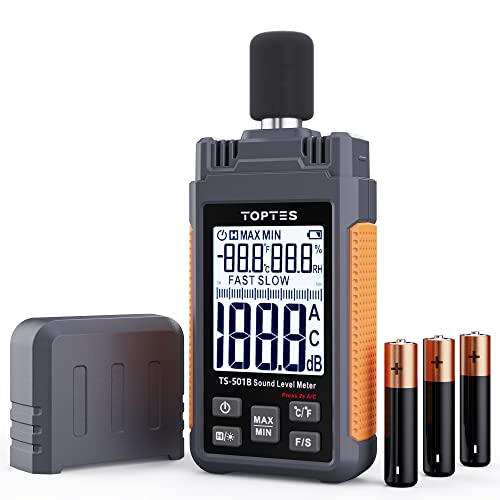
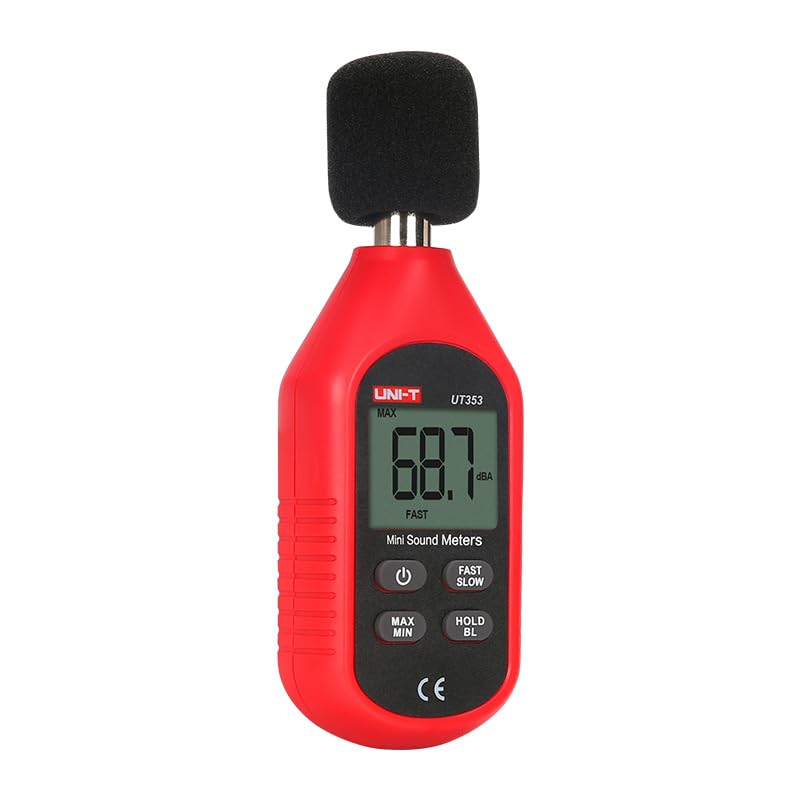
A sound level meter turns the invisible pressure ripple into a number you can read. Pick a model with A and C weighting, Fast and Slow response, and a stated range that covers the sounds you care about. The list below mixes handheld meters, a data logger kit and a calibration-friendly option, based on manufacturer specs and buyer reports.
As an Amazon Associate, Measuring Expert earns from qualifying purchases.
How to Measure Sound Volume, Step by Step
A sound level meter does the math for you. These steps give consistent readings.
- Choose the weighting. Set the meter to A-weighting (dBA) for general noise and hearing questions. Use C-weighting only if you care about loud, low-frequency sound.
- Choose the response speed. Select Fast for changing sounds and Slow for steady sounds. Fast averages over about 125 milliseconds and Slow over about one second.
- Hold the meter correctly. Hold it at arm length, pointing at the source, at about ear height. Keep your body out of the way, since your body reflects sound.
- Cover the microphone. Fit the foam windscreen if you are outdoors or near a fan, so wind does not read as noise.
- Record the level. Wait a few seconds for the number to settle, then write down the reading with the location and time.
- Repeat and compare. Take several readings at different times. Note the peak and the typical value, and compare them against the limits for your situation.
A phone app can be handy for a rough idea, but built-in microphones are not designed for accurate level measurement. For decisions about hearing or noise rules, a proper meter is the better choice.
Do and Do Not
Do
- Quote the weighting (dBA or dBC) together with the number.
- Take readings at the place where people actually listen.
- Calibrate the meter with a reference source when you can.
- Measure over time, not just once.
- Use the same distance each time you compare sources.
Do not
- Compare dB numbers as if they were added like feet or pounds.
- Hold the meter close to your body.
- Trust a single quick reading for a safety decision.
- Assume a louder number always sounds proportionally louder.
- Mix up dB SPL with the loudness of a volume knob setting.
Sounds above about 85 dBA over long periods can damage hearing, and very loud sounds can do harm in seconds. If a sound hurts, leave the area or protect your ears, whatever the meter says.
Honest Limits of Decibel Numbers
A decibel reading describes the sound at one point in space, at one moment, through one microphone. It cannot say how annoying a sound is, how it will affect a particular person, or whether it is safe over a whole day. Hearing is personal, and two listeners can disagree about what is “loud.”
Meters have limits too. Consumer meters often have an accuracy of about plus or minus 1.5 to 2 dB, and they lose accuracy at very low and very high frequencies. A phone microphone may be even less accurate. Reflections from walls, wind, and the position of your body can move a reading by several decibels. Finally, the rule that 10 dB sounds “twice as loud” is an average from listening tests and not an exact law.
When to Call a Professional
For hearing concerns, such as ringing in the ears, muffled sound after a loud event, or trouble following conversations, see a doctor or an audiologist. For workplace noise, an industrial hygienist or safety professional can run a proper survey and tell you whether a hearing conservation program is required. For disputes about neighborhood or building noise, an acoustic consultant can measure with calibrated equipment and report in the format regulators expect.
This article is general education about sound and measurement, and it is not medical, legal or safety advice.
Frequently Asked Questions
What does volume measure in sound?
It measures loudness, which is how strong the sound pressure wave is. The unit is the decibel (dB).
What unit is the volume of sound measured in?
Decibels. Sound pressure level in dB compares the measured pressure with a reference of 20 micropascals.
Is sound volume the same as the volume of an object?
No. Loudness is measured in decibels, while the volume of an object is the space it fills, measured in cubic meters or liters. They share only the name.
Why is the decibel scale logarithmic?
Human hearing covers a huge range of pressures. A logarithmic scale squeezes that range into small, workable numbers, roughly 0 to 140.
How much louder is 10 dB?
It is ten times the sound intensity and about 3.16 times the pressure. Most people hear it as roughly twice as loud.
What is the difference between dB and dBA?
dB SPL treats all frequencies equally, while dBA weights them to match human hearing. dBA is the standard for hearing safety and noise rules.
What sound level is safe for hearing?
NIOSH recommends keeping exposure to 85 dBA or less as an 8-hour average. Louder sounds need much shorter exposure times, and protection is advised.
Does volume depend on pitch?
They are independent. Volume depends on amplitude, and pitch depends on frequency. Ears do hear some pitches more easily than others, though.
How does distance change sound level?
In open space, each doubling of distance lowers the level by about 6 dB. Walls and reflections in a room reduce that effect.
Can I measure sound volume with my phone?
You can get a rough number, but phone microphones are not built for accurate readings. A dedicated sound level meter is better for safety or compliance questions.
The Short Version
In sound, volume means loudness, and the decibel is the unit that measures it. A decibel is a ratio on a logarithmic scale, so small changes in the number hide big changes in energy: 3 dB doubles the power, and 10 dB is ten times the intensity and about twice as loud to the ear.
Treat dB readings as useful, rough guides. Quote the weighting, mind the distance, and use hearing protection once levels reach about 85 dBA. For anything that affects health, work or the law, use a calibrated meter or bring in a professional.
Listen to a free audiobook while you cook, work or wait