

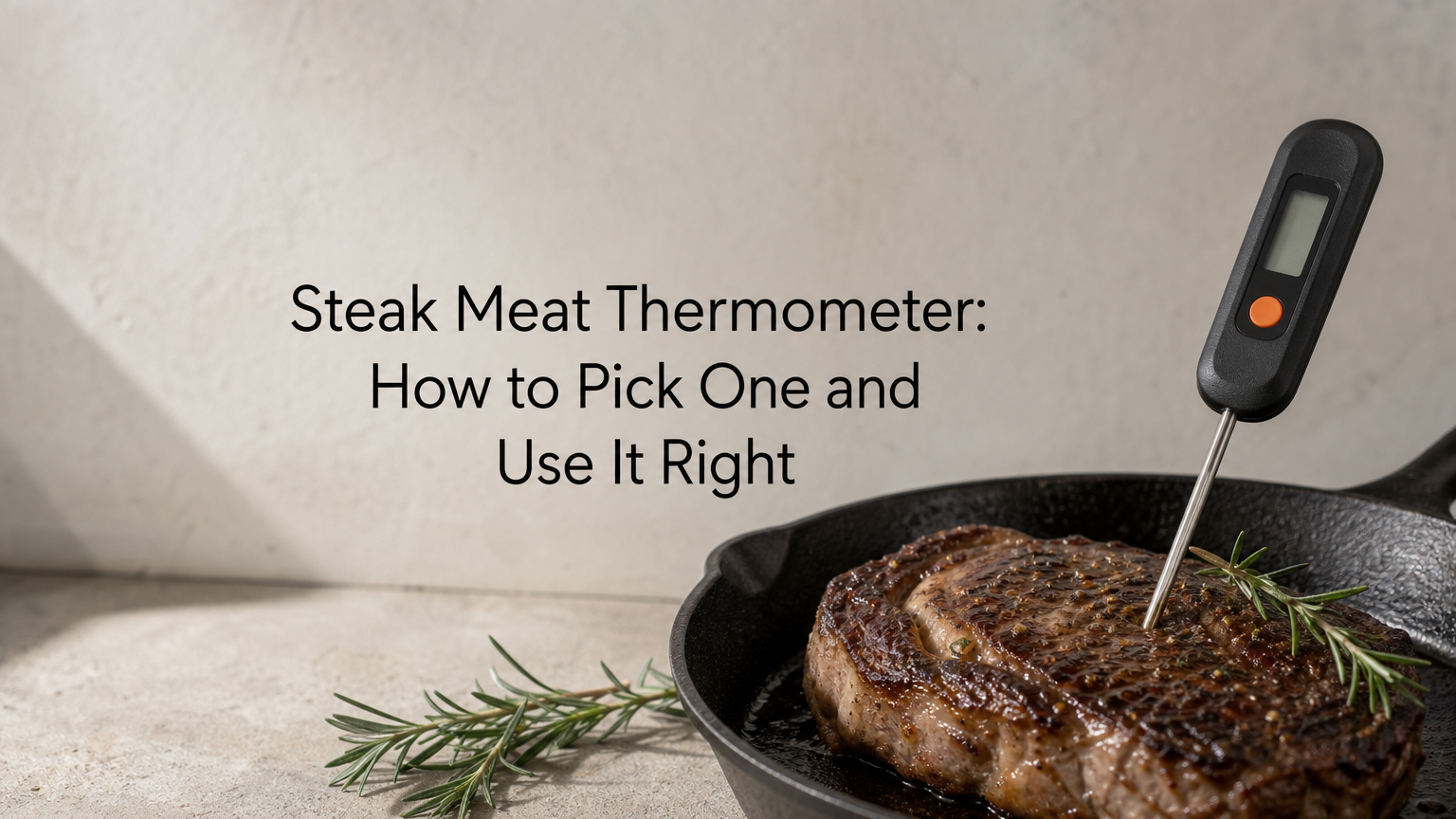
To cook steak to the right doneness, buy a digital instant-read steak meat thermometer, confirm that it reads accurately, push the probe into the thickest part of the cut, and pull the meat 5 to 10°F below your target. The steak keeps cooking as it rests. The routine is the same for beef, burgers and pork. Only the target temperatures change.
Steak gives you a narrow window. Five to ten degrees separate medium rare from medium, and a one-inch steak can cross that line in under a minute. Pan heat, fridge-cold meat and cut thickness all shift the cooking time. Timing charts and the finger-poke test miss more often than they hit.
This guide covers which type of thermometer to buy, then four steps: test the thermometer, choose your target temperature, probe the meat correctly, and pull, rest and recheck. Burgers and pork get their own safe numbers along the way. Measuring Expert focuses on measuring tools and accuracy, so the goal is a reading you can trust.
Black Friday is coming: shop the deals with Prime
Why a thermometer beats guessing, and what to buy
A thermometer measures the one thing that decides doneness, the temperature at the center of the meat. Buy an instant-read digital model for steak, and keep a leave-in probe for roasts.
Why guessing fails with steak
Two steaks of the same weight can need very different times if one is 1 inch thick and the other is 1.75 inches. Starting temperature, pan heat and the grill’s hot spots add more variation. Time and touch only estimate doneness, and a thermometer measures it.
Time and touch estimate doneness, but a thermometer measures it.
Safety is the second reason. You cannot judge ground beef or pork by color, because meat can look done before it reaches a safe temperature. A thermometer removes that doubt.
Which digital thermometer to buy
A digital meat thermometer comes in three common types, and they suit different jobs.
| Type | Best for | Trade-off |
|---|---|---|
| Instant-read digital | Steaks, chops and burgers in a pan or on a grill | You hold it, so it does not stay in the meat |
| Leave-in probe with cable | Roasts and thick cuts in an oven or smoker | Awkward for steaks you flip |
| Wireless smart probe | Long cooks with app alerts | Overkill for a steak that cooks in 10 minutes |
For steak, the instant-read is the one to buy. Look for a reading in about 2 to 3 seconds, accuracy of ±1°F or better, a thin tip that leaves a small hole, a backlit display and a water-resistant body you can wash. Food Network’s testing named the Thermapen One its best overall pick. A cheaper model that meets those specs and passes the test in Step 1 does the same job.
Step 1. Test your thermometer’s accuracy
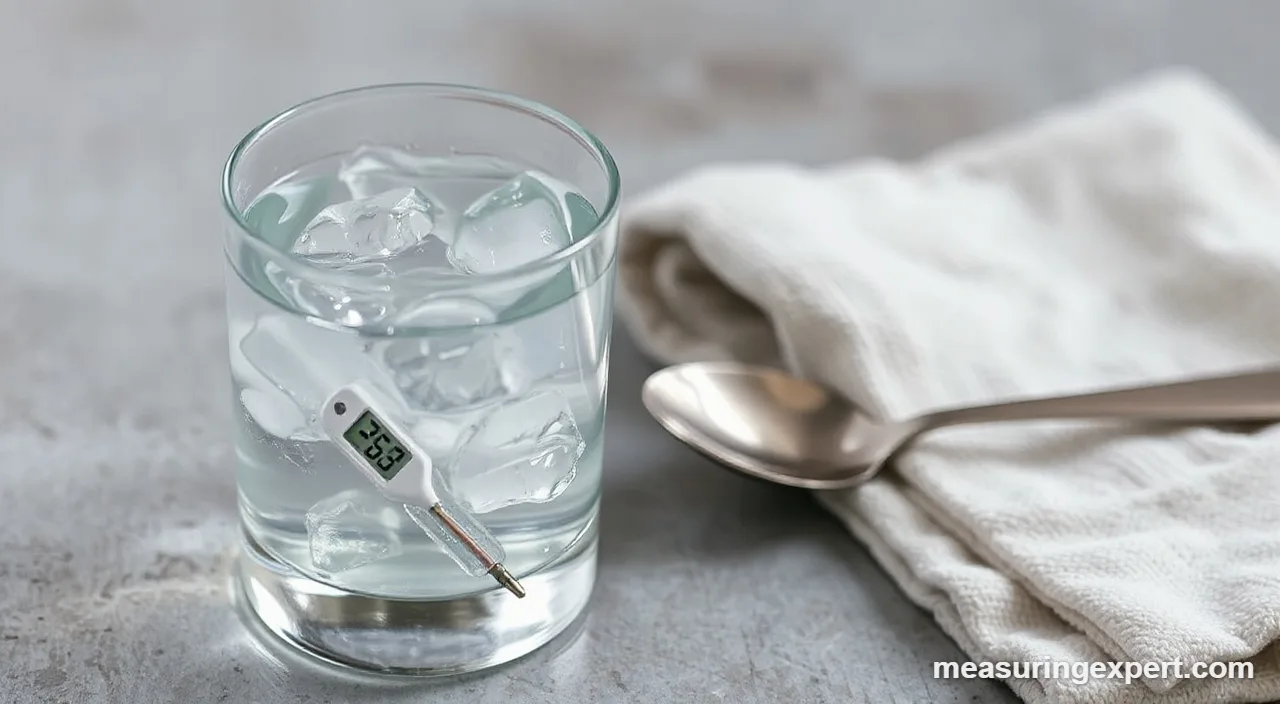
Check any new thermometer in a glass of ice water before you trust it with a steak. A properly working unit reads 32°F in ice water, give or take 1 to 2 degrees.
The ice water test
- Fill a glass to the top with ice, then add cold water.
- Stir for 30 seconds and let it sit for a minute.
- Submerge the probe 2 inches without touching the glass.
- Read the display once it stops moving.
You can also test in boiling water, where the reading should be 212°F at sea level. The boiling point drops about 1°F for every 500 feet of elevation, so adjust your expectation if you live at altitude.
What to do when the reading is off
If the reading is off by 3°F or more, check the calibration instructions. Many digital models have a reset or offset function. If yours has none, write down the error and add or subtract it from every reading. A thermometer that reads 4°F high turns medium rare into medium without telling you.
A thermometer that is 4°F off ruins a steak as surely as a missing one.
Step 2. Choose your target temperature
Pick the final temperature first, then subtract for carryover to get the pull temperature. Use the table for beef and the safe minimums below for burgers and pork.
Doneness targets for beef steak
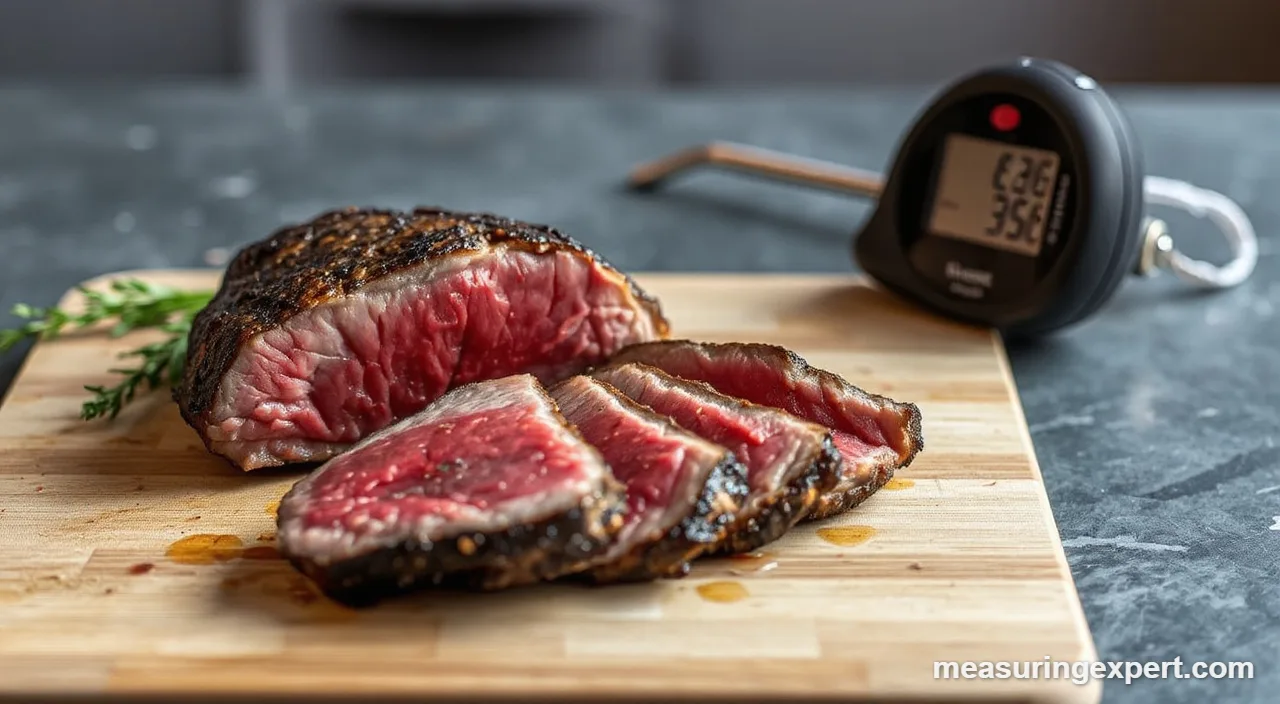
A beef meat thermometer reading of 130 to 135°F gives medium rare. Pull earlier than the final number, because the center climbs as the steak rests.
| Doneness | Pull from heat | Final after rest |
|---|---|---|
| Rare | 115 to 120°F | 120 to 125°F |
| Medium rare | 125 to 130°F | 130 to 135°F |
| Medium | 135 to 140°F | 140 to 145°F |
| Medium well | 145 to 150°F | 150 to 155°F |
| Well done | 155°F | 160°F and up |
Pull the steak 5 to 10°F below the final number you want.
Safe temperatures for steak, burgers and pork
USDA recommends 145°F plus a 3-minute rest for whole cuts of beef, pork and lamb. By that standard, a steak at 140°F is just short, though carryover during the rest often closes the gap. A steak at 155°F is well past the minimum. Medium rare is below the USDA guideline, so eating it is your own call. Be more cautious with tenderized or injected steaks.
Ground meat is different. Grinding spreads surface bacteria through the whole patty, so the rules are stricter:
- Burgers (ground beef or pork): 160°F in the center.
- Pork chops and roasts: 145°F, then rest 3 minutes.
- Chicken and turkey, including ground: 165°F.
A meat thermometer for burgers has to reach the patty’s center, which Step 3 covers.
Step 3. Probe the meat the right way
Insert the probe into the thickest part of the meat, aim for the center, and keep the tip away from bone, fat pockets and the pan. Where you enter matters as much as how deep you go.
Thick steaks and chops
For a steak thicker than about 1.25 inches, push the probe in from the top, past where you think the center is. Then pull back slowly. The lowest number you see is the true center. Bone conducts heat and reads high, so stay about half an inch away from it. Check a second spot if the cut is uneven.
Thin steaks and burgers
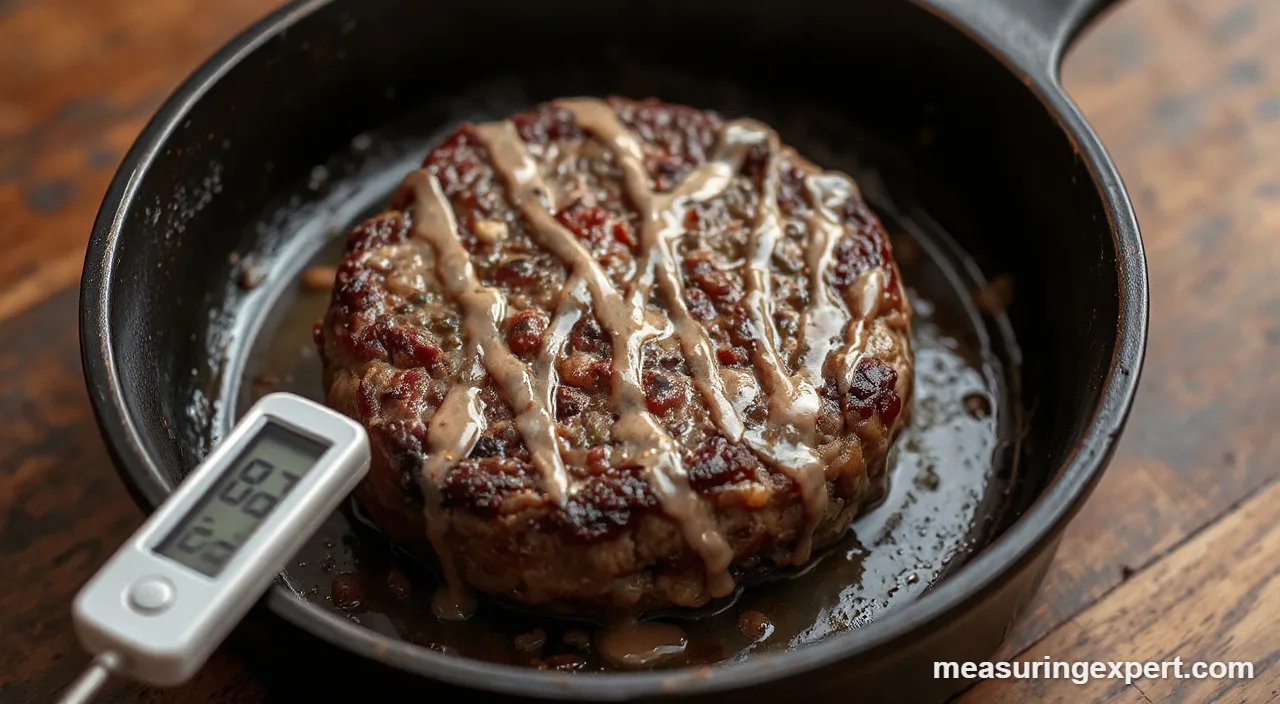
Thin cuts and patties are where most readings go wrong. Insert the probe through the side, horizontally, until the tip sits in the center. The sensing area on many thermometers runs from half an inch to 2 inches along the tip, so a shallow stab from above can read the hot surface instead of the middle.
When you grill steaks, take the meat off direct heat before you probe it. A flare-up or a hot grate near the tip skews the number. Wipe the probe with hot soapy water after raw meat and before it touches anything cooked.
Go in from the side for thin cuts, and sample the center, not the surface.
Step 4. Pull, rest and recheck
Start checking early, pull the meat at the pull temperature, rest it, and confirm the final reading. This step turns a good reading into the doneness you wanted.
A worked example
Take a 1.5-inch ribeye and aim for medium rare at 135°F final.
- Begin probing once the steak has a good crust on both sides, then check every minute.
- Pull it at 128°F, inside the 125 to 130°F pull range.
- Rest it on a plate or rack for 5 to 10 minutes.
- Probe again. The center should peak around 135°F.
- Slice and serve.
If the steak stalls under your pull temperature, return it to the heat for a minute and recheck. Do not guess.
Adjusting for thickness
Thin steaks under 1 inch have little carryover, only 3 to 5°F, so pull them within a few degrees of the final number. Thick cuts and bone-in steaks carry more. Keep a note of your pull and final readings after each cook, and your results will become repeatable in a few meals.
Write down the pull temperature and the final reading, and next time you will not need to guess.
Cook with confidence
A good steak meat thermometer takes the guessing out of doneness. Test it in ice water, choose your final temperature, subtract for carryover, probe the center from the side or top, and rest the meat before you slice. For burgers, go to 160°F. For pork, 145°F with a 3-minute rest.
Follow those steps and a steak, chop or patty comes out the same way each time. If you want help choosing and testing other kitchen tools, from scales to timers, browse the measuring tool guides at Measuring Expert.
Listen to a free audiobook while you cook, work or wait