

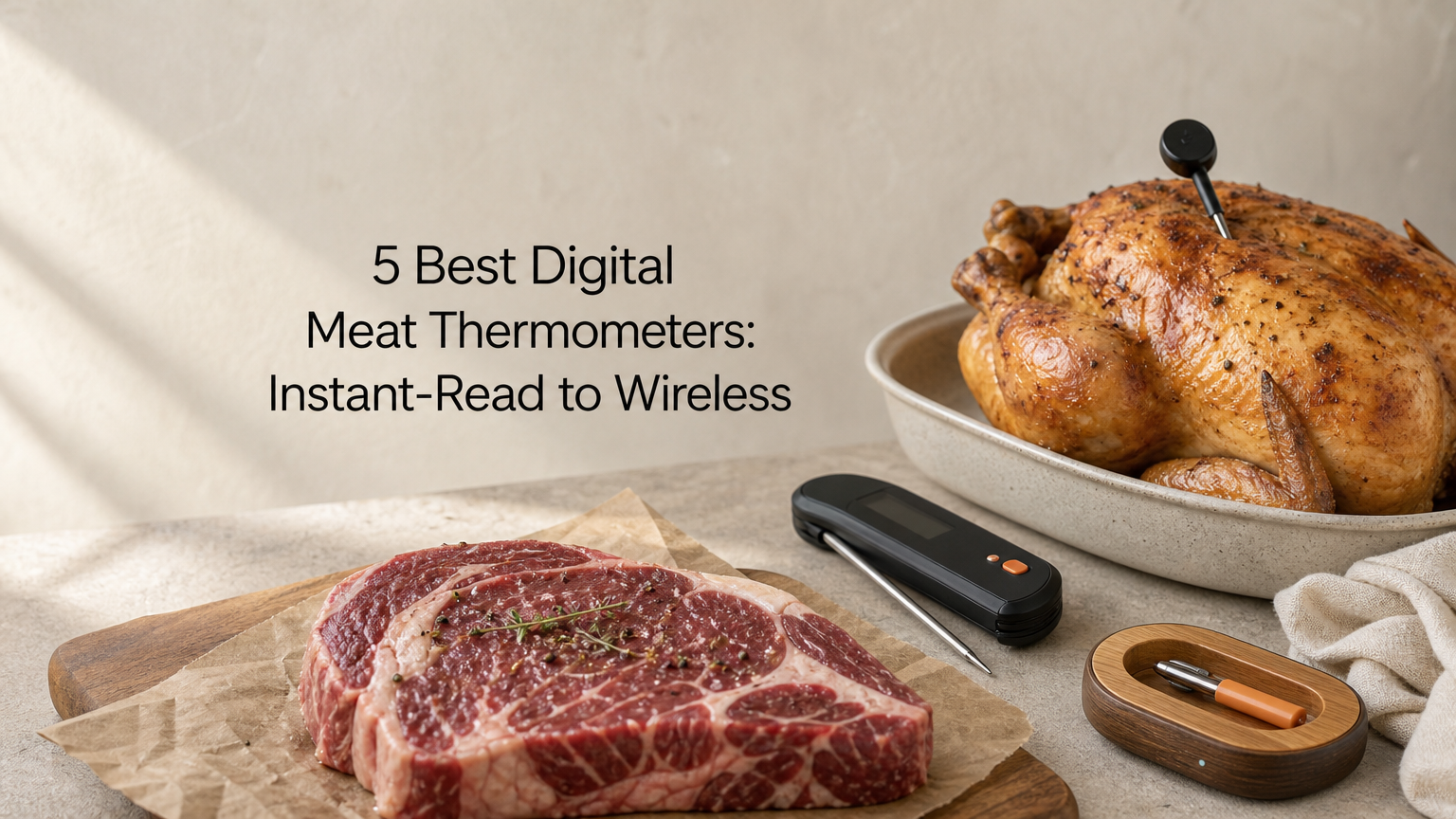
The best thermometer meat pick for most cooks is a fast instant-read, and the best for long roasts and smokes is a wireless leave-in probe. A good digital meat thermometer reads within about 1°F, answers in seconds or alerts you remotely, and survives a wet kitchen. The Thermapen One suits cooks who want top accuracy. MEATER Plus suits people who hate hovering over the oven. A basic wired probe or budget instant-read suits anyone watching the price.
The problem is that color, firmness and cooking time are poor guides to doneness. Overcook a roast and you waste hours of work. Undercook chicken and you risk food safety. Meanwhile, every thermometer listing claims to be fast and accurate.
Measuring Expert covers measuring tools, and a cooking thermometer is one of the tools where accuracy matters most. Below are five picks across instant-read, wired leave-in, Bluetooth and Wi-Fi models. Each one covers how it works, who it suits and what to watch for.
Add ad-free music to your kitchen or workshop
1. Thermapen One for the fastest instant-read
How it works
The Thermapen One is a handheld instant-read digital meat thermometer. You unfold the probe, push it into the meat and read the display. Food Network’s testers named it their best overall pick, and its reputation rests on speed and accuracy.
- Response time: about 1 second
- Accuracy: ±0.5°F
- Build: waterproof body with a folding probe
- Price: roughly $100
Who it suits and trade-offs
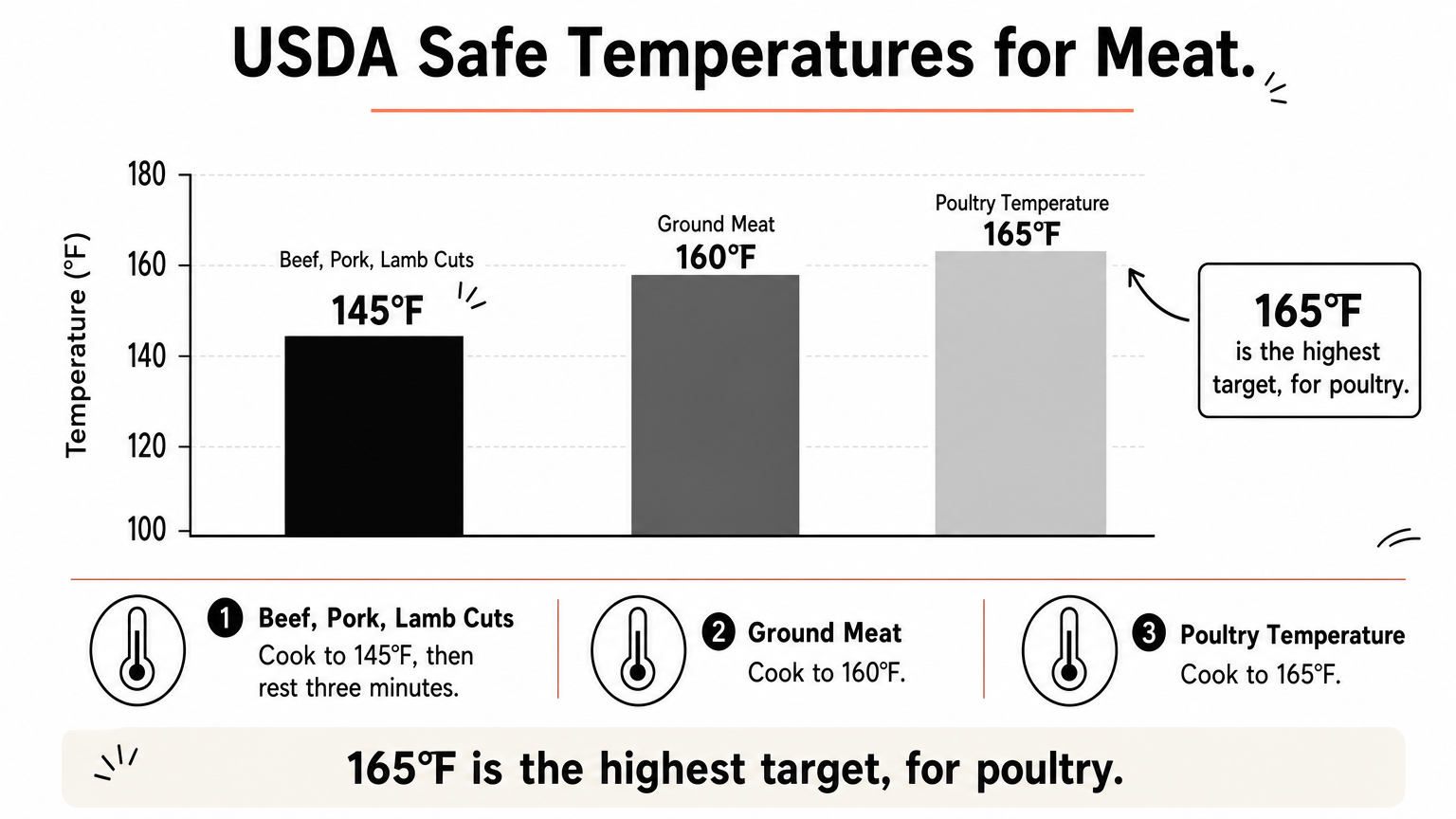
It suits cooks who grill steaks, chops and burgers, where a few seconds separate medium-rare from medium. Insert the tip into the thickest part, away from bone, fat and gristle, as USDA’s Food Safety and Inspection Service advises. The USDA targets are 145°F plus a three-minute rest for beef, pork and lamb cuts, 160°F for ground meat and 165°F for poultry.
The trade-offs are the price and the format. It cannot stay in a hot oven, so you open the door every time you check.
Speed is nice, but a reading you can trust to the half degree is what saves the steak.
2. MEATER Plus for fully wireless cooking
How it works
MEATER Plus is a 100% wire-free probe that stays in the meat for the whole cook. It sends readings over Bluetooth to an app on your phone. Two sensors in one probe track the meat and the air around it.
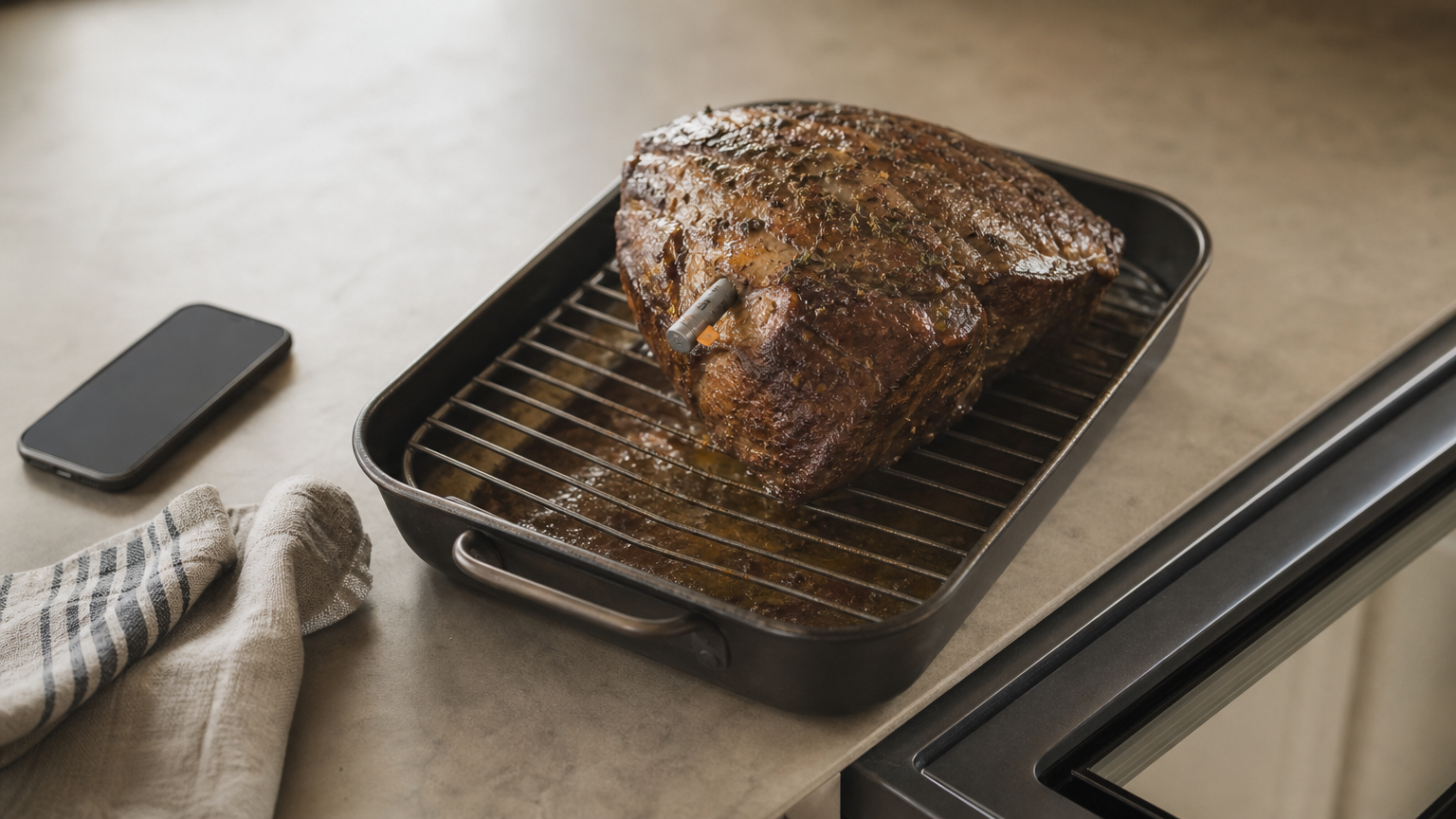
- Wireless range: up to 165 ft
- Internal sensor: up to 212°F
- Ambient sensor: up to 527°F
Who it suits and trade-offs
It suits roasts, whole chickens, rotisserie cooks and smoker sessions, where you want to leave the kitchen and trust an alert. The ambient reading also shows whether your oven or grill is running hot or cold. That helps with long cooks.
The trade-offs are cost and limits. It costs more than a wired probe, and each unit holds one probe, so two roasts need two units. The 165 ft figure is a rated maximum, and walls and metal lids will shorten it. You also need your phone nearby.
If you would rather be a guest than a babysitter, a wireless probe earns its price.
3. TempPro Wi-Fi and Bluetooth models for long cooks
How it works
TempPro sells smart meat thermometers with Wi-Fi and Bluetooth that push live food temperatures to your smartphone. Bluetooth works within a limited radius of the unit. Wi-Fi lets you check the cook from anywhere with an internet connection. Check each listing for the probe style, because models in this class vary.
- Number of probes: more probes let you monitor several cuts at once
- Alarms: set a target and an alert
- Ambient probe: tracks pit or oven temperature
Who it suits and trade-offs
It suits smokers, brisket and pork butt cooks, and hosts doing several cuts at once. Cooks that run 8 to 14 hours are where remote checks pay off.
Expect more setup than a plain thermometer. You pair an app, join your home network and manage probe wires. A weak Wi-Fi signal near an outdoor smoker can be a problem. For a quick weeknight steak it is overkill.
Choose Wi-Fi when the cook outlasts your patience, not because it sounds advanced.
4. Wired leave-in probe for tight budgets
How it works
A wired leave-in thermometer has a metal probe on a heat-safe cable that runs out of the oven to a small display. You set a target temperature and it beeps when the meat gets there. It does the same job as a smart probe without the app. Basic models from brands like Taylor can cost under $10.
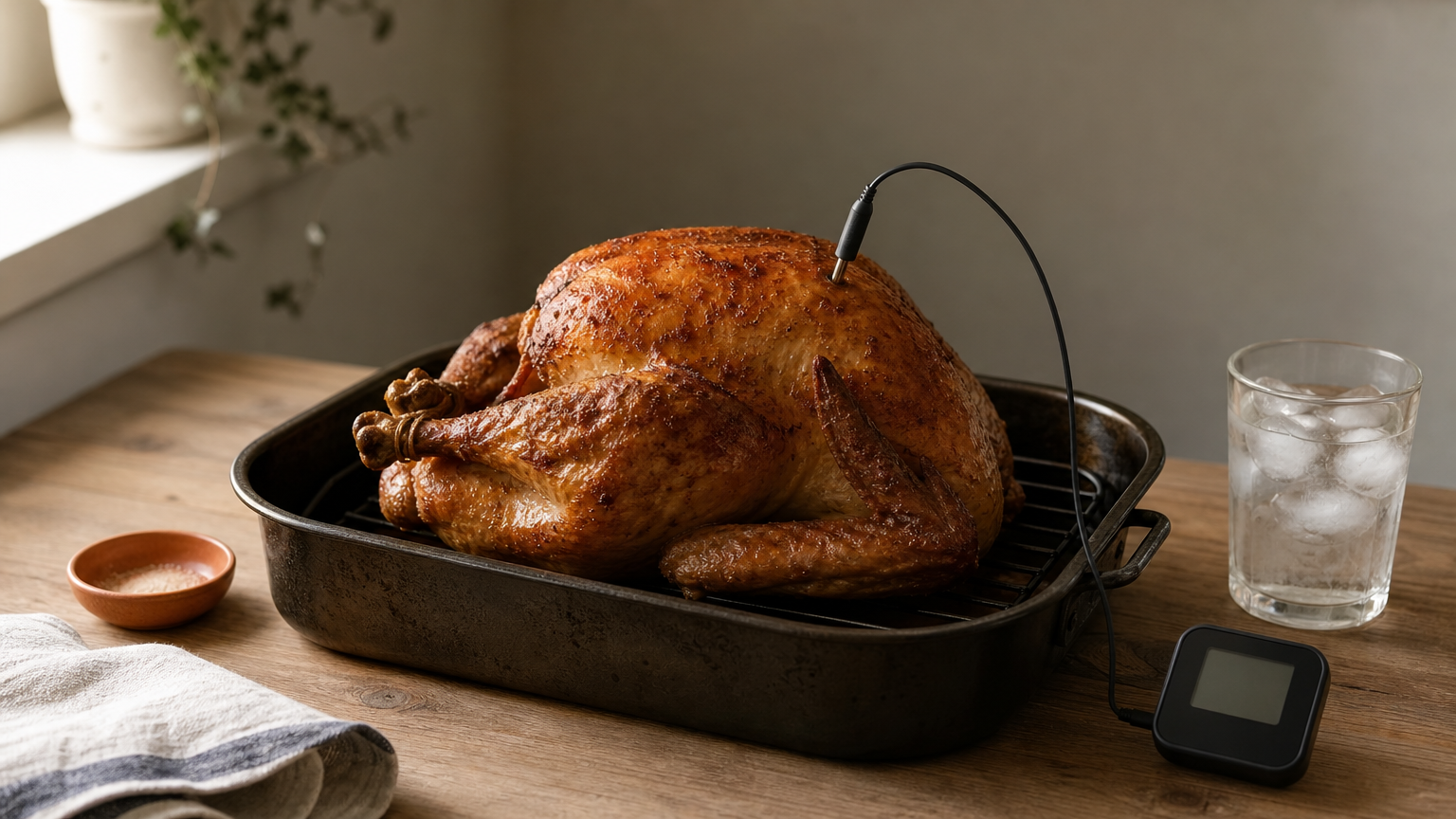
- Best for: roasts, turkey, whole chickens
- Alarm: look for a target-temperature alert
- Cable: should be rated for oven heat
Who it suits and trade-offs
It suits anyone who roasts a few times a month and wants alerts without paying for wireless. Cheap probes drift, so test yours in ice water. A properly mixed ice bath should read 32°F. Boiling water reads 212°F at sea level. If the reading is off by more than a degree or two, return it.
The weak spot is the cable. An oven door can pinch it, and it limits where you can place the unit.
A cheap probe is fine once you have checked it against ice water.
5. Budget instant-read with backlight and magnet
How it works
Amazon’s results for this kind of digital food thermometer are full of low-cost instant-reads. The common features are a backlit display, a waterproof body and a magnet for storing it on the fridge. You insert the probe, wait a few seconds and read the display.
- Look for: backlight, waterproof body, magnet
- Speed: slower than premium models
- Check: the ice-water test applies here too
Who it suits and trade-offs
It suits casual cooks and anyone still asking whether a meat thermometer is worth owning. It is. A basic one costs far less than a single ruined roast. Use it for burgers, chicken breasts and pork chops, where a few extra seconds will not hurt.
The trade-off is that cheaper units tend to be slower and less consistent than premium ones. Pick one with a clear display and a probe long enough to reach the center of thick cuts.
The best first thermometer is the one you actually use every time you cook meat.
Which one should you buy
Pick the Thermapen One if you grill often and want speed and half-degree accuracy. Pick MEATER Plus if you roast or smoke and want to walk away. Pick a TempPro Wi-Fi model for long cooks with several cuts. Pick a wired probe or a budget instant-read if cost matters most.
Whatever you buy, test it in ice water and boiling water, insert it in the thickest part of the meat and cook to USDA temperatures. If you want more help choosing and checking accurate kitchen tools, browse more measuring tool guides on Measuring Expert.
Black Friday is coming: shop the deals with Prime