

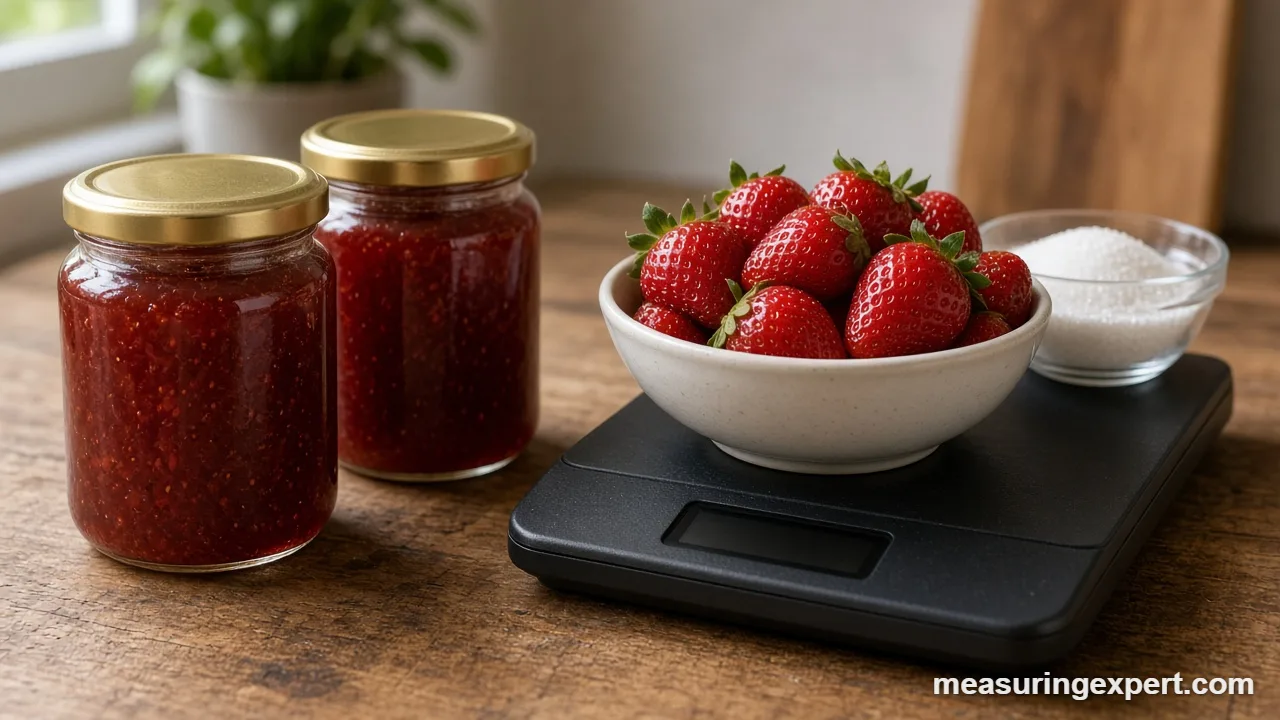
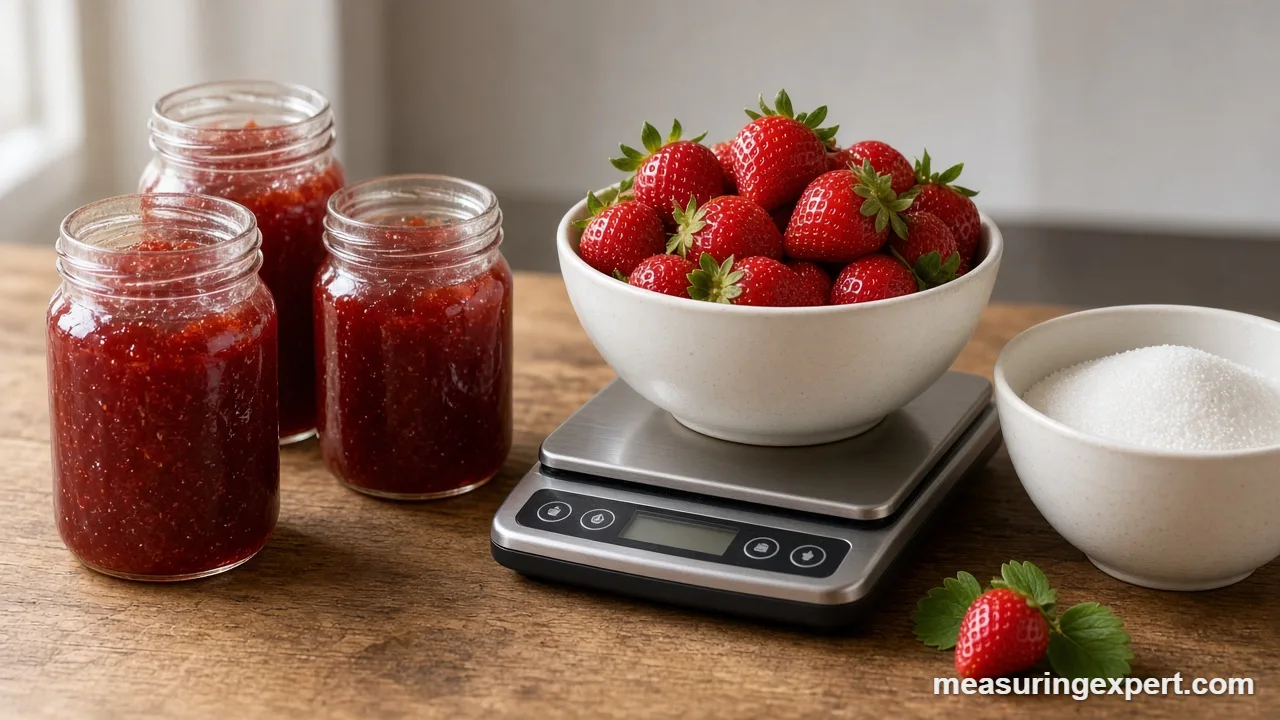
To measure ingredients for jam, weigh the fruit, sugar and pectin on a kitchen scale instead of scooping them. Then follow a tested recipe exactly, cook to the set point of 220 F (104.4 C) at sea level, and leave 1/4 inch (6 mm) of headspace in each jar. Weight is repeatable, while cups are not.
Convert Jam Fruit and Sugar Weights Before You Cook
Most jam recipes list fruit in pounds or cups and sugar in cups. Use the converter below to turn pounds and ounces into grams and kilograms, so a scale in either unit works. Next, compare your total with the recipe before you start cooking.
Jam is a balancing act. Fruit supplies flavor, sugar and acid help it gel, and pectin holds it together. If one of those drifts, the jam can turn runny, stiff or unsafe to store. As a result, careful numbers matter more here than in most recipes.
In short: weigh first, cook to temperature, and fill jars to the right level. The sections below show how to measure ingredients for jam at each step. The advice follows the National Center for Home Food Preservation (NCHFP), which publishes the USDA-based canning guidance for home cooks. Safe canning, in particular, depends on tested recipes. Our guides to measuring ingredients for canning and canning fruit measurements cover the wider picture.
- Set point: 220 F (104.4 C) at sea level, which is 8 F above boiling water.
- Headspace: 1/4 inch (about 6 mm) for jam and jelly.
- 1 cup granulated sugar: about 198 g (7 oz).
- 1 cup sliced fresh strawberries: about 167 g (5 7/8 oz).
- Keep fruit, sugar, pectin and acid in the proportions your tested recipe gives.
Why You Should Measure Ingredients for Jam by Weight
A cup is a measure of space, not of fruit. Chopped strawberries pack differently from whole ones, and a ripe berry holds more juice than a firm one. For example, King Arthur’s ingredient weight chart lists 1 cup of sliced strawberries at about 167 g, while 1 cup of fresh raspberries is about 120 g. That is a difference of nearly 40 percent for the same cup.
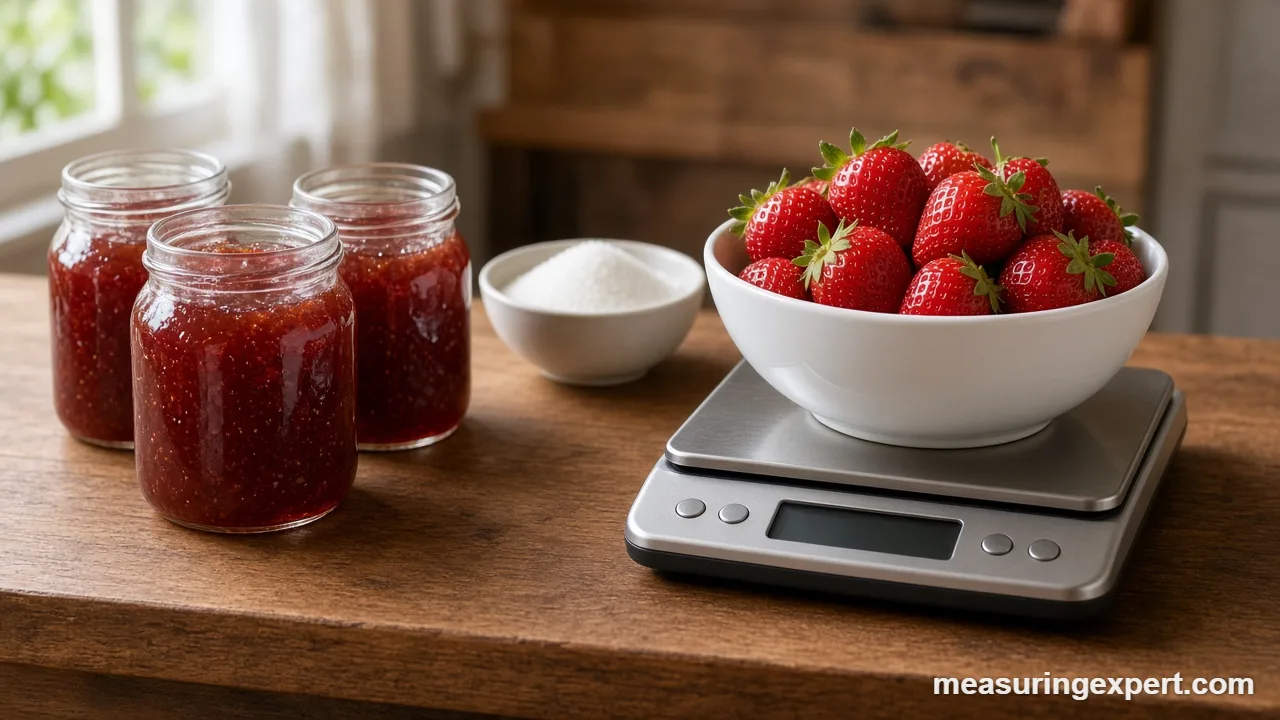
Sugar is steadier, but it still varies a little. The same chart gives 198 g (7 oz) for 1 cup of granulated white sugar. Therefore, a recipe that calls for 5 cups of sugar needs about 990 g, which is roughly 2.18 lb. A scale confirms this in seconds, and it also stops you from overfilling a cup.
| Ingredient | Volume | Approximate weight |
|---|---|---|
| Granulated white sugar | 1 cup | 198 g (7 oz) |
| Strawberries, fresh, sliced | 1 cup | 167 g (5 7/8 oz) |
| Raspberries, fresh | 1 cup | 120 g (4 1/4 oz) |
| Blueberries, fresh or frozen | 1 cup | 140 to 170 g (5 to 6 oz) |
| Lemon juice | 1 tablespoon | 14 g (1/2 oz) |
These values come from the King Arthur Baking ingredient weight chart and are averages. Your fruit may weigh more or less, so treat the table as a guide and let the scale decide. For background on ounces, see how much an ounce is.
Recommended Tools to Measure Ingredients for Jam
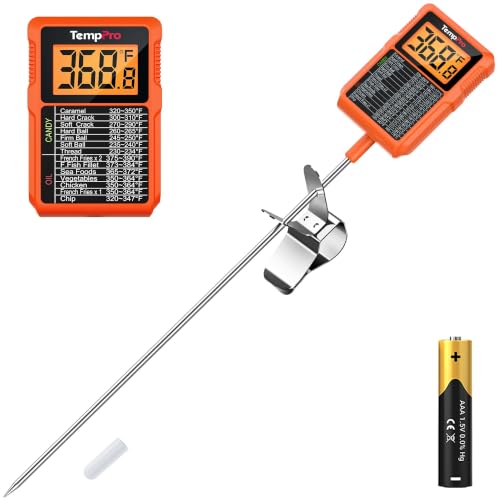
You need very little equipment. First, a digital scale with a tare button lets you weigh fruit and sugar in the same pot. Next, a probe thermometer with a pot clip tracks the set point. In addition, a sturdy set of measuring cups and spoons handles lemon juice and small amounts. Check the thermometer in boiling water before each season, because it should read about 212 F (100 C) at sea level.



As an Amazon Associate, Measuring Expert earns from qualifying purchases.
What Fruit, Sugar, Pectin and Acid Each Do
Each ingredient has a job, and that job explains why the measurements are strict. The table below sums it up.
| Ingredient | Job in the pot | How to measure it |
|---|---|---|
| Fruit | Flavor, color and natural pectin | Weigh it after washing, trimming and pitting |
| Sugar | Helps the gel form and keeps flavor, color and texture | Weigh it, or level cups with a straight edge |
| Pectin | Gelling agent | Use the full box or pouch the recipe names |
| Lemon juice | Acid for gel and balance | Use a marked spoon or a scale |
Regular powdered or liquid pectin needs the sugar amount the recipe lists. NCHFP also warns against swapping the sugar in those recipes for a sugar substitute. Low-sugar and no-sugar pectins are different products with their own directions. Because of that, never swap one pectin type for another.
How to Measure Ingredients for Jam Step by Step
- Choose a tested recipe. Pick one from NCHFP, a USDA guide or a pectin box, and note the batch size.
- Prepare the fruit first. Wash, hull, pit and chop it, because the recipe weight usually means prepared fruit.
- Tare the pot. Place the empty pot on the scale, press tare, and add fruit until you reach the recipe weight.
- Weigh the sugar separately. Use a bowl, tare it, and add sugar to the weight the recipe gives.
- Measure the pectin and lemon juice. Use the entire pectin package and level the lemon juice in a measuring spoon.
- Cook to the set point. Clip the thermometer to the pot and boil hard until it reads 220 F (104.4 C) at sea level.
- Fill the jars. Leave 1/4 inch (6 mm) of headspace, wipe the rims, and apply the lids.
- Process as directed. Use the processing time in your recipe, adjusted for your altitude.
The Jam Set Point: 220 F or 104.4 C
Water boils at 212 F (100 C) at sea level. Jam gels about 8 F higher, at 220 F (104.4 C), because boiling drives off water and concentrates the sugar. The NCHFP canning guide gives 220 F as the jellying point at sea level. It also lowers the target with altitude, to 205 F at 8,000 ft. Therefore, check your own altitude chart rather than trusting a single number.
Calibrate the thermometer in a pot of boiling water first. If it reads 213 F there, for example, treat 221 F as your jam set point. Likewise, do not rely on the thermometer alone for the first batch of a new recipe. Also use the recipe’s visual cues, such as how the jam sheets off a cold spoon.
Headspace: How Full to Fill the Jar
Headspace is the gap between the jam and the lid. For jam and jelly, NCHFP calls for 1/4 inch, which is about 6 mm. Too little leaves no room for expansion and can cause the jar to leak or fail to seal. Too much leaves extra air, which can lead to a weak seal or discoloration.
A simple ruler works well. Alternatively, a headspace tool takes the guesswork out of it. Either way, wipe the rim with a damp paper towel before you add the lid, because a sticky rim can block the seal.
Scaling a Recipe and Converting Cups to Grams
Scale jam by whole batches, not by halves or doubles in one pot. A larger batch takes longer to reach the set point, and long cooking can break down the pectin. For this reason, most tested recipes tell you to make one batch at a time. Meanwhile, you can still prepare several batches of fruit and sugar ahead of time on the scale.
To convert cups to grams, multiply the cups by the weight in the table above. For example, 5 cups of sliced strawberries weigh about 835 g, or roughly 1.84 lb. Next, enter that weight in the converter to check it. Remember that the result is an estimate for ripe fruit, so rely on the recipe’s weight when it gives one.
Tested Recipes: The Safety Rule for Measuring Jam
Jam is a canned food, so proportions affect safety as well as taste. Fruit, sugar and acid together determine how well the jam keeps. A tested recipe has been checked for these proportions and for the processing time. If you change the amount of sugar, fruit or lemon juice, you no longer have a tested recipe.
Fresh pectin matters too. The NCHFP guide says to buy fresh pectin each year, because old pectin may give a poor gel. In addition, it notes that long-boil spreads made without added pectin may not have enough water control for shelf-stable canning. For those, it suggests freezing or refrigerating instead. You can read the full guidance on the NCHFP jams and jellies page.
Common Mistakes When You Measure Ingredients for Jam
Do
- Weigh fruit after it is prepared.
- Use the whole pectin package.
- Check the thermometer in boiling water.
- Cook one batch at a time.
- Leave 1/4 inch of headspace.
Do not
- Swap regular pectin for low-sugar pectin.
- Cut the sugar in a regular-pectin recipe.
- Pack cups of fruit down to fit more in.
- Skip the processing step on stored jars.
- Trust a cup measure over the scale.
Honest Limits of Jam Measurements
No scale can tell you how ripe the fruit is. Riper fruit has more sugar and less pectin, so two batches with the same weights can set differently. Likewise, the weights in this article are averages from a published chart, not guarantees. The set point also drifts with weather and altitude, since air pressure changes the boiling point of water. For that reason, treat the numbers as a starting line and follow your tested recipe’s own directions.
Frequently Asked Questions
What is the best way to measure ingredients for jam?
Weigh them on a digital kitchen scale. Weight stays the same however the fruit is chopped or packed, whereas a cup of fruit does not.
What temperature does jam set at?
Jam sets at 220 F (104.4 C) at sea level, which is 8 F above the boiling point of water. Higher altitudes need a lower target, such as 205 F at 8,000 ft.
How much headspace do I leave in a jam jar?
Leave 1/4 inch (about 6 mm) of headspace for jam and jelly, then wipe the rim before you apply the lid.
How many grams are in a cup of sugar for jam?
One cup of granulated white sugar weighs about 198 g (7 oz), according to King Arthur Baking’s weight chart.
Can I use less sugar when I measure ingredients for jam?
Not with regular pectin, because the recipe depends on the sugar amount. Instead, choose a recipe made for low-sugar or no-sugar pectin and follow its directions.
How much does a cup of strawberries weigh for jam?
A cup of fresh sliced strawberries weighs about 167 g (5 7/8 oz). A pound of sliced strawberries is therefore close to 2.7 cups.
Do I measure fruit before or after chopping?
Follow the recipe wording. Most recipes call for prepared fruit, meaning washed, trimmed and pitted, so weigh it after you prepare it.
Why did my jam not set after I measured everything?
Common causes are old pectin, a thermometer that reads low, an altitude not accounted for, or a batch that was doubled in one pot. Check each of these before you try again.
Is 220 F the same at high altitude?
No. The boiling point of water falls as altitude rises, so the jam set point falls as well. Use the altitude chart in your tested recipe.
Can I double a jam recipe in one pot?
Tested recipes advise against it. A bigger batch takes longer to reach the set point, which can weaken the gel. Make separate batches instead.
Measure Ingredients for Jam: The Bottom Line
To sum up, a scale, a thermometer and a tested recipe do most of the work. Weigh the fruit, sugar and pectin, cook to 220 F (104.4 C) at sea level, and leave 1/4 inch (6 mm) of headspace in each jar.
Finally, remember that the numbers on this page are guides. A tested recipe from a trusted source always comes first, especially for jars you plan to keep on the shelf.