

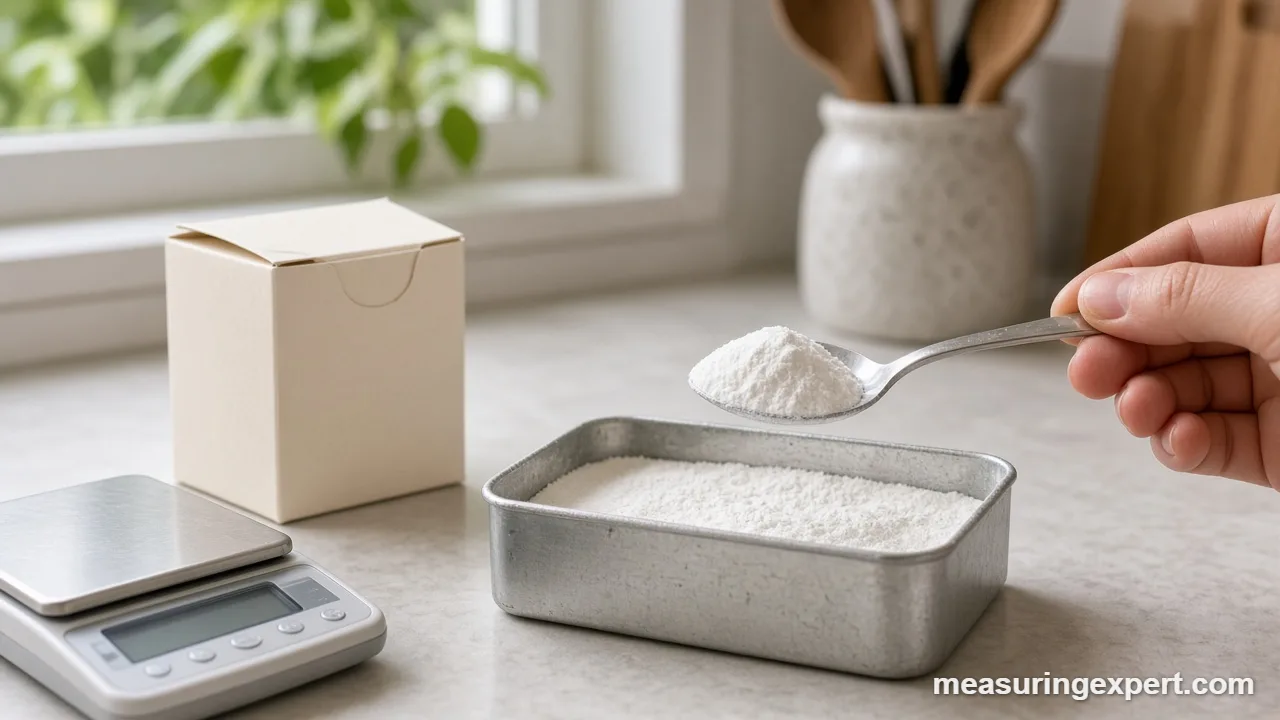
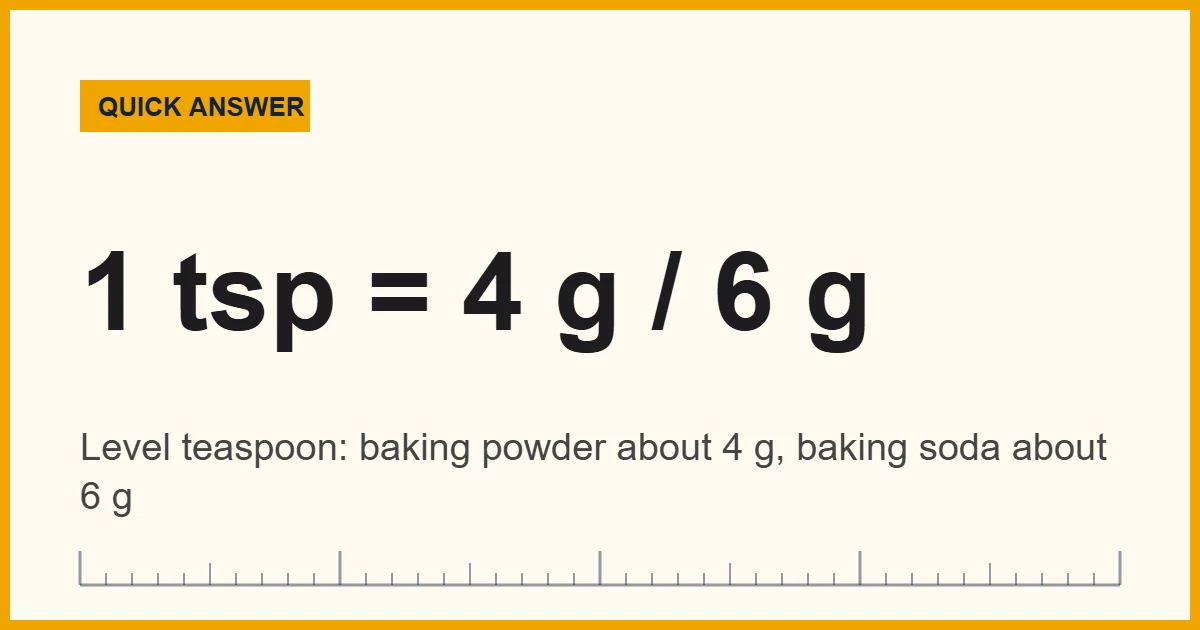
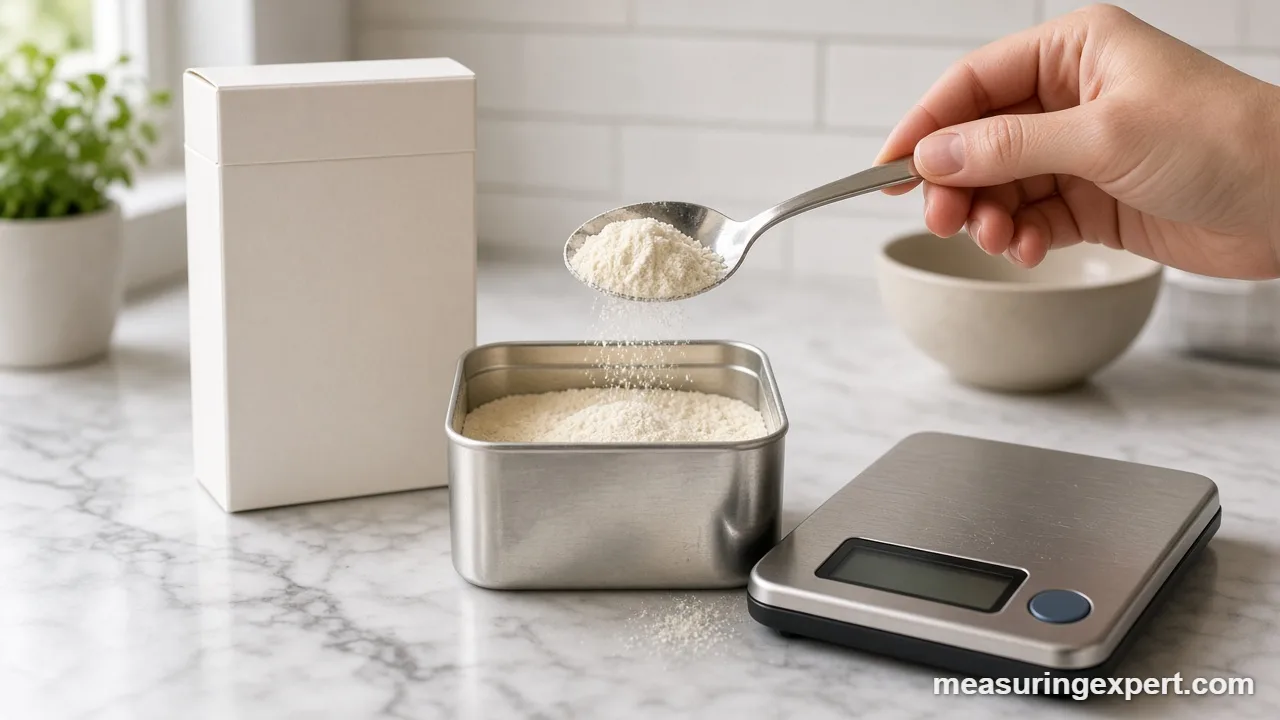
To measure baking powder or baking soda accurately, fluff it, spoon it into a measuring spoon, and level it with a straight edge. One level US teaspoon (4.93 mL) of baking powder weighs about 4 g. Baking soda, by contrast, is denser at about 6 g per teaspoon. For precision, therefore, weigh both on a 0.01 g scale.
Convert Teaspoons of Leavener to Other Spoon Sizes
Recipes write leaveners in teaspoons, but you may need tablespoons, milliliters or metric spoons instead. So enter an amount below and choose your unit. Meanwhile, the converter uses the exact US definition of a teaspoon. To turn the result into grams, multiply teaspoons by about 4 for baking powder or by about 6 for baking soda.
Bakers measure baking powder and soda in tiny amounts, yet they decide whether a cake rises, domes, sinks or tastes metallic. Because a recipe might call for only 1/2 teaspoon, a small error is a large percentage. For example, an extra 1/4 teaspoon of baking soda in a recipe that needs 1/2 teaspoon is 50 percent too much. As a result, the crumb browns too fast and picks up a soapy, bitter taste.
The good news is that a level teaspoon is a fixed volume. In the US, one teaspoon is exactly 4.92892159375 mL, and the US National Institute of Standards and Technology rounds it to 5 mL in its metric kitchen equivalents. However, the weight changes from one jar to the next, since powders settle and pack. King Arthur Baking’s ingredient weight chart lists 1 teaspoon of baking powder at 4 g and 1/2 teaspoon of baking soda at 3 g.
If you want the basics of the spoon itself first, see our guide on what a tsp measurement means.
Baking Powder and Baking Soda in Grams per Teaspoon
The two powders look alike, but they do not weigh the same. For one thing, baking soda is pure sodium bicarbonate, while baking powder also contains acids and cornstarch, which make it lighter. The chart below uses 4 g per teaspoon for baking powder and 6 g per teaspoon for baking soda, in line with the King Arthur figures above. Ounces are avoirdupois weight ounces; see how much an ounce weighs for the 28.35 g definition.
| Volume (US) | Milliliters | Baking powder | Baking soda |
|---|---|---|---|
| 1/8 tsp | 0.62 mL | 0.5 g | 0.75 g |
| 1/4 tsp | 1.23 mL | 1 g | 1.5 g |
| 1/2 tsp | 2.46 mL | 2 g | 3 g |
| 3/4 tsp | 3.70 mL | 3 g | 4.5 g |
| 1 tsp | 4.93 mL | 4 g (0.14 oz) | 6 g (0.21 oz) |
| 1 1/2 tsp | 7.39 mL | 6 g | 9 g |
| 2 tsp | 9.86 mL | 8 g | 12 g |
| 1 tbsp (3 tsp) | 14.79 mL | 12 g (0.42 oz) | 18 g (0.63 oz) |
How to Measure Baking Powder and Baking Soda by Volume
Most home recipes are written in spoons, so the way you measure baking powder matters more than the spoon brand. Follow these steps every time:

- Stir the jar first. Loosen the powder with a dry spoon so it is not compressed.
- Break up any lumps. Crush them against the side of the container, or press them through a small sieve.
- Dip and overfill. Scoop a slightly heaped spoonful with a dry measuring spoon.
- Level the top. Sweep a straight edge, such as the back of a knife, across the rim. Also, many cans have a built-in leveling edge for this.
- Check the spoon size. Confirm the engraving says tsp, not tbsp, before you tip it in.
- Whisk it into the flour. Blend leaveners with the dry ingredients so they spread evenly.
How to Measure Baking Powder With a Scale
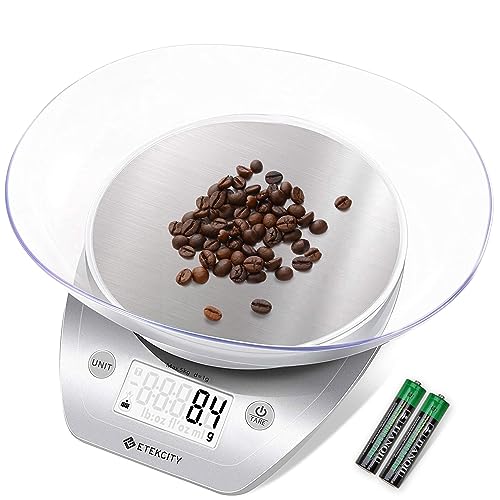
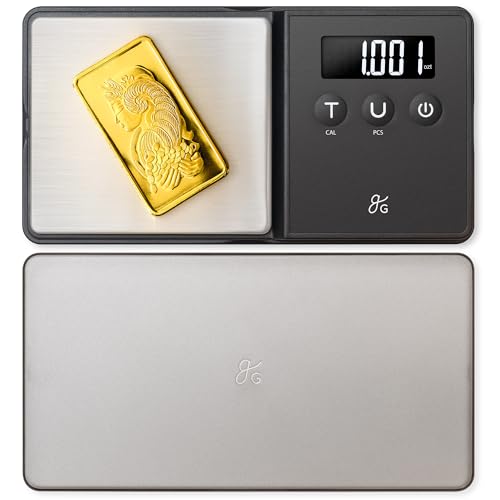
If you measure baking powder by weight, packing errors disappear. However, a regular kitchen scale reads in 1 g steps, and that is too coarse for 2 or 3 g of powder. Instead, use a pocket scale that reads to 0.01 g. First, set a small dish on it and press tare. Next, add powder until you reach the target, such as 2 g for 1/2 teaspoon of baking powder. Finally, tip it into your flour. In addition, if you scale recipes up or down often, grams make the math far easier.
For more ways to handle pinches, dashes and other small amounts, read our guide on how to measure small quantities in the kitchen.
Recommended Tools to Measure Baking Powder
In practice, you only need two things: a good spoon set and a fine scale. First, look for spoons with engraved markings and a flat rim for leveling. Next, choose narrow heads that fit into small cans. A 0.01 g pocket scale handles leaveners, while a 0.1 g or 1 g kitchen scale handles flour and sugar.



As an Amazon Associate, Measuring Expert earns from qualifying purchases.
How Much Leavener per Cup of Flour
Bakers also use simple rules of thumb to spot a recipe that looks off. Of course, these are starting points, not laws. Even so, they help you catch a typo such as tablespoon in place of teaspoon.
| Leavener | Typical amount per 1 cup flour | Approx. weight | When it is used |
|---|---|---|---|
| Baking powder | 1 to 1 1/4 tsp | 4 to 5 g | Cakes, biscuits, pancakes with no acidic liquid |
| Baking soda | 1/4 tsp | about 1.5 g | Recipes with buttermilk, yogurt, brown sugar, honey or cocoa |
| Both together | about 1/4 tsp soda plus 1/2 to 1 tsp powder | 1.5 g plus 2 to 4 g | Batters with some acid that still need extra lift |
Baking soda needs an acid to react, so the amount depends on how much acid the batter holds. For instance, buttermilk pancakes lean on soda, while a plain white cake uses powder. If a recipe asks for 1 tablespoon of baking soda per cup of flour, it is almost certainly a mistake.
Baking Powder vs Baking Soda: What People Mix Up
| Point | Baking soda | Baking powder |
|---|---|---|
| What it is | Sodium bicarbonate only | Soda plus dry acid(s) and starch |
| Needs an acid in the recipe | Yes | No, it carries its own |
| Strength | About 3 to 4 times stronger | Milder |
| Weight per level tsp | about 6 g | about 4 g |
| Too much tastes | Soapy, metallic | Bitter, chemical |
How to Substitute and Still Measure Baking Powder Correctly
In fact, swapping one for the other works, but only with care. Here are the usual rules:
- No baking soda? Use about 3 times as much baking powder. So 1 tsp of soda becomes about 3 tsp (1 tablespoon) of powder.
- No baking powder? Mix 1/4 tsp baking soda with 1/2 tsp cream of tartar for each 1 tsp of powder.
- Add salt last. Baking powder contains sodium too, so cut added salt slightly when you triple it.
Freshness Tests Before You Measure Baking Powder
After all, a perfect measurement is wasted if the leavener is dead. For example, moisture in the air slowly uses up baking powder, and opened cans often lose strength within months. So test both before an important bake:
- Baking powder: stir 1/2 tsp into 1/4 cup of hot water. Fresh powder fizzes right away.
- Baking soda: add 1/4 tsp to a few drops of vinegar or lemon juice. Fresh soda bubbles hard at once.
- Weak fizz: replace the can. Also, write the opening date on the lid next time.
Therefore, store both in a cool, dry cupboard with the lid tight. Similarly, keep wet spoons out of the can, because moisture sets off the reaction early.
Do and Don’t With Leaveners
Do
- Level every spoonful with a straight edge.
- Sift or whisk leaveners into the flour.
- Write the opening date on the can.
- Weigh on a 0.01 g scale for small batches.
Don’t
- Use heaping spoons unless the recipe says so.
- Pack the powder down like brown sugar.
- Dip a wet spoon into the container.
- Swap soda and powder one to one.
Honest Limits of Spoon Measurements
Overall, a level spoon is consistent, but it is not perfect. First, gram figures for a teaspoon vary by brand and by how settled the powder is. Second, measuring spoons have small manufacturing tolerances as well. In addition, a kitchen scale that reads in 1 g steps can be off by a full gram, which is 25 percent of a teaspoon of baking powder. In short, spoons are fine for most home baking. Meanwhile, a 0.01 g scale is the better choice for small batches, scaled recipes and testing.
When Accuracy Really Matters
Some bakes forgive small errors, whereas others do not. For example, thin cookies spread differently with a pinch more soda, and tall cakes can sink if they rise too fast. Likewise, halved or doubled recipes magnify rounding errors. Gluten-free and high-altitude baking are even more sensitive, so weigh leaveners there.
Frequently Asked Questions
How do you measure baking powder accurately?
Stir the can, scoop with a dry measuring spoon, and level the top with a straight edge. For the most precise result, weigh it instead: about 4 g per level teaspoon.
How many grams is 1 teaspoon of baking powder?
One level US teaspoon of baking powder weighs about 4 g, or roughly 0.14 oz. Brands vary by about half a gram.
How many grams is 1 teaspoon of baking soda?
One level teaspoon of baking soda weighs about 6 g, or roughly 0.21 oz. It is denser than baking powder.
Should I measure baking powder level or heaped?
Level, unless the recipe clearly says heaping. A heaped teaspoon can hold far more than a level one.
How much baking powder do I use per cup of flour?
A common rule is 1 to 1 1/4 teaspoons of baking powder per cup of all-purpose flour, or about 4 to 5 g.
How much baking soda do I use per cup of flour?
About 1/4 teaspoon per cup of flour, and the batter needs an acid such as buttermilk, yogurt or brown sugar.
Can I use baking powder instead of baking soda?
Yes, use about 3 times as much baking powder. Expect a slightly different flavor and paler browning.
Can I measure baking powder with a regular kitchen scale?
Only roughly. A scale that reads in 1 g steps is too coarse for 2 to 4 g, so a 0.01 g pocket scale works better.
How do I test if baking powder is still good?
Stir 1/2 teaspoon into 1/4 cup of hot water. If it fizzes right away, it is still active.
Is 1/2 teaspoon of baking soda too much?
It depends on the flour. For 2 cups of flour with an acidic liquid, 1/2 teaspoon is normal. For 1/2 cup of flour, however, it is too much.
The Bottom Line on How to Measure Baking Powder and Soda
To sum up, spoon, level and never pack. A level teaspoon is 4.93 mL; it holds about 4 g of baking powder or about 6 g of baking soda. For small batches, then, weigh on a 0.01 g scale. Also, check the ratio per cup of flour and test freshness before a big bake.
Finally, the converter at the top turns teaspoons into tablespoons, milliliters and metric spoons. Multiply by 4 or 6 to get grams.