

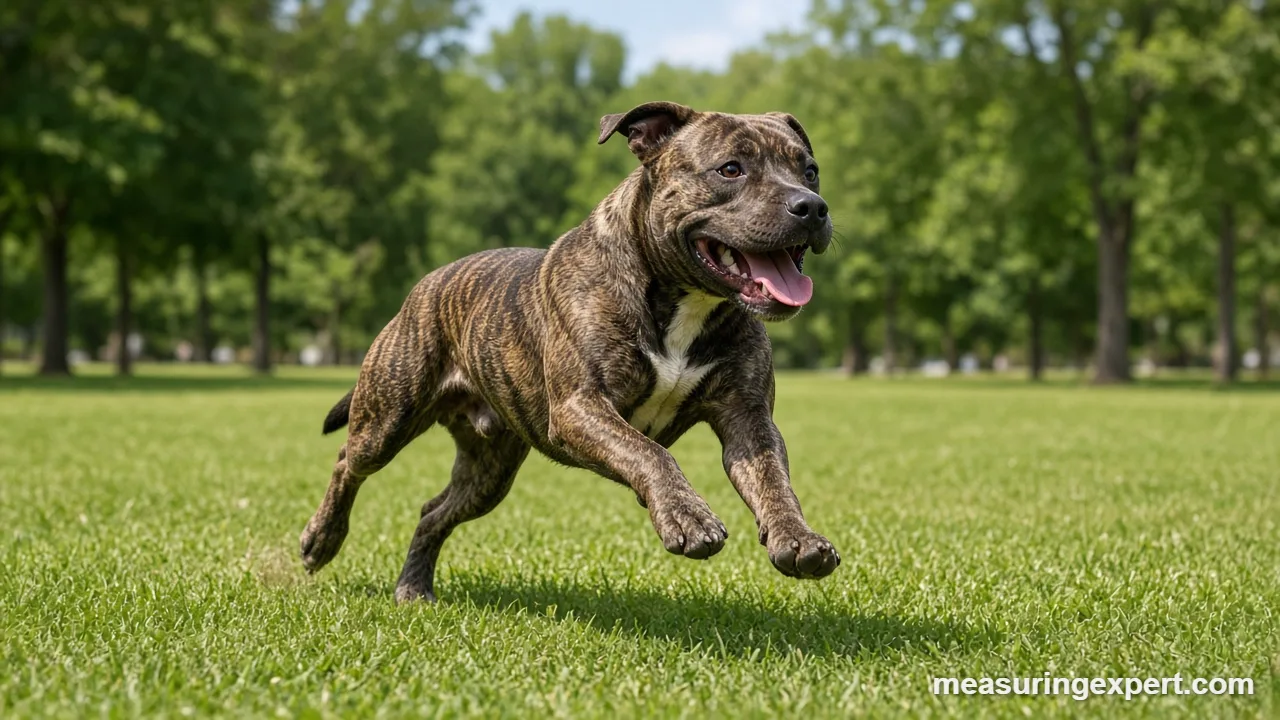
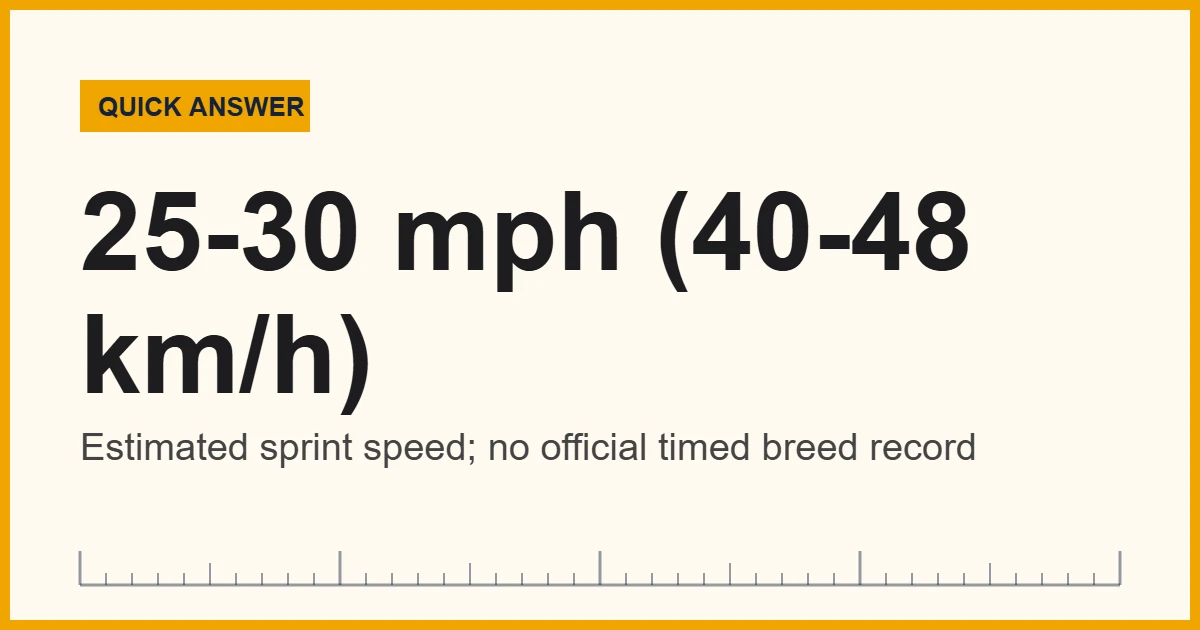
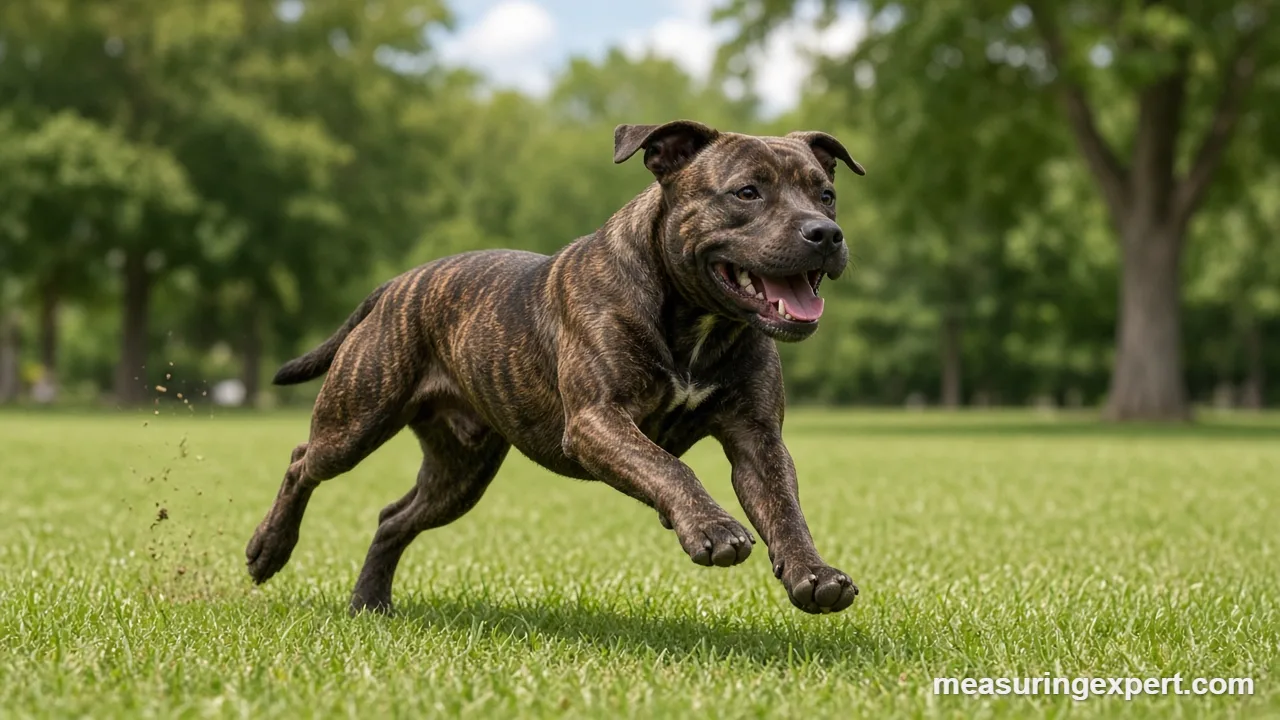
How fast can a pitbull run? The pitbull run speed most often quoted for an American Pit Bull Terrier is 25 to 30 mph (40 to 48 km/h) in a short sprint. That range is an estimate, not a timed record. For comparison, the fastest greyhounds average about 36 mph over 100 yards in timed AKC races.


As an Amazon Associate, Measuring Expert earns from qualifying purchases.
So why the careful wording? Simply put, nobody has published an official, timed top speed for the American Pit Bull Terrier as a breed. Also, the 25 to 30 mph figure appears on many pet sites, but none of them link it to a timed race or a study. Even so, it fits what we know about medium-size athletic dogs, so it is a fair working estimate. Below, you will see where it comes from, how it compares with other dogs and with people, and how to time your own dog safely.
Convert a Pitbull Run Speed to km/h, m/s and Knots
First, the converter starts at 30 mph, the top of the usual estimate. Next, type any speed you measured, or switch the unit, to see it in kilometers per hour, meters per second, feet per second and knots. For example, try 6 for an easy trot or 25 for a hard sprint.
What Counts as a Pit Bull?
First, “pit bull” is a loose label rather than one breed. For example, most often it means the American Pit Bull Terrier, but people also use it for the American Staffordshire Terrier, the Staffordshire Bull Terrier and many muscular mixed-breed dogs. Because these dogs differ in size and build, their speeds also differ.
In this guide, however, the numbers refer to the American Pit Bull Terrier. According to the United Kennel Club breed standard, which first recognized the breed in 1898, males stand about 18 to 21 inches (46 to 53 cm) at the shoulder and weigh about 35 to 60 pounds (16 to 27 kg). Meanwhile, females are a little smaller, at about 17 to 20 inches and 30 to 50 pounds. In addition, the club describes the breed as strong, athletic and agile, which helps explain why a fit pit bull can sprint hard.
| Dog often called a pit bull | Typical build | Speed notes |
|---|---|---|
| American Pit Bull Terrier | Medium, lean and muscular | The 25 to 30 mph estimate is usually about this breed |
| American Staffordshire Terrier | Similar, often heavier in the chest | Likely similar, although there is no published breed record |
| Staffordshire Bull Terrier | Smaller and shorter | Usually slower, because shorter legs mean shorter strides |
| American Bully and heavy mixes | Bulky, wide frame | Usually slower, and they also tire faster in heat |
Where the Pitbull Run Estimate Comes From
In short, the 25 to 30 mph figure is a reasonable estimate, but it is still an estimate. We found no peer-reviewed study and no kennel club record that times American Pit Bull Terriers as a group. Instead, the number is simply repeated from site to site, often with no source at all.
However, real timing data for other dogs gives a useful check. In AKC Fast CAT, each dog runs alone down a straight 100-yard course after a lure, and its time is turned into miles per hour. According to the AKC’s 2026 Fast CAT Invitational results, the fastest dog of the event, a greyhound, ran 100 yards in 5.675 seconds, or 36.04 mph. Also, the top two mixed-breed dogs ran about 32.6 and 32.2 mph. Because the AKC explains on its Fast CAT overview page that the time over the full 100 yards is what gets converted, these figures are averages, so peak speed is a bit higher.
Therefore, a lean, athletic pit bull reaching the high 20s mph is believable, since it would sit below sight hounds and near the speed of fast all-around dogs. On the other hand, a heavy or out-of-shape pit bull may sprint closer to 20 mph or less.
Pitbull Run Speed Chart in mph, km/h, m/s, ft/s and Knots
Also, each row is a straight unit conversion based on the exact definition 1 mile = 1.609344 km. However, the pace labels are typical bands, so your own dog may fall between rows.
| Pace | mph | km/h | m/s | ft/s | Knots |
|---|---|---|---|---|---|
| Relaxed walk | 3 | 4.83 | 1.34 | 4.4 | 2.61 |
| Easy trot | 6 | 9.66 | 2.68 | 8.8 | 5.21 |
| Fast trot or lope | 10 | 16.09 | 4.47 | 14.7 | 8.69 |
| Steady run | 15 | 24.14 | 6.71 | 22.0 | 13.03 |
| Heavy dog sprint | 20 | 32.19 | 8.94 | 29.3 | 17.38 |
| Estimate, low end | 25 | 40.23 | 11.18 | 36.7 | 21.72 |
| Estimate, middle | 27.5 | 44.26 | 12.29 | 40.3 | 23.90 |
| Estimate, high end | 30 | 48.28 | 13.41 | 44.0 | 26.07 |
| Fastest 2026 Fast CAT greyhound (100-yard average) | 36.04 | 58.00 | 16.11 | 52.9 | 31.32 |
Printable tip: the chart fits on one page when you print it from your browser, which is handy for a training notebook.
How Fast Can a Pitbull Run Compared With Other Dogs?
Overall, a pit bull is quick for its size, but it is not built like a racing dog. For instance, sight hounds such as greyhounds and whippets have long legs, deep chests and a flexible spine, so every stride covers more ground. Pit bulls, by contrast, carry more muscle for their height, which helps with acceleration, pulling and agility rather than long sprints.
| Dog | Speed | How solid the number is |
|---|---|---|
| Greyhound | 36.04 mph (58.0 km/h) over 100 yards; peaks of about 40 to 45 mph are often quoted | Timed (AKC Fast CAT); peak figure is widely cited |
| Whippet | 35.60 mph (57.3 km/h) over 100 yards | Timed (AKC Fast CAT 2026) |
| Fast mixed-breed dogs | About 32 mph (51.5 km/h) over 100 yards | Timed (AKC Fast CAT 2026) |
| American Pit Bull Terrier | 25 to 30 mph (40 to 48 km/h) sprint | Estimate only, because no timed record is published |
| Pembroke Welsh Corgi | About 25 mph (40 km/h), fastest example | Timed example cited by the AKC |
| Dachshund | 21.6 mph (34.8 km/h), fastest 2020 example | Timed example cited by the AKC |
Also, notice that the corgi and dachshund figures are the fastest dogs of those breeds, not averages. Similarly, the pit bull estimate describes a fit dog at full effort, not a typical pet on a walk. In other words, compare best with best and average with average.
Pitbull Run Speed vs Humans and Wolves
In fact, most people cannot outrun a fit pit bull. For example, Usain Bolt’s 100-meter world record of 9.58 seconds averages about 23.4 mph (37.6 km/h), and his peak was roughly 27.8 mph. So even the fastest sprinter in history only touches the top of the pit bull estimate for a moment. Meanwhile, an average adult running hard reaches far less, so a fit pit bull wins easily. For the full human numbers, see how fast a human can run.
Wolves, however, are another story. A gray wolf can sprint at about 36 to 38 mph in short bursts and can trot for hours, so it beats a pit bull on both speed and stamina. For more, our page on how fast a wolf runs explains those figures in detail.
| Runner | Top speed (mph) | Top speed (km/h) |
|---|---|---|
| Gray wolf (burst) | about 36 to 38 | about 58 to 61 |
| Greyhound (100-yard average, timed) | 36.04 | 58.0 |
| American Pit Bull Terrier (estimate) | 25 to 30 | 40 to 48 |
| Usain Bolt (peak) | about 27.8 | about 44.7 |
| Usain Bolt (100 m average) | 23.4 | 37.6 |
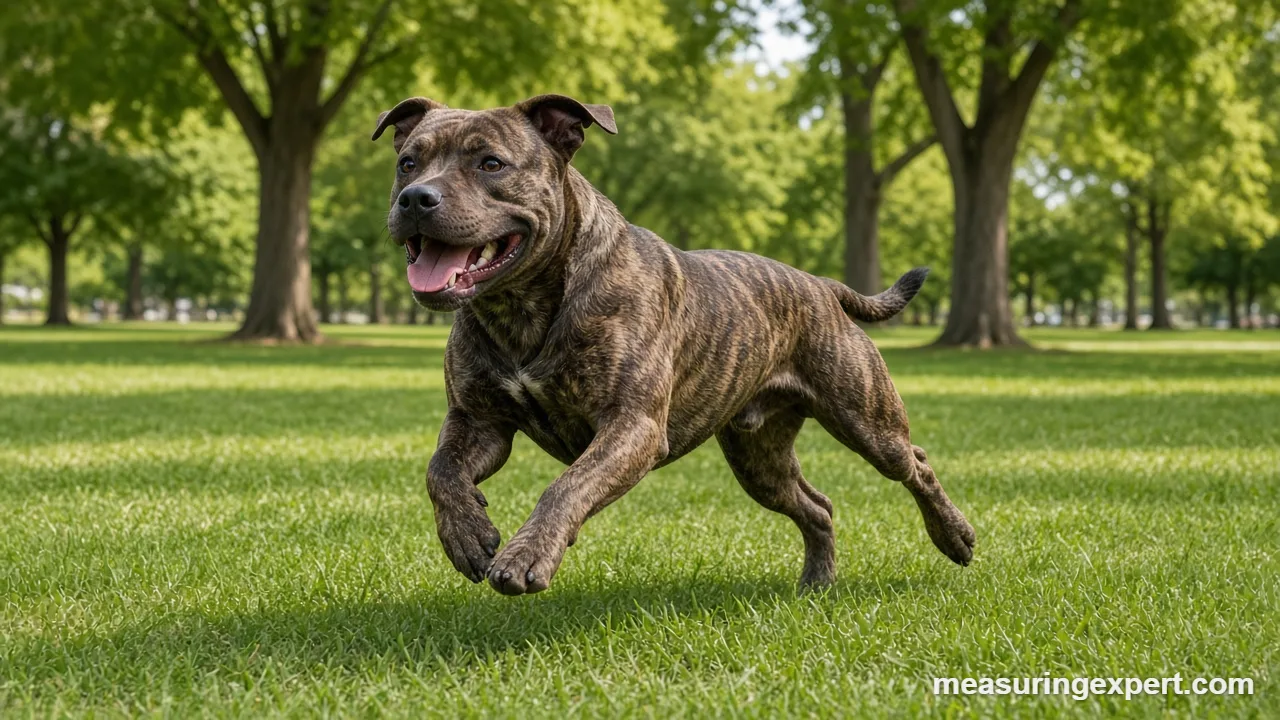
How to Time Your Pitbull Run Safely
Fortunately, you only need a measured distance and a stopwatch. Also, a helper makes the test far easier and safer.
- Check that your dog is ready. First, make sure the dog is an adult and healthy. AKC Fast CAT accepts dogs at least 12 months old, and a quick vet check is wise for any dog with joint or breathing problems.
- Pick a safe, enclosed area. Next, use a fenced field with level grass, away from roads and other dogs, on a cool day.
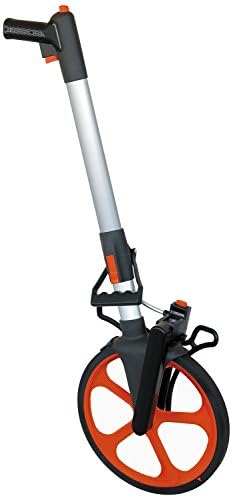
- Measure the course. Then mark exactly 50 or 100 yards with a measuring wheel and put a cone at each end.
- Warm up first. After that, walk and trot your dog for 5 to 10 minutes so its muscles are ready.
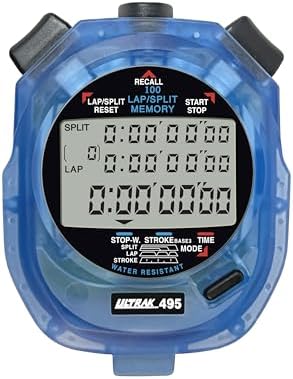
- Run and time. Next, have your helper hold the dog behind the start, while you call it or use a toy from past the finish. Then start the stopwatch as the nose crosses the first cone and stop it at the second.
- Repeat and average. Finally, do two or three runs with rest and water in between, average the times, and enter the result in the converter above.
For example, if your dog covers 100 yards in 8 seconds, that is 37.5 feet per second, or about 25.6 mph (41.1 km/h). Likewise, 100 yards in 10 seconds equals about 20.5 mph. Because the dog starts from a standstill, this is an average speed, so its peak is somewhat higher.
Recommended Tools for Timing a Pitbull Run
Fortunately, a basic kit is enough for a fair test. First, a stopwatch with a big display is easier to read than a phone in the sun. Next, a measuring wheel lays out an exact distance. Finally, a GPS tracker gives a rough speed when you cannot measure a course.
Do and Don’t When You Measure Dog Speed
Do
- First, measure the distance with a wheel or tape.
- Also, warm your dog up before any sprint.
- Time two or three runs, then average them.
- Convert with 1 mile = 1.609344 km, because that value is exact.
- Finally, keep water and shade close by.
Don’t
- Sprint a puppy whose joints are still growing.
- Run in heat, on hot pavement or near traffic, because paws and lungs suffer.
- Trust a GPS speed from a two-second burst, since it can jump.
- Compare one dog’s best run with a breed average.
- Push a dog that wants to stop.
Honest Limits of Pitbull Run Numbers
To be clear, the 25 to 30 mph range is the weakest number on this page, because no timed breed study backs it. Also, “pit bull” covers dogs that weigh anywhere from about 30 to well over 60 pounds, so one range cannot fit all of them. In addition, age, weight, fitness, coat, temperature and even the surface change the result as well. By contrast, timed figures such as Fast CAT results are more solid, yet they are 100-yard averages, so they sit below true peak speed. As a result, treat every speed here as a band, and trust a few careful timings of your own dog more than any chart.
When Accuracy Really Matters
For example, for a school project or a friendly debate, the ranges above are plenty. However, if you plan to enter sport events or build a conditioning program, real timing matters. In that case, for example, an official Fast CAT run gives a measured 100-yard time, and a vet or canine fitness professional can tell you how hard your dog should train.
Pitbull Run FAQs
How fast can a pitbull run?
The figure most often quoted for an American Pit Bull Terrier is 25 to 30 mph (40 to 48 km/h) in a short sprint. Still, it is an estimate, because no official timed breed record exists.
Is the 30 mph pitbull run figure measured?
No. We found no study or kennel club record that times the breed as a group. Instead, the number is repeated across pet sites, but it fits timed data for other athletic dogs.
Can a pit bull outrun a human?
Yes, a fit pit bull outruns almost any person. Usain Bolt averaged about 23.4 mph in his 100-meter record and peaked near 27.8 mph.
Is a pit bull faster than a greyhound?
No. The fastest greyhound at the 2026 AKC Fast CAT Invitational averaged 36.04 mph over 100 yards, well above the pit bull estimate.
Can a pit bull outrun a wolf?
Generally, no. A gray wolf can sprint at about 36 to 38 mph in short bursts and has far more stamina.
How long can a pit bull run at top speed?
Only for a few seconds, because sprinting burns energy fast. Then the dog slows to a run or trot, much like a human sprinter.
How fast does a pit bull walk?
Typically, about 3 mph (4.8 km/h), which is similar to a person walking. By contrast, an easy trot is closer to 6 mph.
What is 30 mph in km/h?
In short, 30 mph is about 48.28 km/h, which equals 13.41 meters per second or 44 feet per second.
How can I measure my dog’s speed at home?
First, measure 100 yards in a fenced field, time the dog from cone to cone, and average two or three runs. Then divide distance by time, or enter the numbers in the converter.
Are pit bulls good running partners?
Yes, many fit adults enjoy moderate runs in cool weather. However, they can overheat, so build up slowly and ask your vet first.
The Bottom Line on Pit Bull Speed
In short, an American Pit Bull Terrier is usually said to sprint at 25 to 30 mph (40 to 48 km/h). Overall, that is a believable estimate, but not a timed record. As a result, it puts the breed ahead of most people and behind greyhounds, whippets and wolves.
So, to know your own dog’s speed, measure 100 yards, time a few safe runs and use the converter at the top of the page. After all, a careful timing beats any number you read online.
Black Friday is coming: shop the deals with Prime
1 thought on “How Fast Can a Pitbull Run? Speed Estimates, Comparisons and How to Time Your Dog”