

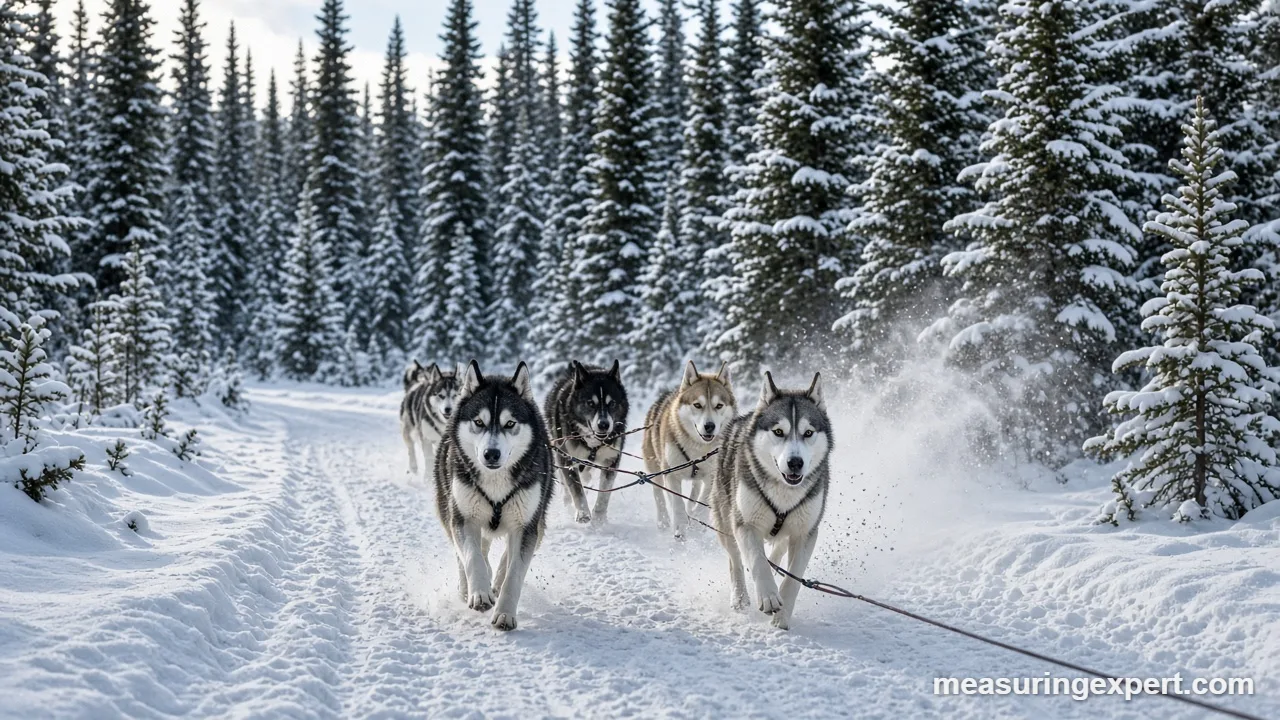
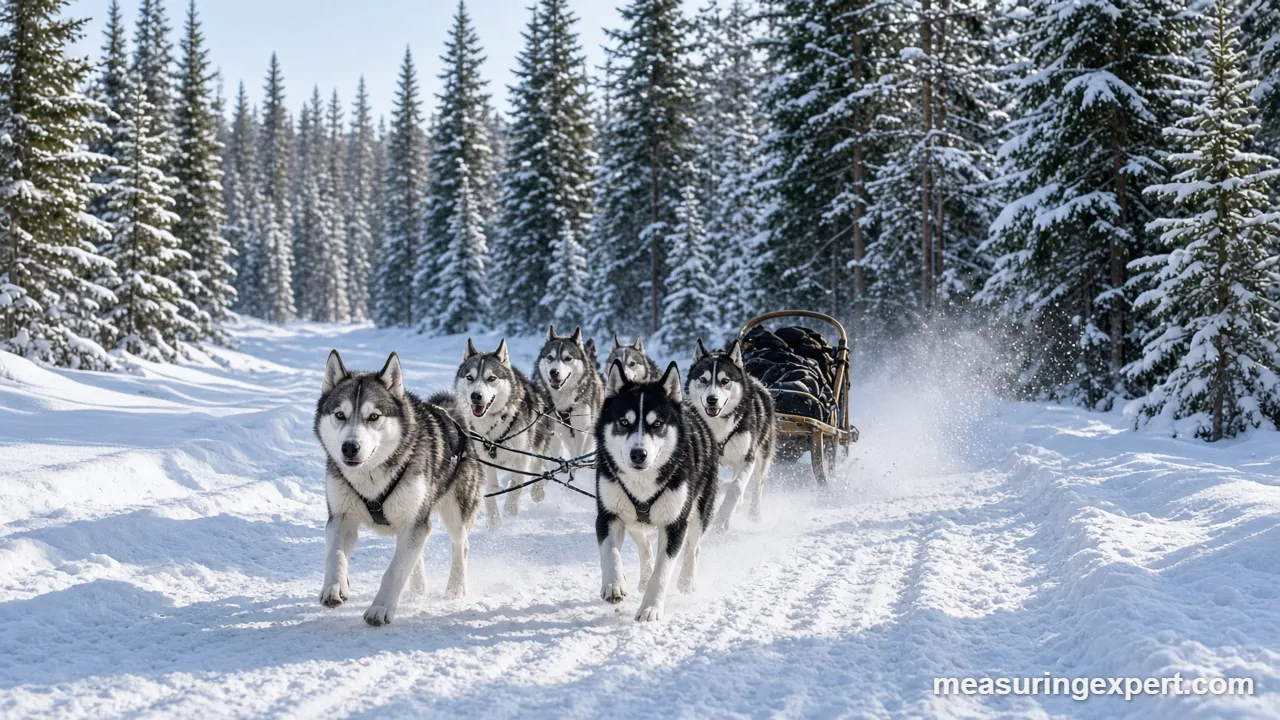
How fast can a husky run? A healthy Siberian Husky can sprint at roughly 25 to 30 mph (40 to 48 km/h) for a few seconds. On a long trail, however, sled teams cruise at about 8 to 12 mph (13 to 19 km/h), and Iditarod winners average only 4 to 5 mph once rest stops count.
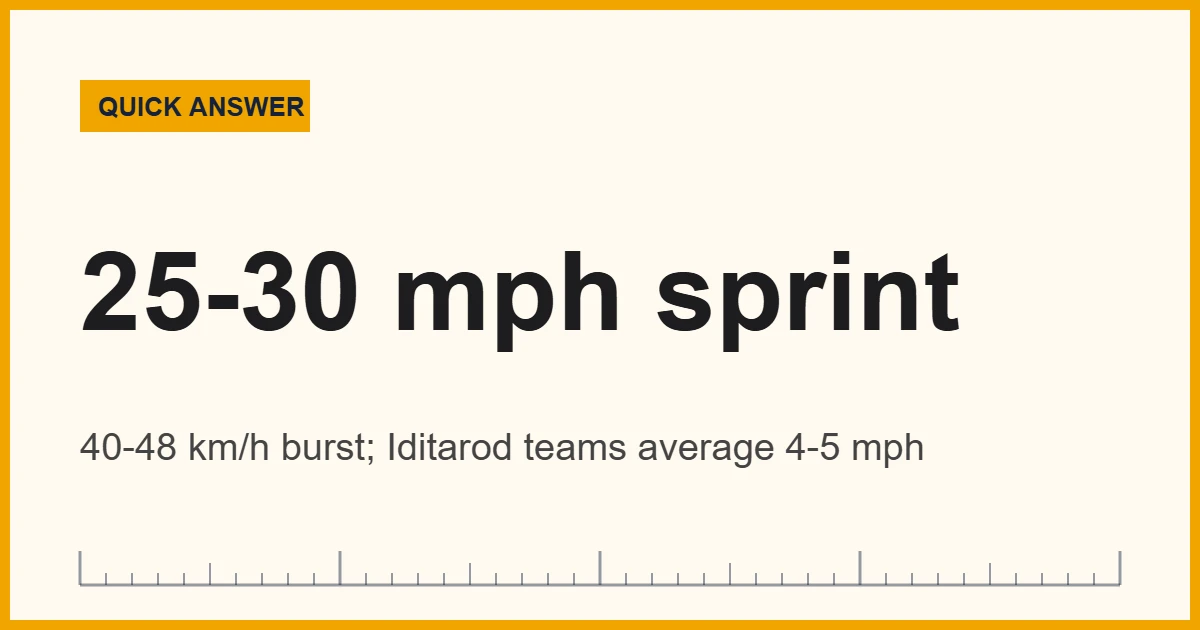
Convert a Husky Run Speed to km/h, m/s and Knots
Enter any speed below, such as the popular 28 mph figure or a pace from your own GPS collar. The converter then shows the same speed in kilometers per hour, meters per second, feet per second and knots, using the exact definition 1 mile = 1.609344 km.
Huskies have a reputation for speed, yet they were never bred to be the fastest dogs on earth. Instead, they were bred to keep moving. The American Kennel Club describes the Siberian Husky as a medium-size sled dog of great endurance that pulls light loads at moderate speeds over long frozen distances. As a result, that one phrase explains most of the numbers on this page.
So there are really two answers. First, there is the short sprint, which you might see when your dog chases a ball across a park. Second, there is the working pace, which a team can hold for hours and repeat for days. Next, we put real numbers on both. Every race average here is computed from official finish times, so you can check the math yourself.
Husky Speed Chart: Sprint, Trot and Race Pace
This chart lists the speeds that matter most. In addition, each row shows where the figure comes from, because a sprint estimate and a computed race average are very different kinds of numbers.
| Situation | mph | km/h | Basis |
|---|---|---|---|
| Top sprint (short burst) | about 25-30 | about 40-48 | Widely quoted estimate, not a controlled timing |
| Often-quoted “record” | 28 | 45.06 | Popular figure; no published timing found |
| Sprint team, 25-mile heat | 18.39 | 29.60 | Computed: 25 mi in 1:21:34 (Fur Rondy 2019) |
| Distance team, one fast leg | 9.91 | 15.95 | Reported: 2017 Iditarod, White Mountain to Safety |
| Iditarod winner, whole race | 4.42-5.00 | 7.12-8.05 | Computed from finish times, rests included |
For quick reference, 1 mph is about 1.609 km/h, so 28 mph is about 45 km/h. Also, 28 mph equals about 41 feet every second.
Tools for Timing a Husky Run
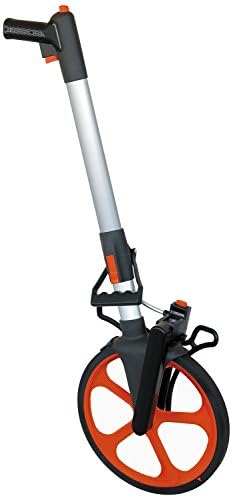
Fortunately, you do not need a lab to estimate your own dog’s speed. For longer runs, a GPS collar logs pace. Meanwhile, a measuring wheel and a good stopwatch let you time a short sprint over a known distance, which is more reliable for top speed than a phone app.




As an Amazon Associate, Measuring Expert earns from qualifying purchases.
How Fast Is a Husky Run on the Iditarod?
The Iditarod is the best public data set for sled dog speed, because every winning time is recorded to the second. To get an average, we divided each course length by the winner’s elapsed time. As a result, these averages include the mandatory rests, the checkpoint stops and the sleep. That is why they look slow at first glance.
| Year and winner | Course | Winning time | Average speed | Miles per day |
|---|---|---|---|---|
| 2021, Dallas Seavey | 848 mi (shortened loop) | 7 d 14 h 8 m 57 s | 4.66 mph (7.49 km/h) | 111.7 |
| 2017, Mitch Seavey | 979 mi (Fairbanks start) | 8 d 3 h 40 m 13 s | 5.00 mph (8.05 km/h) | 120.1 |
| 2016, Dallas Seavey | 975 mi (northern route) | 8 d 11 h 20 m 16 s | 4.79 mph (7.72 km/h) | 115.1 |
| 2025, Jessie Holmes | 1,128 mi (longest course) | 10 d 14 h 55 m 44 s | 4.42 mph (7.12 km/h) | 106.2 |
The finish times and course lengths come from Alaska’s News Source, and the 979-mile figure for 2017 comes from the Iditarod as reported by the Anchorage Daily News. For example, 979 miles divided by 195.67 hours gives 5.00 mph.
Sprint Racing: The Fastest Sled Dog Teams
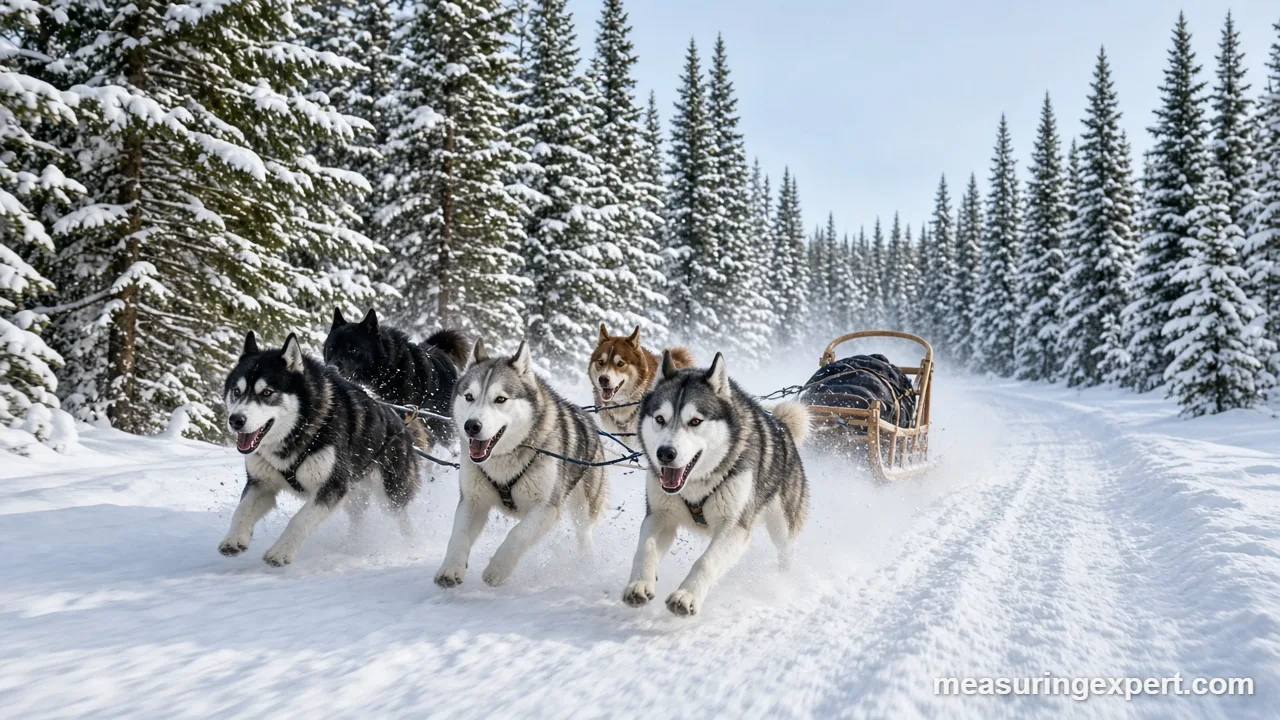
In contrast, sprint races show what a team can hold when nobody needs to save energy for next week. At the Fur Rendezvous World Championship in Anchorage, each heat is 25 miles. In 2019, Buddy Streeper’s fastest heat took 1 hour 21 minutes 34 seconds, according to the Anchorage Daily News. Therefore, his 13-dog team averaged about 18.4 mph (29.6 km/h) for the whole heat.
Over all three days, his 75 miles took 4 hours 11 minutes, which works out to about 17.9 mph (28.9 km/h). In short, a top sprint team holds a speed that is roughly two-thirds of a single dog’s flat-out burst, and it does so for more than an hour.
Siberian Husky vs Alaskan Husky: Which Is Which?
Many speed claims mix up two different dogs. First, the Siberian Husky is a registered breed with a written standard. The Alaskan husky, by contrast, is a working type bred for performance, not looks. Most competitive race teams, including the dogs in the energy study below, are Alaskan huskies or husky crosses.
| Trait | Siberian Husky | Alaskan husky |
|---|---|---|
| Status | AKC-recognized breed | Working type, not a registered breed |
| Bred for | Moderate speed and endurance with light loads | Race speed, endurance and appetite |
| Typical weight | About 35-60 lb (16-27 kg); males heavier | Varies; racing dogs often about 45-60 lb |
| Where you see them | Family pets, recreational mushing | Iditarod, Yukon Quest, sprint teams |
So the Iditarod numbers describe elite Alaskan huskies in peak condition. A pet Siberian, on the other hand, will usually be slower over distance, even though its short sprint can look similar.
Why a Husky Run Lasts So Long
Above all, endurance is where huskies truly stand out. In a study of three teams in the 2011 Yukon Quest, published in the Journal of Nutritional Science, dogs covered 123 to 160 km (about 76 to 99 miles) per day. They also burned an estimated 8,995 kcal per dog per day in the first half, and about 13,799 kcal in the colder, hillier second half (study on PubMed Central).
Even so, those dogs weighed only about 48 to 59 lb (21.9 to 26.6 kg) at the start. In other words, a dog lighter than many Labradors used several times the daily energy of an active adult person. Because of that, mushers feed high-fat meals and snacks at almost every stop.
Husky vs Wolf, Human and Greyhound
Huskies are fast for their size. Still, several animals beat them in a straight sprint. However, very few can match them over a full day.
| Runner | Top sprint | Long-distance pace |
|---|---|---|
| Siberian Husky | about 25-30 mph (40-48 km/h) | 8-12 mph on the trail; about 100+ miles a day in racing teams |
| Gray wolf | about 36-38 mph (58-61 km/h) | about 5 mph trot |
| Fastest human (Usain Bolt) | about 27.8 mph (44.7 km/h) peak | far slower over hours |
| Greyhound | about 40-45 mph (64-72 km/h), commonly cited | low endurance |
For the full wolf story, see our guide to how fast a wolf can run. Similarly, our page on how fast a human can run explains how Bolt’s peak speed was measured.
How to Measure Your Husky Run Speed
Here is a simple field method. In practice, it gives a fair estimate of your own dog’s sprint.
- Pick a flat, safe, fenced area. Grass or packed dirt works well. Also, a fence keeps the dog away from traffic.
- Mark a known distance. Roll a measuring wheel out 100 feet (30.48 m) and place a cone at each end.
- Give your dog a flying start. Let it reach full speed before the first cone, for example by calling it toward a helper.
- Time the gap between cones. Start the stopwatch as the nose passes the first cone, then stop it at the second.
- Repeat three times and average. Rest the dog between runs, and then use the best or average time.
- Convert the result. Divide distance by time, then enter the speed in the converter above.
For example, 100 feet in 3.0 seconds is 33.3 ft/s, or about 22.7 mph (36.6 km/h). Likewise, 50 m in 4.5 seconds is 11.1 m/s, which is 40 km/h or about 24.9 mph.
Do and Don’t When Running a Husky
Do
- Run in cool weather or, better yet, early morning.
- Build distance gradually, for example over several weeks.
- Carry water and also check paws after runs.
- Use a harness made for pulling sports.
- Ask your vet first before a new training plan.
Don’t
- Sprint a husky hard in hot, humid weather.
- Push puppies into long runs while they are still growing.
- Trust one phone-app reading as a top speed, because GPS spikes happen.
- Run off leash near roads or wildlife.
- Ignore heavy panting, limping or lagging.
Honest Limits of Husky Speed Numbers
The sprint range is the weakest number here, because we could not find a peer-reviewed timing of purebred Siberian Huskies at full speed, so the familiar 28 mph figure should be read as an estimate. In addition, phone GPS readings jump around over short distances, and a single spike can look like a record. Meanwhile, race averages are exact but include rest time, so they understate moving speed. Finally, individual dogs vary with age, weight, fitness, snow conditions and load.
When Accuracy Really Matters
For a fun backyard test, then, a rough number is fine. However, accuracy matters more if you plan canicross races, bikejoring or a training log for a working team. In those cases, use a measured course, a GPS collar that records full tracks, and several repeated runs. Also keep notes on temperature and surface, because they change speed more than people expect.
Husky Run FAQs
How fast can a husky run?
A Siberian Husky can sprint at roughly 25 to 30 mph (40 to 48 km/h) for a few seconds. Over long distances, sled teams usually cruise at about 8 to 12 mph.
What is 28 mph in km/h?
28 mph is about 45.06 km/h. In other words, it is about 12.5 meters per second.
How far can a husky run in a day?
Trained racing teams often cover around 100 miles a day. In fact, Iditarod winners have averaged about 106 to 120 miles per day, rests included.
Can a husky run faster than a human?
Yes, in most cases. A husky sprint of 25 to 30 mph is similar to or faster than Usain Bolt’s peak of about 27.8 mph, and far faster than a typical person.
How fast do Iditarod dogs go?
Winning Iditarod teams average about 4.4 to 5.0 mph over the whole race, including rests. While moving, they often run at around 8 to 12 mph.
How long can a husky hold its top speed?
Only for a few seconds. After that, however, a husky settles into a lope or trot that it can hold for much longer.
Is a Siberian Husky faster than an Alaskan husky?
Usually not over distance, because Alaskan huskies are bred for racing performance, and most top race teams use them.
How much do sled dogs eat during a race?
A Yukon Quest study estimated about 9,000 to 13,800 kcal per dog per day. However, the figure depends on terrain and cold.
Is it safe to run with a husky in warm weather?
Be careful, because huskies overheat easily. So run early or late in the day, keep runs short, and ask your vet about safe limits.
How do I check my dog’s speed at home?
Time it over a measured distance, such as 100 feet, then divide distance by time. For example, 100 feet in 3 seconds is about 22.7 mph.
Bottom Line on Husky Speed
To sum up, a husky can sprint at roughly 25 to 30 mph, but its real talent is distance. Race teams cruise at 8 to 12 mph, and Iditarod winners still average 4 to 5 mph across nearly 1,000 miles once every rest is counted.
If you want to compare your own dog, measure a short course, time a few runs, and drop the result into the converter at the top of this page.