

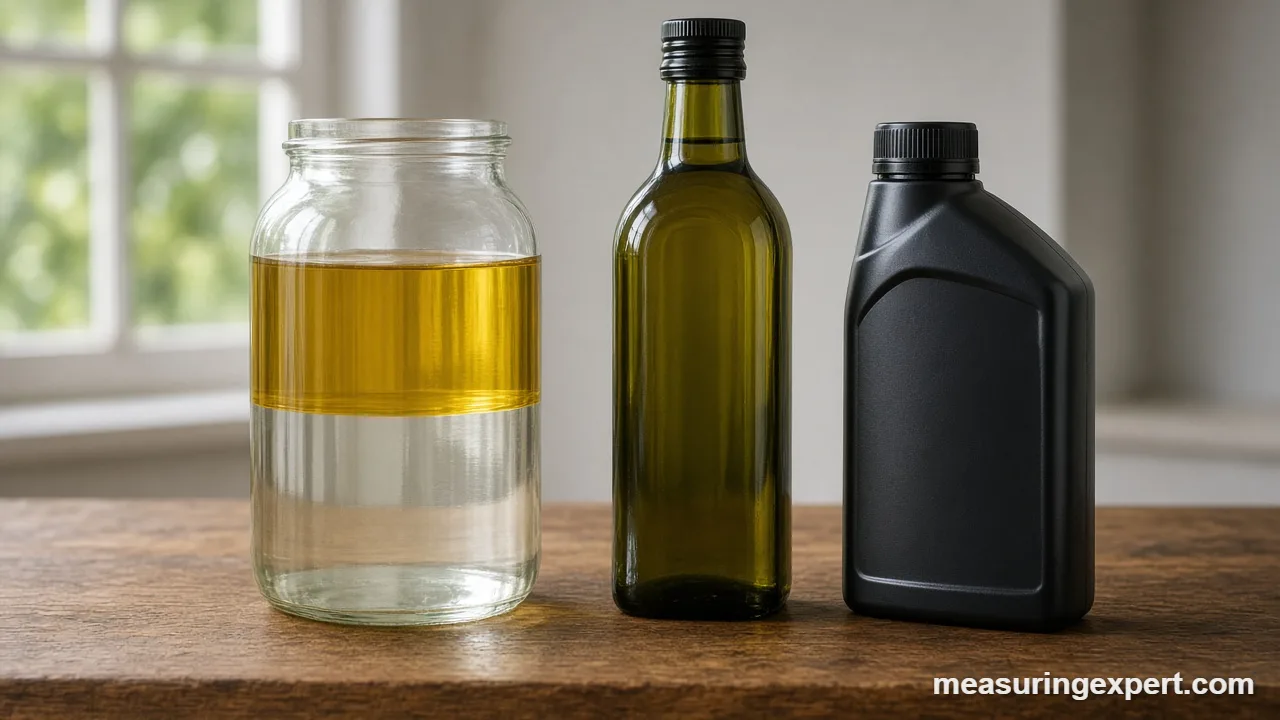
How dense is oil? Most liquid cooking oils, such as olive, canola, sunflower and soybean oil, have a density of about 0.91 to 0.93 g/mL (908 to 925 kg/m3) at 20 C, or roughly 7.6 to 7.7 lb per US gallon. Motor oil sits near 0.85 g/mL, while most crude oil falls between about 0.80 and 1.00 g/mL.
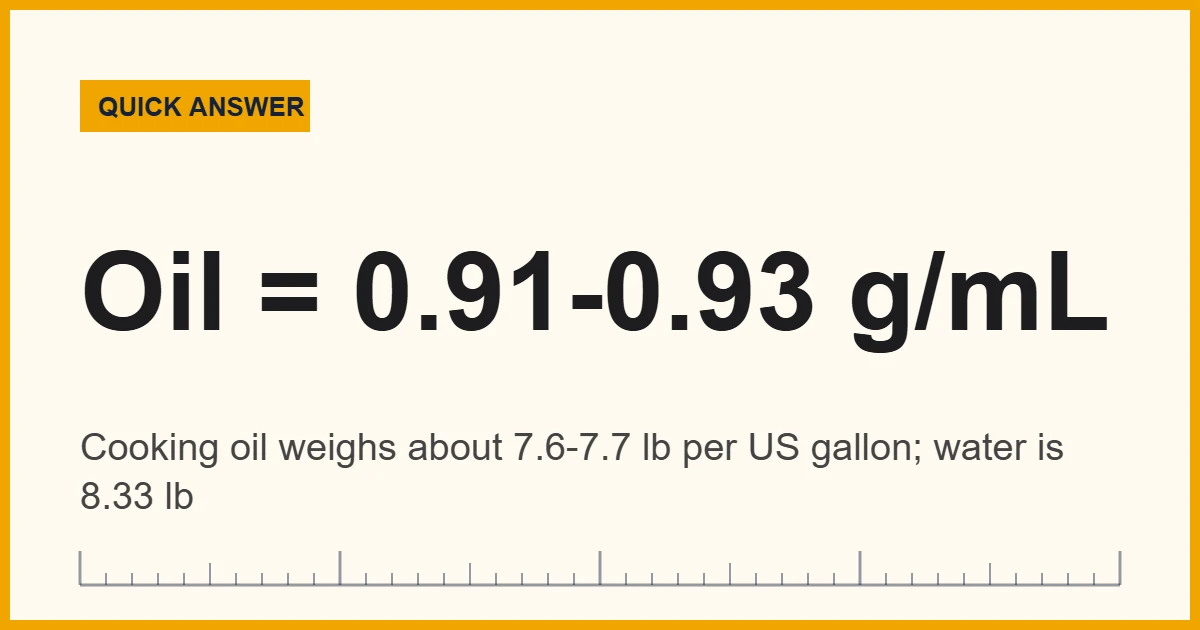
How Dense Is Oil in Your Units? Convert It Here
First, enter a density in any unit, and the converter then shows the same value in the others. For example, type 0.92 g/cm3 for a typical vegetable oil, and you will see kg/m3, pounds per US gallon and pounds per cubic foot.
In short, density tells you how much mass fits into a given volume. So the formula is simple: density = mass / volume. For example, if 100 mL of olive oil weighs 91.4 g, its density is 0.914 g/mL. In other words, a liter of that oil weighs about 914 g.
You meet oil density more often than you might think. For instance, it explains why salad dressing separates, why a cup of oil weighs less than a cup of water, and why oil spills float. It also matters for shipping fuel because crude oil is priced and taxed by volume yet refined by mass.
Above all, the figures on this page come from published standards rather than guesses. In particular, the Codex Alimentarius standard for named vegetable oils, written by the FAO and WHO, lists the allowed relative density of each oil. Because those values compare oil with water at 20 C, we converted them to g/mL using water at 0.9982 g/mL.
How Dense Is Oil From Your Kitchen? Density by Type
At first glance, cooking oils are remarkably close to each other. Even so, the small differences come from the mix of fatty acids in each oil. Below, the table shows the Codex ranges converted to density, plus the weight of one US gallon.
| Oil | Density (g/mL) | Density (kg/m3) | lb per US gallon |
|---|---|---|---|
| Olive oil (all grades) | 0.908 – 0.914 | 908 – 914 | 7.58 – 7.63 |
| Peanut oil | 0.910 – 0.918 | 910 – 918 | 7.60 – 7.66 |
| Canola (low erucic rapeseed) | 0.912 – 0.918 | 912 – 918 | 7.61 – 7.66 |
| Sesame oil | 0.913 – 0.922 | 913 – 922 | 7.62 – 7.70 |
| Corn oil | 0.915 – 0.923 | 915 – 923 | 7.64 – 7.71 |
| Sunflower oil | 0.916 – 0.921 | 916 – 921 | 7.65 – 7.69 |
| Soybean oil | 0.917 – 0.923 | 917 – 923 | 7.66 – 7.71 |
| Grapeseed oil | 0.918 – 0.924 | 918 – 924 | 7.66 – 7.71 |
| Safflower oil | 0.920 – 0.925 | 920 – 925 | 7.68 – 7.72 |
| Coconut oil (melted, measured at 40 C) | 0.906 – 0.919 | 906 – 919 | 7.56 – 7.67 |
| Palm oil (melted, measured at 50 C) | 0.889 – 0.897 | 889 – 897 | 7.42 – 7.49 |
All values are at 20 C unless noted. Olive oil from Codex Standard 33; all others from Codex Standard 210. Also, to print it, set this page to landscape so the whole table fits on one sheet.
Meanwhile, the olive oil range comes from the separate Codex standard for olive oils, which sets a relative density of 0.910 to 0.916 for every grade. As a result, extra virgin and light olive oil weigh essentially the same per cup.
Recommended Tools for Measuring Oil Density
In practice, you only need two tools to find the density of any oil: something that measures volume precisely and a scale that reads to 0.1 g. First, a glass graduated cylinder is far more accurate than a measuring cup. Next, a 0.1 g kitchen scale lets you weigh small samples. Also, a glass measuring cup is handy for pouring oil without drips.
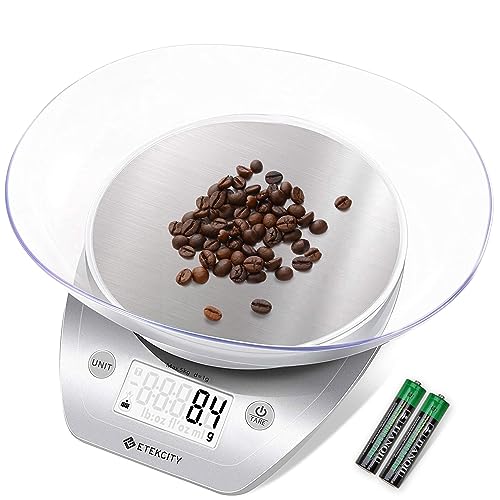


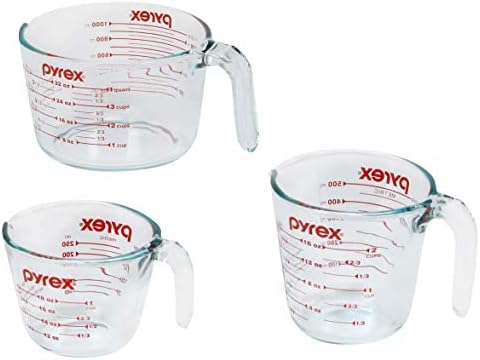
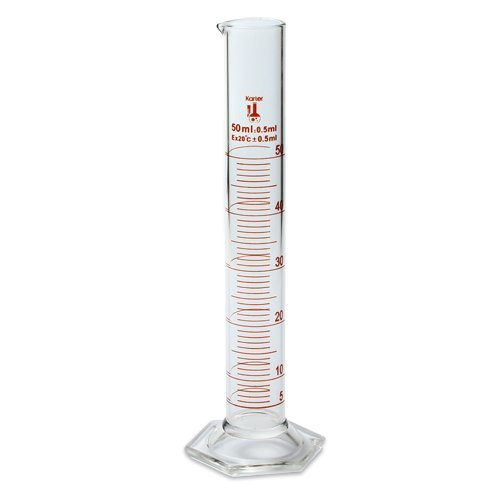
As an Amazon Associate, Measuring Expert earns from qualifying purchases.
How Dense Is Oil Compared With Water?
To begin with, water at 20 C has a density of about 0.998 g/mL. Cooking oil, by contrast, is roughly 8 percent lighter for the same volume. As a result, oil always floats on water, and why the oil layer sits on top in a bottle of vinaigrette.
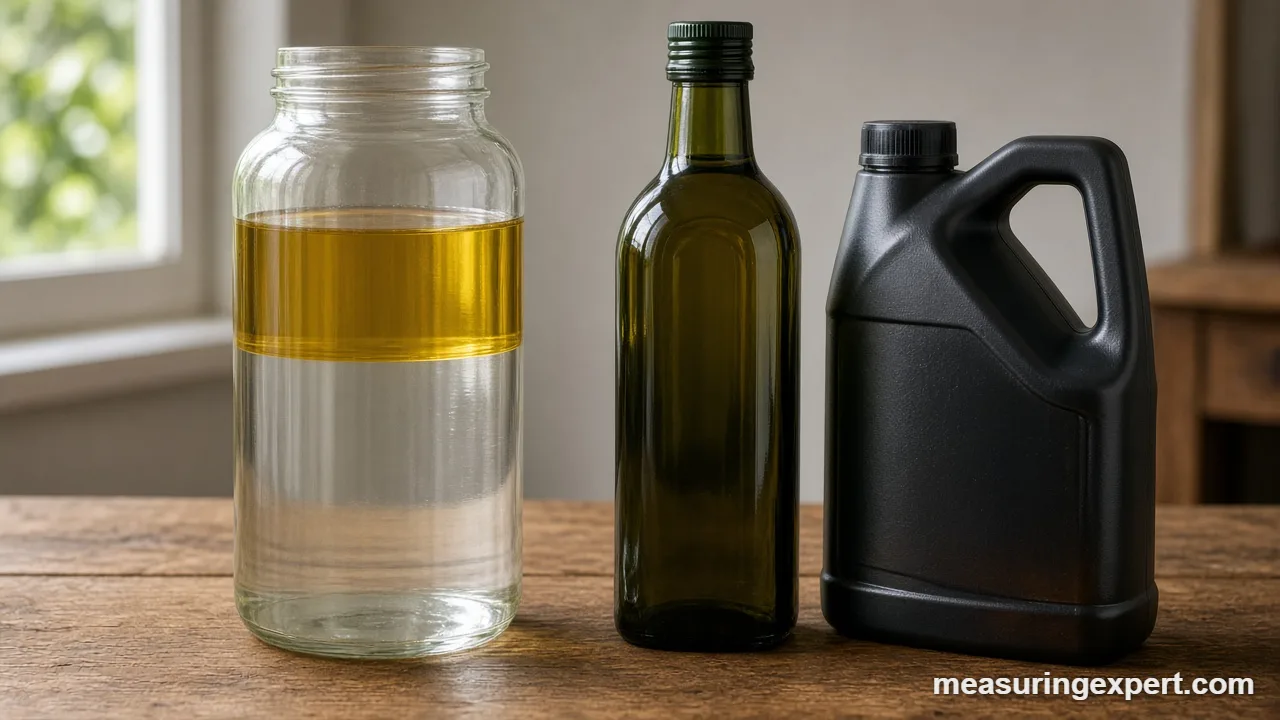
Likewise, you can see the gap clearly in everyday amounts. For example, one liter of water weighs about 998 g, while a liter of olive oil weighs about 910 to 915 g. Similarly, a US gallon of water weighs about 8.33 lb, but a gallon of soybean oil weighs about 7.7 lb. For more on the water side, also see how much 3 liters of water weighs and holds.
| Amount (US) | Water at 20 C | Typical cooking oil (0.91 – 0.92 g/mL) |
|---|---|---|
| 1 tablespoon (14.79 mL) | 14.8 g | 13.5 – 13.6 g |
| 1 fluid ounce (29.57 mL) | 29.5 g | 26.9 – 27.2 g |
| 1 cup (236.59 mL) | 236.2 g | 215 – 218 g |
| 1 liter | 998 g | 910 – 920 g |
| 1 gallon (3.785 L) | 3.78 kg (8.33 lb) | 3.44 – 3.48 kg (7.6 – 7.7 lb) |
How Dense Is Oil From the Ground? Crude, Motor Oil and Fuels
However, petroleum products cover a much wider range than cooking oils. Instead of g/mL, the oil industry often uses API gravity. For reference, the US Energy Information Administration defines API gravity as 141.5 divided by the specific gravity at 60 F, minus 131.5. So a higher API number means a lighter oil.
| Product | Typical density (g/mL) | API gravity |
|---|---|---|
| Gasoline (European EN 228 limits, 15 C) | 0.720 – 0.775 | about 51 – 65 |
| Diesel fuel (European EN 590 limits, 15 C) | 0.820 – 0.845 | about 36 – 41 |
| Motor oil (Mobil 1 5W-30 data sheet, 15 C) | 0.847 | about 35.6 |
| Light crude oil | below 0.870 | above 31.1 |
| Medium crude oil | 0.870 – 0.920 | 22.3 – 31.1 |
| Heavy crude oil | 0.920 – 1.000 | 10 – 22.3 |
| Extra-heavy crude and bitumen | above 1.000 | below 10 |
In other words, an API gravity of exactly 10 matches water, so oil below 10 API sinks. Gasoline, on the other hand, is a refined fuel rather than a “light oil”, and it is the least dense liquid in the table.
Density vs Specific Gravity vs Weight
Unfortunately, these three terms get mixed up constantly. However, each one answers a slightly different question.
| Term | What it means | Example for olive oil |
|---|---|---|
| Density | Mass per volume, with units | 0.91 g/mL or 910 kg/m3 |
| Specific (relative) gravity | Density divided by the density of water; no units | 0.910 – 0.916 |
| API gravity | Petroleum scale in degrees; higher means lighter | about 23 (rarely used for food oils) |
| Fluid ounce | Volume: 29.57 mL | 1 fl oz of oil |
| Ounce (weight) | Mass: 28.35 g | 1 fl oz of oil weighs about 0.95 oz |
In short, a fluid ounce of oil does not weigh an ounce. Instead, it weighs a little less because oil is less dense than water.
How to Measure Oil Density at Home
Fortunately, you can check the density of your own oil in about five minutes. After that, enter the result in the converter above.
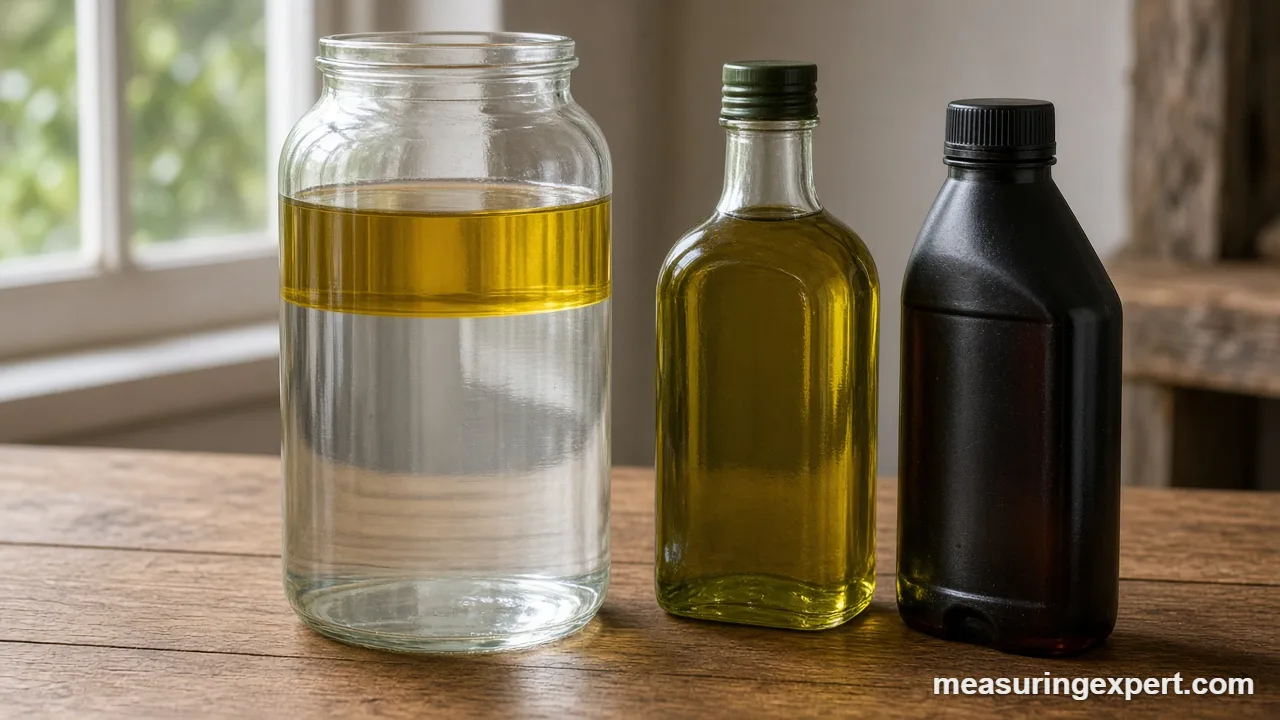
- Let the oil reach room temperature. Then write down the temperature, ideally close to 20 C (68 F).
- Tare the empty graduated cylinder. First, place it on a 0.1 g scale and press tare so the display reads zero.
- Pour in exactly 100 mL. Then read the bottom of the curved surface at eye level.
- Record the mass. Next, note the reading in grams once the display settles.
- Divide mass by volume. So, for example, 91.6 g divided by 100 mL gives 0.916 g/mL.
- Repeat twice and average. That way, three readings smooth out small pouring and reading errors.
For more ways to read a liquid volume accurately, see our guide on how to measure the volume of a liquid.
Do and Don’t for Oil Density Checks
Do
- Always measure at a known temperature.
- Use a graduated cylinder instead of a kitchen cup.
- Tare the container first, before you pour.
- Read the liquid level at eye height so parallax does not skew it.
- Finally, average at least three readings.
Don’t
- Compare a cold reading with a warm one, because temperature shifts density.
- Weigh tiny samples on a 1 g scale, since rounding then swamps the result.
- Expect a beer or wine hydrometer to read oil.
- Assume all “oils” float on water; in fact, some heavy crudes sink.
- Mix up fluid ounces and weight ounces, because they differ for oil.
Honest Limits of These Numbers
To be clear, oil density is a range, not a single fixed value. First, natural oils vary with the crop, the climate and the processing. Second, density falls as temperature rises. For instance, a study of sunflower and olive oil found that density drops in a straight line between about 5 and 32 C. That is why standards always name a reference temperature: 20 C for food oils and 15 C or 60 F for petroleum.
Also, the figures here describe fresh oil. For example, used frying oil changes slightly as it breaks down and picks up food particles. Finally, home measurements carry small errors from the cylinder marks and the scale. Therefore, treat a home result within about 0.005 g/mL of the chart as a match.
When Accuracy Really Matters
For most cooking, using 0.92 g/mL for any vegetable oil is close enough. Nevertheless, a few jobs need tighter numbers, for example:
- Baking by weight. If a recipe gives oil in grams, weigh it instead of converting cups, because cup measures vary.
- Soap and cosmetics making. Because lye calculations work on weight, weigh every oil directly.
- Fuel and lubricant work. For this reason, industry measures density with standard hydrometers or digital meters at a reference temperature.
- Selling or shipping oil. In addition, trade uses temperature-corrected volumes, so follow the buyer’s standard.
Similarly, if you are curious how a much thicker liquid compares, see how dense honey is.
Frequently Asked Questions
How dense is oil in g/mL?
Most liquid cooking oils measure about 0.91 to 0.93 g/mL at 20 C. Motor oil is about 0.85 g/mL, and crude oil ranges from about 0.80 to 1.00 g/mL.
How dense is oil in pounds per gallon?
A US gallon of cooking oil weighs about 7.6 to 7.7 lb. By comparison, a gallon of water weighs about 8.33 lb.
Is oil heavier than water?
No. For the same volume, cooking oil is about 8 percent lighter than water, so it floats. However, some extra-heavy crude oils are denser than water.
What is the density of olive oil?
Olive oil has a relative density of 0.910 to 0.916 at 20 C, which equals about 0.908 to 0.914 g/mL. As a result, all grades fall in this range.
How much does a cup of oil weigh?
One US cup of vegetable oil weighs about 215 to 218 g, or roughly 7.6 oz. In comparison, a cup of water weighs about 236 g.
How dense is oil compared with gasoline?
Gasoline is lighter, at about 0.72 to 0.78 g/mL. By contrast, cooking oil is about 0.92 g/mL, and motor oil is about 0.85 g/mL.
Does temperature change oil density?
Yes. Oil expands as it warms, so its density falls as temperature rises. That is why standards quote density at 20 C or 15 C.
What is API gravity?
API gravity is a petroleum scale equal to 141.5 divided by the specific gravity at 60 F, minus 131.5. So higher numbers mean lighter oil, and 10 equals water.
Which cooking oil is the densest?
Safflower, grapeseed and soybean oil sit at the top of the Codex ranges, at up to about 0.925 g/mL. Olive oil, on the other hand, is among the lightest liquid oils.
Can I use a hydrometer to measure oil density?
Yes, but it must have the right range. Beer and wine hydrometers usually start near 0.990, so they cannot read oil. Instead, use an oil or petroleum hydrometer, or weigh a measured volume instead.
How Dense Is Oil? The Bottom Line
To sum up, cooking oils cluster tightly around 0.91 to 0.93 g/mL, so a gallon weighs about 7.6 to 7.7 lb. Petroleum, however, is wider: motor oil is near 0.85 g/mL, and crude ranges from about 0.80 to slightly over 1.00 g/mL.
Next time you need a number, use the converter at the top, and remember the temperature. Finally, weigh a measured volume if you need your own oil’s exact figure.
5 thoughts on “How Dense Is Oil? Density of Cooking, Motor and Crude Oil”