

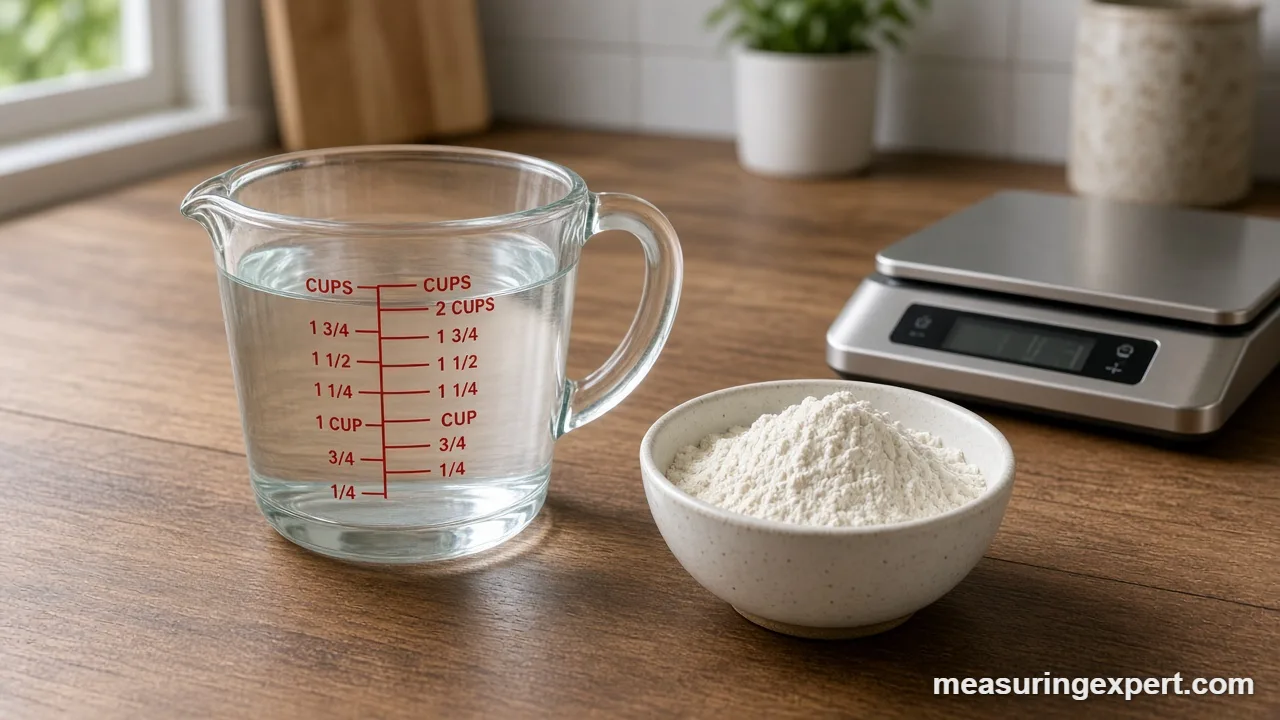
There are exactly 2 US cups in 16 oz of liquid, because one cup holds 8 US fluid ounces. That equals about 473 mL, or one US pint. However, cups in 16 oz of a dry ingredient weighed on a scale change with the ingredient: about 3.8 cups of flour, but only about 2.3 cups of sugar.
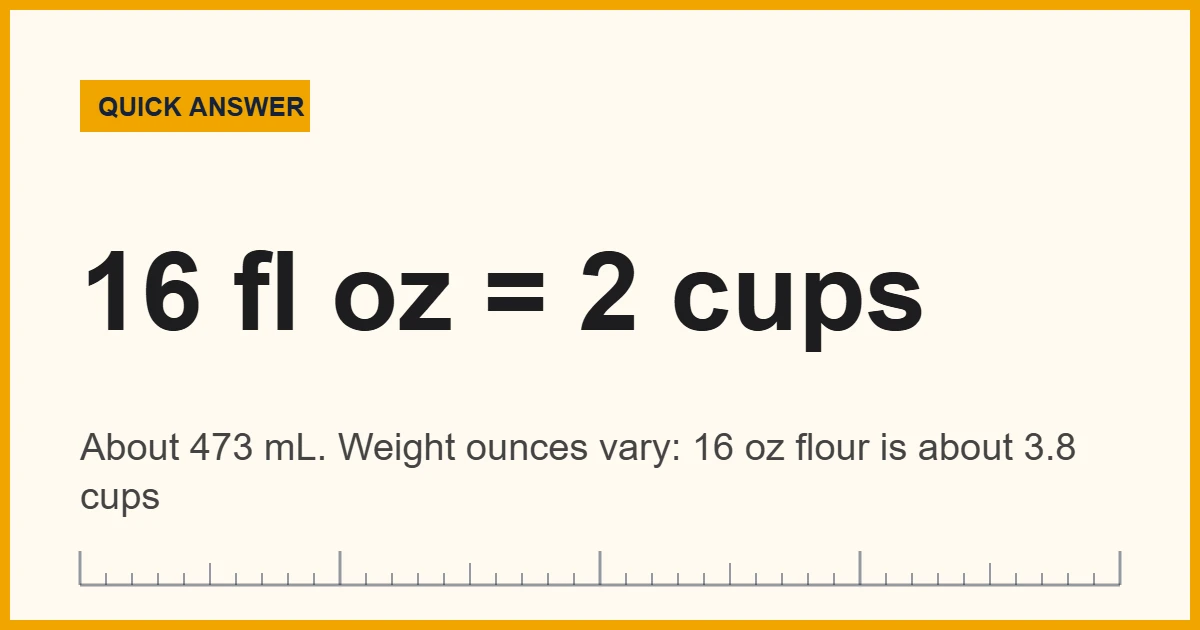
Convert Fluid Ounces to Cups
First, type any number of fluid ounces into the box below. The converter then returns US cups, nutrition-label cups, metric cups, pints and milliliters, using the exact US definitions. It also shows UK fluid ounces and UK pints, so it works for British recipes too.
For instance, a 16-ounce bottle of soda, a pint of cream and a tall coffee tumbler each hold the same 2 cups. The math is short, because a US cup equals 8 US fluid ounces, so 16 divided by 8 gives exactly 2.
However, the catch is the little word “fl”. So when a label says “16 fl oz”, it measures volume. However, when it says only “16 oz” or “1 lb”, it usually measures weight. For example, a 1-pound bag of powdered sugar fills about 4 cups, while a 1-pound jar of honey fills well under 1 1/2 cups.
The US National Institute of Standards and Technology (NIST) keeps the two ounces separate in its kitchen measurement equivalents. Specifically, it lists 16 fluid ounces as 1 pint, or 2 cups, and an ounce by weight as about 28 g. Next, in the sections below, you will find a chart, an ingredient table, the UK difference and a step-by-step way to measure.
Cups in 16 oz and Nearby Sizes
First, this chart covers the liquid amounts that show up most on bottles, cartons and recipes. In addition, the milliliter values come from the exact US definition (1 US fluid ounce = 29.5735295625 mL) and are rounded to two decimals.
| US fluid ounces | US cups | Milliliters | Also equals |
|---|---|---|---|
| 2 fl oz | 1/4 cup | 59.15 mL | 4 tablespoons |
| 4 fl oz | 1/2 cup | 118.29 mL | 1 gill |
| 6 fl oz | 3/4 cup | 177.44 mL | 12 tablespoons |
| 8 fl oz | 1 cup | 236.59 mL | 1/2 pint |
| 10 fl oz | 1 1/4 cups | 295.74 mL | – |
| 12 fl oz | 1 1/2 cups | 354.88 mL | a standard can |
| 16 fl oz | 2 cups | 473.18 mL | 1 US pint |
| 20 fl oz | 2 1/2 cups | 591.47 mL | – |
| 24 fl oz | 3 cups | 709.76 mL | 1 1/2 pints |
| 32 fl oz | 4 cups | 946.35 mL | 1 quart |
| 64 fl oz | 8 cups | 1,892.71 mL | 1/2 gallon |
As a printable tip, save or print this chart and tape it inside a cabinet door. Similarly, if you need the next size up, see our page on how many cups are in 32 oz.
Fluid Ounces vs Weight Ounces
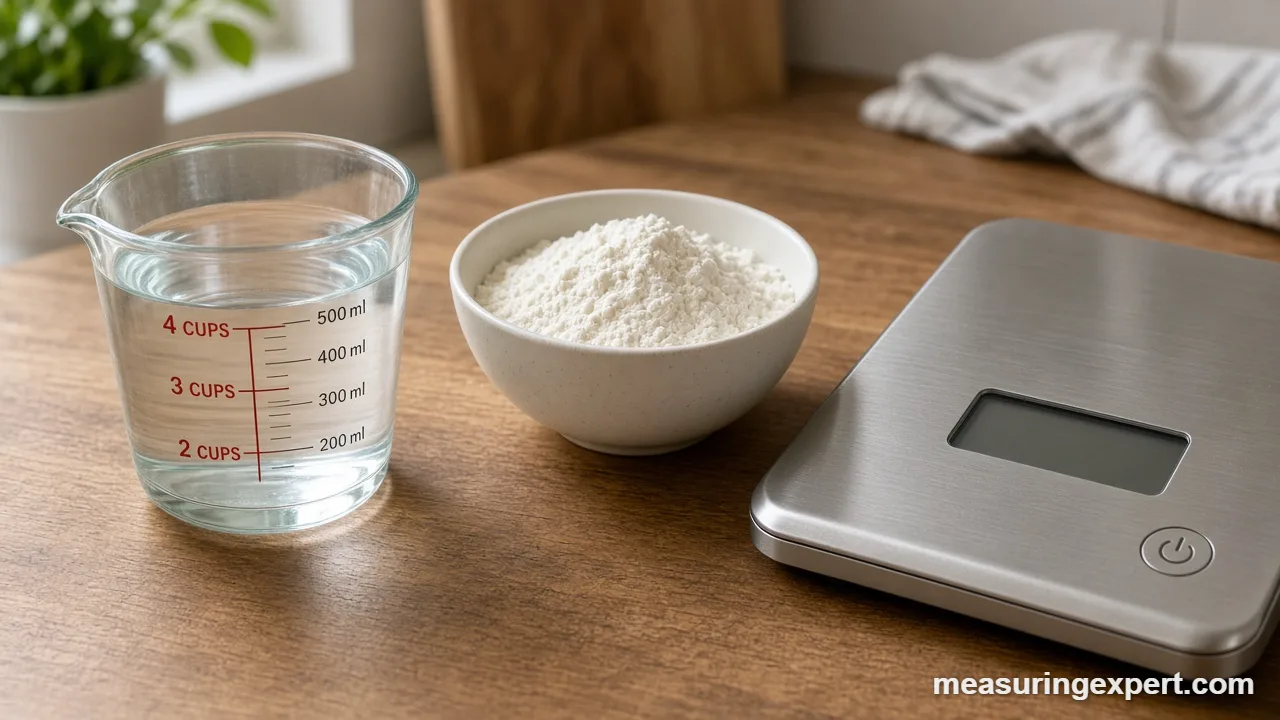
In fact, two different units share the name “ounce”, and that is the root of almost every wrong answer to this question. In short, the fluid ounce measures space, while the ounce on a scale measures mass.
| Unit | What it measures | Exact size | 16 of them |
|---|---|---|---|
| US fluid ounce (fl oz) | Volume | 29.5735 mL | 2 US cups, 473.18 mL |
| Avoirdupois ounce (oz) | Weight (mass) | 28.3495 g | 1 pound, 453.59 g |
| UK (imperial) fluid ounce | Volume | 28.4131 mL | 454.61 mL, about 1.92 US cups |
Therefore, 16 fluid ounces is always 2 cups. By contrast, 16 ounces by weight is always 1 pound, and the number of cups depends on how dense the food is. Water, however, happens to line up neatly: 2 cups of water weigh about 16.7 oz, so for water, milk and thin liquids the two ounces are close enough for cooking. For example, for a deeper look at the weight ounce, read how much an ounce is.
How Many Cups in 16 oz of Flour, Sugar and More
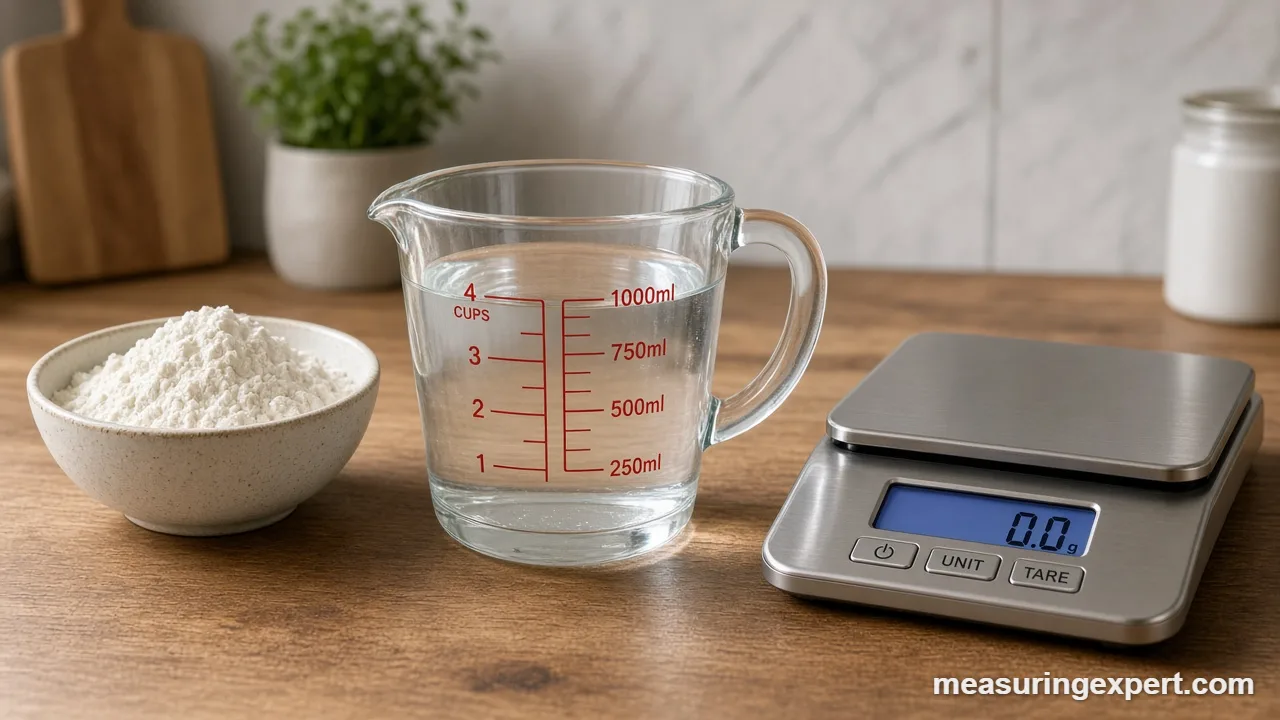
When 16 oz means one pound on a scale, you therefore need the weight of one cup of that ingredient. The table below divides 453.59 g (16 oz) by the cup weights published in the King Arthur Baking ingredient weight chart, a widely used reference for home bakers.
| Ingredient (16 oz by weight) | Weight of 1 cup | Cups in 16 oz |
|---|---|---|
| All-purpose or bread flour | 120 g (4 1/4 oz) | about 3.8 cups |
| Confectioners’ (powdered) sugar | 113 g (4 oz) | about 4 cups |
| Old-fashioned rolled oats | 89 g (3 1/8 oz) | about 5.1 cups |
| Chocolate chips | 170 g (6 oz) | about 2 2/3 cups |
| Granulated sugar | 198 g (7 oz) | about 2.3 cups |
| Long-grain white rice, dry | 198 g (7 oz) | about 2.3 cups |
| Brown sugar, packed | 213 g (7 1/2 oz) | about 2 1/8 cups |
| Butter | 226 g (8 oz) | about 2 cups (4 sticks) |
| Milk | 227 g (8 oz) | about 2 cups |
| Honey | 336 g (about 12 oz) | about 1 1/3 cups |
As a result, a pound of a light, fluffy ingredient fills far more cups than a pound of a dense, sticky one. That is also why the old rule “16 oz dry equals 2 cups” fails for flour by almost 2 cups. Similarly, dry pasta is even harder to pin down, because shapes pack so differently; for pasta, weigh it rather than counting cups.
Cups in 16 oz: US vs UK Ounces and Pints
To start, British recipes use the imperial fluid ounce, which is about 4% smaller than the US one. In addition, the UK pint holds 20 imperial fluid ounces, while the US pint holds only 16 US fluid ounces. As a result, “a pint” in a British recipe is about 2.4 US cups, not 2.
| Measure | Milliliters | In US cups |
|---|---|---|
| 16 US fl oz (1 US pint) | 473.18 mL | 2 cups |
| 16 UK fl oz | 454.61 mL | about 1.92 cups |
| 1 UK pint (20 UK fl oz) | 568.26 mL | about 2.4 cups |
| 2 metric cups (Australia, Canada, NZ) | 500 mL | about 2.11 cups |
| 2 US nutrition-label cups | 480 mL | about 2.03 cups |
Overall, for most cooking, the gap between 16 US and 16 UK fluid ounces (about 19 mL, or a little over a tablespoon) will not matter. The pint difference, however, adds almost half a cup, so check where a recipe comes from before you pour.
Recommended Tools for Measuring Cups in 16 oz
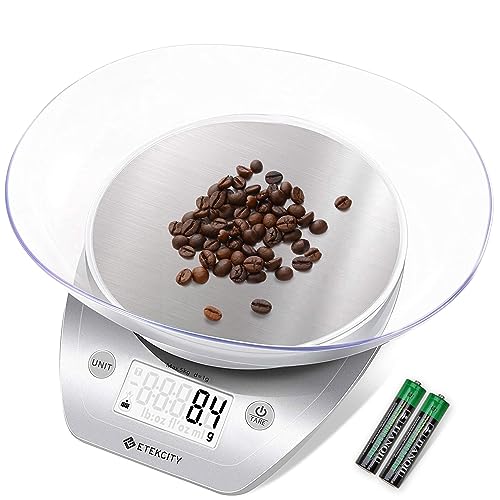
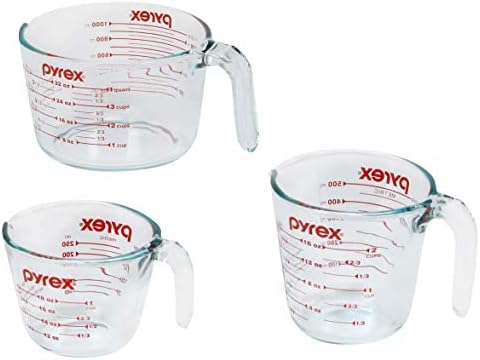
To begin, a clear liquid measuring cup with a 2-cup or 4-cup line makes 16 fluid ounces a one-step pour. For instance, look for cups that print both ounces and milliliters, plus a spout. Also, a digital kitchen scale with a tare button is the best tool for weight ounces, because it reads a pound of flour directly.



As an Amazon Associate, Measuring Expert earns from qualifying purchases.
How to Measure 2 Cups (16 fl oz) Accurately
- Choose the right cup. To start, use a clear liquid measuring cup with a 2-cup (16 fl oz) line for liquids, but use nested dry cups for flour or sugar.
- Set the cup on a flat counter. Otherwise, a tilted cup in your hand reads high or low.
- Pour to the line and check at eye level. Bend down so your eye sits level with the 2-cup mark, and then read the bottom of the curved surface.
- For dry ingredients, spoon and level. First, spoon flour into a 1-cup measure until it mounds, sweep it flat with a knife, and repeat once for 2 cups.
- For weight ounces, use a scale. Put a bowl on the scale, press tare, and then add the ingredient until the display reads 16 oz (453 g).
- Scrape sticky liquids out fully. Before measuring honey or syrup, lightly oil the cup so none stays behind.
Alternatively, you can enter your own amount in the converter above to check any number of fluid ounces before you start.
Do and Don’t
Do
- Check whether the label says “fl oz” or just “oz”.
- Also, read liquid cups at eye level on a flat surface.
- Weigh flour, sugar and pasta when a recipe lists ounces.
- Then confirm if a recipe is US, UK or metric.
- Finally, level dry cups with a straight edge.
Don’t
- Assume 16 oz of any dry food equals 2 cups, since it rarely does.
- Scoop flour straight from the bag, because it packs down.
- Also, treat a British pint as 2 US cups.
- Similarly, measure dry ingredients in a liquid cup.
- Likewise, pack brown sugar loosely when a recipe says packed.
Honest Limits of Ounce-to-Cup Conversions
To begin with, the liquid answer is exact: 16 US fluid ounces equal 2 US cups by definition. The dry answers, on the other hand, are averages. For example, flour can weigh anywhere from about 120 g to 150 g per cup depending on whether you spoon it or scoop it. In addition, humidity, sifting and brand shift the numbers a little. So use the ingredient table as a good starting point, and use a scale when precision counts. Finally, keep in mind that measuring cups themselves carry small manufacturing tolerances, and printed lines can be a few milliliters off.
When Accuracy Really Matters
For example, with soups, smoothies and sauces, a little over or under 2 cups makes no real difference. A few cases, however, deserve more care:
- Bread and cakes. First, an extra half cup of flour makes dough dry and cakes dense, so weigh the flour.
- Candy and syrups. Also, sugar-to-liquid ratios control how a syrup sets, so measure both carefully.
- Tracking fluids or nutrition. Likewise, if you count fluid intake or calories, measure in mL or grams rather than estimating cups.
Frequently Asked Questions
How many cups in 16 oz of water?
There are 2 US cups in 16 fluid ounces of water. By weight, however, 16 oz of water is about 1.9 cups, which is close enough to 2 for cooking.
Is 16 oz the same as 2 cups?
Yes, as long as the ounces are US fluid ounces. However, if the 16 oz is a weight, the number of cups depends on the ingredient.
How many cups in 16 oz of flour?
About 3.8 cups of all-purpose flour, because a spooned cup weighs about 120 g. Scooped flour packs tighter, so you may get closer to 3 1/4 cups.
How many cups in 16 oz of sugar?
It depends on the sugar: about 2 1/4 cups of granulated sugar, about 2 1/8 cups of packed brown sugar, and about 4 cups of powdered sugar.
Is a pint 16 oz?
Yes, a US pint is 16 US fluid ounces, or 2 cups. By contrast, a UK pint is 20 imperial fluid ounces, which is about 2.4 US cups.
How many mL is 16 oz?
16 US fluid ounces equal about 473.18 mL. Meanwhile, 16 UK fluid ounces equal about 454.61 mL.
How many cups in 16 oz of butter?
About 2 cups, because one pound of butter is 4 standard US sticks, and each stick is 1/2 cup.
How many cups is 12 oz?
12 US fluid ounces equal 1 1/2 cups, so that is about 354.88 mL.
Why do some sites say 16 oz of flour is 2 cups?
They mix up fluid ounces and weight ounces. In fact, a cup of flour weighs about 4 1/4 oz, not 8 oz, so a pound fills nearly 4 cups.
How many cups in 16 oz of dry pasta?
It depends on the shape, because small shapes pack tightly while long or large shapes leave gaps, so weigh pasta instead of using cups.
Cups in 16 oz: The Bottom Line
For liquids, the answer is simple: 16 US fluid ounces are exactly 2 US cups, about 473 mL, or one US pint. On the other hand, for dry foods sold by weight, a 16 oz bag is one pound, and the cups inside range from about 1 1/3 for honey to about 5 for rolled oats.
So, in summary, check the label for “fl”, use the converter for liquids, and reach for a scale when a recipe gives weight. Finally, for bigger containers, our guide to how much 32 oz is covers quarts, liters and pounds.