

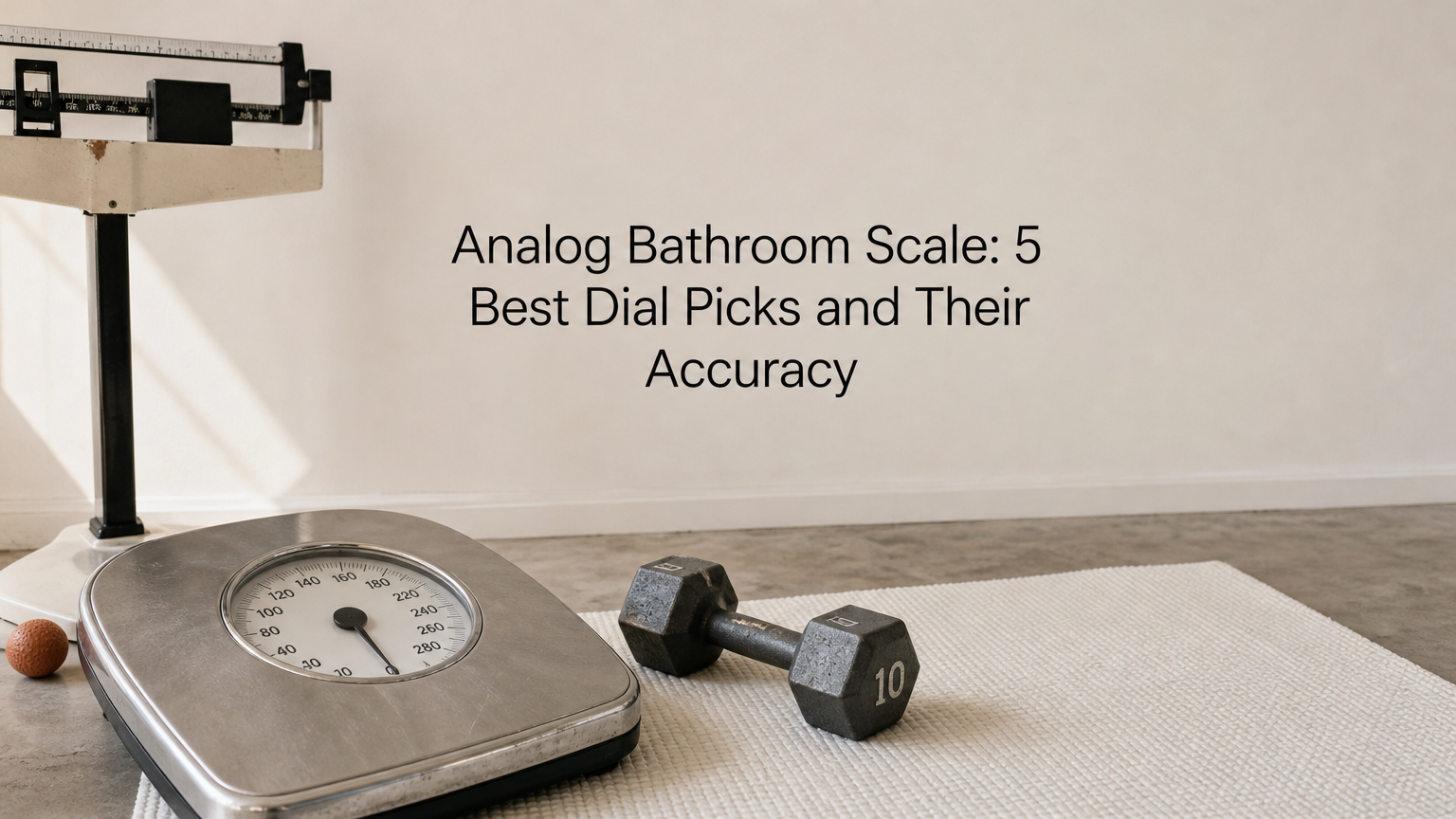
The best analog bathroom scale for most people is a metal-platform dial model with a non-slip mat, a capacity at least 50 lb above your weight, and a zero-adjust wheel. Choose the Taylor if you want a simple scale for one or two people. Choose a big-dial Health o meter if a small needle is hard to read. Choose a physician-style beam scale if you want the best accuracy and can pay for it.
You may be searching for an analogue bathroom scale, or just a bathroom scale non digital, because you want no batteries, no app, and no screen. Shopping for one is harder than it should be. Listings promise accuracy, capacities vary, and few pages explain how a spring scale really compares with a digital one.
This guide gives you five picks, each broken down the same way so you can compare them side by side. After that comes a plain look at accuracy against digital scales, plus a five-minute test you can run on any scale you own or buy.
Listen to a free audiobook while you cook, work or wait
1. Taylor analog bathroom scale with mat
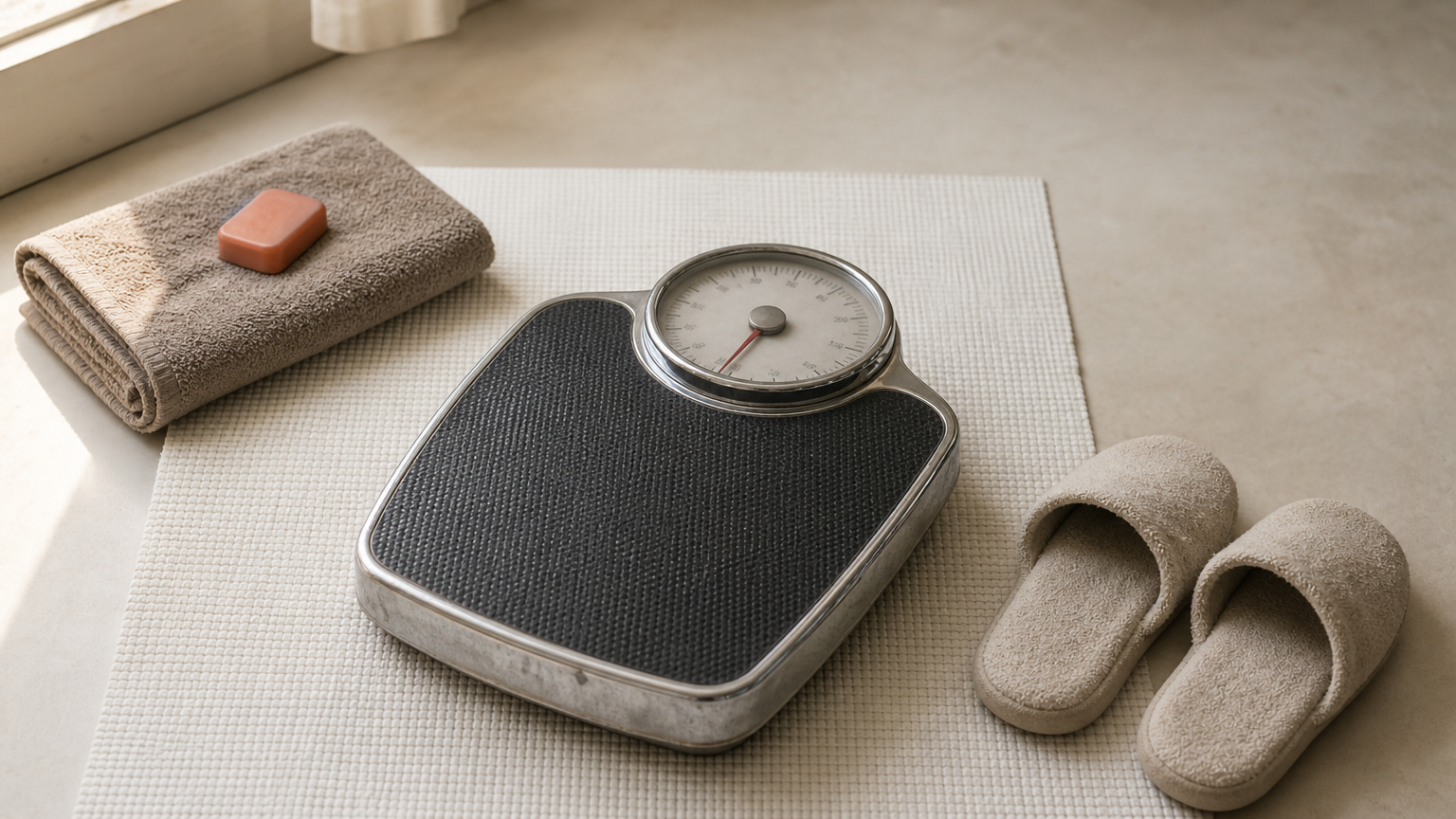
The Taylor analog bathroom scale with white mat is the safest all-round pick: a plain metal platform, a rotating dial, and a vinyl mat you can wipe clean.
Key facts
Taylor’s own listing gives the numbers you need to judge it, and they are modest but sensible. Taylor also sells a 330 lb version with a non-slip mat on its Amazon storefront.
- 10 x 10 inch metal platform
- Textured white vinyl mat that is easy to clean
- 2.65 x 1.75 inch rotating dial
- 300 lb capacity in 1 lb increments, with lb and kg markings
A 1 lb increment is all you need to see a real trend, as long as you read the dial from directly above.
Best for, and the catch
This scale suits a single adult or a couple who want a daily or weekly weigh-in without any setup. Reading to the nearest pound is fine when you track weekly averages instead of chasing single readings.
The catch is size. A 10-inch platform is compact if you have large feet, and the dial window is small. If you weigh more than 270 lb or so, go for the 330 lb version so you stay away from the top of the range.
2. Health o meter oversized dial scale
A Health o meter oversized dial scale is the right pick when reading the needle is your main problem, because a larger dial spaces the pound marks further apart.
Key facts
The name describes the main feature: a bigger dial with larger numerals. Model specs vary, so check the listing for these details before you buy.
- Dial diameter (the larger, the easier to read)
- Capacity, ideally 50 lb or more above your weight
- Increment size, usually 1 lb on a dial scale
- A zero-adjust wheel you can reach
- A textured, non-slip platform
A bigger dial does not make the scale more accurate, it makes your reading of it more accurate.
Best for, and the catch
It fits older readers, anyone with low vision, and anyone who finds small dials fiddly. Most reading errors come from looking down at an angle, and a large dial makes that error smaller.
The catch is bulk. Big-dial models take more floor space and can be awkward to store. Even a large dial still has to be read from directly above, so don’t squint at it from the side.
3. Salter professional analog bathroom scale
The Salter professional analog bathroom scale is the pick when you want something sturdier than a basic dial scale and plan to use it every day.
Key facts
"Professional" in a product name is a marketing word, not a spec, so judge this scale by its listing. Look at four things.
- Platform width, so both feet sit comfortably
- Metal frame versus a plastic housing
- Warranty length
- An accessible zero wheel for recalibration
Judge a scale by its capacity, build, and warranty, never by the word "professional" on the box.
Best for, and the catch
It suits households with several users and people who weigh daily and want the scale to last. A heavier build also tends to sit more steadily on the floor, which helps consistency.
The catch is price and weight. Expect to pay more than the roughly $20 you would for a basic model, and don’t pay extra unless the listing shows a better build or a longer warranty. If the specs match a cheaper scale, buy the cheaper one.
4. Budget metal dial scale with mat
A budget metal dial scale with a mat is the right choice if you want a non-digital bathroom scale for about $20 and don’t need frills.
Key facts
Walmart lists a black analog dial scale at $19.97 and a metal analog scale with a silver mat rated up to 330 lb. Prices move, so treat those as ballpark figures. When you compare listings, check these details.
- Metal platform rather than all plastic
- Listed capacity of 300 to 330 lb
- Non-slip mat or textured surface
- Clear return policy
At this price the return policy matters as much as the specs, because you will only learn how good the scale is by testing it.
Best for, and the catch
It works well as a guest bathroom scale, a second scale, or a first analog purchase. A listed 330 lb capacity at this price is useful for heavier users on a budget.
The catch is consistency. Cheaper springs and thinner platforms are where drift tends to show up first. Run the test in the last section when the scale arrives. If the needle will not zero or the readings wander, send it back.
5. Physician-style balance beam scale
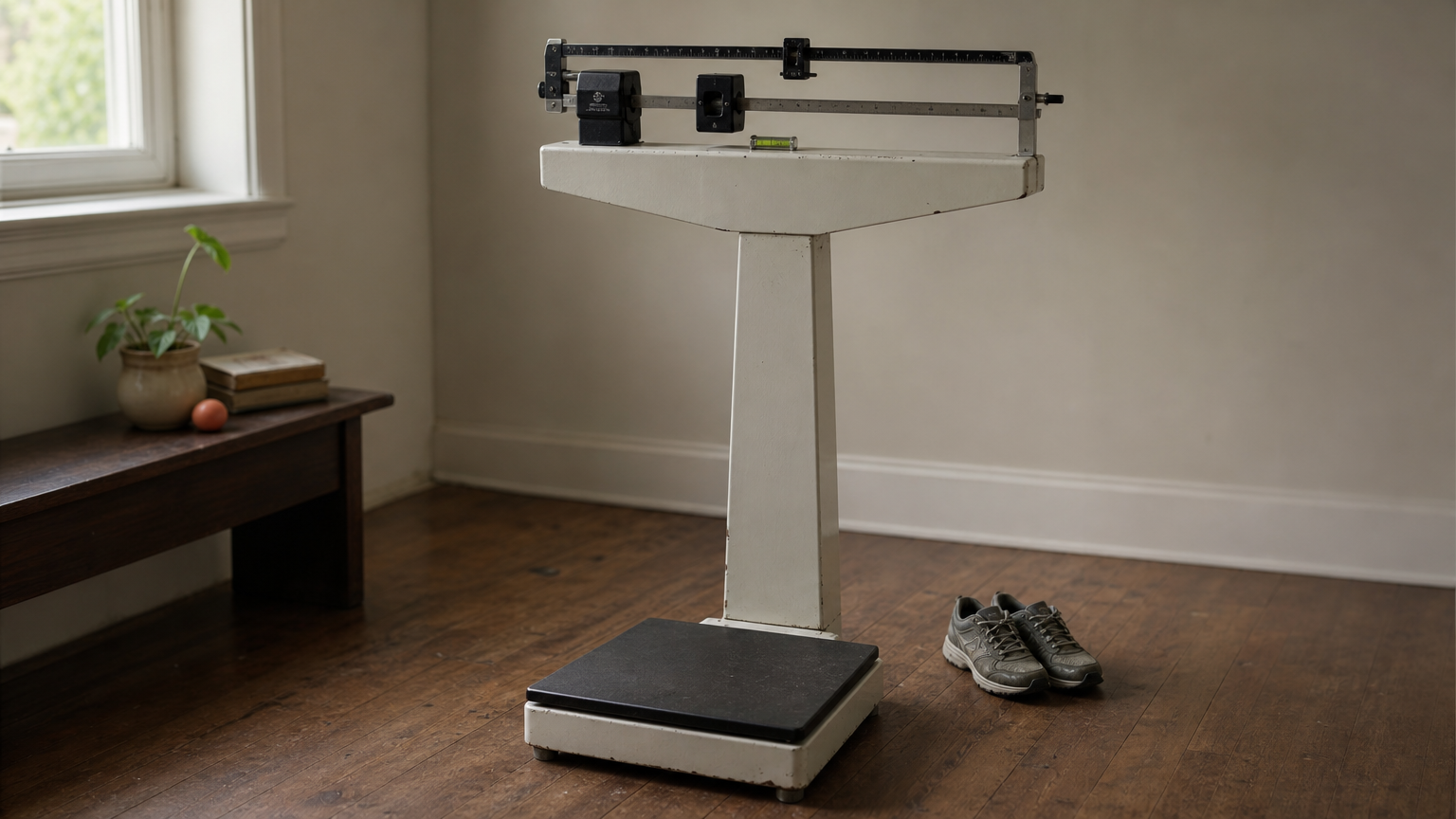
A physician-style balance beam scale is the most accurate analog option, and the pick when you want clinic-grade readings at home.
Key facts
You slide weights along a beam until it balances, so no spring can fatigue. Don’t confuse it with the lab triple beam balance, which is long-lived but only weighs a few kilos. The body-weight version is the type you see in doctors’ offices.
- Reads to fractions of a pound, often a quarter pound (check the model)
- Higher capacity than most dial scales
- Heavy and fixed in place, so it needs a level floor
- Commonly priced in the low hundreds of dollars
If you want the most accurate analog reading, take the spring out of the equation.
Best for, and the catch
It suits people who track small changes with a clinician or want one scale for decades. It is also the clearest case where analog beats most cheap digital scales on accuracy.
The catch is cost and convenience. A beam scale is bulky, not portable, and sliding the poise weights takes a little practice. For casual weigh-ins, a good dial scale is plenty.
How accurate are analog scales compared with digital?
A properly zeroed analog scale is accurate to within a pound or two, which is enough for tracking your weight. Digital scales show finer increments, but finer is not automatically more accurate.
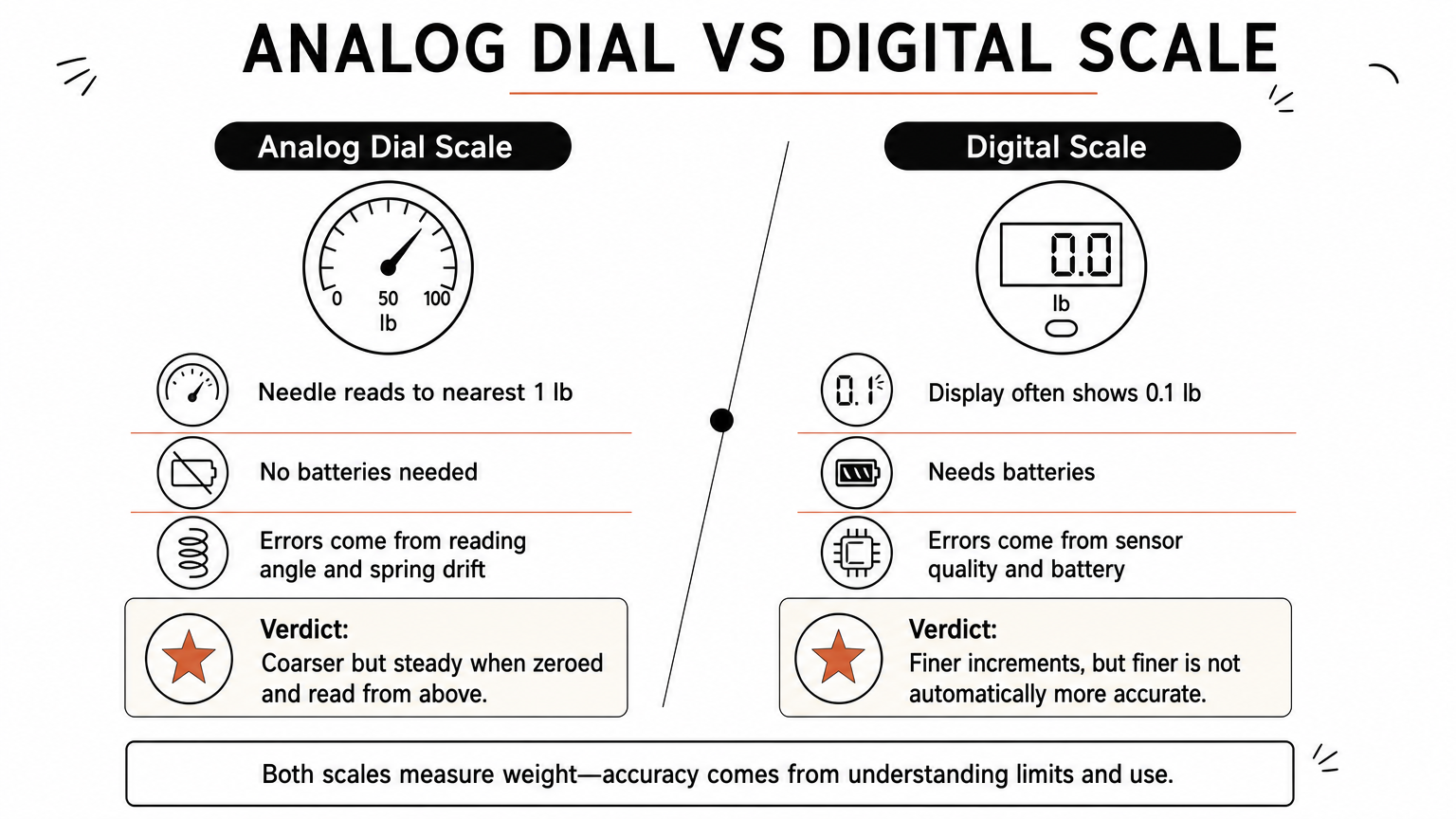
Analog versus digital at a glance
| Analog dial | Digital | |
|---|---|---|
| Reading | Needle, nearest 1 lb | Display, often 0.1 lb |
| Power | None | Batteries |
| Main error source | Reading angle, spring drift | Sensor quality, battery |
| Extras | None | Memory, unit switching, tare |
| Few parts to fail | Yes | Electronics can fail |
Precision versus accuracy
Accuracy is how close a reading is to your true weight. Precision is how finely the scale displays it. A digital scale that shows 149.7, then 150.3, then 149.9 is precise but not consistent, while a dial scale that reads 150 each time is coarser but steadier.
Parallax is the analog weak spot. Look at the needle from an angle and you can misread by a pound or more. Weigh yourself at the same time of day, on a hard, flat floor, in the same spot, and your trend will be reliable on either type.
Test your scale in five minutes
- Place the scale on a hard, level floor, not carpet.
- With nobody on it, check that the needle sits on zero. Turn the zero wheel if it does not.
- Weigh yourself three times. The readings should match.
- Hold a known weight, such as a 10 lb dumbbell, and weigh again. The difference should be 10 lb.
- Repeat with a different known weight if you can, to check another part of the range.
If the difference between readings is off by more than a pound, the scale is not worth keeping.
Which dial scale to buy
For most people, a metal dial scale like the Taylor is the simple answer. Step up to a big-dial model if reading the needle is the problem, a sturdier build if the whole household uses it, and a beam scale if you want clinic-level accuracy. Whichever you pick, zero it, test it with a known weight, and read the dial from directly above.
If you want help choosing other tools, browse more measuring tool buying guides at Measuring Expert for accuracy tips and comparisons.
Black Friday is coming: shop the deals with Prime