

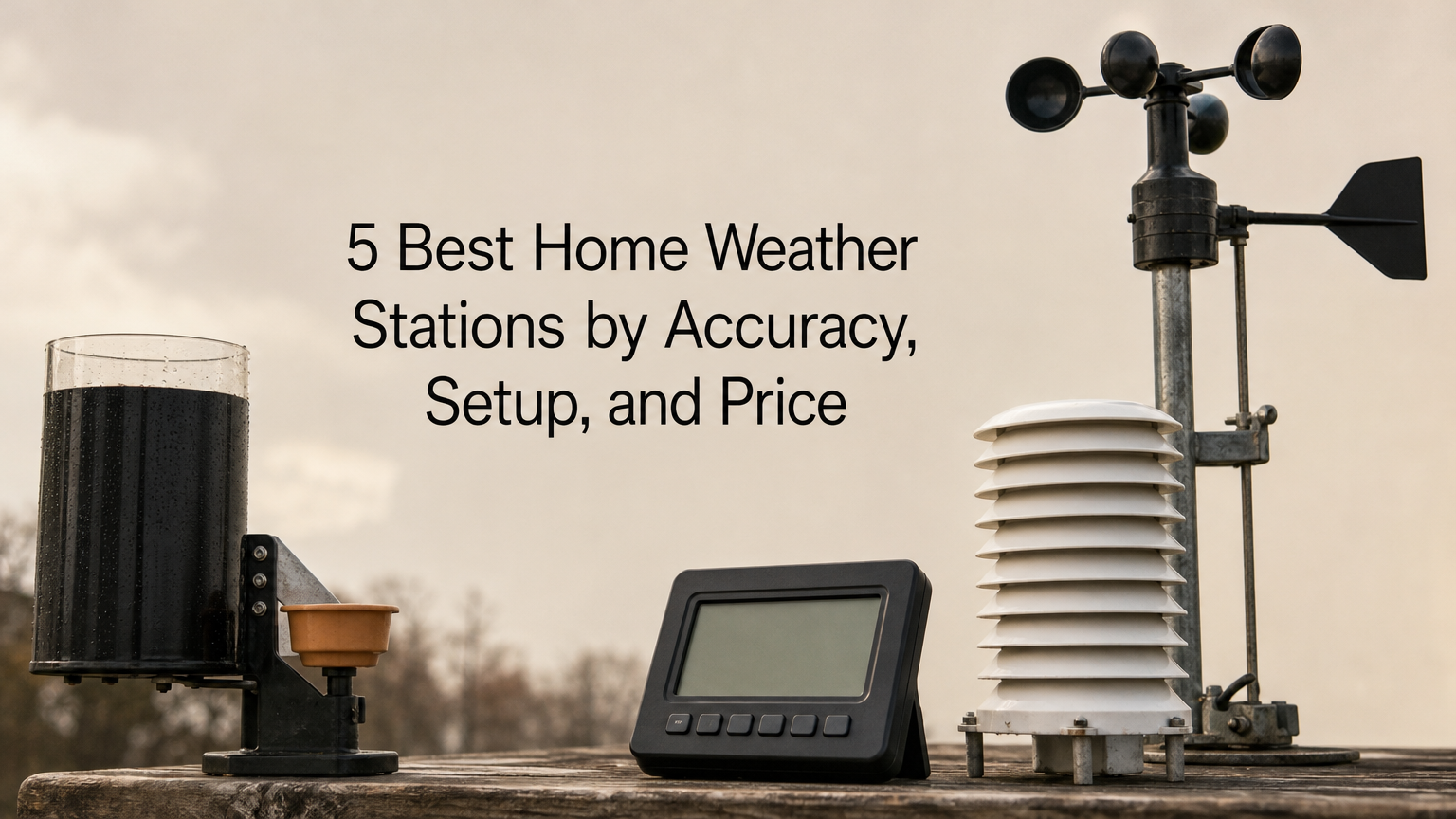
The best weather station for home use is the Ambient Weather WS-2000 if you want one balanced system you can expand later. Choose the Ambient WS-2902 for a lower price and a full sensor set. Choose the Davis Vantage Vue for rugged, low-fuss accuracy, and the Davis Vantage Pro2 for the best data you can buy at home. Choose the Netatmo if you live in an apartment and cannot mount a mast. A good pick measures the basics (temperature, humidity, pressure, wind, rain), connects to your Wi-Fi, and lets you place the sensors in open air.
Most buyers get stuck because every listing promises "hyper-local data." The sensor lists, connectivity and prices behind those words differ a lot. A station with no wind or rain sensor is a different product from one with both. A sensor suite that costs $425 is a different product from a $1,610 research-grade system.
This guide compares five picks on what each one measures, who it suits and what it costs. Measuring Expert does not sell any products, so the ranking is about fit, not stock. Davis prices below come from the maker’s own listings, so confirm current prices before you buy.
1. Ambient Weather WS-2000
The WS-2000 is the best all-around home weather station because it covers the standard sensors and can grow with you. Wirecutter also names it the top home pick for delivering consistent data.
What it measures
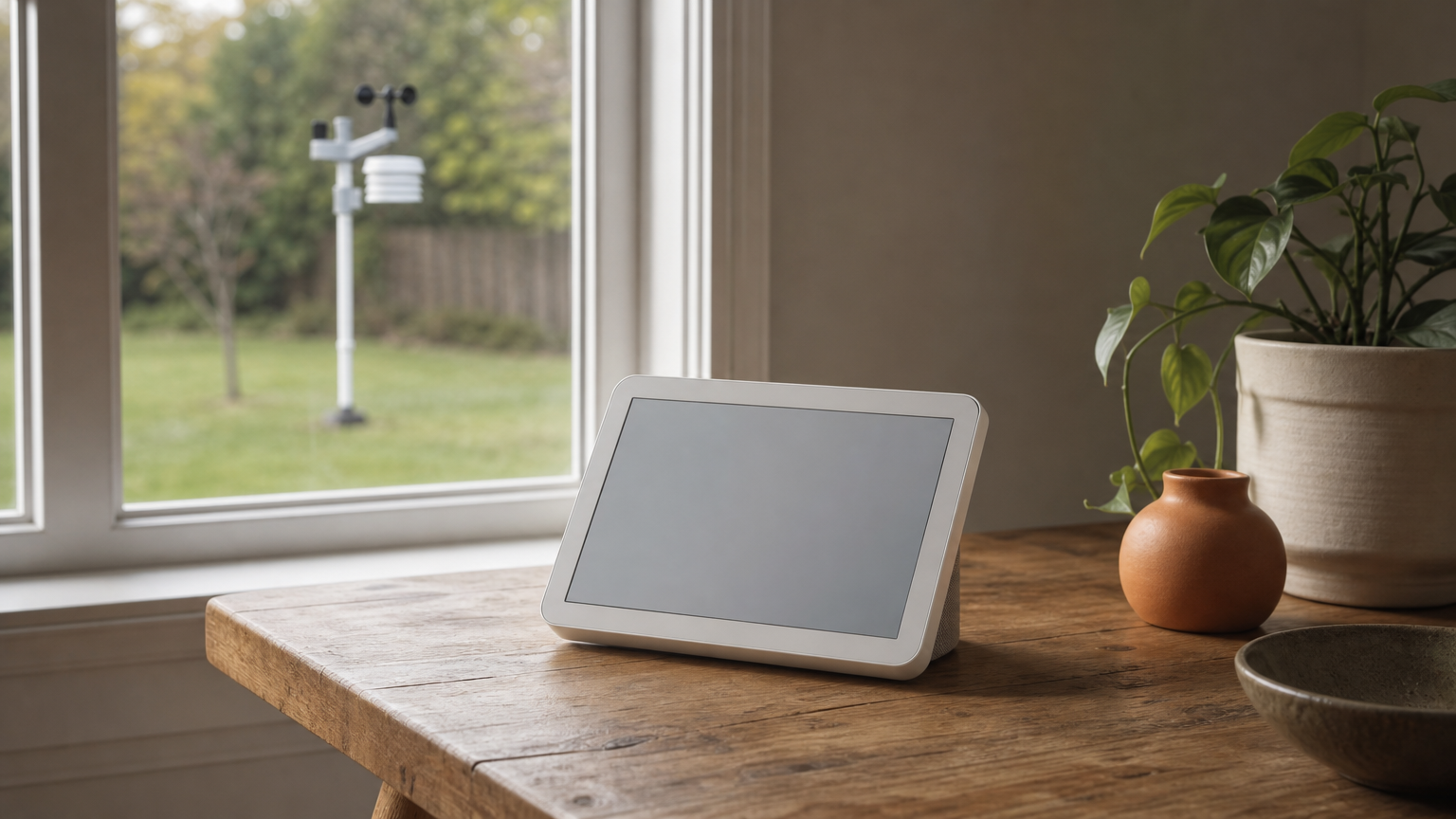
The system pairs an outdoor sensor array with a Wi-Fi display console. It reports the usual home set:
- Outdoor and indoor temperature and humidity
- Barometric pressure
- Wind speed and direction
- Rainfall
Who it suits
It suits first-time buyers who want room to expand. If you later want extra remote sensors, this is the Ambient system built for adding them to the same console.
Price and trade-offs
It costs well below the Davis Pro2 systems, which start at $735 for the sensor suite alone. It is still a consumer-grade station, not a research instrument. Check the current listing for the exact price.
Pick the WS-2000 when you want one station today and the option to add sensors tomorrow.
2. Ambient Weather WS-2902
The WS-2902 is the best value pick, because it packs a full sensor list and a display console into one kit. Ambient markets it as its "Smart Weather Station."
What it measures
The WS-2902B version lists indoor and outdoor temperature and humidity, wind speed and direction, pressure and rainfall. It also adds solar radiation and UV, which many cheaper kits skip. A display console is included.
Who it suits
It suits budget-minded beginners who want a wide sensor list and easy sharing of data online. Weather Underground lists it as a compatible station that needs no extra tools to set up.
Price and trade-offs
Weather Underground’s buying guide says you cannot add sensors to the WS-2902B. If you think you will want more later, step up to the WS-2000. Treat it as a complete, fixed package.
The WS-2902 gives you the longest sensor list for the least money, but you cannot expand it.
3. Davis Vantage Vue
The Vantage Vue is the best pick for dependable accuracy without a complicated install. It is a self-contained, wireless all-in-one sensor suite.
What it measures
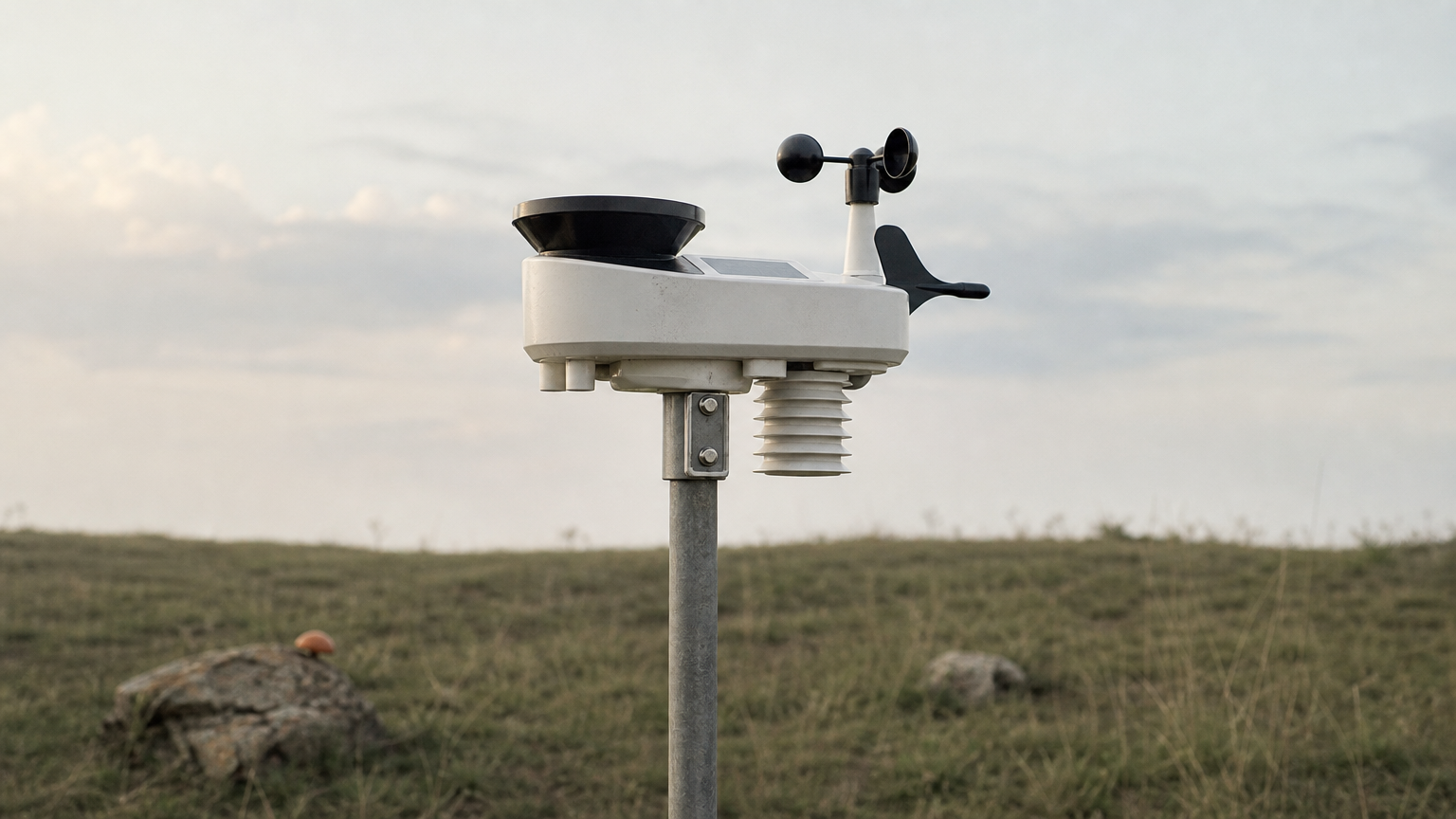
One outdoor unit measures temperature, humidity, barometric pressure, rainfall, and wind speed and direction. Davis says it installs as a single package. It does not include UV or solar radiation sensors.
Who it suits
It suits owners who want Davis build quality and a simple mounting job. One unit on one pole means fewer parts to place.
Price and trade-offs
The sensor suite alone is $425. With the WeatherLink Console it is $725. The $300 console is what gives you live readings, graphs and cloud access through WeatherLink. Compared with the Ambient kits, you pay more for durability and lose UV and solar readings.
Buy the Vue for hassle-free Davis accuracy, and budget for the console.
4. Davis Vantage Pro2
The Vantage Pro2 is the most accurate and most configurable home station on this list. Davis calls it research-grade. It suits serious observers.
What it measures
The Pro2 has built-in temperature and humidity sensors and an electronic rain gauge. The Pro2 Plus adds UV and solar radiation. The GroWeather version adds evapotranspiration for farms and big gardens.
Who it suits
It suits weather hobbyists, gardeners and small farms who want data they can trust and archive. Upgrading the radiation shield matters for accuracy. A 24-hour fan-aspirated shield keeps sunlight from skewing temperature readings. Place any station in open air, away from walls and roofs.
Price and trade-offs
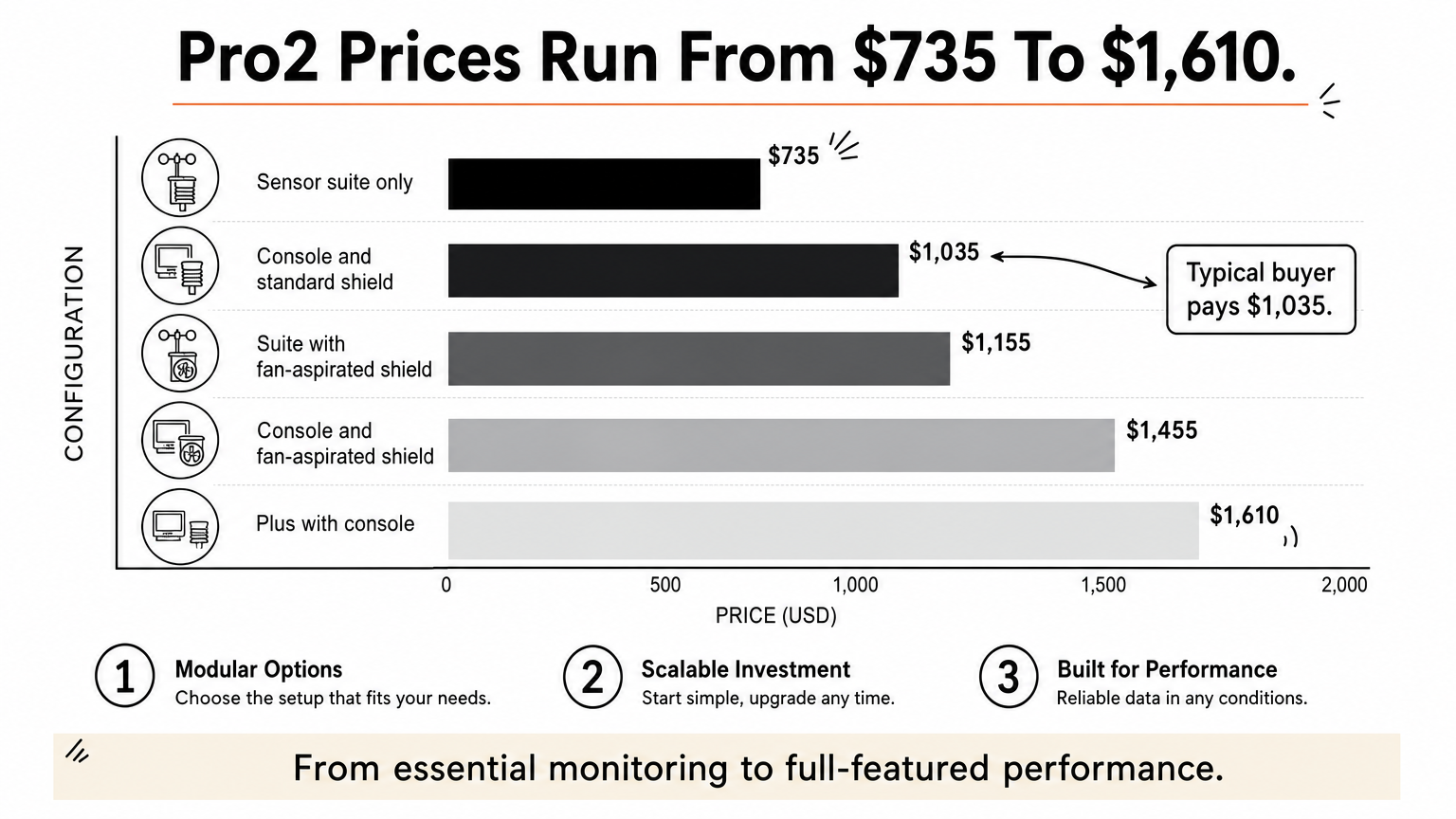
Davis lists these wireless prices:
| Configuration | Price |
|---|---|
| Sensor suite only | $735 |
| With console and standard shield | $1,035 |
| Sensor suite with fan-aspirated shield | $1,155 |
| With console and fan-aspirated shield | $1,455 |
| Plus (UV and solar) with console | $1,610 |
A typical buyer who wants the console and a standard shield pays $1,035. That is $310 more than a Vue with console. The fan-aspirated shield adds $420 on top.
Pay for the Pro2 only if you will use the extra accuracy, because a standard Vue already covers most homes.
5. Netatmo Weather Station
The Netatmo is the best choice when you cannot install a pole or a mast. It is a modular indoor and outdoor system.
What it measures
The base set tracks indoor and outdoor temperature and humidity, pressure, indoor CO2 and sound. It does not measure wind speed or direction out of the box. Weather Underground notes that a rain gauge and extra temperature modules can be added.
Who it suits
It suits apartment and townhouse dwellers who care about comfort and indoor air quality as much as the forecast. Installation needs no extra tools.
Price and trade-offs
It costs well under the $1,035 Pro2 setup. You give up wind data and, until you add the gauge, rainfall. Do not buy it to track storms.
Choose Netatmo for apartment-friendly monitoring, and skip it if wind and rain matter most.
The short version
For most homes, buy the Ambient WS-2000. Take the WS-2902 if budget rules, the Vantage Vue if durability matters, and the Pro2 if accuracy is the point. Netatmo fits when mounting is impossible.
Whichever you choose, put the sensors in open air and check current prices first. For a wider field, see our full comparison of home weather stations, or browse more guides on choosing and testing measuring instruments at Measuring Expert.