

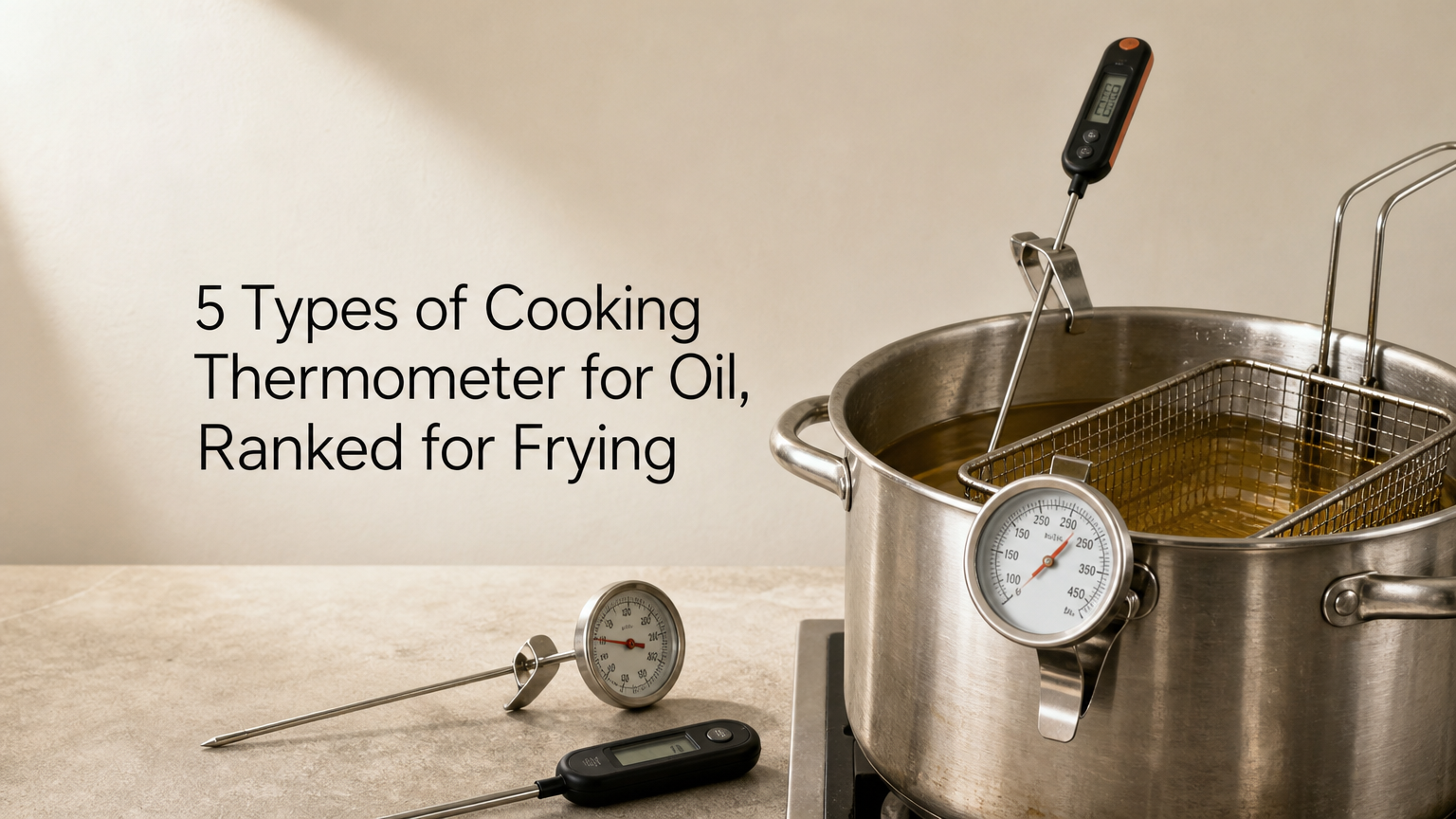
The best cooking thermometer for oil is a digital probe thermometer with a pot clip and a maximum range well above 400°F. It reads in seconds, stays put on the pot wall, and keeps your hand away from splatter. A regular meat thermometer also works, but only if its probe is rated for oil temperatures, and that is the check most people skip.
Which type suits you depends on how you fry. A clip-on dial is the cheapest way to start and needs no batteries. An instant-read digital is the right pick if you already own one and fry now and then. A leave-in probe with an alarm suits long frying sessions, and an infrared gun is only a backup.
Oil held at 350°F to 375°F gives you a crisp crust and a cooked center. Cooler oil soaks into the food and leaves it greasy. Hotter oil browns the outside before the inside is done. You cannot judge that by eye. Below, five types are ranked for deep frying, with how each one works, who it suits, and what to check before you buy.
1. Digital probe thermometer with pot clip
How it works
A digital probe thermometer pairs a long stainless steel stem with a screen and a clip that grips the pot rim. You set the tip in the oil and read the temperature within a few seconds. Models sold as candy and deep-fry thermometers, such as the TempPro TP511 with its 8-inch probe and pot clip, are built for this job.
The clip is the real advantage. It holds the tip at a steady depth, away from the pot floor, which runs hotter than the oil above it. You get one stable reading instead of a guess that changes with every dip.
Who it suits and what to watch
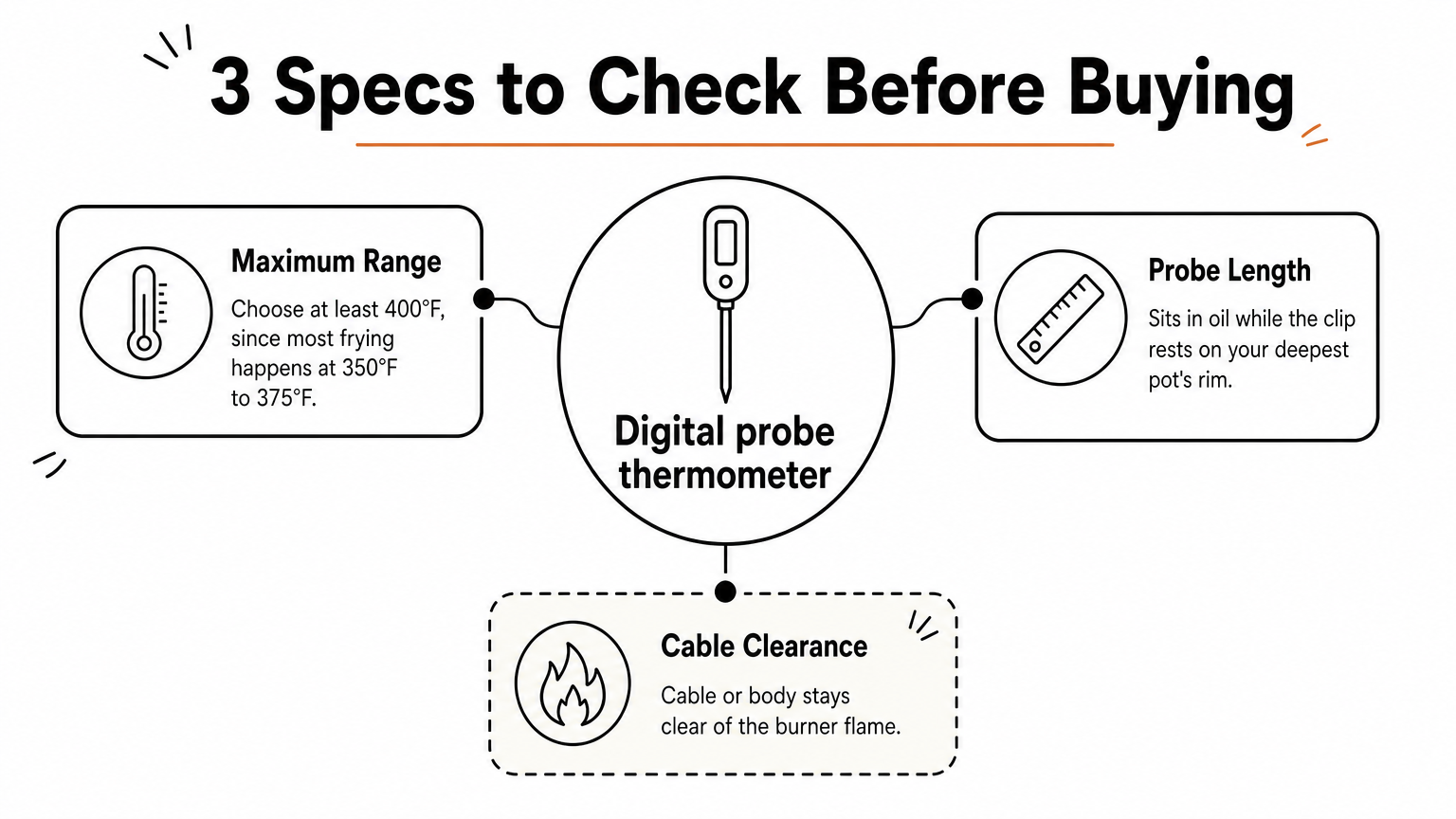
Choose this type if you fry more than once or twice a year. It handles everything from fries to doughnuts, and it doubles as a candy thermometer. Before buying, check three specs:
- A maximum range of at least 400°F, since most frying happens at 350°F to 375°F.
- A probe long enough to sit in the oil while the clip rests on the rim of your deepest pot.
- A cable or body that stays clear of the burner flame.
Here is a worked example. You want 350°F for chicken. Heat the oil, confirm 350°F on the screen, then lower in the food. Cold chicken can pull the oil down by 25°F or more, so wait for the reading to recover before you add the next batch.
Clip the tip into the oil, not against the pan, and you are reading the oil instead of the pot.
2. Clip-on analog deep-fry thermometer
How it works
An analog deep-fry thermometer has a metal stem with a dial at the top and a clip for the pot rim. Inside, a metal coil expands with heat and moves the needle. Classic paddle-style versions, such as the Salter by Taylor stainless steel model with a 100°F to 400°F gauge, follow this design.
The dial sits above the steam and is easy to read from a few feet away. It reacts more slowly than a digital probe, so give it a moment to settle after each change in heat. Expect to adjust the burner and wait.
Who it suits and what to watch
This is the pick for budget-minded cooks and for anyone who wants a tool with no batteries to fail mid-fry. It works well for a single pot of oil on a steady burner, where the temperature drifts slowly.
Two problems come up often. Dials drift over time, so test yours in boiling water. It should read 212°F at sea level, and the boiling point falls about 1°F for every 500 feet of elevation. The glass lens can also fog, which makes the needle hard to read.
An analog dial is fine for frying, as long as you check it in boiling water before you trust it.
3. Instant-read digital meat thermometer
How it works
An instant-read meat thermometer has a thin probe and gives a reading in a few seconds. For oil, you dip the tip, read the number, and pull it out. Many models are rated for hot cooking oil and are used for frying, baking and candy, but some stop at a much lower limit. Read the stated maximum in the manual or on the listing.
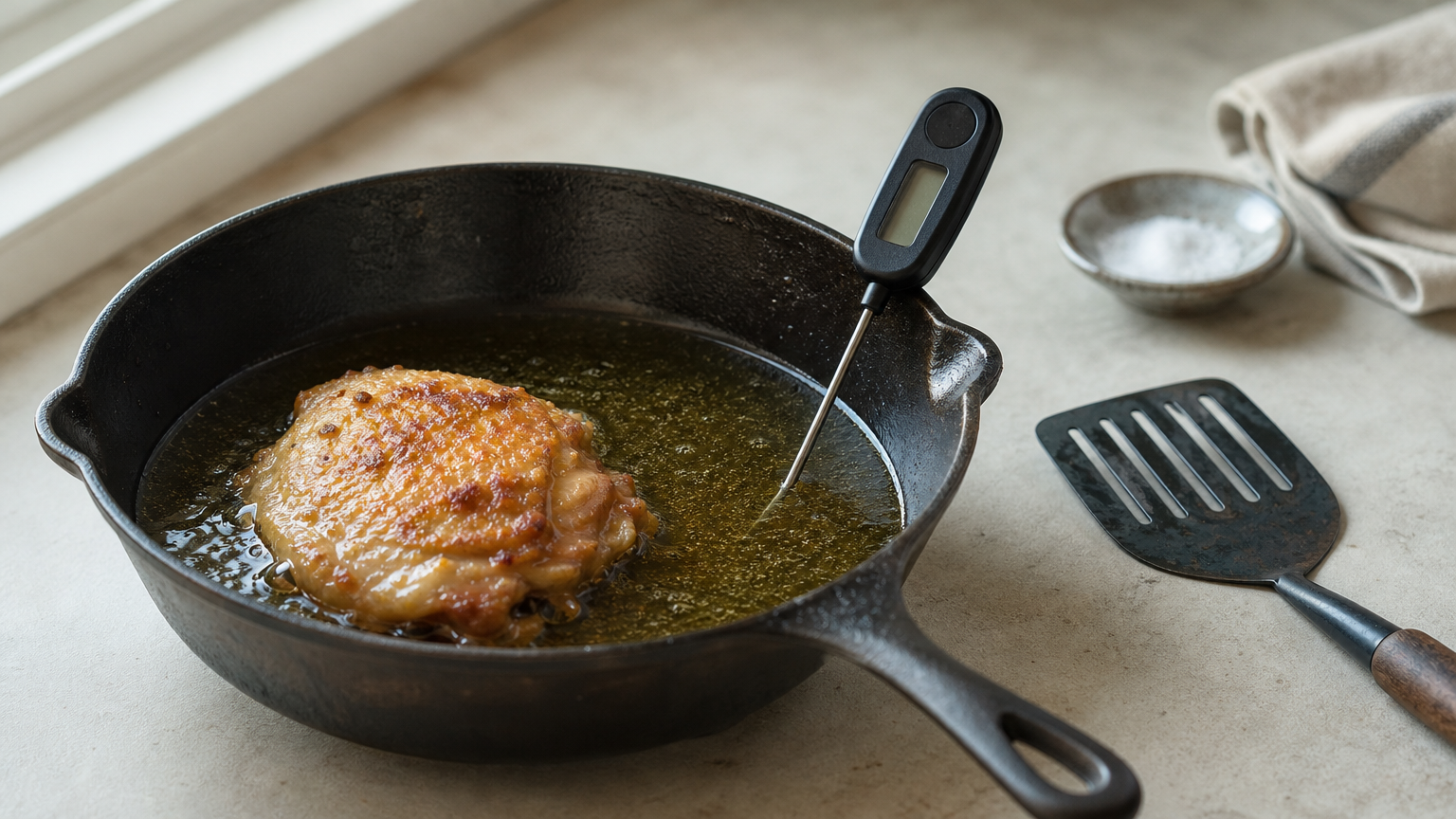
Immersion depth matters most here. If only the tip is submerged, heat travels up the stem and the reading comes out low. Sink the whole sensing end into the oil, and keep it off the pot bottom and sides. This is especially important in shallow pans, where tilting the pan may be the only way to cover the tip.
Who it suits and what to watch
Use this type if you already own one and fry occasionally, or if you pan-fry in shallow oil where a clip will not fit. It is also the quickest way to double-check another thermometer.
The downsides are practical. You hold it by hand, close to spitting oil, and it does not stay in the pot. Do not leave it in the oil unless the maker says it can take the heat for that long. A thermometer with a plastic housing or soft cable near the tip can be damaged.
Yes, a meat thermometer can measure frying oil, but only if its stated maximum clears 400°F.
4. Leave-in probe thermometer with alarm
How it works
A leave-in thermometer connects a probe to a base unit on the counter, either by wire or wirelessly. You place the probe tip in the oil and set a high and low alarm. The display stays well away from the heat, and the alarm tells you when the oil leaves your target range.
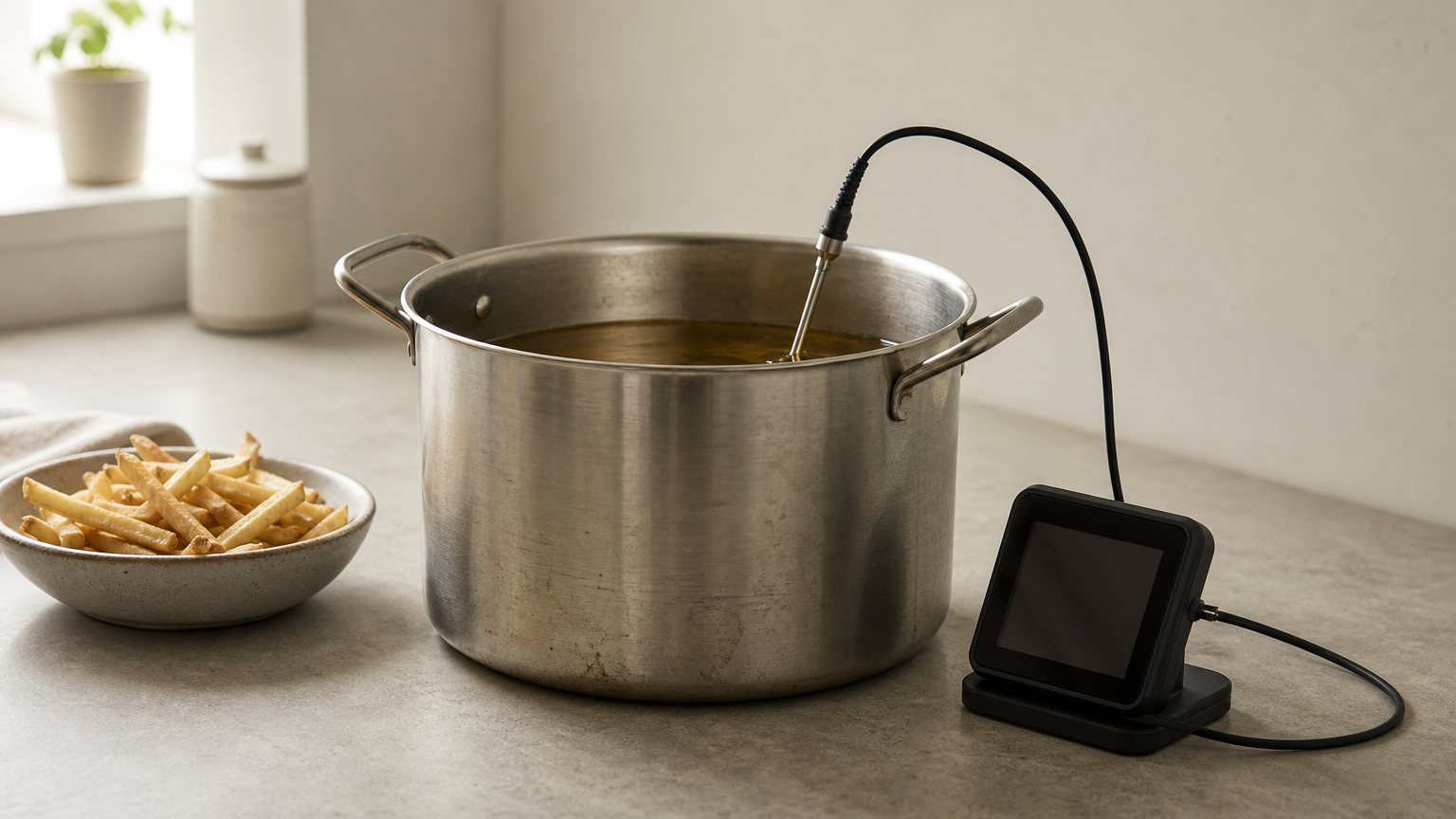
Most of these were designed for roasting and smoking, so the probe cable may not tolerate hot oil. Check the rating of the cable and the tip separately from the display range. Keep the wire off the burner and out of the oil.
Who it suits and what to watch
This type suits long frying sessions, such as several batches of fries or chicken, when you want to keep your eyes on the food rather than the dial. The alarm catches a drifting temperature before it ruins a batch.
Be careful with oil safety. Never leave hot oil unattended just because an alarm is set. Also confirm that the manufacturer allows the probe to be submerged in fat at frying temperatures, because some are rated only for food and oven air.
A leave-in probe earns its place only if its cable is rated for the oil, not just the oven.
5. Infrared thermometer
How it works
An infrared thermometer measures the surface temperature of whatever you point it at, with no contact. You aim, press, and read. It is quick and keeps you at arm’s length from the pot.
For oil, that is also its weakness. It reads only the top layer, which can differ from the oil below, and steam and fumes from the pot interfere with the reading. It tells you about the surface, not the oil your food is sitting in.
Who it suits and what to watch
Treat it as a backup, for example to check that an empty pan is hot before you add oil. Do not rely on it as your main cooking thermometer for hot oil.
If you have no probe at all, try the bread test. Drop a one-inch cube of bread into the oil. If it browns in about a minute, the oil is roughly 350°F to 365°F. It is a rough check, not a measurement, but it beats guessing by sight.
An infrared gun reads the surface of the oil, so keep a probe for the number that actually matters.
Final pick for most kitchens
For most home cooks, a digital probe thermometer with a pot clip is the best buy. It gives a fast, steady reading and keeps your hands clear. A clip-on dial is a fair budget choice if you check it in boiling water, and an instant-read thermometer is worth using if its probe is rated above 400°F. Reach for a leave-in probe only for long sessions, and keep infrared as a backup.
Whatever you choose, match the thermometer’s range to your frying temperature and put the tip in the oil, not on the pan. If you want help choosing and testing other tools in your kitchen, read the measuring tool guides on Measuring Expert.